Palaeotis Pils 1.1

Time for another batch…this time, a retool of my German pils. Compared to the last round, I have changed just about everything, although the overall base malt is basically the same. To speed my brew day along, I’m not doing a decoction. Instead, I’m rounding out the malt bill with a little bit of melanoidin malt.

Palaeotis Pils

  • 8.5 lbs. floor-malted Bohemian pilsner malt (Weyermann)
  • 5 oz. melanoidin malt (Weyermann)
  • 3 oz. acidulated malt (BestMalz)
  • 0.3 oz. Warrior hop pellets (15.0% alpha), 60 minute boil
  • 0.5 oz. Liberty hop pellets (4.9% alpha), 30 minute boil
  • 0.5 oz. Tettnang hop pellets (3.5% alpha), 30 minute boil
  • 0.5 oz. Liberty hop pellets (4.9% alpha), 5 minute boil
  • 0.5 oz. Tettnang hop pellets (3.5% alpha), 5 minute boil
  • 1 tsp. Fermax yeast nutrient, 10 minute boil
  • 1 Whirlfloc tablet, 10 minute boil
  • 2 packages lager yeast (Fermentis W34/70)

Target Parameters

  • Infusion mash to hit target of 150°. Batch sparge.
  • Water built from R.O., to hit 59.1 ppm Ca, 8.2 ppm Mg, 89 ppm SO4, and 62.9 ppm Cl.
  • 1.048 o.g., 1.010 f.g., 4.9% abv, 34 IBU, 4 SRM, 5 gallons into fermenter

Procedure

  • For this recipe, I built my water to match the “Pilsner Water” profile on Braukaiser. For the 3.1 gallons of mash water, I added 1.2 g of gypsum, 1.2 g of epsom salt, and 1.5 g of calcium chloride. For the 5.5 gallons of sparge water, I added 2.1 g of gypsum, 1.7 g of epsom salt, and 2.7 g of calcium chloride.
  • I mashed in with 3.1 gallons of water at 160° to hit 150°, and let it rest for 60 minutes. After 35 minutes, the mash temperature had fallen to 148°.
  • After a 60 minute mash, I added 1.75 gallons of water at 200° to raise the mash temperature to to 160°. I let it sit for 10 minutes, vorlaufed, and collected the first runnings.
  • Next, I added 3.75 gallons of water at 185°, let sit for 10 minutes, vorlaufed, and collected the remainder of the runnings.
  • In total, I had 7.1 gallons of mash runnings at a gravity of 1.039, for 82% efficiency.
  • I brought the kettle to a boil, and added the hops and other ingredients per the schedule.
  • After 90 minutes, I chilled the wort down to 75°, transferred the wort while aerating, put the fermenter into the fermentation chamber, and let it cool down to 50° before pitching the yeast.
  • Starting gravity was 1.048, nearly precisely on target. I started fermentation at 50°, and raised it to 54° after four days. I brewed the beer on 20 May 2017.

Beer Tasting: Ophidia IPA & CA IPA

Both of my recent IPA’s are long-gone (Ophidia IPA first, and CA IPA most recently), but I hadn’t gotten around to posting the tasting information. So, this post is a double-header!

ophidia_IPAOphidia IPA

  • The Basics
    • O.G. = 1.055; f.g. = 1.012; 5.6% abv; 6 SRM; 52 estimated IBU
  • Aroma
    • Beautiful tropical fruit aroma–guava notes are really prominent (I feel a bit silly typing out this kind of pontification, but it’s seriously there!), and a bit of citrus is behind that when it is first poured. As the beer warms up, the purported blueberry associated with Mosaic hops comes forth. It’s a very hop-forward aroma, covering up the malt.
  • Appearance
    • Gold color, moderately hazy, with a low and persistent off-white head.
  • Flavor
    • Hop-forward once again, as you would expect for an IPA. The bitterness is clean and persists nicely from first sip to the finish. Any hop flavor is vaguely tropical and citrusy. The malt is clean, ever-so-slightly-sweet, and in the background.
  • Mouthfeel
    • This is a moderately dry and fairly light-bodied beer, carbonated as appropriate for the style. The dry finish lingers pleasantly on the tongue.
  • Would I brew this again?
    • Hmm…this is in the category of “pretty good, but not life-changing.” It hits nicely on most notes, but I think it might fall victim to “tropical hop burn-out” in the wake of many citrus/fruit-bomb IPAs and pale ales that I’ve done over the past year. I didn’t quite hit my marks for final gravity due to the mash being a bit too cool, but I’m honestly not sure if that’s a totally bad thing. The aroma is absolutely delicious–the Mosaic and Citra combo play together beautifully. This is a very drinkable beer; probably too easily drinkable! I really like it, but it is just missing something very minor that I can’t quite place in the flavor. Ah well!
  • Overall
    • 8/10

CA_IPACA IPA

  • The Basics
    • O.G. = 1.060; f.g. = 1.009; 6.7% abv; 6 SRM; 63 estimated IBU
  • Aroma
    • Slightly phenolic, which overpowers any hop aroma. There is maybe a slight piney hint, but that’s about it.
  • Appearance
    • Gold beer with a moderate haze. The off-white head forms a persistent blanket over the surface of the beer.
  • Flavor
    • Pear/apple notes (probably from the yeast), with a slightly herbal/spicy character behind that–perhaps even a bit phenolic. I attribute this to a brief lapse with the fermentation chamber–the freezer side accidentally got unplugged, so the temperature peaked at 73 or 74 degrees. It’s actually rather close in many ways to what my first, non-temperature-controlled batches tasted like.
  • Mouthfeel
    • Medium-dry body, moderate carbonation.
  • Would I brew this again?
    • Maybe? Unfortunately, enjoyment of this beer is really ruined by the slight bump into high temperatures early in fermentation. I’m willing to try this temperature and technique again, though.
  • Overall
    • 3/10

Confidence and Competence in Brewing

20170107_084229

“Relax. Don’t Worry. Have a Homebrew.” What a lifesaver that phrase was in my early days of brewing! Getting started in this hobby can be a nerve-wracking business. First are all of the (rightfully) important warnings about sanitation and proper temperature for yeast pitching and whatever. Then come all of the smaller warnings about water chemistry, boil volumes, specific gravity, and the rest. If a novice brewer spends more than a few minutes browsing any homebrew forum, they are quite likely to spin themselves into a panic over every last detail. And heaven help them if they run across the most die-hard low-oxygen brewing proponents!

Yet, as long as you master the very basics, you can make some pretty passable beer. All of those other details can come later, with practice and experience. Brewing becomes a genuinely relaxing process, passing the threshold from slightly stressful exercise that produces a fun product to a fun exercise that produces an excellent product.

Just the other day, as I was brewing a pilsner, I thought…”Hey! I really have confidence in brewing now!” Much of this comes from frequent practice. I know my system. I can throw in a new technique without too much disruption in my brew flow. I know my ingredients. If I can’t find one particular ingredient for a recipe, I feel confident in making appropriate substitutions. I’m getting much stronger in self-critique, and have had my critiques validated in formal competitions. Speaking immodestly, most of my beer is pretty decent, and some of my beer is pretty darned excellent.

To truly enjoy brewing, don’t try to master everything at once. Focus on the big picture, and dial in the details over time. Brew by brew, work on your craft and develop your knowledge base. It takes time, but we all have the potential to be confident and competent brewers!

Homebrew Con Seminar: The Dinosaur in My Beer!

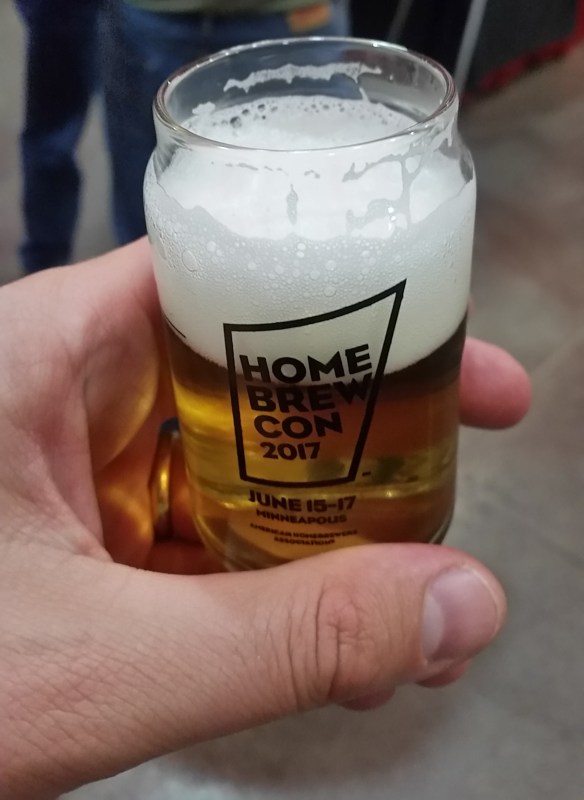
blog_imageI’m excited to be on the schedule for Homebrew Con (aka National Homebrewers Conference) in Minneapolis next month! If you’re at the event, come see my seminar: The Dinosaur in My Beer: 250 Million Years of Homebrewing History.

Of course, most beer enthusiasts are familiar with the overall arc of brewing lore (and some of you could probably recite it in your sleep). Things got rolling in the ancient Middle East around the same time that cereal grains were domesticated, hops made it into the equation during the Middle Ages, and craft breweries got their game going during the late 20th century. This is all interesting–and indeed, numerous books and articles have been published on the topic. Yet, virtually every treatment of brewing that I’ve read neglects the much deeper history of all of our brewing ingredients. We wouldn’t have Burton water without events that happened during the dawn of the age of the dinosaurs. We wouldn’t have hops without an evolutionary innovation in plants more than 120 million years ago. And oddly enough, the production of barley malt led to the discovery of many important fossils.

My seminar (around 45 minutes long, with time for questions) ties together threads that stretch deep into our planet’s history. You’ll gain a better appreciation for just how densely beer and beer ingredients are interwoven with the evolution of life–beer ain’t just a cultural phenomenon! I’ve given versions of this talk at Claremont Craft Ales as well as the Arizona Museum of Natural History, but the Homebrew Con version will have lots of new content, plenty of cool images, and interesting anecdotes. I guarantee that you’ll learn something you didn’t know before!

My seminar starts at 9 am on Saturday, June 17, in Auditorium 1. And even if you can’t make the seminar, I’d love to chat about beer, brewing, and paleontology. Hope to see you in Minnesota!

And for an extra bonus…I’m bringing a replica of the skull from Aquilops americanus, the little dinosaur that inspired Eagle Face Oatmeal Stout, as seen in a recent issue of Zymurgy magazine. If you’ve ever wanted to get your selfie with a dinosaur, now is your chance!

[Image info: The dinosaur skeleton in the logo is modified from a 19th century rendering of Iguanodon by Gustave Lavalette. Also of note: the fossil was found in a part of Belgium that is purportedly home territory for saisons! This fact inspired one of my first attempts at the style.]

Homebrew savings in bulk?

Since I started ramping up my homebrewing two or three years back, I’ve been brewing at least 20 times a year. At five gallon batches, that adds up to a lot of supplies! I soon realized that it might make sense to start buying in bulk as a cost-saving measure, for things like hops, base malts, and some cleaners. But I also realized there are a number of cost/benefit factors that need to be considered. In this post, I outline my thought process.

20170513_102228

  • Do you brew often enough?
    • If you’re the sort of person who only brews a few times a year, it probably doesn’t make sense to buy bulk supplies. They’re likely to go stale before you use them up, and thus are just a waste of money.
  • Do you have space?
    • I’m fortunate to have plenty of storage space to store bulk supplies. Back in the days when I was an apartment brewer, that wouldn’t have been the case.
  • Is the particular supply or ingredient something you use frequently and in large volumes?
    • I brew with American 2-row a lot, so it makes good sense to keep a supply on hand. I can save around 40 to 50% by doing so, which adds up over a few batches. It would not make sense to buy 50 pounds of chocolate malt; I only use a few pounds per year, and a bulk sack would go stale before I could use it all up.
  • What’s the shelf life?
    • A 50 pound bucket of PBW cleaner is nearly two and a half times cheaper than buying the equivalent in 1 pound increments. It will probably take me several years to use this up, but I can’t imagine this stuff ever goes bad, as long as I store it properly. For stuff like yeast or bulk malt, a multi-year shelf life isn’t likely in the cards.
  • Can I pick it up in person or does it have to be shipped?
    • I buy bulk at my local homebrew shop whenever I can. In general, I have found that shipping can swamp out any potential savings otherwise. On those occasions when I do order online, I do a quick calculation on shipping to see if things still add up.
  • Do I really want that in bulk?
    • Although buying in bulk saves money, it also potentially constrains creative exploration of new ingredients. For instance, if I have 50 pounds of a particular brand of pilsner malt, I’m probably not going to try out other brands, at least until I’ve finished out that supply.

Overall, I find bulk purchases to be a good value given my brewing habits. Everyone’s situation is different, though. Think carefully; it might be right for you, too!