Alta California Lager 2026

I’ve enjoyed my Mexican-style pale lager recipe over the years, which has followed the same core ingredients but with variations in how I handle the corn. This includes either flaked corn directly in the mash or grits in a cereal mash. The latter is a lot of work, but opens up varieties of corn and subtle flavors not possible with the standard flaked ingredients. So, I aimed for the extra effort of a cereal mash on this iteration.

This particular batch was brewed to celebrate the major accomplishment of a friend who defended her master’s thesis (I served on her committee as a outside member, too). She had shared that even though she’s not really a beer person, the original version of this recipe was a favorite of hers. That was all the excuse I needed to return to the cereal mash!

Alta California Lager 2026

  • 5.75 lb. Synergy Select pilsen malt (Briess)
  • 2 lb. white corn grits (Palmetto Farms)
  • 1.75 lb. Vienna malt (Weyermann)
  • 0.5 tsp. BrewTanB, added to mash
  • 0.4 oz. Magnum hop pellets (12.3% alpha), 60 minute boil
  • 0.5 tsp. BrewTanB, 10 minute boil
  • 1 Kick carrageenan tablet
  • 1 oz. Saaz hop pellets (2.4% alpha), 5 minute boil
  • 0.5 tsp. WLN1000 yeast nutrient (White Labs), 5 minute boil
  • 2 pkg. Diamond Lager yeast (Lallemand)

Target Parameters

  • Infusion mash, with 75 minutes at 148°, and 10 minutes at 168°, with cereal mash at first step; full volume mash
  • 1.044 o.g., 1.006 f.g., 5.0% abv, 21 IBU, 3 SRM
  • Water built from RO, to hit 20 ppm Ca and 35 ppm Cl
  • 5 gallon batch

Procedure

  • The first step in the process was a cereal mash. I had intended 0.5 lb. of pilsner malt (as did in my first batch), but mismeasured and had 1 lb. instead. I combined ~0.75 gallons of RO water with the corn grits and pilsner malt, heating the mixture on the stove to 158°. I held the mash here for 10 minutes, before bringing everything to a boil. During a 30 minute boil, I added another 0.5 gallons or so of RO water.
  • In my Anvil Foundry, I started with 6.25 gallons of water, to which I added 1.5 grams of calcium chloride. I heated this to 140°.
  • During the last 7 minutes or so of the cereal mash, I mashed in the rest of the grains to hit a temperature of ~130° degrees. Then, a few minutes later, I added the boiling cereal mash. This heated the entire mash to around 145°, and then I added heat via the Anvil heating element to get up to 148°. I added 2 tbs. of 10% phosphoric acid to adjust pH.
  • I held the mash at 148° for 75 minutes, before raising to 168° for 10 minutes.
  • At the end of the mash, I pulled the grains. The runnings came out to 6.56 gallons at a gravity of 1.038, for 73% mash efficiency.
  • I heated the runnings to a boil, adding hops and finings per the recipe. At the end of the 60 minute boil, I turned off the heat and chilled the wort to 74°, before transferring to the fermenter. I chilled the fermenter the rest of the way in the fermentation chamber, down to 50°. 12 hours after the initial transfer, I pitched the yeast directly.
  • I brewed this beer on 9 April 2026. Starting gravity was 1.045.
  • The fermenter was held at 52° for fermentation, and it was cold crashed to 34 degrees on 4 May 2026. I kegged the beer on 9 May 2026, using a semi-closed transfer. The beer was slightly hazy at this point, with a very slight fruity aroma (corn?).
  • Final gravity was 1.007, for 5.1% abv.

Tasting

  • Appearance
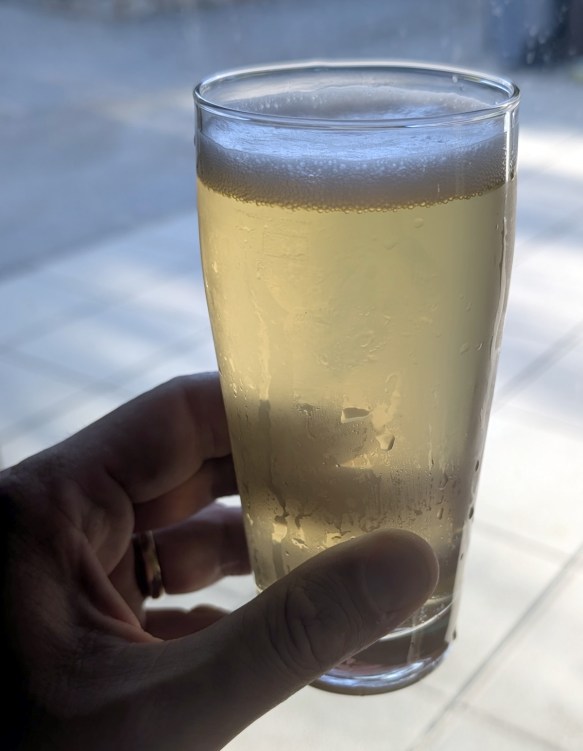
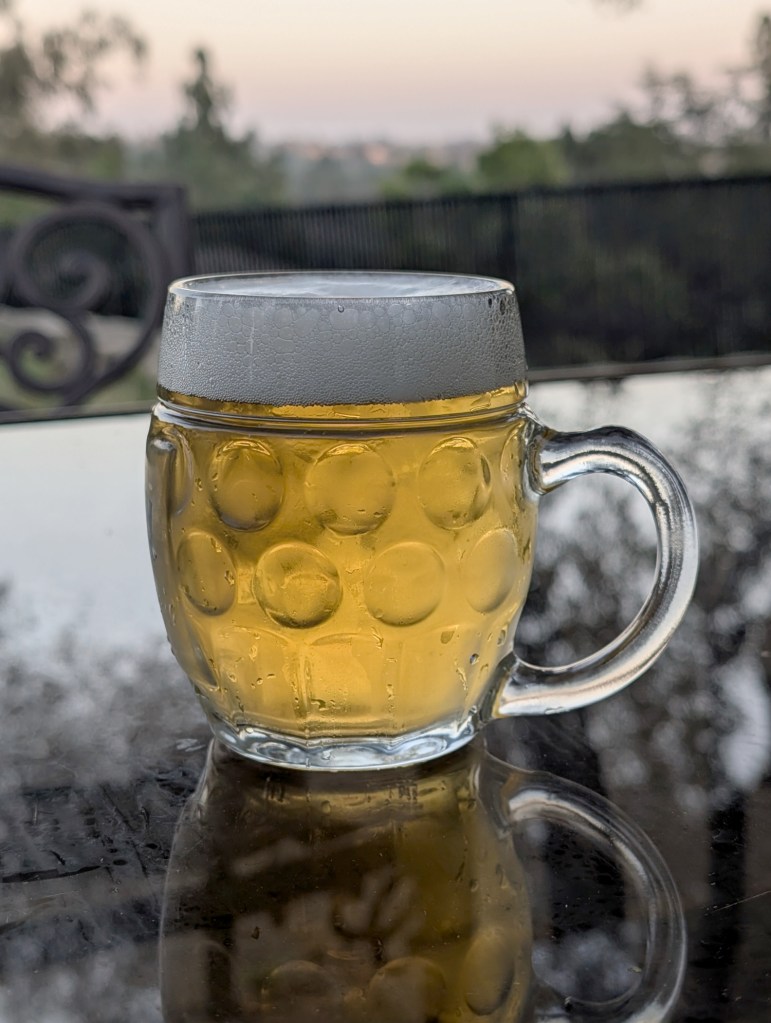
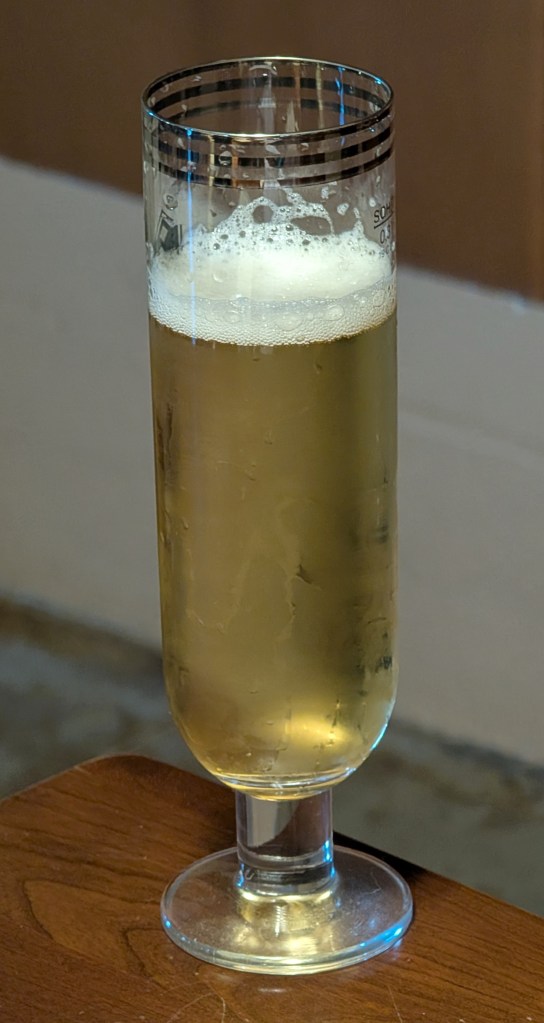
    • Light straw yellow beer, with a modestly persistent white head. There is a very slight haze to this, which is annoying (especially given how long it has been lagering).
  • Aroma
    • The beer has a gorgeous aroma, with a light cracker and corn character. No hop aroma to speak of, nor is there any yeast character that I pick up.
  • Flavor
    • Medium-low cracker-like malt flavor, with a hint of corn sweetness. Medium-low bitterness, clean fermentation profile. Evenly balanced.
  • Mouthfeel
    • Light bodied, crisp mouthfeel, medium-high carbonation.
  • Would I Brew This Again?
    • This is an incredibly tasty and very drinkable beer; it hits pretty much all of the flavor and aroma notes I was hoping for. The sensory contribution from the corn is subtle, but absolutely perfect. I love this recipe! The only minor annoyance is the persistent haze. I need to figure that out in my next batch, because it has been a perpetual issue in most iterations of the recipe. Maybe I need to change water chemistry, and increase the calcium chloride dose? At a minimum, I should hit the keg with a clarifier next time.
    • Serving mod: my friend tells me that the beer is delicious with chamoy and tajin on the rim. Now I have to try this!
  • Overall
    • 8/10

Greg’s Red Lager

My dad got me started in homebrewing (and he has been brewing for over 50 years!), so it’s always fun to brew together when I’m back home. Planning for a recent session, he mentioned that he would like to make a red lager following a recipe he had previously made. His old version, though, was extract, and he now brews all-grain, so a conversion was in order.

The original version, of unknown origin, called for the following:

  • Red Lager (extract version)
    • 8oz. dark crystal malt (75-85L)
    • 8oz. med. crystal malt (50-60L)
    • 5.5lb. DME
    • 0.75 oz. Cascade, 45 minute boil
    • 0.25 oz. Cascade, 15 minute boil
    • Lager Yeast
  • Notes
    • “I think it was the lightest DME I could get at the time. Starting gravity was 1.042. I think I would like the S.G. to be about 1.050.”
    • Hops are whole, homegrown Cascade hops – a past test showed around 5.5% alpha

The conversion was pretty straightforward. I subbed in pilsner malt for the DME, adjusting to hit the target gravity, and used crystal 60 and crystal 80. According to BeerSmith, the color was a little lighter than a “red” lager, so I added a tiny bit of roasted barley for reddish color adjustment.

Although Dad and I planned to brew a five gallon batch, I wanted to test it with a 2.5 gallon batch first.

Greg’s Red Lager (2.5 gallon batch)

  • 5 lb. Synergy Select Pilsen malt (Briess)
  • 4 oz. 80L caramel malt (Briess)
  • 4 oz. 80L crystal malt (Great Western)
  • 0.5 oz. roasted barley (Crisp)
  • 0.35 oz. Cascade whole hops (est. 5.5% alpha), 60 minute boil
  • 0.25 oz. Cascade whole hops (est. 5.5% alpha), 10 minute boil
  • 0.25 tsp. BrewTanB, 10 minute boil
  • 0.5 Kick carrageenan tablet
  • 1 pkg. Diamond lager yeast (Lallemand)

Target Parameters

  • 60 minute infusion mash, 149°, full volume mash
  • 1.051 o.g., 1.007 f.g., 5.8% abv, 16 IBU, 13 SRM
  • Claremont tap water; 110 ppm Ca, 8 ppm Mg, 97 ppm Na, 75 ppm sulfate, 110 ppm Cl, 132 ppm bicarbonate
  • 2.5 gallon batch

Procedure

  • I heated 3.9 gallons of water to .154°, adding a Campden tablet to remove chloramines. I then added the grains and 2 mL of 88% lactic acid to adjust pH, and then held it at 149° while recirculating for 60 minutes. Next, I raised the temperature to 168° for 10 minutes before pulling the grains.
  • In total, I collected 3.5 gallons of runnings with a gravity of 1.043, for 72% mash efficiency.
  • I brought the runnings to a boil, adding hops and finings per the recipe. After 60 minutes, I turned off the heat and chilled to 85° before transferring to the fermenter, chilled to 68°, and then pitched the yeast. I continued to chill down to 53° in the fermentation chamber.
  • Starting gravity was 1.053. I brewed this beer on 8 May 2026.
  • I raised the beer to 54° on 10 May 2026, and then to ambient on 23 May 2026.
  • I kegged the beer on 27 May 2026, using an open transfer and adding 3 oz. of corn sugar to carbonate in the keg.
  • Final gravity was 1.011, for 5.5% abv.
  • I found the pressure to be 32 psi at 70° on 5 June 2026 – perfect.
  • At this point, I transferred the beer to the conditioning chamber, in order to lager.

Tasting

  • Appearance
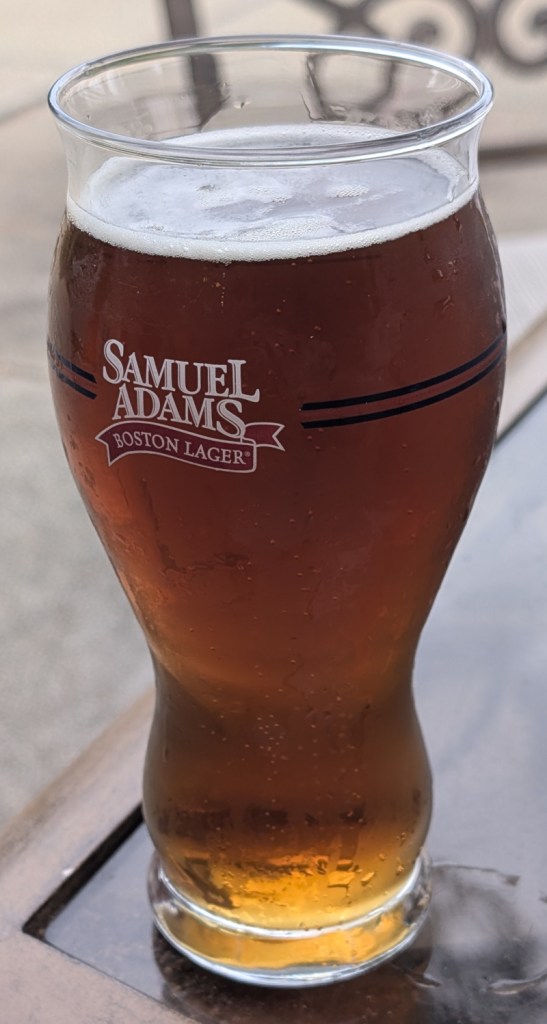
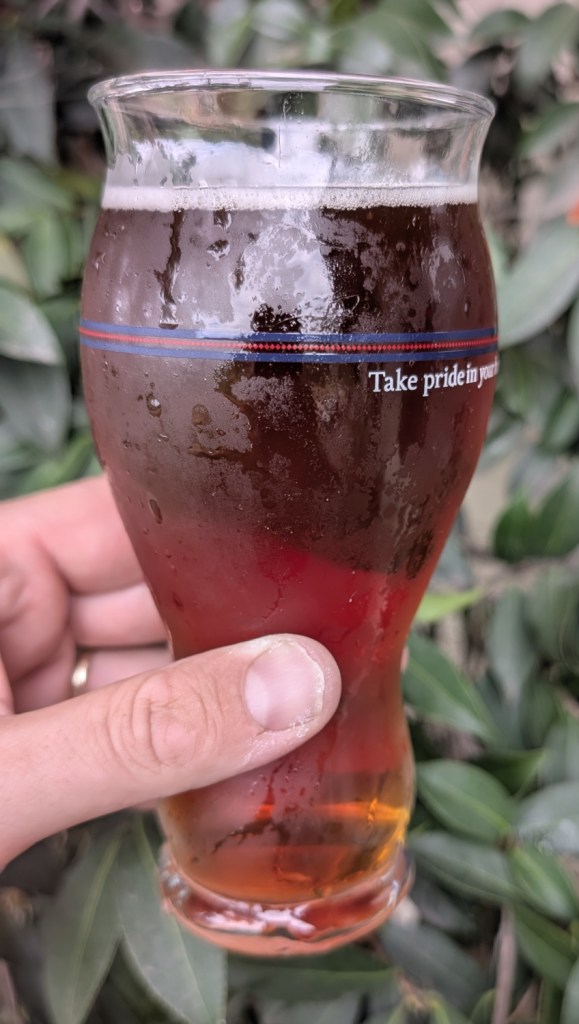
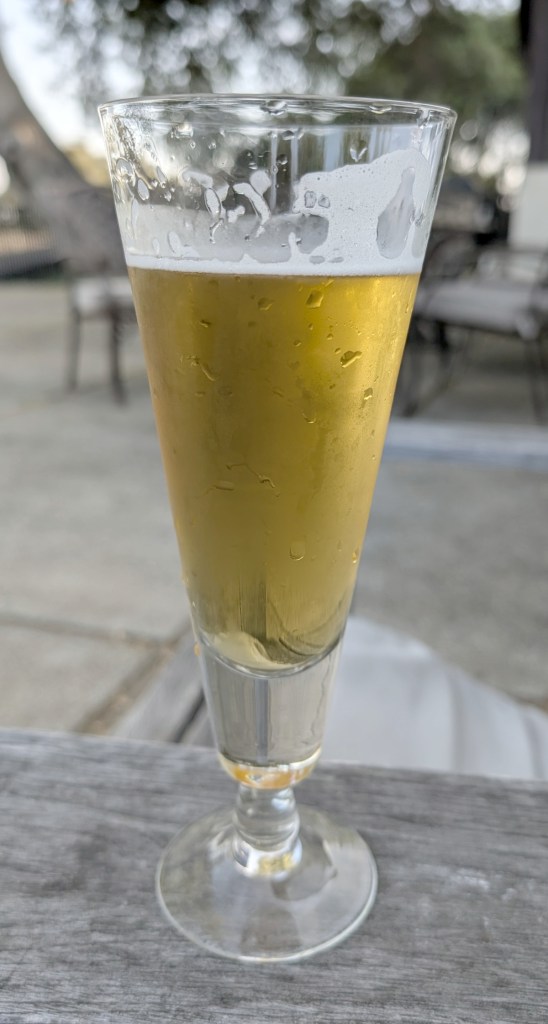
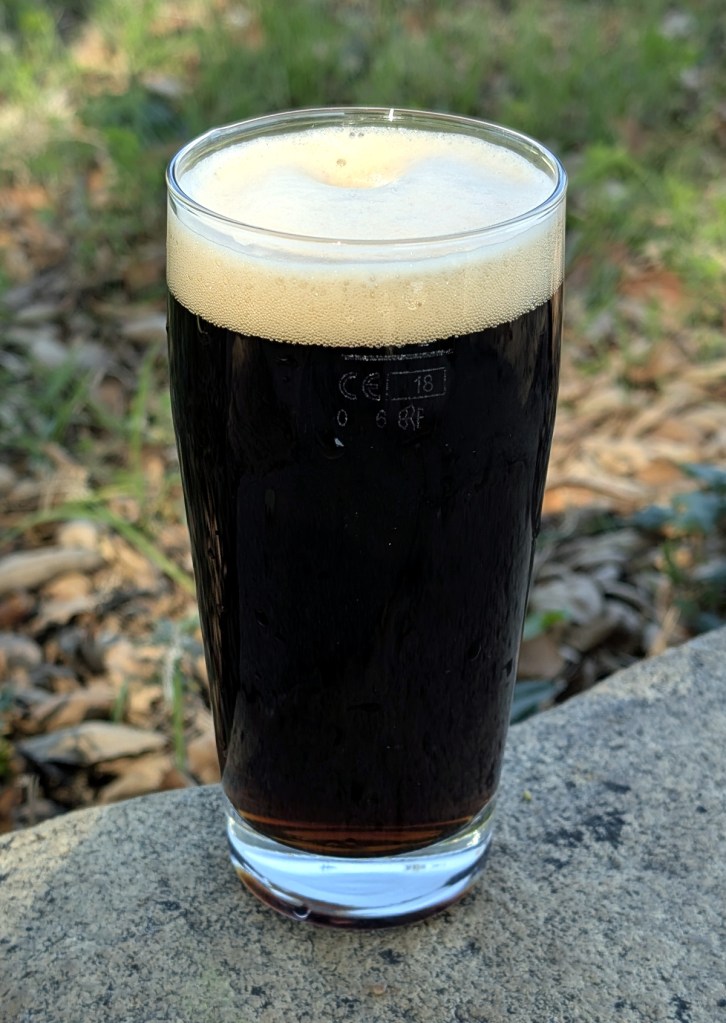
    • Brilliantly clear, reddish amber beer, with a modest, reasonably persistent ivory-colored head.
  • Aroma
    • Caramel malty aroma at a medium-low level; no hop or yeast character to speak of.
  • Flavor
    • Light caramel flavor; dried fruit at a very slight level. Medium level of bitterness.
  • Mouthfeel
    • Medium-light bodied, moderate carbonation, off-dry finish.
  • Would I Brew This Again?
    • This was fun to try as an exercise, and I think it captured the American craft red lager experience of “microbreweries” and homebrewers circa 1996. It’s not my cup of tea as a beer overall; I think a traditional Vienna lager hits some of the same notes but with more drinkability. Even so, this recipe was worth the experience. And Dad enjoyed it, which was the main goal! If I were to do it again for myself, I’d probably dial back the crystal malts by about 50 percent, to lighten up the mouthfeel and flavor.
  • Overall
    • 6/10

Super SMaSH Pils 2026

A good German pils is the perfect style for a SMaSH(ish) beer, and it has been over a year since I last had a pils on tap. For this round, I used Viking Pilsner Zero malt, and nearly the last bit of my Edelweiss hop blend stock. I decided to add a small dry hop in order to amp up the hop aroma. S-189 is back as the yeast; even though it’s not the first strain most people think of (relative to 34/70 and Diamond lager, for example), I really enjoy what it does.

Super SMaSH Pils 2026

  • 10 lb. Pilsner Zero malt (Viking)
  • 0.5 tsp. BrewTanB (mash)
  • 1.25 oz. Edelweiss hop pellets (5.8% alpha), 60 minute boil
  • 0.5 tsp. BrewTanB, 10 minute boil
  • 1 Kick Carrageenan tablet, 5 minute boil
  • 1.75 oz. Edelweiss hop pellets (5.8% alpha), 5 minute boil
  • 3 pkg. SafLager German lager yeast (Fermentis S-189)
  • 1 oz. Edelweiss hop pellets (5.8% alpha), dry hop

Target Parameters

  • 60 minute rest at 144°, 45 minute rest at 160°, 10 minute rest at 168°; full volume infusion mash
  • 1.047 o.g., 1.007 f.g., 5.3% abv, 34 IBU, 4 SRM
  • Water built from RO, to hit 63 ppm Ca, 11 ppm Mg, 123 ppm SO4, 52 ppm Cl, RA=-51
  • 5.25 gallon batch

Procedure

  • To build the water, I started with 7.3 gallons of RO water and added 4 g of gypsum, 3 g of calcium chloride, and 3 g of epsom salt. I heated this to 149° before adding the grains and 14 mL of 10% phosphoric acid for the pH adjustment.
  • I held the mash at 144° for 60 minutes, with recirculation, before ramping it up to 160° and holding it there for 45 minutes. Finally, I raised the mash to 168° and held it for 10 minutes, before removing the grains.
  • In total, I collected 6.6 gallons of runnings with a gravity of 1.041, for 73% mash efficiency.
  • I brought the kettle to a boil, adding hops and finings per the recipe. After 60 minutes, I turned off the heat and chilled to 66°, transferred to the fermenter (leaving some trub behind), and then chilled to 54° in the fermentation chamber before pitching the yeast.
  • I brewed this beer on 10 January 2026; starting gravity was 1.051.
  • The bulk of fermentation was completed at 52° (dropped from the initial pitch temperature); I removed the fermenter to ambient (~60°) on 20 January 2026, adding dry hops at the same time.
  • I cold crashed the beer on 1 February 2026, and kegged the beer with a closed transfer on 28 February 2026. At the time of kegging, the beer had a nice honey and hay character to the aroma, and a super crisp and drinkable flavor.
  • Final gravity was 1.009, for 5.5% abv.

Tasting

  • Appearance
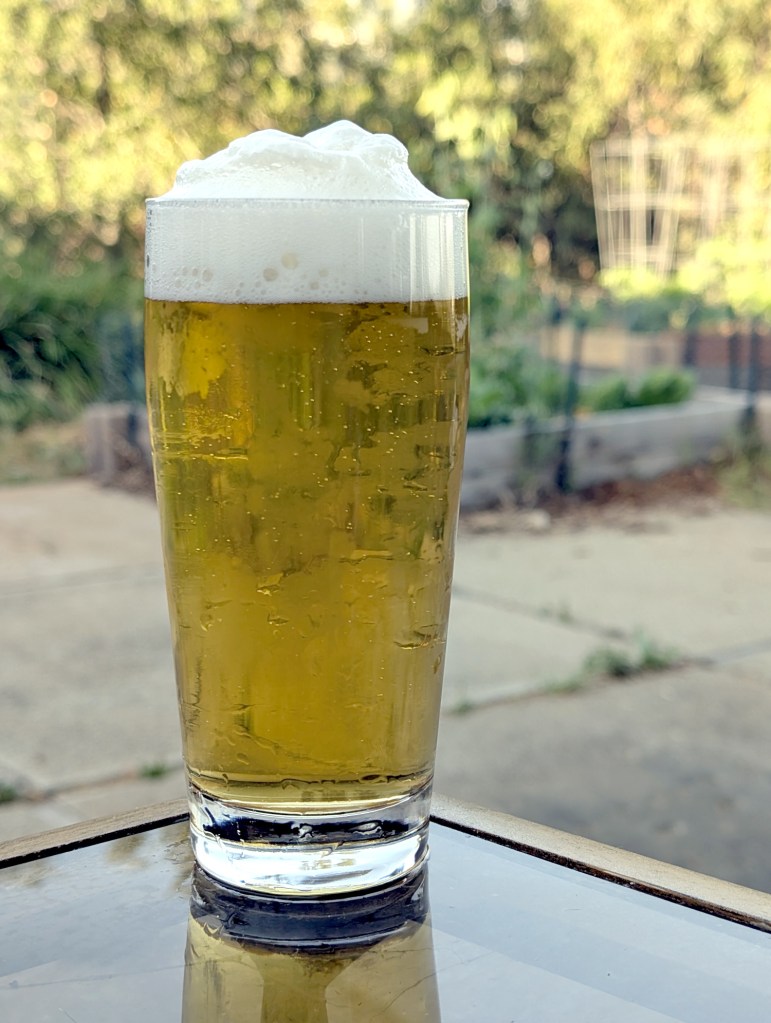
    • Pours with a tall and persistent white head that leaves gorgeous lacing. Brilliantly clear, light yellow beer.
  • Aroma
    • Light and clean honey (not oxidation) with a touch of fresh hay in the malt; a low level of spicy hop aroma; clean yeast character
  • Flavor
    • Moderately high level of bitterness, with a cracker and sweet maltiness. Definitely tilts bitter.
  • Mouthfeel
    • Medium carbonation, medium-light body, crisp and off-dry finish that lingers on the tongue.
  • Would I Brew This Again?
    • This is a superb pils and a great recipe overall. It’s maybe a touch on the bitter side for my tastes (hence the minor ding on score), but everything else is awesome. The honey quality to the malt aroma and flavor is really delightful! I might try a version with slightly lower bitterness and gravity, next time.
  • Overall
    • 9.5/10

Dunkel-Osteus 2025

Another year, another run at my Munich Dunkel recipe. This is my fourth time brewing this one, although the last instance was in 2021. The malt bill is exactly the same, but I swapped in Perle for Magnum and Munich Lager yeast (WLP860) for W34/70. The former change is one of convenience; the latter change is to accentuate the maltiness of the beer a touch. After my previous brews with WLP860 dry yeast, I’ve learned to accept that it’s a slow starter, and not worry!

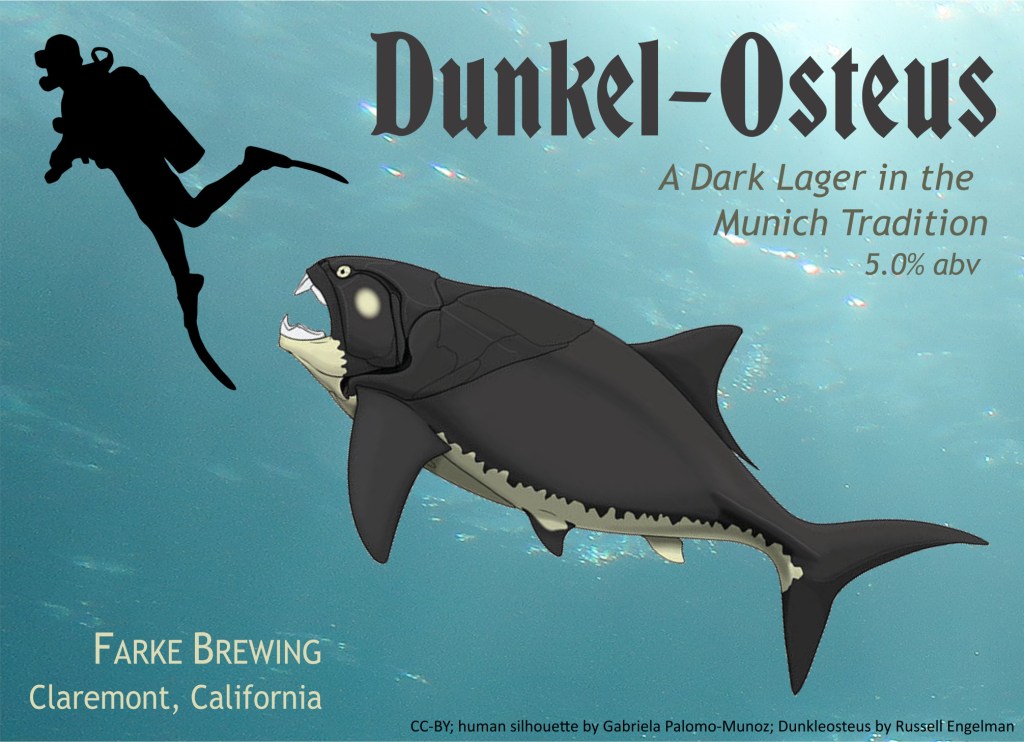
As a fun side project, I redesigned the logo for this batch (below), using a recent re-interpretation of the size of Dunkleosteus. I’m pretty pleased with how it turned out.

Human silhouette by Gabriela Palomo-Munoz; Dunkleosteus image by Russell Engelman. CC-BY 3.0.

Recipe Name

  • 10 lb. Munich II malt (Weyermann)
  • 0.5 lb. Carafa Special II malt (Weyermann)
  • 6 oz. melanoidin malt (Weyermann)
  • 1.1 oz. Perle hop pellets (6.3% alpha), 60 minute boil
  • 1 Kick carrageenan tablet, 5 minute boil
  • 2 pkg. Munich lager dry yeast (White Labs WLP860)

Target Parameters

  • 60 minute full volume mash at 152°, with mash-out at 168°
  • 1.050 o.g., 1.014 f.g., 4.7% abv, 25 IBU, 23 SRM
  • Claremont tap water
  • 5 gallon batch

Procedure

  • I heated 7.4 gallons of water to 158°, added a Campden tablet, and mashed in. I held the mash at 152° for 60 minutes, with recirculation, and then raised the temperature to 168° for a 10 minute mash-out.
  • Once the grains were removed, I had 6.5 gallons of runnings with a gravity of 1.045, for 71% mash efficiency.
  • I brought the runnings to a boil, addings hops and finings per the recipe.
  • After a 60 minute boil, I turned off the heat and chilled to 67° before transferring to the fermenter.
  • After chilling the beer down to 50°, I pitched the yeast.
  • I brewed the beer on 6 December 2025. Starting gravity was 1.052.
  • The fermentation chamber was held at 52°. Knowing that the dry WLP860 is a slow starter, I peeked into the fermenter and saw a small amount of krausen on 10 December 2025.
  • I moved the beer to ambient on 3 January 2026, and kegged it on 24 January 2026. I carbonated the beer with forced carbonation.
  • Final gravity was 1.014, for 5.0% abv.

Tasting

  • Appearance
    • Very clear, dark brown beer with deep garnet red highlights, pouring with a persistent light tan head.
  • Aroma
    • Rich bready malt aroma, with a medium level of chocolate character. No hop or yeast character to speak of – it’s all malt!
  • Flavor
    • Medium high maltiness, with a toasty breadcrust quality and a bit of chocolate. Medium bitterness, with a slightly spicy aspect. Clean yeast character.
  • Mouthfeel
    • Medium body, medium carbonation, smooth finish, slightly dry.
  • Would I Brew This Again?
    • This is such a highly drinkable recipe–probably one of my favorites. There’s not much else to say; it’s a good beer!
  • Overall
    • 10/10

Dimorphos Kellerbier 2025

Back in 2021, I made my first kellerbier; it was a great lager for the winter months and was worth rebrewing in one form or another. The 2025 version (consumed in the early days of 2026) is in the same ballpark as the 2021 version, but has a number of minor changes. The base malt percentages are very slightly tweaked, and I subbed in Carared for Mela malt. North Brewer, rather than Magnum, is the core bittering hop. Finally, I focused on whole hops and moved them to the very last 10 minutes of the boil, to amplify hop aroma and flavor.

Recipe Name

  • 5 lb. Vienna malt (Weyermann)
  • 4.25 lb. pilsner zero malt (Viking)
  • 1 lb 2 oz. Barke Munich malt (Weyermann)
  • 4 oz. Carared malt (Weyermann)
  • 2 oz. Carafa Special II malt (Weyermann)
  • 0.5 tsp. BrewTanB, added to mash
  • 1 oz. Northern Brewer hop pellets (6.1% alpha), 60 minute boil
  • 1.1 oz. Hallertauer whole hops (est. 3.0% alpha, South Dakota origin), 10 minute boil
  • 0.5 tsp. BrewTanB, 10 minute boil
  • 1 Kick Carrageenan tablet
  • 1.1 oz. Hallertauer whole hops (est. 3.0% alpha, South Dakota origin), 5 minute boil
  • 2 pkg. Diamond lager yeast (Lallemand)

Target Parameters

  • 1.049 o.g., 1.007 f.g., 5.5% abv, 29 IBU, 10 SRM
  • Full volume step mash with recirculation, held at 142° for 40 minutes, 156° for 40 minutes, and 10 minute mash-out at 168°
  • Claremont tap water

Procedure

  • Starting with 7.4 gallons of tap water, I added a Campden tablet and heated the water to 147°. Next, I mashed in with the grains and 3.7 mL of 88% lactic acid to adjust pH. I held the mash at 142° for 40 minutes before raising it to 156° for another 40 minutes. Finally, I mashed out at 168° for 10 minutes before removing the grains.
  • In total, I collected 6.5 gallons of runnings at a gravity of 1.044, for 71% mash efficiency.
  • After bringing the runnings to a boil, I added the hops and finings per the recipe, across 60 minutes of boiling time.
  • I chilled the wort to 67°, transferred to the fermenter, pitched the yeast, and then chilled down to 52° in the fermentation chamber.
  • I brewed this beer on 22 November 2025. It had a starting gravity of 1.052.
  • The beer fermented at 54° until 1 December 2025, when I moved the fermenter to ambient (~60°).
  • I kegged the beer on 23 December 2025. Final gravity was 1.016, with an abv of 4.7%.

Tasting

  • Appearance
    • Brilliantly clear, light copper beer, with a creamy and persistent ivory head
  • Aroma
    • Rich bread crust aroma at a medium level, with medium-low spicy hop note. Clean fermentation character.
  • Flavor
    • Malty rich flavor, with notes of bread and dark bread crust. Medium-high bitterness, with a slightly herbal hop character. Clean fermentation character.
  • Mouthfeel
    • Medium carbonation, medium body, off-dry finish.
  • Would I Brew This Again?
    • This is an enjoyable beer! I have no major comments or adjustments to suggest. If I make this again, I might go with a more characterful yeast; perhaps White Labs’ Munich Lager or something similar.
  • Overall
    • 8/10