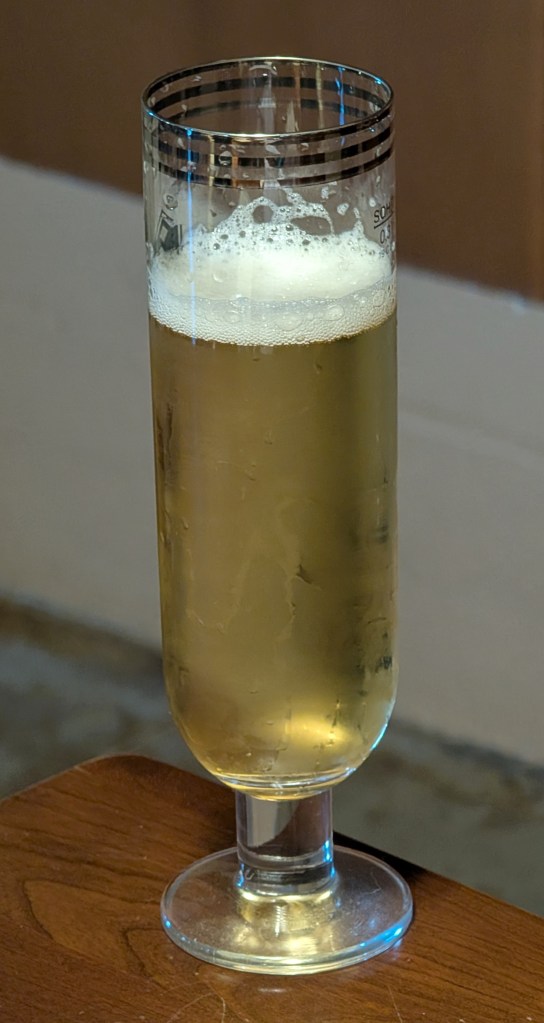
Sierra Nevada Pils: A Brief Review

I love a good German pils, and it’s no surprise that this has been one of my most-brewed styles. Many North American breweries are now doing versions of this classic, and a handful stand out. For what I’ve tasted to date, this includes pFriem Pilsner (for which I have brewed an homage on several occasions) and Slow Pour Pils from Bierstadt Lagerhaus (a brewery that is on my must-visit list any time I am in Denver, and which offers some of the most beautiful pours I have seen at any craft brewery). I can now add a third to this list: Sierra Nevada’s Pils.

First, a salute to the packaging and marketing folks at Sierra Nevada – I hadn’t intended to buy any beer when I was at the grocery store, but a package of the Pils caught my eye in the crowded cooler case. Anything by Sierra Nevada is generally worth a look. I was further intrigued when I saw it wasn’t the typical 12 or 16 oz. cans! Instead, I found an 8-can package of 8.4 oz. cans–although it’s ostensibly to match European-sized pours and keep the beer cold and crisp through the entire can, it really melds with my desire to have smaller serving sizes.

The marketing copy is great – “A smooth malt body with upfront sweetness, pleasant hop character, and hints of citrus peel create a soft, dry finish that’s refreshing sip after sip,” and “Aromas of citrus, tangerine, and a touch of sweet malt dance in the air thanks to the addition of Crystal Lupulin Hops.” This marketing fluff matches surprisingly well with what I actually taste–in the aroma, I also get a bit of fresh hay (in the good way, not the rotten barnyard way). It’s a smooth and drinkable lager, and not overly flinty or bitter, as some of the more aggressive versions can be.

Based on the website, the recipe seems quite simple–pilsner malt, lager yeast, with Saphir and Crystal Lupulin hops, to hit 4.7% abv and 25 IBU. I’ve done a little looking to investigate a clone-type recipe; Crystal Lupulin doesn’t seem to be readily available for homebrewers; Loral Cryo might be roughly in the ballpark, although not identical. To approximate the Sierra Nevada brew, I would aim for 100% of a good North American pilsner malt with a Hochhurz mash, use Saphir in the full length of the boil and perhaps at ~15 minutes, and then use a small dose of Loral Cryo in the last 5 minutes or for a brief whirlpool addition.

To wrap this up, Sierra Nevada Pils is a phenomenal example of a German pils, and well worth sampling if you can find it! What do you readers think?
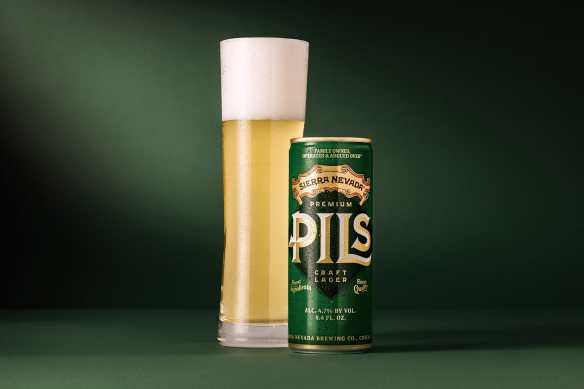
glass of light gold pilsner in a tall cylindrical glass, next to a cylindrical can, on a black background
Sierra Nevada’s promotional image of their beer (image from Sierra Nevada)

Super SMaSH Pils 2026

A good German pils is the perfect style for a SMaSH(ish) beer, and it has been over a year since I last had a pils on tap. For this round, I used Viking Pilsner Zero malt, and nearly the last bit of my Edelweiss hop blend stock. I decided to add a small dry hop in order to amp up the hop aroma. S-189 is back as the yeast; even though it’s not the first strain most people think of (relative to 34/70 and Diamond lager, for example), I really enjoy what it does.

Super SMaSH Pils 2026

  • 10 lb. Pilsner Zero malt (Viking)
  • 0.5 tsp. BrewTanB (mash)
  • 1.25 oz. Edelweiss hop pellets (5.8% alpha), 60 minute boil
  • 0.5 tsp. BrewTanB, 10 minute boil
  • 1 Kick Carrageenan tablet, 5 minute boil
  • 1.75 oz. Edelweiss hop pellets (5.8% alpha), 5 minute boil
  • 3 pkg. SafLager German lager yeast (Fermentis S-189)
  • 1 oz. Edelweiss hop pellets (5.8% alpha), dry hop

Target Parameters

  • 60 minute rest at 144°, 45 minute rest at 160°, 10 minute rest at 168°; full volume infusion mash
  • 1.047 o.g., 1.007 f.g., 5.3% abv, 34 IBU, 4 SRM
  • Water built from RO, to hit 63 ppm Ca, 11 ppm Mg, 123 ppm SO4, 52 ppm Cl, RA=-51
  • 5.25 gallon batch

Procedure

  • To build the water, I started with 7.3 gallons of RO water and added 4 g of gypsum, 3 g of calcium chloride, and 3 g of epsom salt. I heated this to 149° before adding the grains and 14 mL of 10% phosphoric acid for the pH adjustment.
  • I held the mash at 144° for 60 minutes, with recirculation, before ramping it up to 160° and holding it there for 45 minutes. Finally, I raised the mash to 168° and held it for 10 minutes, before removing the grains.
  • In total, I collected 6.6 gallons of runnings with a gravity of 1.041, for 73% mash efficiency.
  • I brought the kettle to a boil, adding hops and finings per the recipe. After 60 minutes, I turned off the heat and chilled to 66°, transferred to the fermenter (leaving some trub behind), and then chilled to 54° in the fermentation chamber before pitching the yeast.
  • I brewed this beer on 10 January 2026; starting gravity was 1.051.
  • The bulk of fermentation was completed at 52° (dropped from the initial pitch temperature); I removed the fermenter to ambient (~60°) on 20 January 2026, adding dry hops at the same time.
  • I cold crashed the beer on 1 February 2026, and kegged the beer with a closed transfer on 28 February 2026. At the time of kegging, the beer had a nice honey and hay character to the aroma, and a super crisp and drinkable flavor.
  • Final gravity was 1.009, for 5.5% abv.

Tasting

  • Appearance
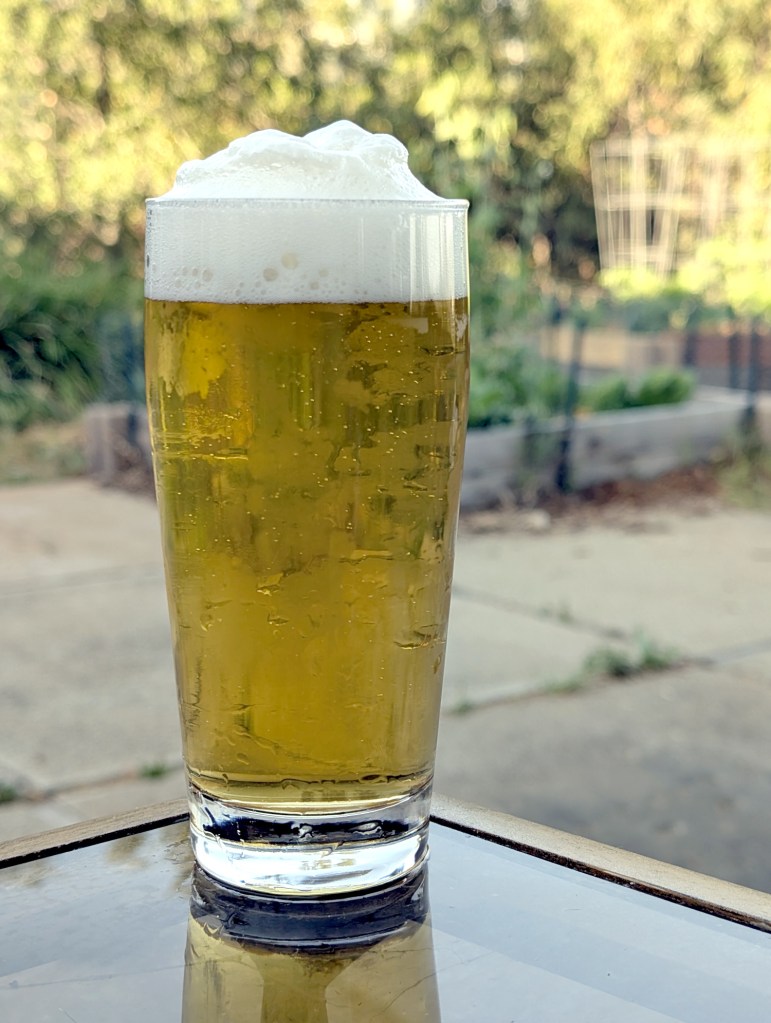
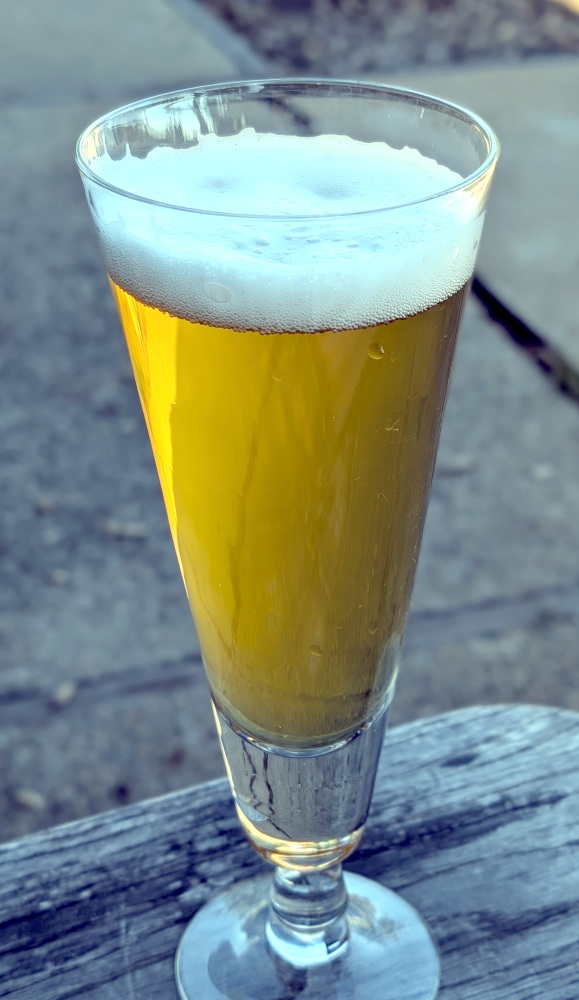
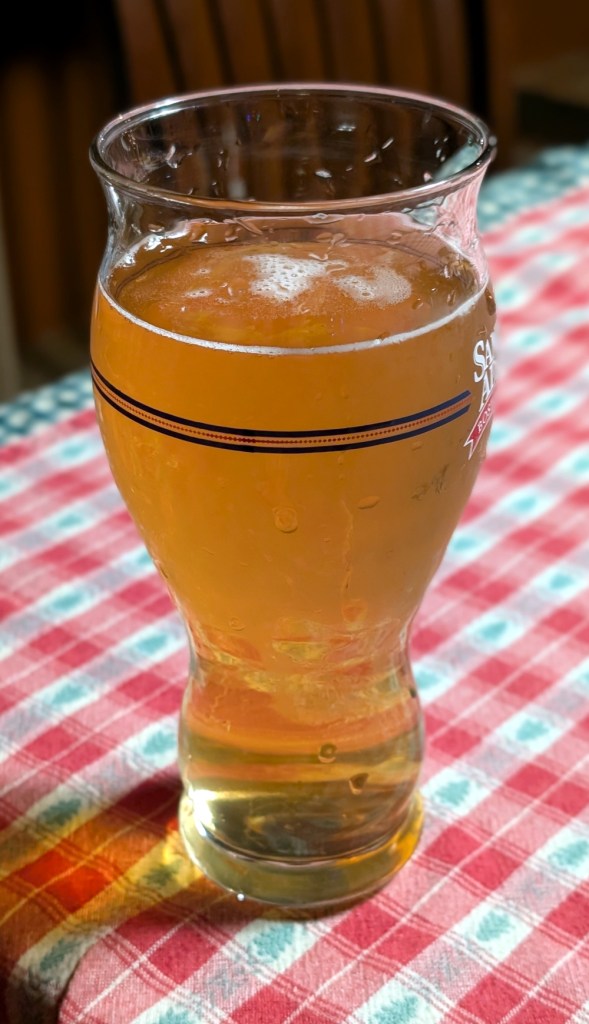
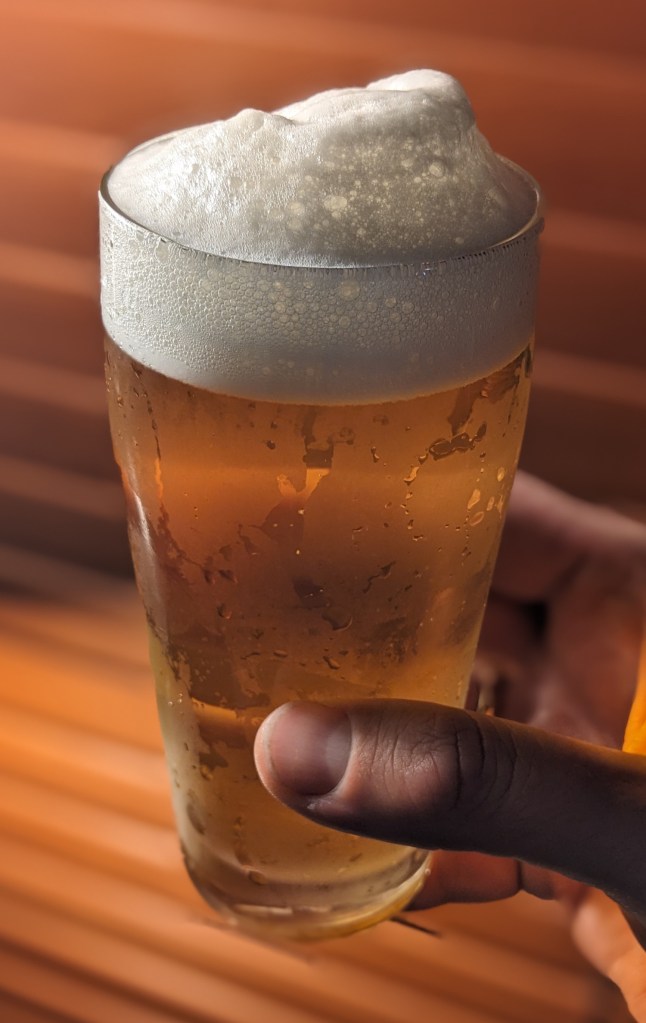
    • Pours with a tall and persistent white head that leaves gorgeous lacing. Brilliantly clear, light yellow beer.
  • Aroma
    • Light and clean honey (not oxidation) with a touch of fresh hay in the malt; a low level of spicy hop aroma; clean yeast character
  • Flavor
    • Moderately high level of bitterness, with a cracker and sweet maltiness. Definitely tilts bitter.
  • Mouthfeel
    • Medium carbonation, medium-light body, crisp and off-dry finish that lingers on the tongue.
  • Would I Brew This Again?
    • This is a superb pils and a great recipe overall. It’s maybe a touch on the bitter side for my tastes (hence the minor ding on score), but everything else is awesome. The honey quality to the malt aroma and flavor is really delightful! I might try a version with slightly lower bitterness and gravity, next time.
  • Overall
    • 9.5/10

Pfriem Pilsner 2024

I have done a version of this three times previously, usually with some minor variations for hops or yeast. This time, I decided to do the hop varieties and timings exactly as written (with adjustments for alpha acid), to follow the original Pfriem Pilsner clone recipe from Dave Carpenter’s Lager book. Without further ado, here’s what I did.

Pfriem Pilsner 2024

  • 9.75 lb. pilsner malt (Rahr)
  • 6 oz. Carafoam malt (Weyermann)
  • 0.5 tsp. BrewTanB, in mash
  • 0.75 oz. Perle hop pellets (6.3% alpha), 60 minute boil
  • 0.5 oz. Tettnang hop pellets (2.4% alpha), 60 minute boil
  • 0.5 oz. Tettnang hop pellets (2.4% alpha), 10 minute boil
  • 0.75 oz. Saphir hop pellets (2.3% alpha), 10 minute boil
  • 0.5 oz. Spalt Spalter hop pellets (4.3% alpha), 10 minute boil
  • 0.5 tsp. BrewTanB, 10 minute boil
  • 1 Whirlfloc tablet, 5 minute boil
  • 1.5 oz. Tettnang hop pellets (2.4% alpha), 10 minute whirlpool
  • 0.75 oz. Saphir hop pellets (2.3% alpha), 10 minute whirlpool
  • 0.5 oz. Spalt Spalter hop pellets (4.3% alpha), 10 minute whirlpool
  • 2 pkg. Diamond dry lager yeast (Lallemand)

Target Parameters

  • 1.046 s.g., 1.007 f.g., 5.1% abv, 4 SRM, 38 IBU
  • Full volume step mash, with 45 minutes at 142°, 45 minutes at 156°, and 10 minutes at 168°; 70 minute boil
  • Water built up from RO, to hit target parameters of 62 ppm Ca, 11 ppm Mg, 121 ppm SO4, and 51 ppm Cl, with RA=-50 ppm

Procedure

  • I built up my mash water from 7.5 gallons of RO water, with 3 g calcium chloride, 3 g epsom salt, and 4 g gypsum. Then, I heated it to 146° before adding the grains and holding at 142° for 45 minutes, with recirculation. Then, I raised the mash to 156° for 45 minutes and finished up at 168° for 10 minutes.
  • After the mash, I pulled the grains. I collected 6.8 gallons of runnings with a gravity of 1.041, for 74% mash efficiency.
  • I brought the runnings to a boil, boiling for 10 minutes before adding the first round of hops and proceeding with the rest of the recipe as written. In total, this was a 70 minute boil.
  • At the end of the boil, I turned off the heat, added the whirlpool hops, and whirlpooled for 10 minutes before continuing with the rest of the chill.
  • Once the beer was down to 72°, I transferred to the fermenter and chilled down to 46° in my fermentation chamber, before pitching the yeast.
  • I brewed this beer on 28 October 2024, and the starting gravity was 1.049.
  • The starting fermentation temperature was 48°, and I held it here until 3 November 2024, when I raised the temperature to 52°. On 17 November, I raised the temperature to 54°, and then to ambient (~62°) on 24 November 2024.
  • I kegged the beer on 25 November 2024. Final gravity was 1.009, for 5.3% abv.

Tasting

  • Appearance
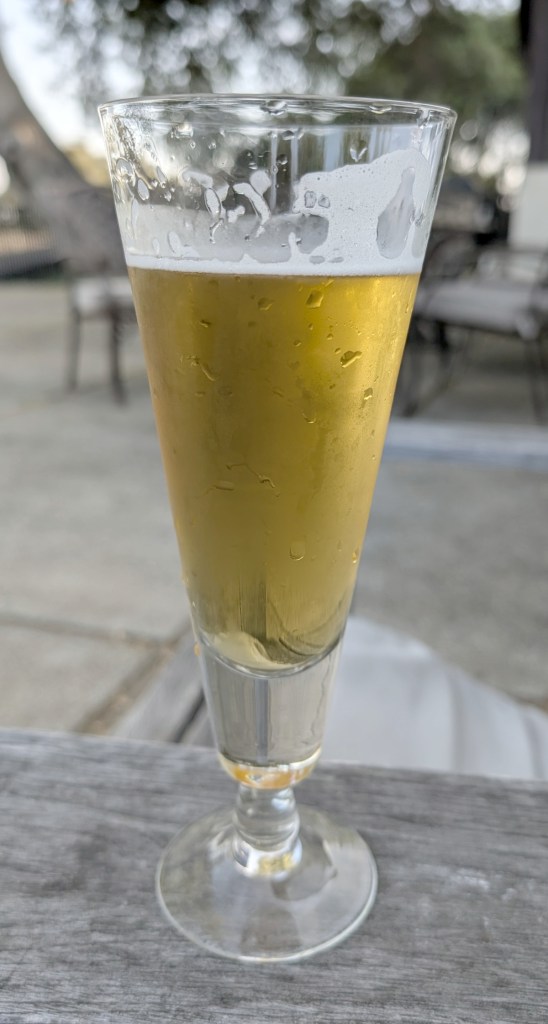
    • Clear, but short of brilliant; there is just a tiny touch of barely visible haze. It is a straw-colored beer that pours with a fine and persistent white head, which leaves some nice lacing on the glass.
  • Aroma
    • Light notes of cracker and honey in the malt, and a pleasant light floral hop aroma, with a touch of fresh hay. This beer smells awesome!
  • Flavor
    • Medium-high bitterness, grainy sweet malt character; hop flavor is lightly herbal. Minerally feel to finish out the flavor.
  • Mouthfeel
    • Medium carbonation, medium light body, dry finish. Minerally, but not unpleasantly so.
  • Would I Brew This Again?
    • I am feeling pretty good about this recipe overall. It is perhaps a touch more bitter than I prefer in all of my pils, but I like the hop aroma and malt character; the overall aroma is amazing! I wouldn’t mind a touch taller head (but that may be in the pour), and I also must ding the beer a bit for its clarity. I wonder if the persistent light haze is from the large dose of whirlpool hops? I could have used some finings, and might do that next time for a pilsner-type beer, because clarity is something important to me for these.
  • Overall
    • 8/10

Collaboration Brews – Citra Blonde Ale and Andy’s Pilsner

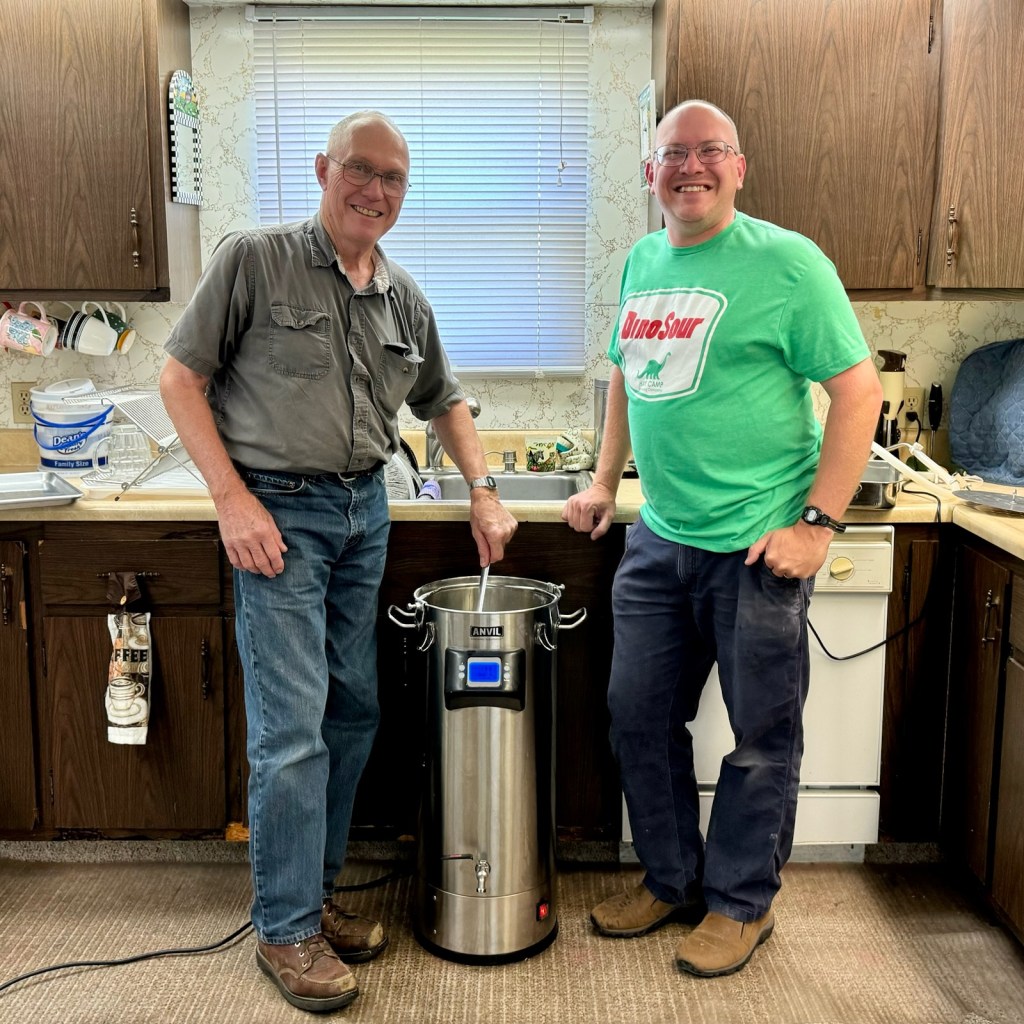
This past summer, I got to brew with my dad, who first got me thinking about brewing many years ago (I remember helping him way back as a teenager, even if I couldn’t enjoy the product at the time). He started as an extract brewer decades ago, took a break, got back into it, and then eventually switched to all-grain brewing (alongside wine making). Dad makes almost exclusively lagers, with his regular rotation including a Pre-Prohibition PIlsner and a Vienna Lager.

Dad currently brews on an Anvil Foundry 10.5 (gifted by us kids a few years back), doing a handful of batches annually to keep his cellar stocked. Awhile back, I shared my Citra Blonde Ale recipe with him, and he liked it enough to add a version into his repertoire. I also helped him put together a simple German pils, which is made with hops he grows himself.

We’ll usually brew something when I’m visiting, but I almost never get to sample the results due to the distance. So, it was extra nice to get a shipment with a bottle of each of the beers we made this summer. I was also able to get my hands on the notes (thanks, Dad!), which are presented in only lightly edited format.

Citra Blonde Ale

  • 5.25 lb. Briess Pilsen malt
  • 5 lb. Briess 2-row malt
  • 0.75 lb. Munich malt
  • 0.5 lb. Vienna malt
  • 0.5 lb. Carapils malt
  • 0.5 oz. Citra hops (boil 10 min.)
  • Whirlfloc tablet (boil 1- min.)
  • 0.5 oz. Citra hops (boil 5 min.)
  • 1.0 oz. Citra hops (steep for 5 min. after shutting the heat off).
  • BRY-97 American West Coast Ale (dry) and Safale US-05 (dry) yeast, 1 packet each

Procedure

Double-milled grains with 0.035 in. gap.  Steeped grains at 152 degrees.  Mashed out at 168 degrees for 10 minutes.  Boiled for 50 minutes.  Added 0.5 oz. Citra hops, Whirlfloc.  Boiled for 5 minutes.  Added 0.5 oz. Citra hops. Boiled for 5 minutes.  

Shut off heat.  Added 1.0 oz. Citra hops.  Steeped for 5 minutes.  Removed hops and cooled to 69 degrees.  S.G.=1.054.  Added American West Coast Ale yeast BRY-97 (best by 08-2024) and Safale US-05 (best by 01-24).

Fermented in the basement at approx. 65 degrees for 12 days.  S.G.=1.006.  Continued to ferment in the basement for 3 more weeks, then moved to 34-degree fridge.  Chilled for about 3 weeks, then filtered, force carbonated and bottled.

Brewed July 18, 2024.

Tasting

  • Appearance
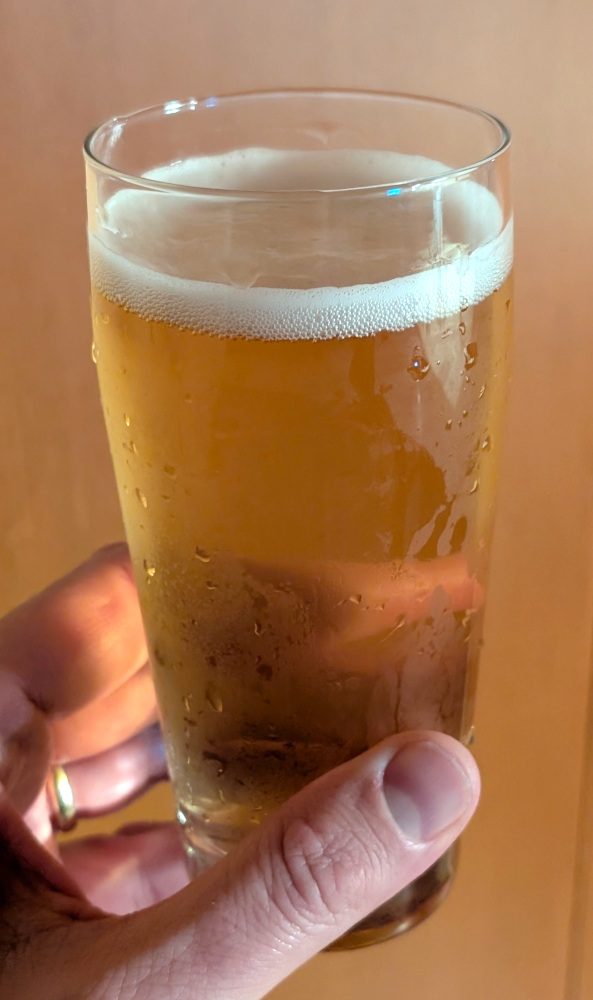
    • Medium yellow color, relatively clear. A touch of chill haze. Thin white head that subsides after pouring.
  • Aroma
    • A nice orange/ citrus hop aroma at a moderate level; moderate/low malty aroma
  • Flavor
    • Citrus hop flavor, low bitterness level, grainy malt character, no yeast to speak of. Nice round maltiness.
  • Mouthfeel
    • Medium-light body, moderate carbonation, smooth finish.
  • Would I Brew This Again?
    • This is a great recipe, even after a few months. Clean, drinkable, interesting but not overpowering.
  • Overall
    • 8/10

Andy’s Pilsner

This is a SMaSH-esque recipe, based on various SMaSH pilsners that I have made over the years. The closest equivalent would be Farke’s Best Pils.

  • 10 lb. Briess Pilsen malt
  • 1.0 oz. Saaz (2023) hops in boil (60 minute boil)
  • 1.0 oz. Mt. Hood (2023) hops (10 minute boil)
  • Whirlfloc tablet, 10 minute boil
  • 2 pkg. DIamond Lager dry yeast (Lallemand)

Procedure

Double-milled grain at 0.035 in. gap.  Steeped grain at 150 degrees for 50 minutes.  Mashed out at 168 degrees for 10 minutes.  Brought to a boil and added Saaz hops.  

Boiled for 60 minutes.  Added Whirlfloc tablet and Mt. Hood hops.  Boiled for 10 minutes.  Cooled to 70 degrees.  S.G.=1.051.  Added 1-1/2 qts. tap water.  S.G.=1.047.

Chilled to 52 degrees.  Added 2 packages of Diamond Lager yeast (BB 08-2024 & 09-2023).  Fermented for 10 days.  S.G.=1.006.  Racked to 5 gal. carboy.   Continued to ferment at 52 degrees for 12 days.  Warmed to 74 degrees for diacetyl rest for 4 days.  Chilled to 34 degrees for approximately one month, then cold filtered, force carbonated and bottled.

Brewed July 18, 2024.

Tasting

  • Appearance
    • Very clear, straw color, with thin white head that subsides fairly quickly.
  • Aroma
    • A bit of spicy hop at the forefront, and some grainy maltiness behind that. Very nice!
  • Flavor
    • Malty sweetness at the front, and medium level of spicy hopping. Clean fermentation profile.
  • Mouthfeel
    • Medium-low carbonation level; medium mouthfeel; smooth and slightly dry finish.
  • Would I Brew This Again?
    • This is a great recipe! Carbonation might help with giving a touch more head. Malt and hop levels are perfect. This is a nice pilsner.
  • Overall
    • 8/10

Super SMaSH Pils

It’s no secret that German Pils is one of my very favorite styles, and one that I finally feel like I’ve mastered. I brewed German pils recipes 18 times in the past seven years, with some batches turning out well, and others less well.

My latest iteration is a SMaSH-esque beer, testing out Rahr’s pilsner malt. I tend to favor European pilsner malts, but that is more through habit than actual comparison. Weyermann, Viking, and Best have all made semi-regular appearances. This past fall, I picked up a 55-lb. sack of Rahr pilsner at the local store, and I wanted to test it in a beer like this. For the hops, I focused on the Edelweiss hop blend from Hop Heaven. In the past, I have absolutely loved the product, and wanted to see what it could do here. Because Edelweiss is a blend, it’s important to note that this is a “SMaSH-esque” beer, rather than a true SMaSH. So, I named my recipe “Super SMaSH Pils”, as a nod to the blend and an homage to a well-known video game.

For yeast, I selected S-189. I’ve been doing lots with Diamond and Novalager lately, and they are truly great yeasts, but I wanted to expand my horizons a little bit. I had a good experience with S-189 in one previous batch, and thought I’d test it out again.

Super SMaSH Pils

  • 10.5 lb. pilsner malt (Rahr)
  • 0.5 tsp. BrewTanB (mash)
  • 1.25 oz. Edelweiss hop pellets (5.8% alpha), 60 minute boil
  • 0.75 oz. Edelweiss hop pellets (5.8% alpha), 10 minute boil
  • 0.5 tsp. BrewTanB, 10 minute boil
  • 1 Whirlfloc pellet, 5 minute boil
  • 1 oz. Edelweiss hop pellets (5.8% alpha), 5 minute boil
  • 2 pkg. SafLager German Lager (S-189)

Target Parameters

  • 1.048 s.g., 1.007 f.g., 5.3% abv, 37 IBU, 4 SRM
  • Full-volume infusion mash, held at 144° for 60 minutes, 160° for 45 minutes, and 168° for 10 minutes
  • Water built up from RO, to hit target parameters of 53 ppm Ca, 11 ppm Mg, 123 ppm SO4, and 52 ppm Cl, with RA=-51 ppm

Procedure

  • Starting with 7.25 gallons of RO water, I added 4 g gypsum, 3 g epsom salts, and 3 g calcium chloride, to hit my water target. I heated this water to 149° and added the grains along with 1.5 mL of 88% lactic acid. This hit a mash temperature of 144° for 60 minutes, with recirculation. Then, I raised the mash to 160° for 45 minutes, and finally to 168° for the final 10 minutes of the mash.
  • I pulled the grain basket, and collected 6.5 gallons of runnings at a gravity of 1.043, for 71% mash efficiency.
  • I brought the runnings to a boil, boiling for 60 minutes and adding hops and finings per the recipe. After the boil, I turned off the heat and chilled to 75° before transferring to the fermenter.
  • Starting gravity was 1.049, pretty close to my target. I chilled the wort further to 48° in the fermentation chamber, before pitching the yeast.
  • I brewed the beer on 29 October 2023, and fermented at 52°.
  • On 12 November 2023, I moved the beer to ambient (~62°).
  • I kegged the beer on 29 November 2023, with a closed transfer.
  • Final gravity was 1.011, which works out to 5.0% abv.

Tasting

  • Appearance
    • Brilliantly clear, straw yellow beer that pours with a dense and persistent, creamy white head.
  • Aroma
    • Clean, lightly floral, and slightly spicy aroma. Very pleasant! Malty sweet character, too.
  • Flavor
    • Clean, lightly floral hop flavor, with moderately high yet smooth bitterness. Light malty sweet flavor, with a nice balance against the hops. No yeast character detectable — it is very clean and crisp!
  • Mouthfeel
    • Medium-light body, moderate carbonation; nice and smooth finish.
  • Would I brew this again?
    • This is a near-perfect pils! It hits every mark of the classic style and is just plain enjoyable. I am incredibly pleased, and would absolutely brew it again.
  • Overall
    • 10/10