Greg’s Red Lager

My dad got me started in homebrewing (and he has been brewing for over 50 years!), so it’s always fun to brew together when I’m back home. Planning for a recent session, he mentioned that he would like to make a red lager following a recipe he had previously made. His old version, though, was extract, and he now brews all-grain, so a conversion was in order.

The original version, of unknown origin, called for the following:

  • Red Lager (extract version)
    • 8oz. dark crystal malt (75-85L)
    • 8oz. med. crystal malt (50-60L)
    • 5.5lb. DME
    • 0.75 oz. Cascade, 45 minute boil
    • 0.25 oz. Cascade, 15 minute boil
    • Lager Yeast
  • Notes
    • “I think it was the lightest DME I could get at the time. Starting gravity was 1.042. I think I would like the S.G. to be about 1.050.”
    • Hops are whole, homegrown Cascade hops – a past test showed around 5.5% alpha

The conversion was pretty straightforward. I subbed in pilsner malt for the DME, adjusting to hit the target gravity, and used crystal 60 and crystal 80. According to BeerSmith, the color was a little lighter than a “red” lager, so I added a tiny bit of roasted barley for reddish color adjustment.

Although Dad and I planned to brew a five gallon batch, I wanted to test it with a 2.5 gallon batch first.

Greg’s Red Lager (2.5 gallon batch)

  • 5 lb. Synergy Select Pilsen malt (Briess)
  • 4 oz. 80L caramel malt (Briess)
  • 4 oz. 80L crystal malt (Great Western)
  • 0.5 oz. roasted barley (Crisp)
  • 0.35 oz. Cascade whole hops (est. 5.5% alpha), 60 minute boil
  • 0.25 oz. Cascade whole hops (est. 5.5% alpha), 10 minute boil
  • 0.25 tsp. BrewTanB, 10 minute boil
  • 0.5 Kick carrageenan tablet
  • 1 pkg. Diamond lager yeast (Lallemand)

Target Parameters

  • 60 minute infusion mash, 149°, full volume mash
  • 1.051 o.g., 1.007 f.g., 5.8% abv, 16 IBU, 13 SRM
  • Claremont tap water; 110 ppm Ca, 8 ppm Mg, 97 ppm Na, 75 ppm sulfate, 110 ppm Cl, 132 ppm bicarbonate
  • 2.5 gallon batch

Procedure

  • I heated 3.9 gallons of water to .154°, adding a Campden tablet to remove chloramines. I then added the grains and 2 mL of 88% lactic acid to adjust pH, and then held it at 149° while recirculating for 60 minutes. Next, I raised the temperature to 168° for 10 minutes before pulling the grains.
  • In total, I collected 3.5 gallons of runnings with a gravity of 1.043, for 72% mash efficiency.
  • I brought the runnings to a boil, adding hops and finings per the recipe. After 60 minutes, I turned off the heat and chilled to 85° before transferring to the fermenter, chilled to 68°, and then pitched the yeast. I continued to chill down to 53° in the fermentation chamber.
  • Starting gravity was 1.053. I brewed this beer on 8 May 2026.
  • I raised the beer to 54° on 10 May 2026, and then to ambient on 23 May 2026.
  • I kegged the beer on 27 May 2026, using an open transfer and adding 3 oz. of corn sugar to carbonate in the keg.
  • Final gravity was 1.011, for 5.5% abv.
  • I found the pressure to be 32 psi at 70° on 5 June 2026 – perfect.
  • At this point, I transferred the beer to the conditioning chamber, in order to lager.

Tasting

  • Appearance
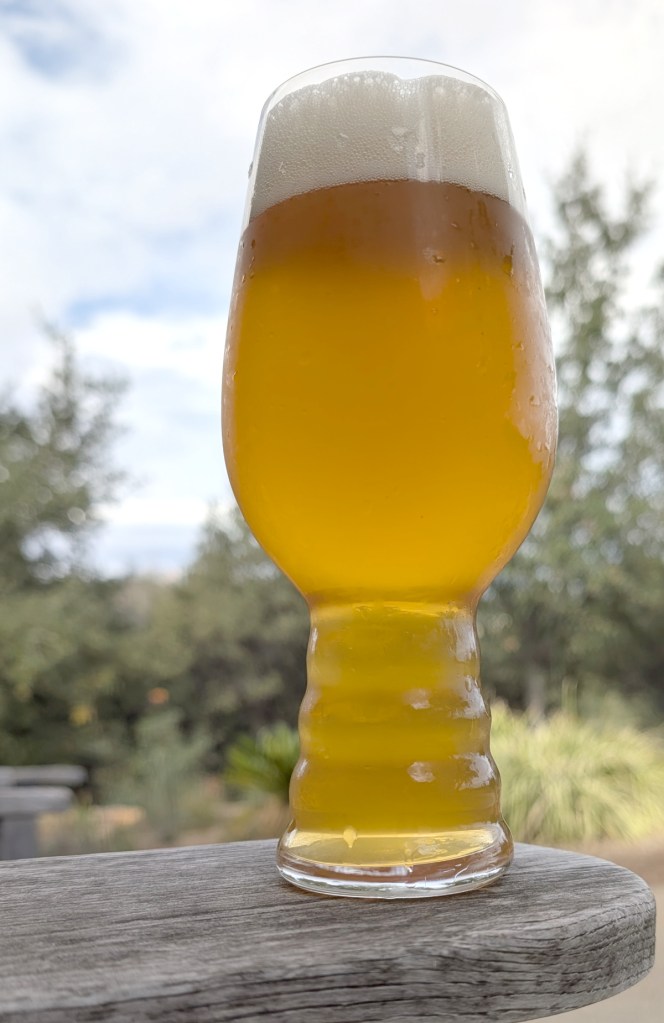
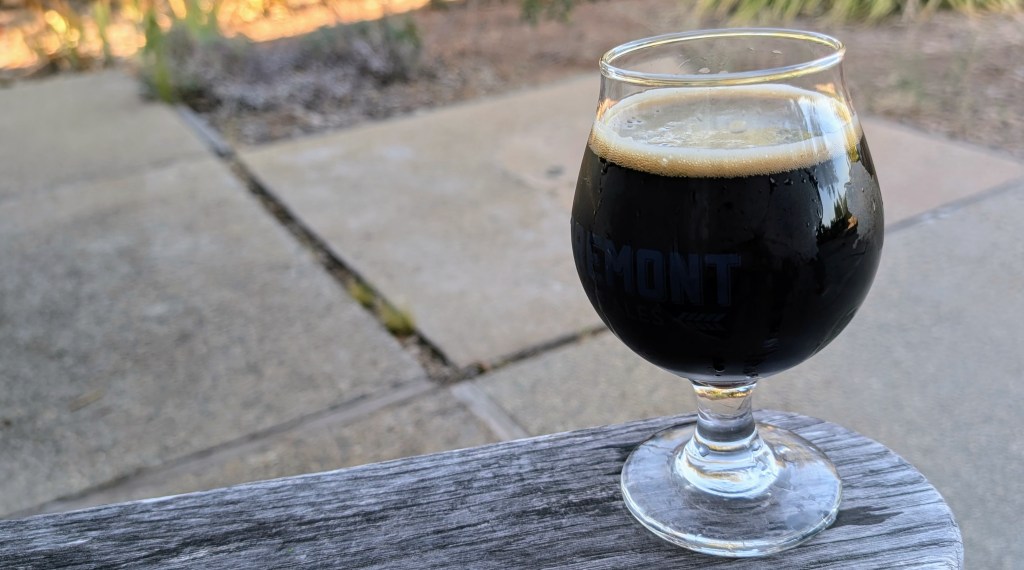
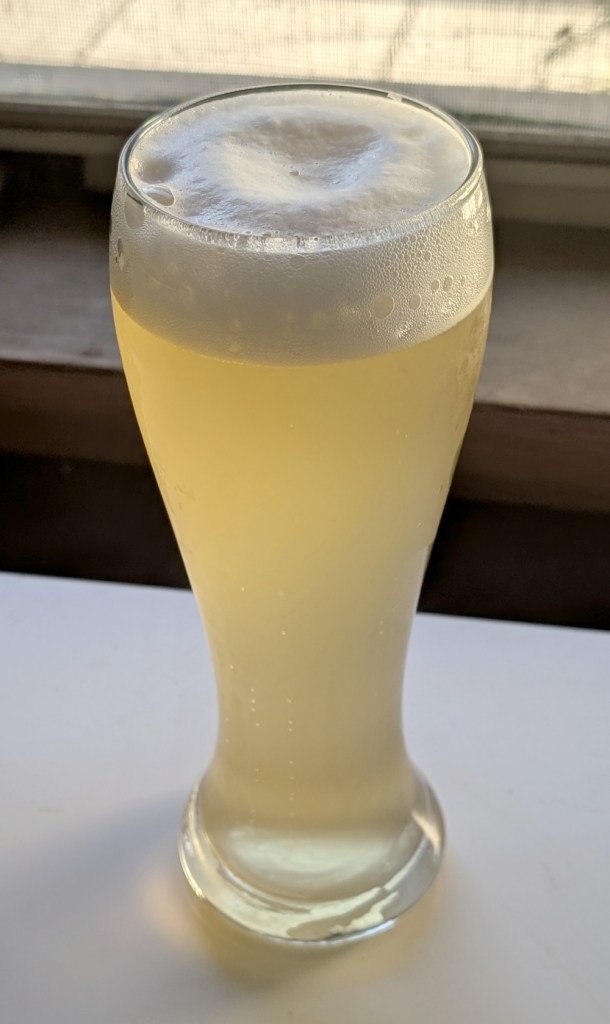
    • Brilliantly clear, reddish amber beer, with a modest, reasonably persistent ivory-colored head.
  • Aroma
    • Caramel malty aroma at a medium-low level; no hop or yeast character to speak of.
  • Flavor
    • Light caramel flavor; dried fruit at a very slight level. Medium level of bitterness.
  • Mouthfeel
    • Medium-light bodied, moderate carbonation, off-dry finish.
  • Would I Brew This Again?
    • This was fun to try as an exercise, and I think it captured the American craft red lager experience of “microbreweries” and homebrewers circa 1996. It’s not my cup of tea as a beer overall; I think a traditional Vienna lager hits some of the same notes but with more drinkability. Even so, this recipe was worth the experience. And Dad enjoyed it, which was the main goal! If I were to do it again for myself, I’d probably dial back the crystal malts by about 50 percent, to lighten up the mouthfeel and flavor.
  • Overall
    • 6/10

Artemis Amber Ale

I frequently state that I love brewing an “old-fashioned” American amber ale, because they’re so hard to find in the wild. Lo and behold, I recently discovered an exceptional example from Highpoint Brewing (San Dimas, California) in their “Uncle’s Red Ale.” Although labeled as an American red ale, I would call it an American amber for BJCP purposes. The beer (sampled from a can) had a nice malty backbone, American “C” hops, and some notes of dark crystal malt (e.g., crystal 120).

Based on my tasting of the commercial example, I wanted to create a hombrewed homage. It needed a good chewy malt backbone, so I split 50/50 on Munich and Maris Otter malts for the base. The crystal malts needed to be on the more carmel, toffee, and roast side, so I split those 50/50 with crystal 80 and crystal 120. To amp up the “C” hop character, I went straight Centennial, with a modest dry hop addition to the fermenter. Yeast was just the basic BRY-97.

I brewed this around the time of the Artemis 2 mission, hence the name. I was inspired to draft a label, using a photo shot by the astronauts on the far side of the moon. Aside from the photo, everything else was created in Inkscape. Ad astra per zymurgiam!

A circular graphic, rimmed by a gold circle. At the bottom, a moonscape from a distance forms a half-visible globe. Text at top in large gold letters says, "Artemis Amber Ale." Below that is a large graphic of a hop cone, floating over the surface of the moon. Text below the hop cone says, "Ad astra per zymurgiam." At the very bottom, text says, "Farke Brewing, Claremont, California"

Artemis Amber Ale

  • 3 lb. Barke Munich malt (Weyermann)
  • 3 lb. Maris Otter pale ale malt (Thomas Fawcett)
  • 0.25 lb. 80L caramel malt (Briess)
  • 0.25 lb. 120L crystal malt (Great Western)
  • 0.3 tsp. BrewTanB, added to mash
  • 0.5 oz. Centennial hop pellets (8.1% alpha), 60 minute boil
  • 0.5 oz. Centennial hop pellets (8.1% alpha), 10 minute boil
  • 0.3 tsp. BrewTanB, 10 minute boil
  • 1 Kick Carrageenan tablet, 5 minute boil
  • 1 pkg. BR-97 American West Coast Ale yeast (Lallemand)
  • 0.5 oz. Centennial hop pellets (8.1% alpha), dry hop in fermenter

Target Parameters

  • 60 minute infusion mash, 152°, full volume mash
  • 1.049 o.g., 1.008 f.g., 5.3% abv, 34 IBU, 14 SRM
  • Claremont tap water, adjusted to .110 ppm Ca, 20 ppm Mg, 97 ppm Na, 121 ppm SO4, 110 ppm Cl, 132 ppm bicarbonate
  • 3 gallon batch

Procedure

  • I took 4.5 gallons of tap water, added a Campden tablet, and added 2 g of epsom salt, while heating to the strike temperature of 157°. I mashed in the grains along with 0.3 tsp. of BrewTanB, and held the mash at 152° for 60 minutes while recirculating. I also added 1 tbs. of 10% phosphoric acid to the mash, to adjust pH.
  • Next, I raised the mash temperature to 168°, held it there for 10 minutes, and then pulled the grains.
  • In total, I collected 4 gallons of runnings with a gravity of 1.042, for 71% mash efficiency.
  • I brought the kettle to a boil, adding hops and finings per the recipe. I boiled for 60 minutes, before turning off the heat and chilling the wort down to 71°. I recently bought the SwirlyArm for my Foundry, which is used to whirlpool in the kettle and improve chilling efficiency; I quite like it.
  • I transferred the wort to the fermenter and pitched the yeast. The fermentation chamber was set at 68°.
  • I brewed the beer on 4 April 2026. Starting gravity was 1.050.
  • On 9 April 2026, I pulled the beer to ambient. It had overflowed through the airlock at some point, so I replaced the airlock. Ambient is ~65°.
  • I added hops on 19 April 2026, and then cold crashed on 20 April 2026.
  • I kegged the beer on 4 May 2026, using 1.8 oz. of corn sugar (the quantity calculated for bottling, not a keg–I’ve had low carbonation on my kegs, so wanted to increase the sugar volume). When I measured the pressure on 15 May 2026, it was at 17 psi, around 2 volumes for the temperature. I cold crashed and finished carbonation with forced CO2.
  • Final gravity was 1.012, for 5.1% abv.

Tasting

  • Appearance
    • Deep copper amber color; slightly hazy; pours with a persistent off-white head.
  • Aroma
    • Amazing! Citrus and pine hop aroma at a medium level. Deep caramel malt aroma at a medium level.
  • Flavor
    • A bitter beer, with a bracing resinous bitterness at the forefront. Moderate caramel and a low level of toffee in the malt. Fermenation profile pretty clean, although I sometimes pick up a bit of fruitiness that might be either from the malt or the yeast.
  • Mouthfeel
    • Medium body, medium carbonation, dry finish.
  • Would I Brew This Again?
    • Yes! This is a great beer; perhaps a touch too bitter, and it needs a little more time to clear the haze (for my preferences). The Centennial and caramel malt combo just works! This beer would be okay with other “C” hops, but because Centennial is so perfect for it I’m hesitant to change that in future batches.
  • Overall
    • 8/10

Rye Saison

I’ve been enjoying Belgian beers with an increased frequency, and saison has been a fun style to try within that family. This recipe was crafted to bring the simplicity of pilsner malt alongside a bit of Munich for character and some flaked rye to add a rustic quality. Lallemand’s Belle Saison, with an open fermentation, helped bring the yeast character. As is typical for these kinds of brews, I’m doing a small batch of ~3 gallons.

Rye Saison

  • 5 lb. Synergy Select Pilsen malt (Briess)
  • 1 lb. Barke Munich malt (Weyermann)
  • 1 lb. flaked rye
  • 0.25 tsp. BrewTanB, added to mash
  • 0.6 oz. Perle hop pellets (6.3% alpha), 60 minute boil
  • 0.25 tsp. BrewTanB, 10 minute boil
  • 1 pkg. LalBrew Belle Saison dry yeast

Target Parameters

  • 75 minute infusion mash, 148°, full volume mash
  • 1.053 o.g., 1.002 f.g., 6.8% abv, 23 IBU, 5 SRM
  • Water built from RO and Claremont tap water, with mineral additions to hit 67 ppm Ca, 15 ppm Mg, 40 ppm Na, 101 ppm SO4, 53 ppm Cl, 59 ppm bicarbonate.
  • 3 gallon batch

Procedure

  • I prepared my water with 2.5 gallons of RO and 2 gallons of tap water, along with a Campden tablet, 2 gram epsom salts, and 1 gram of gypsum. I heated this water to 154° before adding the BrewTanB, 5 mL of 88% lactic acid (probably too much – oops! I had it set for the MPH and not BW model in BeerSmith), adding the grains and holding at 148° with recirculation for 75 minutes. Then, I heated the mash to 168° and held for 10 minutes before removing the grains.
  • I collected 3.96 gallons of runnings with a gravity 1.046, for 70% mash efficiency. This is better than I expected!
  • I heated the runnings to a boil, boiling for 60 minutes before turning off the heat and chilling to 75°. I transferred the wort to a fermenter and pitched the yeast. Because I wanted an open fermentation, I put foil over the out port of the fermenter.
  • I brewed this beer on 29 March 2026; starting gravity was 1.057, a bit higher than calculated (but that’s OK!).
  • The fermentation proceeded at ambient; it was down to 72° by 30 March 2026, with abundant krausen. The fermenter was at 70° by 31 March 2026, so I put it next to a heating pad in order to warm the fermenter. This brought it up to 80° by the evening of 1 April 2026.
  • The fermenter was holding at 74° by 4 April 2026; krausen had largely subsided at that point. I took the foil off and replaced it with a blowoff tube.
  • I kegged the beer on 20 April 2026, transferring into a small keg and adding 3.25 oz. of corn sugar dissolved in ~1 cup of water.
  • Final gravity was 1.001, for 7.5% abv.
  • Tracking keg pressure, the beer was at 18 psi on 4 May 2026, well under the set point for saison-level carbonation. I moved the beer to the conditioning chamber and topped it off with CO2.

Tasting

  • Appearance
    • Deep gold beer with an orange tinge; slight haze, pouring with a fluffy white and reasonably persistent head.
  • Aroma
    • Medium-high yeast aroma, with fresh pomme fruit quality, a bit of white pepper also. Baked bread malt character at a medium-low level. Not prominent on hops.
  • Flavor
    • A light malty-sweet perception, and a hint of tartness; a slight bit of rye “richness” and graininess. Medium level of clean bitterness, with a slightly herbal character. Red apple and pear at a moderate level in the yeast.
  • Mouthfeel
    • Dry finish, high carbonation that gives a “fluffy” feeling on the tongue. Medium-light body.
  • Would I Brew This Again?
    • This is a great saison! Interestingly, it doesn’t taste bone-dry; the rye must round it out, along with the fruity qualities of the yeast. I might try a lower mineral water to see if it dries out the perception in the next batch.
  • Overall
    • 9/10

Snowdrop Kölsch 2026

This is one of my most frequently brewed recipes, now in its fifth iteration. I love the kölsch style, especially my “traditional” version that eschews wheat and leans in to an all-barley grain bill. The 2026 brew represents a changing of the guard, with the Köln yeast no longer available from Lallemand, and the Edelweiss hop blend now into retirement. I truly love this recipe, and will have to reformulate a little bit for the next round. I don’t care for K-97 in this style, so I’ll probably be back to liquid yeast in my German ales.

The brew and fermentations were delightfully uneventful for this round. My only minor hiccup was realizing that my draft lines were badly in need of a clean, which greatly improved the taste on the final product. Lesson learned!

Recipe Name

  • 9.5 lb. Synergy Select Pilsen Malt (Briess)
  • 0.5 lb. Barke Munich malt
  • 0.5 tsp. BrewTanB, added to mash
  • 1.1 oz. Edelweiss hop blend pellets (5.8% alpha), 60 minute boil
  • 0.5 tsp. BrewTanB, 10 minute boil
  • 1 Whirlfloc tablet, 5 minute boil
  • 2 pkg. Köln Kölsch style ale yeast (Lallemand)
  • 0.9 oz. Edelweiss hop pellets (5.8% alpha), dry hop in primary

Target Parameters

  • 60 minute infusion mash, 152°, full volume mash
  • 1.046 o.g., 1.010 f.g., 4.7% abv, 24 IBU, 4 SRM
  • Water built from RO, to hit 50 ppm Ca, 5 ppm Mg, 6 ppm Na, 54 ppm SO4, 72 ppm Cl
  • 5.25 gallon batch

Procedure

  • I built my water from 7.25 gallons of distilled water, with 3.6 g of CaCl, 1.7 g gypsum, 1.4 g epsom salt, and 0.4 g kosher salt, to hit the estimated water parameters.
  • I heated the strike water to 157°, added the grains along with 1 tbs. 10% phosrphoric acid as well as the BrewTanB, and then held at 152° for 60 minutes with recirculation.
  • After 60 minutes, I heated the mash to 168°, held it there for 10 minutes, and then removed the grains.
  • In total, I collected 6.6 gallons of runnings with a gravity of 1.043, for 75% mash efficiency.
  • I heated the runnings to a boil, adding hops and finings per the recipe. After 60 minutes, I turned off the heat and chilled to 75° before transferring to the fermenter. Then, I put the fermenter into the fermentation chamber and chilled down to 60° before pitching the yeast.
  • Starting gravity was 1.049. I brewed this beer on 1 March 2026.
  • I fermented at 64°, and pulled the beer to ambient on 10 March 2026. I cold crashed on 13 March 2026, adding the dry hops at that time.
  • I kegged the beer on 22 March 2026, using closed transfer. I forgot that there were hops in the fermenter, so the dip tube clogged–I used a puff of CO2 to clear things out before resuming the transfer.
  • Final gravity was 1.010, for 5.2% abv.
  • I added ~2 oz. BioFine Clear on 27 March 2026.

Tasting

  • Appearance
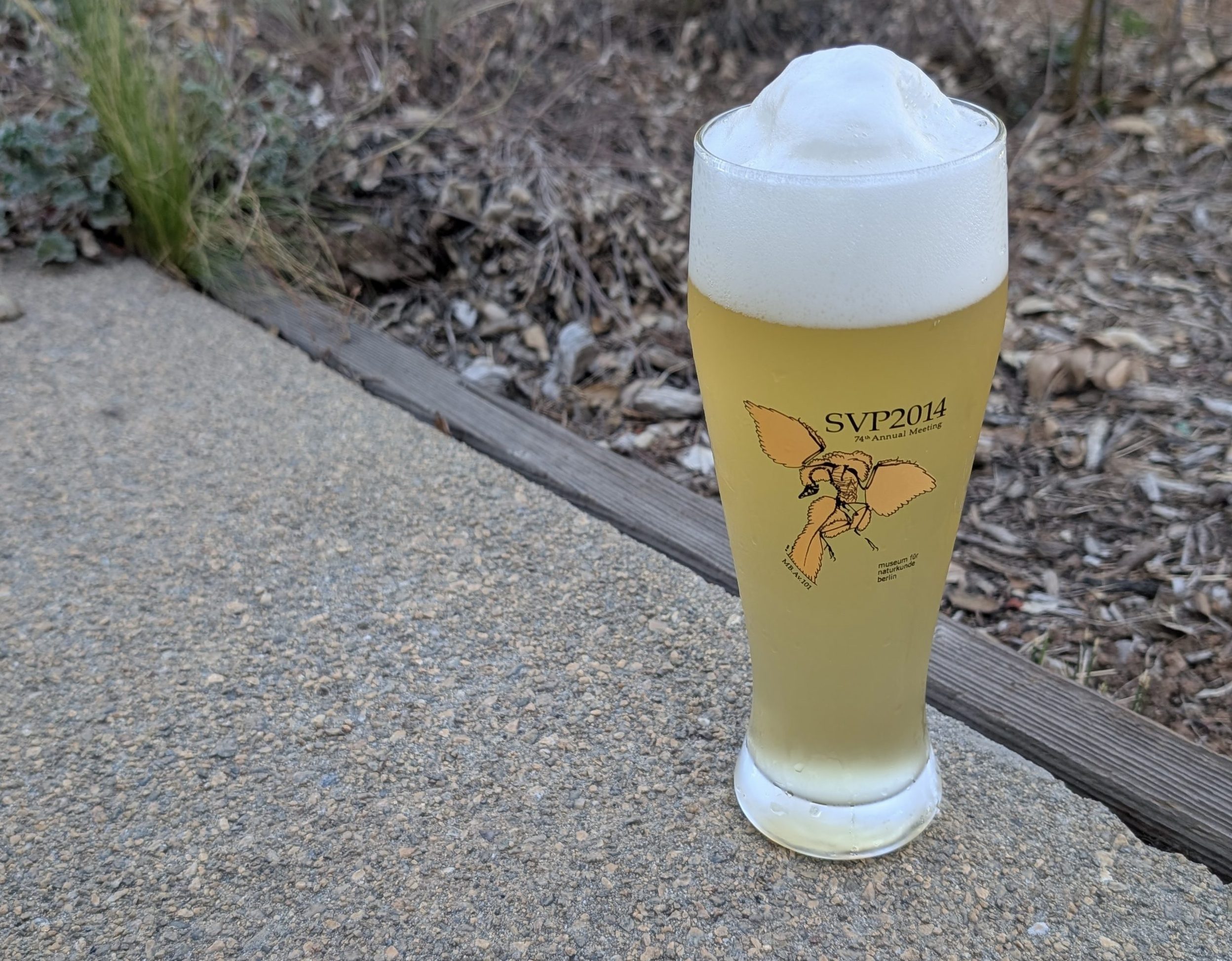
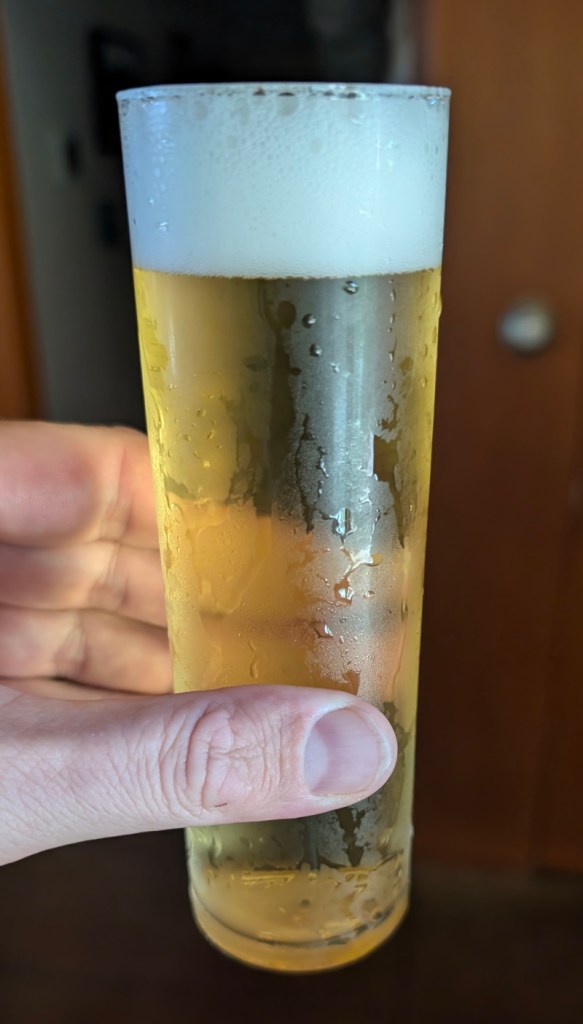
    • Straw yellow color, brilliantly clear, with a low and persistent white head. It took awhile to clarify, but WOW! This is such a pretty beer.
  • Aroma
    • Low level of fruity aroma, with a ripe apple and pear character. Very low level of sweet malt aroma.
  • Flavor
    • Medium-low level of grainy maltiness, medium bitterness, medium low fruity, pear-like yeast flavor.
  • Mouthfeel
    • Medium body, moderate level of carbonation, dry finish.
  • Would I Brew This Again?
    • This is a perfect recipe! The dry hop doesn’t come through, but that’s OK. The yeast character is quite nice, as is the malt bill. I’ll need to adjust yeast and hops for the next batch, but the overall concept is excellent for a kölsch. I could probably notch the bitterness back a little; I go back and forth on whether or not it’s too much or perfect.
  • Overall
    • 10/10

Catharina Sour

Image by Bigul Malayi, licensed under CC-CC0 1.0

The Southern California Homebrewing Festival is coming up! As usual, I can’t make it due to a work event, but I am sending a keg with the Horse Thieves. The “bragging rights” competition this year is tiki-/island-themed beer, so anything that it is tropical/tiki is fair game. Charles, one of our club members and owner of Pacific Brewing Supplies, used an open source machine learning build (“AI”) to analyze a whole ton of recipes and come up with some ideas for our club. One of them was a Catharina Sour, which intrigued me enough to brew it!

Part of the appeal for me was that this is a style I’ve never made previously. Originating in Brazil, the BJCP describes it as “a refreshing fruited sour wheat beer with a vibrant fruit character and a clean lactic acidity.” It is essentially a bright, highly fruited Berliner weisse.

The recipe from Charles was pretty straight-forward, and I made only the most minimal modifications for my equipment and ingredient availability. I kettle soured with Lallemand’s Wildbrew Sour Pitch, and used US-05 (with its famous peachy notes) to provide a subtle fruitiness to enhance the tropical fruit. I chose Amoretti Craft Puree for the base fruit additions, having had good success with it in some batches a few years back. At the suggestion of the recipe, I also used the TrueFruit product (essentially granulated fruit concentrate) to brighten things up in the keg.

Catharina Sour

  • 5 lb. Synergy Select Pilsen Malt (Briess)
  • 4 lb. white wheat malt
  • 0.5 tsp. BrewTanB, added to mash
  • 1 pkg. Wildbrew Sour Pitch (Lallemand), for kettle souring
  • 1.1 oz. Hallertauer whole hops (3.0% estimated alpha), from South Dakota
  • 0.5 tsp. BrewTanB, 10 minute boil
  • 0.5 tsp. WLN1000 yeast nutrient (White Labs)
  • 1 pkg. US-05 Safale American ale yeast (Fermentis)
  • 8 oz. (by weight) mango Amoretti Craft Puree, added to primary
  • 8 oz. (by weight) passionfruit Amoretti Craft Puree, added to primary
  • 1 oz. (by weight) TrueFruit passionfruit, added to keg
  • 0.67 oz. (by weight) TrueFruit mango, added to keg
  • 0.67 oz. (by weight) TrueLime, added to keg

Target Parameters

  • 60 minute infusion mash, 152°, full volume mash
  • 1.044 o.g., 1.009 f.g., 4.5% abv, 4 IBU, 3 SRM
  • Blend of neutralized tap water and RO water to hit 86 ppm Ca, 5 ppm Mg, 64 pm Na, 36 ppn SO4, 86 ppm Cl, 7 ppm bicarbonate, RA=-58.
  • 5.25 gallon batch

Procedure

  • I added 3.9 mL of 88% lactic acid to 5.5 gallons of tap water to remove the bicarbonates, and then added 2.5 gallons of RO water to further reduce the mineral content.
  • I heated the strike water to 157°, added the BrewTanB and grains, and then recirculated at 152° for 60 minutes. Next, I raised the temperature to 168° for a 10 minute mashout.
  • After pulling the grains at the end of the mash, I had 7.1 gallons of runnings with a gravity of 1.035, for 74% mash efficiency. I boiled the wort (without hops) for 5 minutes and then chilled it to 95° before adding 25 mL of 88% lactic acid to adjust the pH of the wort to ~4.2.
  • Before pitching the sour culture, I rehydrated it with 5 g of DME in 100 g of water. My previous experience with dry lacto cultures is that they can clump up, so rehydration seemed wise. Once this was done, I pitched the culture.
  • I did the inital brew on 8 March 2026.
  • Within my Foundry, I held the temperature at 100° for 48 hours, until it hit what tasted like a reasonable level of acidity.
  • I boiled the wort for 60 minutes, adding hops and BrewTanB per the recipe. Then, I chilled the wort down to 70° before pitching the yeast.
  • I pitched the US-05 on 10 March 2026. Around 6 gallons went into the fermenter, with a starting gravity of 1.040.
  • The beer was fermented at 68°. I added the craft puree on 15 March, and also moved the fermenter to ambient at that time.
  • I kegged the beer on 21 March 2026, using 3.15 oz. of corn sugar in the keg. I added the fruit powders directly at this time.
  • Because it was such a large batch, I had some beer left over and bottled it with two carbonation drops in a 22-oz. bottle. The bottle did not get the TrueFruit/TrueLime additions, so is just the “base” fruit style.
  • On 7 April 2026, I measured 16 psi in the keg at 68°, which is around 1.8 volumes of CO2. At this point, I moved the keg to the conditioning chamber, chilled to 34°, and used force carbonation to finish out the beer preparation.

Because I had both a bottled version (with no TrueFruit/TrueLime) and a kegged version (with the additions at kegging), I decided to write up my tasting notes separately.

Tasting – Bottled Version

  • Appearance
    • Light yellow, fairly hazy beer; it pours with a rich white head that subsides fairly quickly and leaves lacing on the glass.
  • Aroma
    • Lightly tart, lightly doughy, moderate tropical fruit aroma that accentuates mango.
  • Flavor
    • Moderately high level of clean lactic acidity; light doughy malt character; medium level of tropical fruit flavor, especially mango, with the passionfruit behind that.
  • Mouthfeel
    • Medium-high carbonation, light body, dry finish.
  • Would I Brew This Again?
    • Yes! This is an awesome sour, one that is complex with the fruit, but not in-your-face. The mango is a little more obvious than the passionfruit; a touch more of the latter would be nice. The fruit quality definitely gets more noticeable as the beer warms.
  • Overall
    • 9/10

Tasting – Kegged Version

  • Appearance
    • Modestly hazy, shimmery, pale yellow beer that pours with a surprisingly persistent white head, which leaves some lacing on the glass.
  • Aroma
    • Bright tropical fruit bouquet at a medium-high level; mango and passionfruit, absolutely! The aroma balance is slightly tilted towards passionfruit. Some lactic sourness comes through, too; light bread dough.
  • Flavor
    • As with the aroma, a bright and fresh tropical fruit flavor is prominent; lime is immediately recognizable, alongside passionfruit. The mango character is a little more subdued. The beer has a clean lactic acid sourness, and a slightly doughy malt character at a low level.
  • Mouthfeel
    • Light body, medium-high carbonation, slightly dry finish.
  • Would I Brew This Again?
    • WOW! The keg version is simply amazing, and the blend of fruit is close to perfection. I might notch back the lime just a touch (perhaps half the amount I used) so that it’s not quite as noticeable and more in a supporting role. The TrueFruit was an excellent addition, in particular helping the passionfruit to shine. This might be one of the most fun (and most enjoyable) brewing projects I’ve had in awhile.
    • Compared to the bottled version, the fruit quality is “better” on this one. Everything else is (as expected) fairly similar.
  • Overall
    • 9.5/10