Fruit Bowl Session IPA

A good session IPA is nice to have on hand in the summer months, and also a handy way to burn through my hop stash. For this batch, I aimed for a “short and shoddy” approach, to speed up the brew day during a busy time of year. This meant a 30 minute mash and 30 minute boil, along with Lutra kveik to reduce chill time.
I have a decent variety of hops on-hand from my HOPBOX subscription, and aimed for a very experimental selection. Comet went in for the bittering, with a hefty dose of BRU-1 and Meridian for the dry hop in the keg. BRU-1 is supposed to provide a pineapple and green fruit combo, and Meridian some tropical fruit and berry. So, I’m calling this “Fruit Bowl Session IPA.”

Fruit Bowl Session IPA

  • 9 lb. 7 oz. Lamonta Pale American Barley Malt (Mecca Grade)
  • 8 oz. caramel malt 20L (Briess)
  • 8 oz. Munich I malt (Weyermann)
  • 2 oz. Comet hop pellets (10.4% alpha), 30 minute boil
  • 0.5 tsp. BrewTanB, 10 minute boil
  • 1 Whirlfloc tablet, 5 minute boil
  • 1 pkg. Lutra Kveik (Omega OYL-071; dry)
  • 2 oz. BRU-1 hop pellets (20.0% alpha), dry hop in keg
  • 2 oz. Meridian hop pellets (5.6% alpha), dry hop in keg

Target Parameters

  • 1.046 s.g., 1.011 f.g., 4.6% abv, 59 IBU, 6 SRM
  • Full volume mash, 156° for 60 minutes, 168° mash-out for 10 minutes
  • Claremont tap water treated with 88% lactic acid to neutralize carbonates

Procedure

  • The night before brewing, I collected 7 gallons of Claremont tap water and added 5.84 mL of 88% lactic acid to neutralize the carbonates.
  • I heated the strike water to 162°, adding the grains to hit a mash temperature of 156°. I added 1.5 mL of 88% lactic acid to adjust the pH, and then recirculated for 30 minutes.
  • After 30 minutes, I raised the mash temperature to 168°, and continued recirculation for another 10 minutes before pulling the grains.
  • In total, I collected 6.5 gallons of runnings with a gravity of 1.041, for 71% mash efficiency.
  • I brought the mash to a boil, adding hops and finings per the recipe. After 30 minutes, I chilled the wort to 82° and transferred to the fermenter.
  • Starting gravity was 1.045. I brewed the beer on 14 May 2023, and fermented at ambient. The fermenter temperature hit between 82° and 85° at the height of fermentation.
  • I kegged the beer on 23 May 2023. Final gravity was 1.012, which works out to 4.4% abv.

Tasting

  • Appearance
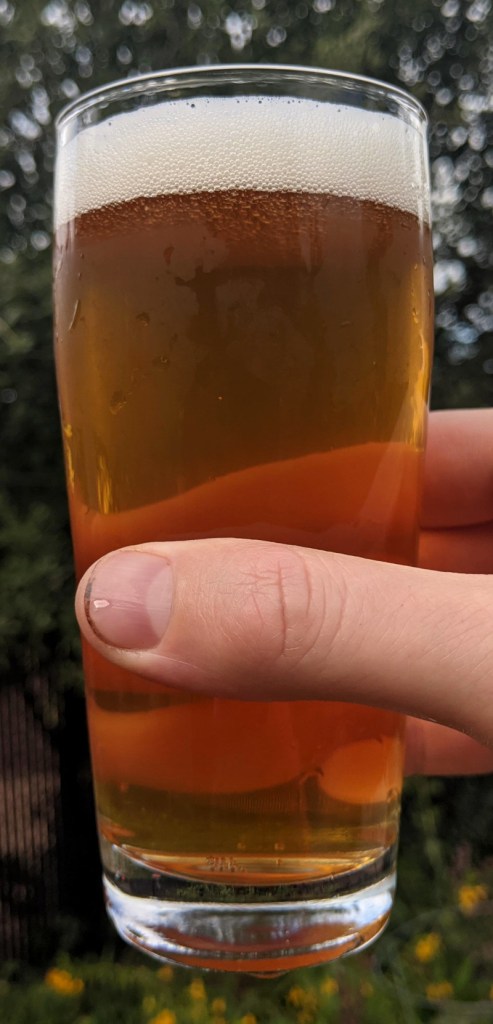
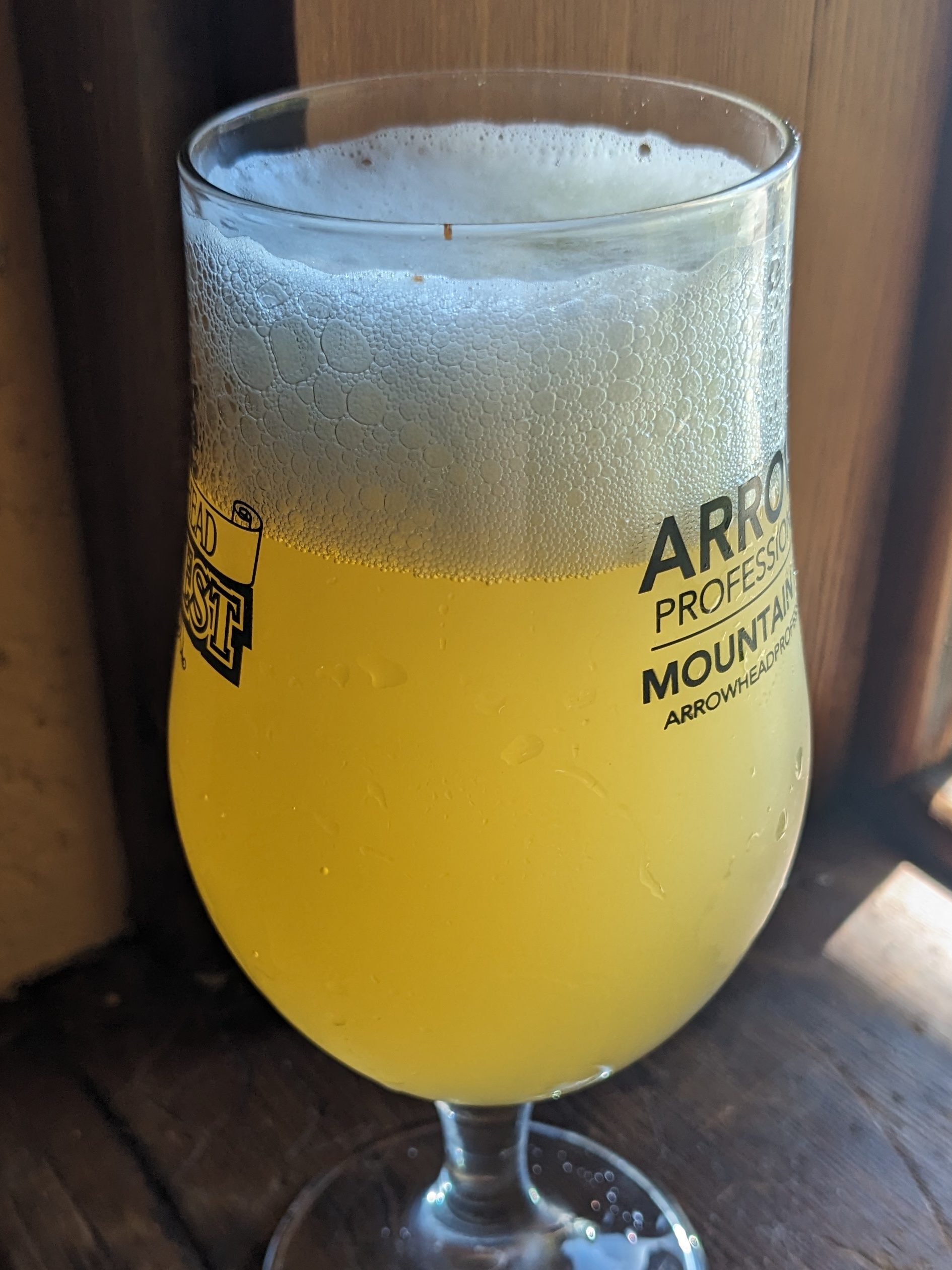
    • A straw yellow beer, with a pillowy and persistent white head. I’m writing this tasting on the last pour of the keg, which has a fair bit of haze. Even before the final pours and after sitting in the keg for two months, the beer never completely cleared.
  • Aroma
    • Bright citrus and kiwi hop aroma — very nice!
  • Flavor
    • Tropical fruit, fresh pineapple, lemon, and orange — it’s a very fruit-forward hop flavor. Bitterness is moderately high. The malt character is fairly subdued, as expected given the gravity and hoppiness of this beer.
  • Mouthfeel
    • Medium-light body, moderate carbonation. There is a slight hop astringency, which is accentuated in the final glass.
  • Would I Brew This Again?
    • I’m fairly pleased with this one, especially in the hop combination. If I were to brew this again (or one like it), I would reduce the dry hop load by a bit, to cut the astringency. I would probably increase the mash time to see if that helps with the haze (in case lingering starch was the cause), too. Overall, it’s a pretty decent session IPA!
  • Overall
    • 7/10

Easy Days Ale

My lighter-colored beers lately have been primarily lagers, but it is nice to switch this up from time to time. So, I decided to create an experimental ale recipe that hit the target of being sessionable, flavorful (with some malt character and a bit of hop character too), and light in color. It doesn’t really conform to any style, although I guess you could make an argument that it’s an American(ish) blonde ale. No matter what you call it, it’s pretty darned good! I also have the memory of sharing a few glasses of this with a good friend who was going through a pretty rough spot in life…although it sounds cheesy (and perhaps it is), so much of brewing isn’t just the end product, but the memories that go with each glass and the people with whom it is shared.

Easy Days Ale

  • 4 lb. Finest Maris Otter Malt (Crisp)
  • 4 lb. 2-row Xtra Pale Malt (Viking)
  • 1.5 lb. white wheat malt (Briess)
  • 11 oz. caramel 10L malt (Briess)
  • 4 oz. Melanoidin malt (Weyermann)
  • 4 oz. rice hulls
  • 0.25 oz. Magnum hop pellets (10.1% alpha), 60 minute boil
  • 1 Whirlfloc tablet, 5 minute boil
  • 0.8 oz. Simcoe hop pellets (12.7% alpha), 15 minute whirlpool
  • 1 pkg. Safale American ale yeast (US-05)

Target Parameters

  • 1.047 s.g., 1.011 f.g., 4.7% abv, 18 IBU, 6 SRM
  • Claremont tap water, treated with Campden tablet to remove chlorine
  • Full volume infusion mash at 154°, 60 minutes

Procedure

  • I mashed in with 7.25 gallons of water at 160°, to target 154° for 60 minutes, with recirculation. I added 7.5 mL of 88% lactic acid, to reduce the mash pH. After 60 minutes, I raised the mash to 168° for 10 minutes, before removing the grains.
  • In total, I collected 6.4 gallons of runnings with a gravity of 1.041, for 67% mash efficiency.
  • I brought the runnings to a boil, adding hops and finings per the recipe. After a 60 minute boil, I turned off the heat and added the whirlpool hops for a 15 minute whirlpool.
  • After the whirlpool, I chilled the wort down to ~75°, before putting it into the fermentation chamber and chilling it the rest of the way to 68°.
  • I brewed the beer on 16 April 2021, and it had a starting gravity of 1.048.
  • I fermented at 68° until 23 April 2021, when I moved the beer to ambient temperatures.
  • I kegged the beer on 6 May 2021, and noted a final gravity of 1.015. This is a bit higher than expected, working out to 4.3% abv.

Tasting

  • Appearance
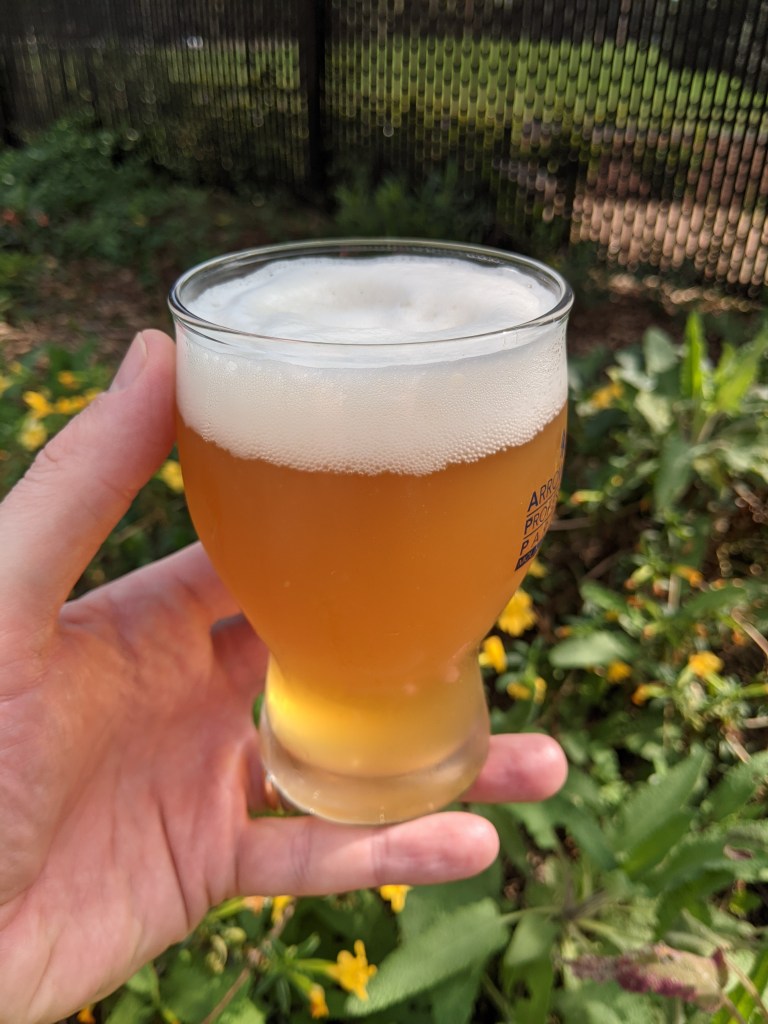
    • Medium gold with slight haze, moderately persistent white head
  • Aroma
    • Lightly malty; light bread dough character, with a light hint of caramel. No hop aroma.
  • Flavor
    • Moderate doughy, light malty character; relatively low, clean bitterness; a light tartness from the wheat that is pretty pleasant.
  • Mouthfeel
    • Moderately light body; smooth finish; moderate carbonation.
  • Would I brew this again?
    • This is a very solid session ale; it’s nothing spectacular, but I’m OK with that. I think it would benefit from a little more hop character; the bitterness is fine, but I think a little dry hop charge or a hop stand would help to liven this up a bit. It’s very drinkable, and makes a nice go-to on the tap selection. The malt character is pretty nice; it’s a little more interesting than the usual “2 row+crystal” malt zone that many ales of this type occupy.
  • Overall
    • 9/10

Session Stout 2020

I like session beers! I like stouts! Let’s do another one!

This recipe is a minor modification of a previous session stout. The main malt change was to swap in Vienna malt for Maris Otter, and use full-octane chocolate (350 SRM) versus the pale chocolate (225 SRM) that I used last time. Because this isn’t really a hop-centered beer, I switched the hops over to just a small charge of Magnum at the beginning of the boil. I also decided to swap flaked oats for flaked barley, because why not?

Session Stout 2020

  • 6.25 lb. Vienna malt (Weyermann)
  • 1 lb. flaked oats (Quaker Old Fashioned Oats)
  • 0.75 lb. roasted barley (Briess)
  • 0.5 lb. chocolate malt (Briess)
  • 0.25 lb. black malt – 2-row (Briess)
  • 0.125 lb. rice hulls
  • 0.60 oz. Magnum hop pellets (13.2% alpha), 60 minute boil
  • 1 Whirlfloc tablet, 5 minute boil
  • 1 pkg. Safale American ale yeast (US-05)

Target Parameters

  • 1.041 s.g, 1.011 f.g., 3.9% abv, 31 IBU, 35 SRM
  • Infusion mash, 156°, no sparge
  • Claremont tap water, with Campden tablet to remove chloramine

Procedure

  • I mashed in with 7.25 gallons of water at 161°, to hit a mash temperature of 156°. I started recirculating after 10 minutes, for a total of 60 minutes in the mash. I neglected to do a mash-out–oops!
  • After draining the grain basket, I had 6.5 gallons of runnings with a gravity of 1.033, for 67% mash efficiency. For this batch, I’m still trying to dial in my efficiencies on the Anvil, so I was a touch on the lower side of what I intended.
  • I brought the kettle to a boil, adding hops and finings per the recipe. After 60 minutes, I turned off the heat and chilled the wort, before transferring it to the fermenter.
  • Starting gravity was 1.038, a little lower than targeted (1.041). Oh well! I brewed this beer on 7 November 2020, and fermented at around 66°.
  • I kegged the beer on 22 November 2020, hitting 1.017 final gravity. This equates to only 2.8% abv! As is usual these days, I used keg conditioning to carbonate this batch. It took 2.7 ounces of corn sugar in 1 cup of water. After 2 weeks, I topped up the CO2 level with force carbonation.

Tasting

  • Appearance
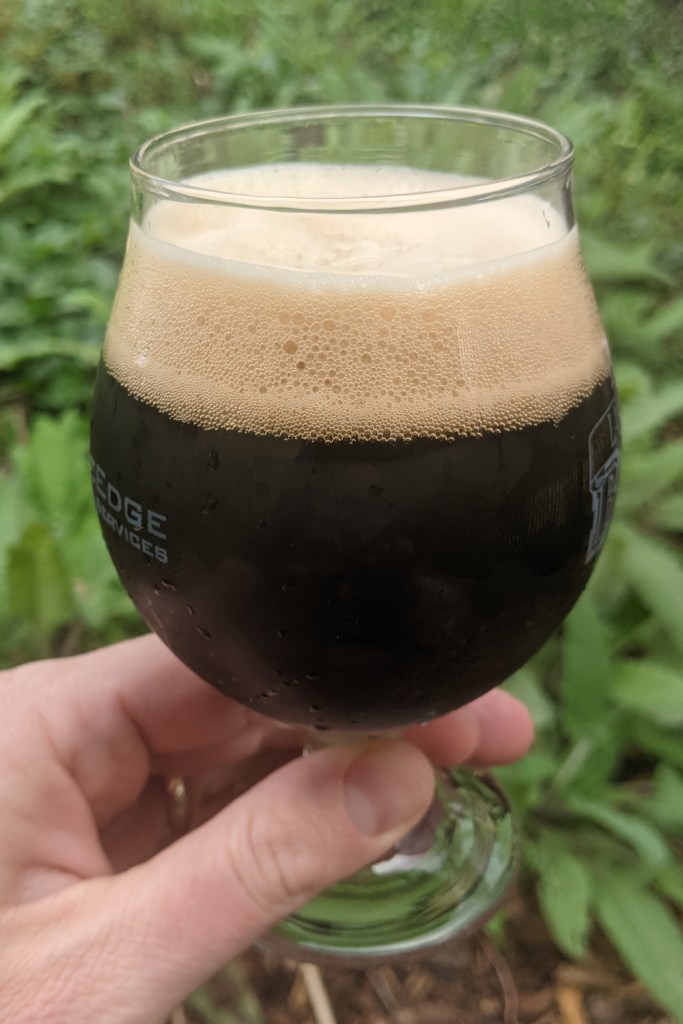
    • Pours with a beautiful and highly persistent deep tan head; the beer itself is clear and deep brown, almost black.
  • Aroma
    • Coffee aroma with a touch of chocolate; no hops to speak of; very clean character overall.
  • Flavor
    • Coffee and roast malt notes predominate; not much for “maltiness” otherwise. Moderate, very clean bitterness.
  • Mouthfeel
    • Very light bodied, pretty dry on the finish with a lingering but not unpleasant bitterness. Moderate level of carbonation.
  • Would I brew this again?
    • Absolutely! For what it is–a dry, relatively light session beer–it’s pretty darned satisfying. The background malt body is a little light, but that’s OK. I expected a little more sweetness given the higher finishing gravity. Not sure what’s up with that.
  • Overall
    • 7/10

Kveik Pale Ale

It happened…I’ve given in to a brewing trend, and am trying a recipe with kveik. As you’ll see in some upcoming posts, I’ve in fact tried a few kveik recipes at this point. This is my first one, and admittedly not my favorite.

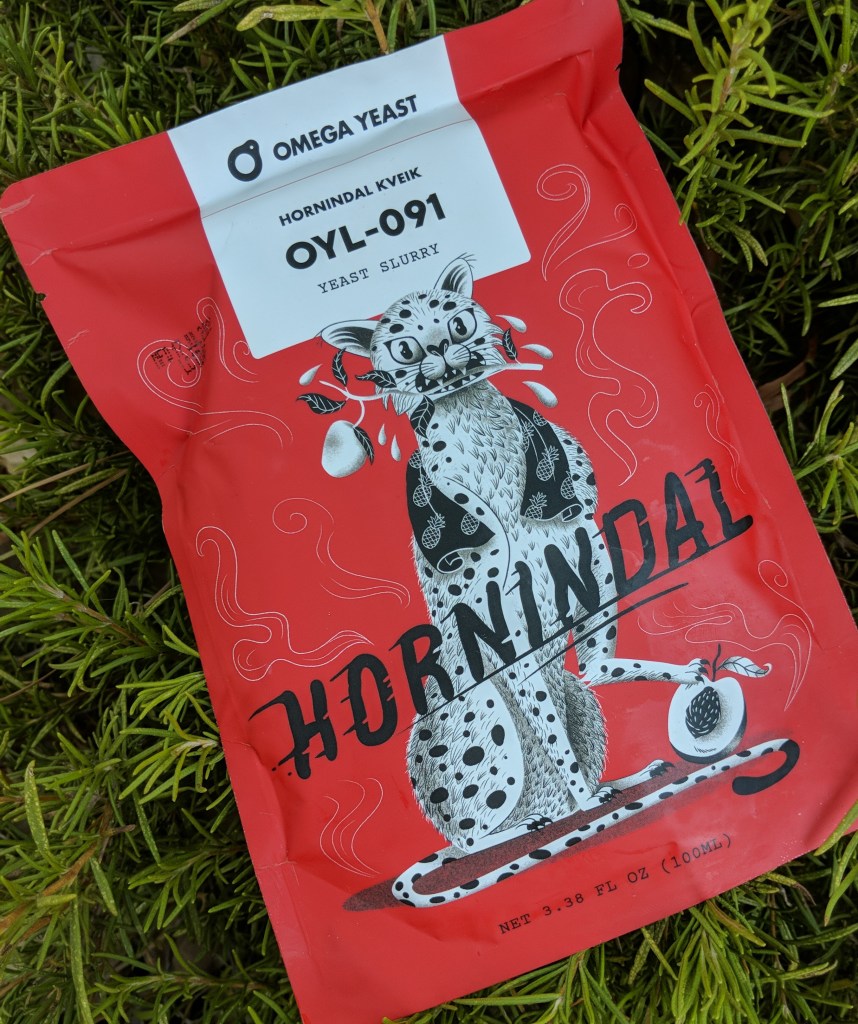
red package of yeast from Omega Yeast, Hornindal Kveik strain, with cartoon of cat on front
Kveik culture from Omega

For those not familiar with it, kveik is essentially a Norwegian farmhouse ale culture, with a rich cultural history that has likely been over-analyzed by those outside of the original neighborhoods where the yeast originated. I’ve been intrigued by their stated qualities of fermenting cleanly in excess of 90°, which almost sounds too good to be true. It wasn’t, in the end!

The recipe is inspired by a kit recipe from Atlantic Brew Supply, with major adjustments to pretty much everything. Many of the kveik-centered recipes out there are super-high alcohol, and that just doesn’t interest me. Session ales forever! I looked around at a few different kveik strains, and Hornindal from Omega seemed to hit the balance of a citrusy character that I wanted. I went with my usual session pale ale strategy of Vienna plus some Munich and a little crystal malt. For the hops, I grabbed a South African experimental variety, U1/108, from my local homebrew shop.

Kveik Pale Ale

  • 8 lb. Vienna malt (Weyermann)
  • 1 lb. Munich light malt (Chateau)
  • 0.5 lb. Crystal 40 malt (Great Western)
  • 0.75 oz. Magnum hop pellets (13.2% alpha), 30 minute boil
  • 1 tsp. Fermax yeast nutrient, 10 minute boil
  • 1 Whirlfloc tablet
  • 1 oz. African Experimental U1/108 hop pellets (15.0% alpha), 5 minute boil
  • 1 oz. African Experimental U1/108 hop pellets (15.0% alpha), 15 minute whirlpool
  • 3 oz. African Experimental U1/108 hop pellets (15.0% alpha), dry hop in keg
  • 1 pkg. Hornindal Kveik (Omega OYL-091)

Target Parameters

  • 1.043 s.g., 1.011 f.g., 4.3% abv, 6 SRM, 41 IBU
  • Infusion mash, 156°, batch sparge; 45 minute boil
  • Claremont water, with Campden tablet to remove chloramines and 2 g of gypsum added to boil kettle.

Procedure

  • I mashed in with 3.25 gallons at 168°, to hit a 158° mash temperature. I also added 4 mL of 88% lactic acid to the mash, to adjust pH.
  • The mash temperature was down to 156° after 45 minutes. At this point, I added 1.5 gallons for the first sparge, which raised the temperature to 162°. After 10 minutes, vorlaufed and collected the first runnings. Next, I added 3.6 gallons for the second sparge, with a vorlauf after 10 minutes.
  • In total, I collected 7 gallons with a gravity of 1.039, for 77% mash efficiency.
  • In the kettle, I added 2 g gypsum, and the broil everything to a boil. I boiled for 45 minutes, adding hops and other items per the schedule.
  • After flame-out, I chilled the wort to below 185° and then added 1 oz. of whirlpool hops. Hops were between 175° and 180° for 10 minutes. Then, I continued chilling.
  • After I chilled the wort down to 90°, I let it settle for 1 hour and then transferred to the fermenter and pitched the kveik.
  • The fermenter showed minor activity within 6 hours, and vigorous bubbling within 18 hours. At this point, I measured ~85° degrees for fermenter temperature, with 80° degrees ambient in the garage. I started fermentation on September 5, and fermentation seemingly was done by 9 Sept 2020.
  • I kegged the beer on 13 September 2020, adding dry hops in a baggie at that time. As has been my usual practice lately, I did a mixture of keg priming and force carbonation, targeting 2.7 volumes of CO2. I added 2.8 oz of corn sugar dissolved in one cup water for this first stage, and after a week topped up the CO2 using my cylinder.
  • Final gravity is 1.017, for 3.6% abv.

Tasting

  • Appearance
    • A hazy gold beer, with a pillowy, fine, and very persistent white head
  • Aroma
    • Aroma is malt-centered, very bready and showing a bit of caramel. Hop aroma is surprisingly low.
  • Flavor
    • Very hoppy, with a slightly rough bitterness. The malt in the background has a bready and toasty quality.
  • Mouthfeel
    • Light bodied, slightly astringent finish, probably from the dry hops. Moderately high carbonation.
  • Would I brew this again?
    • Not with this particular hopping regimen. The malt character is fine, and the yeast character is fantastically clean for having been fermented at high temperature, but the hops just don’t do it for me. I wonder if it’s a combination of the hop variety with the low starting gravity, so that the hops aren’t balanced more by the malt. I also think I overhopped on the dry-hopping, so I can’t blame it all on the hop variety. Honestly, the beer was far better before I added the dry hops! That said, I’m super impressed by the yeast, and harvested a ton for use in some upcoming batches.
  • Overall
    • 4/10

Raspberry Belgian 2020

I’ve brewed this beer at least three or four times, and I keep coming back to it as one of my very favorite recipes. It’s crisp, it’s low alcohol, it’s flavorful, and it’s well out of my usual brewing styles. I wouldn’t want this year-round, but it sure is a nice treat every once in awhile!

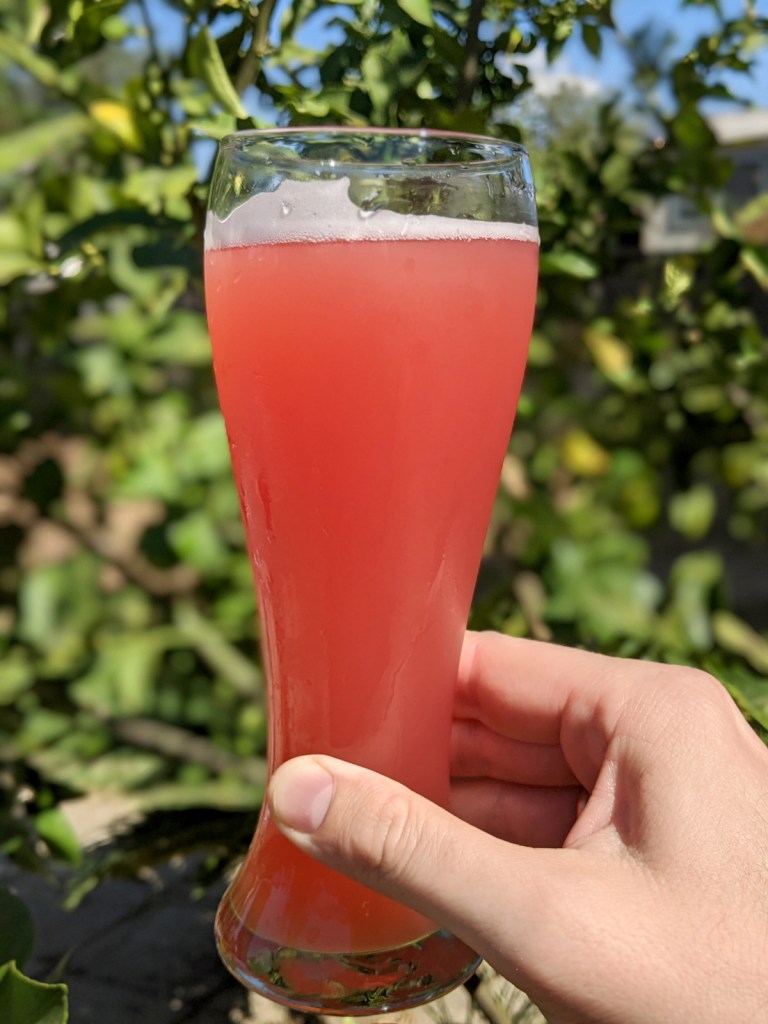
deep pink beer in Belgian wit glass, held aloft against green tree leaves

My personal take on this recipe–which started out as a clone of Funkwerks Raspberry Provincial–has evolved since I first brewed it in 2017. Every batch is a bit different, especially in the souring strain and the type of raspberry puree added. It never fails to be a great beer.

Raspberry Belgian 2020

  • 4.75 lb. pilsner malt (Weyermann)
  • 2.5 lb. pale wheat malt (Weyermann)
  • 1.75 lb. acidulated malt (BestMalz)
  • 0.5 lb. Carapils malt
  • 0.5 lb. flaked oats
  • 0.5 lb. flaked wheat
  • 6 oz. rice hulls
  • 0.35 oz. Magnum hop pellets (13.2% alpha), 60 minute boil
  • 0.5 pkg. (~5 g) of Wildbrew Sour Pitch (Lallemand)
  • 1 pkg. Whiteout Belgian Wit Yeast (Imperial #B44)
  • 36 oz. raspberry puree

Target Parameters

  • 1.048 o.g., 1.013 f.g., 15 IBU, 3 SRM, 4.5% abv
  • 155° full-volume mash, 60 minutes
  • Overnight kettle sour
  • Claremont tap water, no adjustment

Procedure

  • I mashed in with ~8.5 gallons of water at 160°, to hit a 155° mash temperature target. After 60 minutes, I vorlaufed and collected the full volume of runnings.
  • In total, I collected 6.7 gallons of runnings with a gravity of 1.033. This was way below my target (and only 57% mash efficiency), so I added 0.75 lb. of extra light DME to bring the gravity up to 1.038.
  • I boiled the runnings for 10 minutes and then chilled to 115°. I added 1 tbs. of 88% lactic acid, to bring the pH down to ~4.4.
  • Once the kettle temp was down to 105°, I added 5 g of the Wildbrew Sour Pitch, stirred gently, and left it on a heating pad in a warm garage.
  • I started the souring process at around 10:30 am on 18 July 2020, and it was down to ~3.35 by the next morning. The sour level was right where I wanted it, when I sampled a little.
  • I boiled the beer for an hour, adding hops per the schedule as well as some yeast nutrient.
  • I chilled the wort and put it into my fermenter, bringing the temperature down the rest of the way in my fermentation chamber. I pitched the yeast, and let it ferment at 66°. The starting gravity was 1.046.
  • I pitched the yeast on 19 July 2020, and added fruit puree on 23 July 2020.
    • To make the puree, I took frozen raspberries (purchased fresh a few weeks prior, sorted, and frozen) and thawed them out. I had 72 ounces by mass, which was around 130 ounces by volume of whole raspberries. 12 ounces by weight should make around 6 ounces of puree by volume, so I ended up with around 36 ounces (a quart) of puree. To make the puree, I heated the raspberries in a double boiler, mashing them up. I heated the mixture to between 150° and 170°, with the bowl sitting in near-boiling water. I let it sit for 15 minutes and then chilled in an ice bath, before adding the puree to the fermenter.
  • I kegged the beer on 1 August 2020. Final gravity at that time was 1.020, for 3.3% abv; I wonder if the yeast hadn’t completely fermented out? I usually agitate the fermenter when I’m using the various Belgian wit strains, because they do tend to stall out without babysitting. Oh well…I figure that any final fermentation will hopefully wrap up in the keg.
  • I added 3.2 oz. of corn sugar boiled for ~2 minutes in 1 cup of water, and then sealed up the keg (adding a touch of pressure to make sure the lid was seated).
  • Carbonation level maxed out at around 24 psi at 72°, which is not terribly great as a level of carbonation for this style. That’s only 2.2 or so volumes of CO2, and I was aiming for 3.0 at least. I used my CO2 talk to top things up.
  • On 9 August 2020 (the same day as the tasting), I decarbonated a sample and measured gravity with both hydrometer and refractometer, getting a final gravity of 1.017. This works out to ~3.8% abv, and if I were to guess, around 4% abv when you factor in the sugars from the raspberry.

Tasting

deep pink beer in Belgian wit glass
  • Appearance
    • Right now (second day on tap for the keg), this beer has a gorgeous deep pink color, with a prominent haze. It pours with a frothy white head that subsides to a relatively continuous thin blanket.
  • Aroma
    • This beer smells like fresh raspberry. I get maybe a little bit of the citrusy Belgian wit yeast character behind that, but the raspberry is front and center here.
  • Flavor
    • What else? Raspberry! More seriously, the beer has a pleasant (but not over-the-top) tartness, with a berry and citrus character. The malt is pretty subdued, and largely overwhelmed by the fruit and sour notes. But, raspberry definitely dominates.
  • Mouthfeel
    • Crisp and light bodied, with a nice smooth finish. Carbonation is high, which gives a pleasant and spritzy character to the beer, but the heavy amount of suspended yeast and the malt bill keep it from being too thin.
  • Would I brew this again?
    • This is one of my very favorite summer beer recipes. It has evolved considerably from the original clone recipe, and it has further evolved from my initial few attempts. It’s such an interesting beer, and is a good reward for the above-average amount of effort and above-average ingredient cost. The only minor change I might make would be to ditch the acidulated malt–it’s a holdover from the original recipe, which used this malt alone to get the desired sour character.
  • Overall
    • 9/10