Farke’s ESB

With a 55 lb. sack of Maris Otter malt on hand, I’ve been exploring the world of English beers. The latest stop along this journey was with a best bitter (known commercially sometimes as ESB, or Extra Special Bitter). In order to make this a quick-and-easy brew day, I opted to do a full-volume, no-sparge mash. Even with that shortcut, this one was a winner!

Farke’s ESB

  • 8.5 lb. Maris Otter malt (Bairds)
  • 0.5 lb. caramel 80° malt (Briess)
  • 0.25 lb. 90°L 6-row caramel malt (Briess)
  • 0.25 lb. 20°L caramel malt (Briess)
  • 1 oz. East Kent Goldings hop pellets (6.0% alpha), 60 minute boil
  • 1 Whirlfloc tablet, 10 minute boil
  • 1 oz. East Kent Goldings hop pellets (6.0% alpha), 5 minute boil
  • 1 pkg. London ESB English Style Ale Yeast (Lallemand)

Target Parameters

  • 60 minute full volume infusion mash, 152°
  • 1.042 o.g., 1.012 f.g., 4.0% abv, 28 IBU, 10 SRM
  • Claremont tap water

Procedure

  • I mashed in with 7.5 gallons of water at 156.5°, to hit 151.8° mash temperature. After 60 minutes, I vorlaufed and collected the full volume for the boil.
  • In total, I collected ~6.25 gallons of wort with a gravity of 1.039, for 69.2% mash efficiency.
  • I boiled for 60 minutes, adding hops and finings per the schedule. Then, I chilled and trasnferred to the fermenter.
  • Starting gravity was 1.044, when I brewed this on 3 February 2019. I fermented at 66°.
  • I kegged the beer on 25 February 2019, at a final gravity of 1.015. This works out to 3.8% abv.
  • The beer started out pretty hazy in the keg, but dropped really clear after two or three weeks.

Tasting

  • The Basics
    • O.G. = 1.044; f.g. = 1.015; 3.8% abv; 10 SRM; 28 estimated IBU
  • Appearance
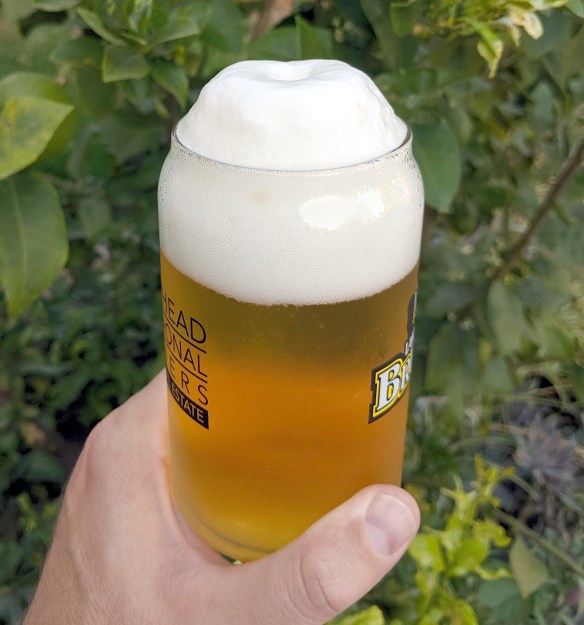
    • Clear, medium amber color, with a fine white head that is pretty persistent. This beer has clarified nicely over the past few weeks.
  • Aroma
    • Light caramel, slightly bready aroma, with a faint fruitiness; incredibly delicious overall!
  • Flavor
    • This is a malt forward beer with a pleasant bitterness on the finish. It’s highly drinkable, with none of the character being overwhelming. The hop character is moderate and balanced well against the malt.
  • Mouthfeel
    • Moderate carbonation appropriate for the style, with a really nicely balanced finish and mouthfeel.
  • Would I brew this again?
    • Yes! It’s a dead simple beer, but one that’s just enjoyable. Pretty much everything is on target here. It’s not one of those “blow your taste buds out of the water” styles, but instead is a solid, enjoyable brew. I might up the fermentation temperature a bit or consider a different yeast, to get more prominent yeast notes, but that’s a fairly minor thing. For being “only” 3.8% abv, this beer doesn’t taste like it!
  • Overall
    • 8.5/10

Dunkel-Osteus 2019

I really enjoyed the Munich Dunkel I brewed two years ago, and recently decided to give the recipe another go. This round was nearly identical in terms of ingredients, with the only real change being a lower mash temperature to dry out the beer a bit and reduce residual sweetness. This version is nearly perfect, and has matured nicely while on tap!

Dunkel-Osteus 2019

  • 9 lbs. Munich Dark malt (BESTMALZ)
  • 6 oz. Carafa Special II malt (Weyermann), added at vorlauf
  • 5 oz. melanoidin malt (Weyermann)
  • 1.5 oz. Hallertauer Mittelfrueh hops (4.0% alpha), 60 minute boil
  • 1 tsp. Fermax yeast nutrient, 10 minute boil
  • 1 Whirlfloc tablet, 10 minute boil
  • 2 pkg. Saflager Lager yeast (Fermentis W34/70)

Target Parameters

  • 60 minute infusion mash, 150°
  • 1.050 o.g., 1.010 f.g., 5.2% abv, 22 IBU, 23 SRM
  • Water adjusted to hit 82 ppm Ca, 7 ppm Mg, 15 ppm Na, 31 ppm SO4, 94 ppm Cl, 131 ppm HCO3, 44 ppm RA

Procedure

  • I used 5.13 gallons of Claremont tap water with 3 gallons of RO water and 5 g of calcium chloride overall, to hit my water targets.
  • I mashed in with 3.25 gallons of tap water (with Campden tablet to remove chloramines) at 161.5°, to hit a mash temperature of 150.5°.
  • For the sparge water, I mixed 2 gallons of tap water with 3 gallons of RO water and 5 g of calcium chloride.
  • After 60 minutes, I added 1.25 gallons of tap water at 185°, let the mash sit for 10 more minutes, vorlaufed, and collected the first runnings.
  • Next, I added 3.3 gallons of sparge water, let sit 10 minutes, vorlaufed, and collected the second runnings.
  • I collected 6.6 gallons of wort with a gravity of 1.040, for 73% mash efficiency.
  • I started the boil, and added the hops, Whirlfloc, and yeast nutrient per the schedule. After 60 minutes, I turned off the flame and chilled the wort down to 70°.
  • I transferred the chilled wort to my fermenter, reduced temperature to 54° in my fermentation chamber, and pitched the yeast at this point.
  • Starting gravity was 1.046, on 26 February 2019.
  • I fermented the beer at 54° for the first week, and raised the temperature to 64° on March 9, 68° on March 12, and cold crashed on March 14. I kegged the beer on 23 March.
  • Final gravity was 1.010, down from 1.046, for 4.7% abv.

Tasting

  • The Basics
    • O.G. = 1.046; f.g. = 1.010; 4.7% abv; 20 SRM; 22 estimated IBU
  •  Aroma
    • Mild chocolate aroma, with no apparent hop aroma.
  • Appearance
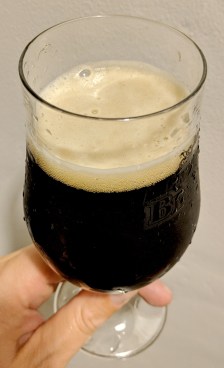
    • Beautifully clear, darkest amber/reddish brown color, with an off-tan persistent head
  • Flavor
    • Malty beer, with a residual breadiness on the finish; fairly moderate bitterness
  • Mouthfeel
    • Medium body, with the finish being only very slightly dry. Moderate carbonation, appropriate for style.
  • Would I brew this again?
    • Absolutely! I think I nailed the style pretty well this time around, particularly in that this version is slightly less sweet than the first one I did. I attribute this to a slightly lower mash temperature (150° vs 154°). Finishing gravity was definitely lower (1.010 vs 1.016), too. I wouldn’t mind a touch more chocolate character on this version (which the last version had), but that could be fixed by a bit more Carafa Special II. I also think I liked the Weyermann Dark Munich a bit better than the BEST version of this malt, which also might explain some of the loss in malt character character. I recall Weyermann’s Dark Munich being just a touch richer in character, so I might switch things up next time. Otherwise, this is another great recipe!
  • Overall
    • 9/10

Session Stout II

A little over a year ago, I brewed a batch of Irish stout based on a recipe in Jennifer Talley’s wonderful book, Brewing Session Beers. The result was pretty enjoyable, so I wanted to revisit the recipe. The main changes from the previous version was a different base malt (Maris Otter instead of American two-row) and using pale chocolate instead of full-on chocolate malt.

The end result was something that is almost there, but in need of a few last tweaks. I love it as a low-alcohol session beer, but feel it still needs a bit more body. I’ll certainly be coming back to this in the future!

Session Stout II

  • 6 lbs. Maris Otter Malt (Bairds)
  • 1 lb. flaked barley
  • 12 oz. roasted barley (Bairds)
  • 7.5 oz. pale chocolate malt (Crisp)
  • 4 oz. black barley (Briess)
  • 2 oz. rice hulls
  • 1 oz. Helga hop pellets (5.6% alpha), 60 minute boil
  • 1.09 oz. East Kent Goldings (6.0% alpha), 10 minute boil
  • 1 Whirlfloc tablet
  • 1 pkg. Safale American ale yeast (US-05)

Target Parameters

  • 1.042 s.g, 1.009 f.g., 4.4% abv, 31 IBU, 42 SRM
  • Infusion mash with batch sparge
  • Water built from Claremont tap water with Campden tablet.

Procedure

  • I mashed in with 166° strike water to hit a target temperature of 152°. After 60 minutes, I added 1.4 gallons of water at 185°, waited 10 minutes, vorlaufed and collected the first runnings. Next, I added 3.3 gallons of water at 185°, waited 10 minutes, vorlaufed, and collected the second runnings.
  • In total, I collected 6.25 gallons of water with a gravity of 1.035, for 71% efficiency.
  • I brought the kettle to a boil, adding hops and finings per the schedule. After 60 minutes, I turned off the heat and cooled down to yeast pitching temperature (combination of cooling coil and time in fermentation chamber after transfer).
  • I transferred the beer to the fermenter and pitched the yeast. I brewed this beer on 4 December 2018, and fermented at 66°. Starting gravity was 1.042.
  • I kegged the beer on 4 Janaury 2019, when it had a final gravity of 1.014. This equates to a measured abv of 3.7%.

Tasting Notes

  • Aroma
    • Chocolatey, roasty, very clean
  • Appearance
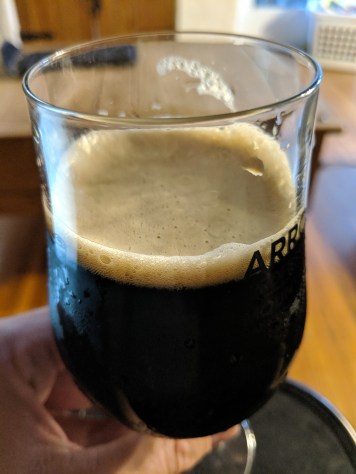
    • Deep deep brown, black in the glass; very fine light brown head with excellent persistance; brilliantly clear
  • Flavor
    • Deceptively light flavor, that tilts towards the roasted side with a hint of chocolate. Not a terrible amount of malt backbone. The roastiness is balanced well against the hoppiness. Moderately bitter beer.
  • Mouthfeel
    • Dry, light-bodied beer, with moderately high carbonation as perceived in the mouth.
  • Would I brew this again?
    • This is a pretty tasty, very drinkable beer. I feel like it is just a touch lighter on base malt character and mouthfeel than I like, although this is a pretty easy fix (a bit more base malt or perhaps use full octane chocolate malt instead of pale chocolate). The base recipe itself is pretty solid.
  • Overall
    • 6/10

The Ones That Got Away…

For a variety of reasons, I haven’t been able to blog about every single batch I brewed in 2018. Many of the ones that didn’t make the cut were repeat brewings of successful recipes. Because I’m not likely to get all of them with full blog posts at this stage, I’m giving myself semi-amnesty by listing them with brief comments.

  • Cerveza de Jamaica 1.1
    • This was a rebrew of the first version, which I really liked. Version 1.1 was modified very slightly to add a little more hibiscus and a little more orange peel, and the result was an incredibly tasty beer!
  • Double IPA / Hoppy Blonde Ale
    • This was an experiment with parti-gyle techniques, co-brewed with a friend. The double IPA ended up at around 7.8% abv, and was fairly tasty. The blonde ale rounded out at 4.6% abv, and was also pretty nice. The experiment was a lot of work on brew day, but a fun attempt.
  • Raspberry Belgian 2018
    • I rebrewed a house favorite recipe for a beer festival, and thus didn’t really get to taste the final result (sadly). Everything on the process was tasty, though, so I’ll be doing this one again too.
  • Bavarica Session IPA
    • This one was pretty disastrous! The flavors clashed horribly (never again will I use Munich malt in a session IPA), and I dumped most of the batch.
  • Grab Bag IPA
    • Basically to use up a bunch of ingredients. Nothing memorable here, although it was pretty drinkable.
  • Grapefruit Wheat Ale
    • I don’t have many notes on this, other than that I used Amoretti grapefruit craft puree for some of the flavoring.

English IPA

I’ve done soooo many American-style IPAs (especially tending towards the citrusy/fruity variety) that I’ve lost sight of what else an IPA can be. I wanted to get back to the style’s roots roots, with an English-style recipe. Creatively, I decided to call it…English IPA. It’s modified from a recipe on the AHA website, which won gold in the NHC during 2016.

English IPA

  • 12 lbs. Maris Otter malt (Bairds)
  • 0.5 lb. biscuit malt (Dingemans)
  • 0.5 lb. red wheat malt (Briess)
  • 6 oz. crystal 120 malt (Great Western)
  • 6 oz. crystal 40 malt (Great Western)
  • 1 oz. Magnum hop pellets (13.2% alpha), 60 minute boil
  • 1 Whirlfloc pellet, 10 minute boil
  • 1 oz. Fuggles hop pellets (5.6% alpha), 10 minute boil
  • 2 oz. East Kent Goldings hop pellets (6.0% alpha), 10 minute whirlpool
  • 2 pkg. Nottingham dry yeast (Lallemand)
  • 3 oz. East Kent Goldings hop pellets (5.0% alpha), dry hop in keg

Target Parameters

  • 1.064 s.g, 1.015 f.g., 6.5% abv, 49 IBU, 11 SRM
  • Infusion mash with batch sparge
  • Water built from Claremont tap water with mineral additions.

Procedure

  • Starting with Claremont tap water, I added 9 g gypsum, 5 g epsom salt, and 4 g CaCl to 4.6 gallons of water with a partial Campden tablet. I heated it to 166° and added the grains along with .5 tbs. of 88% lactic acid, to hit a mash temperature of 152° for 60 minutes. Then, I added 0.7 gallons of water at 185°, let sit for 10 minutes, vorlaufed, and collected first runnings.
  • Next, I added 3.6 gallons of water at 185° with 0.3 tbs. of 88% lactic acid for the sparge. After 10 minutes, I vorlaufed and collected second runnings.
  • In total, I collected 6.9 gallons of runnings with a gravity of 1.055 and 75% efficiency.
  • I brought everything to a boil and added the various kettle ingredients per the recipe. After 60 minutes, I turned off the flame and cooled to 85°. Finally, I transferred to the fermenter (with aeration) and cooled to 66°.
  • I brewed this and pitched the yeast on 7 November 2018.
  • I kegged the beer on 19 November 2018 and added the dry hops.
  • Original gravity was 1.063, and final gravity was 1.015, for 6.4% abv.

Tasting Notes

I drank this beer fairly quickly, because it was so tasty, and unfortunately I kicked the keg before I could do a full, formal tasting. Nonetheless, I kept a few brief notes on my last glass…

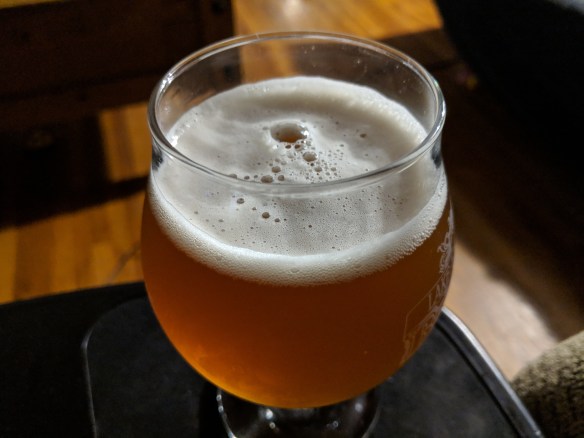
The beer had a hop-forward, nicely earthy aroma, with a slight caramel malt character behind that. On the taste, the malt and bitterness were well balanced. Hop character was pretty smooth on the finish, against the caramel malt qualities. Color was a gorgeous medium amber, with a slight haze.

Overall, I give this beer a 9 out of 10. I could perhaps round out the body a bit more (maybe with some oats or flaked barley), but overall this beer is pretty close to exactly what I wanted. The hops in particular are a treat–this feels like something Bilbo Baggins might enjoy next to the fire on a cold night in the Shire.