Raspberry Belgian 2021

According to my records, this is the fifth time I’ve made Raspberry Belgian. It is one of my favorite recipes, without a doubt. The process is a fair bit of work, and it’s not the cheapest thing to brew, but WOW, are the results worth it!

My approach to this has morphed considerably over the years, and there are inevitably some variations in ingredients and process. So, every time is different, even if they’re all more or less in the same flavor space.

As before, the key to this recipe is using fresh/frozen raspberries. Tons and tons of raspberries–4.5 pounds, to be precise. I used just frozen ones this time, which I thawed and pureed before adding to the fermenter. Canned purees just don’t “pop” in the same way. For souring, I tried out the Lactobacillus Blend from Omega Labs, which is what the local shop had on-hand. Past versions of the recipe used acidulated malt in the grist, which was a hold-over from the original “bacteria-free” version, and I decided to just ditch that because it was unnecessary.

Raspberry Belgian 2021

  • 6.5 lb. Viking Pilsner Zero Malt
  • 2.5 lb. white wheat malt (Great Western)
  • 1 lb. flaked wheat
  • 0.5 lb. Carapils malt (Briess)
  • 0.5 lb. rice hulls
  • 0.5 oz. Magnum hop pellets (10.1% alpha), 60 minute boil
  • 1 tsp. WLN1000 yeast nutrient (White Labs), 10 minute boil
  • 1 pkg. Belgian Wit Ale Yeast (WLP400), prepared in 1L vitality starter
  • 1 pkg. Lactobacillus Blend (Omega Labs OYL-605)
  • 72 oz. frozen raspberries, pureed

Target Parameters

  • 1.048 o.g., 1.012 f.g., 18 IBU, 4 SRM, 4.8% abv
  • 154° full-volume mash, 60 minutes
  • Overnight kettle sour
  • Claremont tap water, no adjustment

Procedure

  • Way back in May, I made a starter for Pannotia White IPA using WLP400, but it was suuuuper slow to kick off. Worrying that it was dead, I got some Whiteout (Imperial Yeast), but kept the WLP400 starter going just in case. After a day or two, it was off to the races, and so I harvested the results to save for a later brew–which turned out to be the raspberry brew!
  • I mashed in with 7.25 gallons of water at 160°, and held the mash at 154° for 60 minutes with recirculation. I added 7 mL of 88% lactic acid to adjust the mash pH. I raised the temperature to 168° for a 10 minute mash-out, and then removed the grain basket.
  • In total, I collected 6.25 gallons of runnings with a gravity of 1.038, for 61% mash efficiency. This is a bit low, but that seems to be the case for these adjunct-heavy beers (and my mill seems to be not quite tight enough, after inspection of equipment).
  • Next, I boiled the runnings for 5 minutes, before chilling down to 95°. I added 25 mL of 88% lactic acid, to get the pH down to 4.4, and then added the lacto culture. Because I’m using the Foundry, I just let the runnings in the kettle, and set it to maintain temperature at 90°. I did this step on 14 August 2021.
  • After 25 hours, the pH was down to 3.5, right in my target range. I called this perfect!
  • While getting the soured runnings ready, I made a SNS (shaken-not-stirred) starter for the harvested yeast culture.
  • I boiled the runnings, adding hops and yeast nutrients per the recipe. After 60 minutes, I chilled the wort, transferred to the fermenter, and then chilled down to 66° before pitching the yeast starter.
  • I started primary fermentation on 15 August 2021, holding at 66°.
  • On 19 August 2021, I added 72 oz. of pureed frozen raspberries, and raised the temperature to 68°.
  • On 22 August 2021, I brought the beer out to ambient, around 75° or so, to finish up.
  • I kegged the beer on 28 August 2021. At this point, it had a final gravity of 1.013, which works out to 4.0% abv. With the extra sugars from the fruit, actual abv might be a touch higher.

Tasting

  • Appearance
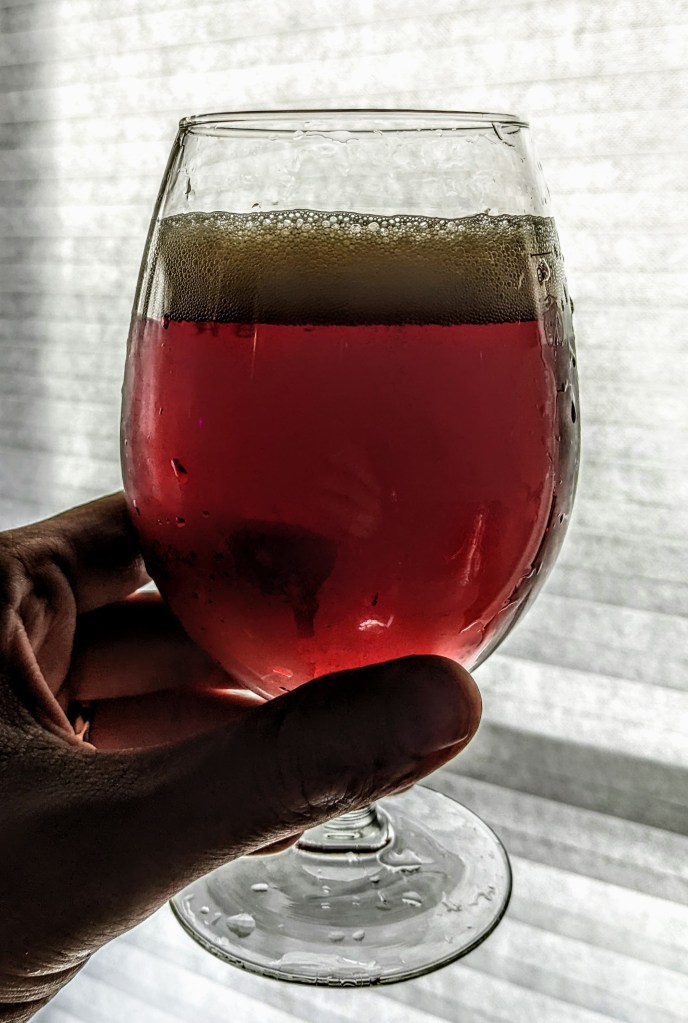
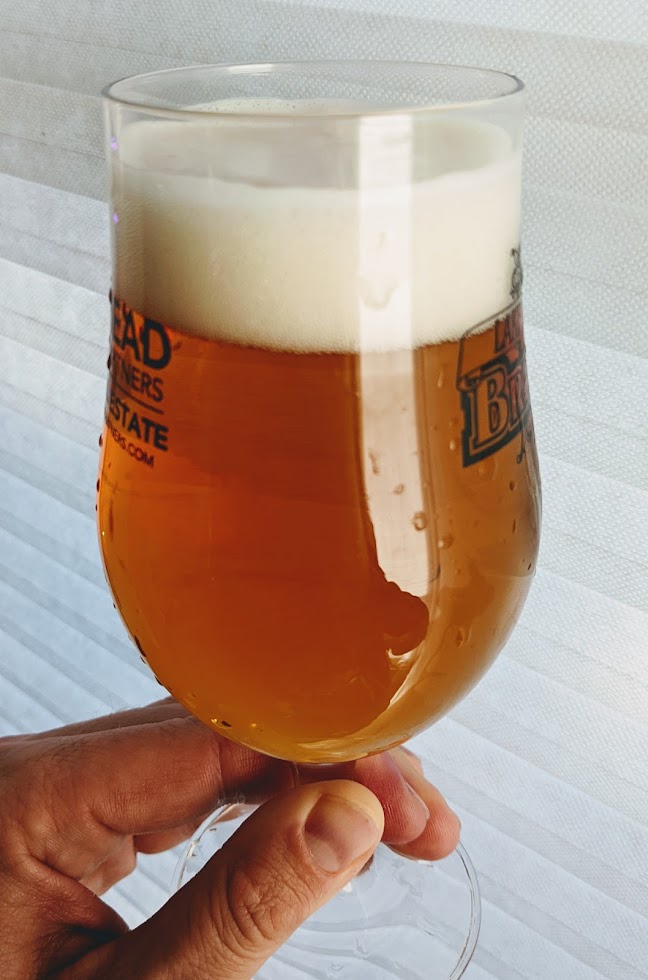
    • The beer is gorgeous! I pours with a pink, frothy, and somewhat persistent head. The beer itself is dark pink, and moderately (but not overly) hazy. I think it’s looking clearer than might be usual, because I’m using a floating dip tube. I wouldn’t mind a little extra haze, if it helped augment the mouthfeel and flavor.
  • Aroma
    • Raspberry is prominent, with a bit of tartness also.
  • Flavor
    • The beer is moderately sour, but not over the top. The sour character is clean (one person who tasted it described it as a sour patch kid–that’s a high compliment in my book!). Bitterness is perceived as low. The raspberry comes through very nicely. There might be a slight wheat flavor, but in general I don’t think the malt is terribly perceptible. I’m a bit surprised that the Belgian yeast character doesn’t come through more, either.
  • Mouthfeel
    • This beer has a light body and effervescent quality, with a tart, modestly sour, and dry finish.
  • Would I Brew This Again?
    • This is a wonderful beer! It’s incredibly drinkable, especially during warm weather. I wouldn’t mind a touch more malt character and a little bit more prominent Belgian yeast character…I would be curious to see if it’s genuinely no Belgian character, or if that is just being covered up by the raspberries. Perhaps I’ll try fermenting at a higher temperature next time, to bring out the phenols more prominently. Those are truly minor issues, and really just in the category of optional tweaks to consider.
  • Overall
    • 9/10

Dunkel-Osteus

This is another rebrew of another favorite recipe. I seem to be doing this a lot lately! My Munich Dunkel is a wonderfully drinkable dark lager, and this year’s version was no exception.

Dunkel-Osteus

  • 10 lb. Munich II malt (Weyermann)
  • 0.5 lb. Carafa Special II malt (Weyermann)
  • 6 oz. melanoidin malt (Weyermann)
  • 0.5 oz. Magnum hop pellets (13.2% alpha), 60 minute boil
  • 1 Whirlfloc tablet, 5 minute boil
  • 2 pkg. W34/70 yeast (Fermentis)

Target Parameters

  • 1.050 o.g., 1.012 f.g., 5.1% abv, 24 IBU, 23 SRM
  • 60 minute full volume mash at 152°, with mash-out at 168°
  • Claremont tap water

Procedure

  • I mashed in with 7.25 gallons of water at 158°, to hit a mash temperature of 152°. I held it here, with recirculation, for 60 minutes. Then, I raised the temperature to 168° for 10 minutes, before removing the grains and bringing the kettle to a boil.
  • In total, I collected 6.25 gallons of runnings with a gravity of 1.043, for 66% mash efficiency.
  • I boiled for 60 minutes, adding hops and finings per the recipe.
  • After the boil, I chilled, transferred, and chilled down to 50° before pitching the yeast. I let the beer free rise to 52° for fermentation.
  • I brewed this beer on 8 May 2021. Starting gravity was 1.048.
  • I let the beer free rise to 60° on 24 May, and then cold crashed to 33° on 26 May 2021.
  • I kegged the beer on 29 May 2021, and it had a gravity of 1.017, for 4.0% abv.

Tasting

  • Appearance
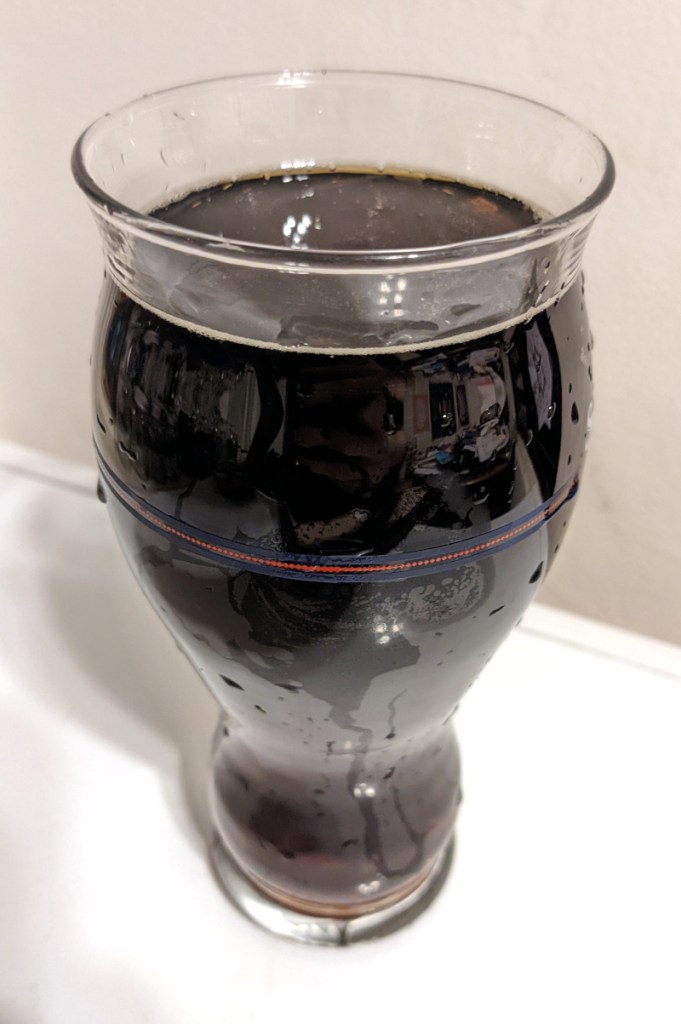
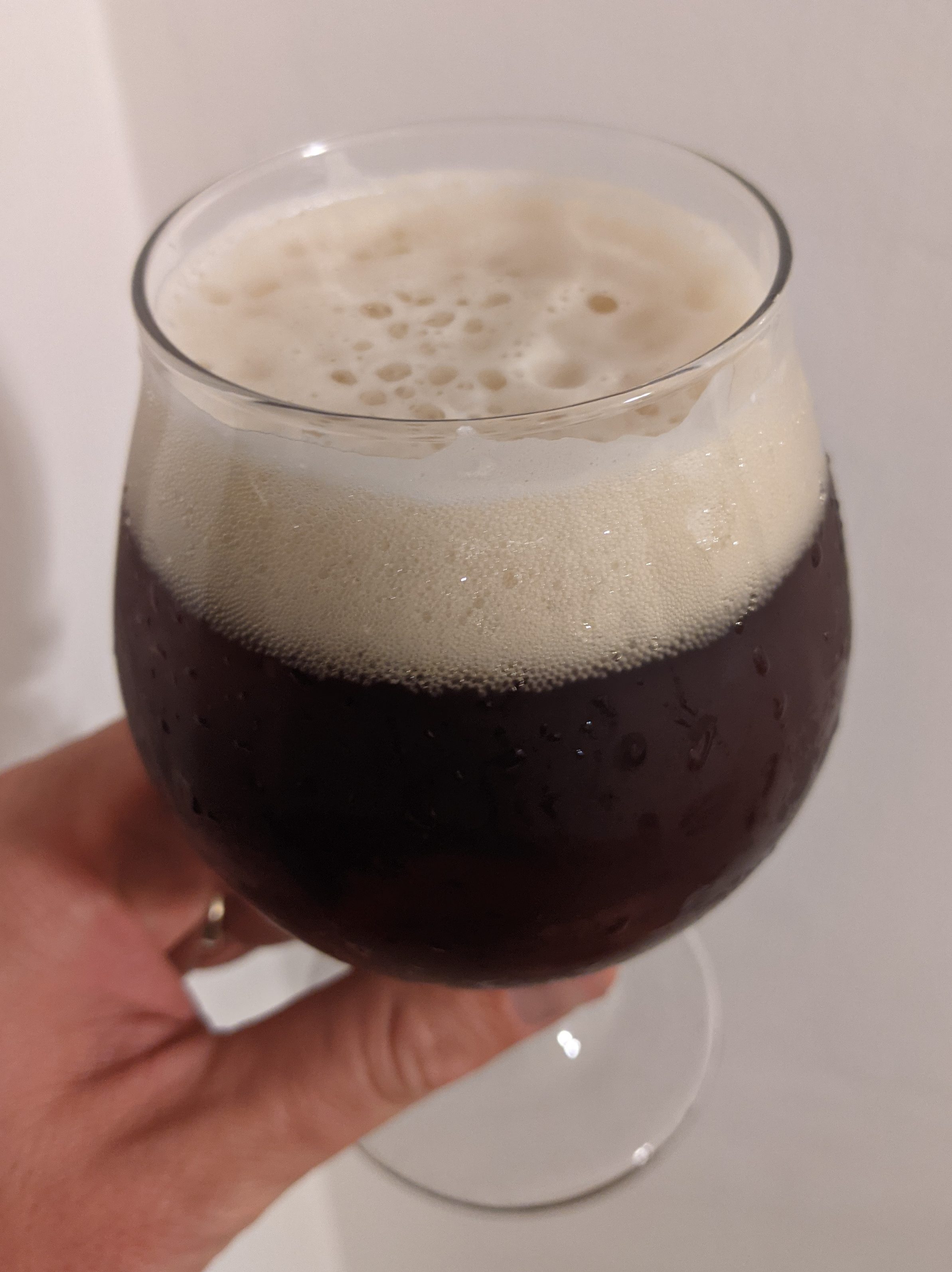
    • The beer is brilliantly clear, and pours with a persistent, creamy, and tan head. The color of the beer itself is deep brown, with deep ruby highlights when viewed on edge.
  • Aroma
    • The aroma is toasty and chocolatey, with a clean character.
  • Flavor
    • Amazing! A chocolate character is prominent, with a deep toasted, malty, bread crust character to the malt. The malt aspect is rich, yet not overwhelming. Bitterness is moderate, making this a very drinkable beer.
  • Mouthfeel
    • Medium-light body, moderate carbonation, smooth finish.
  • Would I brew this again?
    • Yes! This is one of my very favorite recipes…such a good dark lager!
  • Overall
    • 10/10

Schell’s Pilsner Clone 2021

I brew this recipe from time to time, and have enjoyed it pretty well so far. It’s a nice German pils to have around, and has a wonderfully simple approach. This year’s edition is generally the same as in past years, although I used all-Sterling as the hop, rather than a mix of Mt. Hood and Sterling, and I have a different brand of base malt.

Schell’s Pils Clone

Schell’s Pilsner Clone 2021

  • 11 lb. Viking 2-row Xtra Pale Malt
  • 0.25 lb. Carapils (Briess)
  • 0.75 oz. Sterling hop pellets (7.4% alpha), 60 minute boil
  • 0.5 oz. Sterling hop pellets (7.4% alpha), 20 minute boil
  • 1 g BruTanB, 10 minute boil
  • 1.3 oz. Sterling hop pellets (7.4% alpha), 5 minute boil
  • 1 Whirlfloc tablet, 5 minute boil
  • 1 pkg. German Lager yeast (WLP830), in 2L starter
  • 1.25 oz. Sterling hop pellets (7.4% alpha), 3 day dry hop

Target Parameters

  • 1.050 o.g., 1.006 f.g., 5.9% abv, 35 IBU, 4 SRM
  • 60 minute full volume mash, with 40 minutes at 144° and 10 minutes at 158°
  • Claremont tap water

Procedure

  • I mashed in with 7.3 gallons of water at 150°, adding 7 mL of 88% lactic acid, and recirculated at a mash temperature of 144° for 40 minutes.
  • Next, I raised the mash temperature to 158°, holding it there for 10 minutes.
  • Finally, I raised the mash to 168° for 10 minutes, before removing the grains.
  • In total, I collected 6.4 gallons of runnings with a gravity of 1.044, for 68% mash efficiency.
  • I brought the kettle to a boil, adding hops and finings per the schedule. After 60 minutes, I turned off the heat and chilled, transferred, and finished chilling to 48°. I oxygenated with pure O2 for 40 seconds before pitching the yeast.
  • I started with ~5.25 gallons of beer in the fermenter and an original gravity of 1.050.
  • I brewed the beer on 1 May 2021.
  • I began fermentation at 50°, and raised the temperature to 52° on 8 May 2021. I raised the temperature to 60° on 26 May 2021, and cold crashed on 26 May 2021. My fermentation chamber broke(!) on 1 June 2021, so the beer was at ~65° for around 24 hours. I got it back cold on 2 June 2021, and added the dry hops on 5 June 2021.
  • I kegged the beer on 12 June 2021, adding 1 tsp. of gelatin heated to 156° in 3/4 cup of water.
  • Final gravity was 1.010, which works out to 5.2% abv.

Tasting

  • Appearance
    • This is a light gold/yellow beer that pours brilliantly clear, with a persistent creamy head.
  • Aroma
    • The beer has a light, spicy hop note, and a crackery malt note.
  • Flavor
    • It has a prominent bitterness, with a crisp and clean hop character. The bitterness is a bit over the top, and the water has a mineral-type (almost salty) character. Paired with the right food it does OK, but it is a bit too bitter on its own. The malt is light and crackery; very simple, but nice. Yeast profile is quite clean.
  • Mouthfeel
    • Medium-light body, moderate carbonation, slightly dry finish.
  • Would I brew this again?
    • Yes, but next time I’m going to do better on the water profile. I think using tap water was a mistake here, especially without more adjustments to knock out carbonates, etc. The bitterness is just too much, which is unfortunate! In going back through my notes, all past iterations have built up from RO water, and I think I’ll do that again next time. Everything else works pretty well, and I suppose the bitterness is within the upper bounds of a German pils, so I can’t ding it too much. I might also try going back to the Mt. Hood+Sterling hop combo, just to give it a touch more interest in the hops.
  • Overall
    • 6/10

Clonal Common 2021

I like a good steam beer (a.k.a. California common) every once in awhile, and I last made a batch back in 2015. I hadn’t thought it was that long ago, but my notes don’t lie! This year’s version was largely the same recipe, but made with the base malts and caramel malts I had on hand. As before, this batch parallels recipes from BYO and Zymurgy, with only the most minor modifications.

Clonal Common 2021

  • 9.5 lb. Viking 2-row Xtra pale malt
  • 1 lb. Viking caramel 100 (crystal 40 equivalent)
  • 0.5 lb. special roast malt (Briess)
  • 1.15 oz. Northern Brewer hop pellets (7.3% alpha), 60 minute boil
  • 1 Whirlfloc tablet, 5 minute boil
  • 0.85 oz. Northern Brewer hop pellets (7.3% alpha), 10 minute whirlpool
  • 1 pkg. San Francisco Lager yeast (WLP810), prepared in 1L vitality starter

Target Parameters

  • 1.049 s.g., 1.015 f.g., 4.5% abv, 34 IBU, 9 SRM
  • Claremont tap water, treated with Campden tablet to remove chlorine
  • Full volume infusion mash at 152°, 60 minutes

Procedure

  • On the morning of my brew session, I made a 1L vitality starter to kick-start the yeast.
  • I heated 7.25 gallons of water up to 158°, to hit a 152° mash temperature target. I held it here for 60 minutes, before raising to and holding at 168° for 10 minutes. I added a bit of 88% lactic acid to the mash, to adjust pH.
  • I removed the grain basket, and noted 6.5 gallons of wort with a gravity of 1.045, for 72% mash efficiency.
  • Next, I brought the runnings to a boil, boiling for 60 minutes and adding the hops and kettle finings per the recipe. At the end of this, I turned off the heat and whirlpooled (with circulation) for 10 minutes with the whirlpool hop addition.
  • I chilled the wort, transferred it to the fermenter, and then chilled it down to 60° in the fermentation chamber before pitching the yeast.
  • I brewed this beer on 24 April 2021, and fermented at 60° for the first week. I pulled it out to finish up at ambient on 1 May 2021, and it looked like fermentation was pretty much done by this point.
  • I kegged the beer on 9 May 2021. It had a final gravity of 1.015, for 4.6% abv. I hit my numbers pretty well for this batch!

Tasting

  • Appearance
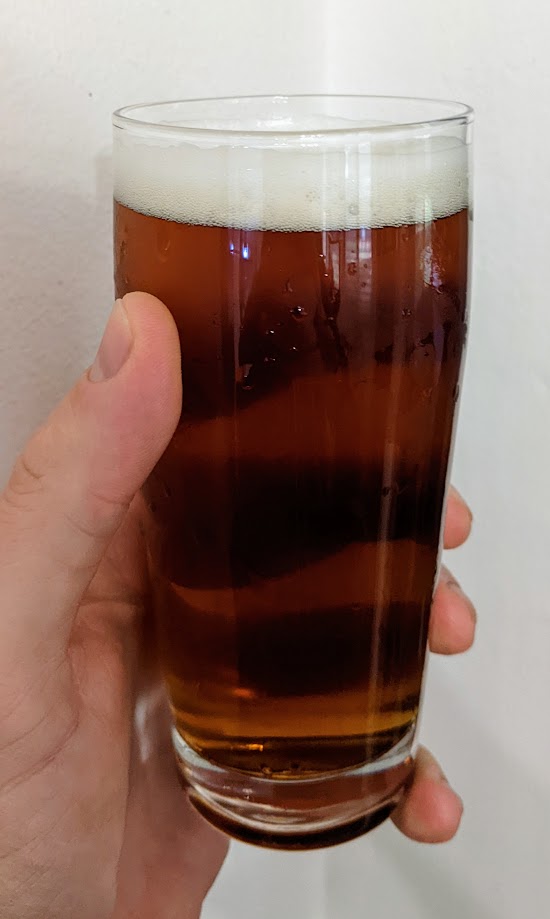
    • Deep gold/light amber color, and very clear, approaching brilliant. The beer pours with a creamy ivory head that is quite persistent. Overall, though, this batch is just a touch lighter in coor than is appropriate by the BJCP style guide.
  • Aroma
    • The beer has a light caramel aroma, with a slight “woody” hop character as appropriate for this style.
  • Flavor
    • This has a moderately high level of bitterness and a nice woody character to the hop flavor. This one tastes moderately malty with a light caramel note and a slight bit of toastiness. Yeast character is very clean. Overall, this one tilts towards bitterness rather than maltiness.
  • Mouthfeel
    • Medium-light body and moderate level of carbonation, with a clean, off-dry finish.
  • Would I brew this again?
    • Overall, this is a pretty nice California Common! There’s not much to say otherwise; I think the overall recipe is pretty well locked in. If I wanted to be a stickler for BJCP guidelines, I should adjust the color slightly with a bit of Carafa Special III or something like that. I also wouldn’t mind a tiny hint of fruitiness in the yeast character, and thus might try fermenting at a slightly higher temperature next time. All that aside, I’m pleased with this one!
  • Overall
    • 8.5/10

Pliny the Elder Clone

Pliny the Elder is probably one of the most highly regarded and sought-after beers in the US, but I think I’ve only had it once. I remember it being pretty good, but not mind-blowing…but then again, that was awhile ago. Even so, I thought it would be fun to make a clone to fill the “high ABV beers” space for a little while.

The clone recipe is from the Brew Your Own Big Book of Homebrewing, although various versions are fairly readily available elsewhere. I scaled it down to ~3 gallons, because I didn’t really want a massive quantity of something around 8 percent abv.

Pliny the Elder Clone

  • 7.75 lb. 2-row Xtra pale malt (Viking)
  • 4 oz. Carapils malt (Briess)
  • 3 oz. caramel 40L malt (Briess)
  • 9.6 oz. corn sugar (added to boil)
  • 2.55 oz. Magnum hop pellets (10.1% alpha), 90 minute boil
  • 0.3 oz. Chinook whole hops (13.1% alpha), 90 minute boil
  • 0.65 oz. CTZ hop pellets (15.8% alpha), 45 minute boil
  • 0.6 oz. Simcoe hop pellets (12.7% alpha), 30 minute boil
  • 1.35 oz. Centennial hop pellets (8.1% alpha), 15 minute whirlpool
  • 0.6 oz. Simcoe hop pellets (12.7% alpha), 15 minute whirlpool
  • 1 pkg. Safale American ale yeast (US-05)
  • 2 oz. Columbus (Tomahawk) hop pellets (14.2% alpha), dry hop in keg
  • 1 oz. Centennial hop pellets (8.1% alpha), dry hop in keg
  • 1 oz. Simcoe hop pellets (12.7% alpha), dry hop in keg

Target Parameters

  • 1.071 s.g., 1.010 f.g., 8.2% abv, 276 IBU (100+ IBU at best!), 5 SRM
  • Claremont tap water with Campden tablet to remove chloramine
  • Infusion mash at 150° for 60 minutes, with pour-over sparge

Procedure

  • I mashed in with 3.75 gallons of water at 159° and 4 mL of 88% lactic acid, to hit a mash temperature of 150° for 60 minutes, with recirculation after 10 minutes. Then, I heated to 168° and held there for 10 minutes. Then, I removed the grain basket, and sparged slowly with 1.6 gallons of hot water.
  • After the mash, I collected 4.75 gallons of runnings with a gravity of 1.054, for 79% mash efficiency. Sparging seems to be the ticket for great efficiency in these high gravity small batch mashes.
  • I brought the runnings to a boil, adding hops and finings per the recipe.
  • After a total of 90 minutes on the boil, I chilled down to 70°, transferred to the fermenter, and pitched the yeast.
  • I brewed this beer on 10 April 2021. Starting gravity was 1.072, right about where I wanted it! I fermented at 66°.
  • I kegged the beer on 23 April 2021, and dry hopped with a sack of hops in the keg. There was quite a bit of trub on the bottom of the fermenter!
  • Final gravity was 1.015, for 7.6% abv.

Tasting

  • Appearance
    • The beer has a rich gold color, with a slight chill haze. It took about two weeks in the keg before it dropped fairly clear. There is a low ivory head that is fine and fairly persistent.
  • Aroma
    • The aroma is hop forward, with an initial citrus and very slight tropical fruit character, and a light caramel malt quality. Fermentation profile is pretty clean.
  • Flavor
    • The flavor is very hop forward, with a high level of bitterness (no surprises). The bitterness has a citrus pith character, with slight grapefruit, and fairly clean. The bitterness is not quite as complex as I might like. The malt character is fairly low, with a slight doughy character.
  • Mouthfeel
    • The beer has a medium body with moderate carbonation, and an extended bitter finish that isn’t overly dry. I feel that the body could be a bit lighter on this one.
  • Would I brew this again?
    • The beer is okay, but the hops feel a bit one-note. This is a surprise, given the quantity of hops involved as well as the dry hop in the keg. I might switch in some more aggressively tropical hops next time, to make this a bit more interesting. I would also mash this at a slightly lower temperature, to dry out the final product a bit. Finally, I would adjust my dry hop strategy–this quantity of hops really generates a lot of detritus, even after sitting for awhile, and I think it would be better served by dry hopping in the fermenter with a careful transfer under CO2.
  • Overall
    • 5/10