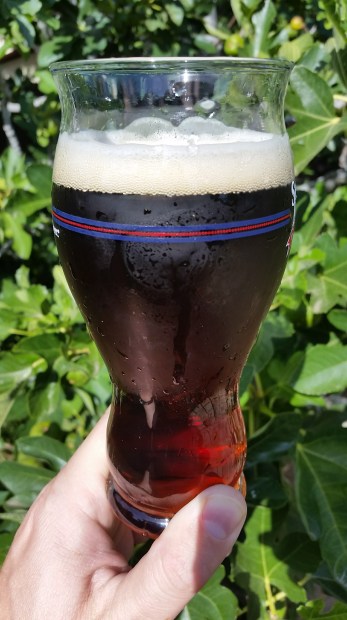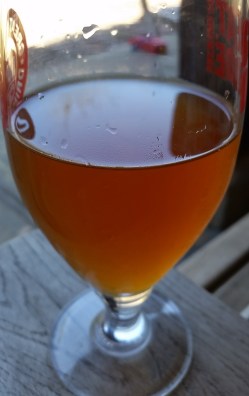
Dark Helmet Schwarzbier

As I continue to work my way through lager styles, I also realized that a lot of my recent brews have been fairly light (at least color-wise). This generally fits my summer drinking preferences, but I’m starting to get the itch for something with just a touch more robustness. Now, I don’t want anything too dark and filling (after all, it’s still hot here!), and I’ve been doing a lot of amber type beers recently, so schwarzbier sounded intriguing.

To sum up the BJCP 2015 style description, schwarzbier should be roasty yet also highly drinkable. That’s intriguing! I’ve maybe only sampled one or two in the very distant past (if ever), so I was a bit in the dark (no pun intended) as to how I should craft the recipe. So, I turned to the ever-reliable Brewing Classic Styles by Zainasheff and Palmer. With a few minor adjustments for ingredients, I was ready to roll. Following the lead of Gordon Strong, I elected to add all of the dark and crystal malts at vorlauf. This is supposed to impart a smoother character, and I figured it couldn’t hurt to try.

As for the name of this brew, I’m not the first to be so clever, but that didn’t deter me. The schwartz is strong with this one.
20170703_083848.jpg

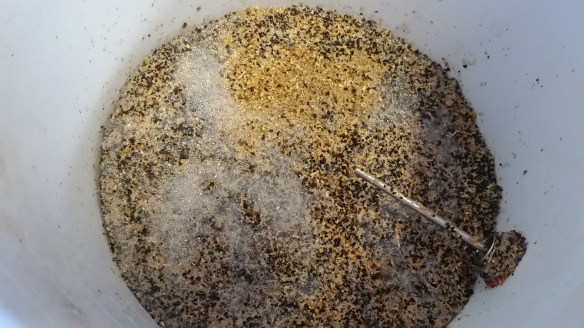
Spent grains after the mash

Dark Helmet Schwarzbier

  • 4.5 lbs. Munich I malt (Weyermann)
  • 4.25 lbs. Château Pilsen malt (Castle Malting)
  • 6 oz. chocolate malt, added at vorlauf (Briess, 350 SRM)
  • 6 oz. crystal 40 malt, added at vorlauf (Great Western)
  • 3.5 oz. black barley malt, added at vorlauf (Briess)
  • 3.5 oz. Carafa Special II, added at vorlauf (Weyermann)
  • 1.25 oz. Liberty hop pellets (4.9% alpha), 60 minute boil
  • 0.75 oz. Liberty hop pellets (4.9% alpha), 5 minute boil
  • 1 tsp. Fermax yeast nutrient, 10 minute boil
  • 1 Whirlfloc tablet, 10 minute boil
  • 2 pkg. SafLager West European Lager yeast (S-23)
  • 1 pkg. SafLager Lager dry yeast (W34/70)

Target Parameters

  • 1.046 o.g., 1.011 f.g., 4.6% abv, 26 IBU, 28 SRM, 5.5 gallons into the fermenter
  • Water built from RO and tap water to hit target of 67 ppm Ca, 7 ppm Mg, 27 ppm Na, 30 ppm SO4, 89 ppm Cl, 126 ppm HCO3, 103 ppm alkalinity, and 51 ppm RA.
  • 60 minute mash at 152°, batch sparge, 60 minute boil

Procedure

  • For my mash water, I used 3.25 gallons of RO with 1 g table salt and 3.5 g calcium chloride. For the sparge water, I treated 5 gallons of Claremont tap water with a quarter of a Campden tablet. All together, this should hit my general brewing water parameters as outlined above.
  • I mashed in with 3.25 gallons of water at 162.6°, to hit a mash temperature of 153.5°. This was down to 150° after 35 minutes.
  • I sparged with 1.5 gallons of water at 175°, let it sit for 10 minutes, added the dark grains, vorlaufed, and collected the first runnings.
  • Then, I sparged with 3.5 gallons of water at 175°, let it sit for 10 minutes, and collected the second runnings.
  • All together, I collected 6.8 gallons of wort at a gravity of 1.039, for 72% efficiency.
  • I started the boil, and added all of the hops, etc., per the schedule in the recipe.
  • After 60 minutes, I chilled the wort to 80° and put it in the fermentation chamber to chill for a few hours, until the beer was down to 48°.
  • I pitched the two packets of S-23 into a slurry of distilled water, which did show appropriate activity. But, I also noted that they were expired by 10 months.
  • There wasn’t any real activity visible in the fermenter after around 24 hours, so I opted to pitch in some extra yeast. Luckily, I happened to have a few packets of W34/70 on-hand. Fermentation was underway visible around 48 hours after the initial pitch. Perhaps I was being overly cautious, but I figured it couldn’t hurt.
  • I am fermenting this at 50°. Starting gravity was 1.046.
  • I brewed this batch on July 3, 2017.

Beer Tasting: Dunkel-Osteus

20170514_170015I love this beer. Quite frankly, it’s one of the best I’ve brewed in a long time. And, it was just plain enjoyable! There aren’t a lot of commercially available Munich dunkels out there, so I was happy to really get to know this style. Of course, a tasty beer sadly leads to an empty keg…with dreams of rebrewing this sometime.

  • The Basics
    • O.G. = 1.050; f.g. = 1.016; 4.5% abv; 20 SRM; 22 estimated IBU
  •  Aroma
    • Nice toasty and malty-sweet aroma, with the very slightest hint of chocolate behind that. Wonderful!
  • Appearance
    • Deep reddish brown color with brilliant clarity and a fine ivory head that sticks around nicely. This is a really pretty beer!
  • Flavor
    • Rich and toasty flavor, with a clean hop profile.
  • Mouthfeel
    • Medium bodied, moderate carbonation that seems to fit what I have read about the style. Malt dominates the finish.
  • Would I brew this again?
    • Absolutely! This is a phenomenal recipe, and I’m really pleased with my first effort at the style. One friend who tasted it (whose taste I trust) suggested it is maybe a touch on the sweet side, and that a lower mash temperature would dry it out a bit. Along these lines, I might aim for a 150 or 152 degree target temperature. Alternatively, I might use the decoction schedule in Gordon Strong’s book and see if that also does the trick. In any case, this ranks among my favorite beers of 2017 and will definitely get brewed again.
  • Overall
    • 9.5/10

Big Batch Update: Saison, Amber Ale, Pilsner

There’s lots to report with kegging and fermentation for a few recent batches. So, here’s what’s new:

  • Thumbspike Saison 2.0
    20170528_144954

    • This might have had the quickest turn-around on any kegged beer I’ve ever done! I brewed the beer on 12 May 2017, starting with an 80° fermentation temperature. On 16 May, I raised the temperature to 85°. Everything really churned along, from start to finish (as you might expect with fermentation at those temperatures)! I kegged the beer on 20 May 2017, with a final gravity of 1.004. That works out to 6.7% abv. I’ve had it on tap for about a week, and it’s a pretty interesting and enjoyable beer. All of the ingredients melded together quite nicely, and I am pleased with the results. It’s a very refreshing brew for a warm afternoon on the patio.
    • My first impressions are that it has a very lightly fruity aroma, with a slight tartness on the flavor. Head retention seems pretty miserable at this point, but I don’t know if that’s a real feature of the beer or because I didn’t wash my glass from a previous beer before pouring this one.
  • Hell Creek Amber Ale 1.1
    • I brewed this beer on 14 April 2017, with a starting gravity of 1.060. I kegged the beer on 7 May 2017. Final gravity was 1.016, which equates to 5.8% abv.
  • Czech-ed Out Pilsner
    • This batch has the honor of being my first dumper, ever. I’ve weathered warm fermentations, low gravities, and incomplete fermentations, and have always soldiered through in the end. Alas, this particular batch just wasn’t any good. The culprit wasn’t infection, bad fermentation, or anything like that. It was bad hops! As noted in my original post, the late hop addition smelled really grassy. I should have known better than to add them to the kettle, but wasn’t quite that smart. So, I kegged the beer, carbonated it, and pulled my first sample…to a whiff of pilsner that smelled pretty much like freshly mown lawn, and not in a good way. It was almost reminiscent of jalapenos, but in any case was not reminiscent of what a good European pilsner should taste or smell like. Lesson learned!
    • In terms of fermentation history, I started fermentation at 50° on 9 April. I raised the beer to 65° on 21 April, and then dropped it to 33° on 30 April 2017. I kegged the beer on 14 May, at which point it had a final gravity of 1.011. This equates to 5.6% abv.

Palaeotis Pils 1.1

Time for another batch…this time, a retool of my German pils. Compared to the last round, I have changed just about everything, although the overall base malt is basically the same. To speed my brew day along, I’m not doing a decoction. Instead, I’m rounding out the malt bill with a little bit of melanoidin malt.

Palaeotis Pils

  • 8.5 lbs. floor-malted Bohemian pilsner malt (Weyermann)
  • 5 oz. melanoidin malt (Weyermann)
  • 3 oz. acidulated malt (BestMalz)
  • 0.3 oz. Warrior hop pellets (15.0% alpha), 60 minute boil
  • 0.5 oz. Liberty hop pellets (4.9% alpha), 30 minute boil
  • 0.5 oz. Tettnang hop pellets (3.5% alpha), 30 minute boil
  • 0.5 oz. Liberty hop pellets (4.9% alpha), 5 minute boil
  • 0.5 oz. Tettnang hop pellets (3.5% alpha), 5 minute boil
  • 1 tsp. Fermax yeast nutrient, 10 minute boil
  • 1 Whirlfloc tablet, 10 minute boil
  • 2 packages lager yeast (Fermentis W34/70)

Target Parameters

  • Infusion mash to hit target of 150°. Batch sparge.
  • Water built from R.O., to hit 59.1 ppm Ca, 8.2 ppm Mg, 89 ppm SO4, and 62.9 ppm Cl.
  • 1.048 o.g., 1.010 f.g., 4.9% abv, 34 IBU, 4 SRM, 5 gallons into fermenter

Procedure

  • For this recipe, I built my water to match the “Pilsner Water” profile on Braukaiser. For the 3.1 gallons of mash water, I added 1.2 g of gypsum, 1.2 g of epsom salt, and 1.5 g of calcium chloride. For the 5.5 gallons of sparge water, I added 2.1 g of gypsum, 1.7 g of epsom salt, and 2.7 g of calcium chloride.
  • I mashed in with 3.1 gallons of water at 160° to hit 150°, and let it rest for 60 minutes. After 35 minutes, the mash temperature had fallen to 148°.
  • After a 60 minute mash, I added 1.75 gallons of water at 200° to raise the mash temperature to to 160°. I let it sit for 10 minutes, vorlaufed, and collected the first runnings.
  • Next, I added 3.75 gallons of water at 185°, let sit for 10 minutes, vorlaufed, and collected the remainder of the runnings.
  • In total, I had 7.1 gallons of mash runnings at a gravity of 1.039, for 82% efficiency.
  • I brought the kettle to a boil, and added the hops and other ingredients per the schedule.
  • After 90 minutes, I chilled the wort down to 75°, transferred the wort while aerating, put the fermenter into the fermentation chamber, and let it cool down to 50° before pitching the yeast.
  • Starting gravity was 1.048, nearly precisely on target. I started fermentation at 50°, and raised it to 54° after four days. I brewed the beer on 20 May 2017.

Beer Tasting: Holy Helles

20170423_150736Time for another beer tasting! This Munich helles–my first attempt for the style–has been an enjoyable brew. I entered it into the first round for the NHC…it didn’t place, but I’ll be interested to see how the score sheets pan out. I should get those later this week, but until then, here are my own thoughts!

  • The Basics
    • O.G. = 1.047; f.g. = 1.012; 4.6% abv; 4 SRM; 19 estimated IBU
  • Aroma
    • Mild spicy hop note, with a moderate degree of slightly sweet maltiness behind that.
  • Appearance
    • Brilliantly clear and light gold in color. The beer pours with a thick off-white head that settles to a nice even and persistent blanket across the top of the beer.
  • Flavor
    • Nice malt character, with a bit of graininess to it. The bitterness level is subdued and definitely in the background
  • Mouthfeel
    • Relatively light bodied, moderately carbonated, with a medium-dry finish. The bitterness hangs around on the finish for awhile, although it is not overpowering.
  • Would I brew this again?
    • This is a good beer, and quite drinkable, but I think it falls down a bit in the malt character. To bring this a touch more into the Munich helles style, I might up the malt profile just a bit–it seems like it swings to the hops end on aroma just a bit more than I would prefer. One fellow homebrewer suggested using a German pilsner malt rather than the Bohemian pilsner malt I’ve been using as of late–this might be a good first step.
  • Overall: 6/10