Beer Tasting: Lemondrop Wheat Ale

20170704_155850I am absolutely thrilled with this beer! In fact, a little too thrilled…the keg is nearly dry. Time for a tasting, then!

Lemondrop Wheat Ale

  • The Basics
    • O.G. = 1.047; f.g. = 1.011; 4.8% abv; 4 SRM; 34 estimated IBU
  • Appearance
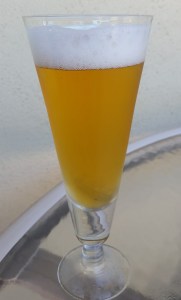
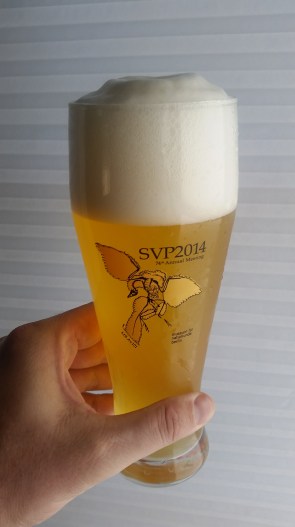
    • Hazy light straw color, with firm and persistent white head. When poured well, it’s like a topping of meringue. Gorgeous!
  • Aroma
    • Light citrus (slightly lemony) and slightly bready aroma
  • Flavor
    • Citrusy forefront, with a smooth and doughy middle, fading then into a lingering but pleasant bitterness.
  • Mouthfeel
    • Light body and moderate carbonation, with a medium-dry finish
  • Would I brew this again?
    • In a second! This is solidly in the running for favorite beer of 2017 so far. It’s just about the perfect summer beer–light, refreshing, and ridiculously drinkable. I’m burning through this keg at a pretty quick pace! The Lemondrop hops are a fun addition, too. Although I wouldn’t call them distinctly “lemon” in all aspects of their character (i.e. it’s not “lemon oil” or “Lemon Pledge”), they definitely have a citrus note that contributes nicely to the overall character of this beer. The only, very minor, flaw in this batch is that the finish has gotten just a touch harsh over time, likely due to the extended keg dry hopping. That’s easily fixed in the next iteration, though. I am quite pleased with just about every other aspect of this recipe; the balance between pilsner and wheat malt is perfect, and the yeast is also a true winner. WLP320 has just a touch of character, but it’s not overwhelming like European wheat beer yeasts. Also, it stays in suspension forever, which also helps with appearance and presentation. I don’t think this would be as good of a beer with a Chico strain yeast. I also think my water adjustments paid off; it’s not overly minerally in character like some of my past lighter beers.
  • Overall
    • 9.5/10

Beer Tasting: Palaeotis Pils 1.1

This batch was all gone last week; luckily, I got my tasting in before it was all gone.

20170702_143220Palaeotis Pils 1.1

  • The Basics
    • O.G. = 1.048; f.g. = 1.011; 4.7% abv; 4 SRM; 34 estimated IBU
  • Appearance
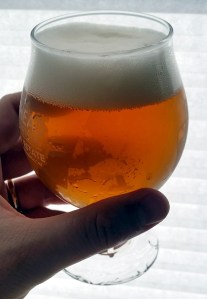
    • Light gold and crystal clear, with a thick white head on the pour that settles to a persistent blanket as I drink the beer. In the image, the condensation on the outside of the glass doesn’t do the beer’s appearance justice!
  • Aroma
    • Light and bready maltiness predominates, with a hint of slightly spicy hops behind that.
  • Flavor
    • Bready maltiness, with a restrained bitterness that builds as I drink the beer. Bitterness is persistent; it is maybe a touch harsh, and I wonder if that is because I used Warrior as the bittering addition?
  • Mouthfeel
    • Moderate body with a slightly dry finish. Carbonation is moderate–as it is pouring at the moment, with a fair bit of foam, I think I am losing some of the carbonation. This will hopefully settle down as the keg matures, as happened with my last keg of this style.
  • Would I brew this again?
    • This is decent, but I think I prefer my previous iteration of the recipe. The aroma on that one seemed a little more pronounced–both on the hops and malt side–and I feel like the flavor was just a notch better. I wonder if that was due to the decoction on the first batch? I will probably return to Magnum hops for the bittering addition in the next version of this pilsner; the Warrior hops have an ever so slight harsh edge that is out of place for a delicate pilsner. I’m also going to use a German pilsner malt–I have 10 pounds of Barke Pilsner Malt that might be perfect for this task. The malt character came up as a critique in a recent competition, so I think that’s a fairly easy fix. I’ll also return to WLP830 for the yeast.
  • Overall
    • 7/10

Beer Tasting: Hell Creek Amber Ale 1.1

20170611_212509

Hell Creek Amber Ale, appropriately served in a fossil-themed glass

The keg is gone barely a week for my wild hop amber ale, so it’s better late than never in posting this review. Also, I bottled up a few of these and enjoyed sharing them with some folks at Homebrew Con (including a paleontologist or two)!

  • Aroma
    • Malt dominates the aroma, with malty-sweet toffee and light caramel character. No appreciable yeast or hop character.
  • Appearance
    • Very clear beer with a deep amber color. The head is ivory in color, and settles down to a low but persistent quality.
  • Flavor
    • Hoppiness dominates on the front end of the flavor, and persists throughout the tasting and into the finish. The hop character is fairly herbal, and the bitterness has a slight rough edge to it. The malts come across moderately, with a caramel and bready quality. There is a minerally character to this, and next time I’ll probably adjust the water a bit to lower that. 100 percent Claremont tap water apparently doesn’t work with this recipe!
  • Mouthfeel
    • Moderate body and moderate carbonation. The finish tends toward the dry and bitter side.
  • Would I brew this again?
    • This is an improvement, certainly, on the last version of this beer. I think it was a good move to ditch the special B. This is an interesting beer, because I “have” to brew it within some self-imposed constraints (only Montana/South Dakota ingredients). I would say that the beer doesn’t age entirely well, probably due to the high percentage of caramel malts, and had a bit of an oxidized note towards the end of the keg. For the next iteration of this recipe (assuming there is a next, of course!), I’ll probably switch up the grain bill and see what other amber ale recipes are out there. The caramel is just a touch heavy in this for my tastes. As noted above, I’ll also play with the water a bit.
  • Overall
    • 6.5/10

Beer Tasting: Thumbspike Saison 2.0

20170623_160401I managed to do a tasting with the very last glass of this! Talk about good timing.
  • Appearance
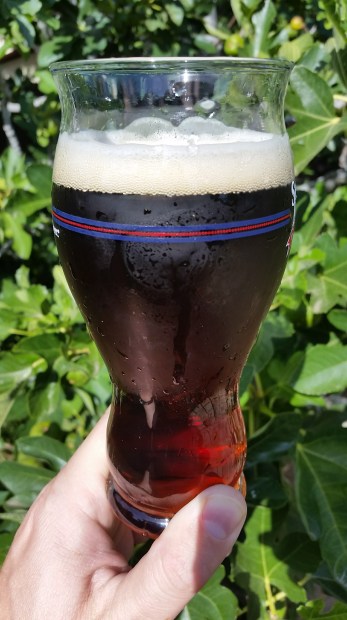
    • Thick white head, with excellent persistence. The beer itself is medium gold, with a slight haze.
  • Aroma
    • Tart aroma, with a hint of breadiness behind that.
  • Flavor
    • Pleasantly tart and very slightly fruity, with a bready maltiness that is quite pleasant. This is a moderately bitter beer, although the bitterness has a slight rough edge to it. I’ll blame the wild hops for that.
  • Mouthfeel
    • Light bodied, moderately high carbonation, and a nice dry finish.
  • Would I brew this again?
    • This is a surprisingly nice beer! I’m not sure what I expected, but in the end it turned out pretty good, especially with a bit of maturation. In the future, I might play with the hop bill, to take a bit of the “edge” off (probably due to the wild hops), but as a ‘gimmick’ beer this ain’t half bad! I like how the yeast worked in this one — the dominant tartness with a bit of fruitiness behind that makes for a tasty combination. It’s a bit different from the slightly more clove-y flavor I get from traditional Belgian saison yeasts, and I rather enjoyed it. Thumbs up for the Mangrove Jack M29 saison strain!
  • Overall
    • 7/10

Beer Tasting: Dunkel-Osteus

20170514_170015I love this beer. Quite frankly, it’s one of the best I’ve brewed in a long time. And, it was just plain enjoyable! There aren’t a lot of commercially available Munich dunkels out there, so I was happy to really get to know this style. Of course, a tasty beer sadly leads to an empty keg…with dreams of rebrewing this sometime.

  • The Basics
    • O.G. = 1.050; f.g. = 1.016; 4.5% abv; 20 SRM; 22 estimated IBU
  •  Aroma
    • Nice toasty and malty-sweet aroma, with the very slightest hint of chocolate behind that. Wonderful!
  • Appearance
    • Deep reddish brown color with brilliant clarity and a fine ivory head that sticks around nicely. This is a really pretty beer!
  • Flavor
    • Rich and toasty flavor, with a clean hop profile.
  • Mouthfeel
    • Medium bodied, moderate carbonation that seems to fit what I have read about the style. Malt dominates the finish.
  • Would I brew this again?
    • Absolutely! This is a phenomenal recipe, and I’m really pleased with my first effort at the style. One friend who tasted it (whose taste I trust) suggested it is maybe a touch on the sweet side, and that a lower mash temperature would dry it out a bit. Along these lines, I might aim for a 150 or 152 degree target temperature. Alternatively, I might use the decoction schedule in Gordon Strong’s book and see if that also does the trick. In any case, this ranks among my favorite beers of 2017 and will definitely get brewed again.
  • Overall
    • 9.5/10