Recirculating Draft Line Cleaner: Pin Lock Edition

Most of us who own kegging setups probably don’t clean our draft lines as often as we should (if ever). For me, the big deterrent has been that the procedures require either 1) wasting a bunch of CO2 to push cleaning solution out of a keg or 2) specialized, somewhat costly, and unwieldy equipment. So, I was really excited awhile back to read a post on Homebrew Finds about a DIY draft line cleaner. It looked cool, but the default build was for a ball lock keg. I use pin locks, and the alternative suggestions they had for pin locks assumed quick disconnects on the draft lines, which I don’t have. So, I needed to do some minor tweaking. Fortunately, the original post gave plenty of specifics for the base build, and a little research helped me put together my own pin lock recirculating draft line cleaning system.

The basics are the same as outlined at Homebrew Finds; the only minor change is in the hardware connecting the pump to the beverage lines. Parts include:

The cost for everything was roughly $45 (the main costs were in the pump and power switch).

20160816_181051

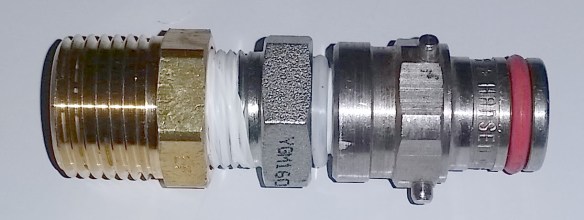
Bushing, Tube Fitting, and Keg Post

Once I had everything, I assembled the parts, using teflon tape to seal the threads. First I connected the bushing+tube fitting+keg post (in that order).

20160816_182222

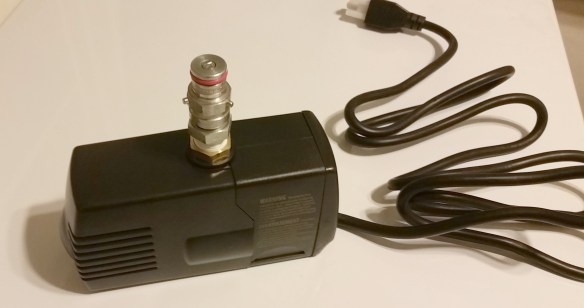
Assembled Hardware

Then, I attached that assembly to the pump. Everything fit perfectly!

20160816_194706

Hardware Attached to Pump

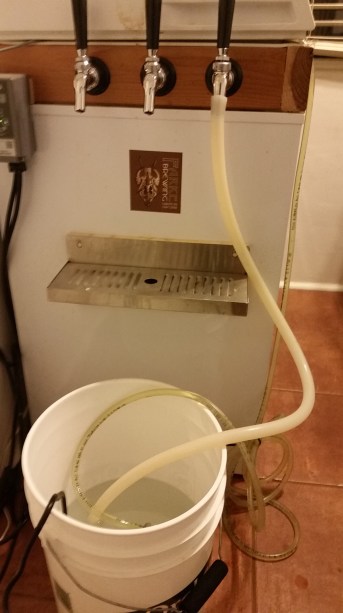
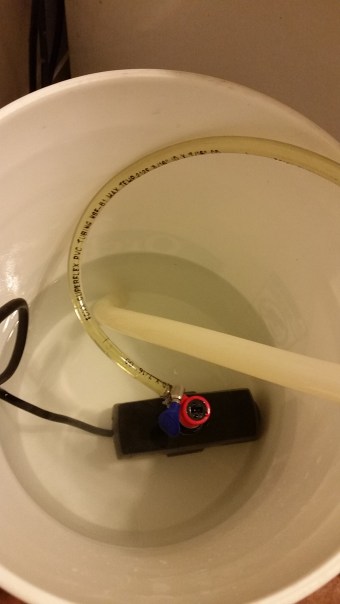
Now, I was ready to go! I attached the silicone tubing to the beer faucet, connected the beer line to the pump, and pushed some hot water through to clear the beer out of the line. After this, I ran line cleaner for 20 minutes, recirculating the cleaner by draining it out of the faucet and back into the bucket with the pump.

20160816_195802

Once this was done, I rinsed out the line by running hot tap water through the entire assembly for another 20 minutes. Done, and done!

20160816_195754

So far, I’m pretty happy with this setup, and anticipate that it will reduce my excuses for not cleaning my tap lines more frequently. This will in turn lead to tastier draft homebrew!

A big thanks to the folks at Homebrew Finds for posting such a clear and easily modified tutorial. You made my own build that much easier!

Safety note: Please use good judgement and be aware of all manufacturer warnings and safety protocols for this equipment. Be smart, be safe!

Gondwana Pale Ale 1.3 Kegged

Tonight I kegged the latest draft of my Gondwana Pale Ale, after 10 days in the primary fermenter. The beer has a nice malty aroma and a smooth bitterness; this will be augmented further by 2 oz. of Mosaic hops pellets on the dry hop. The beer is still rather hazy, presumably because the yeast haven’t fully dropped out yet. Final gravity is at 1.010, down from 1.045, for 4.6% abv.

Citra Wit

It’s time to brew another light-and-drinkable beer (in anticipation of the inevitable kicking of my pilsner keg). For this round, I wanted to try a style I haven’t brewed before, and a Belgian wit seemed like just the ticket. I’ve done a few iterations of a white IPA with Belgian wit yeast, and a less hoppy brew wasn’t too much of a stretch from that.

In putting together this recipe, I settled on a 50% pils20160811_191734ner malt, 50% flaked wheat grist. Based on what I read, flaked wheat seemed like a nice alternative to whole unmalted wheat. The wheat was balanced with a hefty dose of rice hulls in order to ease sparging.

Belgian wits are commonly characterized by a generous dash of coriander and bitter orange peels. I had some coriander on hand in my brewing drawers, but was out of bitter orange. They didn’t have any at my LHBS, either, and fresh oranges are out of season here. So, I grabbed a grapefruit, zested it, and then did a quick peel. To continue on the citrus theme, all of the hopping was accomplished with a very late boil dose of Citra (only around 3 minutes before flame-out, with steeping for the duration of wort chilling).

Citra Wit

  • 5 lbs. pilsner malt
  • 5 lbs. flaked wheat
  • 0.87 lb. rice hulls
  • 2 oz. Citra hops pellets (14.1% alpha, 3.6% beta), 3 minute boil
  • 0.75 oz. fresh grapefruit peel, 5 minute boil
  • 0.25 oz. coriander (crushed), 5 minute boil
  • 0.5 tsp. yeast nutrient, 5 minute boil
  • Belgian Wit Ale Yeast (WLP400)

Procedure

  • Five days in advance, I built a 1.5L starter for some Belgian Wit Ale yeast I had harvested on May 5, when I last brewed a white IPA. After two days on the stir plate, I moved the starter into the refrigerator to cold crash the yeast.
  • On brew day, I mashed in with 3.8 gallons of water at 163°, to hit a mash temperature of 153.2°. This was down to 149° after 50 minutes, and around 147° after 65 minutes. At this time, I added 1 gallon of water at 190°, to raise the mash bed to 149°. I let it sit for 10 minutes, vorlaufed, and collected 2.5 gallons of wort.
  • I added 3.7 gallons of water at 175°, which raised the mash bed to 164°. Because I had only collected 2.5 gallons on the first runnings, I added an additional gallon at 180°, to raise the mash bed to 165°. I figure that the wheat flakes absorbed a lot of extra water, hence the low volume on first runnings.
  • After another 10 minutes, I vorlaufed and collected the remainder of the runnings from the mash tun.
  • In total, I collected 6.6 gallons at a gravity of 1.038. This works out to 69% efficiency. This is a little lower than normal; most likely due to the high percentage of wheat flakes in the grist.
  • I started the boil, and added the various hops, spices, and yeast nutrient per the schedule. Because I was a little distracted, I ended up miscalculating the boil time and ended up with around 55 minutes total.
  • I cooled the wort to 81° (as far as I could get it with the current groundwater temperature), and transferred the wort to my primary fermenter while aerating. I pitched the yeast and sealed everything up.
  • This batch was brewed on 12 August 2016. Starting gravity was 1.043. I am fermenting this at 71°; vigorous fermentation had started within 12 hours of pitching the yeast.

Gondwana Pale Ale 1.3

I’ve been pretty heavy on the IPAs lately, so it’s time to give my tastebuds a break with a pale ale. My go-to recipe has been Gondwana Pale Ale–it has a clean but flavorful malt profile, which permits the single hop of my choosing to shine through. I’ve brewed this recipe with minor modifications on three different occasions, so this is iteration 4.

For the current round, the malt bill is pretty much the same as before (~82% 2-row, 10% Vienna, and the remainder split between crystal 40 and Carapils). Where I previously used Citra hops, though, I substituted in Mosaic. I have not yet done a single-hop Mosaic brew, so this is a good opportunity to really explore the characteristics of that variety.

Gondwana Pale Ale 1.3

  • 8.6 lbs. 2-row malt (Great Western Malting Co.)
  • 1 lb. Vienna malt
  • 0.45 lb. 40° crystal malt
  • 0.45 lb. Carapils malt
  • 1 oz. Mosaic hops pellets (11.3% alpha, 3.2% beta), 35 minute boil
  • 1 oz. Mosaic hops pellets (11.3% alpha, 3.2% beta), 2 minute boil
  • 2 oz. Mosaic hops pellets (11.3% alpha, 3.2% beta), dry hop in keg
  • 1 tsp. Irish moss (10 minute boil)
  • 1 pkg. Safale US-05 dry yeast

Procedure

  • I mashed in with 3.75 gallons of water at 163°, to hit a mash temperature of 153.3°. This was down to 152.5° after 15 minutes, and down to 149° after 40 minutes.
  • After 55 minutes of mashing, I added 1 gallon of water at 165°, to raise the mash temperature to 151.5°. I let it sit for 10 minutes, vorlaufed, and collected the first runnings.
  • Next, I added 3.7 gallons of water at 190°; this raised the mash to 174°, so added ~0.25 gallons of water in ice cubes, to bring the mash down to 165°. I let it sit for 10 minutes, vorlaufed, and collected the remainder of wort.
  • In total, I collected 7.2 gallons total, with a gravity of 1.037 gravity and 69% efficiency. This was a bit below my usually efficiency (~72%)–I suspect the more dilute mash was to blame.
  • I brought the wort to a boil, and added hops and Irish moss per the schedule.
  • After 60 minutes, I cooled the wort to 82°. Anything lower than this would have been too hard given my high groundwater temperature. I transferred the wort to the fermenter while aerating and then pitched the yeast.
  • I brewed this up on August 5. Starting gravity was 1.045. I am fermenting the beer at 64°; visible fermentation signs were in evidence after around 12 hours, and vigorous fermentation was underway after ~36 hours.
  • I’ve noted that my collected volumes have been a bit above what I predicted; I need to continue adjusting the BeerSmith settings for my mash tun volumes and dead spaces. Also, I suspect I am getting just a little sloppy with volume measurements; it’s easy to overfill my gallon measuring pitcher, which adds up after four or five pitchers’ worth.

The Quest for a Real Jurassic Beer

Unexpected connections between my vocation of paleontology and my avocation of brewing pop up in the strangest places.

Recently, I decided to try my hand at a traditional Bohemian pilsner. While reading up on the style in order to develop my recipe, I ran across this interesting tidbit from a technical presentation by folks from Technische Universität München and Weyermann Malting Company [link to PDF]:

The most influencing process for the production of original Bohemian malt is the floor malting process after a 48 h steeping. This is done on traditional naturally cooled Solnhofen limestone floor tiles.

Solnhofen Limestone?!!! No way! My paleontologist brain went into overdrive when I read that statement. Using Solnhofen Limestone for floor tiles is the paleontological equivalent of using Kobe beef in a McDonald’s Happy Meal. Kinda sacrilegious, but also pretty awesome. Let me take a minute to explain this seemingly inane (yet exciting) detail.
Malted barley

Malted barley

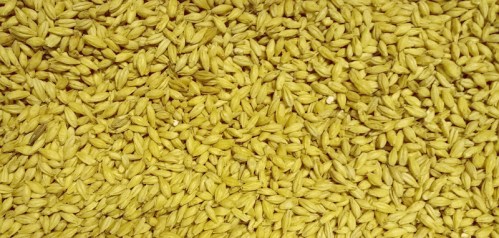
First, the brewing side. Raw barley grains are turned into malt by a brief germination, which among other things creates enzymes in the grain that break down starches into more fermentable sugars later during the brewing process itself. Germination produces a lot of heat, which can be a fire hazard in some conditions (and isn’t great for the quality of the finished malt, either). So, the grain is cooled by a combination of physical turning as well as specially cooled floors. Traditionally, the cooling was accomplished by hand-turning on stone tiles (including those made from Solnhofen Limestone, apparently). This germination period is followed by a drying and kilning period, which halts germination and readies the malted barley for brewing. The malted grains are ground up, steeped in water, the resulting liquid is boiled with hops and then fermented with yeast–and bingo, you have beer!

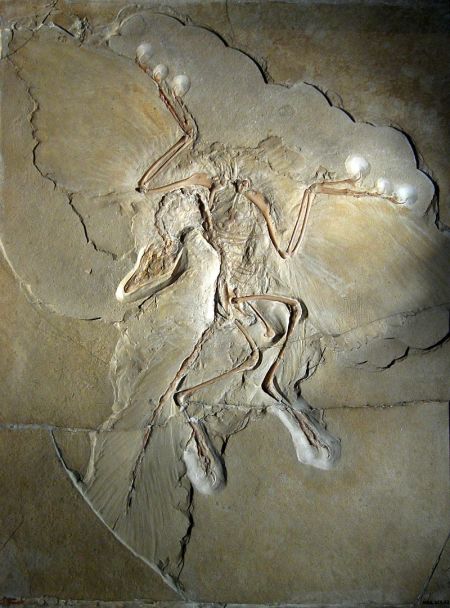
Now, let’s talk about rocks. Solnhofen Limestone is from Bavaria, formed in warm-water lagoons during the Late Jurassic, around 150 million years ago. The gentle waters and fine-grained ooze created the conditions for exquisite preservation of any animals that died in or near the water. Soft-bodied organisms that are rarely fossilized, including dragonflies and giant shrimp, are fairly common finds. The most widely known fossils, though, are the rare and delicate flying vertebrates. Winged reptiles such as Pterodactylus are housed in museum collections globally. And then there is the most iconic fossil of all: Archaeopteryx.

Fossil of Archaeopteryx in Solnhofen Limestone. Specimen displayed at the Museum für Naturkunde (Berlin). Photo by H. Raab, CC-BY-SA.

Fossil of Archaeopteryx in Solnhofen Limestone. Specimen displayed at the Museum für Naturkunde (Berlin). Photo by H. Raab, CC-BY-SA.

First discovered in the 1850s, the early bird Archaeopteryx is a textbook example of a transitional fossil. It preserves features of its dinosaurian ancestors, including sharp teeth and a long bony tail, as well as the long flight feathers found in today’s modern birds. The fingerprints of evolution are all over Archaeopteryx, and it has been key for many discussions on the origin of birds and flight as well as their relationship with carnivorous dinosaurs. Although new discoveries in China, Mongolia, and elsewhere have filled in additional details, the Archaeopteryx skeletons from the Solnhofen Limestone remain historically and scientifically important.

Beyond its paleontological significance, the durable and fine-grained Solnhofen Limestone has a long industrial history–indeed, the fossils are basically “by-catch” from that activity. Over the centuries, the limestone has been used for sculpture, floor tiles, and printing (lithographic) plates. A connection to brewing was new to me!

In the interest of geeky beers, I wondered: was it possible to brew a beer with malt that had rested on the same rocks as Archaeopteryx–a real Jurassic beer? I knew that Bohemian malt had traditionally been malted on Solnhofen Limestone floor tiles. But was this still the case today? Time for some sleuthing.

I started my investigation with Weyermann Malting. They carry a wide range of European pilsner malts; being a modern company, their product is largely produced using state-of-the-art malting techniques in order to maintain consistency and quality. This most typically entails malting on slotted metal floors to allow efficient germination and air circulation at the appropriate times in the process. These procedures create high quality malts, but they don’t involve Solnhofen Limestone.

My eye was then drawn to their floor-malted Bohemian pilsner malt. It is billed as being “made in an original floor malting facility”. That sounded promising. A little more sleuthing found a 2009 article [PDF] about the malt by Sabine Weyermann (of the very same malting company) in Scandinavian Brewers’ Review. In this article, Weyermann notes that their floor-malted pilsner malt is produced under contract at Ferdinand Brewery and Malting Company–whose malt house is floored by Solnhofen tiles.
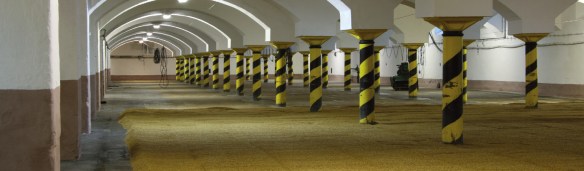
A view inside the traditional floor malting facility at Ferdinand Brewing and Malting. From Weyermann 2009.

A view inside the traditional floor malting facility at Ferdinand Brewing and Malting. From Weyermann 2009.

My journey to Solnhofen Beer was almost complete! I sent off a quick email to several individuals at Weyermann Malting Company, to confirm if their traditional pilsner malt that is sold today is still produced on Solnhofen Limestone. Not long after, I received a response from Stefan Gottschall at Weyermann, verifying the Solnhofen connection. My quest was complete.

So, you can brew a Solnhofen-themed beer! Thanks to Weyermann’s Floor-Malted Bohemian Pilsner Malt, every sip of my latest lager has a physical connection to Archaeopteryx and all of the other Jurassic critters of ancient Bavarian lagoons. This is beer at its best–an experience not just of taste, but also one imbued with 150 million years of history and a link to the fossils I love.

An Archaeopteryx-linked beer requires the appropriate glassware.

An Archaeopteryx-linked beer requires the appropriate glassware.