Kölschy Kölsch

My homebrew club had a kölsch-style ale scheduled as our March contest beer. Well…world events meant that we couldn’t get together. But, I could still do my own tasting at home!

I decided to go for a super-simple beer, with a minimalist grain bill. Last year, I did a kölsch with the Kolsch malt from Schill malting. It turned out pretty well, but was a bit darker than acceptable for the style. So, I used around 1/3 of this malt and the rest was pilsen malt, to lighten up the beer and make the flavor a touch more subtle. I have read in several places that wheat malt is not frequently used in “traditional” grain bills, so I chose to leave this out. Finally, I used Liberty hops for an American twist, and chose WLP029 (White Labs’ German Ale/Kolsch yeast).

As for the recipe name…well, I wasn’t feeling that creative!

Kölschy Kölsch

  • 7.25 lb. Superior Pilsen Malt (Great Western Malting)
  • 3.5 lb. Kölsch (Schill Malting)
  • 1.5 oz. Liberty hop pellets (4.3% alpha), 60 minute boil
  • 1 Whirlfloc tablet, 5 minute boil
  • 0.5 oz. Liberty hop pellets (4.3% alpha), 5 minute boil
  • 2 pkg. German Ale / Kölsch yeast, WLOP024 (White Labs)

Target Parameters

  • 60 minute infusion mash, 151°, batch sparge
  • 1.047 o.g., 1.010 f.g., 4.9% abv, 24 IBU, 4 SRM
  • “Cologne-ish water”, built from 8.5 gallons of RO water with 3.5 g baking soda, 4.5 g of epsom salt, 4.0 g of calcium chloride, and 2.5 g of gypsum, to hit 52 ppm Ca, 14 ppm Mg, 30 ppm Na, 98 ppm SO4, 60 ppm Cl, 78 ppm HCO3, RA=19 ppm, alkalinity=64 ppm

Procedure

  • I mashed in with 3.6 gallons of water at 162°, to hit a 150° mash temperature. It was down to 146° after 45 minutes.
  • After 60 minutes, I added 1.25 gallons of water at 185°, let sit for 10 minutes, and vorlaufed before collecting the first runnings.
  • Next, I added 3.6 gallons of water at 185°, let sit for 10 minutes, vorlaufed, and collected the remainder of the runnings.
  • In total, I collected 7.2 gallons of runnings with a gravity of 1.041, for 76% efficiency.
  • I brought the kettle to a boil, adding hops and other ingredients per the recipe.
  • After a 60 minute boil, I turned off the heat and chilled the wort, before transferring to the fermenter and pitching the yeast.
  • Starting gravity was 1.050, and I fermented at 65°.
  • I brewed the beer on 25 January 2020, and had vigorous fermentation within 24 hours. I moved the beer to ambient conditions on 1 February 2020.
  • I kegged the beer on 29 February 2020, and was able to save around 1/2 quart of yeast for a future brew (probably an altbier).
  • Final gravity was 1.010, which equates to 5.3% abv.

Tasting

  • Appearance
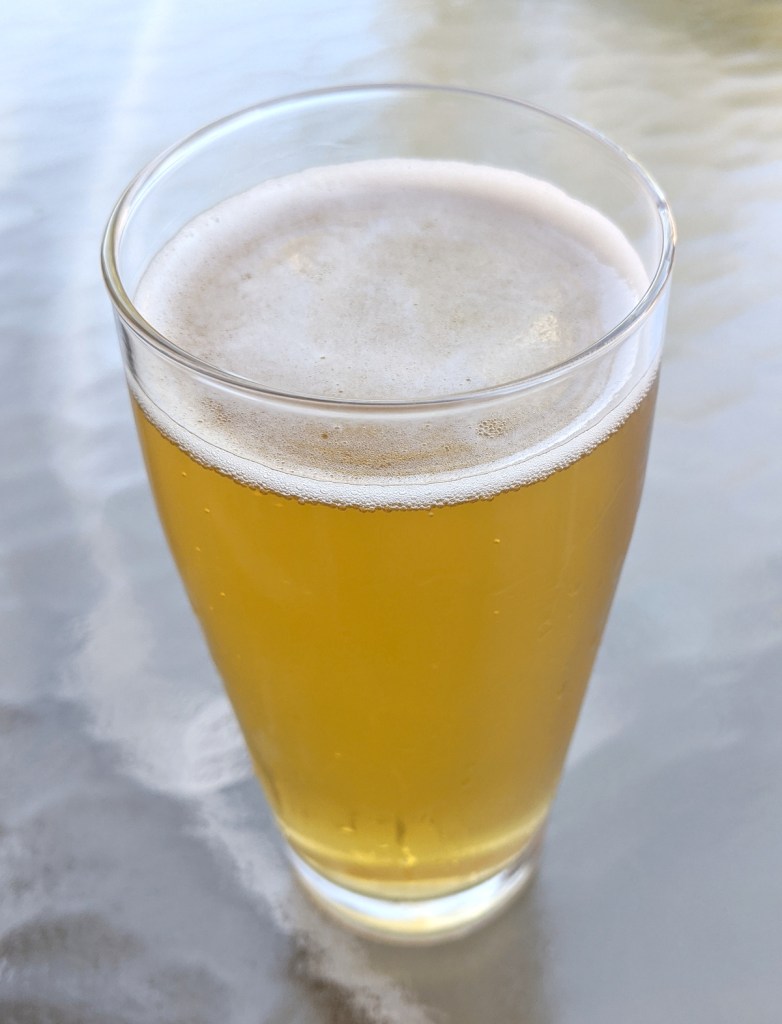
    • Clear, nearly brilliant. Light gold color, with a fine white head. The head is low but persistent around the edges of the glass.
  • Aroma
    • Sweet graininess, with a light touch of honey and apple–almost a Riesling-type character. No hop aroma.
  • Flavor
    • Grainy and lightly sweet grain character, with a subdued apple or pear-like fruitiness. Hop flavor is minimal, although the bitterness is a little stronger than I anticipated.
  • Mouthfeel
    • Moderately light body; crisp, but not overly dry. There is a lingering hop bitterness in the finish…it hangs around perhaps a touch more than is completely enjoyable for my taste.
  • Would I Brew This Again?
    • This is a pretty good beer, with a nice flavor and appearance. I feel like the malt character is a bit stronger than I really want for this style, so I might go with a 100% pilsner or pilsner+American 2-row version in the future, or mix in some Vienna malt instead. That said, though, it’s a solid version of a kölsch!
  • Overall
    • 8.5/10

Wildfire IPA

I love IPAs, but I’m also a bit burnt out on brewing them. Often if I want this style, I’ll just buy a four- or six-pack, and that will satisfy my temporary craving. There are tons of really good (and many great) IPAs out there, but they start to blend together after awhile. The contemporary Citra/Mosaic/etc. versions are tasty, but honestly there’s not always a lot of difference from one to the next. I like the taste of many hazies at first, but get tired after half a glass. The theme in many contemporary IPAs is tropical fruit notes…which can be fun, but gets monotonous after awhile. Can you tell that I’m bored?

More and more, my flavor preferences come back to the “old school” IPAs. Pine, low-key citrus, and herbal notes are all something I crave. It’s hard to find these in many of the newer (and dominant) commercial IPAs! Even the local breweries that have otherwise excellent IPAs aren’t filling this flavor-space anymore. I can’t blame them, if this IPA variant doesn’t sell well. As a homebrewer, though, I can more easily tailor my beer to personal tastes!

I recently received a copy of the Homebrew Recipe Bible, which is a nicely written and expansive tome of recipes. Their recipe for Wildfire IPA immediately appealed to me. It had a hefty blend of old school and newish-hops, while also dodging Citra and Mosaic tropes. I made some small modifications for ingredients on-hand, but otherwise it’s as-written.

Wildfire IPA

  • 12.75 lbs. 2-row malt (Great Western)
  • 1.25 lbs. Dark Munich malt (Viking), 11 SRM
  • 0.75 Crystal 30 malt (Great Western)
  • 0.6 oz. Chinook hop pellets (13.0% alpha), 60 minute boil
  • 0.6 oz. Columbus/Tomahawk/Zeus (CTZ) hop pellets (15.5% alpha), 60 minute boil
  • 0.6 oz. Centennial hop pellets (9.3% alpha), 10 minute boil
  • 1 tsp. Fermax, 10 minute boil
  • 1 Whirlfloc tablet, 5 minute boil
  • 0.5 oz. Simcoe hop pellets (13.6% alpha), 5 minute boil
  • 1 oz. Amarillo hop pellets (7.7% alpha), 10 minute whirlpool
  • 1 oz. Cascade whole hops (~5.5% alpha), 10 minute whirlpool
  • 2 pkg. US-05 American ale dry yeast
  • 1 oz. Ahtanum hop pellets (6.0% alpha), dry hop in keg
  • 0.5 oz. Cascade Cryo-Hops (12.5% alpha), dry hop in keg

Target Parameters

  • Infusion mash to hit target of 150°, 60 minutes, batch sparge
  • 1.066 o.g., 1.013 f.g., 7.0% abv, 68 IBU, 7 SRM
  • Claremont tap water, with 1/2 tsp (~2 g) of gypsum added to boil kettle

Procedure

  • I mashed in with 5 gallons of water at 161.8°, to hit a mash temperature of 149.8°. I added 8 mL of 88% lactic acid to the mash, to adjust the pH.
  • After 60 minutes, I added 0.5 gallons of water at 185°, let sit for 10 minutes, vorlaufed, and collected the first runnings.
  • Next, I added 3.6 gallons of water at 185°, let it sit for 10 minutes, vorlaufed, and collected the second runnings.
  • In total, I collected 7.10 gallons of runnings with a gravity of 1.053, for 70% mash efficiency.
  • In the kettle, I added the 1/2 tsp. of gypsum and brought the mixture to a boil, adding hops per the recipe. After 60 minutes, I added the whirlpool hops and let it sit for 10 minutes before chilling.
  • As I transferred the wort to the fermenter, I noticed a lot of trub. This is due to the heavy hop load. Like, a lot of trub. For future recipes, I’ll need to adjust my kettle leavings (~1 gallon) to ensure I have a full 5 gallon batch.
  • I fermented the beer at 66°, following my brew day on 9 February 2020.
  • I kegged the beer on 29 February 2020. Starting gravity was 1.053, and went down to 1.008, for 7.7% abv. At the time of kegging, I added the dry hops in a weighted mesh sack.

Tasting

  • Appearance
    • Deep gold color and hazy but not cloudy, with a persistent and creamy white head.
  • Aroma
    • Pine, citrus pith, slight dankness
  • Flavor
    • Hop forward (as it should be), with a wonderful piney and bitter citrus character. Malt has a slight caramel, bready quality (likely from the Munich malt).
  • Mouthfeel
    • Moderately light body, off-dry, moderate carbonation.
  • Would I brew this again?
    • Yes! This is a very solid “traditional” West Coast IPA recipe, like something that would have been popular in the early 2000’s. I can’t think of much to change with this one…the only minor “ding” would be the slight haziness, but I’m pretty willing to tolerate that. Overall, it’s exactly the beer I wanted.
  • Overall
    • 9/10

Kitchen Sink Porter

Continuing in my “kitchen sink” series of beers, I brewed a porter recently; it was really a session porter in the end, which has been nice for easy quaffing during the winter months.

Kitchen Sink Porter

  • 7 lbs. Maris Otter malt (Crisp)
  • 1 lb. Munich II malt (Weyermann)
  • 0.75 lb. caramel 60°L malt (Briess)
  • 0.5 lb. pale chocolate malt (Crisp)
  • 5 oz. caramel 120°L malt (Briess)
  • 2 oz. chocolate malt (Bairds)
  • 1 oz. roasted barley (Bairds)
  • 2 oz. Bobek hop pellets (4.5% alpha), first wort hop and 30 minute boil
  • 1 Whirlfloc tablet, 10 minute boil
  • 1 pkg. Windsor dry yeast (Lallemand)

Target Parameters

  • 30 minute full volume infusion mash, 155°
  • 1.044 o.g., 1.012 f.g., 4.3% abv, 26 IBU, 23 SRM
  • Claremont tap water

Procedure

  • I mashed in with 7.5 gallons of water at 159.5°, to hit a 154° mash temperature.
  • After 30 minutes, I vorlaufed and collected 6.3 gallons of runnings with a gravity of 1.039, for 68% efficiency.
  • I brought everything to a boil, boiling for 30 minutes and adding hops and finings as required.
  • After a 30 minute boil, I turned off the heat and chilled down to 70°, before pitching the yeast.
  • I brewed this beer on 3 January 2019. It had a starting gravity of 1.043.
  • The beer was fermented at ambient temperature of around 60°. I pitched the yeast immediately after transfer into the fermentation vesel, and fermentation took off pretty quickly.
  • On January 6, ambient was down to around 58°, so I moved the fermener into the fermentation chamber, where I applied some heat and set the temperature for 66°.
  • I cold crashed the beer on 13 January 2020.
  • I kegged the beer on 15 January 2020. Final gravity was 1.015, for 3.6% abv.

Tasting

  • Appearance
    • Medium brown color, mostly clear (slight haze), with persistent tan head.
  • Aroma
    • Chocolaty, clean aroma. I’m not picking up much of the bread and biscuit aroma that a good English porter should have.
  • Flavor
    • Roasty, chocolate flavor, with a distinct (but not harsh) bitterness that persists on the tongue. As the beer warms up, some of the biscuity malt notes start to come through.
  • Mouthfeel
    • This is a little thinner than I would like; it needs some extra body, I think. Moderate carbonation, smooth and off-dry finish.
  • Would I brew this again?
    • There’s a fair bit happening in dark malt flavor, but the mouthfeel department needs some serious augmentation. I also feel like the lighter character malts (e.g., crystal malts) could be expanded a bit more, because the dark malts really take over. It’s not unpleasant, just a bit one-dimensional. This is a pretty drinkable beer–and the low abv certainly helps with that–but not a recipe I’m likely to do again. For a future iteration of this type of beer, I would definitely mash at a much higher temperature (maybe 158°?) and perhaps add in some biscuit malt and/or more crystal 120.
  • Overall
    • 5.5/10

Holiday Festbier

I have always stereotyped lagers–especially those that are lighter in color–as beers best suited for warm weather. Lawnmower beer. That kind of thing. As my palate has expanded, though, I’ve decided that lighter lagers aren’t just for the summer. A festbier–with its slightly more complex flavor profile–seems like a good option for cooler months. And who says it’s just for Oktoberfest?

My recipe was inspired by a festbier recipe I saw on Brulosophy, with pilsner and Vienna malts carrying the bulk of the grist alongside a splash of Munich malt. In the end, it worked out pretty well!

Holiday Festbier

  • 6 lb. Vienna malt (Weyermann)
  • 5.5 lb. Superior pilsen malt (Great Western)
  • 0.75 lb. Munich Malt (Best; 7.6 SRM)
  • 0.35 oz. Magnum hops (13.2% alpha), 60 minute boil
  • 2 oz. Saaz whole hops (3.0% alpha), 10 minute boil
  • 1 Whirlfloc tablet, 10 minute boil
  • 1 tsp. Fermax yeast nutrient, 10 minute boil
  • 2 pkg. Saflager lager yeast (W34/70)

Target Parameters

  • 60 minute infusion mash, 149°, batch sparge.
  • 1.056 o.g., 1.011 f.g., 5.9% abv, 21 IBU, 5 SRM
  • Water built from RO, for target of 35 Ca, 3 Mg, 29 Na, 41 SO4, 40 Cl, 77 HCO3, 37 RA

Procedure

  • I built up 4.25 gallons of mash water by adding 1.7 g baking soda, 1.3 g CaCl, 0.8 g gypsum, and 0.5 g epsom salts. I aimed for a mash-in temperature of 160.5°, to hit 149.1° for the mash. Immediately after mashing in the grains, I added 9.5 mL of 88% lactic acid, to adjust the pH appropriately.
  • I built up the sparge water with 4.6 gallons of RO water supplemented with 1.9 g baking soda, 1.5 g CaCl, 0.9 g gypsum, and 0.6 g epsom salts.
  • I started the batch sparge with 1 gallon of water at 180°, let it sit for 10 minutes, vorlaufed, and collected first runnings. I then added the remainder of the sparge water, vorlaufed, and collected the rest of the runnings.
  • In total, I collected 7 gallons of runnings with a gravity of 1.045, for 70% efficiency.
  • I brought the kettle to a boil, adding hops and finings per the recipe. After 60 minutes, I turned off the flame and chilled down to 75° or so. After transferring to the fermenter, I chilled down to 50° in the fermentation chamber before oxygenating the wort and pitching the yeast.
  • I brewed this beer on 7 December 2019. Starting gravity was 1.053, a touch below my target (1.056), but not too awfully low.
  • I started fermentation at 52°, and raised it to 56° after two weeks (21 December 2019). I raised the beer to 60° on 23 December 2019, before crashing to 33° on 26 December 2019.
  • I kegged the beer on 28 December 2019, by semi-closed transfer into a CO2 purged keg. Final gravity was 1.009, which works out to 5.9% abv.
  • After kegging, I lagered the beer at 33°. From the start, flavor was really nice. When I sampled the beer on 12 January 2020, after two weeks of lagering, flavor was still amazing, but the beer was still fairly hazy. By February 6, the beer had only a slight haze, and could be rated as relatively clear (but not yet bright). I expect it should be up to snuff within a week or two.

Tasting

  • Appearance
    • Gold, nearly clear (only a slight haze at the time of this tasting), with a nice and persistent white head.
  • Aroma
    • Malt, malt, malt. Aroma is a slightly sweet malty quality, and I don’t pick up much for hops.
  • Flavor
    • Smooth maltiness, with the malt character being a combination of pure maltiness and a bit of breadiness. (I’m using various forms of “malt” in my descriptions, but that’s really the best descriptor for this beer!) Hop level is moderate and has a beautiful smoothness, with the balance of the beer definitely tilted towards malt.
  • Mouthfeel
    • This beer is sooooo drinkable! Medium body, moderate carbonation, just a pure thing of beauty.
  • Would I brew this again?
    • Absolutely! This is a wonderful recipe. My only mild knock-down is for the slight haze in the beer, but if I were to lager this for months as a proper festbier I think it would be fine. The malt character and hopping level are perfect. On top of all of this, it really nails the high drinkability that a good festbier should have.
  • Overall
    • 9/10

Kitchen Sink Pale Ale

To ring in 2020, I did some “kitchen sink” brews to finish out some of my grain and hop stash. One of these was a mixed English/American pale ale, brewed using Brulosophy’s “Short and Shoddy” technique–essentially, using a 30 minute full-volume mash and 30 minute boil to reduce the brew time. It was a quick-turnaround, and has been a pretty good (even if not perfect) batch.

Kitchen Sink Pale Ale

  • 10.25 Maris Otter malt (Crisp)
  • 0.5 lb. Caramel Munich 60°L malt (Briess)
  • 0.25 lb. Caramel 20°L malt (Briess)
  • 0.80 oz. Warrior hop pellets (15.8% alpha), 30 minute boil
  • 1 Whirlfloc tablet, 5 minute boil
  • 2 oz. Cascade whole hops (est. 5.5% alpha), 5 minute boil
  • 1 pkg. Safale American Ale yeast (US-05)
  • 2.25 oz. East Kent Goldings hop pellets, 4 day dry hop in fermenter

Target Parameters

  • 30 minute full volume infusion mash, 154°
  • 1.050 o.g., 1.012 f.g., 5.0% abv, 39 IBU, 9 SRM
  • Claremont tap water, with 1 tsp. of gypsum added to boil

Procedure

  • I mashed in with 7.75 gallons of water at 160°, and hit my target temperature of 154° pretty closely. I added a scant 1 tbs. of 88% lactic acid to the mash, to bring the pH down to acceptable levels.
  • After 30 minutes, I vorlaufed and collected the runnings. I ended up with 6.6 gallons of runnings at a gravity of 1.049, for 77% mash efficiency. That’s a bit better than I usually expect for this kind of mash, more typically around 70 to 72%.
  • I added the gypsum to the kettle, brought everything to a boil, and added hops as required by the recipe. After 30 minutes, I turned off the heat and chilled down to 72°.
  • I transferred to my fermenter, noting a fair bit of trub loss due to the whole hops. I’ll want to remember to adjust accordingly for future recipes that use lots of whole hops!
  • Starting gravity was 1.050, right where I wanted it.
  • I started the fermentation on 2 January 2020, fermenting at ambient temperatures of around 56° to 60°. On January 6, ambient was down to 58°, so I moved the beer into the fermentation chamber and set the temperature for 66°.
  • On 12 January 2020, I added the dry hops.
  • On 13 January 2020, I cold crashed the beer.
  • I kegged on 16 January 2020, using a partial closed transfer into a CO2-purged keg.
  • Final gravity was 1.010, for 5.3% abv.

Tasting

Gold colored beer in glass
  • Appearance
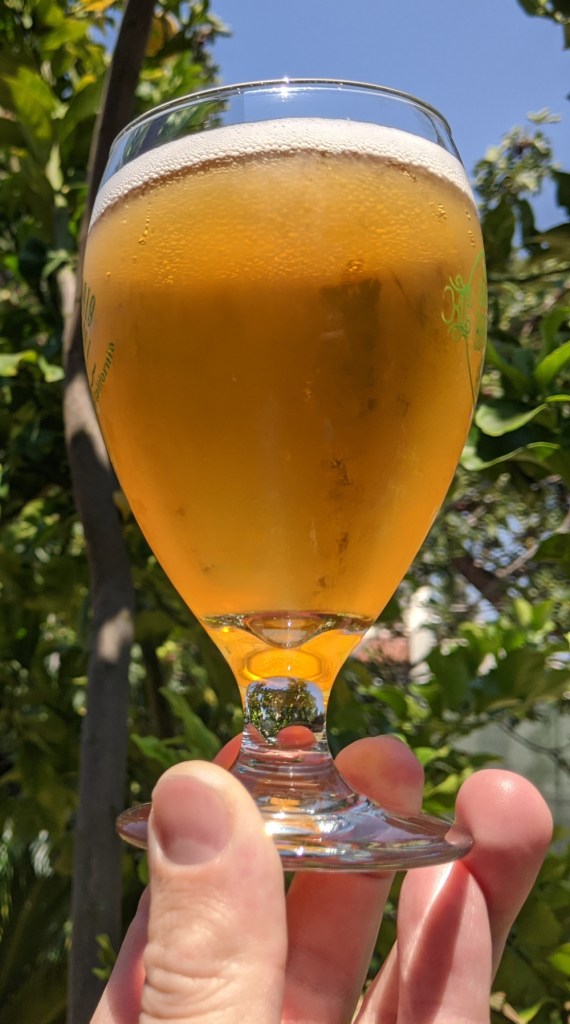
    • Gold, slight haze, with persistent off-white head.
  • Aroma
    • Slightly spicy hop aroma, with light caramel aroma alongside that.
  • Flavor
    • Moderately bitter, with hop qualities in the realm of slightly woody and herbal. The malt character is somewhat bready, with a bit of caramel (likely from the CaraMunich).
  • Mouthfeel
    • Medium-light body, only slightly dry; really nice on this count, actually! Moderate carbonation.
  • Would I Brew This Again?
    • This is a pretty decent beer, and is quite drinkable, but there’s nothing that really jumps out at me. As a pale ale, it’s very much in the realm of qualities that I like–not overly bitter, some malt character, some interesting hops in there too. But, there’s nothing that wows me, either. So, I can say this was a good way to use up some ingredients, but nothing to put on the “must brew” list. On the plus side, the short-and-shoddy technique worked just fine on this batch!
  • Overall
    • 7.5/10