Kitchen Sink Porter

Continuing in my “kitchen sink” series of beers, I brewed a porter recently; it was really a session porter in the end, which has been nice for easy quaffing during the winter months.

Kitchen Sink Porter

  • 7 lbs. Maris Otter malt (Crisp)
  • 1 lb. Munich II malt (Weyermann)
  • 0.75 lb. caramel 60°L malt (Briess)
  • 0.5 lb. pale chocolate malt (Crisp)
  • 5 oz. caramel 120°L malt (Briess)
  • 2 oz. chocolate malt (Bairds)
  • 1 oz. roasted barley (Bairds)
  • 2 oz. Bobek hop pellets (4.5% alpha), first wort hop and 30 minute boil
  • 1 Whirlfloc tablet, 10 minute boil
  • 1 pkg. Windsor dry yeast (Lallemand)

Target Parameters

  • 30 minute full volume infusion mash, 155°
  • 1.044 o.g., 1.012 f.g., 4.3% abv, 26 IBU, 23 SRM
  • Claremont tap water

Procedure

  • I mashed in with 7.5 gallons of water at 159.5°, to hit a 154° mash temperature.
  • After 30 minutes, I vorlaufed and collected 6.3 gallons of runnings with a gravity of 1.039, for 68% efficiency.
  • I brought everything to a boil, boiling for 30 minutes and adding hops and finings as required.
  • After a 30 minute boil, I turned off the heat and chilled down to 70°, before pitching the yeast.
  • I brewed this beer on 3 January 2019. It had a starting gravity of 1.043.
  • The beer was fermented at ambient temperature of around 60°. I pitched the yeast immediately after transfer into the fermentation vesel, and fermentation took off pretty quickly.
  • On January 6, ambient was down to around 58°, so I moved the fermener into the fermentation chamber, where I applied some heat and set the temperature for 66°.
  • I cold crashed the beer on 13 January 2020.
  • I kegged the beer on 15 January 2020. Final gravity was 1.015, for 3.6% abv.

Tasting

  • Appearance
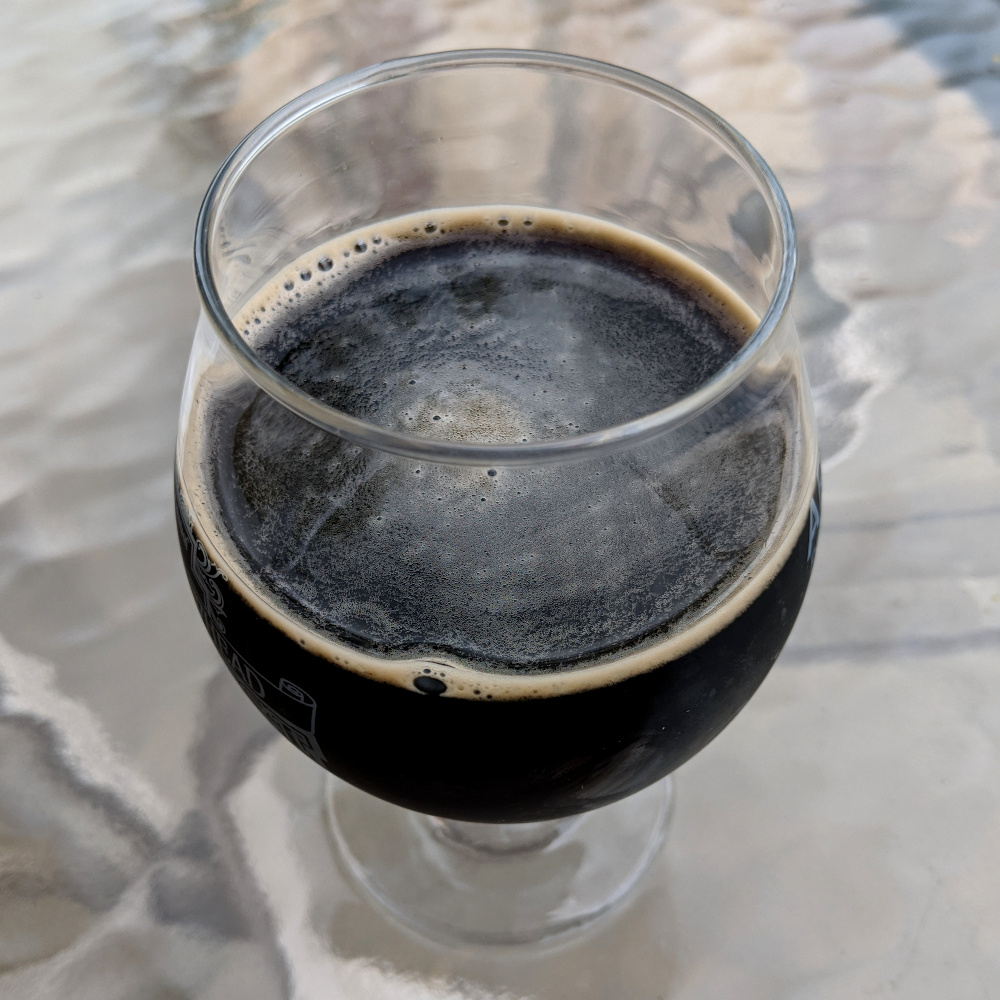
    • Medium brown color, mostly clear (slight haze), with persistent tan head.
  • Aroma
    • Chocolaty, clean aroma. I’m not picking up much of the bread and biscuit aroma that a good English porter should have.
  • Flavor
    • Roasty, chocolate flavor, with a distinct (but not harsh) bitterness that persists on the tongue. As the beer warms up, some of the biscuity malt notes start to come through.
  • Mouthfeel
    • This is a little thinner than I would like; it needs some extra body, I think. Moderate carbonation, smooth and off-dry finish.
  • Would I brew this again?
    • There’s a fair bit happening in dark malt flavor, but the mouthfeel department needs some serious augmentation. I also feel like the lighter character malts (e.g., crystal malts) could be expanded a bit more, because the dark malts really take over. It’s not unpleasant, just a bit one-dimensional. This is a pretty drinkable beer–and the low abv certainly helps with that–but not a recipe I’m likely to do again. For a future iteration of this type of beer, I would definitely mash at a much higher temperature (maybe 158°?) and perhaps add in some biscuit malt and/or more crystal 120.
  • Overall
    • 5.5/10

Holiday Festbier

I have always stereotyped lagers–especially those that are lighter in color–as beers best suited for warm weather. Lawnmower beer. That kind of thing. As my palate has expanded, though, I’ve decided that lighter lagers aren’t just for the summer. A festbier–with its slightly more complex flavor profile–seems like a good option for cooler months. And who says it’s just for Oktoberfest?

My recipe was inspired by a festbier recipe I saw on Brulosophy, with pilsner and Vienna malts carrying the bulk of the grist alongside a splash of Munich malt. In the end, it worked out pretty well!

Holiday Festbier

  • 6 lb. Vienna malt (Weyermann)
  • 5.5 lb. Superior pilsen malt (Great Western)
  • 0.75 lb. Munich Malt (Best; 7.6 SRM)
  • 0.35 oz. Magnum hops (13.2% alpha), 60 minute boil
  • 2 oz. Saaz whole hops (3.0% alpha), 10 minute boil
  • 1 Whirlfloc tablet, 10 minute boil
  • 1 tsp. Fermax yeast nutrient, 10 minute boil
  • 2 pkg. Saflager lager yeast (W34/70)

Target Parameters

  • 60 minute infusion mash, 149°, batch sparge.
  • 1.056 o.g., 1.011 f.g., 5.9% abv, 21 IBU, 5 SRM
  • Water built from RO, for target of 35 Ca, 3 Mg, 29 Na, 41 SO4, 40 Cl, 77 HCO3, 37 RA

Procedure

  • I built up 4.25 gallons of mash water by adding 1.7 g baking soda, 1.3 g CaCl, 0.8 g gypsum, and 0.5 g epsom salts. I aimed for a mash-in temperature of 160.5°, to hit 149.1° for the mash. Immediately after mashing in the grains, I added 9.5 mL of 88% lactic acid, to adjust the pH appropriately.
  • I built up the sparge water with 4.6 gallons of RO water supplemented with 1.9 g baking soda, 1.5 g CaCl, 0.9 g gypsum, and 0.6 g epsom salts.
  • I started the batch sparge with 1 gallon of water at 180°, let it sit for 10 minutes, vorlaufed, and collected first runnings. I then added the remainder of the sparge water, vorlaufed, and collected the rest of the runnings.
  • In total, I collected 7 gallons of runnings with a gravity of 1.045, for 70% efficiency.
  • I brought the kettle to a boil, adding hops and finings per the recipe. After 60 minutes, I turned off the flame and chilled down to 75° or so. After transferring to the fermenter, I chilled down to 50° in the fermentation chamber before oxygenating the wort and pitching the yeast.
  • I brewed this beer on 7 December 2019. Starting gravity was 1.053, a touch below my target (1.056), but not too awfully low.
  • I started fermentation at 52°, and raised it to 56° after two weeks (21 December 2019). I raised the beer to 60° on 23 December 2019, before crashing to 33° on 26 December 2019.
  • I kegged the beer on 28 December 2019, by semi-closed transfer into a CO2 purged keg. Final gravity was 1.009, which works out to 5.9% abv.
  • After kegging, I lagered the beer at 33°. From the start, flavor was really nice. When I sampled the beer on 12 January 2020, after two weeks of lagering, flavor was still amazing, but the beer was still fairly hazy. By February 6, the beer had only a slight haze, and could be rated as relatively clear (but not yet bright). I expect it should be up to snuff within a week or two.

Tasting

  • Appearance
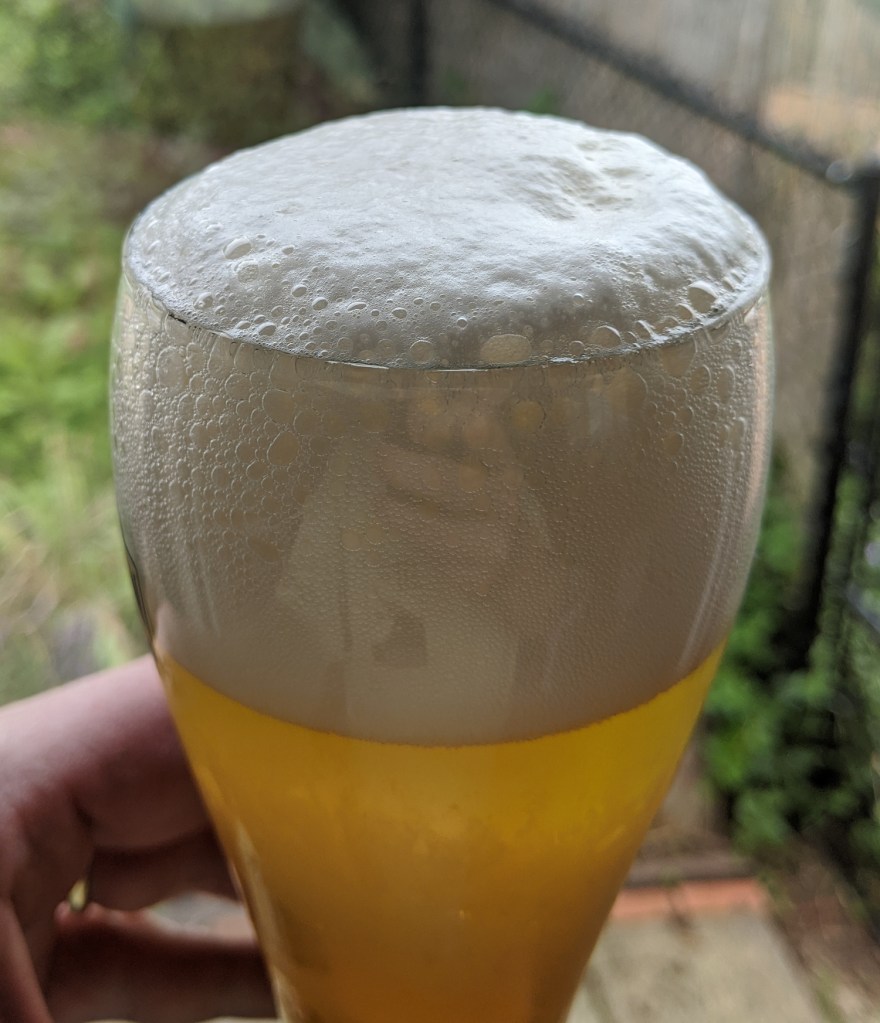
    • Gold, nearly clear (only a slight haze at the time of this tasting), with a nice and persistent white head.
  • Aroma
    • Malt, malt, malt. Aroma is a slightly sweet malty quality, and I don’t pick up much for hops.
  • Flavor
    • Smooth maltiness, with the malt character being a combination of pure maltiness and a bit of breadiness. (I’m using various forms of “malt” in my descriptions, but that’s really the best descriptor for this beer!) Hop level is moderate and has a beautiful smoothness, with the balance of the beer definitely tilted towards malt.
  • Mouthfeel
    • This beer is sooooo drinkable! Medium body, moderate carbonation, just a pure thing of beauty.
  • Would I brew this again?
    • Absolutely! This is a wonderful recipe. My only mild knock-down is for the slight haze in the beer, but if I were to lager this for months as a proper festbier I think it would be fine. The malt character and hopping level are perfect. On top of all of this, it really nails the high drinkability that a good festbier should have.
  • Overall
    • 9/10

Kitchen Sink Pale Ale

To ring in 2020, I did some “kitchen sink” brews to finish out some of my grain and hop stash. One of these was a mixed English/American pale ale, brewed using Brulosophy’s “Short and Shoddy” technique–essentially, using a 30 minute full-volume mash and 30 minute boil to reduce the brew time. It was a quick-turnaround, and has been a pretty good (even if not perfect) batch.

Kitchen Sink Pale Ale

  • 10.25 Maris Otter malt (Crisp)
  • 0.5 lb. Caramel Munich 60°L malt (Briess)
  • 0.25 lb. Caramel 20°L malt (Briess)
  • 0.80 oz. Warrior hop pellets (15.8% alpha), 30 minute boil
  • 1 Whirlfloc tablet, 5 minute boil
  • 2 oz. Cascade whole hops (est. 5.5% alpha), 5 minute boil
  • 1 pkg. Safale American Ale yeast (US-05)
  • 2.25 oz. East Kent Goldings hop pellets, 4 day dry hop in fermenter

Target Parameters

  • 30 minute full volume infusion mash, 154°
  • 1.050 o.g., 1.012 f.g., 5.0% abv, 39 IBU, 9 SRM
  • Claremont tap water, with 1 tsp. of gypsum added to boil

Procedure

  • I mashed in with 7.75 gallons of water at 160°, and hit my target temperature of 154° pretty closely. I added a scant 1 tbs. of 88% lactic acid to the mash, to bring the pH down to acceptable levels.
  • After 30 minutes, I vorlaufed and collected the runnings. I ended up with 6.6 gallons of runnings at a gravity of 1.049, for 77% mash efficiency. That’s a bit better than I usually expect for this kind of mash, more typically around 70 to 72%.
  • I added the gypsum to the kettle, brought everything to a boil, and added hops as required by the recipe. After 30 minutes, I turned off the heat and chilled down to 72°.
  • I transferred to my fermenter, noting a fair bit of trub loss due to the whole hops. I’ll want to remember to adjust accordingly for future recipes that use lots of whole hops!
  • Starting gravity was 1.050, right where I wanted it.
  • I started the fermentation on 2 January 2020, fermenting at ambient temperatures of around 56° to 60°. On January 6, ambient was down to 58°, so I moved the beer into the fermentation chamber and set the temperature for 66°.
  • On 12 January 2020, I added the dry hops.
  • On 13 January 2020, I cold crashed the beer.
  • I kegged on 16 January 2020, using a partial closed transfer into a CO2-purged keg.
  • Final gravity was 1.010, for 5.3% abv.

Tasting

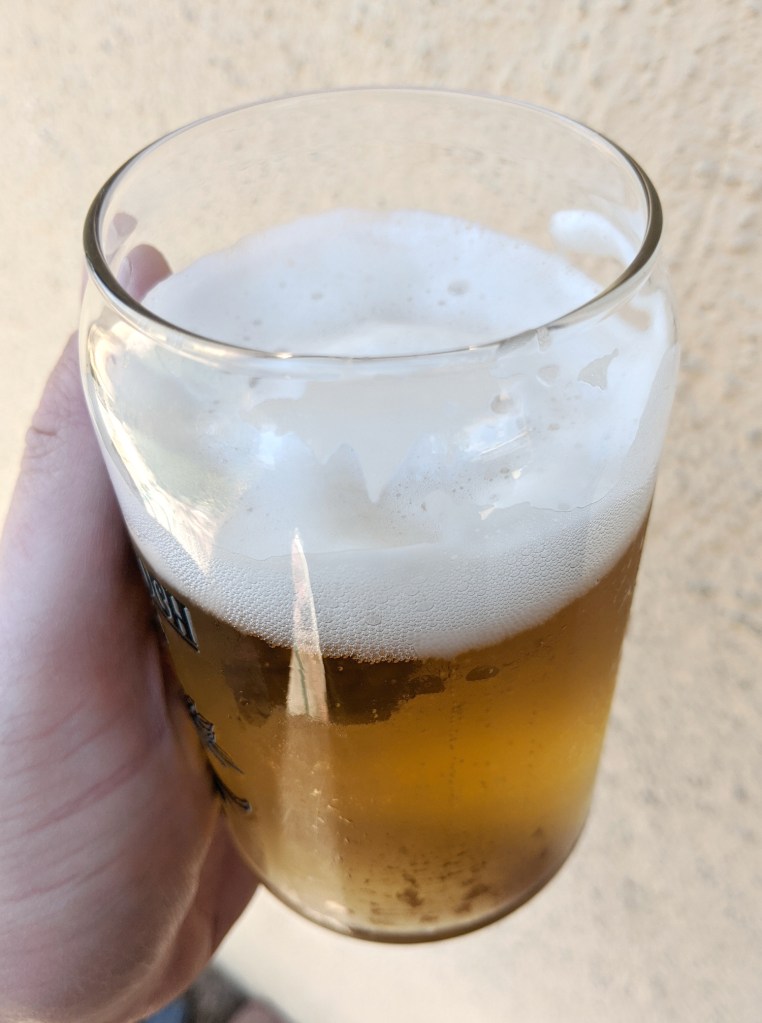
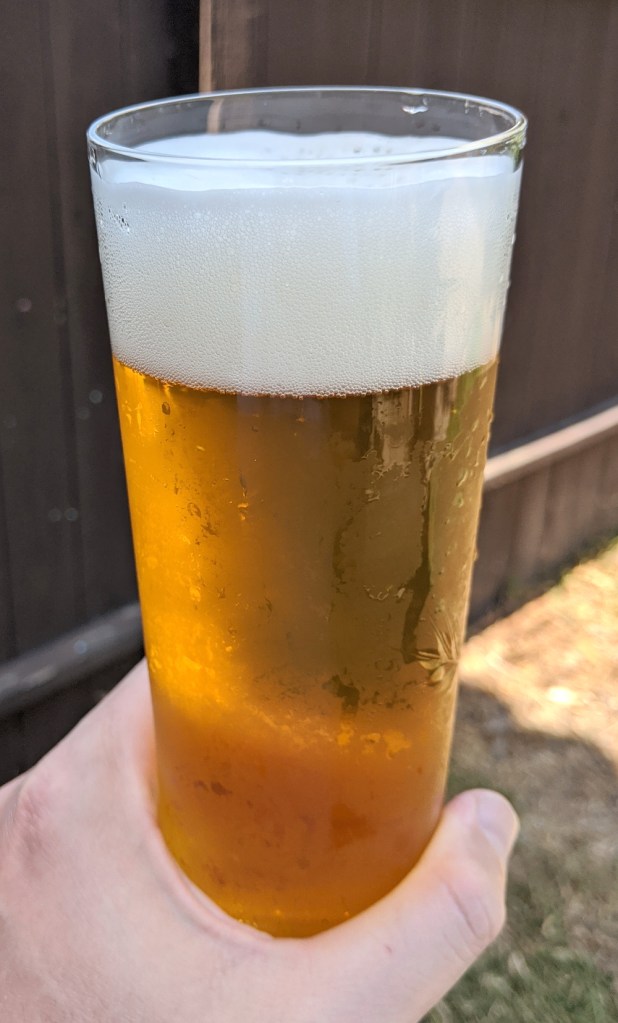
Gold colored beer in glass
  • Appearance
    • Gold, slight haze, with persistent off-white head.
  • Aroma
    • Slightly spicy hop aroma, with light caramel aroma alongside that.
  • Flavor
    • Moderately bitter, with hop qualities in the realm of slightly woody and herbal. The malt character is somewhat bready, with a bit of caramel (likely from the CaraMunich).
  • Mouthfeel
    • Medium-light body, only slightly dry; really nice on this count, actually! Moderate carbonation.
  • Would I Brew This Again?
    • This is a pretty decent beer, and is quite drinkable, but there’s nothing that really jumps out at me. As a pale ale, it’s very much in the realm of qualities that I like–not overly bitter, some malt character, some interesting hops in there too. But, there’s nothing that wows me, either. So, I can say this was a good way to use up some ingredients, but nothing to put on the “must brew” list. On the plus side, the short-and-shoddy technique worked just fine on this batch!
  • Overall
    • 7.5/10

Yule Log Smoked Scottish Ale

For Christmas this year, I wanted a special small-batch beer to sip on a cold, dark evening. I usually buy some barrel-aged commercial beers (Firestone Walker’s 2019 Old Man Hattan is particularly nice), so that flavor profile didn’t terribly appeal to me as a homebrew, especially not in larger volumes. After a bit of thought, I settled on a smoked ale. I’ve done a handful of those over the years, trying out the porter and brown ale styles previously. For this iteration, something in the Scottish ale space was appealing. I could get plenty of malt and plenty of body, and it would (hopefully) stand up well to any smokiness. Thus, the Yule Log Smoked Scottish Ale was born!

The recipe is built around the Scottish Export Ale BJCP style, which according to my reading sometimes is made with smoked variants. My version was based in part on Brulosophy’s Short & Shoddy Wee Heavy Recipe. To add a bit of smoked character, I put in two pounds (~16% of the total grain bill) of Briess cherrywood smoked malt.

In the spirit of the Short & Shoddy series, I cut a ton of corners in the brew day. I only did a 30 minute, full-volume mash, and a 30 minute boil. I used some oldish yeast, which meant I needed three packages total.

Yule Log Smoked Scottish Ale

  • 9 lbs. Maris Otter malt (Crisp)
  • 2 lb. Cherry wood smoked malt (Briess)
  • 5 oz. Biscuit malt (Dingemans)
  • 5 oz. Caramel 120° malt (Briess)
  • 5 oz. CaraPils malt (Briess)
  • 4 oz. Crystal 75° malt (Bairds)
  • 1 oz. Whitbread Golding Variety hop pellets (8.7% alpha), 15 minute boil
  • 2 pkg. Tartan yeast (Imperial Yeast #A31)
  • 1 pkg. Safale American ale yeast (US-05)

Target Parameters

  • 1.063 s.g, 1.019 f.g., 5.8% abv, 21 IBU, 15 SRM
  • 3.25 gallon batch
  • Full volume infusion mash, 156° target temperature
  • Claremont tap water, with Campden tablet treatment to remove chloramines

Procedure

  • I mashed in with 5.35 gallons of water at 165.5°, hitting a mash temperature of 155°. By the end of the 30 minute mash, temperature was down to 152°.
  • I vorlaufed and collected 3.75 gallons of wort with a gravity of 1.068, for 56% mash efficiency. This is a bit “thicker” than targeted, so I added 0.5 gallons of water to get 4.25 gallons of wort at a slightly lower gravity.
  • I boiled for 30 minutes, adding hops at the 15 minute mark. I then chilled down to 70°, transferred to the fermenter, and pitched the yeast.
  • Starting gravity was 1.066, on 24 November 2019. I fermented at 67°.
  • I kegged the beer on 10 December 2019. It had a final gravity of 1.014, for 6.9% abv.

Tasting

  • Appearance
    • Copper colored beer, moderately hazy, with a thin but persistent head.
  • Aroma
    • Faint smoke aroma, but not overbearing. Slight caramel note, and very mild fruity esters as the beer warms up.
  • Flavor
    • Modestly smoky, balanced nicely against the caramel and bready aspects of the malt. Bitterness is moderate, clean, and just about perfect for this beer. There is a very slight but pleasant sweetness to the beer. As I finish a glass, the smoke disappears behind the rest of the beer. On the one hand, it would be nice to smokiness be a bit more prominent, but on the other hand I think the drinkability would suffer. This is a rare smoked beer that can stand up to multiple pints!
  • Mouthfeel
    • This beer has a reasonable bit of body, and a medium-sweet finish. Carbonation level is moderate.
  • Would I brew this again?
    • I liked this beer pretty well! I find commercial smoked beers to be hit or miss, and I think the very moderate level of smoked malt I use paid off. Pretty much everything works about this one, and it’s a nice beer to enjoy on a cool SoCal winter day. I wish the clarity was a bit better at this point, but I never bothered to cold-crash the beer, nor did I use gelatin or even hot-side finings. I expect a combination of these would clear things significantly. I might also mash just a touch higher, as this beer would benefit from a slight bump in body.
  • Overall
    • 8/10

Bierstadt Pils Clone 1.1

I brewed this recipe nearly a year ago, and found the result to be super enjoyable. Why not give it another try? I made a few modifications for hopping rate, and ditched the whirlpool hops, which were apparently a mistake in the originally published recipe (now corrected at the link).

Bierstadt Pils Clone 1.1

  • 9.75 lbs. Barke Pilsner malt (Weyermann)
  • 0.5 lb. Acidulated malt (Bestmalz)
  • 1.25 oz. Hallertauer Mittelfrueh hop pellets (3.0% alpha), first wort hopping, 90 minute boil
  • 1.5 oz. Hallertauer Mittelfrueh hop pellets (3.0% alpha), 70 minute boil
  • 1.25 oz. Hallertauer Mittelfrueh hop pellets (3.0% alpha), 5 minute boil
  • 1 Whirlfloc tablet, 10 minute boil
  • 1 tsp. Fermax yeast nutrient, 10 minute boil
  • 2 pkg. Saflager lager yeast (W34/70)

Target Parameters

  • 1.048 s.g, 1.007 f.g., 5.4% abv, 34 IBU, 3.4 SRM
  • Infusion step mash with decoction
  • Water built from 8.75 gallons of RO water, with 4.3 g CaCl, 3.4 g gypsum, 2.7 g epsom salts, to achieve -47 RA, 59 ppm Ca, 8 ppm Mg, 89 ppm SO4, 63 ppm Cl

Procedure

  • I mashed in with 12 quarts of water at 140°, to hit 132°. After 10 minutes, I added 3.5 quarts of water just below boiling, to hit 145°. I let it rest here for 30 minutes. Finally, I added 5.5 quarts just below boiling, to hit 158°. After 40 minutes, I pulled 1.66 gallons of thin decoction and boiled it for 10 minutes. I added it back to the mash, which raised the temperature to 164°.
  • Next, I let the mash sit for 10 minutes, vorlaufed, and collected the first runnings. I added the first hop charge to the kettle at this time.
  • Next, I added the remaining sparge water (3.5 gallons) at ~170°, to hit a 164° mash temperature. I let it sit for 10 minutes, vorlaufed, and collected the second runnings.
  • In total, I collected 7 gallons at a gravity of 1.041, for 77% mash efficiency. I added 0.25 gallons of RO water to raise the volume to 7.25 gallons.
  • I brought everything to a boil, adding hops and other ingredients per the schedule.
  • After a 90 minute boil, I chilled and transferred. Gravity at this point was 1.052, a bit above my target. So, I added 7 cups of water heated to near boiling to top up and hit a gravity of 1.049.
  • I chilled in the fermenter down to 48°, before oxygenating and pitching the yeast.
  • I brewed this beer on 14 September 2019, fermenting at 50°.
  • I raised the beer to 60° on 30 September 2019. I cooled down to 50° on 4 October 2019, and down to 35° on 5 October 2019.
  • I kegged the beer on 11 October 2019, with a partially closed transfer. Gravity at this point was 1.010, for 5.2% abv.

Tasting

  • The Basics
    • 1.049 o.g., 1.010 f.g., 5.2% abv
  • Appearance
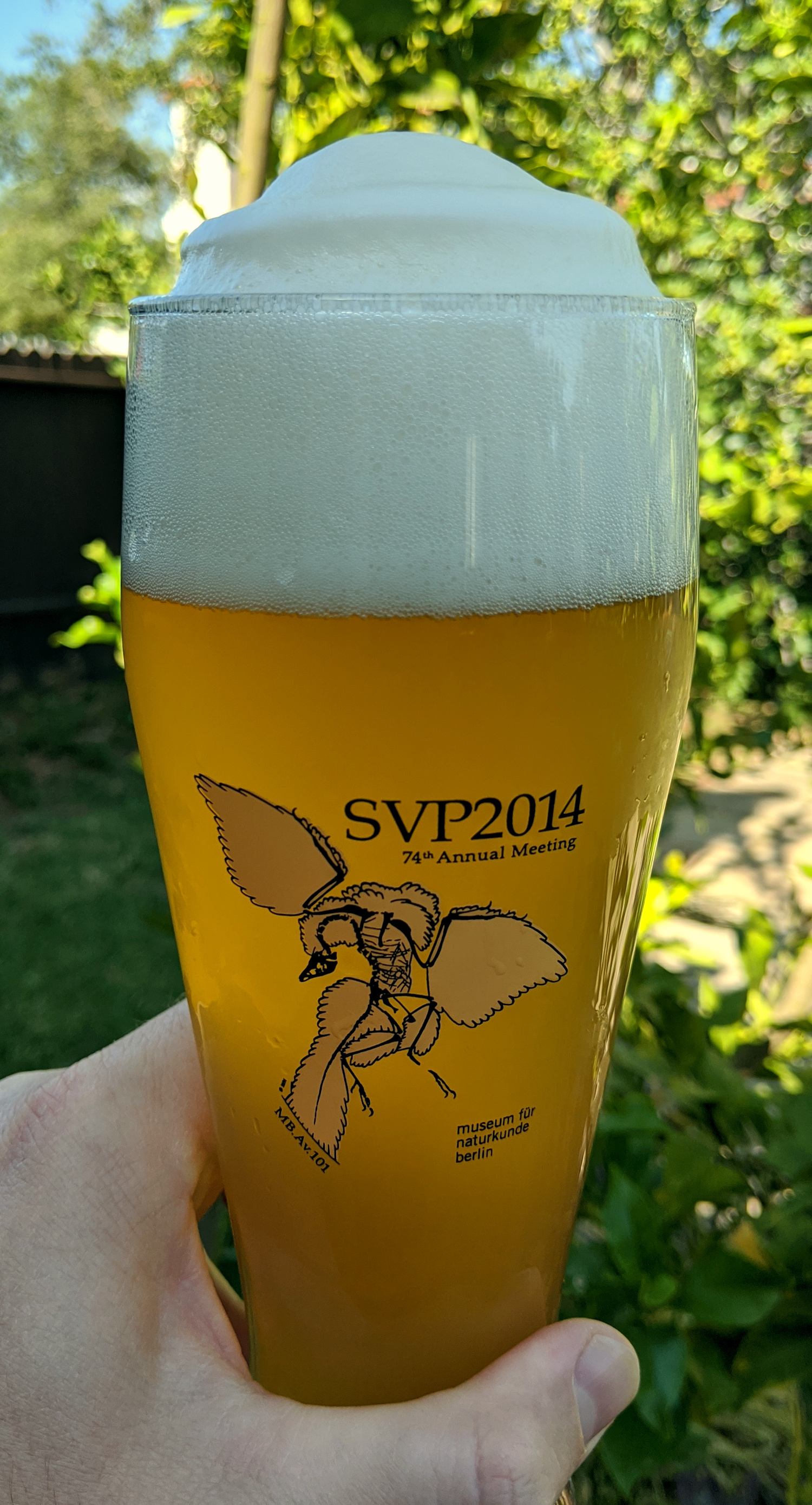
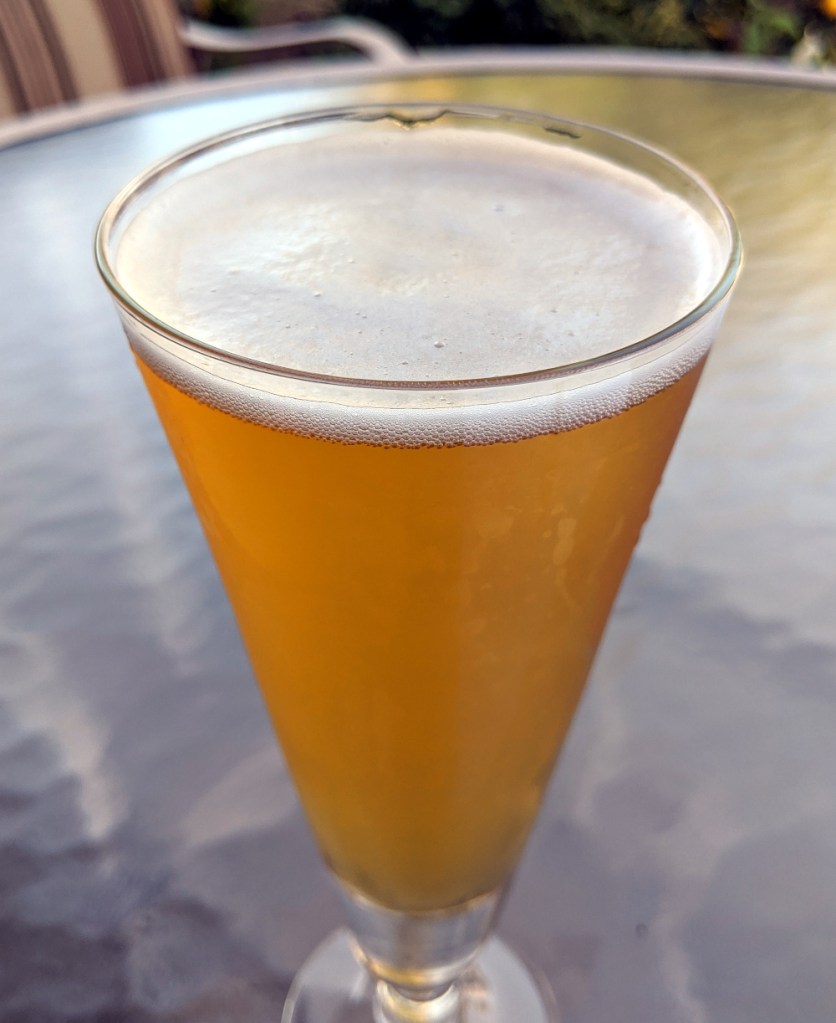
    • Clear, nearly brilliantly so, light yellow beer, with a fine, white, and persistent head.
  • Aroma
    • Clean, lightly malty aroma, with slight floral hop presence.
  • Flavor
    • Light, slightly sweet, and grainy malt character, with a crisp bitterness against that. The balance tilts slightly towards bitter, but not overly so.
  • Mouthfeel
    • Crisp and light-bodied, with moderate carbonation and a smooth finish.
  • Would I brew this again?
    • This is a great recipe. It’s a really smooth and drinkable beer, and was worth repeating from last time. I enjoy the grainy malt character, and the pleasant German hops alongside that. The head isn’t quite as firm and frothy as I might like (that honor belongs to the last German pils I did), but I’m not sure if that is a recipe flaw or something else. I think it will be worth playing with malts some more to see what happens when I switch those up. This recipe lacks some of what makes my other recent pils great, but in all it’s pretty decent.
  • Overall
    • 8/10