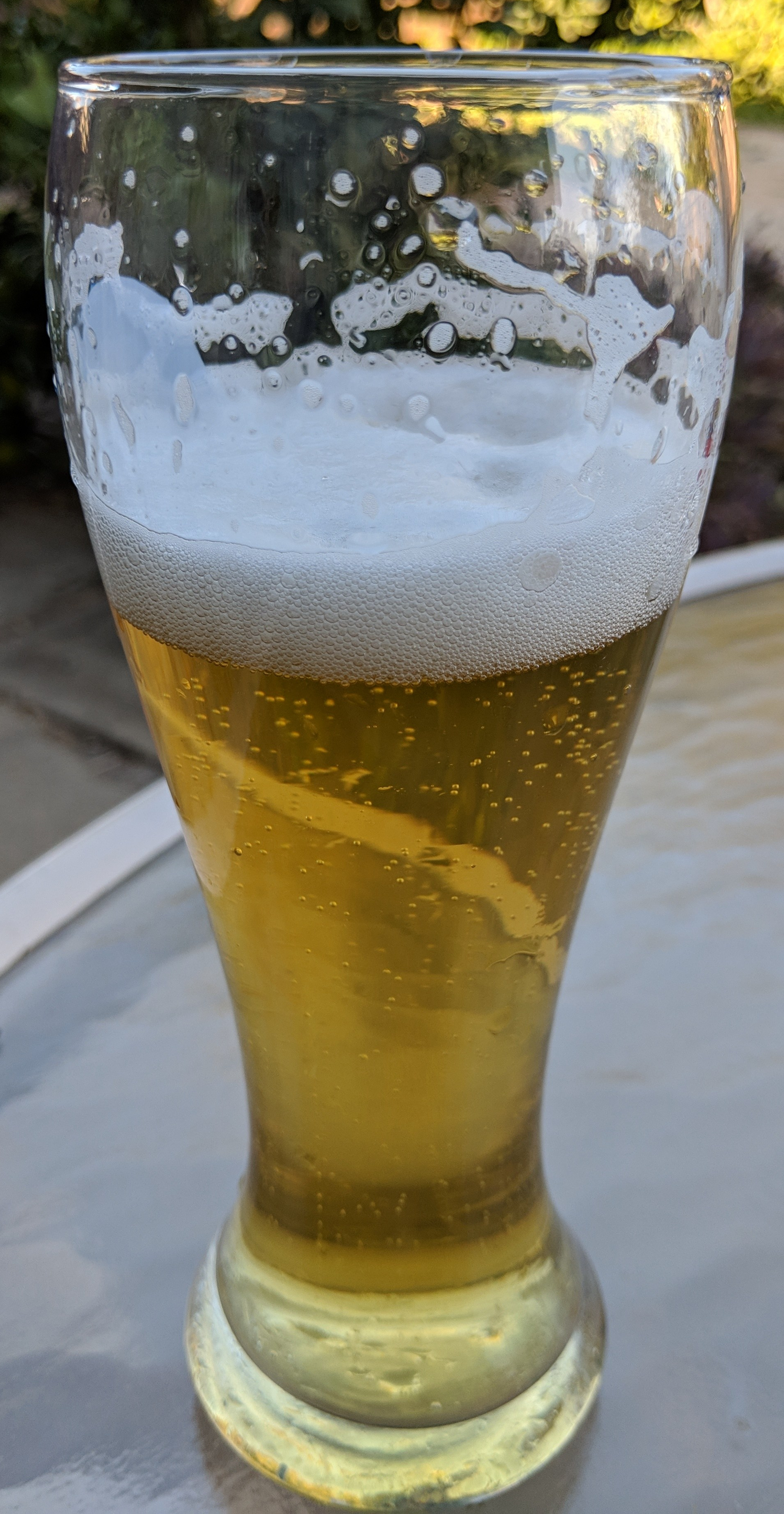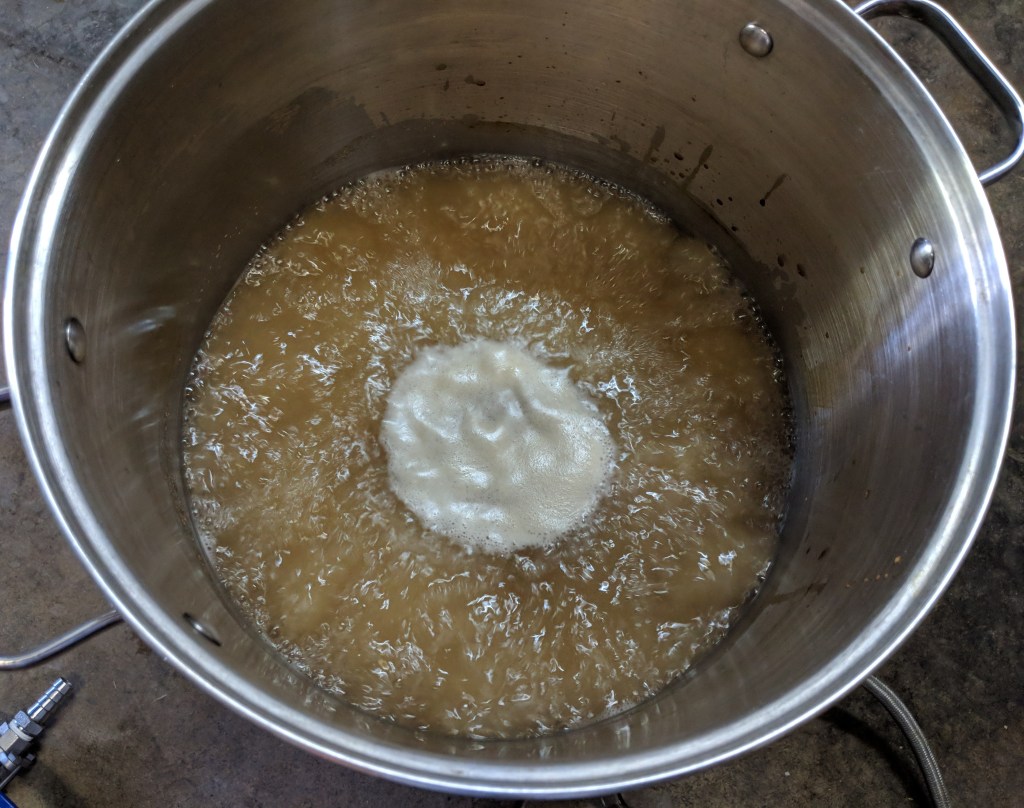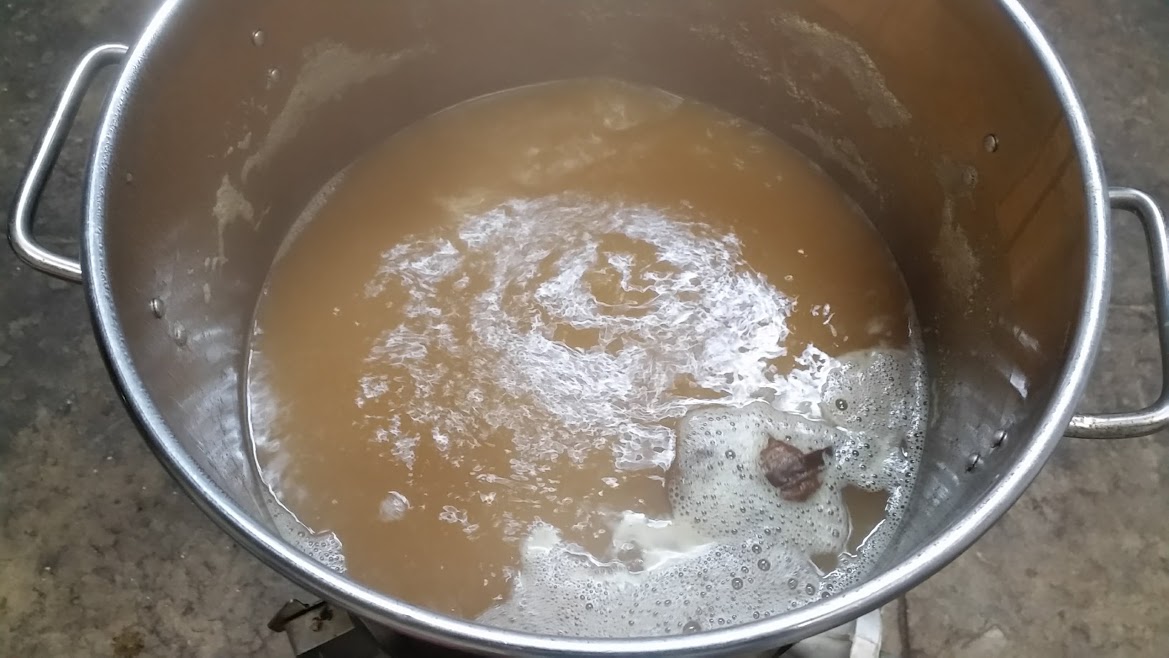
First of Maibock

My homebrew club is doing an in-club style competition for its May meeting, featuring–appropriately–maibock. Flying in the BJCP guidelines as a helles bock, this is a fairly malty, higher gravity German lager. It’s also not a style I’ve brewed before–this provides a great excuse (and is a reminder of how participating in a homebrew club can push you to try new things)!

This recipe is modified in part from one that appears in Gordon Strong’s Modern Homebrew Recipes. I adjusted the grain bill and hops slightly, and opted for an infusion mash rather than a decoction mash. The main commonality is that the recipe is basically pilsner, Vienna, and Munich malt, in descending proportions. I added in some melanoidin to help up the maltiness (particularly since I wasn’t doing a decoction mash). Finally, I adjusted this to be a 3.5 gallon batch, rather than a 5 gallon batch. This is a bigger beer, and I just didn’t want 5 gallons of the stuff!

The name is mangled from a Jonathan Coulton song; apologies to everyone.

20180210_211951

First of Maibock

  • 5 lb. Château Pilsen malt (Castle Malting)
  • 2.5 lb. Vienna malt (Great Western Malting)
  • 1.5 lb. Munich I malt (Weyermann Malting)
  • 0.25 lb. melanoidin malt (Weyermann Malting)
  • 0.45 oz. Magnum hop pellets (11.8% alpha), 60 minute boil
  • 1 oz. Tettnang hop pellets (2.2% alpha), 5 minute boil
  • 1 Whirlfloc tablet, 10 minute boil
  • 2 pkg. SafLager West European Lager yeast (S-23)

Target Parameters

  • Infusion mash to hit target of 152°, 60 minutes, batch sparge.
  • 1.068 o.g., 1.018 f.g., 6.5% abv, 27 IBU, 7 SRM
  • Water built from RO to hit target of 50 Ca, 5 Mg, 5 Na, 55 SO4, 70 Cl, 0 HCO3 ppm, RA -40

Procedure

  • To make my brewing water, I added 1.6 g gypsum, 0.3 g table salt, 1.2 g epsom salt, and 3.2 g calcium chloride to 6.5 gallons of RO water.
  • I mashed in with 3.15 gallons of water at 167° (and 4.75 mL of 75% phosphoric acid), to hit a mash temperature of 155°. After 40 minutes, the temperature was down to 152°. So, I added 0.65 gallons of water to bring the temperature back up to 157°. After a total of 60 minutes, I vorlaufed and collected the first runnings.
  • I added 2.75 gallons of water at 180°, let it sit for 10 minutes, vorlaufed, and drained the mash tun.
  • In total, I collected 5.5 gallons of runnings with a gravity of 1.049, for 78% efficiency.
  • I brought the kettle to a boil, adding hops and Whirlfloc per the schedule.
  • After 50 minutes of boiling, I measured the gravity and saw that it was at 1.058. This was well below my target, so I added 1.18 pounds of Briess pilsen DME to bring up the gravity.
  • After 60 minutes of boiling, I turned off the heat and chilled to 75°. I transferred to the fermenter, and put it in the fermentation chamber overnight to chill down to 54°. About 4 gallons of beer went into the fermenter.
  • I brewed the beer on 10 February 2018, and pitched the yeast on 11 February 2018. Prior to pitching, I hit the wort with 60 seconds of oxygen.
  • Starting gravity was 1.072.
  • On February 24, I let the beer free-rise to 64°. I’ll let it hang out at this temperature for a week or two before cold crashing.

Red Rye Lager

Moving through the winter months, and moving through my practice in the world of lagers, I’m feeling like something a bit different. I’ve got a good, clean German pils conditioning, so yet another pale lager would be somewhat boring. St. Patrick’s Day isn’t that far away, so an Irish-inspired beer seemed intriguing. I like Irish red ales, but rarely brew them. And then I thought…what about a red lager? Let’s take an Irish red ale recipe, and lagerize it!

Thus, my Red Rye Lager was born. I started with the Better Red Than Dead recipe from AHA, and worked a bit of magic on it. Instead of Maris Otter, I subbed in pilsner malt. To add a little more character, I dropped in a pound of rye malt. Thanks to a suggestion on the AHA forum, I used Carafa III instead of roasted barley for color adjustment. The hops got switched over to lager-appropriate hops, too. Finally, I wanted a yeast that would be clean but flavorful–and a California Common yeast seemed perfect.

20171222_140511

This was a fun recipe to work out…I feel like it’s something a bit different and creative. It doesn’t really conform to any particular BJCP style, which is also a plus in my book! The style guidelines are handy, but I find sometimes discourage me from thinking outside the box. I’m not brewing this for competition, so the sky is the limit!

Red Rye Lager

  • 5 lbs. Château Pilsen malt (Castle Malting)
  • 1.5 lbs. Barke pilsner malt (Weyermann Malting)
  • 3 lbs. Munich I malt (Weyermann Malting)
  • 1 lb. rye malt (Briess Malting)
  • 0.5 lb. CaraRed malt (Weyermann Malting)
  • 2 oz. Carafa III malt (Weyermann Malting)
  • 0.5 oz. Magnum hop pellets (13.2% alpha), 45 minute boil
  • 2 oz. Hallertauer Mittelfrueh hop pellets (4.0% alpha), 5 minute boil
  • 1 Whirlfloc tablet, 10 minute boil
  • 0.5 tsp. Fermax yeast nutrient, 10 minute boil
  • 1 pkg. San Francisco Lager Yeast (White Labs, WLP810), prepared in 1.75L starter

Target Parameters

  • Infusion mash to hit target of 152°, 60 minutes, batch sparge
  • 1.053 o.g., 1.016 f.g., 4.8% abv, 26 IBU, 14 SRM
  • Water adjusted to hit target of 52 Ca, 10 Mg, 11 Na, 43 SO4, 53 Cl, 109 HCO3, RA 46 ppm.

Procedure

  • I prepared a 1.75L starter for the yeast, 24 hours in advance. Within 12 hours, it had a visible fermentation.
  • I mashed in with 4.5 gallons of RO water, with 2 g Epsom salt and 3 g CaCl added, in addition to 3 mL of 75% phosphoric acid. The strike water was around 165°, to hit a mash temperature of 154°. It was down to 149.5° after 60 minutes. At this point, I vorlaufed, drained the mash tun, and added 4.5 gallons of tap water at 180°.
  • After waiting another 10 minutes, I vorlaufed and drained the mash tun again.
  • In total, I collected 7.3 gallons of wort with a gravity of 1.047, for 81% efficiency. Wow! I wonder if it was because I had a slightly thinner mash than normal?
  • I brought the runnings to a boil, adding hops and other ingredients per the schedule. After a 60 minute boil, I turned off the flame and chilled down to 70°.
  • I transferred the wort to the primary fermenter, and then hit it with 2 minutes of pure oxygen. I pitched the yeast, and sealed it all up. I will be fermenting at 60°.
  • The beer was brewed on 22 December 2017. Starting gravity was 1.053, exactly on target. I ended up with just over 6 gallons in the fermenter.
  • I cold-crashed the beer on 1 February 2018, and kegged it on 2 February 2018. Final gravity was 1.013, for 5.3% abv.

Tasting Notes

  • Aroma
    • A nice crisp spicy aroma, with a gentle malt aroma behind that. Really nice.
  • Appearance
    • A beautifully clear reddish amber color, with an ivory head that starts as thick, tall foam before settling down to a persistant blanket across the top of the beer. Really nice!
  • Flavor
    • The rye spice note is at the back of this beer; it’s not overwhelming, but definitely detectable, which is awesome. The malt backbone is very present, with that nice toasty note that you get from Munich. The bitterness is firm but gentle, standing up perfectly to the malt.
  • Mouthfeel
    • Medium bodied, moderately high carbonation. The finish is somewhat dry, but not overwhelmingly so.
  • Would I brew this again?
    • This is a wonderful beer! All of the flavors blend perfectly, to make a tasty and very unique beer. This isn’t the sort of thing that I would enter into a competition, because it’s just too off-beat for any category. Not quite amber lager, not quite steam beer.
  • Overall
    • 10/10

Brew Updates: Palaeotis Pils 1.2 & Old Pine Pale Ale

I’ve kegged two of my brews in the past week, incluing my German pils and my American pale ale. Here are the details!

  • After 10 days in primary, I kegged Old Pine Pale Ale on 12 December 2017. I added the dry hops at this point, in a bag. Depending on how it works out, I may or may not remove the hops. I force carbonated the keg, and had it on tap by 16 December. The brew is pretty hazy at this point, and should clear up with time. Final gravity was 1.012, down from 1.052, working out to 5.2% abv.
  • My latest iteration of Palaeotis Pils started fermentation on 20 November 2017. It fermented at 50° until 27 November, when I raised the temperature to 54°. I raised the temperature to 66° on 2 December 2017, and cold crashed it on 10 December 2017. I kegged the beer on 16 December 2017. Final gravity was 1.010; with a starting gravity of 1.049, we’re clocking in at 5.1% abv. There is a touch of haze, which I’m going to settle out with time and cold.

Palaeotis Pils 1.2

I really, really like a good German pils, and have iterated through two batches previously. Based on what I learned there, I refined the recipe a bit more. I opted for Magnum hops for bittering, Barke pilsner malt (courtesy of a free bag from Weyermann at Homebrew Con), and a return to decoction mashing.

Palaeotis Pils 1.2

  • 8.5 lbs. Barke pilsner malt (Weyermann)
  • 0.6 lb. acidulated malt (Bestmalz)
  • 0.6 oz. Magnum hop pellets (13.2% alpha), 60 minute boil
  • 1 Whirlfloc tablet, 10 minute boil
  • 0.5 tsp. Fermax, 10 minute boil
  • 1 oz. Hallertauer Mittelfrueh hop pellets (4.1% alpha), 5 minute boil
  • 2 pkg. Saflager lager yeast (W34/70)

Target Parameters

  • Double decoction mash, infusion to hit 45 minute rest at 151°, thick decoction to raise temperature to 158°, 10 minute rest, thin decoction to mash out at 168°. Batch sparge.
  • Water built from R.O., to hit 59.1 ppm Ca, 8.2 ppm Mg, 89 ppm SO4, and 62.9 ppm Cl.
  • 1.046 s.g., 1.008 f.g., 34 IBU, 3.4 SRM, 5.0% abv

Procedure

  • I started with RO water for both the mash and sparge. For the mash water, I added 1.65 g gypsum, 1.35 g epsom salt, and 2.1 g CaCl to 4.75 gallons of RO water. For the sparge water, I added the same masses of the salts to 3.8 gallons of RO water.
  • I mashed in with 4.75 gallons of water at 158°, to hit a 151° mash rest.
  • After 45 minutes, I pulled 2 gallons of thick decoction, raised to 160° for 10 minutes, boiled for 10 minutes, and then added it back to the mash. This raised the mash to 158°.
  • After another 10 minutes, I pulled a 1 gallon thin decoction (basically, the first runnings), boiled this for 10 minutes, and added back to the mash tun. After another 10 minutes of settling, I pulled off the first runnings.
  • Next, I added 3.8 gallons of sparge water at 185°, let it sit for 10 minutes, and then drained the mash tun.
  • In total, I collected 6.7 gallons of runnings with a gravity of 1.044–this is 88% efficiency! I added 0.5 gallons of RO water to bring the gravity down to 1.041.
  • I boiled for 60 minutes, adding the hops and other additions per the schedule. After the boil was complete, I chilled to 80° with my immersion chiller, and then chilled down to 48° overnight in my fermentation chamber.
  • I brewed the beer on 19 November 2017, and pitched the yeast on 20 November 2017. Fermentation was started at 50°, and raised to 54° on 27 November 2017. Finally, I raised the temperature to 66° on 2 December 2017.
  • In a week or so, I plan to cold crash and then keg the beer.

Festbier Head-to-Head

I’ve been wanting to do a head-to-head comparison of my festbier versus commercial examples, and finally got the chance to do so tonight. My buddy Steve stopped by, and I poured out three sampler glasses for each of us. Steve didn’t know which was which, other than that one was homebrew and two were commercial beers.

For my commercial comparison, I chose Ayinger’s October Fest-Märzen and Sierra Nevada’s Oktoberfest. Both were available at local stores, and are reasonably well regarded. I sampled the beers before and after brewing, to give me a bit of an idea what to expect in a festbier.

festbiers

Three festbiers (from left): Ayinger’s October Fest-Märzen, my Festivus Simplex, and Sierra Nevada’s Oktoberfest.

Steve and I tasted simultaneously, but I tried to avoid giving him any leading comments or critiques that might sway his opinion. Our observations are below; I transcribed his comments, but wrote down my personal observations without telling him, so as to avoid that avenue of bias.

  • We noticed that my beer has an ever so slightly lighter color, as well as a taller and more persistent head. All of the beers are quite clear.
  • Steve noted that the Ayinger version had a more prominent malty aroma. We both perceived malty sweetness and a hint of ginger in the flavor (the latter likely from the hops). I think that the maltiness is potentially from mild oxidation, which wouldn’t be a huge surprise for a beer that might have sat on a store shelf for some time after import. The malty character had that slightly cloying aspect from oxidized beers, as I experienced in an excellent seminar at the 2017 Homebrew Con.
  • The Sierra Nevada version came across as a little less carbonated to me, and Steve remarked that the flavor was a little flatter on the tongue. We both noted that the taste was less complex, and its head was not very persistent relative to the other two beers.
  • Steve described my homebrew as having a more complex taste than the Sierra Nevada version, and he preferred that mine had a less distinct after taste than the other two beers. For me, the hop aroma on mine was a touch more pronounced than in the Sierra Nevada and maybe a shade more than in the Ayinger, which I liked.
  • When asked to guess which was the homebrew, Steve guessed mine, based on the slight color difference and some intangibles in flavor. When asked which he preferred, he ranked my homebrew and the Ayinger pretty closely, with the Sierra Nevada in third place. I am biased, but I preferred my homebrew by a slight margin (although perhaps a fresh example of Ayinger would perform better), and agreed that the Sierra Nevada came in third place.

Overall, I think my festbier is definitely a contender against the two commercial varieties I sampled. It captures the style quite well, and in some ways (especially appearance, via head and head retention) exceeds the commercial examples. As I noted in my earlier tasting, I could up the maltiness just a shade. But overall, I’m pretty thrilled with how my version of a fall favorite turned out! This exercise in comparison was really educational–I’ll be trying it again for selected beers.