Beer Tasting: Festivus Simplex

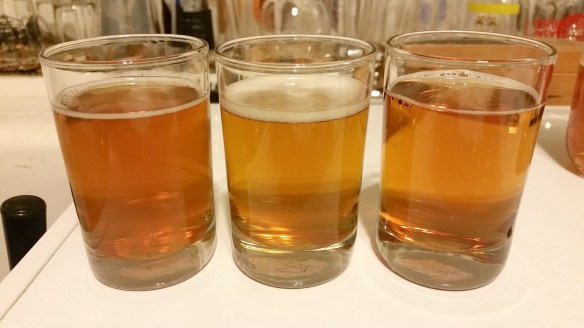
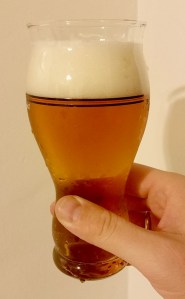
Tasting time! Tasting time! For this round, I’m evaluating my festbier.

  • 20171113_174304The Basics
    • 1.056 o.g., 1.014 f.g., 5.5% abv, 21 estimated IBU, 6 SRM
  •  Appearance
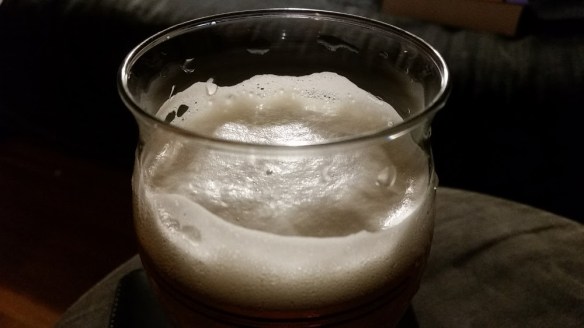
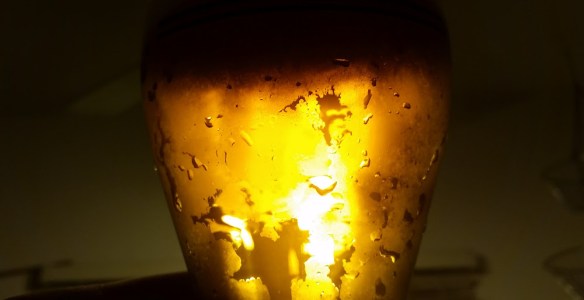
    • Burnished gold and quite clear, with a thick white head that is quite persistant. Very pretty!
  • Aroma
    • Modestly malty (characterized by bready and toasty note), with a slightly spicy hop aroma.
  • Flavor
    • Gorgeously malty character that is at the forefront, with bready aspects dominating, but still quite drinkable. The bitterness is clean, moderate, and well balanced against the malt; there’s not much in the way of hop flavor, other than a slight herbal and spicy character. I feel like I could up the malt character a bit (maybe even go completely with Munich and Vienna, cutting out the pilsner malt) and the beer would be even better.
  • Mouthfeel
    • Moderate body, with a moderately high (but not effervescent) carbonation. The finish is slightly dry, but not overly so, and doesn’t linger forever.
  • Would I brew this again?
    • Absolutely! This is a really nice festbier, and falls squarely into everything I’m looking for in a drinkable fall lager. I might up the maltiness just a touch.
  • Overall
    • 9/10

20171113_174444

20171113_174253

Beer Tasting: Dark Helmet Schwarzbier

My schwarzbier has been kegged for over a month, and seems to be at its peak. Tasting time!

20170903_151314Dark Helmet Schwarzbier

  • The Basics
    • 1.046 o.g., 1.014 f.g., 4.2% abv, 26 estimated IBU, 28 SRM
  • Appearance
    • Clear brown beer with a slight ruby tinge. The head is a light tan color and persistant.
  • Aroma
    • Light chocolate aroma with a slight roastiness; very nice!
  • Flavor
    • Clean and smooth, with a nice bready maltiness backed up with a bit of roasty chocolate and slight coffee notes. There is a modest bitterness, which melds quite well with the malt.
  • Mouthfeel
    • Smooth, light, and crisp; moderate carbonation and a gentle bitterness to the moderately dry finish.
  • Would I brew this again?
    • Indeed! This beer has matured into a delicious and very drinkable lager. I feel like I nailed the style pretty well. Although we are squarely in the heat of summer, this is one dark beer that I don’t mind having around. It’s surprisingly refreshing! Overall, there is very little I would change about this beer. It’s nice to have another reliable session beer in my portfolio, too.
  • Overall
    • 10/10

Dark Helmet Schwarzbier

As I continue to work my way through lager styles, I also realized that a lot of my recent brews have been fairly light (at least color-wise). This generally fits my summer drinking preferences, but I’m starting to get the itch for something with just a touch more robustness. Now, I don’t want anything too dark and filling (after all, it’s still hot here!), and I’ve been doing a lot of amber type beers recently, so schwarzbier sounded intriguing.

To sum up the BJCP 2015 style description, schwarzbier should be roasty yet also highly drinkable. That’s intriguing! I’ve maybe only sampled one or two in the very distant past (if ever), so I was a bit in the dark (no pun intended) as to how I should craft the recipe. So, I turned to the ever-reliable Brewing Classic Styles by Zainasheff and Palmer. With a few minor adjustments for ingredients, I was ready to roll. Following the lead of Gordon Strong, I elected to add all of the dark and crystal malts at vorlauf. This is supposed to impart a smoother character, and I figured it couldn’t hurt to try.

As for the name of this brew, I’m not the first to be so clever, but that didn’t deter me. The schwartz is strong with this one.

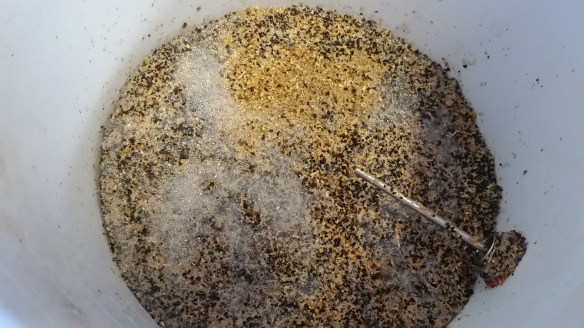
20170703_083848.jpg

Spent grains after the mash

Dark Helmet Schwarzbier

  • 4.5 lbs. Munich I malt (Weyermann)
  • 4.25 lbs. Château Pilsen malt (Castle Malting)
  • 6 oz. chocolate malt, added at vorlauf (Briess, 350 SRM)
  • 6 oz. crystal 40 malt, added at vorlauf (Great Western)
  • 3.5 oz. black barley malt, added at vorlauf (Briess)
  • 3.5 oz. Carafa Special II, added at vorlauf (Weyermann)
  • 1.25 oz. Liberty hop pellets (4.9% alpha), 60 minute boil
  • 0.75 oz. Liberty hop pellets (4.9% alpha), 5 minute boil
  • 1 tsp. Fermax yeast nutrient, 10 minute boil
  • 1 Whirlfloc tablet, 10 minute boil
  • 2 pkg. SafLager West European Lager yeast (S-23)
  • 1 pkg. SafLager Lager dry yeast (W34/70)

Target Parameters

  • 1.046 o.g., 1.011 f.g., 4.6% abv, 26 IBU, 28 SRM, 5.5 gallons into the fermenter
  • Water built from RO and tap water to hit target of 67 ppm Ca, 7 ppm Mg, 27 ppm Na, 30 ppm SO4, 89 ppm Cl, 126 ppm HCO3, 103 ppm alkalinity, and 51 ppm RA.
  • 60 minute mash at 152°, batch sparge, 60 minute boil

Procedure

  • For my mash water, I used 3.25 gallons of RO with 1 g table salt and 3.5 g calcium chloride. For the sparge water, I treated 5 gallons of Claremont tap water with a quarter of a Campden tablet. All together, this should hit my general brewing water parameters as outlined above.
  • I mashed in with 3.25 gallons of water at 162.6°, to hit a mash temperature of 153.5°. This was down to 150° after 35 minutes.
  • I sparged with 1.5 gallons of water at 175°, let it sit for 10 minutes, added the dark grains, vorlaufed, and collected the first runnings.
  • Then, I sparged with 3.5 gallons of water at 175°, let it sit for 10 minutes, and collected the second runnings.
  • All together, I collected 6.8 gallons of wort at a gravity of 1.039, for 72% efficiency.
  • I started the boil, and added all of the hops, etc., per the schedule in the recipe.
  • After 60 minutes, I chilled the wort to 80° and put it in the fermentation chamber to chill for a few hours, until the beer was down to 48°.
  • I pitched the two packets of S-23 into a slurry of distilled water, which did show appropriate activity. But, I also noted that they were expired by 10 months.
  • There wasn’t any real activity visible in the fermenter after around 24 hours, so I opted to pitch in some extra yeast. Luckily, I happened to have a few packets of W34/70 on-hand. Fermentation was underway visible around 48 hours after the initial pitch. Perhaps I was being overly cautious, but I figured it couldn’t hurt.
  • I am fermenting this at 50°. Starting gravity was 1.046.
  • I brewed this batch on July 3, 2017.

Beer Tasting: Holy Helles

20170423_150736Time for another beer tasting! This Munich helles–my first attempt for the style–has been an enjoyable brew. I entered it into the first round for the NHC…it didn’t place, but I’ll be interested to see how the score sheets pan out. I should get those later this week, but until then, here are my own thoughts!

  • The Basics
    • O.G. = 1.047; f.g. = 1.012; 4.6% abv; 4 SRM; 19 estimated IBU
  • Aroma
    • Mild spicy hop note, with a moderate degree of slightly sweet maltiness behind that.
  • Appearance
    • Brilliantly clear and light gold in color. The beer pours with a thick off-white head that settles to a nice even and persistent blanket across the top of the beer.
  • Flavor
    • Nice malt character, with a bit of graininess to it. The bitterness level is subdued and definitely in the background
  • Mouthfeel
    • Relatively light bodied, moderately carbonated, with a medium-dry finish. The bitterness hangs around on the finish for awhile, although it is not overpowering.
  • Would I brew this again?
    • This is a good beer, and quite drinkable, but I think it falls down a bit in the malt character. To bring this a touch more into the Munich helles style, I might up the malt profile just a bit–it seems like it swings to the hops end on aroma just a bit more than I would prefer. One fellow homebrewer suggested using a German pilsner malt rather than the Bohemian pilsner malt I’ve been using as of late–this might be a good first step.
  • Overall: 6/10

Beer Tasting: Palaeotis Pils

20170128_124227My Palaeotis Pils, falling within the German pils style, has been on tap for a few weeks now, and seems to be reaching a peak in quality. Time for a tasting!

  • The Basics
    • Original gravity = 1.048, final gravity = 1.011, abv = 5.0%, estimated IBU = 34
  • Appearance
    • Pale straw appearance, brilliantly clear, with a tall, fine, white head that settles to a persistent blanket across the top of the beer.
  • Aroma
    • A very gentle malty sweetness with a spicy hop note behind that.
  • Flavor
    • Bready malt profile, with a firm bitterness that lingers after each sip. It’s definitely a bitter beer, but not out of balance for what I wanted.
  • Mouthfeel
    • Carbonation is appropriately high for the style, and it has a crisp, medium-dry finish.
  • Would I brew this again?
    • Absolutely! This is an exceptionally nice beer; it nails pretty much every point of the style, and is easy drinking, too. German pils is probably a little hoppier than I would always want in a pale lager, but that’s more of a stylistic thing than a flaw in this particular recipe. The other night, I ordered a glass of Bitburger, often considered a “classic” German pils. Although I didn’t taste them side-by-side, I can say that mine hits many of the same notes as this commercial example. I have my pils entered in an upcoming competition, so we’ll see how my assessment compares to that of the BJCP judges.
  • Overall
    • 10/10