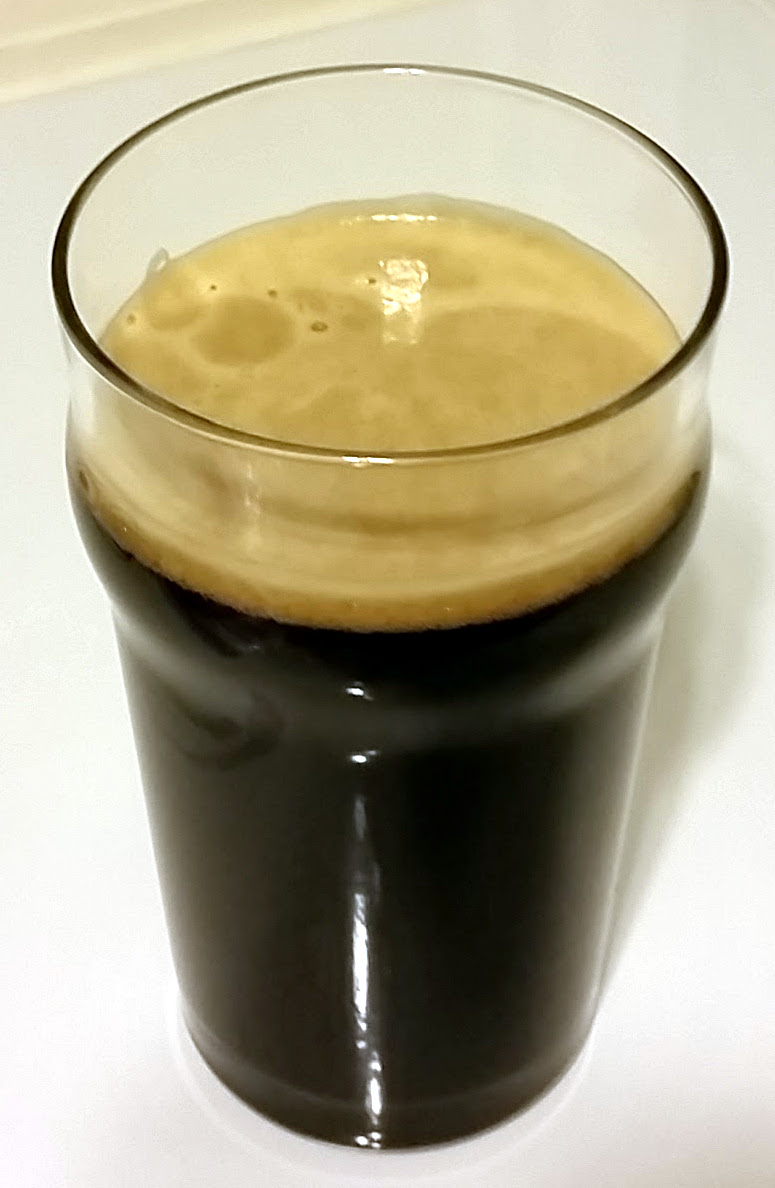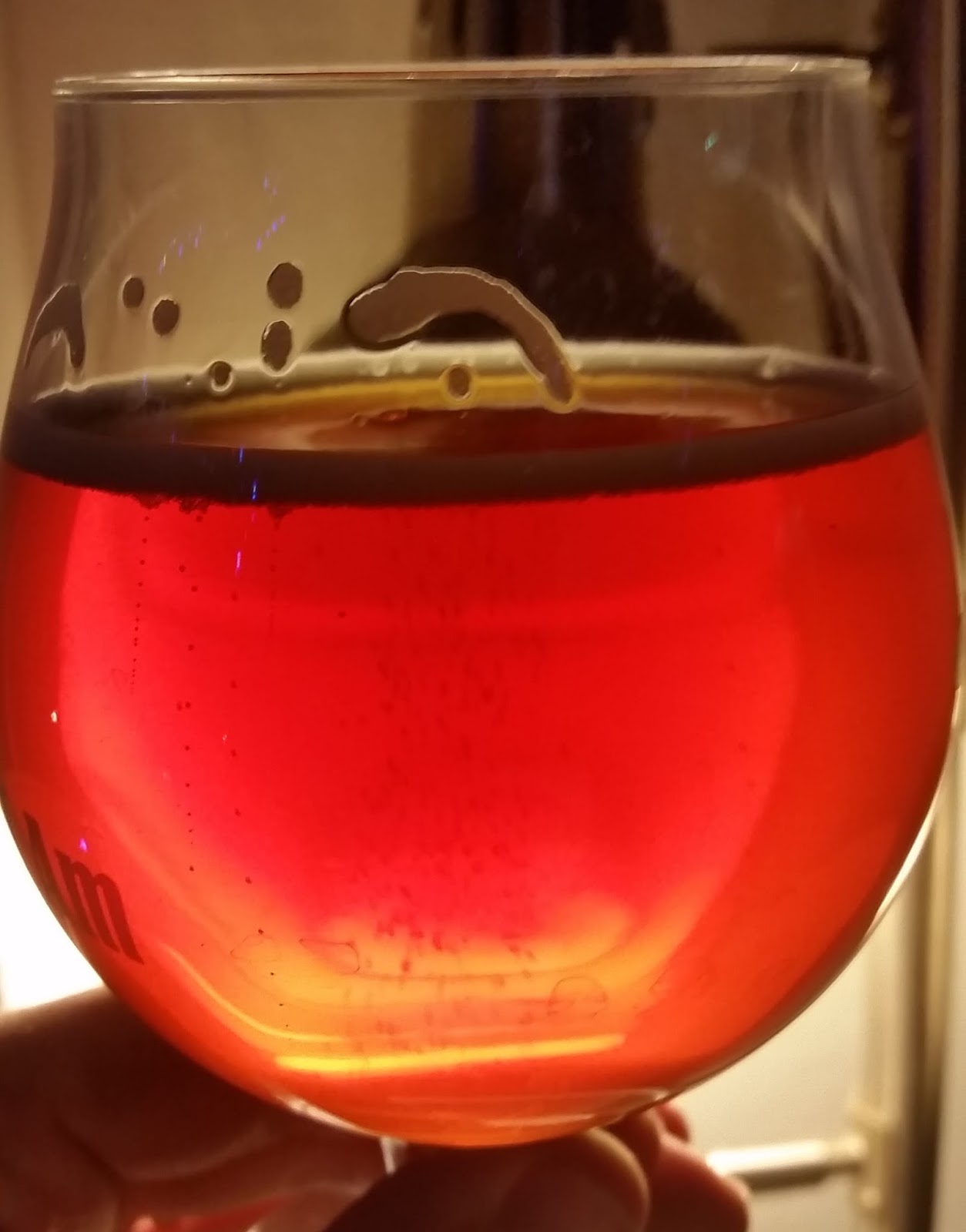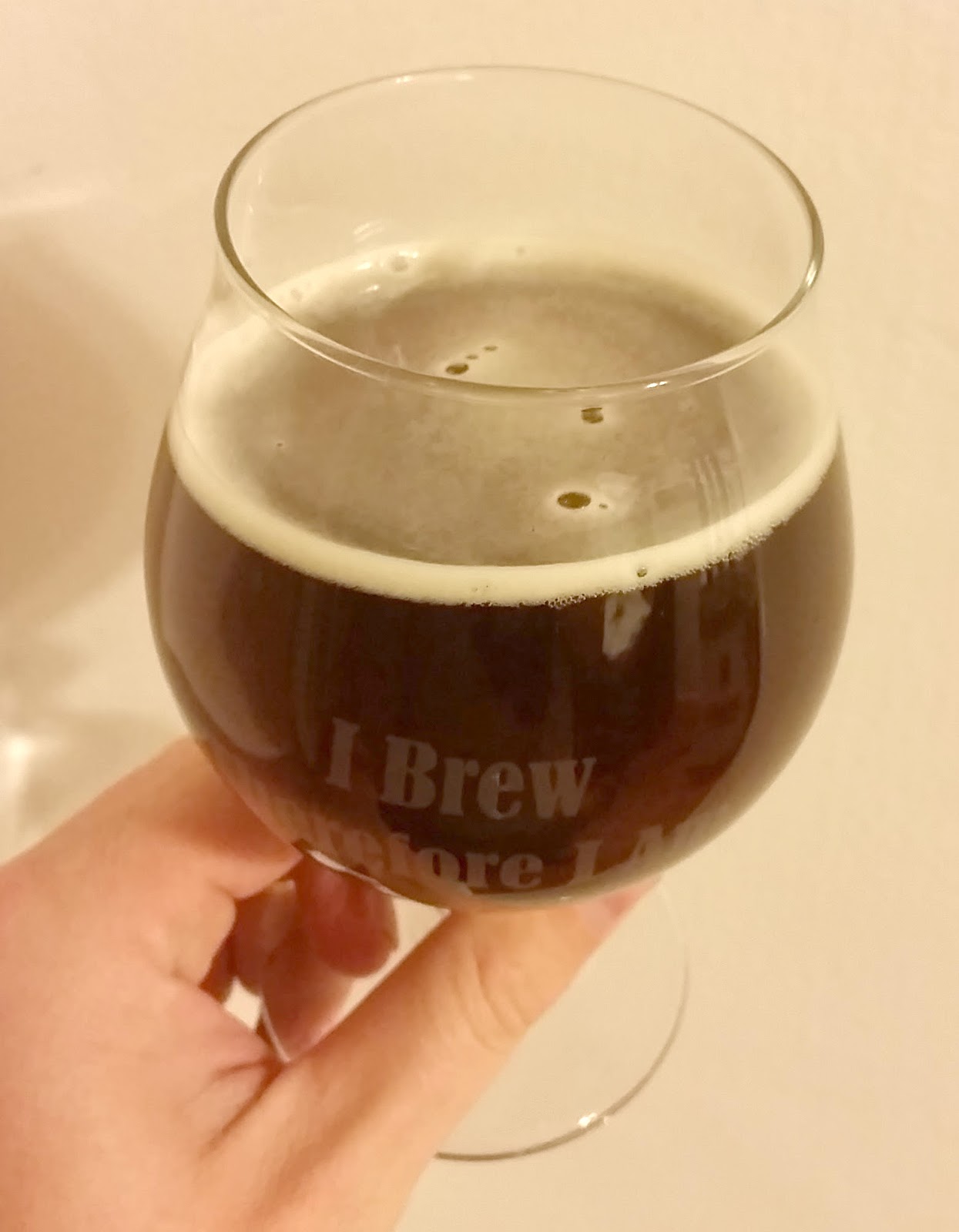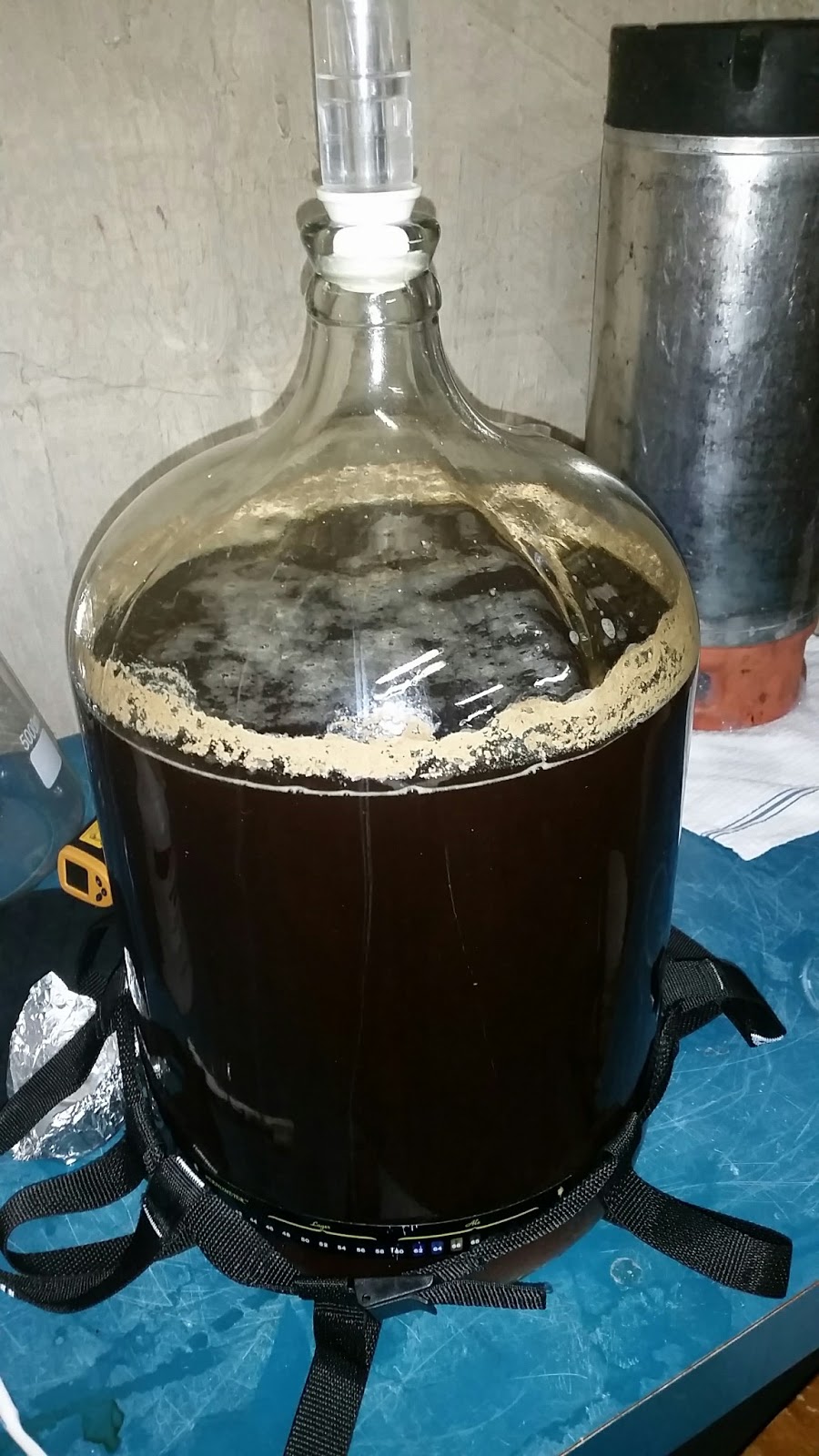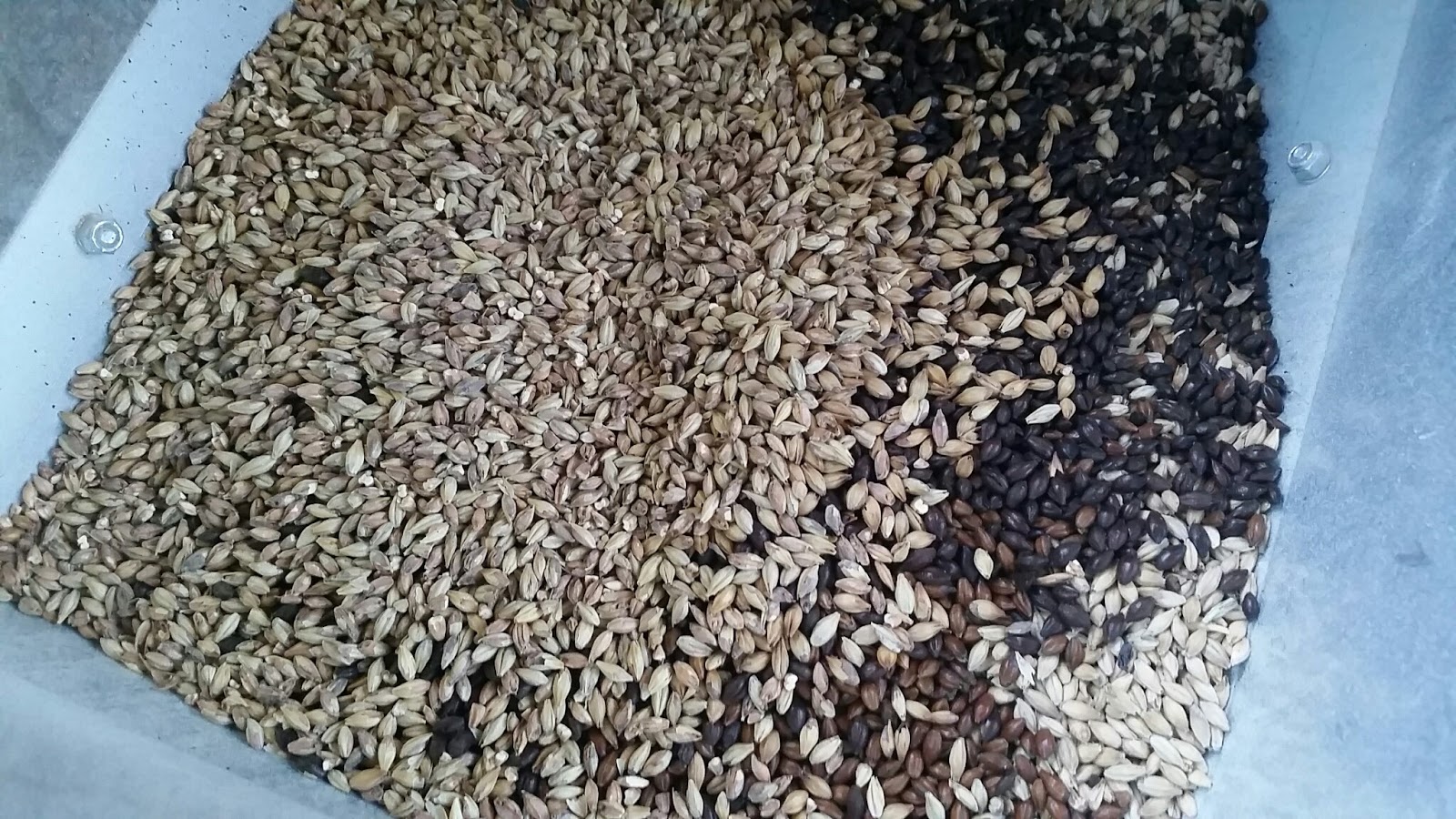
Today I kegged my 80 shilling ale – it has been in the primary fermenter for just over two weeks. Final gravity is 1.016, down from 1.053, with a resulting abv of 4.9%. The beer is a beautiful amber color and has an accompanying malty and caramel flavor that is pretty nice. Time will tell how it tastes with a little aging and carbonation.
Beer Tasting: Pannotia White IPA 1.5
The second iteration of my white IPA recipe is just a touch closer to perfect, with only a few last things to tweak. So close, but not quite there yet.
- Aroma
- Strong hops aroma, but not overpowering; citrusy with slight hints of tropical fruit. I don’t get much if any malt coming through in the aroma.
- Appearance
- Very clear and straw-colored, with a low but persistent fine white head. This beer has cleared up considerably since the keg was first tapped.
- Flavor
- The balance is towards the hoppy side, with citrusy and floral hops at the front of this beer’s flavor. There is a very light malty background. The bitterness is surprisingly low, more in pale ale than IPA territory. What bitterness is there is fairly smooth, with a gentle but noticeable finish.
- Mouthfeel
- This is a light-bodied, moderately dry beer. The moderate carbonation is appropriate for an IPA.
- Would I brew this beer again?
- Yes, with some changes. I feel like the aroma is pretty close to what I want, nicely balanced between Citra, Mosaic, and Galaxy, although I’m still lacking the lemon aspect that I remember from the original white IPA I sampled. I think instead of using 3 oz. of Citra in the steeping phase, I might mix it up with a mix of the same Citra, Mosaic, and Galaxy as used to dry-hop, for a slightly more complex flavor. The body is pretty close to perfection, although I feel like I could go to just 2-row and wheat malt for the next batch, rather than a mix of 2-row and pilsner alongside the wheat. I’m also going to up the bitterness a touch; I think the fairly low bitterness was the result of the homegrown whole hops, which can be a little unpredictable. I suspect the alpha acid content was a bit lower on this year’s Cascade crop that I received, so I might swap those out next time for a definitive ~5% alpha hop pellet.
- Overall: 7.5/10
Transatlantic IPA
![]() |
| “Conan! What is best in life?” “Crush your malted grains. See them mashed before you. Hear the fermentation of their wort.” |
It has been a long time since I’ve done a straight-up, full-strength American IPA (January, in fact). I’ve also been itching to try out some new yeast strains, particularly after hearing good things about “Conan.” I found the Vermont ale yeast via Yeast Bay, which is supposed to be just that. Most local shops don’t carry it, so I mail-ordered and planned out my brew.
The name for this batch honors its ingredients’ roots spanning North America and Europe. This batch is aiming to be an “East Coast” style IPA, with a little more malt character as well as an interesting yeast. So, I designed a recipe that had Maris Otter and Vienna as its backbone, with a bit of Belgian Caravienne to round things out and some pale chocolate malt for color. I’ve been doing a lot of ultra citrusy-type hops lately (especially Citra), and I worry that they would clash with the malts and yeast, so I’ve switched things up a touch. The bittering hops are all Columbus, with an aroma/flavor addition of Cascade. I plan to dry hop with Simco and Galaxy.
Transatlantic IPA
- 9 lbs. Maris Otter malt (Thomas Fawcett)
- 3 lbs. Vienna malt (Weyermann)
- 1 lb. Caravienne malt
- 0.15 lb. pale chocolate malt
- 1 oz. Columbus hops pellets (13.4% alpha, 4.4% beta), 60 minute boil
- 1.3 oz. Columbus hops pellets (13.4% alpha, 4.4% beta), 5 minute boil
- 1 oz. Cascade whole hops (est. 5.5% alpha), 5 minute boil
- 2 oz. Cascade whole hops (est. 5.5% alpha), steep/whirlpool
- 2 oz. Simcoe hops pellets (13% alpha), 2 week dry-hop in keg
- 1 oz. Galaxy hops pellets (13.7% alpha), 2 week dry-hop in keg
- 1 Whirlfloc tablet (10 minute boil)
- 1 pkg. Vermont Ale Yeast (The Yeast Bay), prepared in 1.25 L starter
Procedure
- I mashed in with 5 gallons of water at 165°, to hit a mash temperature of 151°. The mash was down to 150° after 30 minutes, and 147° after 60 minutes.
- After 60 minutes, I added 0.5 gallons of water at 180°, let rest for 10 minutes, vorlaufed, and drained the mash tun to collect 3.25 gallons of wort.
- Next, I added 3.75 gallons of water at 185°, which raised the overall mash temperature to 165°. I let it rest for 10 minutes, vorlaufed, and collected the remainder of the wort.
- All together, I collected 6.8 gallons of wort with a gravity of 1.053. This translates to a mash efficiency of 73%, nearly exactly on the nose for my calculations.
- I brought the wort to a boil, and added the bittering charge. After 50 minutes, I added the Whirlfloc tablet. After 55 minutes of boiling total, I added the additional Columbus and an ounce of Cascade hops. At flame-out, I removed the Columbus hops and added the remainder of the Cascade hops, to steep while I chilled the wort.
- I chilled the wort down to 80°, transferred it to the fermenter, and pitched the yeast starter. Approximately 5.5 gallons of wort went into the primary.
- The starting gravity for this beer is 1.064, exactly where calculated by my software. I’ll ferment this at 68° for two weeks (perhaps with a slight temperature increase at the end to maximize attenuation, as suggested by Yeast Bay).
- I brewed this beer on November 23, 2015.
Claremonter Weisse Bottled
After about a month in the primary fermenter, I finally got around to bottling my Berliner…err, Claremonter…Weisse. The beer has a pale straw color and a definitively tart flavor, with just a touch of grainy malt alongside that.
The final gravity was 1.010, down from 1.032, which translates to 2.9% abv. I had a yield of approximately 4.5 gallons total, which I primed with 4.05 oz. of priming sugar (dissolved in 2 cups of water), for a target of approximately 2.6 volumes of CO2. This is approximately in the middle of the range for the Berliner Weisse style (2.4 to 2.9 vols).
I made the decision to bottle rather than keg, because this doesn’t seem like the kind of beer that I really want to plow through quickly. It is supposed to keep fairly well due to the high acidity, so I’m happy to let it stick around for awhile. Bottling yielded a total of 6 22-oz., 5 18-oz., and 24 12-oz. bottles. I’ll let this carbonate for awhile before sampling (and will also make some syrups).
The Celtic Elk Stout
![]() |
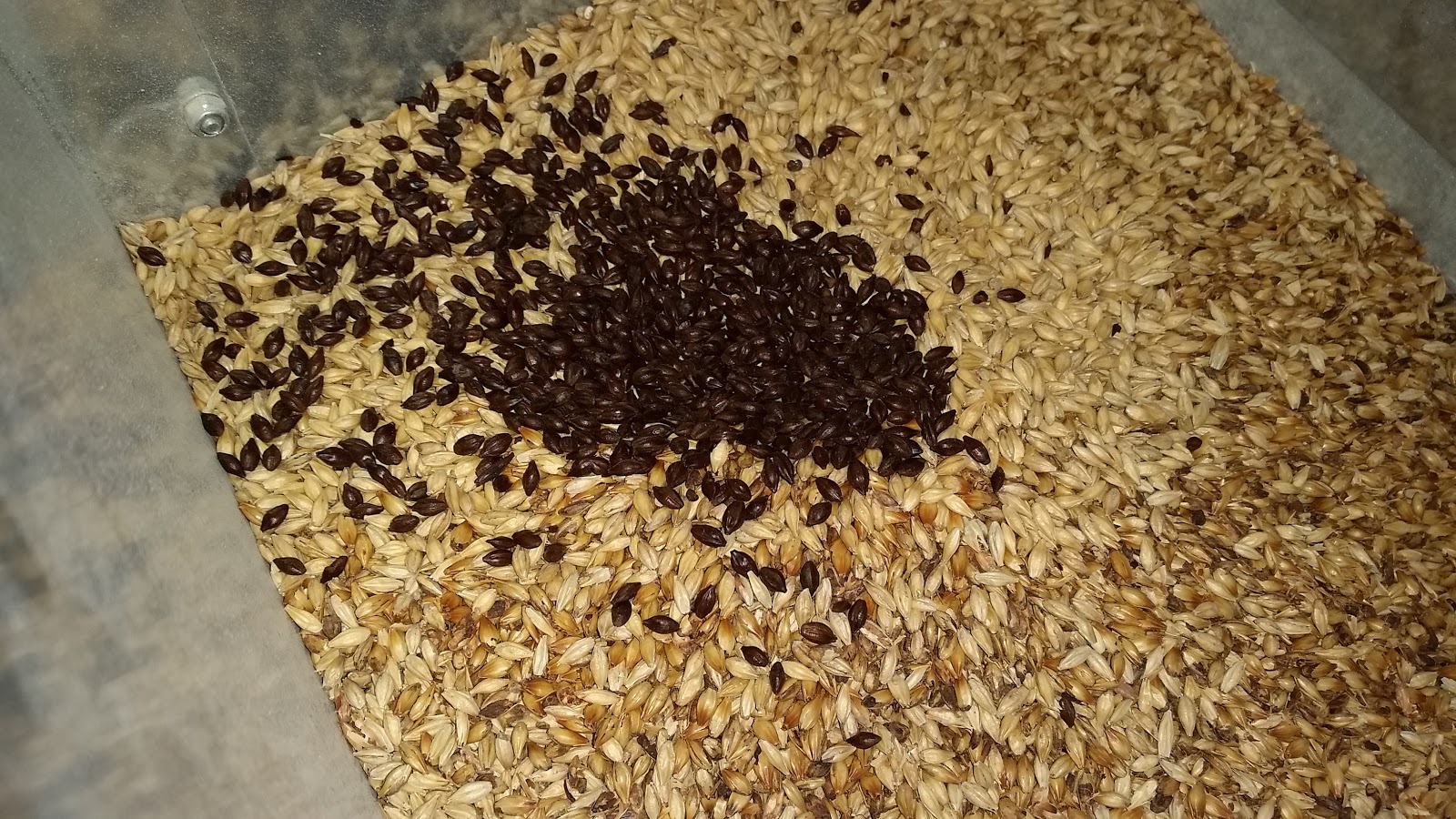
| Dark grains set aside to add during vorlauf |
As we inch closer to the dark days of winter, I’m in a mood for some good, robust beers. Robust for me usually doesn’t require high alcohol content (although it can)–I think of it more as something with a strong malt backbone, prominent flavors from specialty grains, and perhaps some nice yeast character. Following on the heels of last weekend’s 80 shilling ale, tonight I brewed an Irish stout.
The recipe is based on Gordon Strong’s recipe from Modern Homebrew Recipes, with some modifications for the grains and hops I had on hand. My goal with this batch is to get a robust beer, but one that clocks in lower on the alcohol side of things (in this case, 4.3%). The beer is actually a bit outside the 2015 BJCP guidelines for the Irish Stout style, in terms of original gravity and color. The latter point surprised me–the BJCP lists 40 SRM as the maximum for this style, and to me it seems a little silly to set an arbitrary maximum for a beer explicitly described as “black” in the style guidelines.
The name for the batch stems from the famed Irish Elk, Megaloceras. Because why not?
The Celtic Elk Stout
- 6.5 lbs. Maris Otter malt (Thomas Fawcett)
- 1.25 lbs. flaked barley
- 0.25 lbs. Carapils malt
- 0.75 lbs. 80° crystal malt (added at vorlauf)
- 0.67 lbs. roasted barley (Simpsons, 550 SRM, added at vorlauf)
- 0.5 lbs. pale chocolate malt (225 SRM, added at vorlauf)
- 0.375 lbs de-bittered black malt (Dingemans, added at vorlauf)
- 1 oz. Newport hops pellets, 40 minute boil (10.7% alpha, 6.4% beta)
- 1 Whirlfloc pellet (10 minute boil)
- 1 pkg. Irish Ale Yeast (WLP004), prepared 12 hours in advance in 1 L starter
- I mashed in with the Maris Otter, flaked barley, and Carapils, using 4.1 gallons of water at 168°. The mash stabilized at 157°, and was down to 153.5° after 40 minutes. [note: I did not use 5.2 pH stabilizer in this batch]
- I added the dark grains (cystal malt, roasted barley, chocolate malt, and black malt) along with 0.75 gallons of water at 160°, let the mash sit for 10 minutes, vorlaufed, and collected 3 gallons of wort.
- I then added 4 gallons of water at 180°, which raised the mash temperature to 164°. I let the mash sit for 10 minutes, vorlaufed, and collected the rest of the wort.
- All told, I collected 6.75 gallons of wort at a gravity of 1.040. This works out to ~73% efficiency, right where I had been hoping.
- I brought the wort to a boil, and added the hops and Whirlfloc at the appropriate times (aiming for 40 minute boil and 10 minute boil, respectively). After 60 minutes of boiling, I turned off the flame and chilled the wort down to 78° using my copper coil chiller.
- I transferred ~5.5 gallons of wort into the fermenter and pitched the yeast in its starter. I plan to let the temperature slowly equilibrate with the fermentation chamber overnight.
- The beer had a starting gravity of 1.048, exactly where expected. It was brewed on Saturday, November 21, 2015.