Beer Tasting: 2016 Orange Summer Wheat Ale

I am many weeks past kicking the keg of my latest orange wheat beer, but fortunately I did a tasting for posterity–on the very last pour for the batch. This recipe has earned its place in my regular rotation!

  • The Basics
    • Original gravity = 1.043; final gravity = 1.010; abv = 4.3%; estimated IBU = 22.
  • Aroma
    • Light orange blossom aroma, absolutely delightful!
  • Appearance
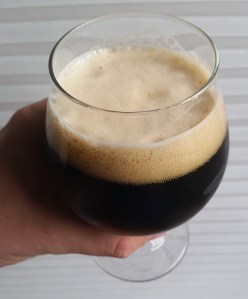
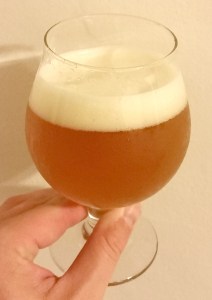
    • There is a moderate haze in the medium-yellow beer. The head is white, medium-fine and of moderate size and decent retention.
  • Flavor
    • The flavor is primarily a low-level of bready maltiness, with a low bitterness and a gentle orange flavor on the finish.
  • Mouthfeel
    • The beer has a light body and moderate carbonation. The finish has a gentle bitterness, but nothing too overpowering.
  • Overall
    • This is a darned fine beer; it hits pretty much every note I was looking for. I am particularly pleased with how the orange came through; just the right amount, without being too far in the background or too much in the front.
  • Overall score: 9.5/10

orange_wheat

Centennial IPA

In preparation for my rather sporadic brewing during the summer months, I’m laying in a store of (filled) kegs for future tapping. Pannotia White IPA is going online shortly, so it seems a good idea to have another IPA waiting in the wings.

I’ve been playing a lot lately in the world of “East Coast IPA’s” (whatever those are), and three things moved me back west for this batch. First, I was getting a bit bored with the East Coast style (even though my recipe is definitely tasty!). Second, my Conan culture seemed to be wandering a bit, and I deemed it wise to dump it. Finally, I wanted to explore some classic hops–a full pound of Centennial hop pellets that recently arrived at my brewery provided incentive.

Centennial Hop Pellets

It’s been over three years since my last record of brewing with Centennial, and that seems like a bit of a shame. They are such a classic within the annals of American craft brewing (one of the “3 C’s” along with Cascade and Columbus), and I don’t really know them as well as I should. Time to rectify that with a single-hop brew.

The recipe is modified from one of Gordon Strong’s, in his excellent book Modern Homebrew Recipes. I’ve been really pleased with the beers from the book I’ve done so far, and wanted to try out another one. Ironically, this is his “East Coast IPA”–my main modifications have been in the yeast (Safale US-05 instead of Wyeast 1272 / White Labs WLP051) and also the hopping schedule. Given how the East Coast IPA “style” has developed, I can’t say I would consider his recipe to really be in the spirit of that right now. The hops and yeast are squarely West Coast (in my opinion), although arguably the malt bill could be East Coast (again, whatever that means).

Last year’s crop of Centennial from YCH Hops was on the low end of alpha acids for the variety (7.6% alpha vs. the 7 to 12% alpha considered typical for YCH). So, I modified the timing of the hop additions to get into the ballpark IBU for the recipe. Additionally, I will add a small dry hop charge (1 oz.) upon kegging, just to bump up the hop aroma a touch more.

Centennial IPA

  • 10.5 lbs. 2-row malt (Great Western Malting Co.)
  • 1.75 lbs. Vienna malt
  • 0.5 lbs. Caravienne malt
  • 0.25 lbs. Carahell malt
  • 1 oz. Centennial hops pellets (7.6% alpha, 3.6% beta), first wort hop and 90 minute boil
  • 1 oz. Centennial hops pellets (7.6% alpha, 3.6% beta), 15 minute boil
  • 1 oz. Centennial hops pellets (7.6% alpha, 3.6% beta), 10 minute boil
  • 1 oz. Centennial hops pellets (7.6% alpha, 3.6% beta), 1 minute boil
  • 1 oz. Centennial hops pellets (7.6% alpha, 3.6% beta), 5 minute steep
  • 2 oz. Centennial hops pellets (7.6% alpha, 3.6% beta), dry hop in keg
  • 0.5 tsp. gypsum (added to boil kettle)
  • 1 tsp. Irish moss (10 minute boil)
  • 0.5 tsp. BSG Fermax yeast nutrient (10 minute boil)
  • 1 pkg. Safale American ale yeast (US-05)

Brewing Targets

  • Mash temperature = 149°
  • Original gravity = 1.062 (actual = 1.048)
  • Color = 6 SRM
  • IBU = 59

Procedure

  • I mashed in with 4.3 gallons of water at 160.5°, to hit an initial mash temperature of 150°. The mash was down to 146.8° after 45 minutes.
  • After 60 minutes, I added 1 gallon of water at 200°, which brought the mash temperature up to 156°. I let this sit for 10 minutes, vorlaufed, and collected the first runnings. At this point, the first ounce of hops were in the hop spider.
  • Next, I added 3.75 gallons of water at 185°, to raise the mash bed up to 168°. This sat for 10 minutes, at which point I vorlaufed and collected the second runnings.
  • All told, I collected 7 gallons of wort with a gravity of 1.052, for 76% mash efficiency.
  • I started the boil, adding the hops and other ingredients per the schedule. The wort had boiled down to 6.1 gallons after one hour.
  • After the full 90 minute boil, I removed the hop spider, added the final ounce of hops (in a small hop sack), let it sit for a minute or two, and then started to cool the wort. Once it was down to 75°, I transferred it to the fermenter. I then cooled it down to 68° in the fermentation chamber (which took ~2 hours) and pitched the yeast.
  • I brewed this beer on May 28, 2016. The starting gravity is 1.063, and I am fermenting at 66°.

Spring Cleaning Amber Ale Kegged

20160526_174737After 12 days in the primary, tonight I kegged my Spring Cleaning Amber Ale. The beer dropped quite clear in the carboy, and comes across as a fairly classic amber ale in color, flavor, and aroma. Amber ales often aren’t terribly exciting to me, but I think they make a nice “dark” beer to have around during the summer months.

From a starting gravity of 1.050, we ended up at 1.014. That works out as 4.7% abv and 71% apparent attenuation. This is a bit higher final gravity than predicted, but could be explained by evolution of the yeast towards a less attenuative strain over the cultured generations (supported by the very clear beer on the transfer, somewhat different from my earlier batches with this same culture).

Pannotia White IPA Kegged

Pannotia White IPA
After a little more than two weeks in the primary fermenter, tonight I kegged the latest iteration of Pannotia White IPA. I think the bitterness level in this version is just about perfect, and the overall flavor and baseline aroma are also pretty good.

At the time of kegging, I added the dry hops charge in a weighted mesh bag (1 oz. each of Citra, Galaxy, and Mosaic hops pellets), along with 2 oz. of the lemon zest extract that I made earlier.

The final gravity for this beer was 1.012, down from 1.060, equating to 6.3% abv.

Beer Tasting: Jarrylo Session IPA

I brewed this one waaay back, and haven’t gotten around to posting my tasting (completed in early March). Here it is!

  • The Basics
    • Original gravity = 1.047; final gravity = 1.017; abv = 3.9%; estimated IBU = 53.
  • Appearance
    • Very fine and persistent off-white heady with a creamy character; the beer itself is a medium copper color with a mild haze.
  • Aroma
    • The aroma is hop-centered but fairly mild, with notes of tropical fruit, pear, and perhaps a hint of pepper.
  • Flavor
    • The flavor is quite clean, with a subdued and smooth hop bitterness. The bitterness is way lower than I was expecting though, and probably pushes this more into pale ale than IPA territory. The hops themselves come across as citrusy and slightly floral. There is a very slight maltiness at the back end of this one.
  • Mouthfeel
    • The body is fairly thin, unfortunately, and the beer comes across as a bit watery. The finish is relatively dry.
  • Would I brew this again?
    • I was, unfortunately, rather disappointed with how this beer turned out. Even though it is intended as a session IPA, the bitterness and body miss the mark. I think the hops I used just aren’t suited for the style, and the initial wort was thinner than desirable too. Jarrylo seems like a nice hops variety, but probably better suited for less “hefty” styles, such as a blonde ale or even a pale ale. In fact, I’ve taken to thinking of this beer as a pale ale rather than an IPA, and that helps a bit with my perception of it.
  • Overall rating
    • 4/10