Mahajanga IPA

Although my tastes tilt towards lower alcohol (<5.5% abv) beers, I like something a bit stronger as a treat now and then. I’ve previously enjoyed Avery Brewing Brewing Company’s Maharaja, a 10% abv double (triple?) IPA, and found a clone recipe in Craft Beer for the Homebrewer. I modified the hops in my version, with Chinook in place of Columbus and Centennial on the boil. On the dry hop end of things, I was much closer to the original recipe.

The name is a play on Avery’s brew, honoring a city in northwestern Madagascar where I spent a bit of time during my fieldwork in that country.

Mahajanga IPA

  • 10.5 pounds 2-row malt (Great Western)
  • 7 oz. biscuit malt (Dingemans)
  • 6 oz. crystal 120 (Great Western)
  • 1 oz. Chinook whole hops (13.1% alpha), 60 minute boil
  • 1 oz. Chinook whole hops (13.1% alpha), 30 minute boil
  • 1 lb. pilsen light dry malt extract, 10 minute boil
  • 1 Whirlfloc tablet, 5 minute boil
  • 1 tsp. Fermax yeast nutrient, 5 minute boil
  • 2 oz. Centennial hop pellets (8.1% alpha), 10 minute whirlpool
  • 1 pkg. Safale American Ale yeast (US-05)
  • 1 oz. Centennial hop pellets (8.1% alpha), dry hop in keg
  • 1 oz. Chinook whole hops (13.1% alpha), dry hop in keg
  • 1 oz. Simcoe hop pellets (13.6% alpha), dry hop in keg

Target Parameters

  • 1.088 o.g., 1.013 f.g., 10% abv, 113 IBU, 13 SRM
  • Claremont tap water, with 2 g of gypsum added at end of boil
  • Full volume mash, 90 minutes at 147°, mash out to 168°, ferment at 65°

Procedure

  • I mashed in full volume with ~5 gallons of water at 156°, to hit a mash temperature of 147°. I added ~4 mL of 88% lactic acid to adjust the mash pH.
  • After a 90 minute mash, I brought it up to 168° and held for 10 minutes before removing the grains.
  • I hit around 57% mash efficiency, with ~1.058 gravity for 4 gallons of runnings. This is pretty low, so I knew I would have to add a pound of DME.
  • I brought the runnings to a boil, adding hops, DME, and kettle finings per the recipe.
  • I added 2 g of gypsum at the end of the boil.
  • Approximately 3.4 gallons of wort went into the fermenter. I gave this 30 seconds of pure O2, and then pitched the yeast. It fermented at ambient (~64°).
  • I brewed the beer on 25 November 2020, and it had a starting gravity of 1.077.
  • I kegged the beer on 19 December 2020, adding the dry hops at that time. Final gravity was 1.014, for 8.5% abv. I’m thrilled that the beer attenuated fairly well!
  • I removed the dry hops on 27 December 2020, to avoid overhopping or harshness.

Tasting

  • Appearance
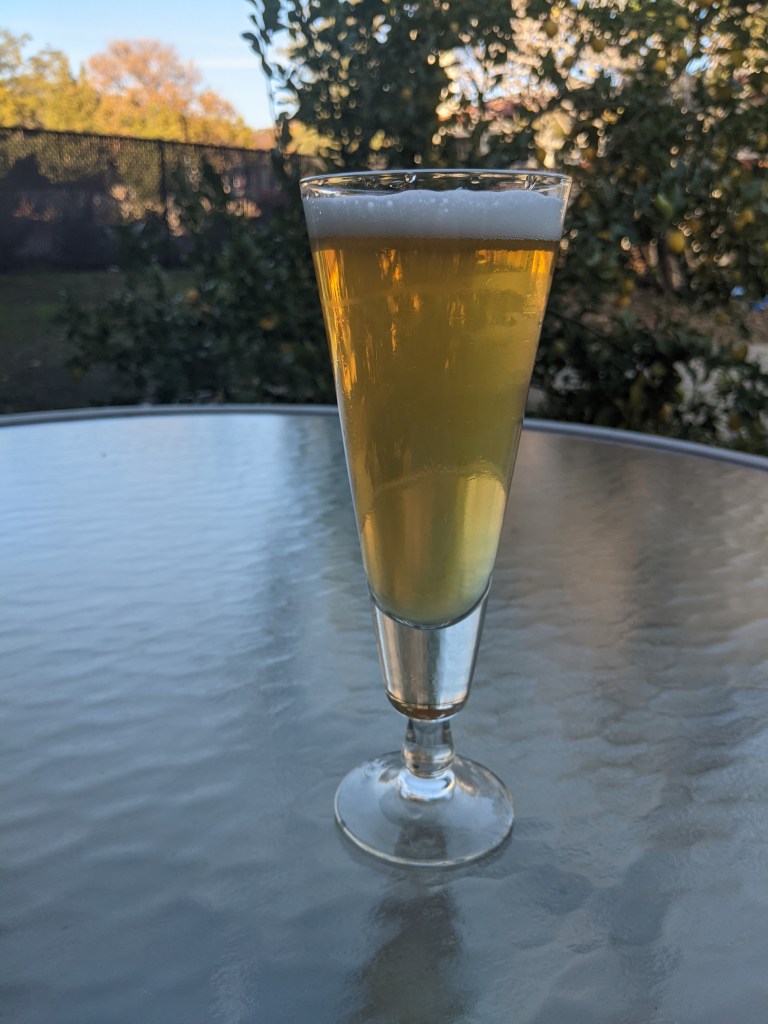
    • The beer has an orangish, burnished gold color; it’s slightly hazy, but not overly so. It pours with a persistent ivory head with really nice lacing.
  • Aroma
    • Slight caramel malt quality, and a prominent hop character of citrus rind and pine resin. There is no yeast character or hot alcohol character, which is awesome!
  • Flavor
    • The beer is quite bitter, with a grapefruit rind and pine resin character to the bitterness. The malt flavor is somewhat grainy, and relatively moderate compared to the hops. Yeast character is very clean. This is a hop-forward beer!
  • Mouthfeel
    • Medium-light body, with an off-dry finish and moderate carbonation.
  • Would I brew this again?
    • Overall, this is a great recipe that just requires some hop adjustment. The hop character is a bit one-dimensional, with the Chinook dominating everything else. If I rebrew this, I’ll go closer to the original recipe, and ditch Chinook for all but a small dry hop addition. The malt character is about perfect, with enough body to stand up to the hops. The yeast management was perfect on this one–it attenuated well, and the yeast character was clean rather than boozy or fusel-ridden.
  • Overall
    • 6/10

Pfriem Pilsner

I recently bought a Foundry brewing system, and chose a German pils as my first brew. First off, I really like this style. Importantly for a first spin on the Foundry, it gave me a chance to try out a step mash. The recipe is from Dave Carpenter’s Lager book, modified slightly for hop varieties. Otherwise, it’s pretty much as advertised.

Pfriem Pilsner

  • 9.5 lb. Pilsner malt (Weyermann)
  • 7 oz. Carafoam malt (Weyermann)
  • 3 oz. acidulated malt (Weyermann)
  • 0.6 oz. Perle hop pellets (7.1% alpha), 60 minute boil
  • 1 oz. Crystal hop pellets (4.5% alpha), 10 minute boil
  • 0.5 oz. Spalt Spalter hop pellets (3.0% alpha), 10 minute boil
  • 0.5 oz. Vanguard hop pellets (6.5% alpha), 10 minute boil
  • 1 oz. Crystal hop pellets (4.5% alpha), 10 minute whirlpool
  • 0.5 oz. Spalt Spalter hop pellets (3.0% alpha), 10 minute whirlpool
  • 0.5 oz. Vanguard hop pellets (6.5% alpha), 10 minute whirlpool
  • 2 pkg. Saflager Lager Yeast (W34/070)

Target Parameters

  • 1.046 s.g., 1.006 f.g., 5.2% abv, 3 SRM, 35 IBU, 5.25 gallon batch
  • Full volume step mash, with 40 minutes at 142°, 40 minutes at 156°, and 10 minutes at 168°; 70 minute boil
  • Claremont water with carbonates knocked out via lactic acid and Campden tablet to remove chloramines.

Procedure

  • While the 7.25 gallons of water were heating, I added 6 mL of 88% lactic acid to neutralize the carbonate load, in addition to adding a Campden tablet. No other minerals were added.
  • It took 29 minutes to heat up from tap water temperature (~115°) to 146° for the mash-in temperature. I also added 5 mL of 88% lactic acid (but realized I had the wrong settings, and this was probably too much). I hit an initial mash temperature of 142°, and held it there for 40 minutes. 10 minutes into the mash, I started recirculating. Then, I raised the temperature to 158°, which took around 20 minutes (I started at 75% power, and then upped it to 100% power for the last 10 minutes). To raise to 168° for mash-out, it took ~7 minutes at 100% power. To get boiling temperatures, it took around 50 minutes. I noted that it was boiling (bubbling) before the panel actually showed 212° (~207°).
  • The post-mash volume was 6.4 gallons, with a gravity of 1.043, for 72% mash efficiency.
  • I boiled for 70 minutes, adding hops and finings per the recipe.
  • After the boil, I chilled and transferred to the fermenter. In the fermenter, I continued the chill, down to 52°. Then, I pitched the yeast.
  • I brewed this beer on 17 October 2020, and it had a starting gravity of 1.049.
  • I raised the beer to 60° on 30 October 2020.
  • I lowered the beer to 55° on 1 November 2020, and down to 33° on 6 November 2020.
  • I kegged using semi-closed transfer on 30 November 2020.
  • Final gravity was 1.013, for 4.7% abv.

Tasting

  • Appearance
    • The beer pours with a persistent, thick, and white head–absolutely gorgeous! This is a true slow-pour beer. I am so pleased with the heading I’ve been getting from my pilsners. In the glass, the beer has a light gold color, with a very slight haze.
  • Aroma
    • Light grainy malt note, with a low level of spicy hop character. Very clean yeast character.
  • Flavor
    • Moderately low grainy-sweet malt character. The hops are more prominent, with a slight herbal character and clean bitterness that is pretty strong, almost approaching a level of harshness. Yeast flavor is very clean.
  • Mouthfeel
    • Moderate/moderate-low level of carbonation, due to the high head on the pour that drives off some of the CO2. The finish is off-dry, with a light and crisp body.
  • Would I brew this again?
    • Yes? I really need to take a look at my hopping levels, and perhaps consider going with American hops rather than European ones to get a better aroma. The persistent haze is annoying, but I also misjudged the lactic acid addition, which I suspect might be a factor, as well as the whirlpool. I’ll dial back the hops in my next batch and avoid the whirlpool, because this is more bitter than I really like for a pils. Once I’m buying RO water again, I’ll definitely be building up my water profile, rather than augmenting the rather over-mineralized tap water. So, there are things I like about the recipe, but I think I can continue to adjust for improvements.
  • Overall
    • 6/10

Blast from the Past: Gingerbread Winter Warmer 2016

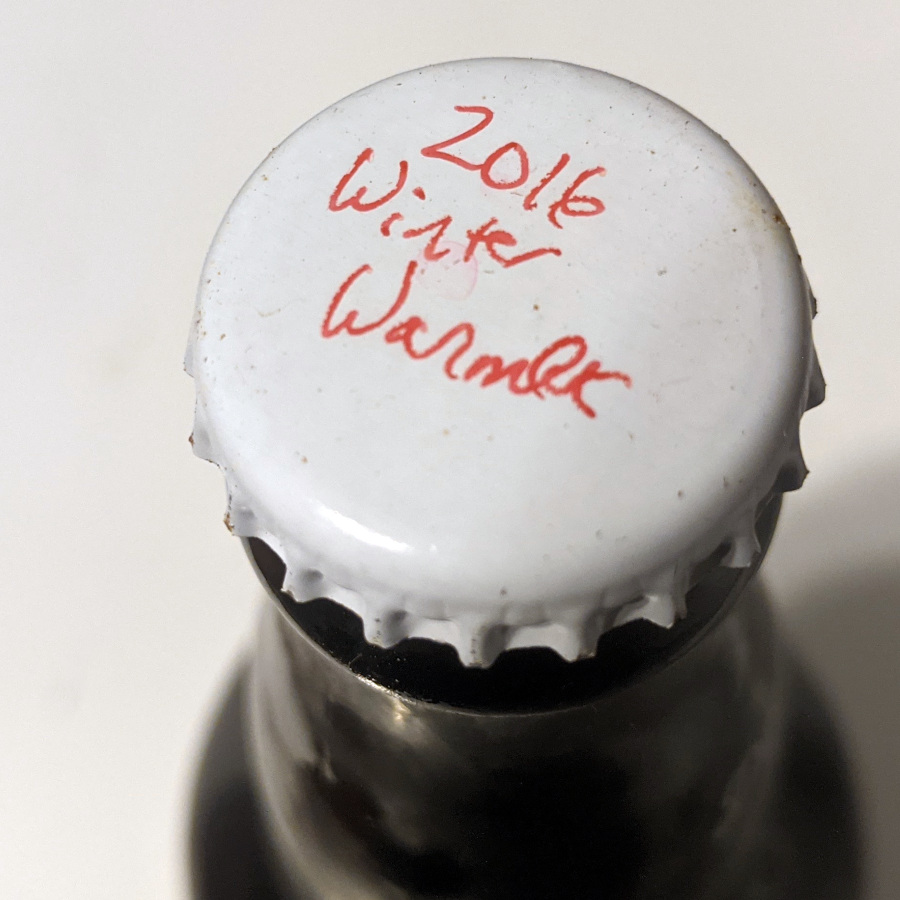
Way, way, way back in the innocent days of September 2016, I brewed a winter warmer. At the time, it was okay, but nothing great. I drank much of it right from the keg, and the rest got bottled. I sampled some back in January 2018, and it was aging nicely. After that, I forgot about the beer for awhile, and only just ran across my stash in the basement while putting away Christmas decorations. Being New Year’s Eve and all, I thought it would be fun to pull out a bottle and give it a taste!

Although I was tempted to review my recipe and brewing notes prior to opening the bottle, I decided to go into the tasting with minimal expectations. I vaguely recalled that there was some ginger in there, but that’s about it. My spouse shared the bottle (it was 22 ounces of beer, and I didn’t need to drink all of it myself!), and we talked over the beer as watched the southern California sunset from our yard.

Tasting

  • Appearance
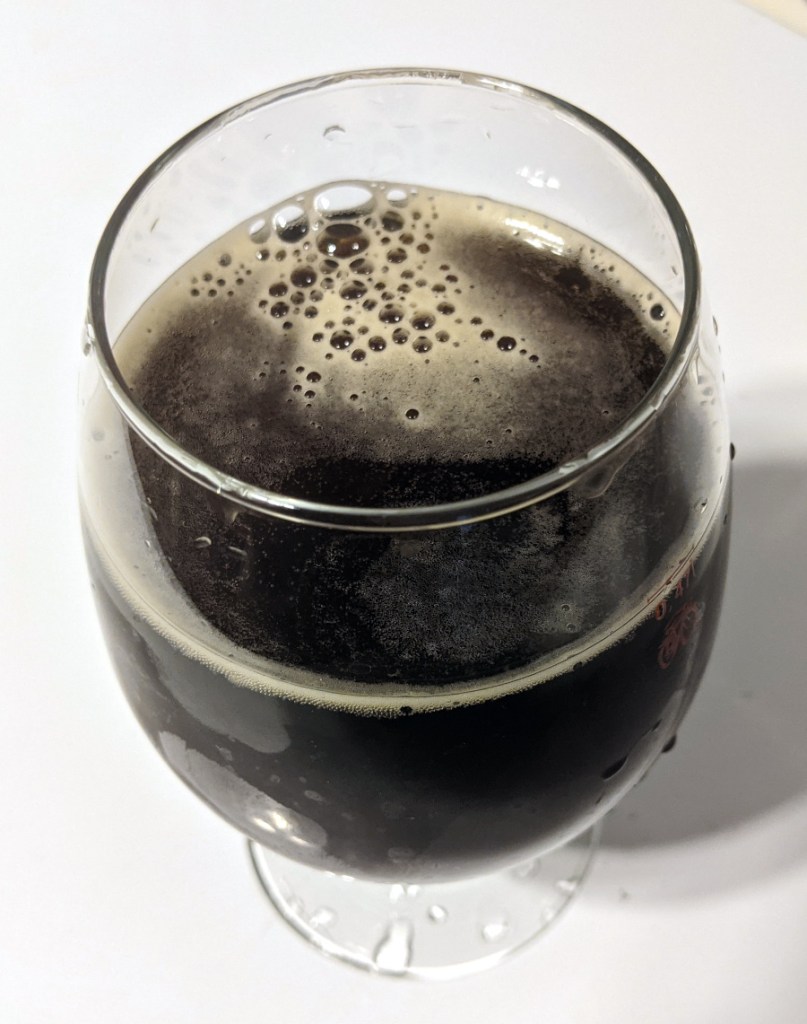
    • Very clear, deep amber beer, which pours with a moderately persistent cream-colored head.
  • Aroma
    • Raisins, light hint of leather, ginger, dried figs…very rich! No hop aroma noticeable.
  • Flavor
    • Malty, with moderate bitterness. Lots of pleasant notes from aging, including dried figs, raisins, and a touch of spice (ginger). Yeast character was surprisingly clean, with no unpleasant aspects that I was afraid might seep in after a few years.
  • Mouthfeel
    • Big body, very smooth, moderate carbonation.
  • Would I Age This Again?
    • YES. Although I don’t recall this being an exceptional beer four years ago, it sure is something special now. Everything has just come together in a rich, flavorful way, and I can’t think of a better beer to enjoy as we close out 2020. I’ll brew this again soon, to have at least a little aging under its belt before next New Year’s Eve.
  • Overall
    • 10/10
Here’s to cellared beer, and 2021!

See See IPA

Classic American IPA time, again! The recipe is a modest modification of my Wildfire IPA from a few months back. The malts are fairly different (crystal 40 and biscuit, instead of crystal 30), and I used light Munich instead of dark Munich malt. The hopping schedule is also adjusted, to use the clean bitterness of Magnum and all of the flavor/aroma happening in the whirlpool and dry hop. So, I suppose it’s not really a complete rebrew, but a new recipe strongly inspired by the past recipe.

The name references the C-C dry hopping, with Cascade and Chinook whole cones right in the keg. And that, in turn, is a (bad) pun on “See See Rider,” a song that originated over 100 years ago and is known to many of us because of Elvis Presley.

See See IPA

  • 12 lb. 2-row brewer’s malt (Great Western)
  • 1 lb. Munich light malt (Chateau)
  • 0.5 lb. crystal 40 malt (Great Western)
  • 0.25 lb. biscuit malt (Dingemans)
  • 1.4 oz. Magnum hop pellets (13.2% alpha), 45 minute boil
  • 1 tsp. Fermax, 10 minute boil
  • 1 Whirlfloc tablet, 5 minute boil
  • 1 oz. Cascade whole hops (5.5% alpha), 15 minute whirlpool
  • 0.5 oz. Chinook whole hops (13.1% alpha), 15 minute whirlpool
  • 0.4 oz. Centennial hop pellets (9.3% alpha), 15 minute whirlpool
  • 1 pkg. American West Coast Ale yeast (Lallemand BRY-97)
  • 1.5 oz. Chinook whole hops (13.1% alpha), dry hop in keg
  • 1 oz. Cascade whole hops (5.5% alpha), dry hop in keg

Target Parameters

  • 1.057 s.g., 1.011 f.g., 6.1% abv, 7 SRM, 67 IBU
  • Infusion mash, 150°, full volume; 60 minute boil
  • Claremont water, with Campden tablet to remove chloramines.

Procedure

  • I heated 7.5 gallons of mash water to 157°, and added the grains to hit a target mash temperature of 150° for 60 minutes. I added 10 mL of 88% lactic acid to adjust pH.
  • After a 60 minute mash with recirculation, I ramped the temperature up to 168° over 10 minutes, and held it there for 10 minutes more. Next, I removed the grains and started heating to the boil.
  • I had approximately 6.5 gallons of runnings with a gravity of 1.050, for 64% mash efficiency.
  • I boiled for 60 minutes, adding hops and finings per the recipe.
  • After 60 minutes, I added the whirlpool hops and recirculated for 15 minutes, before continuing to chill.
  • I transferred the wort to the fermenter, and let it chill down to 68° in the fermentation chamber, before pitching the yeast.
  • I brewed this beer on 14 November 2020. Starting gravity was 1.055.
  • I kegged the beer on 1 December 2020, adding whole dry hops directly to the keg. I have the hop screen adapter for my Clear Beer Draft System, and thought I’d give it a try.
  • Final gravity was 1.012, for 5.7% abv. This batch came pretty close to hitting targets!

Tasting

  • Appearance
    • Deep gold and fairly clear, with just a smidge of haze at the time of this writing. It has cleared up surprisingly wel! The beer pours with a persistent but modest off-white head.
  • Aroma
    • There are definitely Chinook hops in this! Hop aroma is at the forefront, with a heavy spicy, herbal, and slightly dank character. I don’t pick up much for citrus notes, although I could be convinced there is grapefruit as part of it. There is a hint of caramel malt character, but that’s very much in the background. No yeast character is evident.
  • Flavor
    • Flavor is dominated by the hops, with the herbal and dank character mentioned above. Bitterness is moderately high, but not over the top; it’s about perfect for my tastes! The malt character is nicely supportive, and I like the malty, bready character alongside the trace of caramel. As with aroma, the yeast stays in the background, where it belongs!
  • Mouthfeel
    • Medium body, with a finish that is only slightly on the dry side. Carbonation is also on the moderate side, as is appropriate for the style.
  • Would I brew this again?
    • This general recipe is a great base for a classic northwestern IPA that highlights “old school” American hops. It’s pretty similar to its Wildfire IPA predecessor, and I think this overall recipe is likely to stay in my semi-regular rotation. Although it’s a bit out of vogue these days, the 2-row plus Munich base malt combo really hits the spot for me, and I think the crystal malt adds important character. My main complaint on this batch is that the Chinook hops are just a touch heavy. Their flavor plays well with everything else, but I prefer the more citrusy varieties like Cascade in my American IPAs.
  • Overall
    • 7/10

Session Stout 2020

I like session beers! I like stouts! Let’s do another one!

This recipe is a minor modification of a previous session stout. The main malt change was to swap in Vienna malt for Maris Otter, and use full-octane chocolate (350 SRM) versus the pale chocolate (225 SRM) that I used last time. Because this isn’t really a hop-centered beer, I switched the hops over to just a small charge of Magnum at the beginning of the boil. I also decided to swap flaked oats for flaked barley, because why not?

Session Stout 2020

  • 6.25 lb. Vienna malt (Weyermann)
  • 1 lb. flaked oats (Quaker Old Fashioned Oats)
  • 0.75 lb. roasted barley (Briess)
  • 0.5 lb. chocolate malt (Briess)
  • 0.25 lb. black malt – 2-row (Briess)
  • 0.125 lb. rice hulls
  • 0.60 oz. Magnum hop pellets (13.2% alpha), 60 minute boil
  • 1 Whirlfloc tablet, 5 minute boil
  • 1 pkg. Safale American ale yeast (US-05)

Target Parameters

  • 1.041 s.g, 1.011 f.g., 3.9% abv, 31 IBU, 35 SRM
  • Infusion mash, 156°, no sparge
  • Claremont tap water, with Campden tablet to remove chloramine

Procedure

  • I mashed in with 7.25 gallons of water at 161°, to hit a mash temperature of 156°. I started recirculating after 10 minutes, for a total of 60 minutes in the mash. I neglected to do a mash-out–oops!
  • After draining the grain basket, I had 6.5 gallons of runnings with a gravity of 1.033, for 67% mash efficiency. For this batch, I’m still trying to dial in my efficiencies on the Anvil, so I was a touch on the lower side of what I intended.
  • I brought the kettle to a boil, adding hops and finings per the recipe. After 60 minutes, I turned off the heat and chilled the wort, before transferring it to the fermenter.
  • Starting gravity was 1.038, a little lower than targeted (1.041). Oh well! I brewed this beer on 7 November 2020, and fermented at around 66°.
  • I kegged the beer on 22 November 2020, hitting 1.017 final gravity. This equates to only 2.8% abv! As is usual these days, I used keg conditioning to carbonate this batch. It took 2.7 ounces of corn sugar in 1 cup of water. After 2 weeks, I topped up the CO2 level with force carbonation.

Tasting

  • Appearance
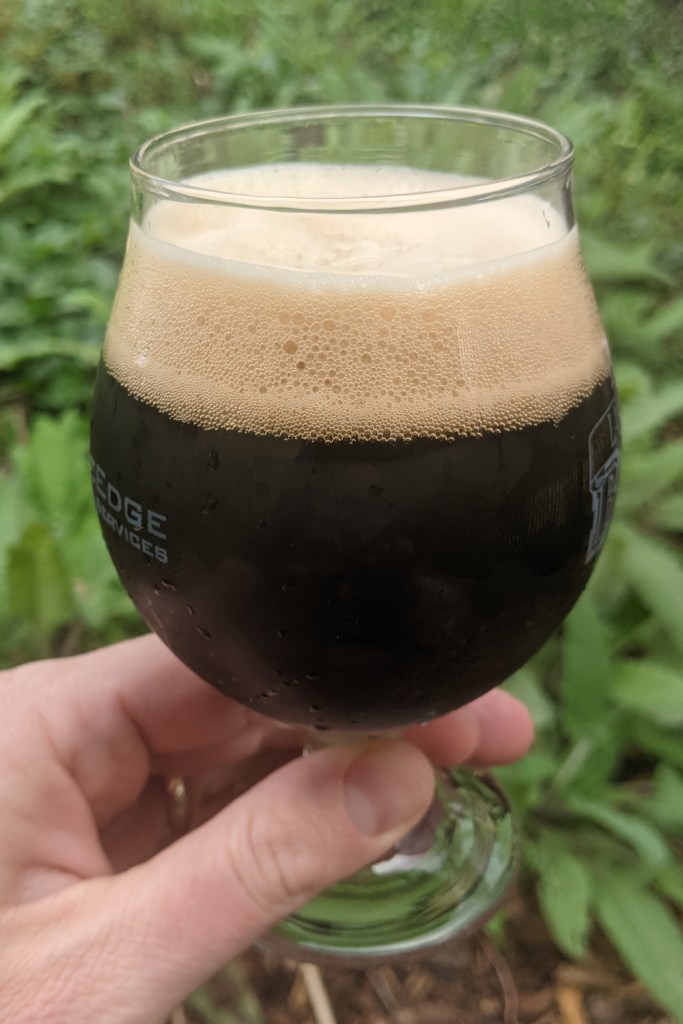
    • Pours with a beautiful and highly persistent deep tan head; the beer itself is clear and deep brown, almost black.
  • Aroma
    • Coffee aroma with a touch of chocolate; no hops to speak of; very clean character overall.
  • Flavor
    • Coffee and roast malt notes predominate; not much for “maltiness” otherwise. Moderate, very clean bitterness.
  • Mouthfeel
    • Very light bodied, pretty dry on the finish with a lingering but not unpleasant bitterness. Moderate level of carbonation.
  • Would I brew this again?
    • Absolutely! For what it is–a dry, relatively light session beer–it’s pretty darned satisfying. The background malt body is a little light, but that’s OK. I expected a little more sweetness given the higher finishing gravity. Not sure what’s up with that.
  • Overall
    • 7/10