Czech-ed Out Pilsner

My first attempt at a Bohemian pilsner turned out reasonably well, but it also had a few areas of potential improvement. The flavor was a little less well rounded than I hoped for, so I aimed for a brew that added in a small percentage of crystal malt. Additionally, the color on my previous batch was a touch paler than desired, so for this version I’m adding in a tiny percentage of Carafa II to deepen that up a bit.

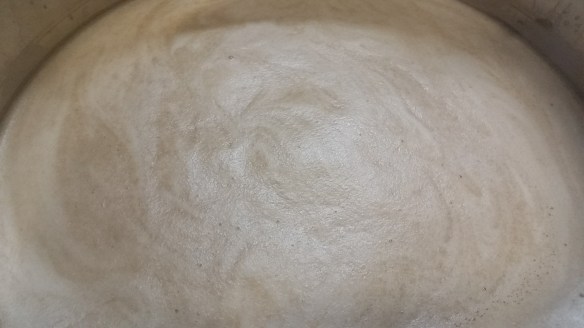
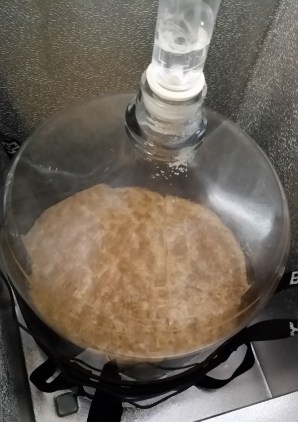
20170409_125350

The recipe today is very loosely based on “Czech It Out” pilsner, published in the January/February 2017 issue of BYO. I’ve made some substitutions and adjustments for the malts and hops, but the overall gist is still there. Lots of Bohemian malt, lots of Saaz hops! Note that I did use a touch of Warrior for the bittering addition; my on-hand Saaz was low in alpha, so I needed to beef up the bittering with another hop. I also had to substitute in American crystal malt for Carahell, based on what was at my local homebrew shop.

I had a few members from my homebrew club over for the brew afternoon. Although I can do pretty much everything solo, it was nice to have the extra company!

Czech-ed Out Pilsner

  • 9.5 lbs. floor-malted Bohemian pilsner malt (Weyermann)
  • 0.5 lb. 10° crystal malt (Briess)
  • 0.25 lb. acidulated malt (Weyermann)
  • 0.2 oz. Carafa Special II malt (Weyermann)
  • 0.47 oz. Saaz hop pellets (5.6% alpha), 60 minute boil
  • 0.25 oz. Warrior hop pellets (15.8% alpha), 60 minute boil
  • 2 oz. Saaz hop pellets (3% alpha), 15 minute boil
  • 2 oz. Saaz hop pellets (3% alpha), 5 minute boil
  • 1 Whirlfloc tablet, 10 minute boil
  • 0.5 tsp Fermax yeast nutrient, 10 minute boil
  • 2 pkg. Pilsner Lager yeast (WLP800, White Labs)

Target Parameters

  • 1.053 o.g., 1.013 f.g., 5.3% abv, 40 IBU, 5 SRM, 5 gallons into the fermenter

Procedure

  • A week in advance, I prepared the yeast in a 2L starter. It ran for three days, and then I cold-crashed it in the fridge. Prior to pitching, I decanted off ~1L of spent starter.
  • I mashed in with 3.45 gallons of water at 163.7°, to hit a mash temperature of 152°. This was built up from RO water with 1 g of calcium chloride. After 60 minutes, I added an additional 1.5 gallons of RO water at ~160°, let sit for 10 minutes, and then vorlaufed. After collecting the first runnings, I added another 3.75 gallons of RO water at 180°, to raise the mash up to 165°. I let the mash sit for another 10 minutes, and collected the second runnings.
  • In total, I collected 7.3 gallons of wort at a gravity of 1.041–nearly right on my target, for ~76% mash efficiency.
  • This batch used a 90 minute boil, and I added all of the hops, etc., per the schedule. After a full 90 minutes, I turned off the flame and started chilling.
  • I’ll note that the hop pellets I used for the aroma additions (last 15 minutes of boil) had a strong herbal and almost “green” character. The latter component is maybe more than I care for, but we’ll see how it all ends up after fermentation.
  • I chilled the wort to 75°, transferred to the fermenter while aerating, and then put it in the fermentation chamber. Once everything was down to 54°, I pitched the yeast.
  • Starting gravity was. 1.054, and the beer was brewed on 9 April 2017. I’m fermenting the beer at 50°.

Olde Persica Porter 1.1

20170402_154913My homebrew club is serving at an upcoming regional festival, and I volunteered to provide a keg of beer. In order to highlight the stuff our group of brewers is doing, I figured something outside of the ordinary (i.e., a generic American IPA or whatever) would be best. What better than a smoked porter?

A few months back, I made a smoked porter that turned out pretty darned delicious (in fact, it was one of my favorite beers of 2016). So, it was an easy decision to bring that recipe back! Once again, I’m using the peachwood smoked malt from Copper Fox–it’s really delicious stuff. Try it out if you can! Otherwise, I made a few very small tweaks for ingredients–in particular, I made some minor adjustments to use up a half ounce of Willamette hop pellets, and I also used dry yeast instead of liquid because I didn’t quite have time this past week to spool up a starter.

Olde Persica Porter 1.1

  • 7 lbs. Vienna malt (Weyermann)
  • 3 lbs. peach wood smoked 2-row malt (Copper Fox Distillery)
  • 1 lb. 80° crystal malt
  • 1 lb. 40° crystal malt
  • 0.5 lb. black (patent) malt
  • 0.5 lb. chocolate malt
  • 2 oz. Cascade whole hops (5.1% alpha), 60 minute boil
  • 0.8 oz. Willamette hop pellets (5.1% alpha), 10 minute boil
  • 1 oz. Willamette hop pellets (4.1% alpha), 5 minute steep/whirlpool after flame-out
  • 1 Whirlfloc tablet, 10 minute boil
  • Safale American ale yeast (US-05), 1 package

Target Parameters

  • 1.065 o.g., 1.017 f.g., 6.3% abv, 37 IBU, 36 SRM, 5.5 gallons into the fermenter

Procedure

  • I added 4.3 gallons of water at 172°, and let it cool until it hit 166.5°. This was a little below my target (I got distracted by some other tasks in the brewery), so the mash temperature only hit 154°. Thus, I added 1 quart of boiling water to hit 154.5°. The mash was only down to 153° after an hour.
  • After 60 minutes of mashing, I collected the first runnings and then added 4 gallons of water at 190°, to hit a mash out temperature of 169°. I let it sit for 10 minutes, vorlaufed, and collected the second runnings.
  • Altogether, I collected 6.25 gallons of wort with a gravity of 1.052, for a mash efficiency of 69%. I’m not entirely sure why I was a bit below my target–maybe a volumetric issue when measuring out the mash and sparge water?
  • I brought the runnings to a boil, and added hops and other stuff per the schedule. After 60 minutes, I turned off the heat and chilled the wort to 75°. Just to see if the whole Cascade hops would create enough of a filter to keep the pelletized gunk out, I left the hop pellets loose rather than bagging them or using my hop spider. That was a mistake! The kettle screen ended up clogged, and I only got about 4 gallons into the fermenter. This lessened volume is OK in my view, because past experience shows that we generally use only 2-3 gallons of a typical beer during a typical festival pour.
  • After transferring to the fermenter, I pitched the yeast. Starting gravity is 1.061. I will be fermenting at 67°.
  • This beer was brewed on 1 April 2017, with vigorous fermentation underway within less than 24 hours.
  • Update: Final gravity was 1.018 on 23 April 2017, which works out to 5.5% abv.

Update: Dunkel-Osteus, Raspberry Belgian

20170326_143559

Raspberry Belgian Ale sample

During the past week, I kegged both my Munich Dunkel (“Dunkel-Osteus“) as well as my raspberry Belgian ale. Let’s take a look at the details since brew day for each.

Dunkel-Osteus

This pun-fully named beer in the Munich Dunkel style fermented at 54° for 17 days, before it was raised to 68° on February 28. On March 6, I cold crashed it to 33°, and let it sit for an additional 16 days before kegging on March 22. At this point, the final gravity was 1.016, for an abv of 4.5%. I set to carbonating immediately–the sample I pulled a few days later is really, really tasty. I’m liking this beer so far, and it should be pretty exceptional once it has conditioned for another week or two.

Raspberry Belgian

I brewed this beer on March 10, and added the raspberry puree on March 14. To make the puree, I added about 1 cup of vodka and 18 oz of frozen raspberries to a blender. Then, I blended them until they were nice and pureed, before tossing them into the fermenter. I figured the vodka (which I ran first) would kill anything nasty in the blender (or anything remaining on the berries). I let this mixture ferment for another 12 days; by this point, the raspberry seeds, etc., had dropped to the bottom and the beer had cleared pretty nicely.

I kegged the brew on March 26. Final gravity was 1.011, down from 1.039. This works out to an abv of 3.8%. The beer has a nice pale pink color and a beautiful raspberry aroma. The raspberries come through nicely on the flavor, too, although the beer as a whole could use a bit more tartness and body. I’ll see if that perception remains accurate after carbonation. I was tempted to throw in some lactic acid, but figured it would be best to carbonate first and test if that helps.

CA IPA

Time to IPA it up again! I’ve been doing a lot of either “fruity” hops (Citra/Mosaic) or single hop IPA experiments, so for this recipe I wanted to do an American hop blend focusing on Centennial and Amarillo (hence the name “CA IPA”). I’m also going to switch up techniques a bit–rather than dry-hopping in the keg, I’m going to dry-hop in the fermenter towards the end of the main fermentation cycle, followed by cold crashing prior to kegging.

CA IPA

  • 11 lbs. 2-row malt (Rahr)
  • 2 lbs. 4.8 oz. Vienna malt (Weyermann)
  • 8 oz. crystal 20° malt (Briess)
  • 5 oz. crystal 10° malt (Briess)
  • 0.75 oz. Warrior hop pellets (15.8% alpha), 60 minute boil
  • 1 oz. Amarillo hop pellets (7% alpha), 15 minute boil
  • 1 oz. Centennial hop pellets (7.6% alpha), 15 minute boil
  • 1 Whirlfloc tablet, 10 minute boil
  • 1 oz. Amarillo hop pellets (7% alpha), 5 minute whirlpool
  • 1 oz. Centennial hop pellets (7.6% alpha), 5 minute whirlpool
  • 1 pkg. Burton Ale yeast (WLP023, White Labs), prepared in 1.25L starter
  • 1 oz. Amarillo hop pellets (7% alpha), 5 day dry-hop in primary fermenter
  • 1 oz. Centennial hop pellets (7.6% alpha), 5 day dry-hop in primary fermenter

Target Parameters

  • 150° mash, 60 minutes
  • 1.065 o.g., 1.015 f.g., 6.6% abv, 63 IBU, 6 SRM, 6 gallons into the fermenter

Procedure

  • The morning of my brew day, I prepared the yeast in a 1.25L starter. I don’t plan on setting any aside, so I did not bother with overbuilding the starter.
  • I prepared my mash water by adding a quarter Campden tablet, 8g gypsum, and 5g epsom salt to 4.75 gallons tap water. The 4.5 gallons of sparge water will be plain RO.
  • I heated the mash water to 170°, added it to the fermenter, and then let the temperature settle to 161.5° before adding the grains. This hit my mash temperature right at 150.2°, pretty much exactly where I wanted it.
  • Mash temperature was down to 148.5° after 30 minutes. I was visiting with some friends, so the mash ended up sitting a total of 90 minutes before I got back to it. At this point, I vorlaufed and then collected the first runnings.
  • Next, I added the sparge water (at around 155°, to hit a mash bed temperature of 152°), let it sit for 10 minutes, vorlaufed, and collected the remainder of the wort.
  • In total, I collected 8.1 gallons of wort at a gravity of 1.050 and 78% efficiency. This is a larger volume than expected–I think this is likely because I had assumed my RO jug had 4.5 gallon exactly, and it was probably a touch more than this. I’ll measure more carefully next time! For this particular batch, I boiled a bit harder than usual to bring the volume down and the gravity up.
  • Once I had the wort at a hard boil, I added the hops per the schedule, boiling for 60 minutes total. At the end of the boil, I added the whirlpool hops (in a mesh bag) and let them sit for 5 minutes before chilling the wort.
  • Once the beer was down to ~75°, I transferred to the fermenter and pitched the yeast. I put approximately 5.75 gallons into the primary. I pitched the yeast, and will be fermenting at 67°. I plan to add the dry hops in 5 days.
  • Starting gravity was 1.060, a bit below my target (but not surprising given the extra boil volume).
  • I brewed this beer on 25 March 2017. Visible yeast activity was evident in under 24 hours.

Beer Tasting: First Amendment Blonde Ale

20170320_170026After a month conditioning in the keg, my latest blonde ale seems to be at its peak!

  • The Basics
    • O.g. = 1.051; f.g. = 1.011; 5.2% abv; 5 SRM; 24 estimated IBU
  • Aroma
    • Malty sweet aroma, with a very slight fruitiness behind that.
  • Appearance
    • Light gold and clear, with a low and persistent white head.
  •  Flavor
    • The flavor on this one really highlights the malt, which has a rounded maltiness. The hop level is moderate, maybe a touch stronger than I care for, with a slightly earthy and woody finish.
  • Mouthfeel
    • The beer has a moderately light body, moderate carbonation, and off-dry finish.
  • Would I brew this again?
    • Overall, this is a tasty and easy-drinking blonde ale. I think my moderate water adjustments helped a lot in this recipe versus some previous ones, in that the hop character avoids the flabbiness that I’ve had in some previous batches without adjustments. I could probably dial the overall hops back a tiny bit for my taste, but in general I’m pretty happy with this recipe!
  • Overall
    • 8/10