The French Connection Pale Ale

A recent HOPBOX had a few varieties of French hops, which ranged from lager-type to IPA-ready varieties. Wanting to experiment a bit and also make an end-of-summer-drinkable-pale-ale, I created “French Connection Pale Ale.” Because my fermentation space was limited, I opted for a kveik–once again, the faithful Lutra. It’s not over-the-top in flavor, with mild citrusy qualities that would play well with the hops. I kept the grist on the lighter side, with just 2-row and caramel 20, in order to tilt towards easy drinkability and also contrast with the “old school” pale ale I brewed recently.

The French Connection Pale Ale

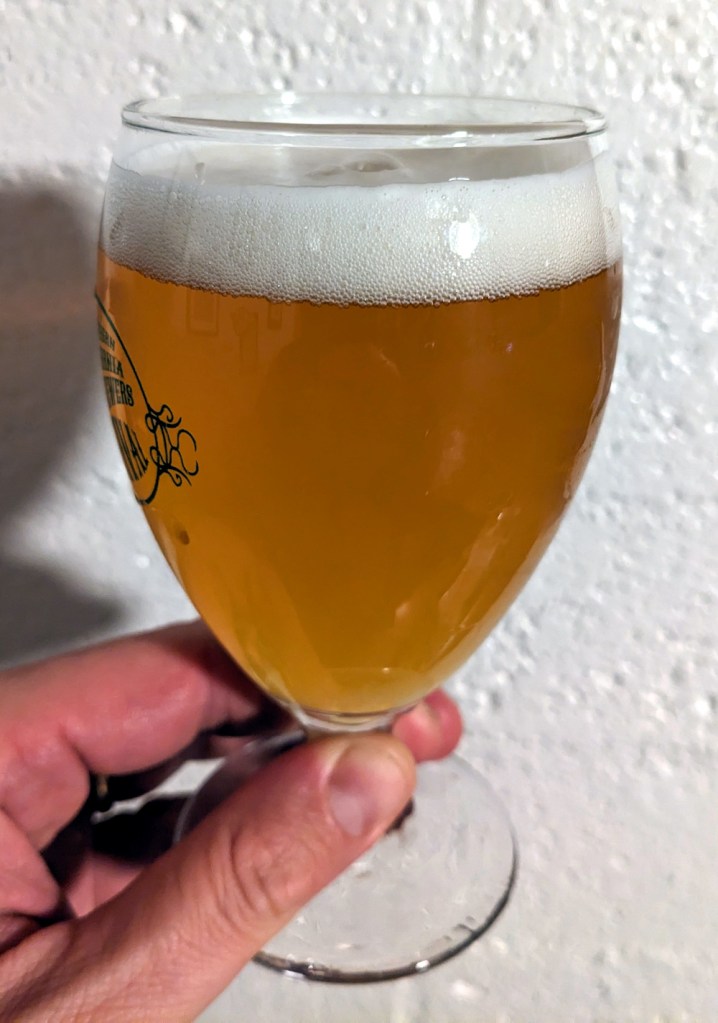
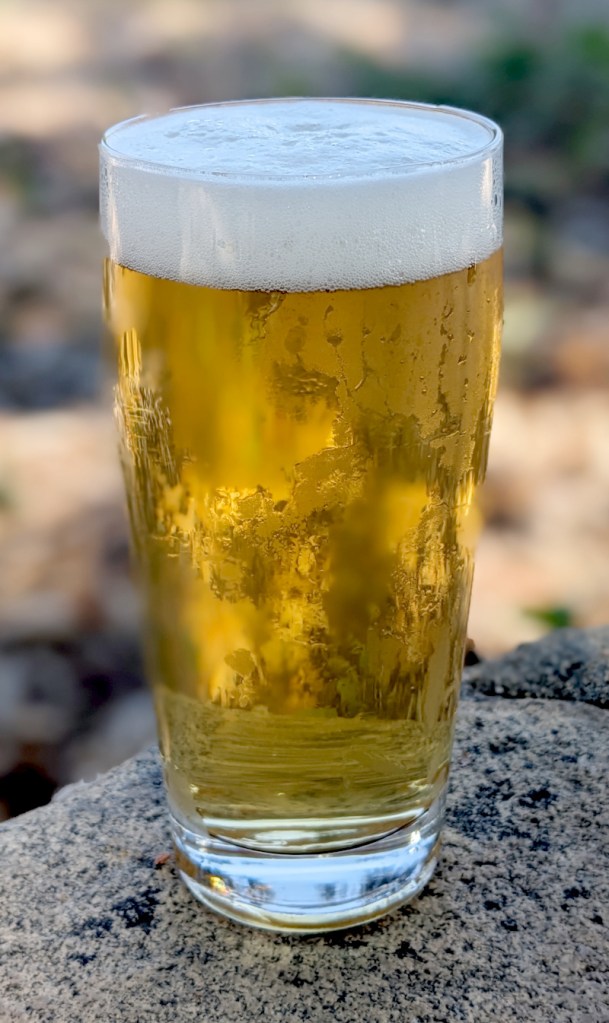
pale beer in glass
  • Lamonta Pale American barley malt (Mecca Grade)
  • 0.5 lb. caramel malt 20L (Briess)
  • 1.5 oz. Barbe Rouge hop pellets (6.6% alpha), 60 minute boil
  • 0.5 tsp. BrewTanB, 10 minute boil
  • 1 Whirlfloc tablet, 5 minute boil
  • 1 pkg. dry Lutra Kveik (Omega #OYL-071)
  • 2 oz. Mistral hop pellets (4.2% alpha), dry hop in keg
  • 0.5 oz. Barbe Rouge hop pellets (6.6% alpha), dry hop in keg

Target Parameters

  • 1.049 s.g., 1.010 f.g., 5.2% abv, 37 IBU, 6 SRM
  • Full volume mash, 152° for 60 minutes, 168° mash-out for 10 minutes
  • Claremont tap water adjusted to hit target water parameters of to hit target of 91 ppm Ca, 23 ppm Mg, 84 ppm Na, 196 ppm SO4, 120 ppm Cl, 20 ppm HCO3, RA=-62

Procedure

  • I collected 7.5 gallons of tap water and added 6.25 mL of 88% lactic acid, to knock out the carbonates. Then, I added 5 g of Epsom salts and 5 g of gypsum in order to hit my target water.
  • I heated the water to 157° in order to hit a mash temperature of 152°. I added 3 mL of 88% lactic acid to adjust the mash pH…only to realize I shouldn’t have done this! I hadn’t adjusted my water profile in the recipe, so this would result in a pH of ~4.9. Oops! I figured I would just roll with it by this point, and let the beer find its pH in the end.
  • I mashed at 152° for 60 minutes, with recirculation, before raising the mash to 168° for 10 minutes. I then pulled the grains.
  • In total, I collected 6.75 gallons with a gravity of 1.041, for 70% mash effciency.
  • I brought the kettle to a boil, adding hops and finings per the recipe. After 60 minutes, I turned off the heat and chilled to 84° and transferred to the fermenter.
  • I brewed this beer on 19 August 2023. Starting gravity was 1.046.
  • After pitching the yeast, I fermented the beer at ambient.
  • I kegged the beer on 7 September 2023. It had a final gravity of 1.012, for 4.5% abv.

Tasting

  • Appearance
    • This is a straw-colored, hazy beer, with a thin white head. The head is somewhat persistent around the margins of the glass, but nothing special.
  • Aroma
    • A bit of berry as the beer warms up as well as some citrus; very fresh fruit character. I even get a bit of melon (cantaloupe/honeydew) at times.
  • Flavor
    • Hop-forward, especially in a fresh hop flavor. Bitterness is medium, and the hops come across with a bit of orange and even more berry character–especially currant and others. It’s more of a “generic berry” quality than anything. In some tastings, I get more citrus, but overall that is in the background. Malt quality is fairly innocuous, as expected. There is a bit of the “kveik flavor,” but it’s quite minimal.
  • Mouthfeel
    • Medium light body, moderate carbonation, and very very slightly dry finish. It’s an easy drinking beer!
  • Would I Brew This Again?
    • This is a pretty good “modern American pale ale,” and it is quite drinkable. I wouldn’t say it’s an earth-shaking beer, but the hops definitely are enjoyable. They are a nice departure from “citrus/pine bomb” territory. I would recommend these varieties for others who want to branch out. I got a strong vegetal/allium quality on the first few pours of this, but that is long gone thankfully.
  • Overall
    • 8/10 — the haze dings it a bit for my taste, but otherwise it’s pretty solid.

American Pale Ale 2023

My previous American Pale Ale was enjoyable for multiple reasons, and I was keen to brew another one in the same flavor space. Specifically, I love the “traditional” Americna craft versions of APA, with their citrus/pine hops and decent malt complexity.

Conveniently, the July/August 2023 issue of BYO featured a style profile on American Pale Ale by Gordon Strong, with a focus on more traditional versions of the style. I usually have good luck with Strong’s recipes, so decided to give this one a go. It had a more complex malt bill than I normally use, which seemed like an interesting experiment.

My version follows the spirit of Strong’s fairly closely, although I increased the pale malt and pilsner malt quantities very slightly in order to account for my system efficiency. I also went with Centennial and Columbus hops instead of the more complex original version (Cascade+Amarillo+Centennial), to use up some of my hops on-hand. Finally, I like the “cleaner” profile of American ale yeasts, so I used those instead of the suggested English yeasts.

American Pale Ale 2023

  • 5.25 lb. Lamonta Pale American malt
  • 4.25 lb. Viking Pilsner Zero malt
  • 1 lb. Munich I malt (Weyermann)
  • 0.5 lb. caramel malt 60L (Briess)
  • 0.5 oz. Centennial hop pellets (8.1% alpha), 60 minute boil
  • 0.5 tsp. BrewTanB, 10 minute boil
  • 1 Whirlfloc tablet, 5 minute boil
  • 0.5 oz. Centennial hop pellets (8.1% alpha), 5 minute boil
  • 2 oz. Columbus LUPOMAX hop pellets (20.5% alpha), 15 minute whirlpool
  • 1 pkg. American West Coast Ale (Lallemand BRY-97)

Target Parameters

  • 1.050 s.g., 1.011 f.g., 5.1% abv, 38 IBU, 8 SRM
  • Full volume mash, 152° for 60 minutes, 168° mash-out for 10 minutes
  • Claremont tap water adjusted to hit target water parameters of 83 ppm Ca, 6 ppm Mg, 84 ppm Na, 108 ppm SO4, 120 ppm Cl, 20 ppm HCO3, RA=-46 ppm

Procedure

  • I collected 7.5 gallons of tap water and added 6.25 mL of 88% lactic acid in order to neutralize the carbonates. Then, I heated the water to 156° before adding the crushed grains and 1.5 mL of 88% lactic acid for pH adjustment.
  • I set the mash temperature to 152° for 60 minutes with recirculation, and then raised the temperature to 168° for 10 minutes. Finally, I removed the grains.
  • In total, I collected 6.75 gallons of runnings with a gravity of 1.041, for 68% mash efficiency.
  • While I brought the kettle to a boil, I added 4 g of gypsum to hit my water target.
  • I added hops and finings per the schedule, boiling for a total of 60 minutes.
  • Once I turned off the heat, I added the LUPOMAX Columbus hop pellets and recirculated for 15 minutes.
  • Next, I chilled the wort to 85° before transferring to the fermenter for the final chill to 66°. This took around 5 hours. Finally, I pitched the yeast.
  • Starting gravity was 1.049. I brewed the beer on 16 July 2023.
  • Fermentation was vigorous, with the yeast overflowing into the airlock.
  • I kegged the beer on 12 August 2023. Final gravity was 1.010, for 5.1% abv.
  • The beer had dropped very clear by 24 August 2024.

Tasting

  • Appearance
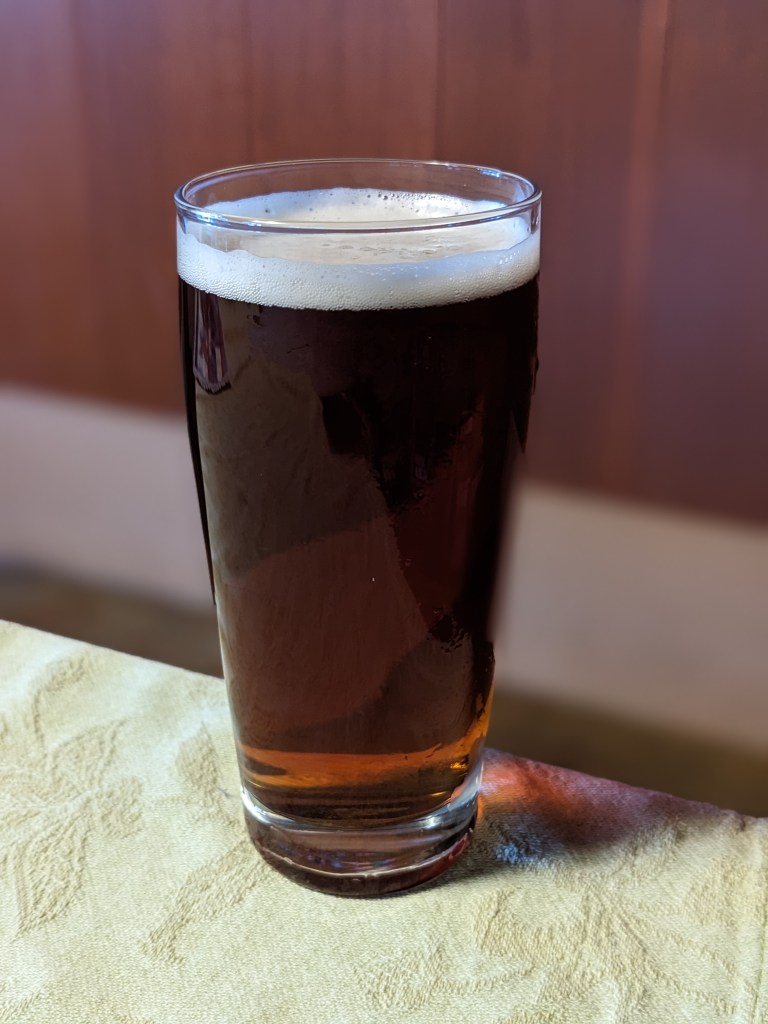
    • Very clear and deep gold beer, which pours with a creamy and incredibly persistent ivory head. Just gorgeous!
  • Aroma
    • Bready malt and a touch of caramel, with piney hop notes. No significant yeast character.
  • Flavor
    • Moderately high bitterness, with extended bitter finish. The bitterness tends towards piney resin and citrus pith. The malt level is secondary; slightly bready and smooth.
  • Mouthfeel
    • Medium body, medium-low carbonation, slightly dry finish. Overall, this beer has a nice “round” palate.
  • Would I Brew This Again?
    • YES! This is a wonderful, classic American pale ale, of the sort you just can’t find anymore. Everything merges perfectly. The hop combo is awesome, and hits my sweet spot.
  • Overall
    • 10/10

Sideways Saison

It has been a long time since I last made a saison, back in 2018. It’s an interesting style, but one that I’m usually content to enjoy in a sporadic bottle, rather than a full keg. But, inspired by some reading and podcasts, I decided to give the style another go. My friend Justin was in town, so it was fun to have a brewing partner.

I patterned my recipe after Odds & Ends Saison from Modern Homebrew Recipes, and followed Drew Beechum’s guide to yeasts and yeast techniques via the Maltose Falcons. I used the saison article in the July/August 2018 Zymurgy magazine for my water profile.

This was a complicated batch in the end. The breaker on my Foundry gave up mid-boil, so I had to transfer to a kettle and finish over a propane burner. There’s never a dull moment while brewing! Things really went sideways on this batch, which conveniently provided the name. (Thankfully, it was an easy fix for the breaker issue, which involved swapping in a new breaker)

Sideways Saison

  • 4.5 lb. Lamonta pale malt (Mecca Grade)
  • 1 lb. flaked rye
  • 1 lb. Viking Pilsner Zero Malt
  • 1 oz. roasted barley (Bairds)
  • 4 oz. rice hulls
  • 0.5 lb. white sugar, added at end of boil
  • 1.5 g. WLN1000 yeast nutrient (White Labs)
  • 1 oz. Moutere hop pellets (19.5% alpha acid), 15 minute whirlpool
  • 1 pkg. Belgian Saison yeast (Wyeast 3724), prepared in vitality starter

Target Parameters

  • 1.057 s.g., 1.006 f.g., 6.7% abv, 30 IBU, 10 SRM
  • Full volume mash, 149° for 60 minutes, 168° mash-out for 10 minutes
  • Claremont tap water and RO water adjusted to hit target water parameters of 33 ppm Ca, 18 Mg, 34 Na, 103 SO4, 49 Cl, 63 HCO3, 18 ppm RA

Procedure

  • A few hours before the mash, I made a vitality starter with a 16-oz. can of Propper Starter (Omega) along with 16 oz. of distilled water.
  • I combined 2.25 gallons of Claremont tap water and 3 gallons of distilled water, adding 1 g gypsum and 3 g of epsom salt to hit my water parameters. Once I got the water to 154°, I added the grains (except for the roasted barley) along with 3.4 mL of 88% lactic acid, to adjust the pH.
  • I held the mash temperature at 149° for 60 minutes, with recirculation. Then, I added the roasted barley, raised the mash to 168°, and held it there for 10 minutes before pulling the grains.
  • In total, I collected 5 gallons of runnings with a gravity of 1.037, for 78% mash efficiency.
  • The Foundry crapped out on the way to the boil, so I transferred the runnings to my big 10 gallon kettle and continued the process over my propane burner. I boiled for 90 minutes total, to up the gravity.
  • I added hops and finings per the recipe.
  • For some reason, I didn’t record the gravity, but I think it was around the target. I was able to estimate the starting gravity by measuring the final gravity and taking a final refractometer reading–which worked out to 1.055.
  • I brewed this beer on 28 May 2023.
  • Once the initial chill was done, I transferred it to the fermenter. I chilled the wort to 64° before pitching the yeast, and set the fermenter to 65°. I held it here for 3 days, before letting it free-rise.
  • I raised the temperature to 72° on 31 May 2023, and then to 85° on 2 June 2023. This was a free-rise with ambient heat, rather than measuring the temperature of the fermenter.
  • Despite using an “open” fermentation (aluminum foil over the airlock, rather than liquid in the airlock), I still got the “saison stall.” Gravity was only at 1.032 on 8 June 2023, so I left the beer at 85°.
  • The beer was finally down to 1.009 on 19 July 2023. This works out to 6.1% abv.

Tasting

  • Appearance
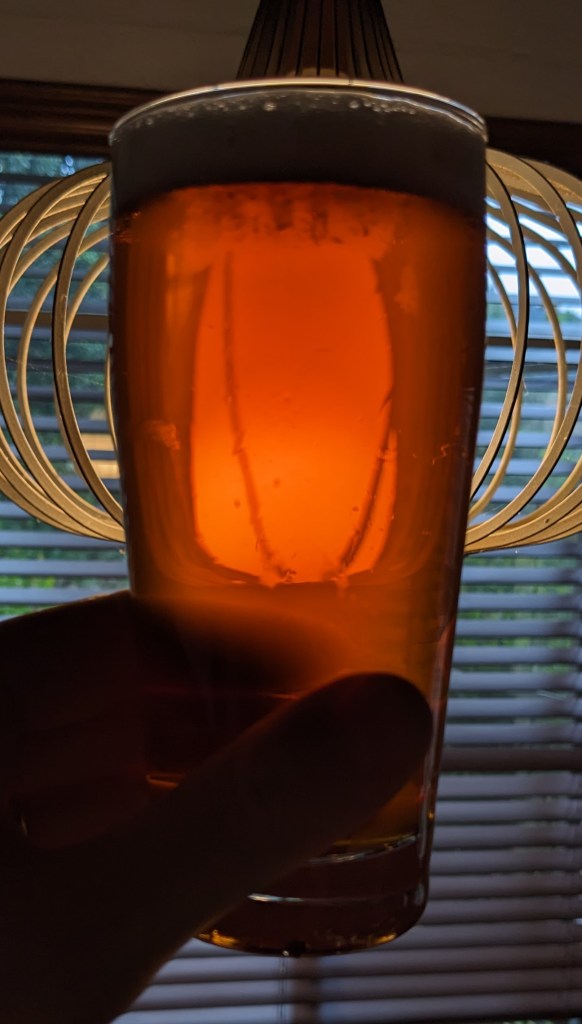
    • Pours with a fluffy and persistent ivory head. The beer itself is medium amber and has a decent haze..
  • Aroma
    • Slightly earthy aroma, with a moderate level of pear character alongside some peppery spice. A tartness also comes through, which is really delightful.
  • Flavor
    • Spicy, slightly peppery flavor and a decent bit of ripe pear at the forefront, with only moderate bitterness. I get a bit of the rye flavor, but most of the flavor is in the world of the yeast.
  • Mouthfeel
    • Medium-light body, moderately high carbonation, moderately dry finish.
  • Would I Brew This Again?
    • This is a pretty good recipe! It is a bit darker than I am used to for a saison (especially the classic Saison Dupont), but I think it’s still well within the style. I personally might like one that is a little lighter bodied, and I wonder if the rye didn’t complicate matters some. I also might go for 100 percent pilsner malt, rather than American pale malt as the dominant grain, in order to streamline the flavor. The yeast qualities are quite nice, and hit a nice balance of interesting but not in-your-face. I feel that I got the fermentation parameters just about perfect. It was worth the extra fuss!
  • Overall
    • 9/10

Fruit Bowl Session IPA

A good session IPA is nice to have on hand in the summer months, and also a handy way to burn through my hop stash. For this batch, I aimed for a “short and shoddy” approach, to speed up the brew day during a busy time of year. This meant a 30 minute mash and 30 minute boil, along with Lutra kveik to reduce chill time.

I have a decent variety of hops on-hand from my HOPBOX subscription, and aimed for a very experimental selection. Comet went in for the bittering, with a hefty dose of BRU-1 and Meridian for the dry hop in the keg. BRU-1 is supposed to provide a pineapple and green fruit combo, and Meridian some tropical fruit and berry. So, I’m calling this “Fruit Bowl Session IPA.”

Fruit Bowl Session IPA

  • 9 lb. 7 oz. Lamonta Pale American Barley Malt (Mecca Grade)
  • 8 oz. caramel malt 20L (Briess)
  • 8 oz. Munich I malt (Weyermann)
  • 2 oz. Comet hop pellets (10.4% alpha), 30 minute boil
  • 0.5 tsp. BrewTanB, 10 minute boil
  • 1 Whirlfloc tablet, 5 minute boil
  • 1 pkg. Lutra Kveik (Omega OYL-071; dry)
  • 2 oz. BRU-1 hop pellets (20.0% alpha), dry hop in keg
  • 2 oz. Meridian hop pellets (5.6% alpha), dry hop in keg

Target Parameters

  • 1.046 s.g., 1.011 f.g., 4.6% abv, 59 IBU, 6 SRM
  • Full volume mash, 156° for 60 minutes, 168° mash-out for 10 minutes
  • Claremont tap water treated with 88% lactic acid to neutralize carbonates

Procedure

  • The night before brewing, I collected 7 gallons of Claremont tap water and added 5.84 mL of 88% lactic acid to neutralize the carbonates.
  • I heated the strike water to 162°, adding the grains to hit a mash temperature of 156°. I added 1.5 mL of 88% lactic acid to adjust the pH, and then recirculated for 30 minutes.
  • After 30 minutes, I raised the mash temperature to 168°, and continued recirculation for another 10 minutes before pulling the grains.
  • In total, I collected 6.5 gallons of runnings with a gravity of 1.041, for 71% mash efficiency.
  • I brought the mash to a boil, adding hops and finings per the recipe. After 30 minutes, I chilled the wort to 82° and transferred to the fermenter.
  • Starting gravity was 1.045. I brewed the beer on 14 May 2023, and fermented at ambient. The fermenter temperature hit between 82° and 85° at the height of fermentation.
  • I kegged the beer on 23 May 2023. Final gravity was 1.012, which works out to 4.4% abv.

Tasting

  • Appearance
    • A straw yellow beer, with a pillowy and persistent white head. I’m writing this tasting on the last pour of the keg, which has a fair bit of haze. Even before the final pours and after sitting in the keg for two months, the beer never completely cleared.
  • Aroma
    • Bright citrus and kiwi hop aroma — very nice!
  • Flavor
    • Tropical fruit, fresh pineapple, lemon, and orange — it’s a very fruit-forward hop flavor. Bitterness is moderately high. The malt character is fairly subdued, as expected given the gravity and hoppiness of this beer.
  • Mouthfeel
    • Medium-light body, moderate carbonation. There is a slight hop astringency, which is accentuated in the final glass.
  • Would I Brew This Again?
    • I’m fairly pleased with this one, especially in the hop combination. If I were to brew this again (or one like it), I would reduce the dry hop load by a bit, to cut the astringency. I would probably increase the mash time to see if that helps with the haze (in case lingering starch was the cause), too. Overall, it’s a pretty decent session IPA!
  • Overall
    • 7/10

Dakota Gold Pils

Summer is a great time for pale lagers! For this recipe, I riffed on the Schell’s Pils clone I’ve brewed in the past. It is intended to be a German pils, which is a style I quite enjoy. This recipe uses only 2-row malt, rather than pilsner malt, for the base, with a bit of CaraPils or similar malt.

For this iteration, I tried out Mecca Grade’s pale American malt as the primary base grain, using a bit of Rahr 2-row to finish out that supply. I also subbed in Carafoam instead of Carapils. The hops are entirely whole cones from South Dakota (thanks, Dad!). I had to guess on the alpha based on what is typical for the style, and as you’ll see in the results probably guessed high.

Dakota Gold Pils

  • 7 lb. 9 oz. Lamonta Pale American malt (Mecca Grade)
  • 2 lb. 7 oz. 2-row pale malt (Rahr)
  • 0.5 lb. Carafoam malt (Weyermann)
  • 1.09 oz. Hallertauer whole hops (3.0% estimated alpha), 60 minute boil
  • 1 oz. Sterling whole hops (4.5% estimated alpha), 60 minute boil
  • 1 oz. Saaz whole hops (3.5% estimated alpha), 15 minute boil
  • 0.5 tsp. BrewTanB, 10 minute boil
  • 1 Whirlfloc tablet, 5 minute boil
  • 1 oz. Saaz whole hops (3.5% estimated alpha), 5 minute boil
  • 1 tsp. yeast nutrient (WLN1000, White Labs), 5 minute boil
  • 2 pkg. Diamond Lager dry yeast (Lallemand)

Target Parameters

  • 1.047 s.g., 1.010 f.g., 4.8% abv, 35 IBU, 5 SRM
  • Full volume mash, 149° for 60 minutes, 168° mash-out for 10 minutes
  • RO water with minerals added to hit target of 59 ppm Ca, 8 Mg, 89 SO4, 63 Cl, RA=-47, alkalinity=0.

Procedure

  • Starting with 7.6 gallons of RO water, I added 2.7 g gypsum, 2.2 g epsom salt, and 3.4 g of calcium chloride, to hit the target water profile. I also added half of a sodium metabisulfate tablet, to remove any latent oxygen in the water.
  • I heated the water to 154° and added the grains to hit a target mash temperature of 149°. I did not add any lactic acid, because the pH was calculated to be approximately fine (pH of 5.4) without any additions.
  • After a 60 minute mash, I heated to 168° for the mash-out, and pulled the grains after 10 minutes of this.
  • In total, I collected 6.8 gallons of runnings with a gravity of 1.039, for 70% efficiency.
  • I brought the runnings to a boil, adding hops and finings as indicated by the recipe. After a 60 minute boil, I turned off the heat and chilled to ~70°. I transferred the wort to the fermenter, and chilled down to 50° before pitching the yeast.
  • Starting gravity was 1.047. I brewed the beer on 15 April 2023, fermenting at 52°. I held it here until 13 May 2023, when I cold crashed the beer.
  • I kegged the beer with a closed transfer on 28 May 2023. Final gravity was 1.009, for 5.0% abv.

Tasting

  • Appearance
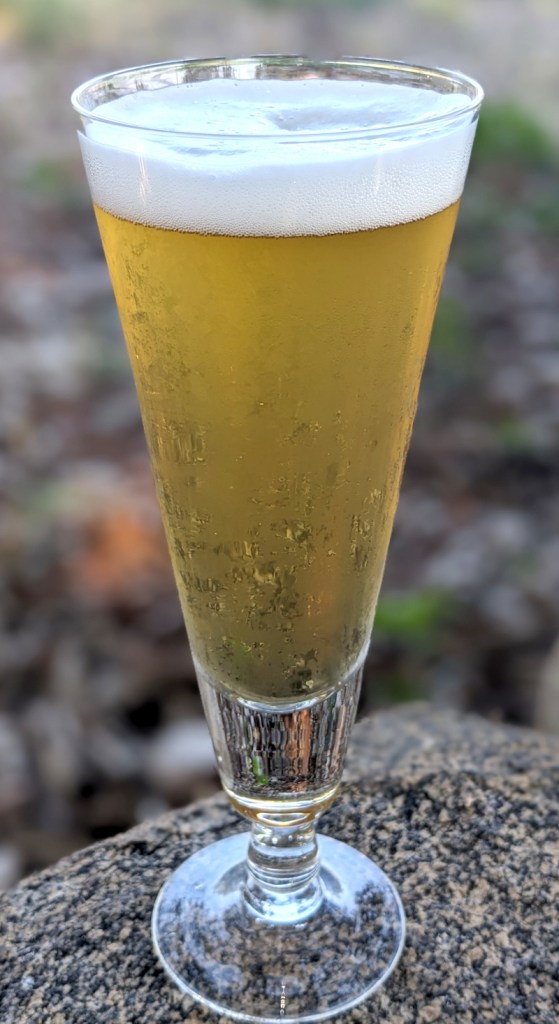
    • Brilliantly clear, straw-colored beer that pours with a fine and persistent white head. Absolutely beautiful!
  • Aroma
    • Sweet malt aroma. Not really much for hops.
  • Flavor
    • Cracker and sweet malty flavor. Moderately low bitterness, with a very clean fermentation profile. There is not a ton of hop character, surprisingly.
  • Mouthfeel
    • Medium-light body, moderately high carbonation, and smooth finish with a slightly extended bitterness.
  • Would I Brew This Again?
    • This is an excellent beer! A touch more bitterness and hop flavor/aroma would be great, but it is otherwise fantastic in drinkability and appearance. It’s not really a German pils at all–it should be more bitter–but that’s OK. Were I to assign a BJCP category, I would probably put it in International Pale Lager. This is the definition of a lawnmower beer!
  • Overall
    • 10/10 as a beer on its own; 6/10 as a German pils.