It has been three years since I last did one of these posts, but I figured I would give it a go in 2025. I usually only somewhat loosely adhere to these resolutions, but they can be fun ways to frame the year.
More Small Batches.
I enjoy brewing, and sometimes it’s more about the brew day than consuming the final product. One way to get around an occasional backlog in beer (and to have more variety) is to brew smaller batches. So, I’m going to aim to do a greater percentage of 3 gallon brews this year. Although I anticipate continuing with 5 gallon batches as the bulk of my brewing (especially for favorites like German pils), I hope to work more 3 gallon batches into the rotation, especially for new-to-me styles.
Conditioning Time.
Somewhat paradoxically relative to the item above, some of my beers would benefit from a longer conditioning or lagering time before serving. For instance, my märzen was on tap within 6 weeks after kegging, but a minimum of 8 weeks and preferably 10 would have been ideal to hit the point of brilliance for this particular recipe. A German pils (not yet posted) is at 6 weeks and is now brilliant and ready to serve; I often have these beers on around 2 weeks after kegging. Beyond simple discipline, I think the key to achieving this goal is brewing frequently enough that I can afford to let a keg sit for longer lagering.
New Styles.
I have explored a good chunk of the styles out there, but there are still more to do. In the most recent Zymurgy issue that highlights the winners of the 2024 NHC, there was a really intriguing gose recipe. Sour beers aren’t my usual favorite, quick sour methods are sometimes a bit one dimensional or not advised for many styles, and the possibility of contamination always gives me second thoughts. But, this particular “Salty One” by gold medal winner Jonathan Hernandez relies on a blending technique that avoids souring on the cold side, and allows some complexity on the hot side. Basically, you make a fraction of the batch as sauergut, and then adding this to the rest of the wort at the boil. I’m going to give it a try!
2024 was a decent year for brewing; I focused in part on perfecting classic styles, in addition to returning to a few standby recipes. I feel that I know my brewing system pretty well and have been learning the mash and recipe formulation techniques to get to my destination. Interestingly, I think I was at 100 percent dry yeast during the past year–I might try one or two liquid yeast varieties for particular batches, but in the end the variety and convenience of dry yeast can’t be beat.
Favorite Batch(es)
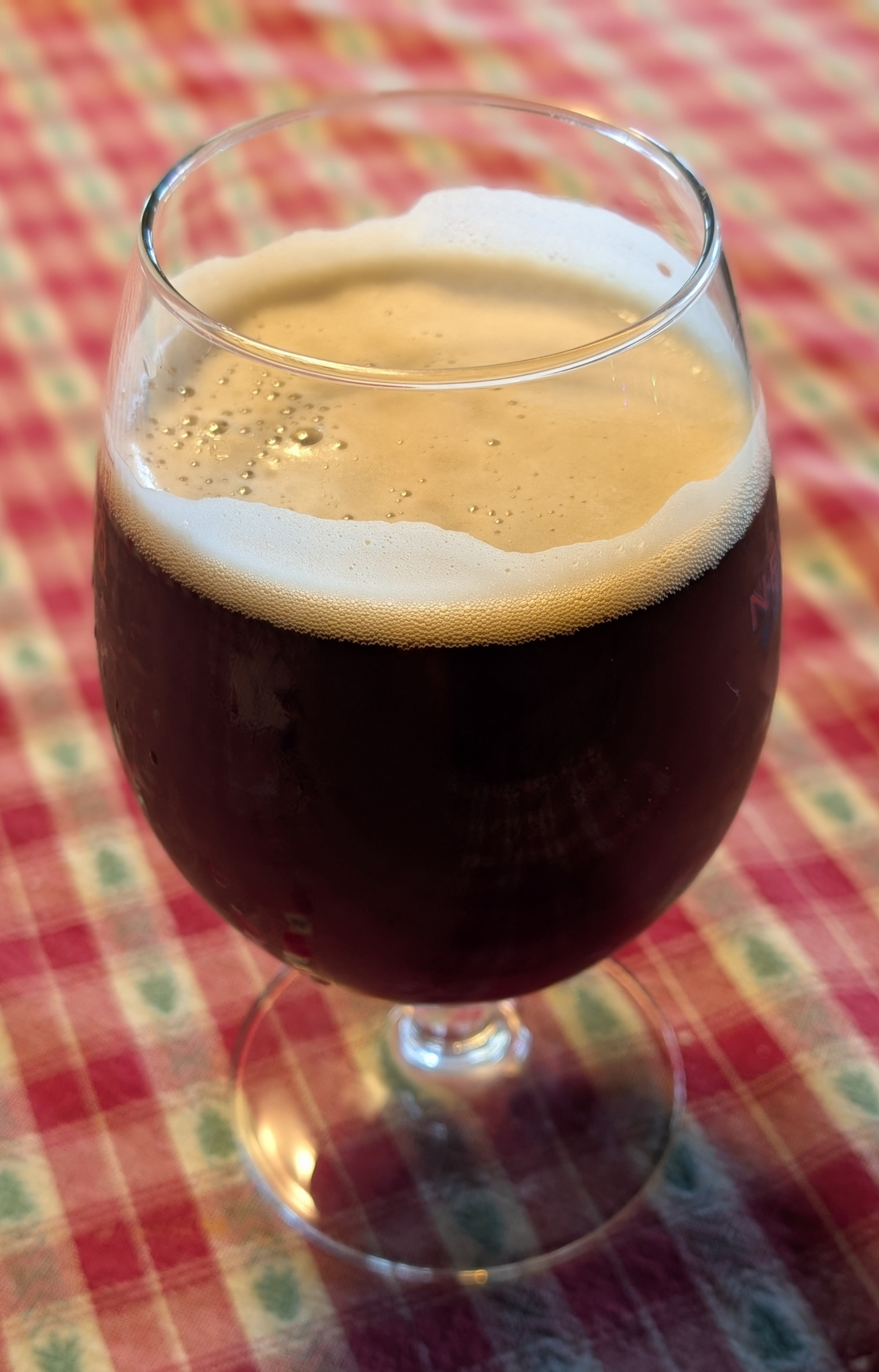
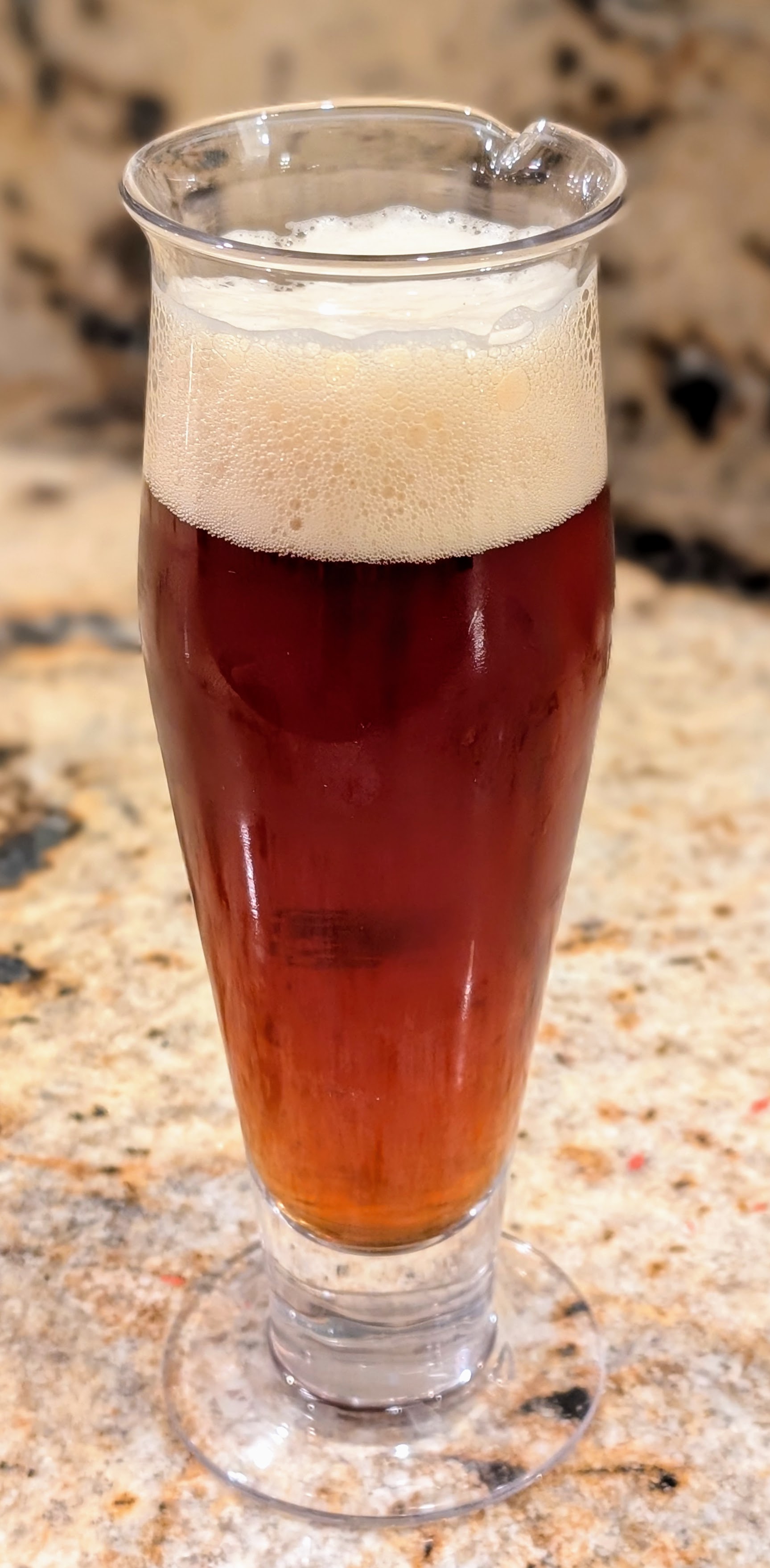
Bear Butte Porter is on tap right now, and it hits every note that I love about classic American craft beer styles. It’s rich without being cloying, malty while still being drinkable, and low enough abv that I can enjoy a glass or two without getting knocked out. American porters are a style I keep enjoying, especially because they’re relatively scarce nowadays in a sea of IPAs.
Snowdrop Kölsch 2024 Attempt 1 (not blogged) got infected; this was a disappointment, and led me to add Iodophor semi-regularly into my cleaning rotation. Thankfully my second attempt at this recipe went much more smoothly.
Experimental Recipe With Most Potential
Session Saison got soooo close to perfection, and I’m looking forward to dialing in this recipe.
Most Fun New Style/Recipe to Try
Levitation Ale Homage was a super tasty session ale, and I still remember the hop flavor on this one. It had so much going on for a lower alcohol beer, and I absolutely love that!
Upcoming Beer With Most Potential
I have a Belgian blond ale conditioning in the keg right now, for a recipe I’ve called “Unruly Gnome Belgian Blond Ale.” It’s intended to be an approximation of La Chouffe, which is one of my favorite beers.
My first rauchbier is lagering right now; it will go on tap once I have space in my keezer. Initial samplings have been very tasty!
Best Ingredient/Technique Added to Repertoire
Feijoa (Pineapple Guava): This unusual (to me) fruit has a unique taste and is perfectly suited for a sour. So, my Rated “PG” for Pineapple Guava recipe was born.
Mash schedules: I used my Anvil Foundry to its full potential this year, by adjusting mash schedules to achieve desired fermentation results. Exemplar number 1 is my hefeweizen–I added a ferrulic acid rest, which I am fairly sure tipped the beer’s character into perfection. Similarly, I used a long and low saccharification rest on my session saison, which finally got me the dryness I want and need on that style.
Favorite Books
No new books jumped out at me this year, which may be just as much a factor of me reading other things versus a dearth of interesting content. A new-to-me book that I greatly enjoyed was Experimental Homebrewing: Mad Science in the Pursuit of Great Beer Mad Science in the Pursuit of Great Beer by Denny Conn and Drew Beechum, published a full 10 years ago. It’s a time capsule in many ways, from a simpler era when the overlap between homebrewers and commercial brewers was blurrier, and it felt like the homebrewing scene was on an eternally upward trajectory. I like the approach they take to recipes, with an emphasis on thinking through the ingredient inputs needed for sensory outputs. This is not unique to them, but their way of relating it is quite approachable and fun to read.
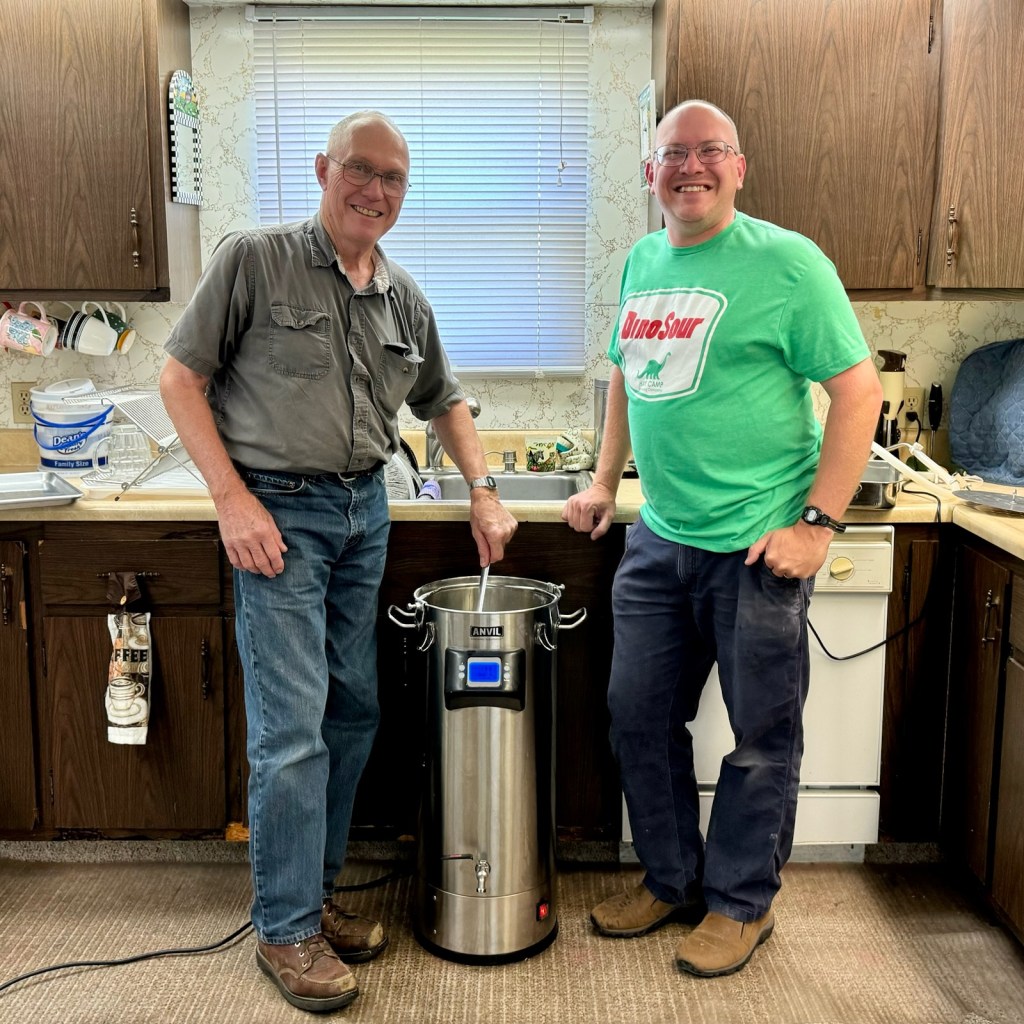
This past summer, I got to brew with my dad, who first got me thinking about brewing many years ago (I remember helping him way back as a teenager, even if I couldn’t enjoy the product at the time). He started as an extract brewer decades ago, took a break, got back into it, and then eventually switched to all-grain brewing (alongside wine making). Dad makes almost exclusively lagers, with his regular rotation including a Pre-Prohibition PIlsner and a Vienna Lager.
Dad currently brews on an Anvil Foundry 10.5 (gifted by us kids a few years back), doing a handful of batches annually to keep his cellar stocked. Awhile back, I shared my Citra Blonde Ale recipe with him, and he liked it enough to add a version into his repertoire. I also helped him put together a simple German pils, which is made with hops he grows himself.
We’ll usually brew something when I’m visiting, but I almost never get to sample the results due to the distance. So, it was extra nice to get a shipment with a bottle of each of the beers we made this summer. I was also able to get my hands on the notes (thanks, Dad!), which are presented in only lightly edited format.
Citra Blonde Ale
5.25 lb. Briess Pilsen malt
5 lb. Briess 2-row malt
0.75 lb. Munich malt
0.5 lb. Vienna malt
0.5 lb. Carapils malt
0.5 oz. Citra hops (boil 10 min.)
Whirlfloc tablet (boil 1- min.)
0.5 oz. Citra hops (boil 5 min.)
1.0 oz. Citra hops (steep for 5 min. after shutting the heat off).
BRY-97 American West Coast Ale (dry) and Safale US-05 (dry) yeast, 1 packet each
Procedure
Double-milled grains with 0.035 in. gap. Steeped grains at 152 degrees. Mashed out at 168 degrees for 10 minutes. Boiled for 50 minutes. Added 0.5 oz. Citra hops, Whirlfloc. Boiled for 5 minutes. Added 0.5 oz. Citra hops. Boiled for 5 minutes.
Shut off heat. Added 1.0 oz. Citra hops. Steeped for 5 minutes. Removed hops and cooled to 69 degrees. S.G.=1.054. Added American West Coast Ale yeast BRY-97 (best by 08-2024) and Safale US-05 (best by 01-24).
Fermented in the basement at approx. 65 degrees for 12 days. S.G.=1.006. Continued to ferment in the basement for 3 more weeks, then moved to 34-degree fridge. Chilled for about 3 weeks, then filtered, force carbonated and bottled.
Brewed July 18, 2024.
Tasting
Appearance
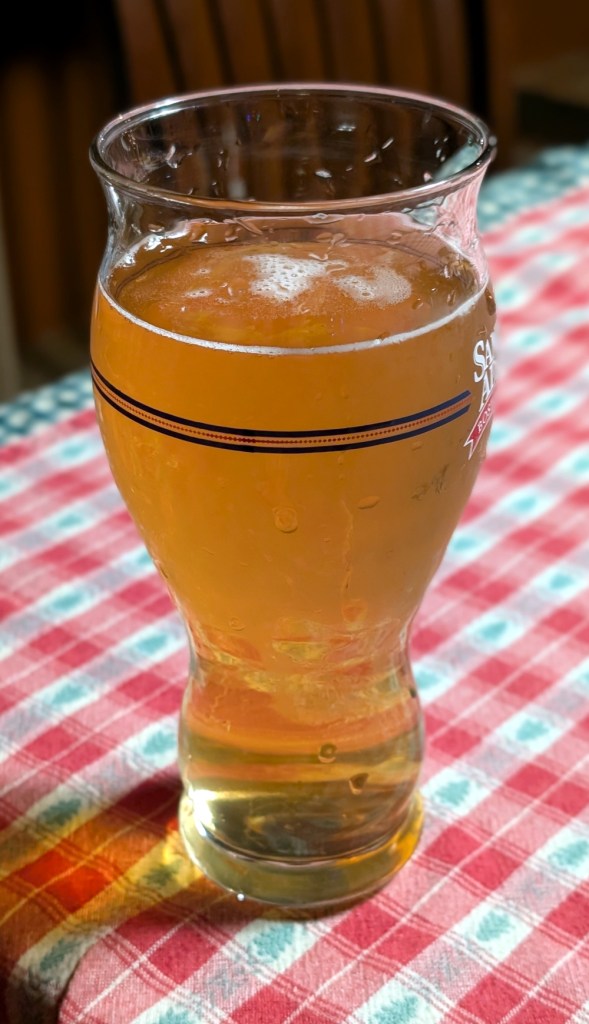
Medium yellow color, relatively clear. A touch of chill haze. Thin white head that subsides after pouring.
Aroma
A nice orange/ citrus hop aroma at a moderate level; moderate/low malty aroma
Flavor
Citrus hop flavor, low bitterness level, grainy malt character, no yeast to speak of. Nice round maltiness.
This is a great recipe, even after a few months. Clean, drinkable, interesting but not overpowering.
Overall
8/10
Andy’s Pilsner
This is a SMaSH-esque recipe, based on various SMaSH pilsners that I have made over the years. The closest equivalent would be Farke’s Best Pils.
10 lb. Briess Pilsen malt
1.0 oz. Saaz (2023) hops in boil (60 minute boil)
1.0 oz. Mt. Hood (2023) hops (10 minute boil)
Whirlfloc tablet, 10 minute boil
2 pkg. DIamond Lager dry yeast (Lallemand)
Procedure
Double-milled grain at 0.035 in. gap. Steeped grain at 150 degrees for 50 minutes. Mashed out at 168 degrees for 10 minutes. Brought to a boil and added Saaz hops.
Boiled for 60 minutes. Added Whirlfloc tablet and Mt. Hood hops. Boiled for 10 minutes. Cooled to 70 degrees. S.G.=1.051. Added 1-1/2 qts. tap water. S.G.=1.047.
Chilled to 52 degrees. Added 2 packages of Diamond Lager yeast (BB 08-2024 & 09-2023). Fermented for 10 days. S.G.=1.006. Racked to 5 gal. carboy. Continued to ferment at 52 degrees for 12 days. Warmed to 74 degrees for diacetyl rest for 4 days. Chilled to 34 degrees for approximately one month, then cold filtered, force carbonated and bottled.
Brewed July 18, 2024.
Tasting
Appearance
Very clear, straw color, with thin white head that subsides fairly quickly.
Aroma
A bit of spicy hop at the forefront, and some grainy maltiness behind that. Very nice!
Flavor
Malty sweetness at the front, and medium level of spicy hopping. Clean fermentation profile.
Mouthfeel
Medium-low carbonation level; medium mouthfeel; smooth and slightly dry finish.
Would I Brew This Again?
This is a great recipe! Carbonation might help with giving a touch more head. Malt and hop levels are perfect. This is a nice pilsner.
Once again, it’s time to look ahead to the new year of brewing. What would I like to achieve in 2022?
Session Beers
I’ve always had session-strength beers as a regular part of my brewing rotation, and have had some really great successes. I’ve done well with IPAs and stouts, and would now like to branch out a bit. I recently made a session strength dark mild, which I just put on tap and am really enjoying. A Scottish 70-/Heavy is on the schedule, and I might even aim for a patersbier soon.
German Pils
I had this as a goal last year, and although I’m getting closer, I’m not quite there yet with any consistency. I’ve been pulling the various levers of mash and grain bill and hop rates, and want to get things to the level of regular perfection soon. During 2021, I discovered that a German pils on the high end of bitterness didn’t work well for my taste buds, and something on the low end needed a touch more bite. Initial tastes on a recently kegged lager are promising.
Pre-Prohibition Lager
I recently had the 1903 Lager from Craftsman Brewing Company (Pasadena), and this beer was amazing as a pre-Prohibition style lager that clocks in at 5.2% abv. The malt character was fantastic, against some really nice hop qualities. It’s hard to find much information on this beer, so I’m going to need to look around a bit in the world of pre-Prohibition lagers to figure out a comparable recipe. In any case, this is a beer style I want to make!
IPAs
I’ve made some good IPAs, and even some great ones, but I’ve not yet settled on a “house” recipe. I need to change that. I have found that “traditional” West Coast IPAs with a heft measure of Centennial and Cascade are most to my taste, so I want to revisit previoussuccesses and see if I can’t replicate those. I might even return to a session rye IPA, to hit the session beer goal again.
Brewing continues to be an on-again/off-again festivity, as I work my way through a busy chunk of the year. Thankfully, the weekends are starting to free up a bit, so I’ve started to get ahead of things again.
Beer Batch Updates
Since last report, I kegged my Ill Tempered Gnome clone, and it’s now on tap. Although I had planned to bring some to Thanksgiving with friends, plans changed and now I’m “stuck” with the keg all on my own. Looks like a few lucky local friends will get a growler!
Winter Dream Ale–a Belgianesque winter warmer–has been kegged, and is now conditioning. The flavors seem pretty nice in preliminary tastings, although it needs a bit more time to drop completely clear. I hope to move it on-tap in time for Christmas.
On November 6, I brewed an IPA using hops from a recent HOPBOX, and it is now conditioning in the keg. I expect it will go on-tap fairly soon, because the kegs in the main keezer are getting pretty low.
I brewed this year’s iteration of Eagle Face Oatmeal Stout on November 13. It’s finishing up the rest in the primary fermenter, and should be kegged in the next day or two.
A new German pils is currently fermenting, after my brew day on November 21. It is going to ferment next to an amber zwickel, which got brewed on November 22. The former beer was made using the Edelweiss hop blend, which is an interesting experiment. The latter beer is a bit of a kitchen sink recipe to use up some odds and ends (especially Munich and Vienna malt). For each, I did a hochhurz mash (45 minutes at 144° and 45 minutes at 160°, before mash-out), and this really seems to boost my mash efficiency! I was at nearly 77% for the zwickel and 74% for the pils, which are each well above my usual 68%. On my previous pils, I just did a 60 minute mash at 149°, which ended with 70% mash efficiency. So, I speculate that a longer mash can be a key to boosting gravity in the Anvil Foundry. I might add this in to my regimen more frequently, once I evaluate the results.
What’s On Tap?
Ill-Tempered Gnome is now on tap, and it drinks really well. It’s a perfect winter beer, in that it has lots of flavor but isn’t too heavy or cloying.
I need to plan my holiday brewing sessions, and am starting to work out the possibilities. A tropical pale ale is in the lineup (using HOPBOX hops), and I’m also thinking an English dark mild for something a bit more sessionable that will use up ingredients.