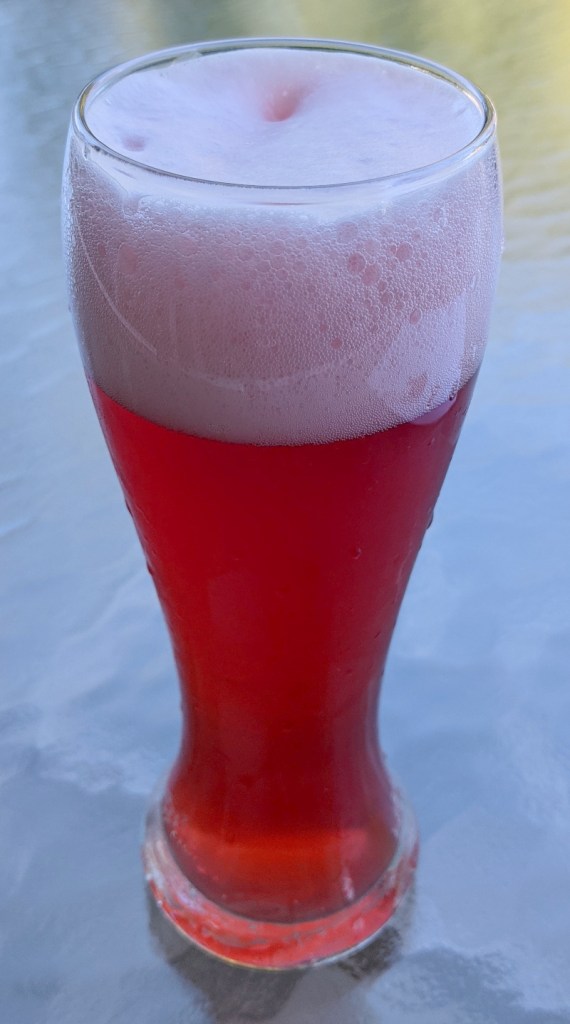
Rated “PG” (for Pineapple Guava) 2026

Our feijoa (pineapple guava) tree had a slack year in 2024-2025 (probably due to dry conditions), so I wasn’t able to gather any fruit. But, the tree produced fairly well towards the end of 2025, so it was the perfect time for a rebrew of my old favorite sour beer. The feijoa fruits weren’t quite as large this year, and were perhaps a bit riper when I picked them, so the overall quality is different from the first batch. That said, it still turned out as a great beer (even if a bit of extra work)!

Everything is pretty much the same this year as the previous version; there is a mix of pilsner malts, because I was getting to the end of my Pilsner Zero supply. With a smaller harvest of fruit, I opted for a 2.5 gallon instead of a 3 gallon recipe.
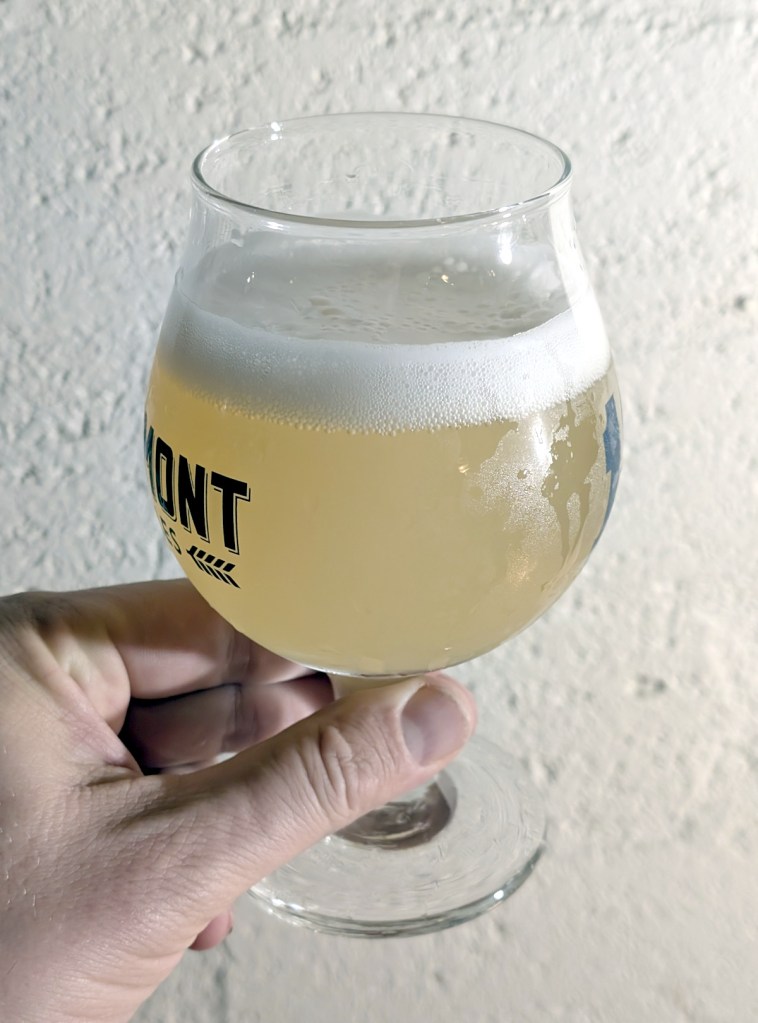
Rated “PG” (for Pineapple Guava) 2026

  • 1 lb. 12 oz red wheat malt (Briess)
  • 14 oz. Pilsner Zero malt (Viking)
  • 8 oz. Synergy Select Pilsen Malt (Briess)
  • 2 oz. rice hulls (added to mash)
  • 0.25 tsp. BrewTanB, added to mash
  • 0.25 tsp. BrewTanB, 10 minute boil
  • 1 oz. Saaz whole hops (South Dakota; est. 3.5% alpha), 5 minute boil
  • 0.5 tsp. yeast nutrient (WLN1000), 5 minute boil
  • 1 pkg. Wildbrew Philly Sour (Lallemand)
  • 2 lb. feijoa (pineapple guava) puree, added at end of fermentation

Target Parameters

  • 60 minute infusion mash, 152°, full volume mash
  • 1.031 o.g., 1.006 f.g., 3.2% abv, 5 IBU, 3 SRM
  • Claremont tap water, neutralized, to hit 120 ppm Ca, 7 ppm Mg, 89 ppm Na, 50 ppm SO4, 120 ppm Cl, 10 ppm bicarbonate, -81 RA
  • 2.5 gallon batch

Procedure

  • Starting with 3.75 gallons of tap water, I added a quarter of a Campden tablet to drop the chloramines, and then 2.65 mL of 88% lactic acid, to neutralize the bicarbonates.
  • I heated the water to 155°, before adding the grains, and holding at 152° for 60 minutes, with recirculation.
  • After the main mash, I raised the mash temperature to 168° and held it there for 10 minutes.
  • Once the mash was done, I pulled the grains. I had 3.4 gallons of runnings with a gravity of 1.025, for 72% mash efficiency.
  • I brought the runnings to a boil, and boiled for 60 minutes, adding hops and other ingredients per the recipe.
  • After the 60 minute boil, I chilled to 84°, transferred to the fermenter, pitched the yeast, and fermented at ambient. I wrapped a towel around the temperature to maintain temperature.
  • I brewed the beer on 18 February 2026; starting gravity was 1.033.
  • The beer was down to 70° by the morning of 19 February 2026, with active bubbling in the airlock. I put my fermentation heater next to the fermenter and wrapped the fermenter in a towel in order to keep the temperature up.
  • The fermenter was around 76° when I checked it on 22 February 2026.
  • I added the fruit puree on 22 February 2026. I had picked the feijoa at the end of December, skinned it, and then froze the pulp. After thawing, I pureed the pulp with an immersion blender, heated the puree it to between 160° and 165°, and then let it sit for 30 seconds. I added the pasteurized puree to the fermenter at this point, which raised the temperature to 86°. There was a gentle krausen on top when I opened the fermenter.
  • The fermenter sat at ambient, until I kegged the beer on 7 March 2026. I used 1.5 oz of corn sugar dissolved in water to start carbonation (and reduce oxygen).
  • Final gravity was 1.009, down from 1.033; this works out to 3.1% abv, pretty close to my initially estimated target.
  • After a few weeks, I moved the keg to the fermentation chamber and topped up the CO2 with forced carbonation.

Tasting

  • Appearance
    • Very hazy and straw-colored beer, with a surprisingly persistent white head (likely helped by the high level of carbonation).
  • Aroma
    • Highly tart, acidic aroma, with a medium level of tropical fruit; very ripe, almost like papaya, especially on the initial pour; as the beer warms, I pick up more guava, and a bit of apricot and pineapple.
  • Flavor
    • Very clean sour profile, with a lactic acid character; a light bread dough malt flavor. As the beer warms, a medium-low level of tropical fruit comes through, with well ripened pineapple as the dominant flavor. Minimal bitterness.
  • Mouthfeel
    • Highly carbonated, crisp, light-bodied beer; a wonderful effervescent character.
  • Would I Brew This Again?
    • This is a super amazing beer, made even more special by the fact that I picked the fruit in my yard. It is just about the perfect fruited sour; the aroma is a little more “ripe” than the previous version. The flavor is not as fruit-forward (hence the 9/10), but still nice. The Philly Sour strain works well for these kinds of beers; I’m definitely sold on it! Comparing with the previous version, the color is a little lighter; maybe that’s something about the fruit?
  • Overall
    • 9/10

Raspberry Belgian 2021

According to my records, this is the fifth time I’ve made Raspberry Belgian. It is one of my favorite recipes, without a doubt. The process is a fair bit of work, and it’s not the cheapest thing to brew, but WOW, are the results worth it!

My approach to this has morphed considerably over the years, and there are inevitably some variations in ingredients and process. So, every time is different, even if they’re all more or less in the same flavor space.

As before, the key to this recipe is using fresh/frozen raspberries. Tons and tons of raspberries–4.5 pounds, to be precise. I used just frozen ones this time, which I thawed and pureed before adding to the fermenter. Canned purees just don’t “pop” in the same way. For souring, I tried out the Lactobacillus Blend from Omega Labs, which is what the local shop had on-hand. Past versions of the recipe used acidulated malt in the grist, which was a hold-over from the original “bacteria-free” version, and I decided to just ditch that because it was unnecessary.

Raspberry Belgian 2021

  • 6.5 lb. Viking Pilsner Zero Malt
  • 2.5 lb. white wheat malt (Great Western)
  • 1 lb. flaked wheat
  • 0.5 lb. Carapils malt (Briess)
  • 0.5 lb. rice hulls
  • 0.5 oz. Magnum hop pellets (10.1% alpha), 60 minute boil
  • 1 tsp. WLN1000 yeast nutrient (White Labs), 10 minute boil
  • 1 pkg. Belgian Wit Ale Yeast (WLP400), prepared in 1L vitality starter
  • 1 pkg. Lactobacillus Blend (Omega Labs OYL-605)
  • 72 oz. frozen raspberries, pureed

Target Parameters

  • 1.048 o.g., 1.012 f.g., 18 IBU, 4 SRM, 4.8% abv
  • 154° full-volume mash, 60 minutes
  • Overnight kettle sour
  • Claremont tap water, no adjustment

Procedure

  • Way back in May, I made a starter for Pannotia White IPA using WLP400, but it was suuuuper slow to kick off. Worrying that it was dead, I got some Whiteout (Imperial Yeast), but kept the WLP400 starter going just in case. After a day or two, it was off to the races, and so I harvested the results to save for a later brew–which turned out to be the raspberry brew!
  • I mashed in with 7.25 gallons of water at 160°, and held the mash at 154° for 60 minutes with recirculation. I added 7 mL of 88% lactic acid to adjust the mash pH. I raised the temperature to 168° for a 10 minute mash-out, and then removed the grain basket.
  • In total, I collected 6.25 gallons of runnings with a gravity of 1.038, for 61% mash efficiency. This is a bit low, but that seems to be the case for these adjunct-heavy beers (and my mill seems to be not quite tight enough, after inspection of equipment).
  • Next, I boiled the runnings for 5 minutes, before chilling down to 95°. I added 25 mL of 88% lactic acid, to get the pH down to 4.4, and then added the lacto culture. Because I’m using the Foundry, I just let the runnings in the kettle, and set it to maintain temperature at 90°. I did this step on 14 August 2021.
  • After 25 hours, the pH was down to 3.5, right in my target range. I called this perfect!
  • While getting the soured runnings ready, I made a SNS (shaken-not-stirred) starter for the harvested yeast culture.
  • I boiled the runnings, adding hops and yeast nutrients per the recipe. After 60 minutes, I chilled the wort, transferred to the fermenter, and then chilled down to 66° before pitching the yeast starter.
  • I started primary fermentation on 15 August 2021, holding at 66°.
  • On 19 August 2021, I added 72 oz. of pureed frozen raspberries, and raised the temperature to 68°.
  • On 22 August 2021, I brought the beer out to ambient, around 75° or so, to finish up.
  • I kegged the beer on 28 August 2021. At this point, it had a final gravity of 1.013, which works out to 4.0% abv. With the extra sugars from the fruit, actual abv might be a touch higher.

Tasting

  • Appearance
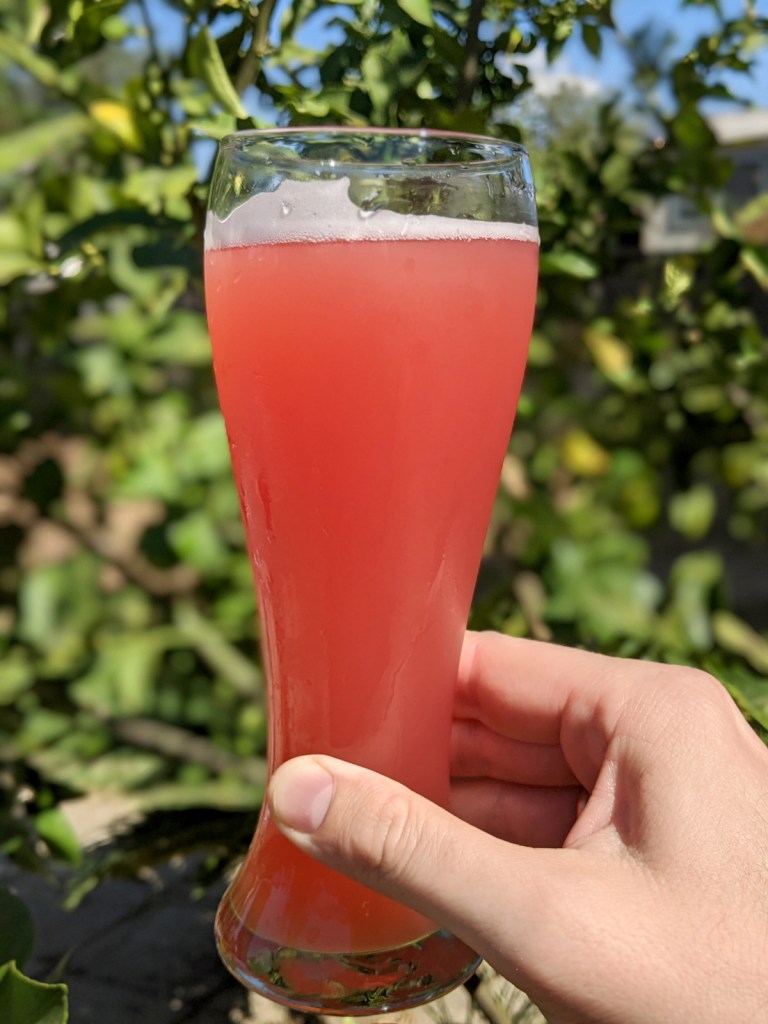
    • The beer is gorgeous! I pours with a pink, frothy, and somewhat persistent head. The beer itself is dark pink, and moderately (but not overly) hazy. I think it’s looking clearer than might be usual, because I’m using a floating dip tube. I wouldn’t mind a little extra haze, if it helped augment the mouthfeel and flavor.
  • Aroma
    • Raspberry is prominent, with a bit of tartness also.
  • Flavor
    • The beer is moderately sour, but not over the top. The sour character is clean (one person who tasted it described it as a sour patch kid–that’s a high compliment in my book!). Bitterness is perceived as low. The raspberry comes through very nicely. There might be a slight wheat flavor, but in general I don’t think the malt is terribly perceptible. I’m a bit surprised that the Belgian yeast character doesn’t come through more, either.
  • Mouthfeel
    • This beer has a light body and effervescent quality, with a tart, modestly sour, and dry finish.
  • Would I Brew This Again?
    • This is a wonderful beer! It’s incredibly drinkable, especially during warm weather. I wouldn’t mind a touch more malt character and a little bit more prominent Belgian yeast character…I would be curious to see if it’s genuinely no Belgian character, or if that is just being covered up by the raspberries. Perhaps I’ll try fermenting at a higher temperature next time, to bring out the phenols more prominently. Those are truly minor issues, and really just in the category of optional tweaks to consider.
  • Overall
    • 9/10

Raspberry Belgian 2020

I’ve brewed this beer at least three or four times, and I keep coming back to it as one of my very favorite recipes. It’s crisp, it’s low alcohol, it’s flavorful, and it’s well out of my usual brewing styles. I wouldn’t want this year-round, but it sure is a nice treat every once in awhile!

deep pink beer in Belgian wit glass, held aloft against green tree leaves

My personal take on this recipe–which started out as a clone of Funkwerks Raspberry Provincial–has evolved since I first brewed it in 2017. Every batch is a bit different, especially in the souring strain and the type of raspberry puree added. It never fails to be a great beer.

Raspberry Belgian 2020

  • 4.75 lb. pilsner malt (Weyermann)
  • 2.5 lb. pale wheat malt (Weyermann)
  • 1.75 lb. acidulated malt (BestMalz)
  • 0.5 lb. Carapils malt
  • 0.5 lb. flaked oats
  • 0.5 lb. flaked wheat
  • 6 oz. rice hulls
  • 0.35 oz. Magnum hop pellets (13.2% alpha), 60 minute boil
  • 0.5 pkg. (~5 g) of Wildbrew Sour Pitch (Lallemand)
  • 1 pkg. Whiteout Belgian Wit Yeast (Imperial #B44)
  • 36 oz. raspberry puree

Target Parameters

  • 1.048 o.g., 1.013 f.g., 15 IBU, 3 SRM, 4.5% abv
  • 155° full-volume mash, 60 minutes
  • Overnight kettle sour
  • Claremont tap water, no adjustment

Procedure

  • I mashed in with ~8.5 gallons of water at 160°, to hit a 155° mash temperature target. After 60 minutes, I vorlaufed and collected the full volume of runnings.
  • In total, I collected 6.7 gallons of runnings with a gravity of 1.033. This was way below my target (and only 57% mash efficiency), so I added 0.75 lb. of extra light DME to bring the gravity up to 1.038.
  • I boiled the runnings for 10 minutes and then chilled to 115°. I added 1 tbs. of 88% lactic acid, to bring the pH down to ~4.4.
  • Once the kettle temp was down to 105°, I added 5 g of the Wildbrew Sour Pitch, stirred gently, and left it on a heating pad in a warm garage.
  • I started the souring process at around 10:30 am on 18 July 2020, and it was down to ~3.35 by the next morning. The sour level was right where I wanted it, when I sampled a little.
  • I boiled the beer for an hour, adding hops per the schedule as well as some yeast nutrient.
  • I chilled the wort and put it into my fermenter, bringing the temperature down the rest of the way in my fermentation chamber. I pitched the yeast, and let it ferment at 66°. The starting gravity was 1.046.
  • I pitched the yeast on 19 July 2020, and added fruit puree on 23 July 2020.
    • To make the puree, I took frozen raspberries (purchased fresh a few weeks prior, sorted, and frozen) and thawed them out. I had 72 ounces by mass, which was around 130 ounces by volume of whole raspberries. 12 ounces by weight should make around 6 ounces of puree by volume, so I ended up with around 36 ounces (a quart) of puree. To make the puree, I heated the raspberries in a double boiler, mashing them up. I heated the mixture to between 150° and 170°, with the bowl sitting in near-boiling water. I let it sit for 15 minutes and then chilled in an ice bath, before adding the puree to the fermenter.
  • I kegged the beer on 1 August 2020. Final gravity at that time was 1.020, for 3.3% abv; I wonder if the yeast hadn’t completely fermented out? I usually agitate the fermenter when I’m using the various Belgian wit strains, because they do tend to stall out without babysitting. Oh well…I figure that any final fermentation will hopefully wrap up in the keg.
  • I added 3.2 oz. of corn sugar boiled for ~2 minutes in 1 cup of water, and then sealed up the keg (adding a touch of pressure to make sure the lid was seated).
  • Carbonation level maxed out at around 24 psi at 72°, which is not terribly great as a level of carbonation for this style. That’s only 2.2 or so volumes of CO2, and I was aiming for 3.0 at least. I used my CO2 talk to top things up.
  • On 9 August 2020 (the same day as the tasting), I decarbonated a sample and measured gravity with both hydrometer and refractometer, getting a final gravity of 1.017. This works out to ~3.8% abv, and if I were to guess, around 4% abv when you factor in the sugars from the raspberry.

Tasting

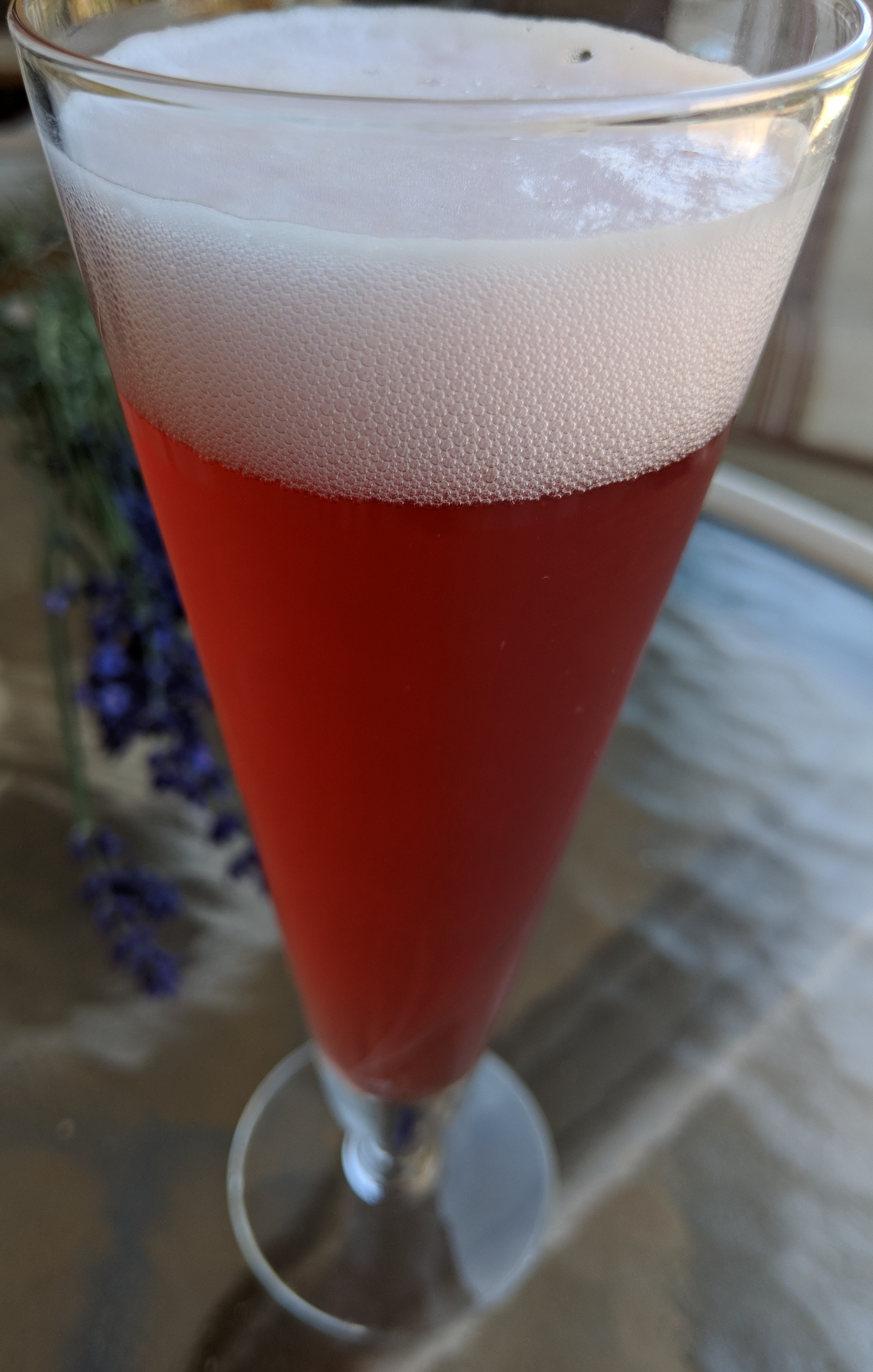
deep pink beer in Belgian wit glass
  • Appearance
    • Right now (second day on tap for the keg), this beer has a gorgeous deep pink color, with a prominent haze. It pours with a frothy white head that subsides to a relatively continuous thin blanket.
  • Aroma
    • This beer smells like fresh raspberry. I get maybe a little bit of the citrusy Belgian wit yeast character behind that, but the raspberry is front and center here.
  • Flavor
    • What else? Raspberry! More seriously, the beer has a pleasant (but not over-the-top) tartness, with a berry and citrus character. The malt is pretty subdued, and largely overwhelmed by the fruit and sour notes. But, raspberry definitely dominates.
  • Mouthfeel
    • Crisp and light bodied, with a nice smooth finish. Carbonation is high, which gives a pleasant and spritzy character to the beer, but the heavy amount of suspended yeast and the malt bill keep it from being too thin.
  • Would I brew this again?
    • This is one of my very favorite summer beer recipes. It has evolved considerably from the original clone recipe, and it has further evolved from my initial few attempts. It’s such an interesting beer, and is a good reward for the above-average amount of effort and above-average ingredient cost. The only minor change I might make would be to ditch the acidulated malt–it’s a holdover from the original recipe, which used this malt alone to get the desired sour character.
  • Overall
    • 9/10

The Ones That Got Away…

For a variety of reasons, I haven’t been able to blog about every single batch I brewed in 2018. Many of the ones that didn’t make the cut were repeat brewings of successful recipes. Because I’m not likely to get all of them with full blog posts at this stage, I’m giving myself semi-amnesty by listing them with brief comments.

  • Cerveza de Jamaica 1.1
    • This was a rebrew of the first version, which I really liked. Version 1.1 was modified very slightly to add a little more hibiscus and a little more orange peel, and the result was an incredibly tasty beer!
  • Double IPA / Hoppy Blonde Ale
    • This was an experiment with parti-gyle techniques, co-brewed with a friend. The double IPA ended up at around 7.8% abv, and was fairly tasty. The blonde ale rounded out at 4.6% abv, and was also pretty nice. The experiment was a lot of work on brew day, but a fun attempt.
  • Raspberry Belgian 2018
    • I rebrewed a house favorite recipe for a beer festival, and thus didn’t really get to taste the final result (sadly). Everything on the process was tasty, though, so I’ll be doing this one again too.
  • Bavarica Session IPA
    • This one was pretty disastrous! The flavors clashed horribly (never again will I use Munich malt in a session IPA), and I dumped most of the batch.
  • Grab Bag IPA
    • Basically to use up a bunch of ingredients. Nothing memorable here, although it was pretty drinkable.
  • Grapefruit Wheat Ale
    • I don’t have many notes on this, other than that I used Amoretti grapefruit craft puree for some of the flavoring.

Peach IPA

This is a recipe I’ve been wanting to try for quite awhile…fruit beers intrigue me, and a well executed fruit IPA can be exquisite. This particular recipe is modified from the Peach IPA recipe by Mitch Steele in the March/April 2016 Zymurgy magazine. I adjusted the base malt, hops, etc., to match some of what I had in stock. I also upped the dry hop quantities to provide the more intense hop aroma that I like.

Peach IPA

  • 11.25 lb. 2-row pale malt (Rahr)
  • 0.75 lb. Munich I malt (Weyermann)
  • 0.5 lb. Carapils malt (Briess)
  • 1.10 oz. Warrior hop pellets (15.8% alpha), 60 minute boil
  • 1 Whirlfloc tablet, 10 minute boil
  • 1 oz. Galaxy hop pellets (14.0% alpha), 5 minute whirlpool
  • 2 oz. Helga (Southern Hallertau) hop pellets (5.6% alpha), 10 day dry hop
  • 1 oz. Galaxy hop pellets (14.0% alpha), 10 day dry hop
  • 1 oz. Mosaic hop pellets (12.25% alpha), 10 day dry hop
  • 4 oz. peach puree, added on day 3 of fermentation
  • 1 pkg. California Ale yeast (White Labs WLP001)

Target Parameters

  • Single infusion mash to hit target of 152°, 60 minute rest, batch sparge
  • 1.063 s.g., 1.014 f.g., 6.5% abv, 64 IBU, 4 SRM
  • Water adjusted to 113 ppm Ca, 22 ppm Mg, 24 ppm Na, 194 ppm SO4, 42 ppm Cl, 170 ppm alkalinity, 76 ppm RA

Procedure

  • Two days before brewing, I prepared a 2L yeast starter, and let it go for 36 hours before cold crashing in the fridge. I’ll set aside ~0.6L for a later batch.
  • I prepared my mash water and sparge water in two equal batches of 4.25 gallons. To each, I added 3.1g gypsum, 1.7 g epsom salt, and 0.7 g calcium chloride. To adjust the mash pH, I added 2 tsp (10 mL) of 75% phosphoric acid.
  • I mashed in with 4.25 gallons of water at 160.5°, to hit my mash target of 152°. After 45 minutes, I was down to 150°.
  • After 60 minutes, I added 0.75 gallons of water at 185°, let rest for 10 minutes, vorlaufed, and collected the first runnings.
  • Next, I added 3.5 gallons of water at 185°, let rest for 10 minutes, vorlaufed, and collected the second runnings.
  • In total, I collected 6.5 gallons of sweet wort with a gravity of 1.053, for 75% efficiency.
  • I brought the wort to a boil, and added the hops and other ingredients per the recipe. After 60 minutes, I added the final hop dose and then turned off the flame before chilling as far as I can.
  • I got the wort down to about 85°…that’s the best I could do in the midst of this heat wave! So, I transferred the wort into the fermenter and put it in the fermentation chamber overnight to chill down to 66°.
  • Starting gravity was 1.062. I brewed this beer on 1 September 2017, and pitched the yeast on 2 September 2017.