- The Basics
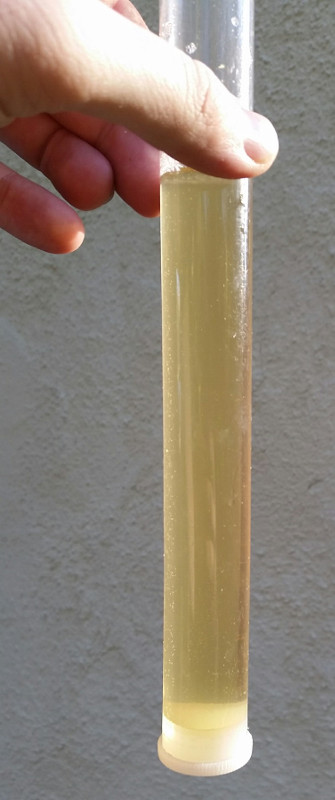
- Starting gravity = 1.054; final gravity = 1.017; abv = 5.1%; estimated IBU = 38
- Aroma
- Lots of malty aroma, with a grainy and roasty character to it. I don’t pick up much in the way of hops or yeast esters.
- Appearance
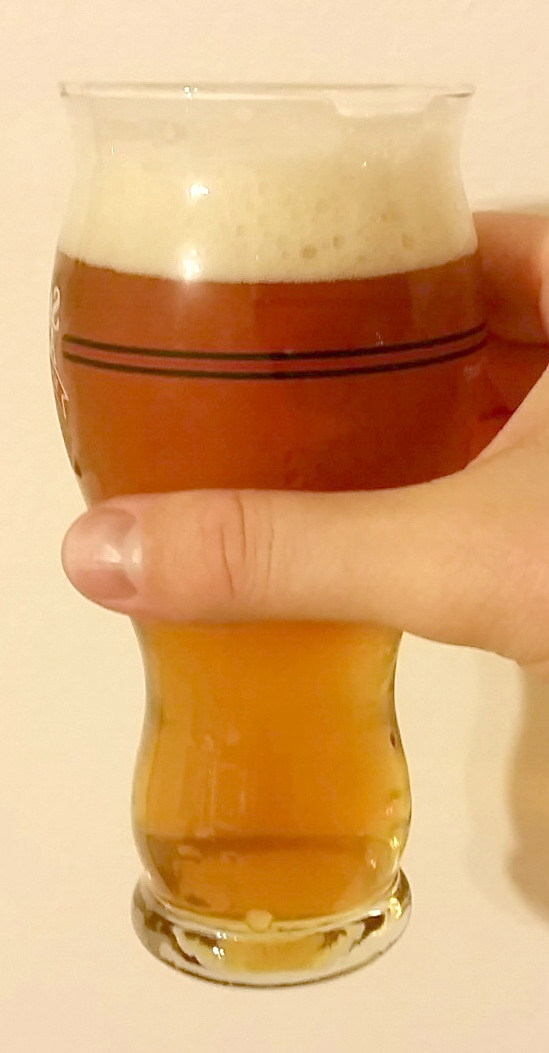
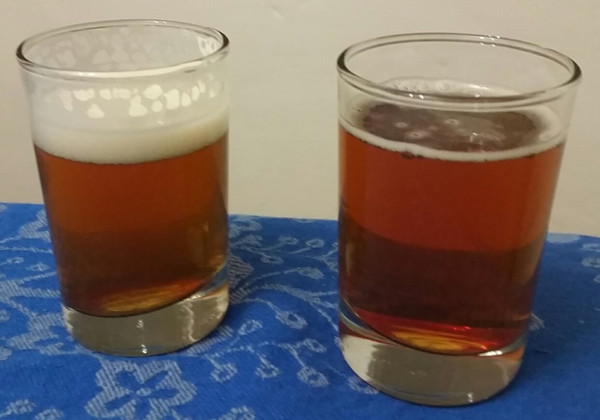
- The beer is deep brown in gross examination. When held up to the light, a deep ruby tinge is quite apparent, as well as excellent clarity. It’s very pretty! The head is beige, fine, and moderately low, with excellent retention during the course of consumption.
- Flavor
- The beer is malt-forward, with a primarily grainy and chocolate character backed up by roasty notes (in the overall same ballpark as the aroma). The bitterness is moderate and smooth, but not overwhelming.
- Mouthfeel
- The beer has a moderate body and a pleasant, fine carbonation with a slightly creamy sensation. The finish is relatively dry and tasty.
- Would I brew this again?
- Yes! For something that was thrown together from odds-and-ends, it turned out exceptionally well. Although I am unlikely to duplicate this exact recipe ever again, I think the overall ‘feel’ is a definite winner. The beer is a solid improvement on my last porter, most probably in my choice of a less attenuative English ale yeast as well as a healthy addition of flaked oats, which added some needed body over the previous recipe. I would note that this probably is best classified as a “hybrid porter”–the starting gravity is a bit higher than conventional for an English porter and the graininess is apparently slightly out of character, but it’s not quite aggressive enough to be an American porter (no ‘burnt’ characteristics and the hops are fairly tame). Ignoring the BJCP, though, it’s a great beer! I would definitely brew a simplified version of the recipe (cut the micro-additions of various grain sample packs), or perhaps even switch it up by using Maris Otter for the base malt.
- Overall rating
- 8.5/10
Pumpkin Ale 2015
Pumpkin beers are perhaps one of the most divisive styles I know, and for good reason. Too many take the “just add spice” approach, and are basically a light lager with an overdose of cinnamon and nutmeg. However, I know that there are good pumpkin beers out there, as evidenced by some reasonable success on last year’s pumpkin ale. Following a string of successes with recipes from Gordon Strong’s Modern Homebrew Recipes, I opted to give his pumpkin ale recipe a try (in very slightly modified form to adjust for ingredient availability). His recipe is intriguing for its sheer amount of pumpkin–9 pounds–as well as for its complex grain bill that I think will make the background beer more interesting in its own right.
Pumpkin Ale 2015
- 5 lbs. Golden Promise malt
- 3 lbs. Vienna malt
- 2 lbs. Munich II (“Dark Munich”) malt
- 0.5 lbs. brown malt
- 1 lbs. flaked oats
- 1 lbs. flaked wheat
- 1 lb. Belgian Caramel Vienne malt (17 SRM)
- 0.25 lb. pale chocolate malt (225 SRM)
- 9 lbs. Libby’s pumpkin puree (5 large cans, added at vorlauf and transferred to boil kettle in bag)
- 3 oz. Grandma’s Original Molasses
- 0.5 lb. Turbinado sugar
- 1.65 oz. Hallertau hops pellets (4.3% alpha, 5.6% beta), 20 minute boil
- 1 tbs. 5.2 pH stabilizer (in mash)
- 1 Whirlfloc tablet (10 minute boil)
- 1 vial English Ale yeast (WLP002), in 1.5 L starter
- Spice blend including:
- 6 large sticks cinnamon, broken up and crushed
- 1.5 tbs. crystallized ginger, chopped up
- 1 whole nutmeg, coarsely ground
- 10 whole allspice, coarsely ground
- 2 vanilla beans, split, scraped, and chopped
- 4 black cardamom pods, peeled from husks and crushed
- 0.25 tsp. ground mace
- Prior to brewing, I put the pumpkin puree into a few baking dishes, so that it formed a layer 1-2″ thick in each. I roasted the pumpkin in a 400° oven for 1.5 hours, stirring it up every 15 to 20 minutes. By the end of this, a lot of the excess moisture had been driven off and the pumpkin had darkened up a bit too. After it all cooled, I placed it in a big mesh grain bag and set it aside for the mash
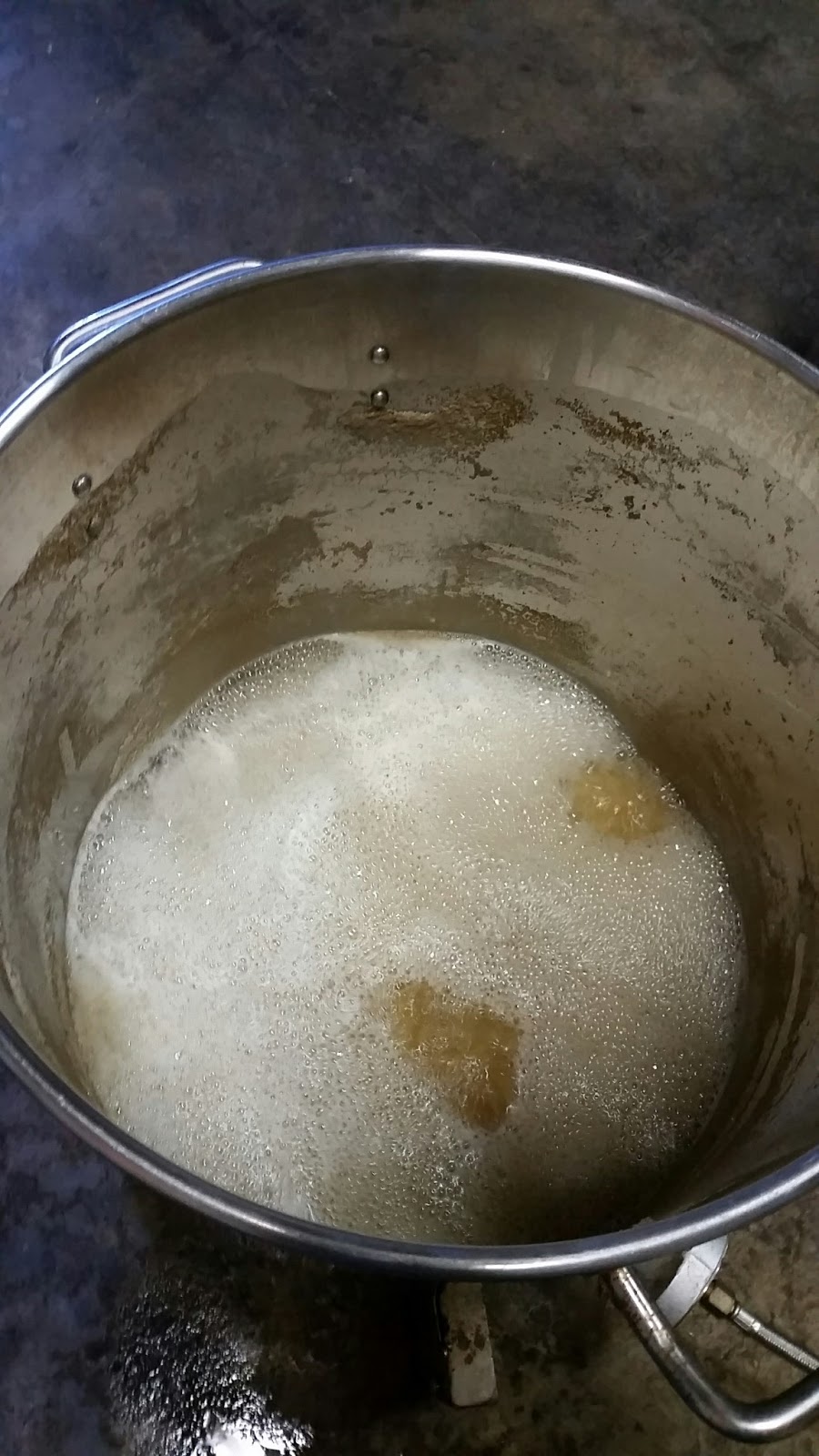
- I mashed in the grains with 5.1 gallons of water at 168°. The mash stabilized at around 156°, and was down to 154° after 40 minutes. After 60 minutes, I added the pumpkin and 1 gallon of water at 180°. I vorlaufed after 15 minutes, drained the mash tun, and added 4.1 gallons of water at 185°. I let this sit for 10 minutes, vorlaufed, and drained the rest of the wort. I transferred the pumpkin over to the boil kettle, and let it steep while the wort came to a boil.
- In total, I collected 7.5 gallons of wort with a gravity of 1.050, which equates to 68% efficiency.
- I brought the wort to a boil, and at this point removed the pumpkin. I saved the pumpkin to recycle for a pumpkin soup. The wort boiled for 60 minutes total. I added the hops during the last 20 minutes, a Whirlfloc tablet during the last 10 minutes, and the spices at flameout. I let the spices sit in the hot wort for 10 minutes, before removing them and chilling the wort as usual.
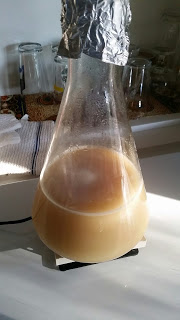
- Once I had cooled the wort down around 80°, I transferred it to the fermenter and pitched the yeast. (The yeast had been cold-crashed, so I decanted most of the spent starter).
- Starting gravity was 1.064, a touch higher than initially predicted (1.060). The cinnamon is pretty prominent–I am a little worried that it might be too much so (I suspect the recipe’s 6 cinnamon sticks were smaller than the one’s I used!), but maybe that worry will be unfounded. I started fermentation on October 3. The beer was happily krausened when I checked on it ~12 hours later, and had a robust fermentation. I will leave it in primary for at least 2 weeks.
Beer Tasting: Seven Seas Session IPA
After 5 weeks in the keg, it’s a good time to formally taste my latest session IPA! Overall, it seems like I’m about one iteration away from the “house recipe.”
Seven Seas Session IPA
- The Basics
- Original gravity = 1.052; final gravity = 1.018; abv = 4.3%; estimated IBU = 50.
- Appearance
- Very persistent ivory head with a little bit of lacing on the glass; it starts quite high, and lowers a bit as I drink the beer, but never disappears. The beer itself is a rich gold with a slight haze.
- Aroma
- A strong but not overwhelming pine and grapefruit dominate. I don’t pick up much in the way of malt (except towards the end of the glass, when the beer is warmed up a notch).
- Flavor
- The malt is in the background on this one, but definitely there. It supports a prominent bitterness from the hops, which is quite pleasant at the forefront but fades perhaps a little more harshly on the finish than I care for. In other words, the bitterness sticks around.
- Mouthfeel
- The body is just about perfect on this one; moderate, but not overly thin or overly chewy. Carbonation is moderate and on-point for an IPA.
- Would I brew this again?
- Yes, with only slight modification. The appearance, aroma, and mouthfeel are exactly perfect for me, so I wouldn’t change the malt bill, mashing schedule, yeast, or dry-hopping. The only minor issue that I would care to fix would be to tone back the nature of the bitterness a bit; something a little more subtle might be nice. It’s not bad in this way (as discussed at my homebrew club when I brought it), just slightly outside my personal preference. So, I would probably change up the bittering hops for this recipe; dial them back just a touch, and aim for something with a smoother bittering profile (?Cascade). The beer is definitely a big step closer to my house session IPA recipe. Once I get the bittering hops figured out, I think the recipe is set!
- Overall rating
- 7/10
On Falconer’s Flight 7C’s: I quite like this hop blend. It basically says “West Coast IPA.” And despite the slight shortcomings for the bittering profile in this particular recipe, I think it would be fine for bittering in a bigger beer (i.e., a standard strength IPA). It’s just a _touch_ much for a session IPA.
Clonal Common Kegged
Tonight I kegged my Clonal Common (a California steam beer intended as an Anchor Steam clone), which had been fermenting for two weeks. It spent a week at 60°, three days at 64°, and three days at 66°. For the last day, I sent it back down to 62° in preparation for kegging.
I transferred a full 5 gallons of beer into the keg. Final gravity was 1.012, down from 1.049, which works out to 4.8% abv. All of the other vitals seem to be on track; color is right where anticipated, and the aroma/flavor/bitterness are all spot on. This should be a really tasty beer, and a nice transition from the light summer ales into fall beers.
Once kegged, I added a bit of CO2 and set the temperature for the whole apparatus to 34°. My plan is to lager this for at least a week, until I have to switch the fermentation chamber back into ale fermentation mode again.
Beer Update: Packrat Porter and Clonal Common
Today I kegged my Packrat Porter, which had been in the primary for just over two weeks. Final gravity was 1.017, down from 1.056, which works out to 5.1% abv. This is about spot on the nose for what I had anticipated. The flavor is pretty nice, but I can’t say much other than that it tastes like porter. I plan to speed carbonate this one, so that it’s ready for serving by the end of the week.
The Clonal Common appeared to ferment nicely over the past week. To help it finish out, I edged the temperature controller up to 64° from 60°. I’ll let it sit there for 3-4 days, edge it up to 68° for a day or two to help things finish out, and then cold crash it prior to kegging.