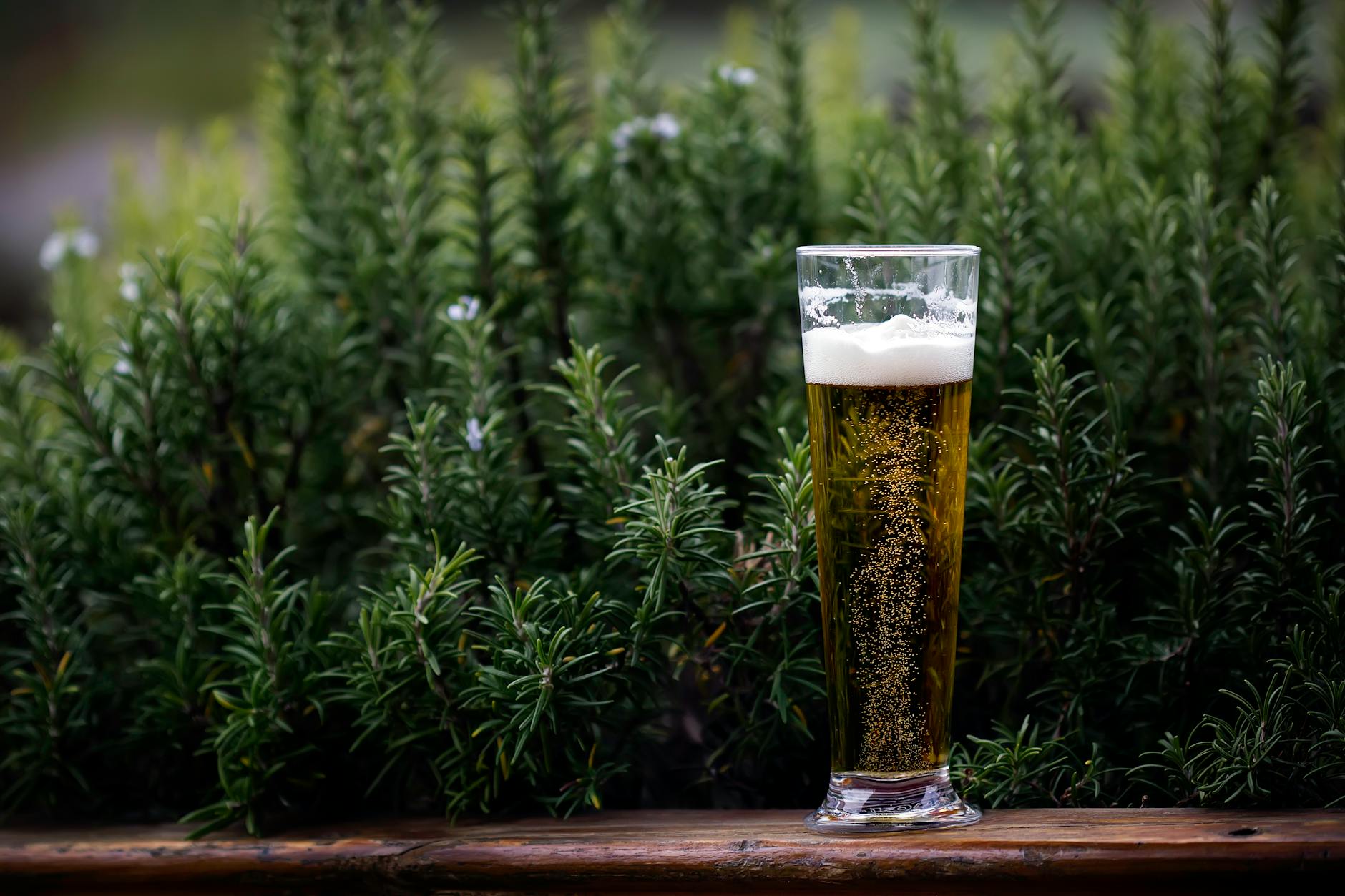
Collaboration Brews – Citra Blonde Ale and Andy’s Pilsner

This past summer, I got to brew with my dad, who first got me thinking about brewing many years ago (I remember helping him way back as a teenager, even if I couldn’t enjoy the product at the time). He started as an extract brewer decades ago, took a break, got back into it, and then eventually switched to all-grain brewing (alongside wine making). Dad makes almost exclusively lagers, with his regular rotation including a Pre-Prohibition PIlsner and a Vienna Lager.

Dad currently brews on an Anvil Foundry 10.5 (gifted by us kids a few years back), doing a handful of batches annually to keep his cellar stocked. Awhile back, I shared my Citra Blonde Ale recipe with him, and he liked it enough to add a version into his repertoire. I also helped him put together a simple German pils, which is made with hops he grows himself.

We’ll usually brew something when I’m visiting, but I almost never get to sample the results due to the distance. So, it was extra nice to get a shipment with a bottle of each of the beers we made this summer. I was also able to get my hands on the notes (thanks, Dad!), which are presented in only lightly edited format.

Citra Blonde Ale

  • 5.25 lb. Briess Pilsen malt
  • 5 lb. Briess 2-row malt
  • 0.75 lb. Munich malt
  • 0.5 lb. Vienna malt
  • 0.5 lb. Carapils malt
  • 0.5 oz. Citra hops (boil 10 min.)
  • Whirlfloc tablet (boil 1- min.)
  • 0.5 oz. Citra hops (boil 5 min.)
  • 1.0 oz. Citra hops (steep for 5 min. after shutting the heat off).
  • BRY-97 American West Coast Ale (dry) and Safale US-05 (dry) yeast, 1 packet each

Procedure

Double-milled grains with 0.035 in. gap.  Steeped grains at 152 degrees.  Mashed out at 168 degrees for 10 minutes.  Boiled for 50 minutes.  Added 0.5 oz. Citra hops, Whirlfloc.  Boiled for 5 minutes.  Added 0.5 oz. Citra hops. Boiled for 5 minutes.  

Shut off heat.  Added 1.0 oz. Citra hops.  Steeped for 5 minutes.  Removed hops and cooled to 69 degrees.  S.G.=1.054.  Added American West Coast Ale yeast BRY-97 (best by 08-2024) and Safale US-05 (best by 01-24).

Fermented in the basement at approx. 65 degrees for 12 days.  S.G.=1.006.  Continued to ferment in the basement for 3 more weeks, then moved to 34-degree fridge.  Chilled for about 3 weeks, then filtered, force carbonated and bottled.

Brewed July 18, 2024.

Tasting

  • Appearance
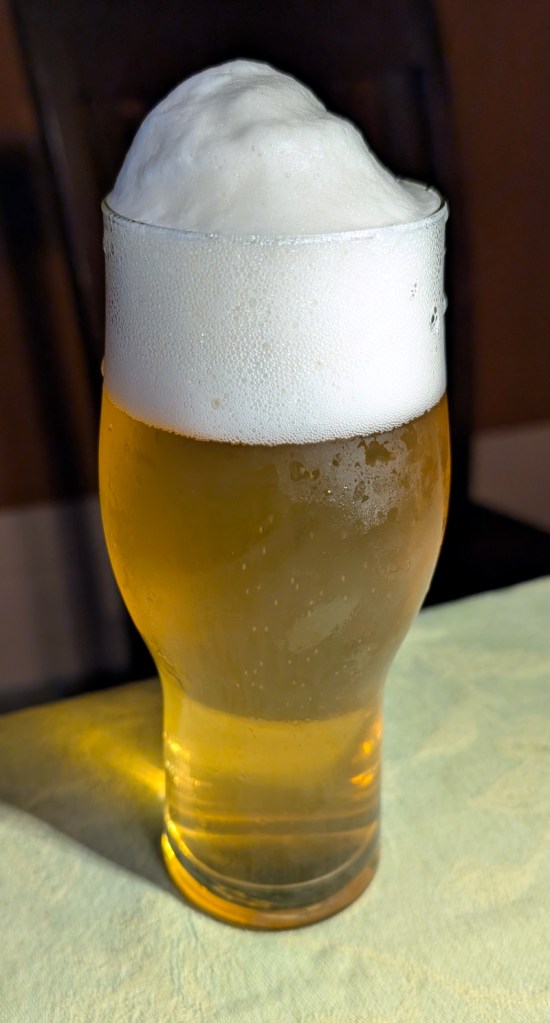
    • Medium yellow color, relatively clear. A touch of chill haze. Thin white head that subsides after pouring.
  • Aroma
    • A nice orange/ citrus hop aroma at a moderate level; moderate/low malty aroma
  • Flavor
    • Citrus hop flavor, low bitterness level, grainy malt character, no yeast to speak of. Nice round maltiness.
  • Mouthfeel
    • Medium-light body, moderate carbonation, smooth finish.
  • Would I Brew This Again?
    • This is a great recipe, even after a few months. Clean, drinkable, interesting but not overpowering.
  • Overall
    • 8/10

Andy’s Pilsner

This is a SMaSH-esque recipe, based on various SMaSH pilsners that I have made over the years. The closest equivalent would be Farke’s Best Pils.

  • 10 lb. Briess Pilsen malt
  • 1.0 oz. Saaz (2023) hops in boil (60 minute boil)
  • 1.0 oz. Mt. Hood (2023) hops (10 minute boil)
  • Whirlfloc tablet, 10 minute boil
  • 2 pkg. DIamond Lager dry yeast (Lallemand)

Procedure

Double-milled grain at 0.035 in. gap.  Steeped grain at 150 degrees for 50 minutes.  Mashed out at 168 degrees for 10 minutes.  Brought to a boil and added Saaz hops.  

Boiled for 60 minutes.  Added Whirlfloc tablet and Mt. Hood hops.  Boiled for 10 minutes.  Cooled to 70 degrees.  S.G.=1.051.  Added 1-1/2 qts. tap water.  S.G.=1.047.

Chilled to 52 degrees.  Added 2 packages of Diamond Lager yeast (BB 08-2024 & 09-2023).  Fermented for 10 days.  S.G.=1.006.  Racked to 5 gal. carboy.   Continued to ferment at 52 degrees for 12 days.  Warmed to 74 degrees for diacetyl rest for 4 days.  Chilled to 34 degrees for approximately one month, then cold filtered, force carbonated and bottled.

Brewed July 18, 2024.

Tasting

  • Appearance
    • Very clear, straw color, with thin white head that subsides fairly quickly.
  • Aroma
    • A bit of spicy hop at the forefront, and some grainy maltiness behind that. Very nice!
  • Flavor
    • Malty sweetness at the front, and medium level of spicy hopping. Clean fermentation profile.
  • Mouthfeel
    • Medium-low carbonation level; medium mouthfeel; smooth and slightly dry finish.
  • Would I Brew This Again?
    • This is a great recipe! Carbonation might help with giving a touch more head. Malt and hop levels are perfect. This is a nice pilsner.
  • Overall
    • 8/10

Winter in Antwerp 2024

I like to make a holiday beer every once in awhile, for drinking during the Christmas and New Year’s stretch. It’s an opportunity to do a smaller batch of something unusual, which might not warrant a full 5 gallons. This year, I chose a version of a recipe from Gordon Strong’s Modern Homebrew Recipes, called “Winter in Antwerp.” It’s a spiced Belgian ale, roughly in the realm of a dark pale ale (yes, that’s an oxymoron). I made some malt substitutions and also used the Abbaye dry yeast, although the overall “feel” is pretty close.

Winter in Antwerp 2024

  • 4 lb. 2-row brewer’s malt (Great Western)
  • 2 lb. Vienna malt (Weyermann)
  • 0.5 lb. aromatic malt 20L (Briess)
  • 0.5 lb. caramel malt 60L (Briess)
  • 0.5 lb. Caramunich II (Weyermann)
  • 0.5 lb. Munich dark malt (Viking)
  • 0.25 lb. biscuit malt (Dingemans)
  • 2 oz. chocolate malt (Bairds)
  • 2 oz. Special B malt (Dingemans)
  • 0.5 oz. Liberty hop pellets (5.0% alpha), 60 minute boil
  • 1 oz. Liberty hop pellets (5.0% alpha), 10 minute boil
  • 0.5 oz. Liberty hop pellets (5.0% alpha), 5 minute boil
  • 1 vanilla bean, split, scraped, and steeped for 5 minutes after the boil
  • 1 cinnamon stick, steeped for 5 minutes after the boil
  • 1 pkg. Abbaye Belgian ale yeast (Lallemand)

Target Parameters

  • 1.068 s.g., 1.021 f.g., 6.2% abv, 30 IBU, 24 SRM
  • Full volume infusion mash, held at 156° for 60 minutes and 168° for 10 minutes
  • Claremont tap water with Campden tablet, with approximate ppm of 110 Cl, 50 SO4, 40 Ca, 156 HCO3, 12 Mg, 87 Na

Procedure

  • I heated 5 gallons of water (with Campden tablet) to 163°, and then mashed in the grains. I held the mash temperature, with recirculation, at 156° for 60 minutes before raising the temperature to 168° for a 10 minute mashout.
  • Once I pulled the grains, I collected 4.5 gallons of runnings at a gravity of 1.049, for 71% mash efficiency.
  • I brought the runnings to a boil, adding hops and finings per the recipe. After 60 minutes, I turned off the heat and added the spices in a mesh bag. Because the cinnamon was a bit old, I added two sticks (broken up). After a 5 minute steep, I removed the spices and continued the chilling process.
  • I chilled the wort to 78° before transferring to the fermenter. I chilled the rest of the way, down to 68°, in the fermentation chamber. I pitched the yeast at 68°, holding at this temperature for fermentation. Expecting a vigorous fermentation, I used a blow-off tube.
  • Starting gravity was 1.065. I brewed this beer on 17 November 2024.
  • I kegged the beer on 30 November 2024. Final gravity was 1.024, for 5.4% abv.

Tasting

  • Appearance
    • Deep reddish amber beer, very clear; pours with a creamy and persistent ivory head. It’s very pretty!
  • Aroma
    • Some dried dark fruit character as the beer warms and a hint of very ripe banana. Rich maltiness, but just a hint. Very faint cinnamon as it warms.
  • Flavor
    • Bread crust malt character, dried dark fruit in the yeast, medium level of bitterness. Less complex than I expected!
  • Mouthfeel
    • Medium body, medium high carbonation, very slightly dry finish.
  • Would I Brew This Again?
    • This is a good beer but nothing special. I was hoping for a bit more spice character, but there isn’t really any. I would probably increase the spicing rate a touch. For a similar beer next time, I would condition longer. It needs more body and malt “oomph”! Given all of the crystal malts, I’m surprised it doesn’t give the impression of more body. Perhaps for this kind of beer, it would benefit from a higher starting gravity or swapping in Munich for the 2-row malt. I would also age it for awhile longer. Another challenge is that I have this beer in my conditioning chamber, at around 35°, so it takes awhile to warm up after pouring. It’s definitely better at warmer temperatures!
  • Overall
    • 6/10

Bear Butte Porter

Porters are a classic homebrewing style, and they are an accessible entry point for newer brewers because their rich flavors are simultaneously enjoyable and also able to cover the results of overheated fermentations. As my brewing has progressed, and my fermentation temperature control has improved, I come back to them again and again as an enjoyable winter beer.

Last year I made a Sierra Nevada Porter clone, and this year I delved into a clone recipe for Deschute Brewing’s Black Butte Porter. The version I had was pulled from the Brew Your Own Big Book of Homebrewing (2022 updated edition), with some small modifications for hops and yeast on-hand on-hand as well as some very slight malt quantity adjustments. Instead of Galena as the bittering charge, I subbed in Chinook, which seemed like a reasonable swap, and I used Mangrove Jacki’s M36 Liberty Bell ale yeast instead of Lalbrew’s Verdant strain. Again, this seemed to be a reasonable swap that would get me into the same flavor zone. Interestingly, I learned via David Taylor’s Yeast Master List that M36 is a blend of M42 (New World/Nottingham) and M15 (Empire/Windsor); the reported fruitiness of the strain seemed like a good fit for this particular batch.

It’s interesting to note that the BYO clone recipe is very different from an AHA clone recipe. The AHA version uses chocolate wheat malt instead of chocolate malt, 80L crystal instead of 60L crystal, and a bit of dextrine malt, and it also calls for WLP002. Hops include Hallertauer instead of Tettnang. I’m not sure which version is more “authentic,” and I suppose it doesn’t really matter in the end! As another aside, I brewed a version of the AHA recipe back in 2021, as Turtle Toe Porter.

Because this is not a direct version of the clone recipe, and in honor of a landmark in my home state, I have called this batch “Bear Butte Porter.” I also used some South Dakota-grown hops from my dad, another fitting addition to the beer.

Bear Butte Porter

  • 10.25 lb. 2-row brewer’s malt (Great Western)
  • 0.75 lb. crystal 60L (Briess)
  • 0.75 lb. chocolate malt (Simpsons)
  • 0.35 oz. Chinook hop pellets (12.3% alpha), 60 minute boil
  • 2 oz. Cascade whole hops (3.5% est. alpha), 20 minute boil
  • 1 Whirlfloc tablet, 5 minute boil
  • 2 oz. Tettnang hop pellets (2.4% alpha), 5 minute boil
  • 1 pkg. Liberty Bell ale yeast (Mangrove Jack’s M36)

Target Parameters

  • 1.052 s.g., 1.012 f.g., 5.4% abv, 33 IBU, 33 SRM
  • Full volume infusion mash, held at 152° for 60 minutes and 168° for 10 minutes
  • Claremont tap water with Campden tablet, with approximate ppm of 110 Cl, 50 SO4, 40 Ca, 156 HCO3, 12 Mg, 87 Na

Procedure

  • I heated 7.5 gallons of Claremont tap water, with Campden tablet, to 158°, before adding the grains as well as 6 mL of 88% lactic acid to adjust the mash pH. I held the mash at 152° for 60 minutes, with recirculation, before raising the temperature to 168°. After 10 minutes at the mash-out temperature, I removed the grains and heated the runnings to a boil.
  • In total, I collected 6.7 gallons of runnings with a gravity of 1.043, for 68% mash efficiency.
  • Once the runnings were boiling, I added the hops and finings per the recipe. After 60 minutes on the boil, I turned off the heat and chilled to 78° before transferring to the fermenter and dropping to 66° in the fermentation chamber.
  • Once the beer was at 66°, I pitched the yeast.
  • I brewed this beer on 25 October 2024; it had a starting gravity of 1.057.
  • I fermented the beer at 66° until 28 October 2024, when I pulled it to ambient (~70°). Active fermentation seemed mostly done, so I figured it wouldn’t hurt it to sit at ambient for awhile.
  • I kegged the beer on 16 November 2024. Final gravity was 1.016, for 5.4% abv. This was around 71% measured attenuation. It’s on the lower end that Mangrove Jack’s reports for the strain (74% to 78%), but in my experience I’ve often had lower attenuation with the Windsor strain that comprises part of this blend.

Tasting

  • Appearance
    • Deep, deep brown beer with dark garnet highlights, very clear. Pours with a persistent and creamy tan head. Beautiful! Great lacing down the side of the glass.
  • Aroma
    • Moderate dark chocolate: coffee aroma, a touch of earthy hop character.
  • Flavor
    • Slightly roasty and bitter chocolate malt character, a bit of dark sugar character; medium bitterness. A medium bit of dark dried fruit yeast character, but it’s in the background.
  • Mouthfeel
    • Medium carbonation, medium-full body, off-dry finish.
  • Would I Brew This Again?
    • I love this beer! It’s a perfect American porter, and wonderfully drinkable. Porter is such an underappreciated style; this version looks great and tastes great!
  • Overall
    • 10/10

Munich Madness II

German beers are certainly my favorite, although a classic German pils is probably my most frequently brewed style within that realm (19 batches since 2016). I haven’t done many märzens, and it seemed like a good seasonal style to explore again. My first version was Monks’ Fortitude Märzen, and it was an exceptional beer. Malt is at the forefront of this style, with Monks’ Fortitude hitting 1.055 with 71% Vienna, 25% Munich II, and 4% Carared malts. For my latest foray into märzens, I took a page from Brewing Classic Styles, via their Munich Madness recipe. Atlhough BCS is pushing 20 years old, it has stood the test of time as a handy reference, especially for styles that have been pretty constant.

My version of Munich Madness has been adjusted slightly from the original, primarily to lower the abv a bit. The original had a starting gravity of 1.059, so I dropped it to 1.054 to hit the lower bound of the BJCP style and also make it a bit more drinkable for my tastes. This was done by maintaining the grain proportions and dropping the amounts slightly, and drops the recipe from around 6% to the lower end of 5%.

Munich Madness II

  • 4.75 lb. pilsner malt (Rahr)
  • 3.5 lb. Munich I malt (Weyermann)
  • 2.75 lb. Vienna malt (Weyermann)
  • 0.75 lb. Caramel Munich 60L malt (Briess)
  • 0.5 tsp. BrewTanB, added to mash
  • 2 oz. Hallertauer Mittelfrueh hop pellets (2.7% alpha), 60 minute boil
  • 0.5 tsp. BrewTanB, 10 minute boil
  • 1 Whirlfloc tablet, 5 minute boil
  • 3 pkg. Diamond Lager dry yeast (Lallemand)

Target Parameters

  • 1.054 o.g., 1.013 f.g., 5.3% abv, 19 IBU, 10 SRM
  • Full volume mash at 152° for 60 minutes, 10 minute mash-out at 168°
  • Claremont tap water, with Campden tablet, adjusted to hit water profile of 56 ppm Ca, 12 ppm Mg, 87 ppm Na, 89 ppm SO4, 110 ppm Cl, and 20 ppm CO3.

Procedure

  • Starting with 7.5 gallons of tap water, I added a Campden tablet and 6.25 mL of 88% lactic acid, followed by 2 g of gypsum, in order to hit my water profile.
  • I heated the water to 158°, and added the grains, holding at 152° with recirculation for 60 minutes before heating to 168° and holding there for 10 minutes.
  • At the end of the mash, I removed the grains. In total, I collected 6.75 gallons of runnings with a gravity of 1.045, for 70% mash efficiency.
  • I brought the runnings to a boil, adding hops and finings per the recipe. After 60 minutes, I turned off the heat and chilled to 80° before transferring to the fermenter.
  • I chilled the fermenter overnight down to 50°, before pitching the yeast.
  • I brewed the beer on 13 September 2024 and pitched the yeast on 14 September 2024. Starting gravity was 1.053.
  • I fermented at 52° until 30 September 2024, when I let the beer free rise to 60°, and then pulled to ambient (~74°) on 5 October 2024.
  • I kegged the beer via closed transfer on 12 October 2024. Final gravity was 1.012, for 5.4% abv.
amber beer with ivory head held aloft in dimpled German mug, with background of pink flowers

Tasting

  • Appearance
    • The beer pours with a tall and persistent ivory head; it is a clear and medium amber-orange beer.
  • Aroma
    • A moderate bread crust malt character at the forefront; slight spicy hop aroma behind that.
  • Flavor
    • Very rich, malty character dominates the flavor, with some bready notes. A medium-low, clean bitterness with a hint of spice is behind that. Yeast profile is clean. It is a very easy drinking beer!
  • Mouthfeel
    • Medium body, moderate carbonation, smooth finish that is slightly dry.
  • Would I brew this again?
    • This is a fantastically drinkable fall lager, which is interesting but not so interesting that I can’t have another. The malt character is excellent. I rushed this beer just a touch (relative to a “traditional” märzen) in terms of lagering, and a little more time would help it condition and clear to brilliance. Overall, though, this is a winner! [note added after the post was published – by mid-December, the beer had cleared to brilliant; so, a minimum of two months seems to be optimal for this style, recipe, and yeast]
  • Overall
    • 8/10

Live Oak Canyon Ale 2024

As is tradition, I crafted a special batch for the Thanksgiving celebration, a multi-day affair with friends and family. This is a time when I like to roll out a special batch, often a bigger beer that can be savored in smaller (or bigger) pours. Last winter, I experimented with a wood-aged imperial red IPA, and it was so good that I decided to roll it forward into this year’s Thanksgiving beer. It was an extra fun brewing session, in that I hosted my homebrew club to assist with the brew day!

Stylistically, this is an imperial red IPA, or something like it. It’s very much a beer from yesteryear, in the thick of the IBU wars–big, bold, and unapologetically in your face. Versus the 2023 version, the 2024 edition is pretty much the same grist but different hops to reflect what I had on-hand. I used Moutere as my bittering hops, in order to finish out the ounce left in my hop stash; the addition of Centennial and Simcoe at the whirlpool and dry hop stages is different from last year (which used HBC 522 and Talus).

Live Oak Canyon Ale

  • 10.5 lb. 2-row malt (Briess)
  • 13 oz. caramel malt 120L (Briess)
  • 0.5 tsp. BrewTanB, added to mash
  • 1 oz. Moutere hop pellets (19.5% alpha), 60 minute boil
  • 0.25 tsp. BrewTanB, 10 minute boil
  • 0.75 lb. corn sugar, 5 minute boil
  • 1 Whirlfloc tablet, 5 minute boil
  • 2 oz. Centennial hop pellets (8.1% alpha), 15 minute whirlpool
  • 1 pkg. WLP001 (White Labs), California Ale dry yeast
  • 1 medium toast American oak Beer Stix carboy stick, added to primary and carried over to keg
  • 2 oz. Simcoe hop pellets (12.4% alpha), dry hop in keg

Target Parameters

  • 1.092 s.g., 1.015 f.g., 10.4% abv, 113 IBU, 17 SRM
  • Infusion mash, held at 152° for 60 minutes and 168° for 10 minutes, with sparge
  • Claremont tap water, with Campden tablet, adjusted with minerals to achieve 58 ppm Ca, 23 ppm Mg, 54 ppm Na, 155 ppm SO4, 60 ppm Cl, 10 ppm CO3, -47 ppm RA

Procedure

  • Starting with 5.6 gallons of water, I added 4 mL of 88% lactic acid to neutralize the carbonates. Then, I added 2 g epsom salts and 2 g gypsum, to achieve my target water profile.
  • I heated the strike water to 161°, added the grains, and hit a 152° mash temperature. I also added 4 mL of 88% lactic acid, to adjust the pH.
  • After a 60 minute mash and recirculation, I raised the mash temperature to 168° for 10 minutes, before pulling the grains.
  • I had neglected to pull the sparge water from the strike water, so I had to sparge with ~0.5 gallons of water, which topped up my volume a bit beyond that which was intended. This meant a longer boil.
  • In total, I collected 5.35 gallons of runnings with a gravity of 1.055, for 70% mash efficiency.
  • I boiled for 45 minutes before starting the formal timer, which meant a 105 minute boil total.
  • After the initial 45 minutes of boiling, I began adding hops and other finings per the recipe, with corn sugar added at the very end.
  • After the boil, I chilled the beer down to around 78°, before transferring to the fermenter and chilling to 64° in my fermentation chamber and pitching the yeast.
  • I brewed this beer on 12 October 2024; it had a starting gravity of 1.085. Once pitching the yeast, I fermented at 64°.
  • I soaked the oak stick in water overnight, and then put it into the microwave for around 90 seconds to flash steam and sanitize. I spritzed the oak with StarSan, before adding it to the fermenter. The oak was added to the primary fermenter on 15 October 2024.
  • I kegged the beer on 31 October 2024, adding the dry hops in a baggie and also transferring the oak to the keg. I left the beer at ambient for this phase.
  • Final gravity was 1.016, for 9.3% abv.
  • I left the keg at ambient until 6 November 2024, when I removed the dry hops and oak, moved the keg to the conditioning chamber, and let it condition and carbonate at 34°.

Tasting

  • Appearance
    • This is a deep reddish amber beer, very clear, which pours with a persistent and fine ivory head. It’s very pretty!
  • Aroma
    • The nose has a citrus and fresh pine hop aroma at a moderate level, with vanilla-type woodiness and light caramel behind that. The wood comes through more prominently as the beer warms, along with a light alcohol aroma.
  • Flavor
    • Very bitter, with resin and citrus pith qualities, and a hint of fresh orange zest; there is a modest level of woodiness as the beer warms up. A light and sweet caramel flavor is at the back end.
  • Mouthfeel
    • Medium body, moderate carbonation, dry finish.
  • Would I Brew This Again?
    • This is a good one! I think that last year’s version was maybe a touch better; perhaps Simcoe and Centennial don’t quite hit the mark for what the beer needs. The recipe upon which I based this beer used a mix of Simcoe and Mosaic, so I might try those in a future iteration. Either way, this is a highly drinkable beer for as big as it is, even if in the “sipping beer” category.
  • Overall
    • 9/10