What’s Brewing? December 2021 Edition

As we head into the end of the year, I find that I’m having to pace my brewing a bit. I want to brew more frequently, but either don’t have time or (more pragmatically) have a bunch of beer on-hand already. In any case, I’m planning out the brewing schedule for the next few weeks, and have some fun stuff “on tap.” My current tap selection is pretty darned good, which makes for enjoyable sampling.

Beer Batch Updates

  • Eagle Face Oatmeal Stout is now kegged, and conditioning. I’ve noted that this recipe tends to attenuate fairly poorly (finishing north of 1.020), which is actually a good thing in terms of body and lower alcohol.
  • I kegged the amber kellerbier / zwickel, and it is now carbonating. The plan is to have it on-tap very soon, so that it can be available for pairing with our traditional pretzel night during the holidays.
  • I brewed a dark mild last weekend, and it is now fermenting. In a bit of experimental laziness, I transferred the beer directly onto the yeast cake from the oatmeal stout. In part, I wanted to try this technique. But mostly I just didn’t want to clean the fermenter. As a side effect, I saved a few bucks (unless the beer is bad, in which case I didn’t save anything).
  • My newer German pils is lagering, and I plan to keg it soon.

What’s On Tap?

  • I’m on the home stretch for the kegs of Farke’s Best Pils and Humboldt’s Lesser Hefeweizen. Once those are done, I can rotate in the kellerbier!
  • I just put the American IPA on-tap (made with 2021 hops), and it is drinking beautifully.

What’s Coming Up?

  • I plan to brew a pale ale with a few more of the hops from the HOPBOX, specifically Strata and El Dorado.
  • I’m also going to run a clone recipe of Pliny the Elder again, this time with slight modification. Kits were on sale at MoreBeer, so I picked one up just to give it a try.
  • I am thinking about another pilsner soon, once I evaluate the most recent German pils.
  • A Scottish 70/- heavy is on my list, so I can have another lower alcohol beer on hand.

Ill-Tempered Gnome Clone

As I am pretty sure I’ve lamented previously, I sometimes get too far down the rabbit-hole of brewing to a particular style. IPA, stout, porter, pilsner…all are great, but that can be at expense of creativity. On the other hand, I grew wary of the big and bitter beers that I gravitated towards early in my craft beer days. And yet…I now find myself picking up a bottle of Arrogant Bastard every few weeks, and kind of enjoying it. The excesses of craft beer recipes are still excessive, but I’m finding that they can be enjoyable in moderation and on occasion.

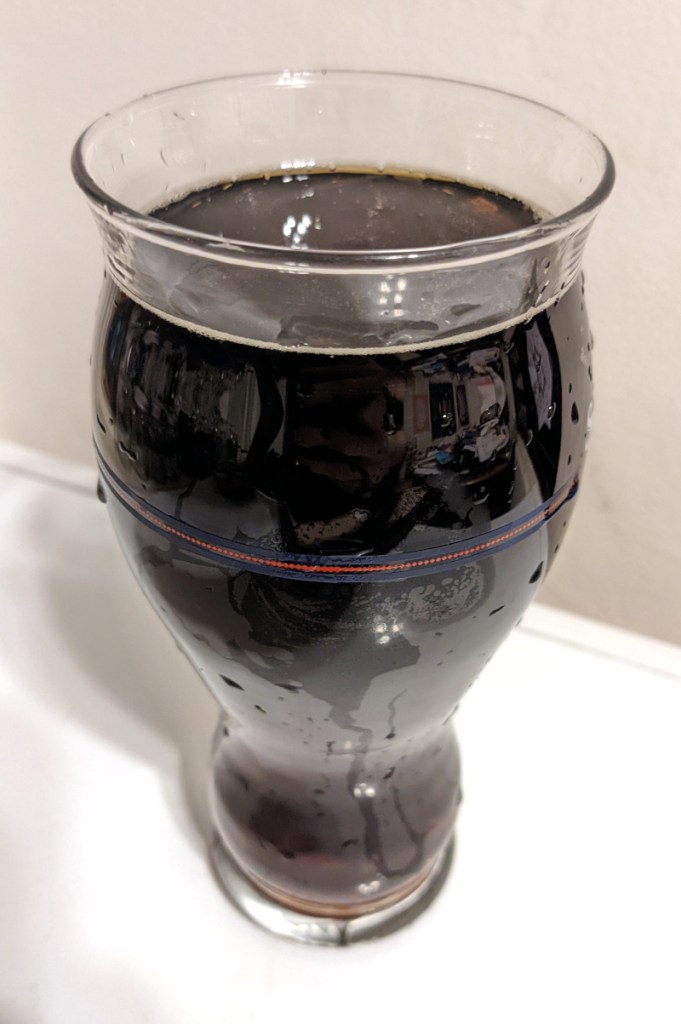
dark brown beer with tan head, held in clear tulip glass against a white wall

To scratch this itch, I paged through the Craft Beer For the Homebrewer book, and my eyes settled upon a clone recipe for something called Ill-Tempered Gnome. Produced by Oakshire Brewing, this recipe looked big, dark, and bitter, and was billed as an American Brown Ale (on the website) or a winter warmer (in the beer book).

Quite intrigued, I pulled together the ingredients, making a minor substitution or two based on availability for some of the harder-to-find malts (e.g., I had to go with a different brand of coffee malt versus Franco-Belges Kiln Coffee Malt in the original recipe). That said, I did try to adhere as closely as possible to the book’s version, which I was told (by Denny Conn himself) came direct from the brewer.

Ill-Tempered Gnome Clone

  • 12 lb. California Select 2-row malt (Great Western)
  • 11 oz. crystal 15° (Great Western)
  • 5 oz. coffee malt (Simpsons)
  • 5 oz. honey malt (Gambrinus)
  • 5 oz. special B malt (Dingemans)
  • 4.5 oz. special roast malt (Briess)
  • 3.5 oz. chocolate malt (Briess)
  • 1 oz. Nugget hop pellets (12.9% alpha), 60 minute boil
  • 0.5 oz. Centennial hop pellets (8.1% alpha), 20 minute boil
  • 0.5 oz. Crystal hop pellets (4.5% alpha), 20 minute boil
  • 1 Whirlfloc tablet, 5 minute boil
  • 1 oz Cascade whole hops (est. 5.5% alpha), 5 minute boil
  • 2 pkg. Safale American ale yeast (US-05)

Target Parameters

  • 1.062 o.g., 1.015 f.g., 6.3% abv, 58 IBU, 19 SRM
  • Full volume mash at 154° for 60 minutes, with 10 minute mash-out at 168°
  • Claremont tap water, adjusted to reach estimated profile of 75 ppm Ca, 11 ppm Mg, 93 ppm Na, 149 ppm sulfate, 105 ppm Cl, 156 ppm bicarbonate; RA 68, 128 ppm alkalinity; 60 ppm effective hardness.

Procedure

  • I heated 7.5 gallons of water to 161°, adding a Campden tablet to remove chloramines. Then, I mashed in with the grains to hit a temperature of 154°. I added 7 mL (1.5 tsp.) of 88% lactic acid to adjust the pH of the mash, and recirculated at 154° for 60 minutes. Then, I raised the mash temperature to 168° and held it there for 10 minutes, before removing the grains.
  • In total, I collected 6.35 gallons of runnings with a gravity of 1.055, for 68% mash efficiency.
  • As I brought the runnings to a boil, I added 5 g of gypsum to adjust the water profile.
  • To bring the gravity up a bit, I boiled for an extra 10 minutes, before beginning to add the hops. I then boiled for an additional 60 minutes, adding hops and kettle finings per the recipe.
  • After the 60 minute boil, I chilled to ~75°, transferred to the fermenter, and chilled down to 65° in the fermentation chamber. Then, I pitched the two packages of yeast.
  • I brewed the beer on 9 October 2021, and fermented at 65°. Starting gravity was 1.061.
  • On 20 October 2021, I let the beer free rise to 70° (after removing it from the fermentation chamber).
  • I kegged the beer on 23 October 2021. At this point, its gravity was 1.017. This equates to 5.9% abv.

Tasting

  • Appearance
    • The beer pours with a thick and frothy ivory head, and awesome lacing as the head subsides slowly. The beer is a brilliantly clear reddish amber in color in a tulip glass, and is a nice even brown in a tall glass.
  • Aroma
    • Resiny hops are at the front, with toffee and coffee malt aroma alongside some caramel. The malt/hop balance is spot-on.
  • Flavor
    • Moderately high bitterness, with a resin and pine quality to the hops, for an extended bitterness in the finish. This beer has a full malt character, with caramel at the front and a slight bit of chocolate at the back. Delicious!
  • Mouthfeel
    • Medium-full body, with moderate carbonation and an off-dry finish.
  • Would I Brew This Again?
    • YES! The resiny hops plus rich malt character are an awesome combo. The beer is straight out of 1997 in terms of its traditional hops and big flavors, but I love it for that. Who knows if my version is a true clone, but do I really care? I love this beer! In particular, it’s not really a winter warmer (in terms of the overspiced recipes so common out there), but definitely closer to an American brown ale. I’ll do this one again.
  • Overall
    • 10/10

What’s Brewing? November 2021 Edition

Brewing continues to be an on-again/off-again festivity, as I work my way through a busy chunk of the year. Thankfully, the weekends are starting to free up a bit, so I’ve started to get ahead of things again.

Beer Batch Updates

  • Since last report, I kegged my Ill Tempered Gnome clone, and it’s now on tap. Although I had planned to bring some to Thanksgiving with friends, plans changed and now I’m “stuck” with the keg all on my own. Looks like a few lucky local friends will get a growler!
  • Winter Dream Ale–a Belgianesque winter warmer–has been kegged, and is now conditioning. The flavors seem pretty nice in preliminary tastings, although it needs a bit more time to drop completely clear. I hope to move it on-tap in time for Christmas.
  • On November 6, I brewed an IPA using hops from a recent HOPBOX, and it is now conditioning in the keg. I expect it will go on-tap fairly soon, because the kegs in the main keezer are getting pretty low.
  • I brewed this year’s iteration of Eagle Face Oatmeal Stout on November 13. It’s finishing up the rest in the primary fermenter, and should be kegged in the next day or two.
  • A new German pils is currently fermenting, after my brew day on November 21. It is going to ferment next to an amber zwickel, which got brewed on November 22. The former beer was made using the Edelweiss hop blend, which is an interesting experiment. The latter beer is a bit of a kitchen sink recipe to use up some odds and ends (especially Munich and Vienna malt). For each, I did a hochhurz mash (45 minutes at 144° and 45 minutes at 160°, before mash-out), and this really seems to boost my mash efficiency! I was at nearly 77% for the zwickel and 74% for the pils, which are each well above my usual 68%. On my previous pils, I just did a 60 minute mash at 149°, which ended with 70% mash efficiency. So, I speculate that a longer mash can be a key to boosting gravity in the Anvil Foundry. I might add this in to my regimen more frequently, once I evaluate the results.

What’s On Tap?

  • Ill-Tempered Gnome is now on tap, and it drinks really well. It’s a perfect winter beer, in that it has lots of flavor but isn’t too heavy or cloying.
  • Farke’s Best Pils is also almost gone, but still tastes quite good.
  • Humboldt’s Lesser Hefeweizen is probably halfway through the keg.

What’s Coming Up?

  • I need to plan my holiday brewing sessions, and am starting to work out the possibilities. A tropical pale ale is in the lineup (using HOPBOX hops), and I’m also thinking an English dark mild for something a bit more sessionable that will use up ingredients.

Farke’s Best Pils

My dad has a few hop bines on the farm in South Dakota, and usually has a fair bit of Cascade that he sends my way (see my recent pale ale). This year, I also managed to snag some South Dakota-grown versions of Saaz, Hallertauer, and Sterling, so a German pilsner seemed like an awesome use of them. I went with a super simple grist, and loaded up most of the hops towards the end in a hope to elevate relative flavor and aroma. I had to guess on alpha acid levels, so aimed a bit higher in estimated IBU in the presumption that they would be a bit lower in potential bitterness than is typical for the varieties.

Farke’s Best Pils

  • 10 lb. Viking Pilsner malt
  • 1 oz. Sterling whole hops (est. 7.4% alpha), 60 minute boil
  • 1 tsp. BruTanB, 10 minute boil
  • 1 Whirlfloc tablet, 5 minute boil
  • 1 oz. Hallertauer whole hops (est. 4.8% alpha), 5 minute boil
  • 1 oz. Saaz whole hops (est. 5.3% alpha), 5 minute boil
  • 1 tsp. yeast nutrient (WLN1000), 5 minute boil
  • 2 pkg. Saflager lager yeast (W34/70)

Target Parameters

pale yellow beer with white foam held aloft in tall clear glass
  • 1.046 o.g., 1.009 f.g., 4.9% abv, 32 IBU, 4 SRM
  • Full volume mash at 149° for 60 minutes, with 10 minute mash-out at 168°
  • Water built up from RO water, to hit target of 59 Ca, 8 Mg, 89 SO4, 63 ppm Cl, RA=-47

Procedure

  • I added 2.8 g gypsum, 2.3 g epsom salt, and 3.6 g CaCl in 7.25 gallons of water to hit a profile of 59 Ca, 8 Mg, 89 SO4, and 63 ppm Cl, with RA=-47.
  • I heated the water to 154° and mashed in to hit a temperature of 149°. At this point, I added 0.7 mL (approximately) of 88% lactic acid, to hit the target mash pH of 5.3 to 5.4.
  • I mashed at 149° for 60 minutes (with recirculation), before raising the temperature to 168° and holding it there for 10 minutes.
  • After the mash, I removed the grains. In total, I collected 6.5 gallons of runnings with a gravity of 1.041, for 70% mash efficiency.
  • I brought the runnings to a boil, adding finings per the recipe. After 60 minutes, I chilled to 78°, let settle for 90 minutes, and then transferred to the fermenter. I chilled it down the rest of the way to 50° in the fermentation chamber, before pitching the yeast.
  • Starting gravity was 1.046. I brewed the beer on 18 September 2021.
  • After starting fermentation at 50° on 18 September 2021, there were active signs of bubbling by 20 September 2021. I raised the temperature to 53° on that day, and then up to 56° on 22 September 2021, and 60° on 30 September. I dropped it to 55° on 3 October, 50° on 4 October, 45° on 5 October, 40° on 6 October, 35° on 7 October, and to 32° on 9 October.
  • I kegged the beer on 11 October 2021. There was a gorgeous and delicate malt flavor at that time, with a really nice floral hop character, and moderately low level of bitterness. This was shaping up to be a nice beer!
  • Final gravity was 1.010, for 4.7% abv.

Tasting

  • Appearance
    • Light yellow, very clear (nearly brilliant), with a fairly persistent white head
  • Aroma
    • Delicate malt aroma with a grainy character and light honey-sweet quality. A very low floral hop aroma. Very nice and clean fermentation character!
  • Flavor
    • Light malty character, slightly sweet, with a clean fermentation character. The bitterness is clean and moderate, but not overly so. There is a nice balance between hops and malt!
  • Mouthfeel
    • Medium body and moderate carbonation, with an off-dry finish.
  • Would I Brew This Again?
    • The malt aroma is amazing, but I wish there was a little more hop aroma alongside that in the final product. The bitterness level is perfect, and it dodges some of the issues I have had with overbittering in past recipes. The body could be a touch lighter. That said, I’m very happy with how clean the fermentation turned out, and the water character is great, too! Overall, this is not an amazing beer, but still a pretty good one.
  • Overall
    • 7/10

Humboldt’s Lesser Hefeweizen

I enjoy German hefeweizens, but just don’t brew them that often. So, I decided it was time to do a rebrew of a recipe from last year. Because I was using up some grains, I ended up with a slightly smaller beer. Hence, the name change from Humboldt’s Hefeweizen to Humboldt’s Lesser Hefeweizen. Additionally, I decided to try out a dry wheat beer strain from Lallemand, just to see how it compares with the liquid varieties available.

Humboldt’s Lesser Hefeweizen

  • 4 lb. 10 oz. Viking Pilsner Zero malt
  • 4 lb. 1 oz. Viking wheat malt
  • 2 oz. melanoidin malt (Weyermann)
  • 8 oz. rice hulls
  • 0.4 oz. Vanguard hop pellets (6.5% alpha), 60 minute boil
  • 1 tsp. yeast nutrient (White Labs WLN1000), 5 minute boil
  • 1 pkg. Munich Classic Wheat Beer (Lallemand)

Target Parameters

  • 1.043 o.g., 1.010 f.g., 4.3% abv, 10 IBU, 4 SRM
  • Full volume mash at 149° for 60 minutes, with 10 minute mash-out at 168°
  • Water built up from RO water, to hit target of 43 ppm Ca, 76 ppm Cl, RA=-30 ppm

Procedure

  • I built up my water starting with RO water and 4 g of calcium chloride, to hit 43 ppm Ca and 76 ppm Cl. I then heated this to 158° before mashing in, to hit a target mash rest of 149°. I added 2 mL of 88% lactic acid, to adjust pH.
  • I held the mash (with recirculation) at 149° for 60 minutes, before raising to 168° for 10 minutes. Then, I removed the grain basket and brought the runnings to a boil.
  • In total, I collected 6.4 gallons of runnings with a gravity of 1.036, for 68% mash efficiency.
  • I boiled for 30 minutes before adding the hops, to drive down the volume of the beer and increase the gravity a bit.
  • I added hops and yeast nutrient per the recipe. After the 30 minutes of initial boil and 60 minutes of boiling with the hops, I turned off the heat and chilled the wort down to 78° before transferring to the fermenter.
  • After chilling the wort down to 64° in the fermentation chamber, I pitched the yeast and set it to ferment at 65°.
  • I brewed the beer on 25 September 2021. Starting gravity was 1.041.
  • Active fermentation was well underway by the next day. I raised the fermentation temperature to 70° by 3 October 2021, and kegged the beer on 8 October 2021.
  • Final gravity was 1.012, for 3.9% abv.

Tasting

  • Appearance
    • Very hazy, straw colored beer that pours with a creamy and persistent white head.
  • Aroma
    • Tart aroma, moderately low levels of spicy phenolics; no banana or bubblegum aroma. No hop aroma.
  • Flavor
    • Bready malt character that is really pleasant. There is a slight tartness to the yeast character, and a bit of fruitiness along with that. There is not much for banana or bubblegum or spice. Bittering level is low, with no real distinct character to speak of.
  • Mouthfeel
    • High level of carbonation, but not overly so. Medium light body, and a smooth finish.
  • Would I brew this again?
    • This isn’t a bad beer, but it is missing the yeast character I like in a good German hefeweizen. I fermented this at a somewhat low temperature (~65°). Some recommendations for this yeast strain have suggested that temperature is desirable to avoid a case of the bubblegums, but I feel that in this case much of the yeast character was lost. There was no banana, and little clove, and just a general moderate level of fruitiness. I would definitely ferment this higher next time, at least with the particular dry yeast strain! In fact, I would probably just find a different yeast, and go back to the liquid White Labs (or equivalent).
  • Overall
    • 6/10