Tremonia Lager

Despite their sometimes bland reputation, pale lagers have a surprising breadth of variation. One type I’ve not yet explored is the Dortmunder Export, lumped into the German Helles Exportbier category under the BJCP 2015 guidelines. As described there, it’s a style that packs a fair bit of malt character (especially for a pale lager) and noticeable but not overwhelming hopping, against a relatively mineralized water profile. The latter aspect was particularly appealing for me, given the nature of our local tap water. Let’s just say I’m not going to be making a Bohemian pilsner straight out of the water faucet, but with a bit of tweaking I can get right into the appropriate water zone for a Dortmunder Export.

I did a fair bit of research for this brew, checking out the recipes available already (including this nice article) and trying to approximate something of my own. Compared with other lagers, there are surprisingly few example recipes. My first recipe draft was about 90% pilsner malt and 10% Vienna. After posting this to the Homebrewers Association Forum, common feedback was that some Munich would also be in character and even desirable. So, I adjusted the recipe to include approximately 70% pilsner, 15% Vienna, and 15% light Munich malt. In practice, my percentages were slightly off of this just because I was using up some of my malt stock (for instance, I had 2 ounces of extra Vienna malt, and it seemed silly to leave that behind). I also had a blend of two pilsner malts, because I used up one bag and opened another. Finally, I chose Magnum as the backbone for my bittering, with Mt. Hood as the flavor/aroma addition.

For this recipe, I decided to use my new Lamott water testing kit and some chemistry to adjust my tap water prior to the mash. My goal was to use acid to neutralize much of the carbonate load, and then adjust from there. Excluding the carbonate, my water is actually pretty good most of the time, and can be built up for many styles. It just takes some time and careful adjustment.

The name for this references a supposed archaic Latin name for the city of Dortmund. It sounded cool, so it stuck.

Tremonia Lager

  • 4 lb. 5 oz. Superior Pilsen Malt (Great Western)
  • 4 lb. Pilsner Malt (Weyermann)
  • 1 lb. 10 oz. Vienna Malt (Great Western)
  • 1 lb. 8 oz. Munich I Malt (Weyermann)
  • 0.5 oz. Magnum hop pellets (13.2% alpha), 60 minute boil
  • 0.5 oz. Mt. Hood hop pellets (4.6% alpha), 10 minute boil
  • 0.5 oz. Mt. Hood hop pellets (4.6% alpha), 5 minute boil
  • 1 tsp. Fermax yeast nutrient, 10 minute boil
  • 1 Whirlfloc tablet, 5 minute boil
  • 2 pkg. Saflager W34/70 dry yeast

Target Parameters

  • 1.052 o.g., 1.012 f.g., 5.3% abv, 27 IBU, 5 SRM
  • Infusion mash, 152° for 60 minutes, batch sparge
  • Claremont tap water adjusted with lactic acid and mineral additions, to achieve calculated water profile of 64 Ca, 8 Mg, 26 Na, 97 SO4, 91 Cl, 24 HCO3. RA=-31 ppm, alkalinity=20 ppm, effective hardness 51 ppm.

Procedure

  • The night before brewing, I started the water adjustment process. With 9 gallons of Claremont tap water, I added 7.5 mL of 88% lactic acid to bring down the alkalinity. I stirred the hot tap water sporadically over a 4 hour period, to let the CO2 get kicked out. This amount of lactic acid should be well below the flavor threshold. I tested the water chemistry after this, and confirmed that much of the bicarbonate was dropped out. To this water, I then added 2 g gypsum, 2 g epsom salt, and 0.8 g calcium chloride, along with half a Campden tablet (for chloramine removal), to hit the water properties listed above.
  • I mashed in with 4 gallons of water at 163°, to hit a mash temperature of 152.5°. I added 2.5 mL of 88% lactic acid to drop the pH slightly. The mash had dropped to 149.5° after 25 minutes.
  • After 60 minutes, I added 1.3 gallons of water at ~185°, let it sit for 10 minutes, vorlaufed, and collected first runnings.
  • Next, I added 3.75 gallons of water at ~185°, let it sit for 10 minutes, vorlaufed, and collected the remainder of the runnings.
  • In total, I collected 7.5 gallons of runnings with a gravity of 1.044, for 78% efficiency. I’m happy with that!
  • I boiled the wort for 60 minutes, adding hops and finings per the recipe above.
  • Once the boil was done, I chilled down to 52°, and sprinkled the dry yeast directly into the wort. I did not oxygenate this batch, beyond simple aeration when going into the kettle.
  • I brewed the beer on 16 May 2020, reaching a starting gravity of 1.050. Final gravity was 1.013, for 4.9% abv.
  • I kegged the beer into a CO2-purged keg on 6 June 2020. After a few days of carbonation at 33°, I added 0.75 tsp. of gelatin dissolved and pasteurized in 1/2 cup of water on 12 June 2020, in order to speed up the clarification processs. I noticed nice clarity within 48 hours, and nearly brilliant clarity within a week. Thank you, gelatin! I realize I risked adding some oxygen at this point, but want to see if there are any noticeable effects as I finish the keg.

Tasting

  • Appearance
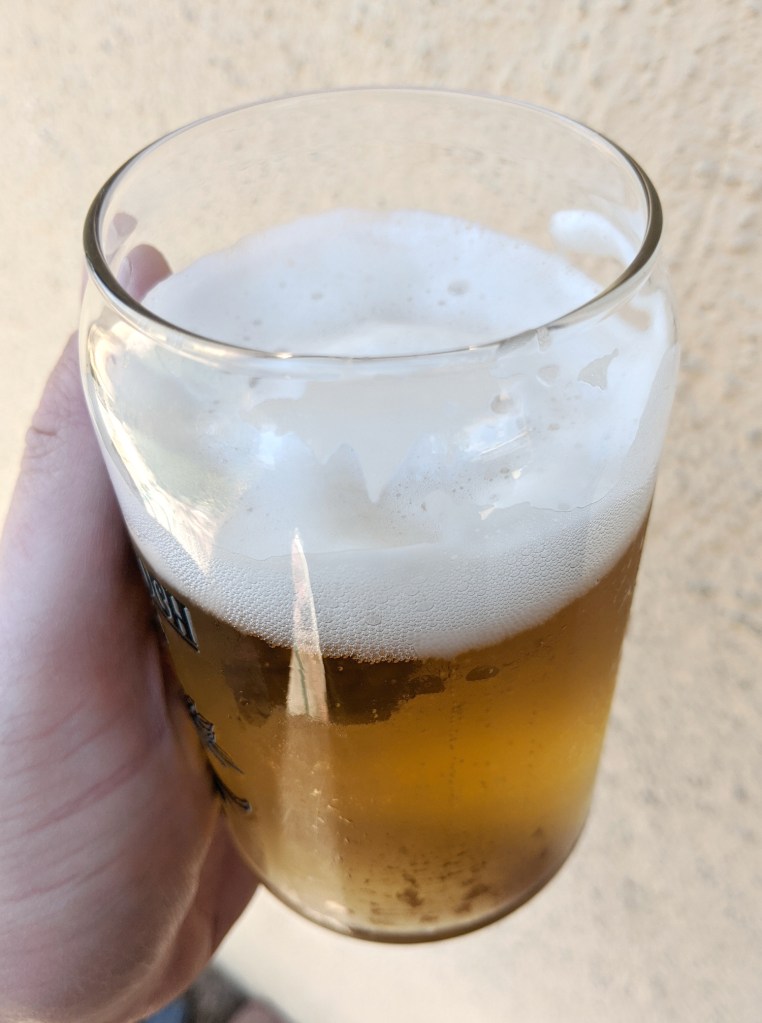
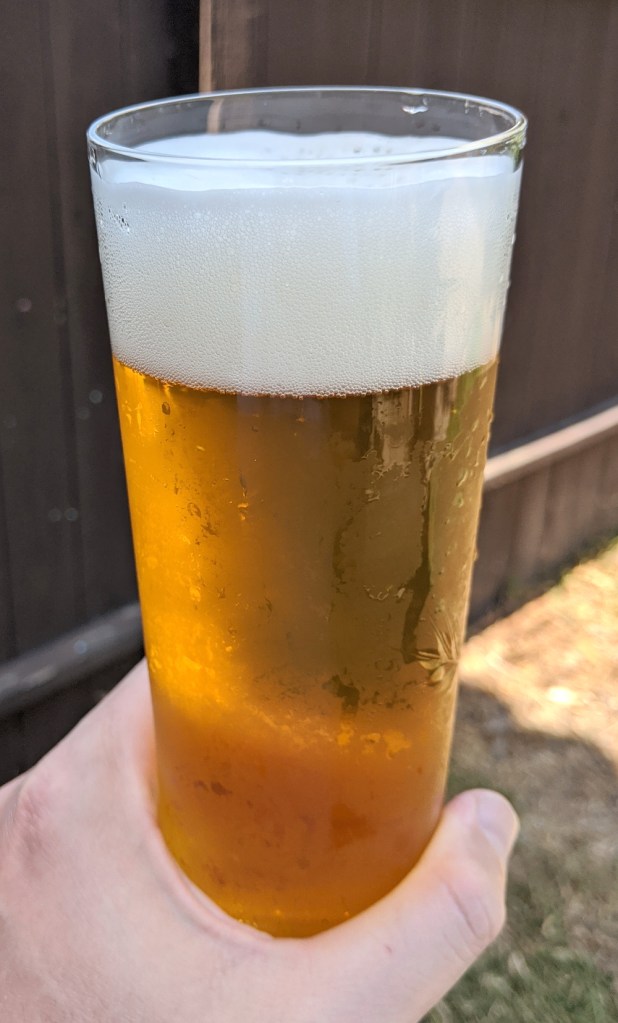
    • It has the color of burnished gold and is wonderfully clear, with a persistent and creamy white head that leaves slight lacing on the side of the glass.
  • Aroma
    • Moderate bready and slightly sweet malt aroma, with a hint of hop spice against that; very clean yeast character
  • Flavor
    • Moderately bitter, with a grainy/bready malt character that finishes with just a hint of malty sweetness and lingering bitterness; really nice!
  • Mouthfeel
    • Medium body, medium carbonation, very slightly dry on the finish but not overly so
  • Would I brew this again?
    • Absolutely! I really love this recipe, and love this style as a result. It’s a nice notch up from pilsner in terms of maltiness, without getting too heavy or too high in alcohol. I find the beer to drink really easily, too…maybe too easily. I see this as a recipe that I can play around with hop varieties and malt brands, but I really see no reason to make any substantial adjustments. The Pilsner/Vienna/Munich balance is pretty much spot-on!
  • Overall
    • 10/10

Alta California Lager 2020

Another go at my favorite beer of last year, Alta California Lager. I made a few minor adjustments for this iteration, to simplify brewing. Specifically, I used flaked corn (rather than a cereal mash with grits), and used the Imperial version of the Mexican lager yeast instead of White Labs’ version, due to availability at my local shop.

Alta California Lager 2020

  • 6.5 lb. Superior Pilsen Malt (Great Western)
  • 2 lb. flaked corn
  • 1.75 lb. Vienna Malt (Great Western)
  • 0.25 lb. rice hulls
  • 0.40 oz. Magnum hop pellets (13.2% alpha), 60 minute boil
  • 0.50 oz. Sterling hop pellets (7.4% alpha), 5 minute boil
  • 1 tsp. Fermax yeast nutrient, 10 minute boil
  • 1 Whirlfloc tablet, 5 minute boil
  • 1 tsp. Fermax
  • 1 pkg. Que Bueno liquid yeast (Imperial Yeast L09)

Target Parameters

  • 1.046 o.g., 1.009 f.g., 4.9% abv, 20 IBU, 3 SRM
  • Infusion mash, 149° for 60 minutes, batch sparge
  • Blend of Claremont tap water and RO water, to achieve calculated water profile of 19 Ca, 7 Mg, 46 Na, 15 SO4, 53 Cl, 102 HCO3. RA=66 ppm, alkalinity=84 ppm, effective hardness 18 ppm.

Procedure

  • I spooled up a 1.5L starter on 2 April 2020, and cold crashed it on the morning of 4 April.
  • My water was a mix of tap water (4.25 gallons) and RO water (4.5 gallons), to get 8.75 gallons total. Given the stay-at-home orders, I didn’t want to run out for more RO water.
  • I mashed in with 3.75 gallons of tap water and 5 mL of 88% lactic acid, to hit my 149° mash temperature. The mash was down to 143 after 75 minutes, so I added 1.5 gallons of hot tap water/RO water blend to bring up the temperature and prepare for collection of the runnings.
  • I added rice hulls just before first runnings were collected. Once the first runnings were in the kettle, I added 4 gallons of RO water, let sit for 10 minutes, vorlaufed, and collected the second runnings.
  • In total, I collected 7.25 gallons with a gravity of 1.042, for 80% efficiency.
  • I brought the kettle to a boil, adding hops and finings per the recipe.
  • After 60 minutes, I chilled, and transferred the wort to the fermenter. I let it chill the rest of the way overnight, down to 50°. I brewed the beer on 5 April 2020.
  • On the morning of 6 April 2020, I oxygenated with 45 seconds of pure O2, and pitched the yeast. I am fermenting at 51°. Starting gravity was 1.050.
  • I let the beer free-rise to 62° on 18 April 2020. On 25 April, I lowered the temperature to 52°, and then to 42° on 26 April, and 33° on 27 April.
  • I kegged the beer on 10 May 2020, after purging the target keg with CO2.
  • Final gravity was 1.008, for 5.5% abv.

Tasting

  • Appearance
    • Light yellow, slight chill haze for the first few weeks on tap, but otherwise clear. I finally achieved good clarity about a month after kegging–patience pays off! The beer pours with a nice dense head with excellent retention.
  • Aroma
    • Light spice hop note; malt has a slight graininess with a maize aroma too (not DMS!).
  • Flavor
    • Light grainy maltiness, slight maize character with that; distinct but not overpowering bitterness; this beer is definitely more tilted towards the bitter end than I expected, though. It’s not IPA levels, but I think I could notch the IBUs back about 10 percent. I wonder if I got higher utilization this time with the hops free floating rather than bagged. The finish tilts towards bitter.
  • Mouthfeel
    • Crisp, off-dry, moderately high carbonation.
  • Would I brew this again?
    • I’m going to tweak a bit more, and think I’ll go back to a cereal mash for the next version, and perhaps try the White Labs yeast again. I’ll also notch the hops back a touch, to reduce the bitterness for when I use free floating hops in the boil. It’s a pretty good beer, but the slight persistent haze was mildly disappointing, and the slight overbitterness could be fixed. That said, it’s pretty good with a lime slice!
  • Overall
    • 7.5/10

The Celtic Elk Stout 1.1

Nearly five years ago, I made an Irish stout that tasted great and did well in competition. I gave another go this year, seeking a dark beer with lots of flavor but not a lot of booziness. It was a success!

The recipe is basically the same as last time, just with some minor ingredient adjustments.

The Celtic Elk Stout 1.1

  • 6 lb. Maris Otter malt (Crisp)
  • 1.5 lb. flaked barley
  • 13.6 oz. crystal 75 malt (Great Western)
  • 12 oz. roasted barley (Briess)
  • 10 oz. chocolate malt (Briess)
  • 4 oz. crystal 10 malt (Briess)
  • 3 oz. Blackprinz malt (Briess)
  • 3 oz. Carafa Special III malt (Weyermann)
  • 3 oz. rice hulls
  • 0.65 oz. Warrior hop pellets (15.8% alpha), 60 minute boil
  • 1 Whirlfloc tablet, 5 minute boil
  • 1 pkg. Irish Ale Yeast (WLP004)

Target Parameters

  • 1.045 o.g., 1.014 f.g., 4.1% abv, 35 IBU, 39 SRM
  • Infusion mash, 156° for 60 minutes, batch sparge
  • Claremont tap water

Procedure

  • The night before brewing, I made a 0.75 L starter, and let it run on the stir plate.
  • I mashed in with 3.5 gallons of water at 168°, to hit a mash temperature of 156°.
  • After 60 minutes of mashing, I added 1.5 gallons of water at 185°, let sit for 10 minutes, vorlaufed, and collected the first runnings. Next, I added 3.75 gallons of water at 185°, let sit for 10 minutes, vorlaufed, and collected the second runnings.
  • In total, I collected 7.5 gallons of runnings with a gravity of 1.045, for 87% efficiency! This was way too high, so I removed 0.5 gallons of runnings and added 0.5 gallons of tap water, to hit 1.041. This was much better. I saved 2 cups of this to use in bread (and it made tasty bread!).
  • I brought the kettle to a boil, adding hops and finings per the schedule. After 60 minutes, I turned off the flame and chilled the wort.
  • Once the wort was down to around 75°, I transferred to the fermenter and chilled the rest of the way down to 66°. Finally, I pitched the yeast.
  • I brewed this beer on 18 April 2020. Starting gravity was 1.050.
  • I fermented the beer at 66°, and kegged the beer on 25 April 2020. To save some CO2 and try keg conditioning, I primed the keg with 2.1 oz. of corn sugar in boiling water.
  • Final gravity was 1.019, for 4.1% abv.

Tasting

  • Appearance
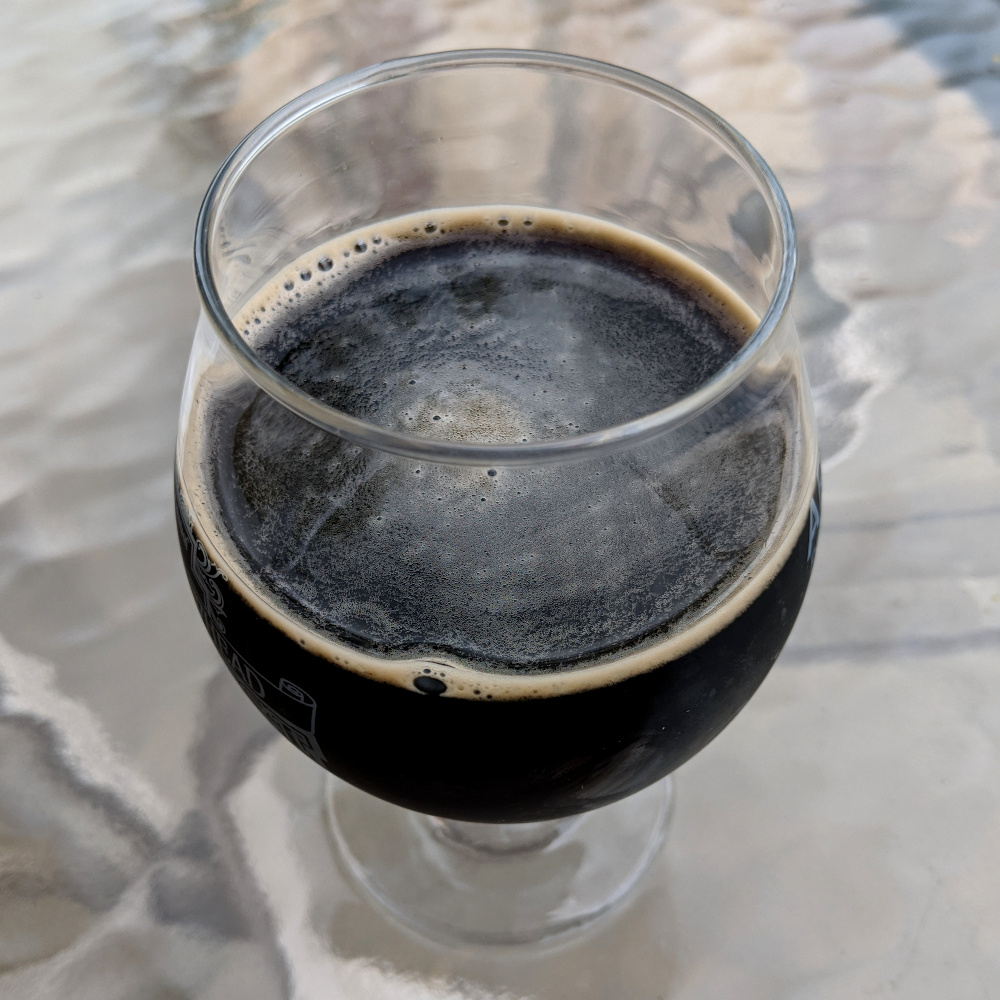
    • Dark! Black in the glass, and a deep, dark brown if you get a thin sliver of beer. Thin but persistent brown head.
  • Aroma
    • Rich aroma of chocolate with a touch of roasted coffee. There are hints of dried cherry behind that; I don’t think it’s esters (because the flavor of the beer is pretty clean in terms of yeast character), but a synergistic effect of the dark malts. I like it!
  • Flavor
    • Roasted coffee character at the outset, with a touch of dark chocolate behind that. There is a really nice coffee-type bitterness from the malt than creeps in alongside the hop bitterness. Hop bitterness is clean. The flavor is malt forward, with hops secondary, until the finish. There is an extended, slightly bitter (but not unpleasant) finish.
  • Mouthfeel
    • Dry, medium-light body, moderate carbonation.
  • Would I brew this again?
    • This is a great recipe, and a fine interpretation of the style. I think my modifications were okay overall, although I’ll replace the Carafa III with all debittered black malt next time, and use pale chocolate instead of regular chocolate malt, because the malt was just a little too much chocolate and not enough roast. As the beer matures, it has really come into its prime. I rushed it just a touch to get it on-tap, and so it had a hint of sweetness at first from the corn sugar used for priming (at least I think that’s what I was experiencing). That’s gone away now. This recipe produces a really quaffable beer, and the low alcohol level (4.1% abv) isn’t really a flavor/mouthfeel detriment thanks to the malt character.
  • Overall
    • 9/10

Humboldt’s Hefeweizen

It has been a loooooong time since I’ve brewed a German hefeweizen / weissbier. In fact, my records show that I’ve only done it once, over five years ago. That attempt was all-extract, and turned out reasonably well.

I’ve been thinking about this style because I wanted something that turns around quickly, has a ton of character, and is low alcohol enough to be enjoyed as a session beer on warm days. Plus, I’ve really been into German styles lately–what’s not to like?

The recipe more or less follows Gordon Strong’s weissbier recipe from the March/April 2020 issue of Brew Your Own magazine (recipe here, behind paywall). I liked its simplicity, and that it could be done fairly well with an infusion step mash. I added in a touch of melanoidin malt, to use up a lingering handful, and used up some extra wheat malt, too. The recipe called for a ferulic acid rest (to maximize clove character), and I was willing to give that a try in the interest of science.

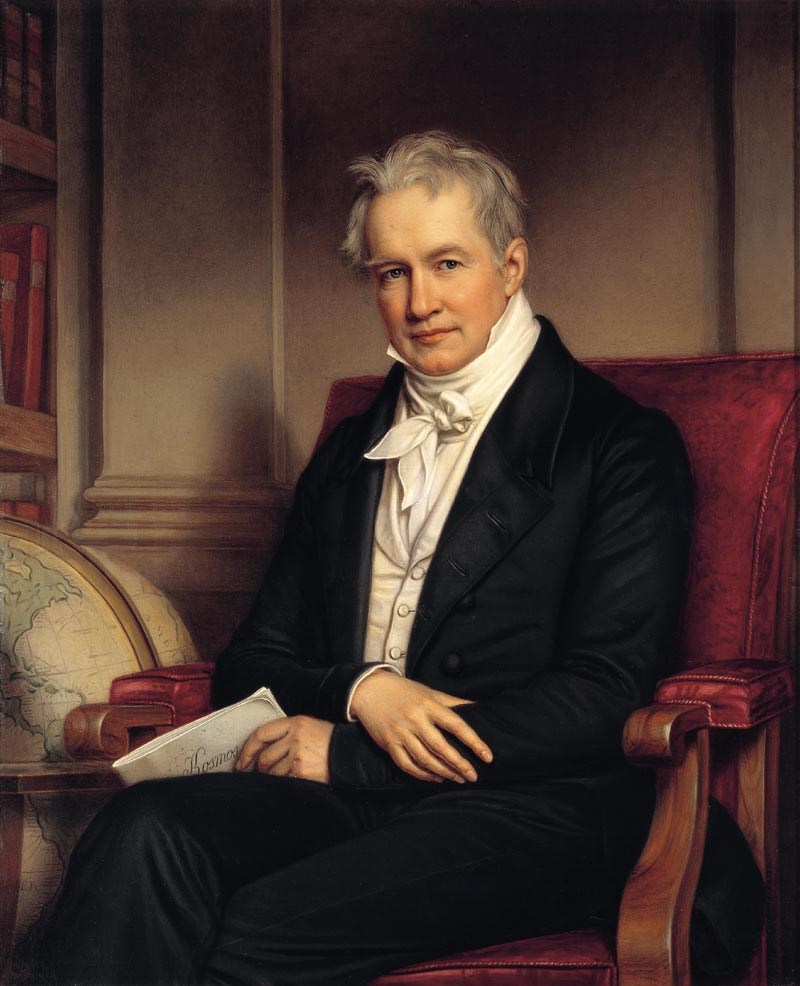
The name–Humboldt’s Hefeweizen–honors German scientist Alexander von Humboldt. I recently finished a biography about him (Andrea Wulf’s Invention of Nature–highly recommended!), and I was fascinated by his intellectual and cultural influence, as well as his incredible dedication to documenting knowledge. This dude has a ton of animals and plants bearing his name, bestowed by the scientific community. There’s a Humboldt Penguin, and a Humboldt Squid, and a Humboldt’s Sapphire Hummingbird. Why not a Humboldt’s Hefeweizen? I don’t know that he necessarily drank much of the stuff when he was alive, but he probably didn’t eat many penguins, either.

Humboldt’s Hefeweizen

  • 4.75 lb. Superior Pilsen Malt (Great Western)
  • 4 lb. white wheat malt (Briess)
  • 1.25 lb. white wheat malt (Great Western)
  • 1.6 oz. melanoidin malt (Weyermann)
  • 0.25 oz. Magnum hop pellets (13.2% alpha), 60 minute boil
  • 1 pkg. Hefeweizen Ale yeast (WLP300, White Labs)

Target Parameters

  • 1.047 o.g., 1.010 f.g., 4.9% abv, 11 IBU, 4 SRM
  • Infusion mash; 15 minute acid rest at 116°; 30 minute saccharification rest at 149°; 30 minute saccharification rest at 158°, batch sparge
  • Claremont tap water with mineral additions, to hit target water profile of 80 ppm Ca, 9 ppm Mg, 23 ppm Na, 58 ppm SO4, 50 ppm Cl, 220 ppm HCO3; RA=118 pm

Procedure

  • The night before brewing, I spooled up a 1.25L starter for the yeast.
  • On brew day, I mashed in with 2 gallons of water at 129°, to hit 119° for the acid rest. This is a touch higher than I wanted, but still within the acceptable parameters for an acid rest.
  • After 15 minutes, I added 1.6 gallons of water at 202°, to hit a 149° mash temperature. I added 4.5 mL of lactic acid at this time, and let it rest for 30 minutes.
  • Next, I added 1.6 gallons of water at 185°, to raise the mash temperature to 152°. I had been hoping for a little warmer (158°), but will settle for this. After 30 minutes, I collected the first runnings.
  • I added 3.6 gallons of water at 185°, let it rest for 10 minutes, and collected the second runnings.
  • In total, I collected 7.2 gallons of runnings with a gravity of 1.040, for 75% mash efficiency.
  • I brought the runnings to a boil, adding the hops per the schedule. After 60 minutes, I turned off the flame and began chilling.
  • I transferred the wort into the fermenter, and chilled it further in my fermentation chamber. Once I hit 62°, I pitched the yeast.
  • I brewed this beer on 26 April 2020, and kept the 62° temperature for the first four days of fermentation. I ramped up to 67° on 30 April.
  • On 3 May 2020, I brought the beer out to ambient temperature, which was around 72°, to finish out fermentation.
  • I kegged the beer on 5 May 2020, adding 3.61 oz. of corn sugar. This should hit a target carbonation volume of ~3.4 volumes. After a week, I hooked it up to the gas in my keezer, carbonating the last little bit in there.
  • Starting gravity was 1.045, and final gravity was 1.013, for 4.3% abv.
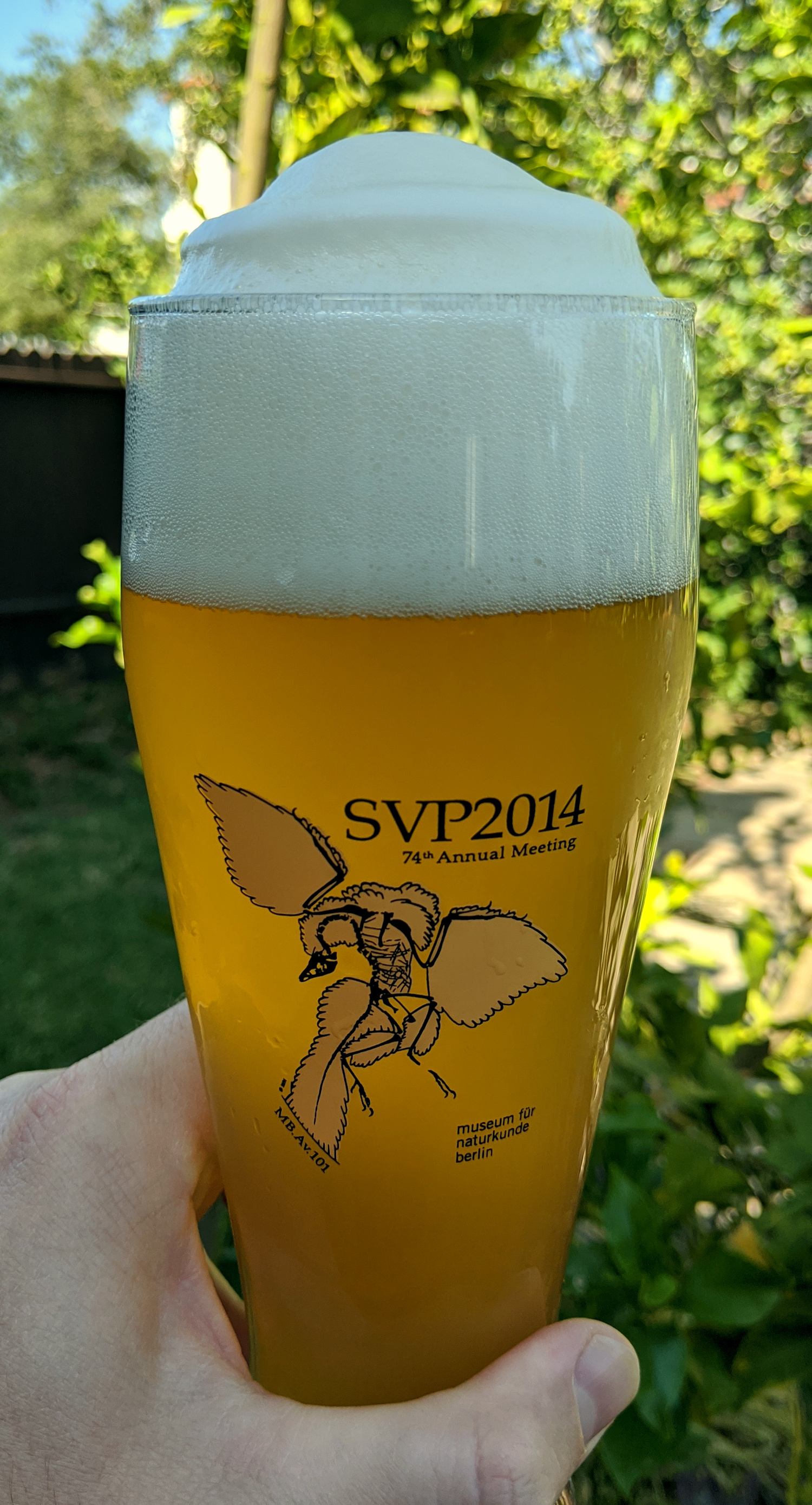
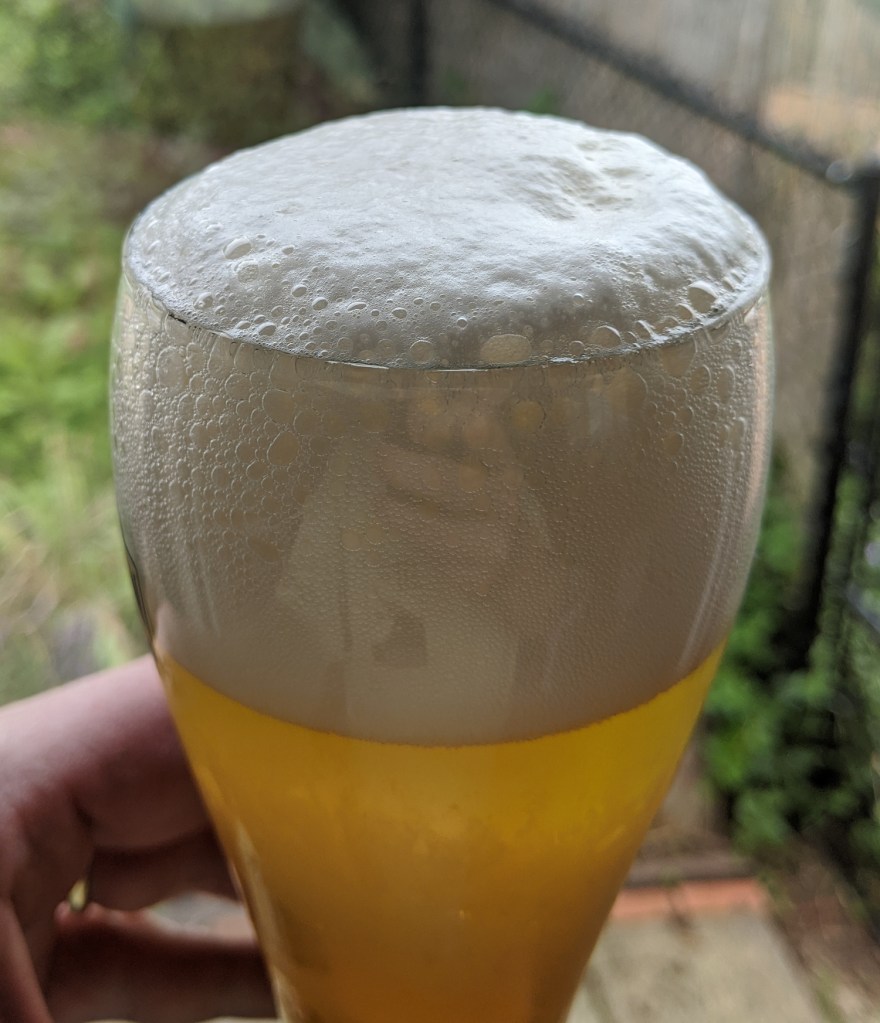
yellow beer with fluffy white head, in weizen glass with SVP2014 on front with picture of fossil Archaeopteryx, held by hand in green yard

Tasting

  • Appearance
    • Creamy white head, persistent; doesn’t always pour consistently tall, though (gotta work on the head factor). I seem to do better if I let the beer line rest for 10 minutes between pours, to let CO2 out of solution and encourage some foam. Very hazy light gold beer.
  • Aroma
    • Tart aroma, with light bubblegum and clove. (no banana) Lots of yeast character!
  • Flavor
    • Light and smooth, with very low, subtle hop flavor. Slightly tart, with a mild bite coming from high level of carbonation that offsets the malt. Moderate clove, slight banana, very slight bubblegum in the yeast character. Malt character is light and somewhat bready, with a residual sweetness.
  • Mouthfeel
    • Medium-light body, creamy on tongue, with high carbonation, very slightly dry finish.
  • Would I brew this again?
    • This is a really nice weissbier! I think the freshness, malt balance, and high carbonation come together pretty well. I like that I dodged the super-banana (sometimes to the level of stomach-churning) character of wheat beers fermented at higher temperatures, so there’s not much I would change on that end. The yeast character is pretty nice here, too. My one disappointment concerns the level of head; depending on my pour (and how long the beer has sat in the lines between pours, with a greater length of time encouraging more foam), I don’t get quite as tall of a head as consistently as I would like. I wonder if the low temperature initial mash rest had a detrimental effect in this regard (in terms of breaking down the relevant proteins just a bit too much). Or maybe it’s how I’m pouring? Or maybe I am expecting more head than is realistic in a typical setting? I might add in a touch of flaked wheat to address head character next time.
    • As a style, I’m definitely coming back to this one. It’s super flavorful, packing in a ton of character without a ton of alcohol. That’s perfect for enjoying on a summer afternoon!
  • Overall
    • 8.5/10

Schell’s Pils Clone 1.1

Last year, one of my favorite recipes was a clone of Schell’s Pils, a German-style pilsner from Minnesota using 2-row malt rather than pilsner malt. I decided to have another go at this recipe, but with a few minor modifications in the ingredients.

Schell’s Pils Clone 1.1

  • 11.5 lb. 2-row malt (Great Western)
  • 0.25 lb. Carapils malt (Briess)
  • 1 oz. Mt. Hood hop pellets (4.6% alpha), first wort hopping and 60 minute boil
  • 0.75 oz. Mt. Hood hop pellets (4.6% alpha), 60 minute boil
  • 0.75 oz. Mt. Hood hop pellets (4.6% alpha), 20 minute boil
  • 0.5 oz. Sterling hop pellets (7.4% alpha), 5 minute boil
  • 1 tsp. Fermax yeast nutrient, 10 minute boil
  • 1 Whirlfloc tablet, 5 minute boil
  • 1 repitch of German lager yeast (White Labs WLP830)

Target Parameters

  • 1.052 o.g., 1.011 f.g., 5.4% abv, 38 IBU, 4 SRM
  • 60 minute infusion mash, 152°, batch sparge
  • Water built up from RO, to hit target water profile of 59 ppm Ca, 8 ppm Mg, 89 ppm SO4, 63 ppm Cl; RA=-47ppm

Procedure

  • I built up my RO water with 1.86 g CaCl, 1.45 g gypsum, and 1.2 g Epsom salt in total with 8.5 gallons of RO water.
  • I mashed in with 4 gallons of water at 163.5°, to hit a mash temperature of around 152°. After 60 minutes, I added 1.1 gallons of water at ~185°, let sit for 10 minutes, vorlaufed, and collected the first runnings.
  • I next added ~3.6 gallons of water, let sit for 10 minutes, vorlaufed, and collected the second runnings.
  • In total, I collected 7.25 gallons of runnings with a graviy of 1.045, for 77% mash efficiency.
  • I brought the kettle to a boil, adding the hops, nutrient, and finings per the schedule.
  • After a 60 minute boil, I chilled the wort down to ~75°, and transferred to the fermenter.
  • I chilled the wort in my fermentation chamber down to 49°, oxygenated with 30 seconds of pure O2, and pitched a culture of yeast from a previous batch (my Crystal Pils, harvested about 6 weeks prior).
  • I fermented at 52°, for just under a month.
  • Starting gravity was 1.053, on 7 March 2020.
  • I didn’t change the temperature at all during the duration of fermentation, figuring that any lingering off-flavors would be cleaned up during this time.
  • I kegged the beer on 4 April 2020. Final gravity was 1.010, for 5.7% abv.

Tasting

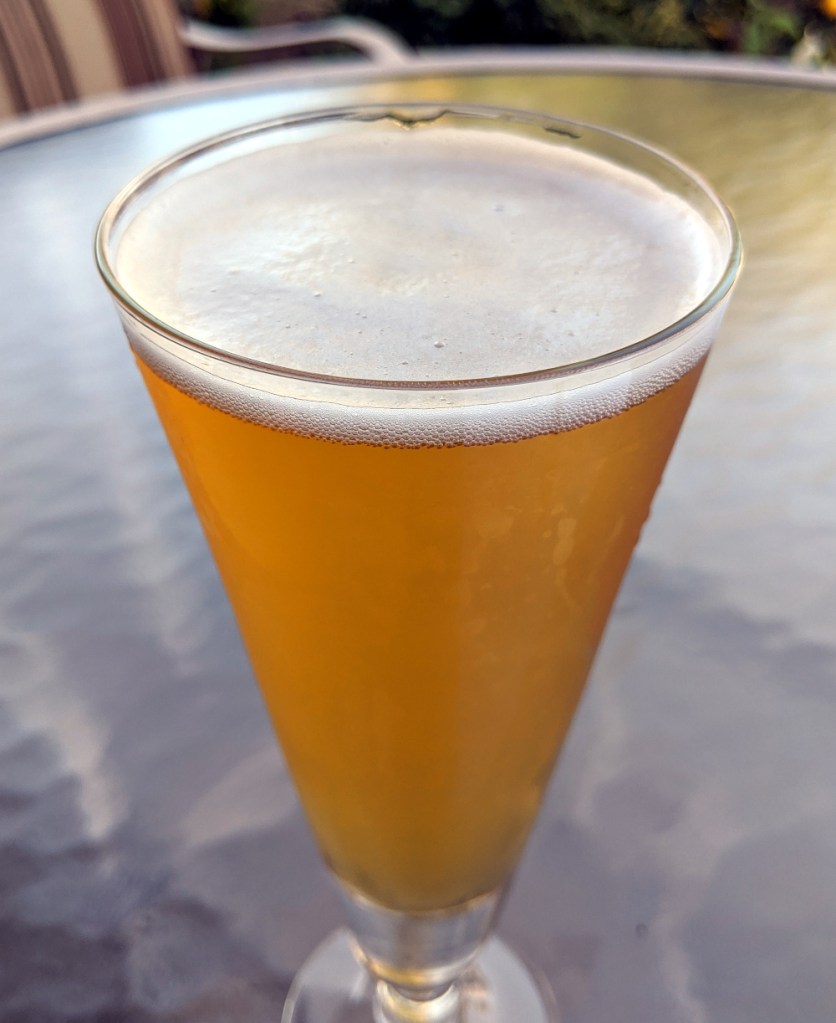
golden beer with white head in conical pilsner glass
  • Appearance
    • Thick white head, pretty persistent. It pours well, and sticks around, too. The beer itself is light yellow and pretty clear (but not quite brilliant).
  • Aroma
    • Lightly spicy hop character, slight grainy-sweet malt character.
  • Flavor
    • Definitely hop dominant, with an assertive hop presence that is on the tongue well after finishing the sip. Malt character is smooth and slightly doughy, but definitely in the background…almost too much so.
  • Mouthfeel
    • Off-dry, moderately high carbonation, with a lingering bitter finish.
  • Would I brew this again?
    • For my tastes, I liked the first batch much better. This version is still a pretty good German pils, but definitely a touch more bitter than I care for in this style. It just overwhelms the malt too much. I think I’ll go back to my hopping schedule from the previous version. The hop/malt balance was just better in that one. I’ll still keep the dry-hop out, though. I also wonder if changing from Rahr to Great Western for the malt made a difference?
  • Overall: 6.5/10