Mow the Damn Lawn, Farke

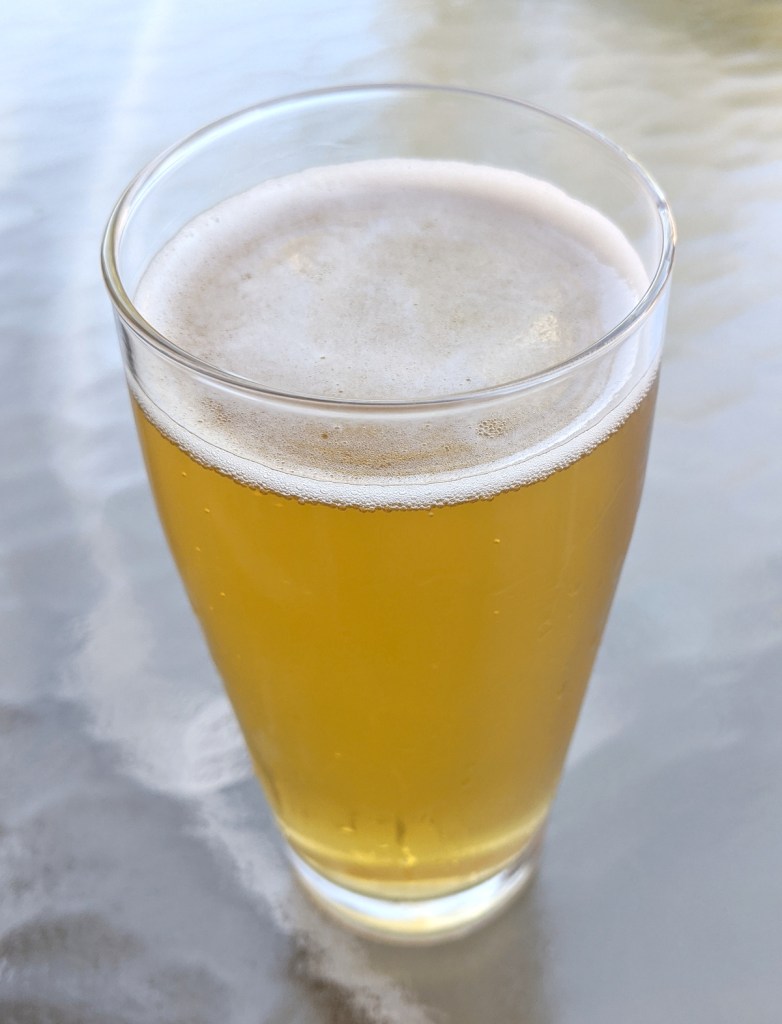
golden beer with frothy white head in clear glass, held by hand

This is probably one of the most memorable homebrew recipe names out there, at least for me. “Mow the Damn Lawn,” by Annie Johnson, took the gold medal at the 2013 National Homebrew Competition, and helped propel Johnson to 2013 Homebrewer of the Year. It’s intended to be a flavorful but highly drinkable “lawnmower beer,” and I’ve wanted to brew it for some time now! And what better time to do so than a SoCal summer?

The original recipe is posted at the Homebrewers Association website, and I made a few minor modifications for ingredients on-hand. I left the basic malt bill unchanged, with ~80% 2-row and ~20% flaked rice. I subbed in Mt. Hood as an American version of Hallertauer, and used a re-pitch of Que Bueno Imperial Yeast L09 instead of an American lager yeast (WLP840). So, it’s not exactly the same beer, but I think it’s certainly close to the spirit of the recipe. I’ve thus augmented the recipe name slightly, to emphasize that any flaws are mine and not the original recipe designer’s.

Mow The Damn Lawn, Farke

  • 8.5 lb. 2-row premium malt (Great Western)
  • 2 lb. flaked rice
  • 2 oz. rice hulls
  • 1 oz. Mt. Hood hop pellets (4.6% alpha), 60 minute boil
  • 1 tsp. Fermax yeast nutrient, 10 minute boil
  • 1 Whirlfloc tablet, 5 minute boil
  • 1 repitch of Que Bueno yeast (Imperial Yeast #L09)

Target Parameters

  • 1.046 o.g., 1.008 f.g., 15 IBU, 3 SRM, 5.0% abv
  • 148° infusion mash, 60 minutes, batch sparge
  • Claremont tap water, alkalinity neutralized by 88% lactic acid, with CaCl added to the boil, to produce final profile of 54 Ca, 17 Mg, 7 Na, 50 SO4, 118 Cl, 25 HCO3, 49 hardness, -49 RA

Procedure

  • To 9 gallons of local tap water, I added 8 mL of 88% lactic acid and 1/2 Campden tablet. This knocked total alkalinity down to 25 ppm, based upon a quick water test.
  • I heated 3.75 gallons of water to 157°, and mashed into hit a target temperature of 149°. I added 2.5 mL of 88% lactic acid, to adjust pH.
  • After 60 minutes, I added 1.4 gallons of water at 185°, let it sit for 10 minutes, vorlaufed, and collected the first runnings.
  • Next, I added 3.75 gallons of water at ~185°, let sit for 10 minutes, vorlaufed, and collected the rest of the runnings.
  • In total, I collected 7.65 gallons of runnings with a gravity of 1.039, for 79% efficiency.
  • I brought the runnings to a boil, adding hops and finings per the schedule.
  • After 60 minutes, I turned off the heat, chilled, transferred to the fermenter, and chilled the rest of the way, down to ~48°.
  • Once the beer was chilled, I oxygenated with pure O2 for 30 seconds and pitched the yeast.
  • I brewed this beer on 20 June 2020, and fermented at 49° for the first 5 days. There was fermentation activity visible within 12 hours, and really vigorous activity during the first few days.
  • I notched the fermentation chamber up to 50° on 25 June 2020, and let it free rise to 54° on July 1. I let it rise to 58° on July 3, and then 60° on July 4. Over several days, I dropped to 55° (July 5), 50° (July 6), 45° and then 40° (July 7), 35° (July 8), and 33° on July 9.
  • I kegged the beer on 17 July 2020; it was still pretty hazy at this point. Final gravity was 1.010, for 4.7% abv. I conditioned at 33° for a few weeks, before putting the beer on tap.

Tasting

  • Appearance
    • Nearly brilliantly clear, medium yellow in color, with a tall, creamy, and persistent white head. The head on this is seriously amazing–almost too amazing, because it takes a bit to pour a full glass of this stuff.
  • Aroma
    • Fresh, grainy aroma, with just a little bit of spicy hop note behind that. Very clean yeast character.
  • Flavor
    • Malty sweet flavor at the forefront, with a wonderfully rounded malt profile. The hop level is fairly even against the malt, and the hop level is just bitter enough to keep the beer from being overly sweet. The finish has a subtle bitterness to it, without being too much.
  • Mouthfeel
    • Medium-light body, moderate carbonation. Crisp finish without being too dry. Carbonation could be a bit higher for the style, but it does lose a little bit when poured .
  • Would I brew this again?
    • Yes! This is a very flavorful light lager, that is incredibly easy to drink. This accolades for this recipe are indeed deserved. The only thing I might change, and this is a bit of a personal preference, would be to dial back the 2-row to both lighten the flavor a touch more and also reduce the alcohol level. I really would like this as a sub-4.5% beer. It would be interesting to try this with W34/70 or the American lager yeast in the original recipe, which I suspect would dial back the malt character a touch versus the Mexican lager yeast that I used here.
  • Overall
    • 9/10

Raspberry Belgian 2020

I’ve brewed this beer at least three or four times, and I keep coming back to it as one of my very favorite recipes. It’s crisp, it’s low alcohol, it’s flavorful, and it’s well out of my usual brewing styles. I wouldn’t want this year-round, but it sure is a nice treat every once in awhile!

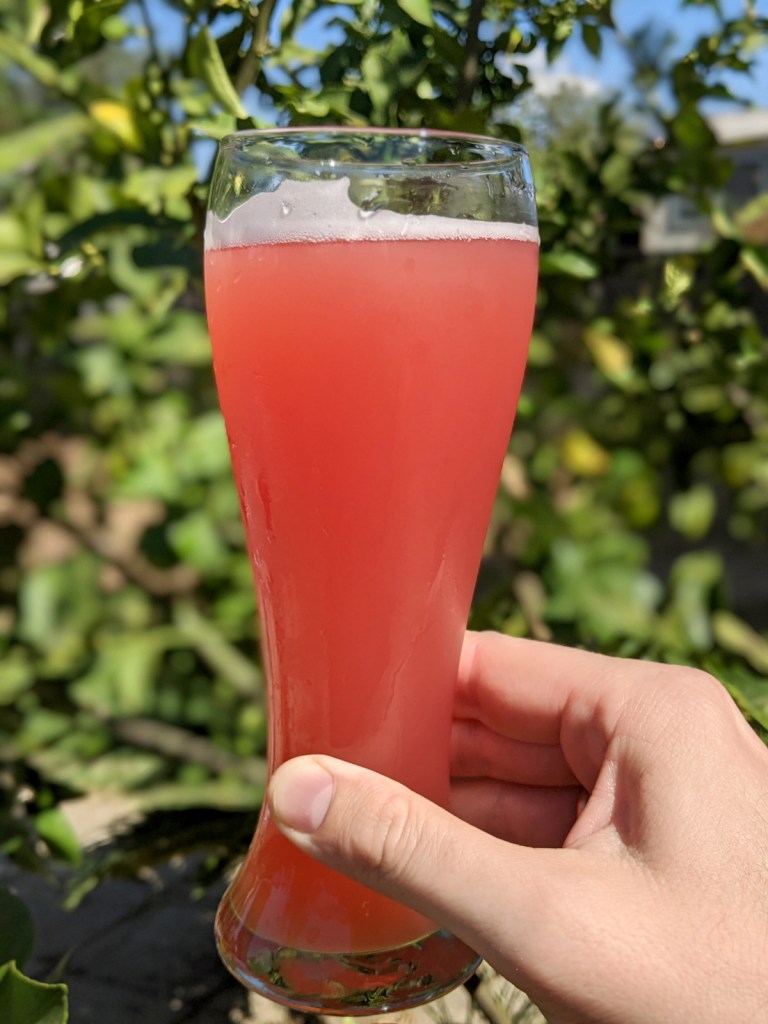
deep pink beer in Belgian wit glass, held aloft against green tree leaves

My personal take on this recipe–which started out as a clone of Funkwerks Raspberry Provincial–has evolved since I first brewed it in 2017. Every batch is a bit different, especially in the souring strain and the type of raspberry puree added. It never fails to be a great beer.

Raspberry Belgian 2020

  • 4.75 lb. pilsner malt (Weyermann)
  • 2.5 lb. pale wheat malt (Weyermann)
  • 1.75 lb. acidulated malt (BestMalz)
  • 0.5 lb. Carapils malt
  • 0.5 lb. flaked oats
  • 0.5 lb. flaked wheat
  • 6 oz. rice hulls
  • 0.35 oz. Magnum hop pellets (13.2% alpha), 60 minute boil
  • 0.5 pkg. (~5 g) of Wildbrew Sour Pitch (Lallemand)
  • 1 pkg. Whiteout Belgian Wit Yeast (Imperial #B44)
  • 36 oz. raspberry puree

Target Parameters

  • 1.048 o.g., 1.013 f.g., 15 IBU, 3 SRM, 4.5% abv
  • 155° full-volume mash, 60 minutes
  • Overnight kettle sour
  • Claremont tap water, no adjustment

Procedure

  • I mashed in with ~8.5 gallons of water at 160°, to hit a 155° mash temperature target. After 60 minutes, I vorlaufed and collected the full volume of runnings.
  • In total, I collected 6.7 gallons of runnings with a gravity of 1.033. This was way below my target (and only 57% mash efficiency), so I added 0.75 lb. of extra light DME to bring the gravity up to 1.038.
  • I boiled the runnings for 10 minutes and then chilled to 115°. I added 1 tbs. of 88% lactic acid, to bring the pH down to ~4.4.
  • Once the kettle temp was down to 105°, I added 5 g of the Wildbrew Sour Pitch, stirred gently, and left it on a heating pad in a warm garage.
  • I started the souring process at around 10:30 am on 18 July 2020, and it was down to ~3.35 by the next morning. The sour level was right where I wanted it, when I sampled a little.
  • I boiled the beer for an hour, adding hops per the schedule as well as some yeast nutrient.
  • I chilled the wort and put it into my fermenter, bringing the temperature down the rest of the way in my fermentation chamber. I pitched the yeast, and let it ferment at 66°. The starting gravity was 1.046.
  • I pitched the yeast on 19 July 2020, and added fruit puree on 23 July 2020.
    • To make the puree, I took frozen raspberries (purchased fresh a few weeks prior, sorted, and frozen) and thawed them out. I had 72 ounces by mass, which was around 130 ounces by volume of whole raspberries. 12 ounces by weight should make around 6 ounces of puree by volume, so I ended up with around 36 ounces (a quart) of puree. To make the puree, I heated the raspberries in a double boiler, mashing them up. I heated the mixture to between 150° and 170°, with the bowl sitting in near-boiling water. I let it sit for 15 minutes and then chilled in an ice bath, before adding the puree to the fermenter.
  • I kegged the beer on 1 August 2020. Final gravity at that time was 1.020, for 3.3% abv; I wonder if the yeast hadn’t completely fermented out? I usually agitate the fermenter when I’m using the various Belgian wit strains, because they do tend to stall out without babysitting. Oh well…I figure that any final fermentation will hopefully wrap up in the keg.
  • I added 3.2 oz. of corn sugar boiled for ~2 minutes in 1 cup of water, and then sealed up the keg (adding a touch of pressure to make sure the lid was seated).
  • Carbonation level maxed out at around 24 psi at 72°, which is not terribly great as a level of carbonation for this style. That’s only 2.2 or so volumes of CO2, and I was aiming for 3.0 at least. I used my CO2 talk to top things up.
  • On 9 August 2020 (the same day as the tasting), I decarbonated a sample and measured gravity with both hydrometer and refractometer, getting a final gravity of 1.017. This works out to ~3.8% abv, and if I were to guess, around 4% abv when you factor in the sugars from the raspberry.

Tasting

deep pink beer in Belgian wit glass
  • Appearance
    • Right now (second day on tap for the keg), this beer has a gorgeous deep pink color, with a prominent haze. It pours with a frothy white head that subsides to a relatively continuous thin blanket.
  • Aroma
    • This beer smells like fresh raspberry. I get maybe a little bit of the citrusy Belgian wit yeast character behind that, but the raspberry is front and center here.
  • Flavor
    • What else? Raspberry! More seriously, the beer has a pleasant (but not over-the-top) tartness, with a berry and citrus character. The malt is pretty subdued, and largely overwhelmed by the fruit and sour notes. But, raspberry definitely dominates.
  • Mouthfeel
    • Crisp and light bodied, with a nice smooth finish. Carbonation is high, which gives a pleasant and spritzy character to the beer, but the heavy amount of suspended yeast and the malt bill keep it from being too thin.
  • Would I brew this again?
    • This is one of my very favorite summer beer recipes. It has evolved considerably from the original clone recipe, and it has further evolved from my initial few attempts. It’s such an interesting beer, and is a good reward for the above-average amount of effort and above-average ingredient cost. The only minor change I might make would be to ditch the acidulated malt–it’s a holdover from the original recipe, which used this malt alone to get the desired sour character.
  • Overall
    • 9/10

Melange Amber Ale

This was another quick kitchen-sink recipe to finish up some stray ingredients, with the side benefit of putting a tasty brew on tap. It’s interesting how amber ales really aren’t that common anymore in craft beer, given how prevalent they were 20 years ago. In a quick search of local breweries, I didn’t find a single example in their offerings! That’s part of why I homebrew, I suppose.

(As a historical note, the very first amber ale I did as a solo homebrewer was in December 2009. On average, I have brewed roughly one batch a year since.)

Melange Amber Ale

  • 8.25 lb. 2-row malt (Great Western)
  • 1.75 lb. Munich I malt (Weyermann)
  • 1 lb 2.4 oz. Crystal 75 malt (Great Western)
  • 0.5 lb. Crystal 60 malt (Great Western)
  • 1 oz. Carafa Special III malt (Weyermann)
  • 1 oz. Cascade whole hops (5.5% alpha), 60 minute boil
  • 1 oz. Cascade whole hops (5.5% alpha), 15 minute boil
  • 2 oz. Cascade whole hops (5.5% alpha), 5 minute boil
  • 1 Whirlfloc tablet, 5 minute boil
  • 1 pkg. Safale American Ale yeast (US-05)

Target Parameters

  • 60 minute infusion mash, 152°, batch sparge
  • 1.052 o.g., 1.011 f.g., 31 IBU, 15 SRM, 5.4% abv
  • Claremont tap water

Procedure

  • I mashed in with 4 gallons of water at 162°, to hit a mash temperature of 152°. I added 2.5 mL of 88% lactic acid, to adjust the pH.
  • After 45 minutes of mashing, I added 1.25 gallons of water at 190°, to raise the mash temperature to 158°. I let it rest for another 15 minutes, before collecting first runnings.
  • Next, I added 3.75 gallons at ~185°, let rest for 10 minutes, and collected the second runnings.
  • In total, I collected 7.2 gallons with a gravity of 1.045, for 76% mash efficiency. This was exactly where I wanted to be!
  • I boiled for 60 minutes, adding hops and finings per the recipe. After 60 minute, I chilled down to 78 °, and chilled another 10° in my fermentation chamber, pitching the yeast ~8 hours later.
  • Starting gravity was 1.051, with 5.75 gallons into the fermenter. I brewed the beer on 13 June 2020, and fermented it at 66°.
  • After about a week, I pulled the beer out to finish at ambient (~75°), in order to free up room in the fermentation chamber.
  • I kegged the beer on 23 June 2020; it had a final gravity of 1.013, for 5.0% abv. I added 2.5 oz. corn sugar in 1 cup of water for priming and sealed it up to carbonate.
  • When I tried the beer after ~2 weeks, carbonation seemed a bit low, so I finished carbonation using my CO2 tank. I am beginning to wonder how reliable the BeerSmith carbonation calculator is for kegged batches, because I’ve had this as a perpetual problem.

Tasting

  • Appearance
    • The beer is a gorgeous deep amber color, and fairly clear, with only a touch of haze at this point (~2 weeks at serving temperature of below). It pours with a thick ivory head, that thins to a persistent rim around the glass.
  • Aroma
    • Crisp, caramel aroma that’s really pleasant and distinctive, with a background of woody hop aroma. Very, very nice!
  • Flavor
    • Malt forward, with a bready richness backed up by a touch of caramel. Bitterness is moderate, but not quite enough to keep the malt from becoming too cloying. I think it has just a touch too much caramel malt, and so it’s on that edge of too sweet. After a sip, though, the hops and malt really nicely balance each other out as it lingers on the palate.
  • Mouthfeel
    • Medium-full body, medium carbonation. Smooth finish, that’s not too dry.
  • Would I brew this again?
    • This is a good enough beer, but as mentioned above it has a bit too much caramel on the flavor. Crystal malt makes up 15% of the malt bill, and I would probably ratchet it back a touch (probably on the crystal 75) to bring it a little more into a balance I like. I think this would drink a little better in the late fall / winter, when a fuller, maltier beer is more welcome than during a warm summer afternoon! So, it’s not an awful beer, but not the best amber ale I’ve done.
  • Overall
    • 6/10

Kölsch Minimus

I keep coming back to the kölsch style, iterating through various grain bills and yeast choices. My past attempts (here [with process notes], here, and here) have been pretty good, but not quite on the mark of what I’m looking for.

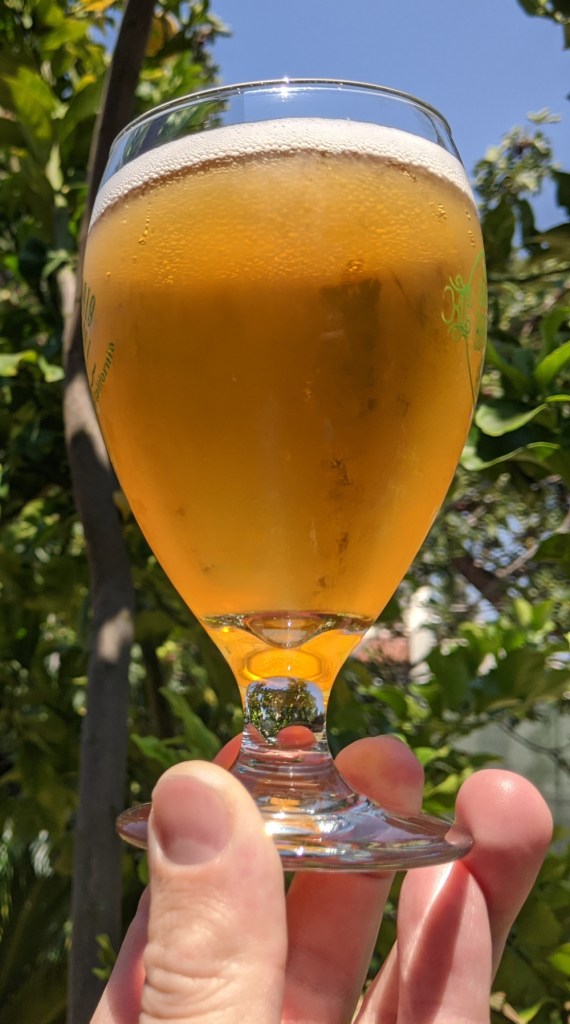
pale gold beer with thin white head in clear glass, sitting on glass patio table

My recipes have evolved considerably over three attempts. The first version (Vitamin K Kölsch Clone), brewed way back in 2015, was a fairly typical American brewpub version, with a measure of wheat malt. My next version, Kölsch Simple, used a Kolsch base malt from Schill Malting, but ended up a bit darker and maltier than typical for the style. My most recent attempt, Kölschy Kölsch, was closer to the mark but still a bit stronger on the malt character than I wanted.

So here we are at kölsch attempt number four! I wanted something quite drinkable, with an abv on the lower end of things, and a simple malt character. Kölsch Minimus is the result! My recipe philosophy was to go with a majority (95%) pilsner malt, and then a touch of Munich I (5%) to add a teeny bit of character. Hops were all American equivalents of German hops, and I used a dry yeast (K-97) for fermentation.

Kölsch Minimus

  • 9.5 lb. pilsner malt (Weyermann)
  • 0.5 lb. Munich I malt (Weyermann)
  • 0.8 oz. Sterling hop pellets (7.4% alpha), 60 minute boil
  • 1 tsp. Fermax, 10 minute boil
  • 1 Whirlfloc tablet, 5 minute boil
  • 0.2 oz. Sterling hop pellets (7.4% alpha), 5 minute boil
  • 1 pkg. SafAle German Ale yeast (K-97)

Target Parameters

  • 60 minute infusion mash, 152°, batch sparge
  • 1.046 o.g., 1.012 f.g., 4.5% abv, 21 IBU, 3 SRM
  • Claremont tap water adjusted to hit hit 52 ppm Ca, 2 ppm Mg, 26 ppm Na, 40 ppm SO4, 94 ppm Cl, 24 ppm HCO3, -19 ppm RA, 20 ppm alkalinity

Procedure

  • The night before brewing, I prepared my water by adding 7.5 mL 88% lactic acid and 1/2 Campden tablet to 9 gallons of tap water. The lactic acid knocked out the carbonates, to bring the hardness of the water down.
  • I mashed in with 3.5 gallons of water at 163°, to hit a mash temperature of 152°. After 60 minutes, I added 1.5 gallons of water at 185°, let sit 10 minutes, vorlaufed, and collected the first runnings. I then added another 3.75 gallons of water at 185°, let sit 10 minutes, vorlaufed, and collected the second runnings.
  • In total, I collected 7.2 gallons of runnings with a gravity of 1.041, for 77% mash efficiency.
  • I boiled the wort for 60 minutes, adding hops and finings per the recipe.
  • After the boil, I chilled the wort down to 74°, transferred it to the fermenter, pitched the yeast, and chilled the beer the rest of the way down to 64° in the fermentation chamber.
  • I brewed the beer on 7 June 2020, with a starting gravity of 1.048.
  • I kept fermentation temperature at 64° for six days (until 13 June 2020), when I moved the fermenter to ambient in order to make room for another beer in the fermentation chamber. By this point, bubbling through the airlock had largely ceased.
  • I kegged the beer on 22 June 2020, transferring into a CO2-purged keg. The fermenter had a slight whiff of sulfur when opened; it wasn’t overpowering, and was subtle enough to be pleasant against my taste of the uncarbonated beer.
  • Final gravity was 1.009, for 5.1% abv.

Tasting

  • Aroma
    • Subtle malt aroma with a slightly grainy character; I don’t pick up any fruitiness from the yeast, but there is a very subtle sulfury character that is quite pleasant against the malt. No noticeable hop aroma.
  • Appearance
    • Pale gold, slight haze; white head that thins out shortly after pouring but is reasonably persistent
  • Flavor
    • Soft, highly drinkable beer, with a pleasantly understated grainy/sweet malt character. Bitterness is moderate against the malt, and quite smooth. Hop flavor is low, with a spicy quality (as expected with these hops). I get very little in the way of yeast character.
  • Mouthfeel
    • Medium-light body, moderate carbonation, crisp finish.
  • Would I brew this again?
    • This is probably the best kölsch-style ale I have brewed to date. The malt character is exactly where I want it, and the hops are pretty much perfect too. I’m pleased with how the yeast performed here. The only minor flaw is in the clarity of the beer–I am simply too lazy to fine this batch, and I was a bit worried about oxidation if I opened up the keg. I suspect it will clarify a little more with extended time in the keg, although this is likely at the risk of flavor degradation.
  • Overall
    • 8.5/10

Adalatherium Pale Ale

This is another kitchen sink beer, clearing out some malt and hops. In terms of overall goals, I aimed for a session beer with a bit of malt character, and hops that were present but not overpowering. The recipe is a mix of English and American ingredients, with Windsor yeast and citrusy American hops. I did a “Short and Shoddy” approach (ala Brulosophy), with a 30 minute full volume mash and 30 minute boil.

The name honors the recently named Adalatherium–an unusual mammal that lived in Madagascar around 70 million years ago. The skeleton used to sit across the hall from my office in grad school, and I spent more than a bit of time in the original field area as a student. In Malagasy, “adala” means “crazy”, and that also seemed to match up with the scattershot blend of ingredients here.

Adalatherium Pale Ale

  • 6.75 lb. Maris Otter malt (Crisp)
  • 2.75 lb. Superior Pilsen malt (Great Western)
  • 0.5 lb. Vienna malt (Great Western)
  • 0.5 lb. crystal 40 2-row (Great Western)
  • 0.85 oz. Warrior hop pellets (15.8% alpha), 30 minute boil
  • 1 Whirlfloc tablet, 5 minute boil
  • 0.5 oz. Simcoe hop pellets (13.6% alpha), 5 minute whirlpool
  • 2 pkg. Windsor yeast (Lallemand)
  • 1 oz. Citra hop pellets (12% alpha), dry hop in keg
  • 1 oz. Mosaic hop pellets (10.9% alpha), dry hop in keg

Target Parameters

  • 1.048 o.g., 1.013 f.g., 4.5% abv, 36 IBU, 7 SRM
  • Infusion mash, 156° for 30 minutes, full volume
  • Claremont tap water adjusted with lactic acid and mineral additions, to achieve calculated water profile of 56 ppm Ca, 24 ppm Mg, 94 ppm Na, 107 ppm sulfate, 110 ppm Cl, 210 ppm bicarbonate, 172 ppm Alkalinity

Procedure

  • I mashed in with 8 gallons of unadjusted tap water at 161° and 0.5 tbs. of 88% lactic acid, to hit a mash temperature of 155°. After 30 minutes, it was down to 154°.
  • I vorlaufed, and collected the runnings, with 6.6 gallons into the kettle and a gravity of 1.046, for 77% efficiency.
  • As I brought the runnings to a boil, I added 3 g of epsom salt and 2 g of gypsum.
  • I boiled for 30 minutes, adding hops and finings as in the recipe.
  • At the end of the boil, I added the Simcoe hops and whirlpooled for 5 minutes, before chilling.
  • I chilled down to 75° or so, and transferred to the fermenter (with aeration). Once the fermenter was down to 66°, I pitched the yeast.
  • Starting gravity was 1.052. I brewed this beer on 3 May 2020.
  • After 6 days at 66°, I pulled out the fermenter and let it finish at ambient temperature.
  • I kegged the beer on 30 May 2020, adding the dry hops in a baggie and 3 oz. of corn sugar (in a cup of boiling water). I sealed the keg, added a bit of CO2, and let it condition at room temperature for 2 weeks.
  • Final gravity was 1.013, down from 1.052, for 5.1% abv.

Tasting

  • Appearance
    • Medium gold in color; after about 2 weeks on tap, it has dropped clear. The head is off-white and modestly persistent.
  • Aroma
    • Plenty of yeast character, with some definite pear ester alongside the hop aroma. The hops have a bit of tropical fruit character.
  • Flavor
    • Hop bitterness is moderately high, but well balanced against the malt. The malt comes through with a bit of biscuity flavor, which is pretty nice. I get a lot of the pear-like yeast esters, which almost swamp out the citrus note on the hops.
  • Mouthfeel
    • Medium body, smooth finish without being biting. Moderate carbonation.
  • Would I brew this again?
    • If I did, I would steer clear of Windsor, and use US-05 or a similarly clean yeast. The yeast character on Windsor is interesting, but the esters clash with the citrusy, tropical notes on the hops. The malt bill is good, and I think makes a nice base otherwise. I would try this recipe pretty close to what it is, just with different yeast. I’m also disappointed by how Windsor clears, or doesn’t clear. It was a hazy mess when first on tap, and took two weeks to really clear up. I expected a bit more to drop out in the fermenter, and that just didn’t happen. The esters are super interesting, and I might poke at them for some other recipes, but as a whole I think I prefer Nottingham for my English ale needs.
  • Overall
    • 5.5/10