The Celtic Elk Stout

Dark grains set aside to add during vorlauf

As we inch closer to the dark days of winter, I’m in a mood for some good, robust beers. Robust for me usually doesn’t require high alcohol content (although it can)–I think of it more as something with a strong malt backbone, prominent flavors from specialty grains, and perhaps some nice yeast character. Following on the heels of last weekend’s 80 shilling ale, tonight I brewed an Irish stout.

The recipe is based on Gordon Strong’s recipe from Modern Homebrew Recipes, with some modifications for the grains and hops I had on hand. My goal with this batch is to get a robust beer, but one that clocks in lower on the alcohol side of things (in this case, 4.3%). The beer is actually a bit outside the 2015 BJCP guidelines for the Irish Stout style, in terms of original gravity and color. The latter point surprised me–the BJCP lists 40 SRM as the maximum for this style, and to me it seems a little silly to set an arbitrary maximum for a beer explicitly described as “black” in the style guidelines.

The name for the batch stems from the famed Irish Elk, Megaloceras. Because why not?

The Celtic Elk Stout

  • 6.5 lbs. Maris Otter malt (Thomas Fawcett)
  • 1.25 lbs. flaked barley
  • 0.25 lbs. Carapils malt
  • 0.75 lbs. 80° crystal malt (added at vorlauf)
  • 0.67 lbs. roasted barley (Simpsons, 550 SRM, added at vorlauf)
  • 0.5 lbs. pale chocolate malt (225 SRM, added at vorlauf)
  • 0.375 lbs de-bittered black malt (Dingemans, added at vorlauf)
  • 1 oz. Newport hops pellets, 40 minute boil (10.7% alpha, 6.4% beta)
  • 1 Whirlfloc pellet (10 minute boil)
  • 1 pkg. Irish Ale Yeast (WLP004), prepared 12 hours in advance in 1 L starter
Procedure
  • I mashed in with the Maris Otter, flaked barley, and Carapils, using 4.1 gallons of water at 168°. The mash stabilized at 157°, and was down to 153.5° after 40 minutes. [note: I did not use 5.2 pH stabilizer in this batch]
  • I added the dark grains (cystal malt, roasted barley, chocolate malt, and black malt) along with 0.75 gallons of water at 160°, let the mash sit for 10 minutes, vorlaufed, and collected 3 gallons of wort.
  • I then added 4 gallons of water at 180°, which raised the mash temperature to 164°. I let the mash sit for 10 minutes, vorlaufed, and collected the rest of the wort.
  • All told, I collected 6.75 gallons of wort at a gravity of 1.040. This works out to ~73% efficiency, right where I had been hoping.
  • I brought the wort to a boil, and added the hops and Whirlfloc at the appropriate times (aiming for 40 minute boil and 10 minute boil, respectively). After 60 minutes of boiling, I turned off the flame and chilled the wort down to 78° using my copper coil chiller.
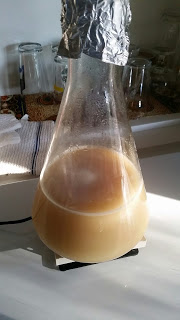
  • I transferred ~5.5 gallons of wort into the fermenter and pitched the yeast in its starter. I plan to let the temperature slowly equilibrate with the fermentation chamber overnight.
  • The beer had a starting gravity of 1.048, exactly where expected. It was brewed on Saturday, November 21, 2015.

80 Shilling Ale

In the continued effort to expand my brewing universe, a Scottish ale seems in order. AHA recently posted a recipe for Bonnie Prince Charlie’s 80/- Shilling, an award-winning brew for a style that I’ve not made previously. I’m greatly intrigued by its simplicity–only two malts and one hop! The technique and flavor combinations promise to be something tasty for the winter season, too. I made only a few small modifications, for hops availability (I’ve got a bunch in my freezer, so it didn’t seem right to buy more) as well as for batch size (scaling down from 12 gallons to 5 gallons).

80 Shilling Ale

  • 10 lbs. Maris Otter malt (Thomas Fawcett brand)
  • 0.25 lb. roasted barley
  • 1 oz. Cluster hops pellets (6.8% alpha, boil 60 minutes)
  • 1 Whirlfloc tablet (boiled for 8 minutes)
  • 1 pkg. Edinburgh Ale yeast (WLP028), prepared in 1.5 L starter, with spent starter decanted
Procedure

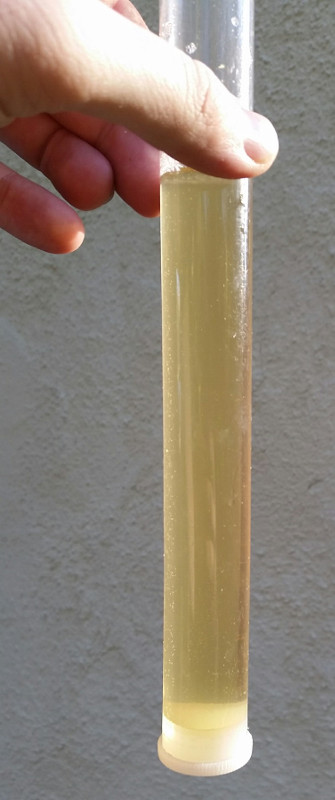
  • Four days in advance, I prepared a 1.5 L starter use extra light DME and yeast nutrients. After 2 days on the stir plate, I cold-crashed the starter in order to settle the yeast.
  • I mashed in the grains with 4 gallons of water at 169°. This resulted in a mash temperature of 157°, which was down to 154.6° after 30 minutes.
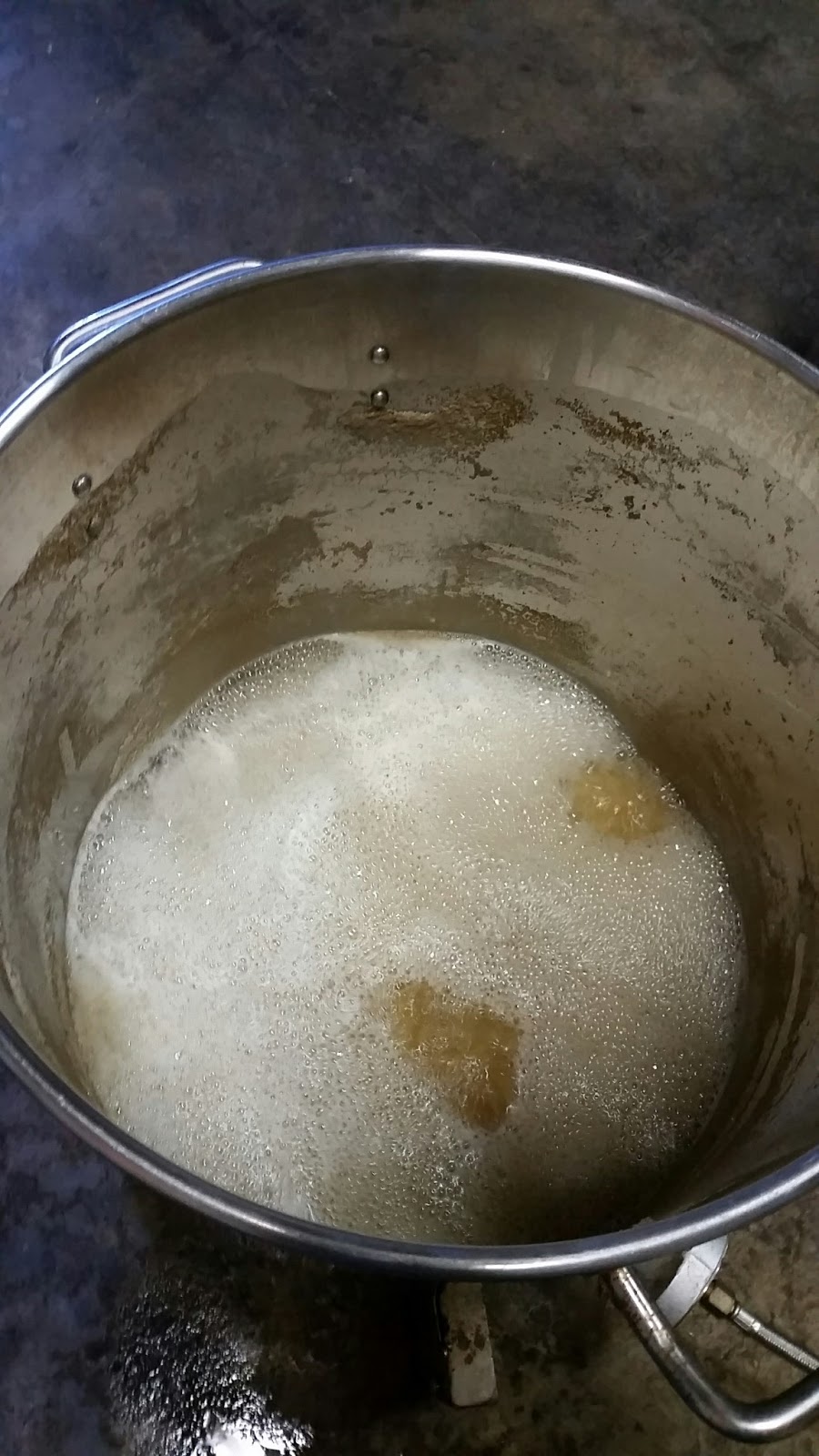
  • Next, I vorlaufed and collected 2.2 gallons of wort. I brought this to a hard boil for 30 minutes (pictured at right), which brought the wort down to 1.6 gallons.
  • I added the barley to the mash tun and then added 5.25 gallons of water at 175°. I let this sit for 10 minutes, vorlaufed, and then drained the mash tun into the kettle until I had a total of 6.4 gallons of wort. With the two rounds of wort and a total of 6.4 gallons, this worked out to around 74% efficiency.
  • I started the boil and added the hops. Because my hops bags were all in use for dry-hopping and because I didn’t want to get out the hop spider, I just tossed the pellets into the pot directly.
  • I boiled for a total of 60 minutes. With eight minutes remaining, I added a Whirlfloc pellet.
  • I chilled the wort down to 76° using my cooling coil and transferred the wort to the fermenter. This was the point where I realized the lack of hops bag was a mistake; hops matter clogged my screen pretty quickly, so I decided to just dump the wort into the fermenter directly. Lesson learned!
  • The starting gravity was 1.053, with around 6 gallons in the fermenter. I plan to start fermentation at 67°. Although the original recipe suggested 62°, White Labs results indicated that the lower temperature could potentially tend to stall out with their strain.
  • This batch was brewed on November 14, 2015. I plan to ferment for around two weeks before kegging.

Beer Tasting: Clonal Common

With a little over a month in the keg, it’s time to test out the Clonal Common! The recipe is intended as a clone of Anchor Steam, in the California Common (steam beer) style. For the sake of comparison, we also picked up a 6-pack of commercial Anchor Steam beer.

Clonal Common

  • The Basics
    • Original gravity = 1.049; final gravity = 1.012; abv = 4.8%; estimated IBU = 35
  • Aroma
    • A sharp woody/minty aroma is prominent (I can only assume this is from the Northern Brewer hops), but not overwhelming. I also pick up a caramel malt aroma in the background. Overall, a clean and pleasant aroma.
  • Appearance
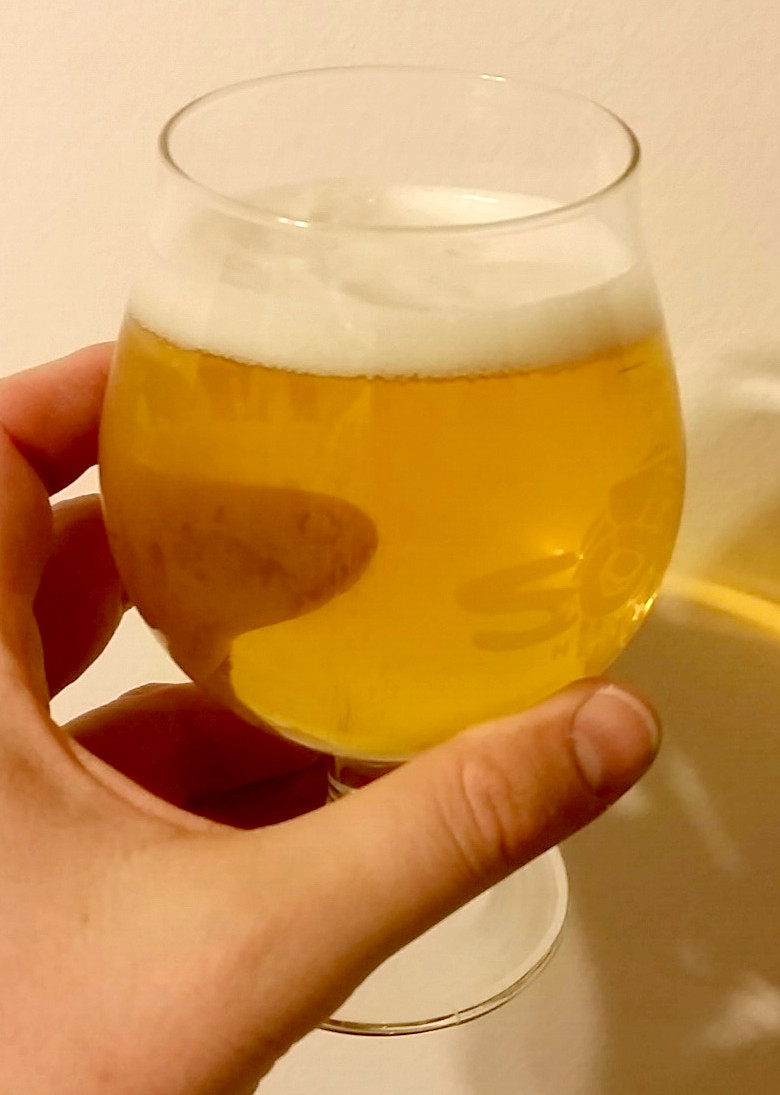
    • Very clear, but not quite bright, with a medium-gold color. The off-white head is moderately fine and prominent when poured, and sticks around for awhile.
  • Flavor
    • The flavor is nicely balanced between the hops and malt–both have a light and pleasant touch. The bitterness is there, but not over the top. The malt character is a combination of caramel with a bit of toastiness faintly at the rear. There is a very light apple/pear fruitiness on the finish, which is pretty pleasant.
  • Mouthfeel
    • This is a beer with medium-light body, moderate carbonation, and a medium-dry finish.
  • Would I brew this again?
    • As this beer has matured, it has turned into a very quaffable drink. I wouldn’t say this is my favorite style of all time, but it definitely is a very solid recipe and one that I’ll brew again. There’s not much I’d really change on this.
  • Overall score: 7 / 10


Beer vs. Beer (homebrew on left, commercial version on right)

Anchor Steam

  • The Basics
    • abv = 4.9%; additional data not available
  • Aroma
    • Malty with a caramel-forward note; some fruity esters in the background. No noticeable hops to my nose.
  • Appearance
    • The head is low and moderately-fine, with an off-white color. Head retention is reasonably good. The beer itself is a light amber or medium gold color.
  • Flavor
    • Prominent caramel malt flavor, almost butterscotch-like. The bitterness is subdued and most evident on the finish, rather than being hops-forward. The hops finish is slightly woody.
  • Mouthfeel
    • Medium-light body, with moderately high carbonation. Moderately dry finish.
  • General comments
    • A good beer, and I suppose the epitome of the California Common style, but I like mine a bit better, in terms of its more subdued malt. Both my wife and I agreed that my homebrewed version was more to our tastes. The commercial version was just a little too fruity and cloying.
  • Overall score
    • 6 / 10
Overall Comparisons
The commercial Anchor Steam has a far more prominent caramel aroma and flavor than my homebrew version, which is slightly more prominent in the hops and toastiness of the malt. Anchor Steam itself is slightly more carbonated, too. However, the body, color, and abv match up quite closely. In all, I like my clone quite a bit (and actually prefer it), even if it’s very definitely a different beer from the commercial product. I suspect the differences come down to process and ingredients. This has been a fun exploration of a beer style–I’ll have to try one of these side-by-side comparisons again with another style!

Pannotia White IPA 1.5

In my quest to achieve a perfect white IPA, I’ve modified my previous recipe just a touch (based on my tasting evaluation). I brewed this up a few weeks ago, but only just now got a chance to post it. Here are the details!

Pannotia White IPA 1.5

  • 4 lbs. 2-row malt
  • 3.5 lbs. Pilsner malt
  • 3 lbs. white wheat malt
  • 1 lb. flaked wheat
  • 0.5 lb. flaked oats
  • 0.5 lb. rice hulls
  • 1 oz. Cascade whole hops (assumed 5.5% alpha, first wort hopping, boil 60 minutes)
  • 1 oz. Cascade whole hops (assumed 5.5% alpha, boil 30 minutes)
  • 3 oz. Citra hops pellets (12% alpha, steep 5 minutes)
  • 1 oz. Citra hops pellets (12% alpha, dry hop in keg)
  • 1 oz. Australian Galaxy hops pellets (13.7% alpha, dry hop in keg)
  • 1 oz. Mosaic hops pellets (12.8% alpha, dry hop in keg)
  • 8.1 g gypsum (added to boil)
  • 1 pkg. Belgian Wit Ale yeast (WLP400), prepared in 1L starter)
Procedure
  • I mashed in the grains with 4.75 gallons of water at 164.5°. The mash stabilized at ~153°, and was down to 152° after 30 minutes. After 65 minutes, I added 0.75 gallons of water at 180°. From this, I vorlaufed and collected the wort (adding the first ounce of Cascade hops at this time). Then, I added 3.75 gallons of water at 185°, and mixed to reach 169°. Then, I vorlaufed and collected the remainder of the wort.
  • All told, I collected 7.5 gallons of wort at a gravity of 1.043. This equates to an efficiency of 71%. I added 1 oz. of gypsum to the wort prior to boiling.
  • After 30 minutes of boiling, I added the second ounce of Cascade hops.
  • For the final minute of the boil, I added the orange peel and coriander seed.
  • At flame-out, I added 3 oz. of Citra hops pellets as well as the final ounce of Cascade hops. These were steeped while I cooled the wort using my wort chiller. Once the wort was cooled to 80°, I transferred it to the fermenter.
  • The starting gravity was 1.053, slightly below my anticipated target (1.059). Next time, I may boil a little longer.
  • I pitched the yeast, and set the fermentation chamber to 70°, and lowered it to 68° after 12 hours. At this point, there was a very vigorous fermentation, which topped out through the airlock. This yeast strain could probably use a blow-off tube next time.
  • The yeast was pitched on October 6, 2015. On October 25, 2015, I kegged the beer and added the dry hops. At this time, I also started carbonating (at room temperature, ~70°)
  • The final gravity was 1.013, which equates to 5.2% abv. The beer has a clean, citrusy taste, and I think should be quite tasty after dry-hopping!