
Ok, so it’s been a long time since the last post. The All-American Porter has been brewed and will get bottled later today. Also, the wheat beer got bottled two weeks ago–we ended up with 41 bottles, if I remember correctly. Some of these were the larger pint-sized bottles, too. I cracked the first bottle earlier this week, and it has carbonated up nicely. It’s pretty drinkable, although in hindsight the normal fruity aroma associated with the German wheat beers is not quite to my taste. A little slice of lemon really rounds out the flavor, though. Next time, I think I’ll try an American strain of yeast–these seem to lack the fruity aroma/flavors seen in many of the European strains.
Author Archives: Andy Farke
Up Next. . .the All-American Porter
Tomorrow, I’m thinking about brewing up a porter–on a whim, I’ve named it the “All-American Porter” (in honor of the new president, the upcoming President’s Day holiday, and the fact that I’m going to ignore the British hops in favor of the American ones in my freezer).
Here’s what I’m looking at for a preliminary ingredients list. . .it will likely be updated a bit as I shop around at the local home brew shop:
1/2 pound caramel malt (for steeping; I’ve got some on hand, and need to use it up)
1/2 pound cara-pils malt (for steeping; again, I’ve got some on hand already)
1/2 pound chocolate malt (I’ll have to pick some of this up at the store)
6.6 pounds Briess liquid malt (I’m thinking about 3.3 pounds Golden Light plus 3.3 pounds Sparkling Amber; I’ll see what the local brew store has on hand)
2 oz. Cascade hops (bittering)
1 oz. Saaz (aroma)
The usual Nottingham ale yeast
Wheat Beer Update
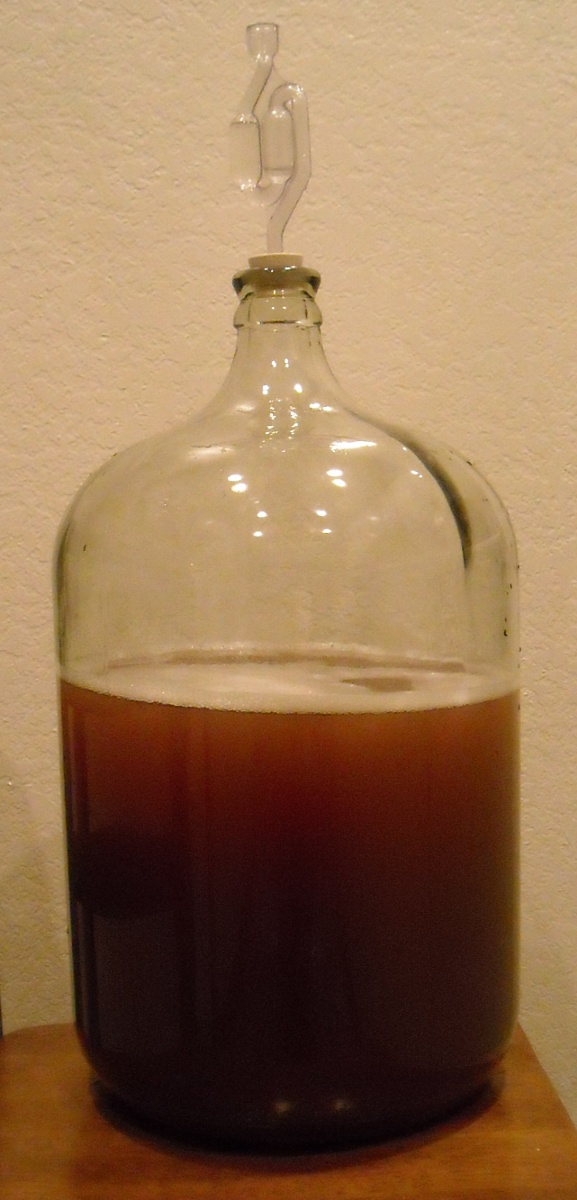
Tonight I transferred the wheat beer (which has been fermenting for six days now) into the secondary fermenter. The beer has a nice yeasty-sour aroma, which is about what I would expect. Plus, it’s tasting pretty good. The gravity at present is 1.010, putting alcohol at right about 3 percent. Can’t wait to see what this will be like once it’s settled and matured a little!
The Red Ale #1!

Here’s my red ale, a month or two after bottling. This has turned into a really nice beer – good head, good flavor, good all around. I’m enjoying drinking this one.
First Taste of KPA
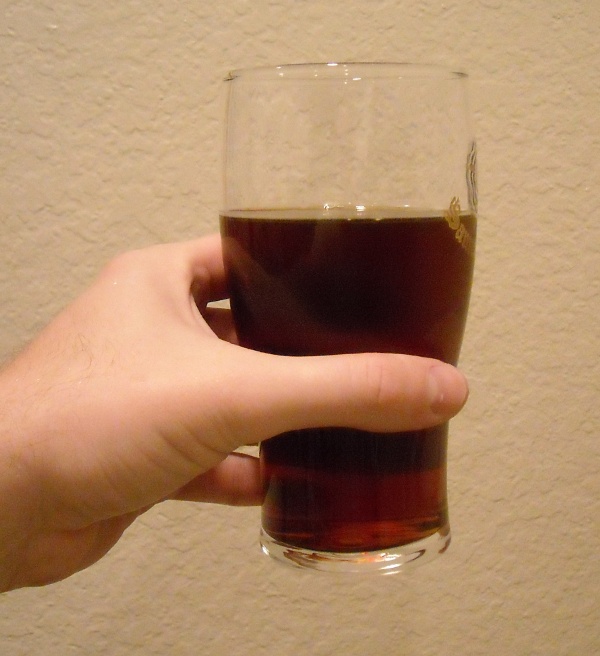 Over the past week or two, I’ve been (impatiently) cracking open a bottle or two of the Kamikaze Pale Ale. I don’t think it has fully carbonated yet – after two weeks, it has a nice fizz, but not quite the level of bubbly that I would prefer. My red ale had similar behavior at first, so I think I’m just being impatient. At any rate, I agitated the bottles a bit tonight to see if that will help the carbonation along. Some brewing sites I’ve read recommended this procedure to “rouse” the yeast if it’s not carbonating at the preferred rate. Mostly, I think I just need to wait a little longer.
On first pouring the beer, I get a mild hops scent. The beer is a nice red color (as mentioned in a previous post), and the carbonation (at this writing) is manifested as a light but steady stream of tiny bubbles along the side of the glass. The taste is smooth, with some definite hops flavor, but not overly bitter. The finish is pretty smooth, too. I don’t know if it quite has as much “body” as I’d like on my beers. There is relatively little head, too, but I think this might just be a factor of the present low carbonation.
So what might I do differently next time? I might experiment with steeping another type of malt or two, to add a little extra body (but not too much). Perhaps I just need to crack the pale malt a little finer. I think I’ll also try dry-hopping, to give it a more prominent hops aroma (the aroma is just a little milder at present than I might like). Additionally, I’ll try boiling with a greater water volume – I only did two gallons (modified after one recipe I saw) for the boil this time, but I suspect I’d get slightly better hops utilization if I used 2.5 or 3 gallons. Next time, I’ll also try using dry malt instead.
Despite all these ideas for “next time,” I still think it’s a pretty drinkable beer. I like the smoothness, and it will be even better once that last bit of carbonation settles in.

