
It’s no secret that German Pils is one of my very favorite styles, and one that I finally feel like I’ve mastered. I brewed German pils recipes 18 times in the past seven years, with some batches turning out well, and others less well.

My latest iteration is a SMaSH-esque beer, testing out Rahr’s pilsner malt. I tend to favor European pilsner malts, but that is more through habit than actual comparison. Weyermann, Viking, and Best have all made semi-regular appearances. This past fall, I picked up a 55-lb. sack of Rahr pilsner at the local store, and I wanted to test it in a beer like this. For the hops, I focused on the Edelweiss hop blend from Hop Heaven. In the past, I have absolutely loved the product, and wanted to see what it could do here. Because Edelweiss is a blend, it’s important to note that this is a “SMaSH-esque” beer, rather than a true SMaSH. So, I named my recipe “Super SMaSH Pils”, as a nod to the blend and an homage to a well-known video game.
For yeast, I selected S-189. I’ve been doing lots with Diamond and Novalager lately, and they are truly great yeasts, but I wanted to expand my horizons a little bit. I had a good experience with S-189 in one previous batch, and thought I’d test it out again.
Super SMaSH Pils
- 10.5 lb. pilsner malt (Rahr)
- 0.5 tsp. BrewTanB (mash)
- 1.25 oz. Edelweiss hop pellets (5.8% alpha), 60 minute boil
- 0.75 oz. Edelweiss hop pellets (5.8% alpha), 10 minute boil
- 0.5 tsp. BrewTanB, 10 minute boil
- 1 Whirlfloc pellet, 5 minute boil
- 1 oz. Edelweiss hop pellets (5.8% alpha), 5 minute boil
- 2 pkg. SafLager German Lager (S-189)
Target Parameters
- 1.048 s.g., 1.007 f.g., 5.3% abv, 37 IBU, 4 SRM
- Full-volume infusion mash, held at 144° for 60 minutes, 160° for 45 minutes, and 168° for 10 minutes
- Water built up from RO, to hit target parameters of 53 ppm Ca, 11 ppm Mg, 123 ppm SO4, and 52 ppm Cl, with RA=-51 ppm
Procedure
- Starting with 7.25 gallons of RO water, I added 4 g gypsum, 3 g epsom salts, and 3 g calcium chloride, to hit my water target. I heated this water to 149° and added the grains along with 1.5 mL of 88% lactic acid. This hit a mash temperature of 144° for 60 minutes, with recirculation. Then, I raised the mash to 160° for 45 minutes, and finally to 168° for the final 10 minutes of the mash.
- I pulled the grain basket, and collected 6.5 gallons of runnings at a gravity of 1.043, for 71% mash efficiency.
- I brought the runnings to a boil, boiling for 60 minutes and adding hops and finings per the recipe. After the boil, I turned off the heat and chilled to 75° before transferring to the fermenter.
- Starting gravity was 1.049, pretty close to my target. I chilled the wort further to 48° in the fermentation chamber, before pitching the yeast.
- I brewed the beer on 29 October 2023, and fermented at 52°.
- On 12 November 2023, I moved the beer to ambient (~62°).
- I kegged the beer on 29 November 2023, with a closed transfer.
- Final gravity was 1.011, which works out to 5.0% abv.
Tasting
- Appearance
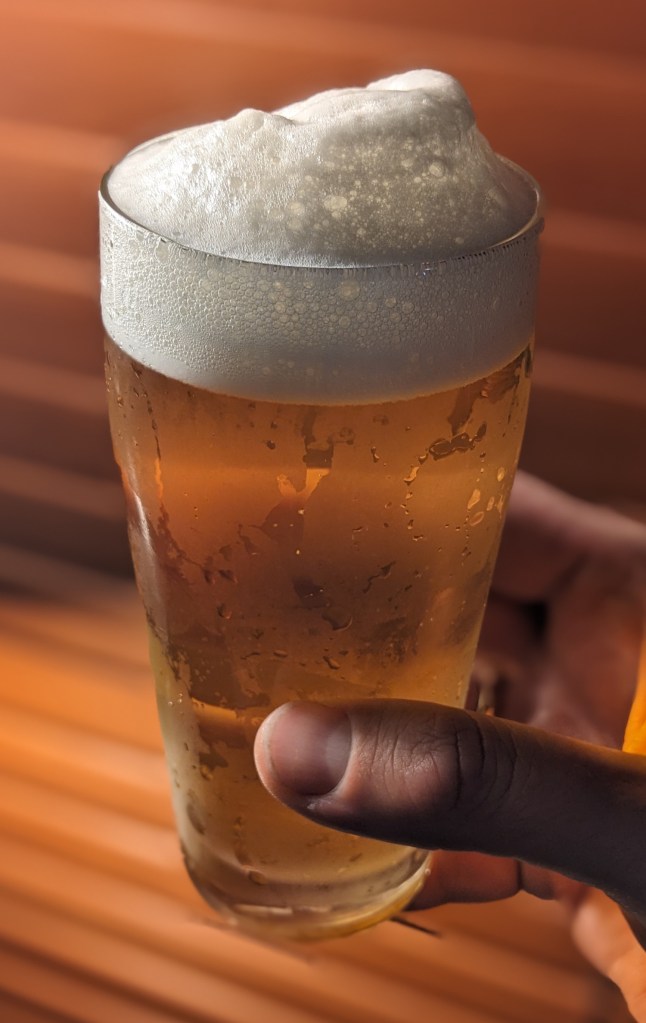
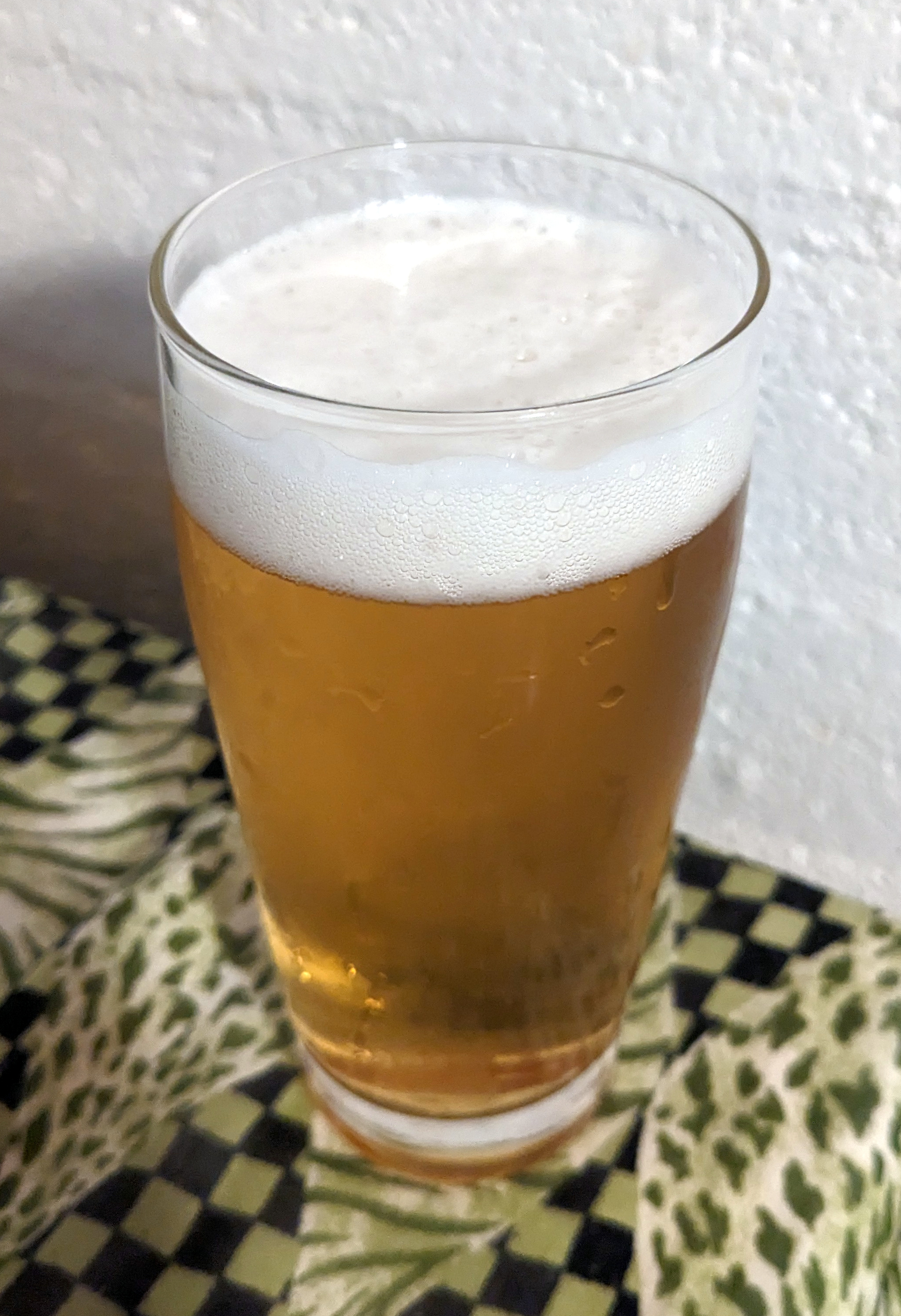
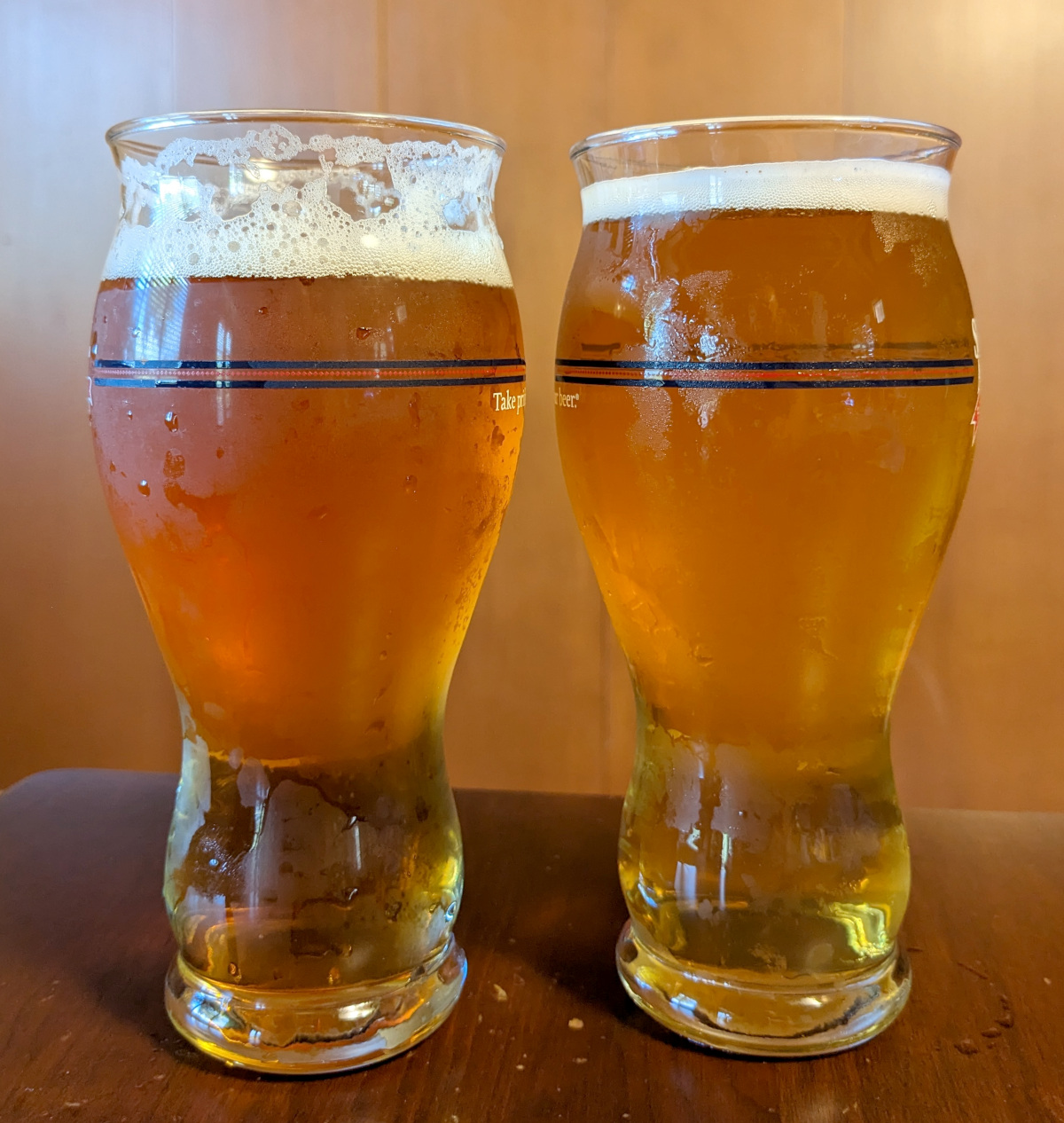
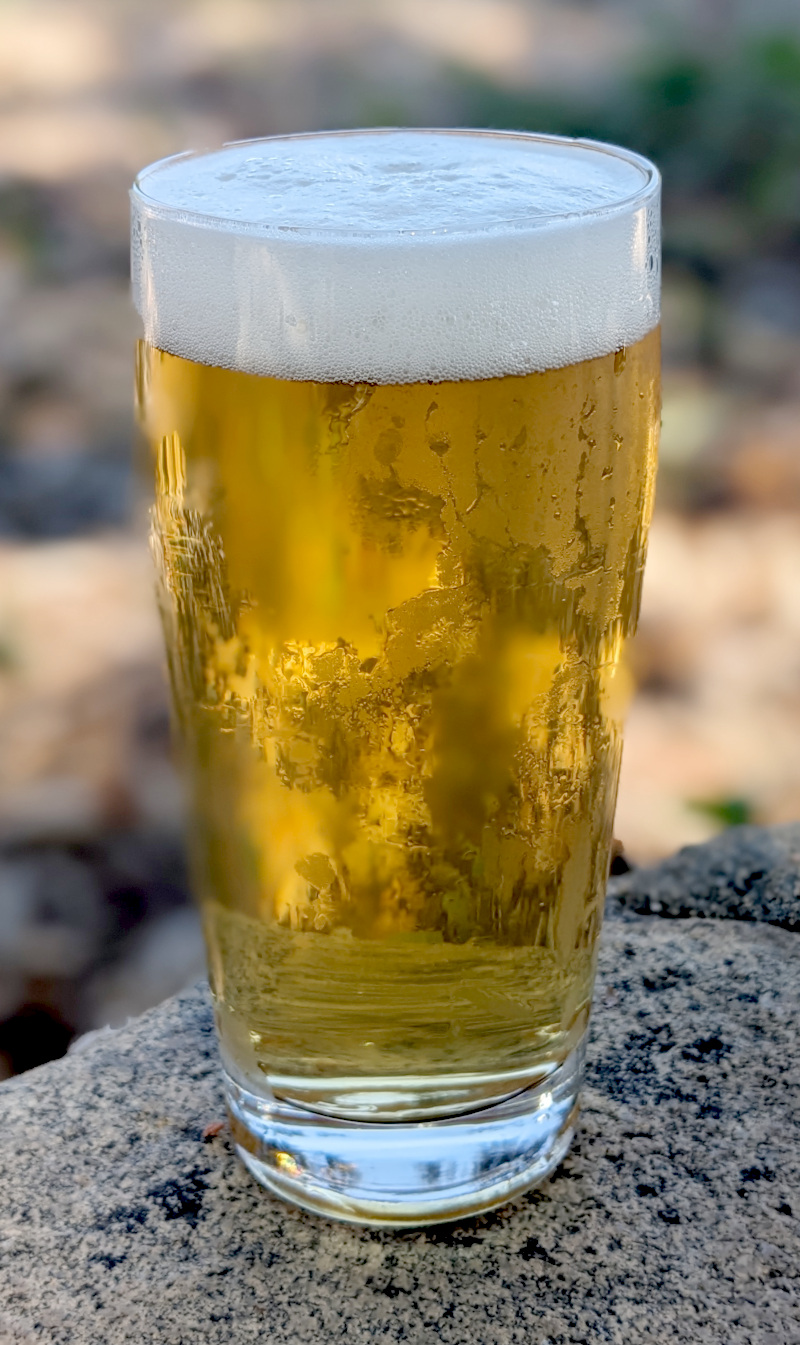
- Brilliantly clear, straw yellow beer that pours with a dense and persistent, creamy white head.
- Aroma
- Clean, lightly floral, and slightly spicy aroma. Very pleasant! Malty sweet character, too.
- Flavor
- Clean, lightly floral hop flavor, with moderately high yet smooth bitterness. Light malty sweet flavor, with a nice balance against the hops. No yeast character detectable — it is very clean and crisp!
- Mouthfeel
- Medium-light body, moderate carbonation; nice and smooth finish.
- Would I brew this again?
- This is a near-perfect pils! It hits every mark of the classic style and is just plain enjoyable. I am incredibly pleased, and would absolutely brew it again.
- Overall
- 10/10


 Andy's Brewing Blog