Schell’s Pilsner Clone 2021

I brew this recipe from time to time, and have enjoyed it pretty well so far. It’s a nice German pils to have around, and has a wonderfully simple approach. This year’s edition is generally the same as in past years, although I used all-Sterling as the hop, rather than a mix of Mt. Hood and Sterling, and I have a different brand of base malt.

Schell’s Pils Clone

Schell’s Pilsner Clone 2021

  • 11 lb. Viking 2-row Xtra Pale Malt
  • 0.25 lb. Carapils (Briess)
  • 0.75 oz. Sterling hop pellets (7.4% alpha), 60 minute boil
  • 0.5 oz. Sterling hop pellets (7.4% alpha), 20 minute boil
  • 1 g BruTanB, 10 minute boil
  • 1.3 oz. Sterling hop pellets (7.4% alpha), 5 minute boil
  • 1 Whirlfloc tablet, 5 minute boil
  • 1 pkg. German Lager yeast (WLP830), in 2L starter
  • 1.25 oz. Sterling hop pellets (7.4% alpha), 3 day dry hop

Target Parameters

  • 1.050 o.g., 1.006 f.g., 5.9% abv, 35 IBU, 4 SRM
  • 60 minute full volume mash, with 40 minutes at 144° and 10 minutes at 158°
  • Claremont tap water

Procedure

  • I mashed in with 7.3 gallons of water at 150°, adding 7 mL of 88% lactic acid, and recirculated at a mash temperature of 144° for 40 minutes.
  • Next, I raised the mash temperature to 158°, holding it there for 10 minutes.
  • Finally, I raised the mash to 168° for 10 minutes, before removing the grains.
  • In total, I collected 6.4 gallons of runnings with a gravity of 1.044, for 68% mash efficiency.
  • I brought the kettle to a boil, adding hops and finings per the schedule. After 60 minutes, I turned off the heat and chilled, transferred, and finished chilling to 48°. I oxygenated with pure O2 for 40 seconds before pitching the yeast.
  • I started with ~5.25 gallons of beer in the fermenter and an original gravity of 1.050.
  • I brewed the beer on 1 May 2021.
  • I began fermentation at 50°, and raised the temperature to 52° on 8 May 2021. I raised the temperature to 60° on 26 May 2021, and cold crashed on 26 May 2021. My fermentation chamber broke(!) on 1 June 2021, so the beer was at ~65° for around 24 hours. I got it back cold on 2 June 2021, and added the dry hops on 5 June 2021.
  • I kegged the beer on 12 June 2021, adding 1 tsp. of gelatin heated to 156° in 3/4 cup of water.
  • Final gravity was 1.010, which works out to 5.2% abv.

Tasting

  • Appearance
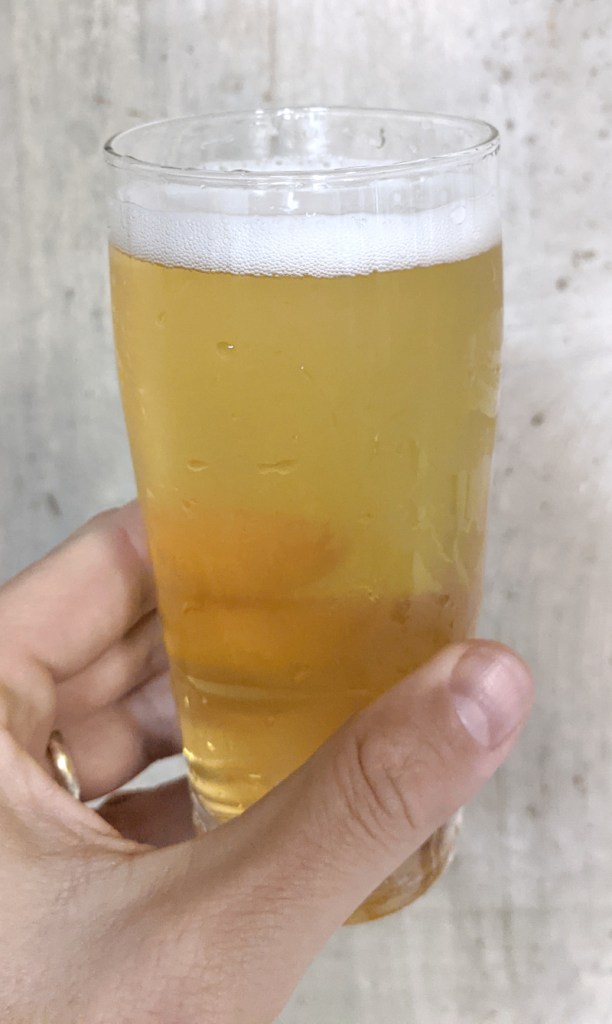
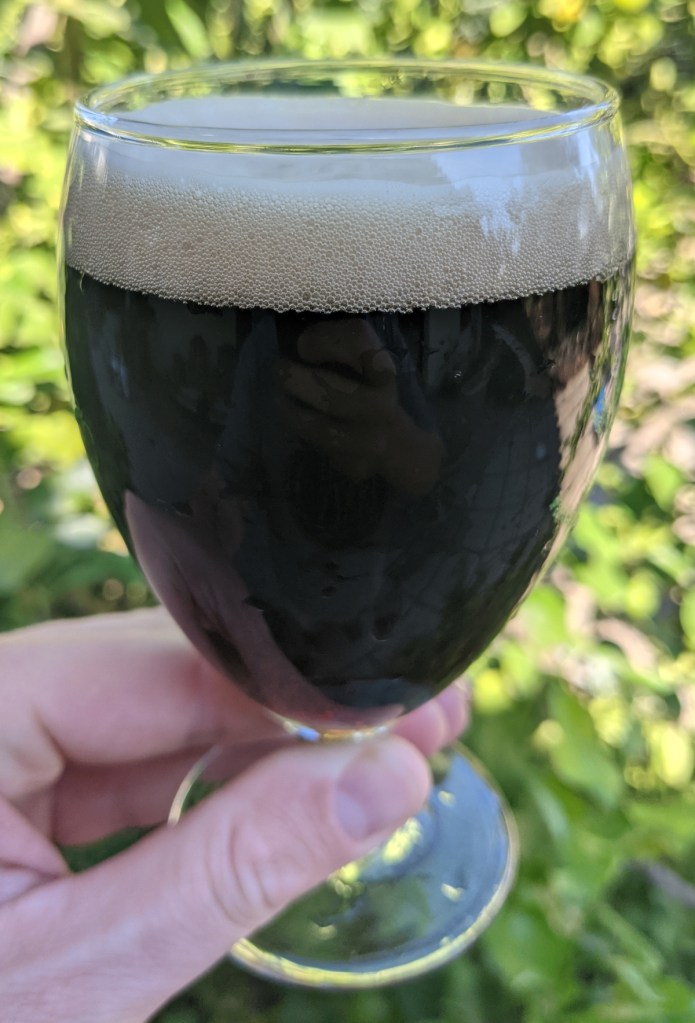
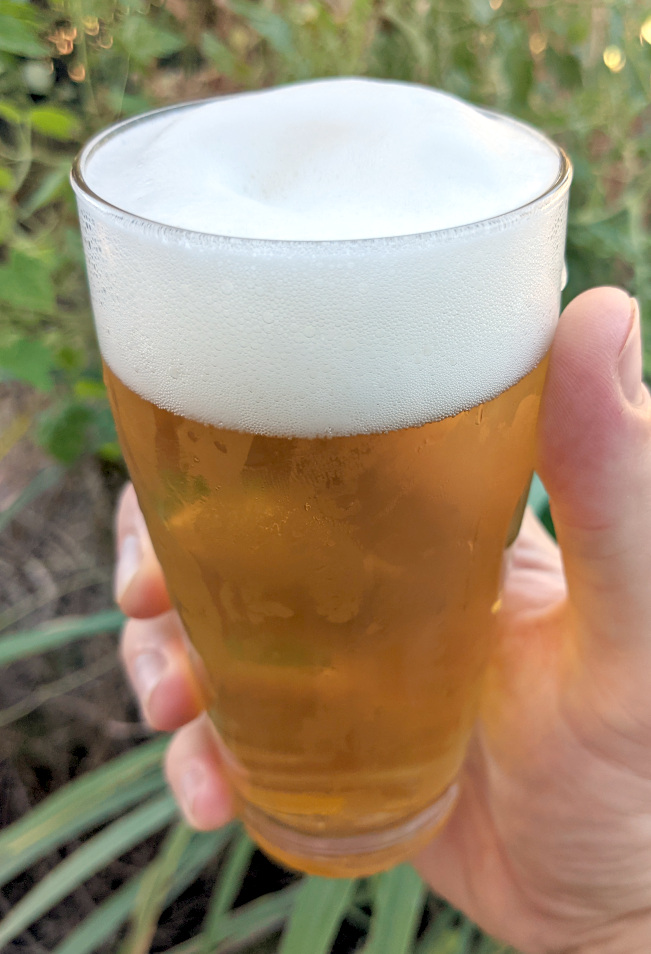
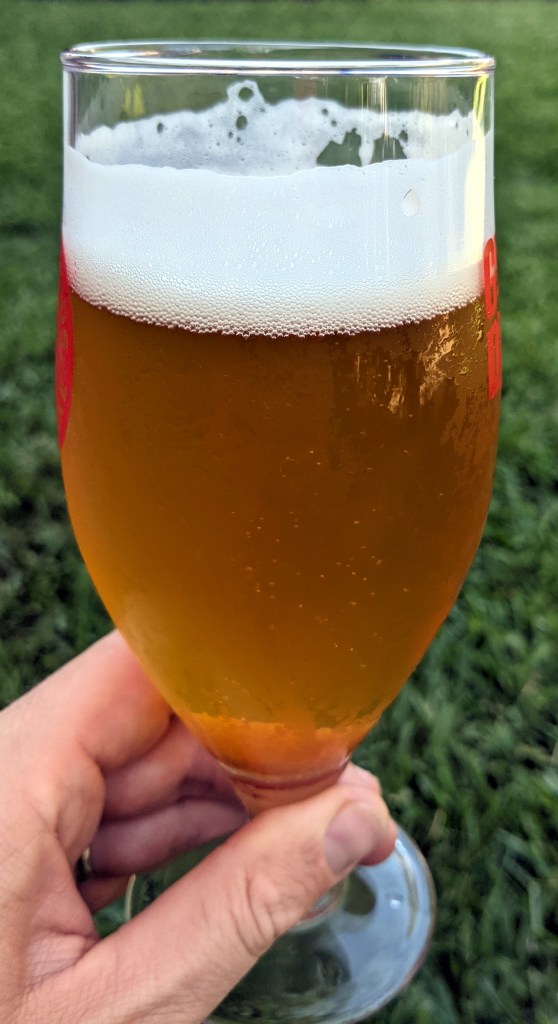
    • This is a light gold/yellow beer that pours brilliantly clear, with a persistent creamy head.
  • Aroma
    • The beer has a light, spicy hop note, and a crackery malt note.
  • Flavor
    • It has a prominent bitterness, with a crisp and clean hop character. The bitterness is a bit over the top, and the water has a mineral-type (almost salty) character. Paired with the right food it does OK, but it is a bit too bitter on its own. The malt is light and crackery; very simple, but nice. Yeast profile is quite clean.
  • Mouthfeel
    • Medium-light body, moderate carbonation, slightly dry finish.
  • Would I brew this again?
    • Yes, but next time I’m going to do better on the water profile. I think using tap water was a mistake here, especially without more adjustments to knock out carbonates, etc. The bitterness is just too much, which is unfortunate! In going back through my notes, all past iterations have built up from RO water, and I think I’ll do that again next time. Everything else works pretty well, and I suppose the bitterness is within the upper bounds of a German pils, so I can’t ding it too much. I might also try going back to the Mt. Hood+Sterling hop combo, just to give it a touch more interest in the hops.
  • Overall
    • 6/10

What’s Brewing? July / August 2021 Edition

These summer months have been busy with travel, which means not a lot of brewing (or homebrew sampling) has happened. Towards the end of August, I’m just starting to dip my toes back into the waters.

Beer Batch Updates

  • I brewed, kegged, and am now conditioning the 2021 edition of “Mow the Damn Lawn,” a light (?lite) American lager.
  • Two weekends ago, I made a new batch of my Raspberry Belgian, with a kettle sour, boil, and then fermentation. It should be ready to keg in a few days.
  • I’m doing a third brew of my Orange Summer Wheat Ale, for a homebrew club event. It’s a great recipe, and is easy (and popular) enough that I’ve made a few batches of it this year. I brewed the beer last weekend, and now it’s fermenting away. In a week or so, I’ll keg it and add the orange zest tincture.
  • Last weekend, I brewed a Voss kviek-based American IPA, to see if I can get a bit better beer with some different hops. The last IPA I made with Voss was meh, and so I figured a new version is worth a try.

What’s On Tap?

  • I’ve blown through my Schell’s Pilsner Clone as well as my Pannotia White IPA, and need to write those up for this blog!
  • The second brew (this year) of my orange wheat ale is on tap. What a drinkable, tasty summer beer! I made this version with the dry K-97 yeast (instead of a liquid American wheat yeast), and it’s pretty great. I think I found a great yeast alternative!
  • Dunkel-Osteus 2021 is also on tap right now; it’s pretty good, although is maybe a touch past its very prime now.

What’s Coming Up?

  • I plan to do a hefeweizen in a week or so, just because it’s an enjoyable style while the weather is still warm.

Other Notes

  • I’ve got another batch of sauerkraut going, because the last batch (packaged back in June) is about 3/4 gone.

Soda Syrup Recipes

Although beer brewing is the main focus of my beverage-based creativity, I also enjoy making non-alcoholic drink syrups. I’ve perfected a strawberry soda recipe I’m quite happy with, and also have a ginger beer syrup that works very well. I often get asked to pass these recipes along, so I’m going to compile them in a post here for future reference.

All of these syrups are completely non-alcoholic. “Traditional” recipes (such as ones for ginger beer) use natural carbonation, but I prefer to make a concentrated syrup and then mix it with sparkling water. This gives me a bit more control and consistency on the carbonation level, ensures there is absolutely no alcohol in the beverage, and reduces the sometimes yeasty flavor you get from natural carbonation.

Strawberry Syrup

  • Ingredients
    • 1.5 cups strawberries (cut up roughly)
    • 0.9 cups sugar (white or demerera)
    • 0.25 cups fresh-squeezed lemon juice
    • 0.65 cups water
  • Procedure
    • Simmer all ingredients for 15 minutes, mashing strawberries as it comes to a simmer.
    • After 15 minutes, strain through a fine mesh strainer and transfer the syrup to a container. The strawberry sludge left over in the strainer makes a great ice cream topping or spread on bread.
    • Mix ~1 to 2 oz. of syrup with 6 to 8 oz. of sparkling water, or to taste.
bright red strawberries

Ginger Syrup

  • This recipe is very heavily modified from an Alton Brown recipe on The Food Network website. The original version didn’t have nearly enough ginger for my taste; it’s worth experimenting to find what works for you.
  • Just the standard “grocery store ginger” works really well, although you can try out galangal or other gingers if you like.
  • Thanks to my buddy Peter K. for turning me on to this recipe.
  • Ingredients
    • Mid-sized ginger root, peeled and grated
    • 3/4 cup sugar (white or demerera; I usually use demerera)
    • 3/4 cup water
    • 2 tbs. freshly squeezed lemon or lime juice
  • Procedure
    • Bring the ginger, sugar, and water to a boil, and let sit for an hour.
    • Strain into a container, and add the lemon (or lime) juice.
    • Mix ~1.5 oz. of syrup with 6 to 8 oz. of sparkling water, or to taste.
    • This is delicious on its own, or you can use it as a mixer for other drinks.

Juniper Syrup

  • This recipe is modified off of one from Imbibe magazine. I reduced the sugar a bit, and added rosemary–that last ingredient really helped the syrup to “pop,” and brought it a bit closer to a gin-like character. This works really well in a juniper & tonic!
  • Ingredients
    • 3 tbs. dried juniper berries, crushed
    • Peel from one orange
    • 1 sprig rosemary
    • 3 green cardamom pods, crushed
    • 1/2 cup sugar
    • 1 cup water
  • Procedure
    • Bring the juniper berries, orange peel, rosemary, cardomom, and water to a simmer, simmering for 15 minutes.
    • Add the sugar, stir to dissolve, and then transfer the hot mixture (berries and all) to a jar.
    • Steep overnight in the refrigerator, and then strain into a jar.
    • Mix ~1.5 oz. of syrup with 6 to 8 oz. of sparkling water, or to taste.

Tonic Syrup

  • In our house, this serves primarily as a mixer for gin & tonic, although it also works really well for a non-alcoholic juniper & tonic drink.
  • For a full post on the stuff, check out my previous article.

What’s Brewing? June 2021 Edition

My previous What’s Brewing post was cutting it close to the finish line for the end of the month, so I’m aiming to get this one done a bit more ahead of the curve. There has been a moderate amount of activity in the brewery since then, and also on the “other fermentables” front.

Beer Batch Updates

  • I brewed a new batch of the orange wheat ale on 5 June 2021, but subbed in K-97 (German ale) dry yeast instead of American wheat ale liquid yeast. I think the characteristics of the two are similar enough that I’m feeling justified in the substitution.
  • On 12 June 2021, I kegged my Schell’s pilsner clone. For the first time, I dry-hopped it as suggested by the recipe; I’m still uncertain how I feel about that overall.

What’s On Tap?

  • I’m on the last glass or two of my Easy Days session ale; it is super close to being finished out! The Munich dunkel (currently lagering) will roll into this slot soon thereafter.
  • My Clonal Common (steam beer / California common) has been on tap for a week or two, and it’s a nice mid-range amber(ish) beer.
  • The 2021 edition of Pannotia White IPA is on tap, rounding out my current selection.

What’s Coming Up?

  • A new edition of the “Mow the Damn Lawn” brew will get made either this weekend or next weekend, depending on my time and inclination.

Other Notes

  • Last night I packaged the miso batch I mentioned in my previous What’s Brewing? post. It tastes pretty good, and I’m going to make a small batch of miso soup soon.
  • My latest sauerkraut batch is now packaged, too. The fridge is pleasantly full of fermented food products now!
miso paste in mason jar

Miso paste in the jar

Clonal Common 2021

I like a good steam beer (a.k.a. California common) every once in awhile, and I last made a batch back in 2015. I hadn’t thought it was that long ago, but my notes don’t lie! This year’s version was largely the same recipe, but made with the base malts and caramel malts I had on hand. As before, this batch parallels recipes from BYO and Zymurgy, with only the most minor modifications.

Clonal Common 2021

  • 9.5 lb. Viking 2-row Xtra pale malt
  • 1 lb. Viking caramel 100 (crystal 40 equivalent)
  • 0.5 lb. special roast malt (Briess)
  • 1.15 oz. Northern Brewer hop pellets (7.3% alpha), 60 minute boil
  • 1 Whirlfloc tablet, 5 minute boil
  • 0.85 oz. Northern Brewer hop pellets (7.3% alpha), 10 minute whirlpool
  • 1 pkg. San Francisco Lager yeast (WLP810), prepared in 1L vitality starter

Target Parameters

  • 1.049 s.g., 1.015 f.g., 4.5% abv, 34 IBU, 9 SRM
  • Claremont tap water, treated with Campden tablet to remove chlorine
  • Full volume infusion mash at 152°, 60 minutes

Procedure

  • On the morning of my brew session, I made a 1L vitality starter to kick-start the yeast.
  • I heated 7.25 gallons of water up to 158°, to hit a 152° mash temperature target. I held it here for 60 minutes, before raising to and holding at 168° for 10 minutes. I added a bit of 88% lactic acid to the mash, to adjust pH.
  • I removed the grain basket, and noted 6.5 gallons of wort with a gravity of 1.045, for 72% mash efficiency.
  • Next, I brought the runnings to a boil, boiling for 60 minutes and adding the hops and kettle finings per the recipe. At the end of this, I turned off the heat and whirlpooled (with circulation) for 10 minutes with the whirlpool hop addition.
  • I chilled the wort, transferred it to the fermenter, and then chilled it down to 60° in the fermentation chamber before pitching the yeast.
  • I brewed this beer on 24 April 2021, and fermented at 60° for the first week. I pulled it out to finish up at ambient on 1 May 2021, and it looked like fermentation was pretty much done by this point.
  • I kegged the beer on 9 May 2021. It had a final gravity of 1.015, for 4.6% abv. I hit my numbers pretty well for this batch!

Tasting

  • Appearance
    • Deep gold/light amber color, and very clear, approaching brilliant. The beer pours with a creamy ivory head that is quite persistent. Overall, though, this batch is just a touch lighter in coor than is appropriate by the BJCP style guide.
  • Aroma
    • The beer has a light caramel aroma, with a slight “woody” hop character as appropriate for this style.
  • Flavor
    • This has a moderately high level of bitterness and a nice woody character to the hop flavor. This one tastes moderately malty with a light caramel note and a slight bit of toastiness. Yeast character is very clean. Overall, this one tilts towards bitterness rather than maltiness.
  • Mouthfeel
    • Medium-light body and moderate level of carbonation, with a clean, off-dry finish.
  • Would I brew this again?
    • Overall, this is a pretty nice California Common! There’s not much to say otherwise; I think the overall recipe is pretty well locked in. If I wanted to be a stickler for BJCP guidelines, I should adjust the color slightly with a bit of Carafa Special III or something like that. I also wouldn’t mind a tiny hint of fruitiness in the yeast character, and thus might try fermenting at a slightly higher temperature next time. All that aside, I’m pleased with this one!
  • Overall
    • 8.5/10