Follow-Up: 2021’s Brew Year’s Resolutions

I made a few brewing goals for 2021, and with the turning of the calendar page, it’s time to assess the damage (or progress).

  • Kveik.
    • I set a goal to brew more with kveik, and did get two batches in with this family of yeast cultures, both IPAs. They turned out OK, but not great. I’ll probably play around more with kveik in the future, but I feel that the trend has perhaps run its course for my brewing tastes and needs.
    • Final Score: 5/10
  • Pilsner.
    • I set out to perfect a German pils, and came close. I’ve figured out my general grain bill and bitterness regimes, and now it’s just a matter of continued iteration. The Pilsnerpeton batch is perhaps the best from 2020/2021, and Farke’s Best Pils also came out pretty great. I just need a little more practice, and I’ll get there.
    • Final Score: 7/10
  • Big Beers in Small Batches.
    • I’m feeling really great about this one. I ended up with three small-batch beers higher than 7% abv, including the excellent Winter Dream Ale. Although I could have brewed more of these, I am actually pretty satisfied with where I landed on this goal. Each of the beers turned out fairly well, and it was about the perfect quantity for what I had energy to drink (or share).
    • Final Score: 8/10
  • Belgian Beers.
    • I didn’t do great on this one, probably because I got distracted by other brewing projects. Alongside the aforementioned Winter Dream Ale, I fermented three other beers with Belgian yeast. Two of these were old favorites (Raspberry Belgian and Pannotia White IPA), and another was a big quad for a homebrew club barrel project. So…I really have work to do here next year. Maybe a patersbier for Lent?
    • Final Score: 4/10

Overall Assessment of 2021: 6/10 for brewing goals — not great, but not awful. I still had fun, though!

2021’s Homebrew Highlights

This was a big year for my brewing, even if I had busy stretches with minimal time. As I enter the last few minutes of 2021, here are my thoughts looking back…

  • Favorite Batch
    • This was a tough one to pick! I had a decent number of beers I really liked, and so I chose the following two as my favorite batches:
      • Ill-Tempered Gnome. I don’t make American brown ales very often, but this one was just awesome. The hop character is particularly memorable, and I definitely want to make it again sometime.
      • Alstadt Altbier. I feel like I perfected my altbier game on this latest version of the recipe. Again, a very memorable beer!
  • Least Favorite Batch
  • Experimental Recipe with Most Potential
    • Winter Dream Ale. High-alcohol beers are not the sort of thing I do all the time, but this particular recipe was really enjoyable in the Christmas to New Year’s stretch. It had a nice mix of flavor and body, making an interesting beer without addition of spices or strange adjuncts.
  • Most Fun New Style/Recipe to Try
    • I had fun putting together an amber kellerbier, in Dimorphos Kellerbier. I really freestyled it in the recipe, and achieved a tasty result.
  • Upcoming Beer With Most Potential
    • I have another Pliny the Elder clone fermenting right now, and I’m crossing my fingers that it turns out well!
  • Best Technique Added to Repertoire
    • I’ve been using a Hochkurz mash semi-regularly, and like the results in terms of extract yield as well as fermentability and flavor.
  • Best Ingredient Added to Repertoire
    • The HOPBOX was a lot of fun to play with, and gave me a nice IPA as a result. I’ll be enjoying the next iterations as they arrive this year.
  • Favorite Book(s)
    • For Christmas, I received a copy of Dark Lagers: History, Mystery, Brewing Techniques, Recipes (by Thomas Kraus-Weyermann and Horst Dornbusch)…it has been a fun one to browse! The historical information is interesting, the recipes seem solid, and the food recipes are also something I’ll look forward to trying.
  • Other Milestones
    • I had some fun with other fermentables this year, including creation of miso paste as well as injera bread. I’ve continued with sauerkraut and homemade mustard, all of which are fantastic accompaniments for beer and sausage.
  • Overall Stats
    • I brewed 31 batches of beer this past year, totalling around 150 gallons of beer produced.
    • No particular beer style dominated 2021, although I had three batches of German pils and two batches of American IPA as the most frequently brewed styles. Expanding into IPAs as a general category, I brewed seven recipes in the IPA world (including American, English, white, and double IPAs).

Winter Dream Ale

I often make a special, small-batch beer for Christmas, something that’s rich and high alcohol and perfect for cold (southern California) evenings next to the fire. For the 2021 edition, I threw together a Belgian-style winter warmer. I wanted a rich, sumptuous malt backbone, and to let the fermentation add any spice, rather than using actual species. I used up a few ingredients on-hand, which just happened to be perfect for my vision of the beer.

Winter Dream Ale

  • 8 lb. Vienna malt (Weyermann)
  • 1.25 lb. Munich light malt (Chateau)
  • 11 oz. Special B malt (Dingemans)
  • 4 oz. Crystal 120 malt (Great Western)
  • 0.75 oz. Magnum hop pellets (10.1% alpha), 60 minute boil
  • 1 Whirlfloc tablet, 5 minute boil
  • 1.5 g yeast nutrient (WLN1000, White Labs)
  • 8 oz. honey, add to flameout
  • 2 pkg. Abbay Belgian ale yeast (Lallemand)

Target Parameters

  • 1.086 o.g., 1.018 f.g., 9.2% abv, 22 IBU, 22 SRM
  • Mash held at 150° for 60 minutes, and 10 minute mash-out at 168°, with ~0.75 gallon sparge
  • Claremont tap water

Procedure

  • I heated 4.5 gallons of water to 159°, and added the grains to hit a mash temperature of 150°. I held here (with recirculation) for 60 minutes, before raising the temperature to 168° and holding there for 10 minutes. Then, I removed the grain basket and sparged with 0.75 gallons of hot water.
  • I collected 4.5 gallons of runnings with a gravity of 1.060, for 71% mash efficiency.This was a good efficiency but too high of a volume. So, I boiled for an extra 30 minutes before adding hops.
  • After 30 minutes of boiling, I added the hops, honey, and finings per the recipe, boiling for an addition 60 minutes.
  • Starting gravity was 1.076; this was a bit short of the recipe, but I didn’t worry about it too much.
  • I chilled to 80°, transferred to the fermenter, and let the wort chill overnight before pitching the yeast.
  • I brewed the beer on 12 October 2021, and pitched the yeast on 13 October 2021.
  • I fermented at 65°, and raised the beer to 70° (free rise) on 20 October 2021, to help the yeast ferment out.
  • I kegged the beer on 5 November 2021. Final gravity was 1.020, for 7.5% abv.

Tasting

  • Appearance
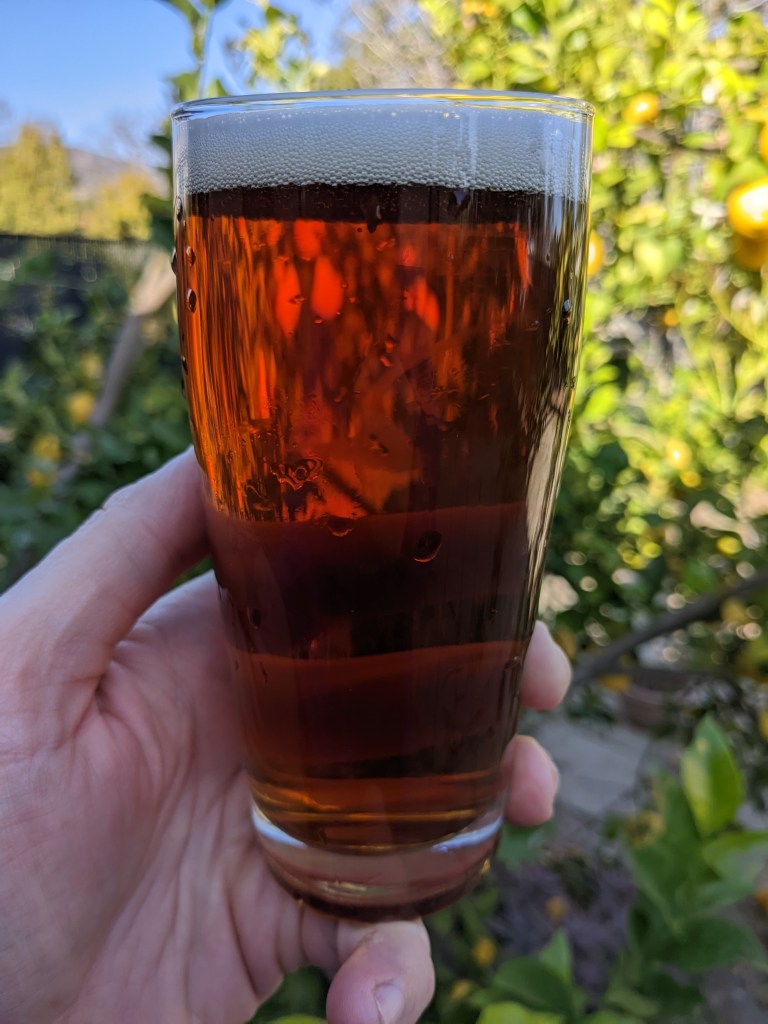
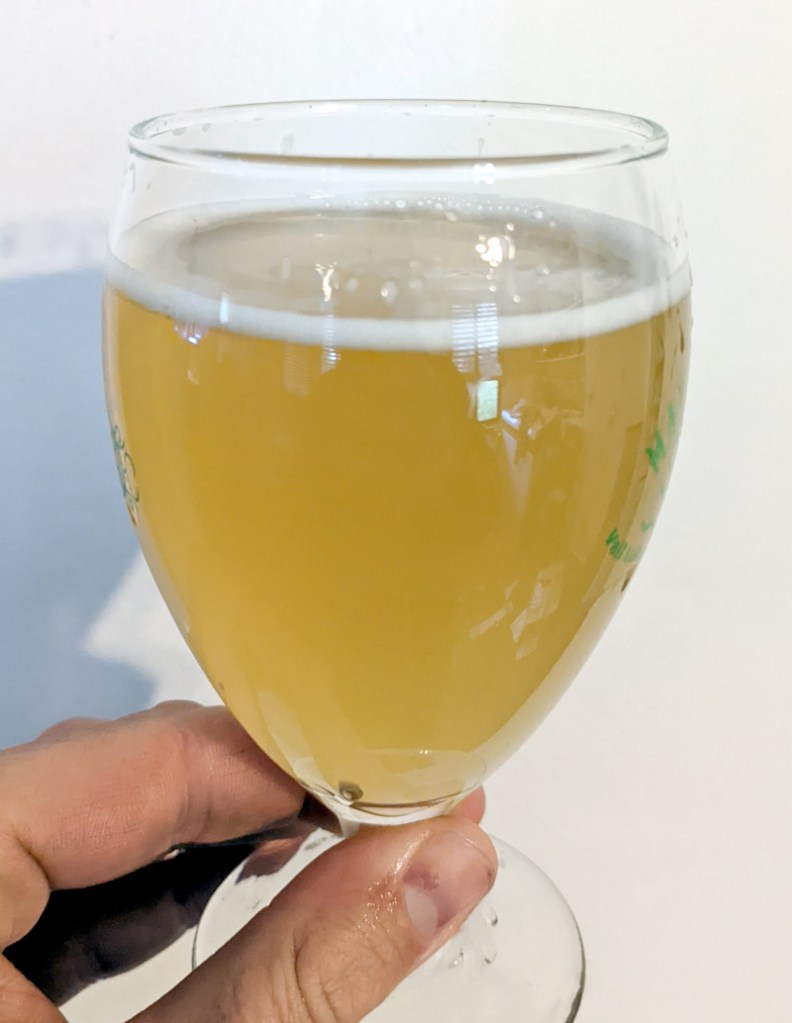
    • Deep reddish amber and very clear; there is a persistent and creamy ivory head.
  • Aroma
    • Spicy aroma, with a bit of caramel and dried dark fruit.
  • Flavor
    • Wonderfully rich! There is a caramel and toffee malt character with a bit of dried fruit and sweet candy. A bready malt quality sneaks up behind that. Bitterness is moderate, and the yeast character has a slightly spicy quality. Fermentation quality is really nice, and I dodged any hot alcohol character.
  • Mouthfeel
    • Medium body, with medium-high carbonation and a smooth finish. The body is maybe a little thinner than I had envisioned.
  • Would I brew this again?
    • I am really, really happy with the results in this recipe. It absolutely hit the rich, complex qualities I wanted, and is highly drinkable. The fermentation quality is perfect too! The only minor ding is that starting gravity was a touch low, which decreases the body a little, but I think that worked out okay in the end. I would rather the body be somewhat thin, than the beer be too sweet and cloying.
  • Overall
    • 8/10

Dimorphos Kellerbier

I’m still working my way through the world of German beer, and there is no shortage of varieties to try. Although kellerbier isn’t necessarily a discrete style (just being vaguely young lager), I wanted to give it a go. I also wanted to use up some ingredients. How convenient!

I aimed for an amber kellerbier, with a rich and malty character. I had some Munich malt to finish, as well as Vienna malt. A little bit of melanoidin (Great Western’s Mela malt, in this case) went in to raise the maltiness bar, and I used some Carafa Special II for color adjustment. Spalt hops are apparently somewhat traditional; I had a little bit to use up, so in they went too.

The name of “Dimorphos Kellerbier” is after the smaller member of the 65803 Didymos asteroid system. Coincidentally, it’s also part of the root for the pterosaur Dimorphodon, which appealed to my paleontological side. In any case, Dimorphos is the planned target for the DART (Double Asteroid Redirection Test) mission, in which the orbit of the asteroid will be changed very slightly through impact by a satellite. It’s testing technology that may be used to save Earth from an asteroid impact someday, which I can definitely support as a paleontologist. The mission launched on November 24, and I was just a few miles from the launchpad to see the satellite head into the great beyond. It was a pretty incredible experience, and one worth commemorating with a beer batch!

The DART mission on its way to its rendevous with Dimorphos and Didymos, during its launch with a Falcon 9 rocket on November 24, 2022. The ring represents clouds pushed aside by the shock wave of the rocket’s passage; the rocket itself is the bright object in the middle of the photo, with the exhaust plume to the left of the image.

For many of my beers, I write up the tasting notes after a few weeks on tap. This gives the beer chance to mature, and allows me to figure out the character of the beer. This time, I wrote up the tasting on my very first glass out of the keg. Because the style is supposed to be served young, I figured I didn’t gain anything by waiting. It also gave me a chance to provide first impressions, before I’ve had a chance to talk myself into a particular opinion about the beer.

Dimorphos Kellerbier

  • 5 lb. 1 oz. Vienna malt (Weyermann)
  • 3 lb. 12 oz. pilsner malt (Viking)
  • 15 oz. Munich I malt (Weyermann)
  • 4 oz. Mela malt (Great Western)
  • 2 oz. Carafa Special II malt (Weyermann)
  • 0.5 oz. Magnum hop pellets (10.1% alpha), first wort hop and 60 minute boil
  • 1 oz. Spalt hop pellets (3.0% alpha), 20 minute boil
  • 1 Whirlfloc tablet, 5 minute boil
  • 1 oz. Spalt hop pellets (3.0% alpha), 5 minute boil
  • 2 pkg. Diamond lager dry yeast (Lallemand)

Target Parameters

  • 1.049 o.g., 1.007 f.g., 5.5% abv, 28 IBU, 10 SRM
  • Full volume Hochkurz mash, held at 144° for 45 minutes, 160° for 45 minutes, and 10 minute mash-out at 168°
  • Claremont tap water

Procedure

  • I mashed in with 7 gallons of water at 149°, adding 6 mL of 88% lactic acid to adjust the pH. This hit an initial rest temperature of 144°, which I held for 45 minutes with recirculation.
  • Next, I raised the mash (while recirculating) to 160°, and held it here for 45 minutes.
  • Finally, I raised the mash temperature to 168°, and held it there for 10 minutes before removing the grain basket.
  • In total, I collected 6.4 gallons of runnings with a gravity of 1.045, for 77% mash efficiency. The Hochkurz mash protocol seems to do well for efficiency!
  • I brought the runnings to a boil, adding hops and finings per the recipe.
  • After a 60 minute boil, I turned off the heat and chilled to 70°, before transferring to the fermenter.
  • I brewed this beer on 22 November 2021, and let it sit overnight in the fermentation chamber to get down to my target temperature of 50°. I pitched the yeast on the morning of 23 November 2021.
  • Starting gravity was 1.050.
  • I raised the fermenter to 52° on 24 November 2021, to 54° on 28 November 2021, 56° on 1 December 2021, and let it free rise to 60° on 3 December 2021.
  • On 6 December 2021, I started to cycle down the temperature, lowering it by 5° to 10° daily (sometimes dropping 5° in the morning and 5° in the evening). It was down to 34° on 9 December.
  • I kegged the beer on 11 December 2021, and force carbonated it.
  • Final gravity was 1.013, which equates to 4.9% abv.

Tasting

  • Appearance
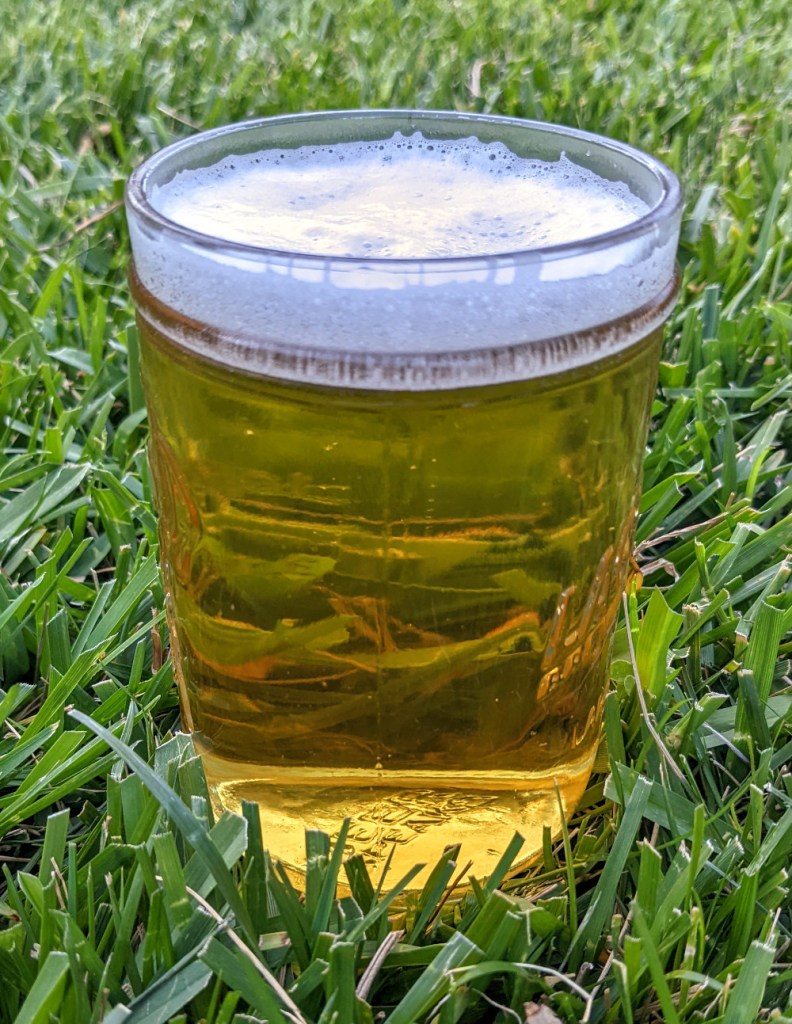
    • Deep copper beer with a slight haze; very persistent ivory head
  • Aroma
    • Bready, malty aroma with a slight bread crust character and a slight spicy hop character. Yeast character is very clean.
  • Flavor
    • Rich and very pleasant maltiness. Moderate bitterness with a spicy, slightly herbal quality. Clean yeast character.
  • Mouthfeel
    • Medium body, medium-low carbonation. Smooth, very slightly dry finish with extended bitterness.
  • Would I Brew This Again?
    • Yes! This is like tearing off a piece of warm, crusty bread pulled straight from the oven, and popping it into your mouth. There is so much awesome malt character, and the yeast quality is super clean. This is a perfect winter lager!
  • Overall
    • 10/10

2021 IPA

This might be my least creative recipe name ever, but it sure is appropriate! Thanks to my HOPBOX, I had a whole mess of hops from the 2021 harvest. I wanted to craft a recipe that would highlight more “traditional” IPA flavors of citrus and pine, while also exploring some new-to-me varieties.

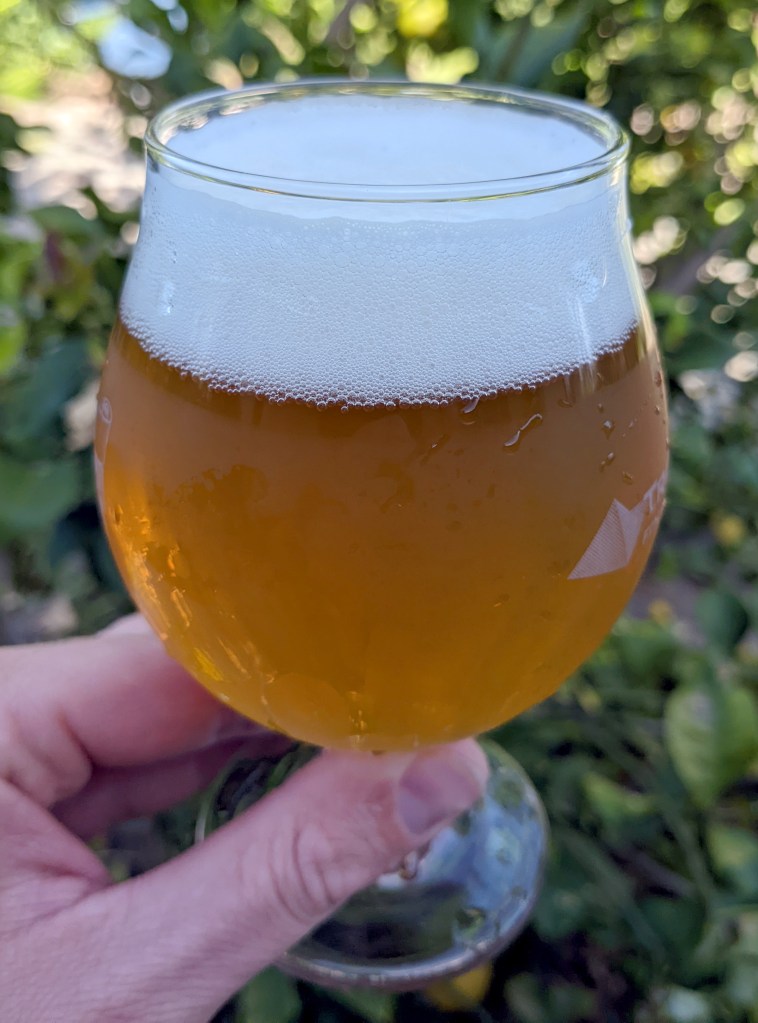
orange-gold beer with off-white head, held in tall tulip glass

After sorting through my hop selection, I selected Bravo as the main bittering hop, with heavy doses of Cashmere, Wai-iti, and Waimea in the whirlpool and dry hop. Each of those brought complementary notes of lemon, citrus, and pine, without major components of tropical fruits. When opening up the hops, I noted that Waimea had an incredible fruit aroma (and was my favorite), with Wai-iti being a close second. The Cashmere had a slightly dank aroma that verged on vegetal, so I wasn’t initially sure how I would like it in the brew. I built a moderately complex grist, in part to use up some malts and in part to give a robust malt backbone to the beer. Finally, I chose BRY-97 as the yeast. I haven’t brewed with it a ton (my early experiments found it to be veeery slooow to take off), but have heard enough great things that I wanted to give it a try.

2021 IPA

  • 10 lb. 6 oz. California Select 2-row malt (Great Western)
  • 2 lb. Maris Otter malt (Crisp)
  • 0.75 lb. Chateau Munich Light malt
  • 0.5 lb. Caramel 40° malt (Briess)
  • 0.25 lb. biscuit malt (BlackSwaen)
  • 1 oz. Bravo hop pellets (14.2% alpha), 60 minute boil
  • 1 Whirlfloc tablet, 5 minute boil
  • 1 oz. Cashmere hop pellets (7.0% alpha), 15 minute whirlpool
  • 1 oz. Wai-iti hop pellets (3.5% alpha), 15 minute whirlpool
  • 1 oz. Waimea hop pellets (13.2% alpha), 15 minute whirlpool
  • 2 pkg. American West Coast Ale yeast (Lallemand BRY-97)
  • oz. Cashmere hop pellets (7.0% alpha), 3 day dry hop in fermenter
  • 1 oz. Wai-iti hop pellets (3.5% alpha), 3 day dry hop in fermenter
  • 1 oz. Waimea hop pellets (13.2% alpha), 3 day dry hop in fermenter

Target Parameters

  • 1.062 o.g., 1.013 f.g., 6.5% abv, 63 IBU, 8 SRM
  • Full volume mash at 152° for 60 minutes, with 10 minute mash-out at 168°
  • Claremont tap water, adjusted with lactic acid to knock out carbonate in strike water. Adjusted further in kettle to reach target water profile of 61 ppm Ca, 16 ppm Mg, 91 ppm Na, 170 ppm SO4, 85 ppm Cl, 15 ppm HCO3; RA=-41 ppm.

Procedure

  • The night before brewing, I collected 7.5 gallons of tap water and treated it with 0.5 Campden tablet and 5.75 mL of 88% lactic acid, to knock out the carbonates. I let it sit overnight, before brewing the next morning.
  • I heated the water to 159°, and mashed in to hit a target temperature of 152°. I added 2.1 mL of 88% lactic acid, to adjust pH.
  • After recirculating at 152° for 60 minutes, I raised the temperature to 168° and held it there for 10 minutes before removing the grain basket.
  • In total, I collected 6.3 gallons of runnings with a gravity of 1.054, for 66% mash efficiency.
  • I brought the runnings to a boil, boiling for 30 minutes before adding the hops, to bring up the gravity a bit. As the boil started, I added 4 g of gypsum of 3 g of epsom salt to the boil, to hit the target water profile.
  • After the initial 30 minute boil, I added hops and finings per the recipe, reaching a 90 minute total boil.
  • Once I had finished the boil, I added the whirlpool hops and whirlpooled for 15 minutes before chilling down to 70° and transferring to the fermenter.
  • I pitched the yeast, and fermented at 66°.
  • I brewed the beer on 6 November 2021, and hit a starting gravity of 1.063.
  • On 14 November 2021, I added the dry hops to the fermenter in a bag, and let it sit at ambient temperature (~64°) for three days.
  • I kegged the beer on 17 November 2021. Within about a month, the beer had dropped completely clear.

Tasting

  • Appearance
    • This is a deep gold and very clear beer, with a persistent ivory head–gorgeous!
  • Aroma
    • Citrus peel and orange; not much in the way of detectable malt character, and the yeast character is very clean.
  • Flavor
    • The hops are at the forefront, with orange and citrus zest, followed by light pine. The malt character is smooth, but not over the top. I feel like a little bit of the hop character was lost between when I smelled the hops directly and now. Although I think it partly could be oxidation, I also suspect I should have either dry hopped more freely or else dry hopped in the keg, to get more exposure time. I bagged the hops for dry hopping, and don’t think they got as much contact as they should have.
  • Mouthfeel
    • Moderate body, with an off-dry finish and moderate carbonation level.
  • Would I Brew This Again?
    • Yes! I think I will modify my dry-hopping for next time, and dry hop a little longer or else leave the hops in the keg, or increase the amount of Waimea and Wai-iti.
  • Overall
    • 8/10