
Beer Update: Palaeotis Pils & Gondwana Pale Ale

Gondwana Pale Ale 1.5

I kegged the latest iteration of my Gondwana Pale Ale on 7 June 2017, adding two ounces of dry hops in a baggie at that time. Final gravity was 1.012, down from 1.053, for 5.4% abv.

Initial tastings show that this should be a pretty decent beer. It has a bit to mature yet, in that the yeast haven’t totally settled out and that seems to impart a harshness to the bitterness. I expect this should be much improved by the time I get back from Homebrew Con.
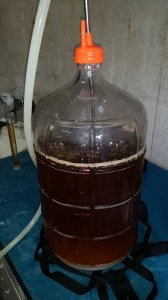
20170611_131001Palaeotis Pils 1.1

After brewing this beer on 20 May 2017, I started it at 50° and then let it ferment at 54° after a few days. I raised the temperature to 64° on 1 June, and then cold-crashed to 33° on 7 June 2017.

I kegged this beer today (11 June 2017). It has a final gravity of 1.011, down from 1.048, for 4.7% abv. At the time of kegging, I also added 1 tsp. of gelatin dissolved in 3/4 cup of water and heated to 152°, as a fining agent.

This beer tastes and smells amazing–I anticipate that it’s going to be a fine brew once it is clear and carbonated! Everything is on-point, and it’s a nice change after the disappointment on my Bohemian pilsner.
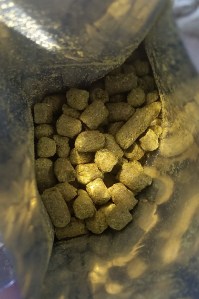
Gondwana Pale Ale 1.5

african_queenMy local homebrew shop happened to have a pound of African Queen hop pellets during my most recent visit…for those not in the know, this is a variety grown in South Africa, and one of the few that is available (for now) in the United States. Due to some recent hop farm purchases, future South African hop availability is likely to be even tighter than before, so I had to jump at this chance to brew with this variety.
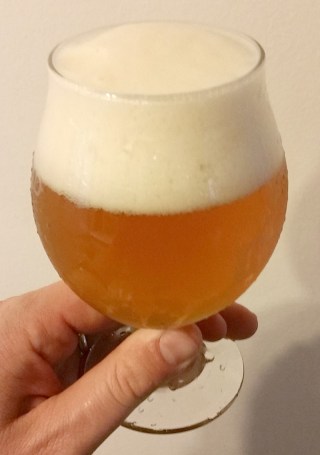
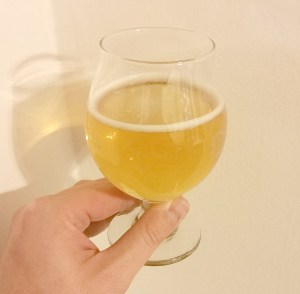
These hops are touted as being on the flavor/aroma end of things, so I wanted a good pale ale recipe that would highlight this. My classic Gondwana Pale Ale seemed like just the ticket! I subbed in a little Vienna malt for the 2-row to help bolster the maltiness. Otherwise, there is very little changed here from my most recent iteration, just the hops.

Gondwana Pale Ale 1.5

  • 6.5 lbs. 2-row malt (Rahr Malting Co.)
  • 3 lbs. Vienna malt (Great Western Malting Co.)
  • 0.5 lb. crystal 40 malt (Great Western Malting Co.)
  • 7 oz. Carafoam malt (Weyermann Malting)
  • 0.35 oz. Warrior hop pellets (15.8% alpha), 60 minute boil
  • 2 oz. African Queen hop pellets (14.5% alpha), 5 minute boil
  • 2 oz. African Queen hop pellets (14.5% alpha), dry hop in keg
  • 1 Whirlfloc tablet, 10 minute boil
  • 1 pkg. California Ale yeast (WLP001)

Target Parameters

  • Infusion mash to hit target of 152°. Batch sparge.
  • Claremont tap water.
  • 1.053 o.g., 1.011 f.g., 5.4% abv, 41 IBU, 6 SRM, 5 gallons into fermenter

Procedure

  • A few days in advance, I made a yeast starter, cold-crashing it and setting aside some for a future batch.
  • On brew day, I mashed in with 3.5 gallons of water at 163°, to hit a 152° mash temperature. The temp had dropped to ~150° after 30 minutes.
  • After 60 minutes, I added 1.25 gallons of water at 185°, let sit for 10 minutes, vorlaufed, and collected the first runnings.
  • Next, I added 3.5 gallons of water at 185°, let sit for 10 minutes, vorlaufed, and collected the remainder of the wort.
  • In total, I collected 6.6 gallons of wort with a gravity of 1.045, for 78% efficiency.
  • I started the boil and added everything per the schedule.
  • After 60 minutes, I chilled the wort down to 70 degrees, and pitched the yeast. I’ll be fermenting at 66°.
  • Starting gravity was 1.053 (right on target!). I brewed this beer on 27 May 2017.
  • Final gravity on 7 June 2017 was 1.012, which equates to 5.4% abv. I added the hops to the keg in a mesh bag, and began carbonation and dry-hopping at room temperature.

Beer Tasting: Good Riddance Pale Ale

20170218_163101This pale ale has disappeared surprisingly quickly; with only a little bit left in the keg, it’s a good time to do a quick tasting.

  • The Basics
    • O.g. = 1.053; f.g. = 1.011; 5.6% abv; estimated IBU = 41; 7 SRM.
  • Aroma
    • Orange and grapefruit, with a hint of tropical fruit at the background — a nice, medium-strong hop aroma.
  • Appearance
    • When poured, I get a tall, off-white head that is pretty persistent and medium-fine. The beer itself is a burnished gold color and fairly hazy (but not opaque like a NEIPA).
  • Flavor
    • The balance is towards the hops (which have a definite grapefruit character), but the malt character is still pretty nice–slightly grainy.
  • Mouthfeel
    • Bitterness is moderately high, but not over the top. The finish is a touch thinner and drier than I care for, which could be corrected by mashing a degree or two higher or adding in an extra quarter pound of crystal 20. That said, the finish is also nicely balanced between hops and malt, and isn’t puckeringly bitter like some other beers I’ve made.
  • Would I brew this again?
    • This beer was a real surprise! I like it much more than I thought I would. Considering that the main aroma hops were coming up on two years of ago, they held their own really well. I suppose the combination of vacuum seal+deep freeze paid off! This is definitely encouraging for other hops in long-term storage. Overall, the base recipe is another good one to add to my repertoire of American pale ales, with just a few minor modifications for mash temp and hops.
  • Score
    • 7/10

Update: Good Riddance Pale Ale and Eagle Face Oatmeal Stout

Tonight it was time to keg my most recent pale ale and my annual oatmeal stout batch.

Good Riddance Pale Ale, after 20 days in the primary fermenter, was down to 1.011 from a starting gravity of 1.053. This equates to 5.6% abv. As I kegged the beer, I added a weighted mesh bag with the dry hops (1 oz. Amarillo hop pellets, 1 oz. Falconer’s Flight 7C’s hop pellets). I’ll be letting this sit at ~68° under carbonation pressure for at least a few days before serving.

Eagle Face Oatmeal Stout (1.4) had been in the primary fermenter for 15 days. It had a starting gravity of 1.060 and a final gravity of 1.019, equal to 5.4% abv. The gravity was a few points more attenuated than expected–most likely due to the slightly lower-than-normal mash temperature for this particular iteration.

This whole undertaking was a good reminder of why I am glad I was able to switch over to kegging–it took barely an hour to sanitize the kegs, keg the beers, clean my transfer equipment, and set the fermenters to soak! I would have needed up to twice that time for bottling!

Beer Tasting: Wild Times Pale Ale

20161226_163216The Wild Times Pale Ale is no more…but I did get a tasting in before the 2.5 gallon keg was all gone!

  • The Basics
    • Original gravity = 1.046, final gravity = 1.011, abv = 4.7%, estimated IBU = 45
  • Aroma
    • Faintly floral hop aroma, with a very light caramel malt aroma.
  • Appearance
    • Brilliantly clear and light yellow in color, with a low white head that is pretty persistant.
  • Flavor
    • A lightly grainy and bready malt aspect; the hop flavor tends towards the distinctly (but not overly) bitter. The bitterness is fairly uncomplex, and the hop flavor has a slightly grassy aspect to it with a faint edge of citrus pith. It’s not bad, just not exceptional.
  • Mouthfeel
    • A pretty dry and light-bodied beer.
  • Overall
    • This is a pretty average pale ale. It’s not bad; it just doesn’t have much that pops out at me. It needs a bit more body and malt complexity; this probably would entail a bit of crystal malt and/or a second base malt (Munich or Vienna, perhaps) to round things out. I also ended up with a slightly lower gravity than expected after the boil, which doesn’t help matters much either. The aroma hop attributes have definitely diminished a bit over time. At their peak, they were surprisingly good, particularly as a novelty item. For an experimental beer, this was certainly a worthy attempt, but any future pale ales will need a different malt base.
  • Score
    • 5/10