Eagle Face Oatmeal Stout 2024

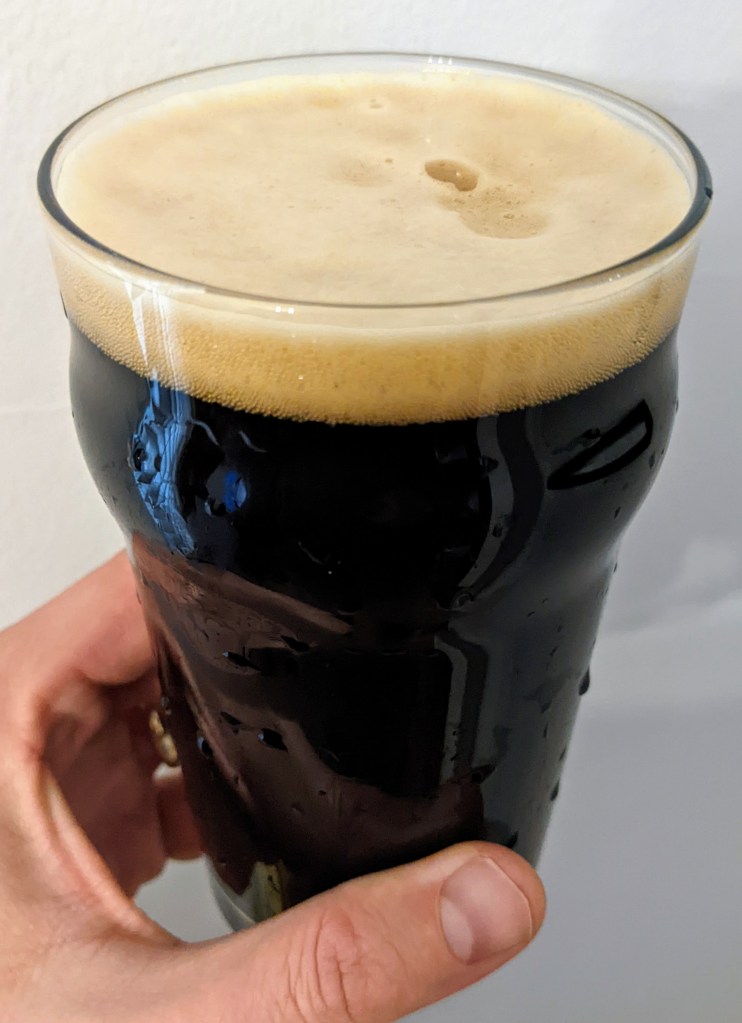
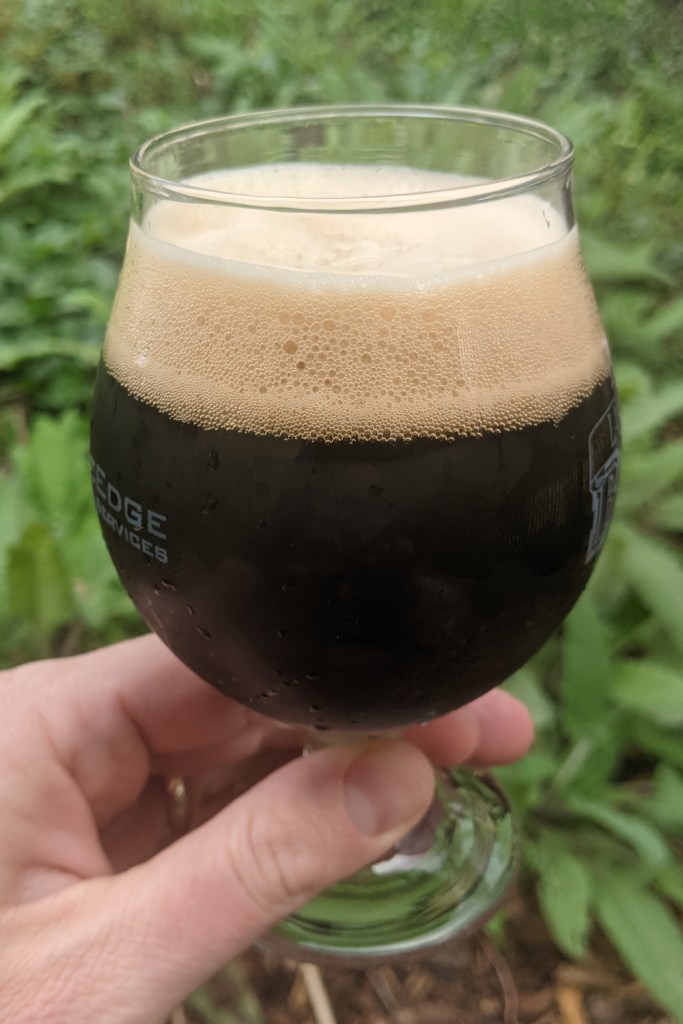
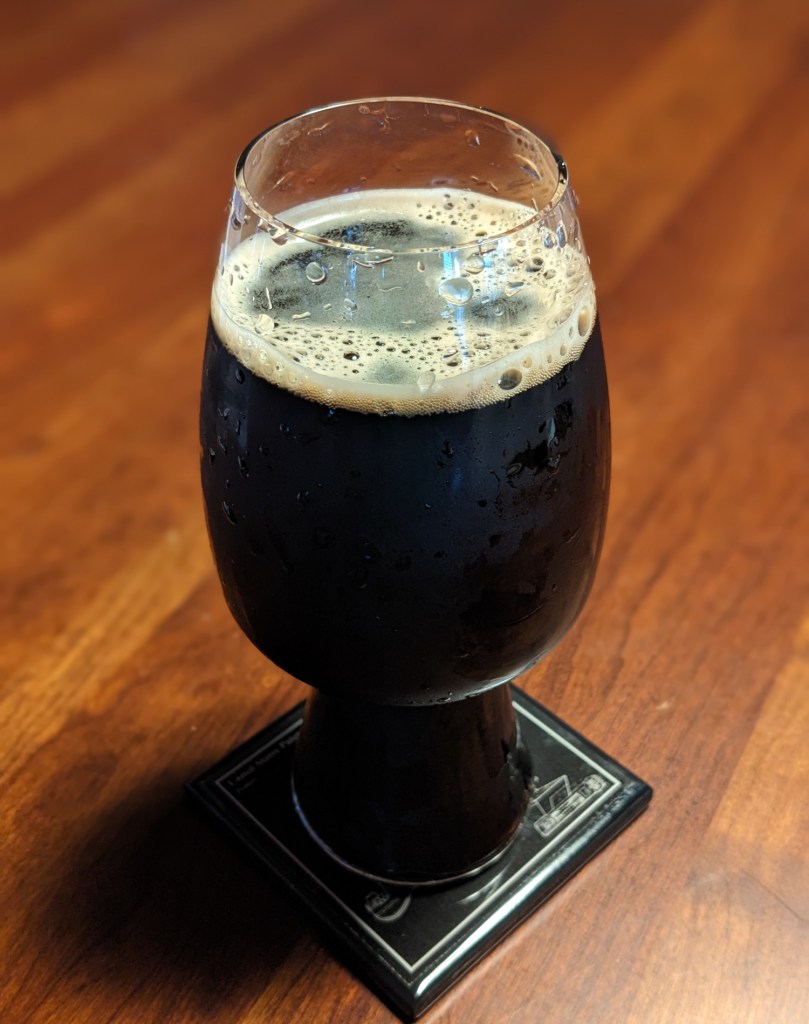
dark stout with tan head in tall, slightly bulged-out craft beer glass, sitting on table
Eagle Face Oatmeal Stout, in a Spiegelau stout glass. I know that beer can be enjoyed in nearly any glassware, but this sure does look pretty!

I have brewed this one many times before, and it is a house favorite. After a two-and-a-half year hiatus, I once again returned to my favorite oatmeal stout recipe. This version has two significant departures — firstly, I returned to the use of 2-row rather than Maris Otter in the recipe. The very first brew used 2-row, and I have more frequently used Maris Otter since. The biggest change here, though, was to try out BRY-97 instead of Nottingham or another higher attenuation English ale yeast. I figured it would be a worthy experiment, creating a more “American” take on the style.

Eagle Face Oatmeal Stout 2024

  • 8.5 lb. 2-row malt (Briess)
  • 1.25 lb. flaked oats (Quaker)
  • 1 lb. 80L caramel malt (Briess)
  • 1 lb. Victory malt (Briess)
  • 0.5 lb. chocolate malt (Bairds)
  • 0.5 lb. roasted barley (Crisp)
  • 0.25 lb. chocolate malt (Simpsons)
  • 1.1 oz. Magnum hops (10.1% alpha), 45 minute boil
  • 1 Whirlfloc tablet, 5 minute boil
  • 1 pkg. American West Coast Ale dry yeast (BRY-97, Lallemand)

Target Parameters

  • 1.058 o.g., 1.015 f.g., 5.6% abv, 35 IBU, 48 SRM
  • Full volume mash, no sparge, 156° mash for 60 minutes, 10 minute mash-out at 168°
  • Claremont tap water, treated with Campden tablet

Procedure

  • I mashed in with 7.75 gallons of Claremont tap water, heated to 163°. I also added 3 mL of 88% lactic acid.
  • I held the mash, with recirculation, at 156° for 60 minutes, before raising to 168° for 10 minutes and then pulling the grains.
  • I collected 6.75 gallons of runnings with a gravity of 1.050, for 72% mash efficiency.
  • I brought the runnings to a boil, adding hops and finings per the recipe. After 60 minutes, I turned off the heat and chilled to 68°.
  • I transferred the wort to my fermenter, pitched the yeast, and started it at ambient (~65°) in my back room.
  • I brewed the beer on 6 January 2024. The starting gravity was 1.056.
  • I kegged the beer on 18 March 2024. Final gravity was 1.020, for 4.8% abv.

Tasting

  • Appearance
    • Very deep brown & clear beer that pours with a fine tan head, with decent persistence.
  • Aroma
    • Clean, chocolate and coffee aroma, with a touch of roastiness. Not much for hop or yeast aroma.
  • Flavor
    • Roasty coffee in the malt profile, and a bit of subtle graininess behind that. Moderate level of bitterness.
  • Mouthfeel
    • Medium body, moderate carbonation, very slightly dry finish.
  • Would I Brew This Again?
    • This recipe is still a winner! My 2024 edition is a touch drier than I recall in past versions, likely because I went with BRY-97 rather than Nottingham. The return to 2-row also probably lightens the flavor a bit. I would consider this one an Americanized version of the style, but I’m ok with that. All of the past versions have been great, but this one is probably most “drinkable” (in terms of having more than one glass). I served the beer at a recent gathering, and it was certainly quite popular! It’s nice to know the recipe has a bit of flexibility–this version might be better for the warmer days of spring, and the “traditional” recipe targeted better for cold winter nights.
  • Overall
    • 9/10

Eagle Face Oatmeal Stout 2021

I have made this recipe a million times (okay, more like seven or eight times), and it’s still just so enjoyable. Here’s the latest!

Eagle Face Oatmeal Stout 2021

  • 8.5 lb. Finest Maris Otter Ale Malt (Crisp)
  • 1.5 lb. flaked oats
  • 1 lb. 80° caramel malt (Briess)
  • 1 lb. Victory malt (Briess)
  • 0.5 lb. roasted barley (Briess)
  • 6 oz. chocolate malt (Briess)
  • 6 oz. chocolate malt (Dingemans)
  • 0.5 lb. rice hulls
  • 1 oz. Magnum hop pellets (10.1% alpha), 60 minute boil
  • 1 Whirlfloc tablet, 5 minute boil
  • 2 pkg. Nottingham ale yeast (Lallemand)

Parameters

  • 1.059 o.g., 1.017 f.g., 5.6% abv, 34 IBU, 35 SRM
  • Full volume mash, no sparge, 156° mash for 60 minutes, 10 minute mash-out at 168°
  • Claremont tap water, treated with Campden tablet

Procedure

  • I heated ~7.5 gallons to 164°, and then mashed in to hit a target mash rest of 156°. I added 5 mL of 88% lactic acid, to adjust pH.
  • I held the mash at 156° for 60 minutes, and then raised it to 168°. I held it at this temperature for 10 minutes, and then pulled the grains.
  • In total, I collected 6.4 gallons of runnings with a gravity of 1.048. This was a bit below my target (1.052).
  • I brought the runnings to a boil, and boiled for 15 minutes before adding the hops. I then proceeded with an additional 60 minutes on the boil, before turning off the heat and

Tasting

  • Appearance
    • A black, clear beer, with a somewhat persistent tan head. The beer is a very dark brown when viewed on edge.
  • Aroma
    • Earthy aroma, with coffee and chocolate and roasted malt. There is a faint dried dark stonefruit aroma.
  • Flavor
    • Medium-high bitterness, and a coffee/chocolate, exceptionally malty flavor. This is a wonderfully rich beer! The yeast character is pretty clean, with a very faint fruitiness. There is an earthy background, perhaps from the hops.
  • Mouthfeel
    • Very full bodied, with a somewhat slick mouthfeel as would be expected from an oatmeal stout. It is very smooth, with a slightly dry finish.
  • Would I Brew This Again?
    • It’s interesting that I pick up earthy characteristics in the aroma, given that there is only a single hop addition as a 60 minute bittering charge of Magnum. That must be produced by the malt combination, but I can’t figure out whre.
  • Overall
    • 10/10

Session Stout 2020

I like session beers! I like stouts! Let’s do another one!

This recipe is a minor modification of a previous session stout. The main malt change was to swap in Vienna malt for Maris Otter, and use full-octane chocolate (350 SRM) versus the pale chocolate (225 SRM) that I used last time. Because this isn’t really a hop-centered beer, I switched the hops over to just a small charge of Magnum at the beginning of the boil. I also decided to swap flaked oats for flaked barley, because why not?

Session Stout 2020

  • 6.25 lb. Vienna malt (Weyermann)
  • 1 lb. flaked oats (Quaker Old Fashioned Oats)
  • 0.75 lb. roasted barley (Briess)
  • 0.5 lb. chocolate malt (Briess)
  • 0.25 lb. black malt – 2-row (Briess)
  • 0.125 lb. rice hulls
  • 0.60 oz. Magnum hop pellets (13.2% alpha), 60 minute boil
  • 1 Whirlfloc tablet, 5 minute boil
  • 1 pkg. Safale American ale yeast (US-05)

Target Parameters

  • 1.041 s.g, 1.011 f.g., 3.9% abv, 31 IBU, 35 SRM
  • Infusion mash, 156°, no sparge
  • Claremont tap water, with Campden tablet to remove chloramine

Procedure

  • I mashed in with 7.25 gallons of water at 161°, to hit a mash temperature of 156°. I started recirculating after 10 minutes, for a total of 60 minutes in the mash. I neglected to do a mash-out–oops!
  • After draining the grain basket, I had 6.5 gallons of runnings with a gravity of 1.033, for 67% mash efficiency. For this batch, I’m still trying to dial in my efficiencies on the Anvil, so I was a touch on the lower side of what I intended.
  • I brought the kettle to a boil, adding hops and finings per the recipe. After 60 minutes, I turned off the heat and chilled the wort, before transferring it to the fermenter.
  • Starting gravity was 1.038, a little lower than targeted (1.041). Oh well! I brewed this beer on 7 November 2020, and fermented at around 66°.
  • I kegged the beer on 22 November 2020, hitting 1.017 final gravity. This equates to only 2.8% abv! As is usual these days, I used keg conditioning to carbonate this batch. It took 2.7 ounces of corn sugar in 1 cup of water. After 2 weeks, I topped up the CO2 level with force carbonation.

Tasting

  • Appearance
    • Pours with a beautiful and highly persistent deep tan head; the beer itself is clear and deep brown, almost black.
  • Aroma
    • Coffee aroma with a touch of chocolate; no hops to speak of; very clean character overall.
  • Flavor
    • Coffee and roast malt notes predominate; not much for “maltiness” otherwise. Moderate, very clean bitterness.
  • Mouthfeel
    • Very light bodied, pretty dry on the finish with a lingering but not unpleasant bitterness. Moderate level of carbonation.
  • Would I brew this again?
    • Absolutely! For what it is–a dry, relatively light session beer–it’s pretty darned satisfying. The background malt body is a little light, but that’s OK. I expected a little more sweetness given the higher finishing gravity. Not sure what’s up with that.
  • Overall
    • 7/10

Eagle Face Oatmeal Stout 1.5

Another year, another iteration of the Eagle Face! This is my absolute favorite recipe, and it has done well for me. I’m entering this in the national homebrew competition this year, after scoring a very respectable 40 last year. Unfortunately, the comments on the judging sheets were not as precise as I would like, other than a vague “needs more malt character.” So, I decided to change the background malt from 2-row to Maris Otter. Other than a minor change in bittering hops, this is pretty much exactly the same as I usually brew. Following last year’s example, I toasted the oats for a bit, too.

Eagle Face Oatmeal Stout 1.5

  • 7.5 lbs. Maris Otter pale malt
  • 1.5 lbs. flaked oats (toasted 1.25 hours at 300°)
  • 1 lb. 80° crystal malt
  • 1 lb. Victory malt
  • 0.75 lb. chocolate malt (Briess)
  • 0.5 lb. roasted barley (Bairds)
  • 6 oz. rice hulls
  • 0.53 oz. Magnum hop pellets (11.8% alpha), 60 minute boil
  • 0.31 oz. Warrior hop pellets (15.8% alpha), 60 minute boil
  • 1 Whirlfloc tablet, 10 minute boil
  • 1 pkg. English ale yeast (WLP001), prepared in 1L starter 24 hours in advance

Target Parameters

  • Infusion mash to hit target of 158°, 60 minutes, batch sparge.
  • 1.062 o.g., 1.023 f.g., 5.2% abv, 37 IBU, 41 SRM
  • Claremont tap water, 56 ppm Ca, 9 ppm Mg, 23 ppm Na, 41 ppm SO4, 21 ppm Cl, 220 ppm HCO3, 135 ppm RA

Procedure

  • I mashed in with 4.25 gallons of water at 171°, to hit a mash temperature of 158°.
  • After 60 minutes, the mash was down to 157°. I added 0.75 gallons of water at 180°, let rest 10 minutes, vorlaufed, and collected the first runnings. I then added 3.25 gallons of water at 180°, vorlaufed, and collected the second runnings.
  • In total, I collected 6.25 gallons of wort with a gravity of 1.053, for 74% efficiency.
  • I boiled for 60 minutes, adding hops and finings per the schedule in the recipe.
  • After a 60 minute boil, I cooled to 72°, pitched the yeast, and put the beer in the fermentation chamber. I’ll be fermenting at 68°.
  • I brewed this beer on 24 February 2018. Starting gravity was 1.062–right on target!
  • Update: I kegged this beer on 8 March 2018. Final gravity was 1.028, a bit higher than predicted, but I’m pretty comfortable that the beer is fully fermented out. Everything tastes pretty good right now; calculated abv is 4.5%.

Update: Good Riddance Pale Ale and Eagle Face Oatmeal Stout

Tonight it was time to keg my most recent pale ale and my annual oatmeal stout batch.

Good Riddance Pale Ale, after 20 days in the primary fermenter, was down to 1.011 from a starting gravity of 1.053. This equates to 5.6% abv. As I kegged the beer, I added a weighted mesh bag with the dry hops (1 oz. Amarillo hop pellets, 1 oz. Falconer’s Flight 7C’s hop pellets). I’ll be letting this sit at ~68° under carbonation pressure for at least a few days before serving.

Eagle Face Oatmeal Stout (1.4) had been in the primary fermenter for 15 days. It had a starting gravity of 1.060 and a final gravity of 1.019, equal to 5.4% abv. The gravity was a few points more attenuated than expected–most likely due to the slightly lower-than-normal mash temperature for this particular iteration.

This whole undertaking was a good reminder of why I am glad I was able to switch over to kegging–it took barely an hour to sanitize the kegs, keg the beers, clean my transfer equipment, and set the fermenters to soak! I would have needed up to twice that time for bottling!