Schoepshead Pale Schöps

For our April style competition, my homebrew club decided to try a Breslau-Style Pale Schöps. I had never heard of this until my club president brought this up as an option, and a bit of searching online finds virtually nothing. This is a historical style, native to the area of Breslau (now Wrocław, Poland). The Brewer’s Association added it to their style guide for the GABF a few years back, which I can only imagine must have been a special favor for someone, because there just ain’t any commercial examples out there now.

In any case, I only found a handful of recipes online, and many (all?) of these were by people asking, “So, I made up this recipe and does it look plausible…” This meant I decided to just use what I’ve learned over the years, and try and put my own recipe together.
From what I read about the style, it should be mostly wheat malt in the grist (up to 80%), with a bready flavor and aroma aspect and a full body. Although this is a wheat ale, it wasn’t supposed to have German wheat ale yeast–instead, a fruity character was described, without phenols. Hops are in the background on this, too.

With all of this information, I put together a grain bill that was mostly wheat malt (~70%), backed up by equal parts pilsner and biscuit malt. I elected to go with a German ale yeast, the classic WLP029. For my grains, I wanted to go with European malts, choosing those from Viking because at least some are sourced from Poland. This seemed appropriate for the brew! I had no idea if I would like this batch or not, so I aimed for 3 gallons instead of the full 5.

The name is a German-ish (highly inauthentic and untranslatable) pun on “Sheep’s Head,” just because I thought it sounded funny and vaguely like the word “Schöps.”

Schoepshead Pale Schöps

  • 6 lb. wheat malt (Viking)
  • 1 lb. biscuit malt (Dingemans)
  • 1 lb. pilsner malt (Viking)
  • 1 lb. rice hulls
  • 2 oz. Hallertauer Mittelfrueh hop pellets (2.7% alpha), 35 minute boil
  • 1 Whirlfloc tablet, 10 minute boil
  • 1 tsp. Fremax yeast nutrient, 10 minute boil
  • 1 pkg. German Ale/Kolsch yeast (White Labs, WLP029)

Target Parameters

  • 60 minute infusion mash, 153°, batch sparge
  • 1.065 o.g., 1.016 f.g., 6.6% abv, 24 IBU, 8 SRM
  • Claremont tap water

Procedure

  • 48 hours in advance, I made a 0.65L starter with the yeast, and cold crashed for 24 hours.
  • I mashed in with 3.25 gallons of water at 165°, to hit a 154° mash temperature. I let this sit for 60 minutes, and it was down to 151° by the end. I added 0.3 gallons of water at 185°, let sit for 10 minutes, vorlaufed, and collected first runnings.
  • Then, I added 2.25 gallons of water at 185°, let sit for 10 minutes, vorlaufed, and collected the second runnings.
  • In total, I collected 4.3 gallons of runnings at a gravity of 1.047. This was only 67% efficiency; it put me well below my target (1.053), but it’s not a surprise given the large amount of wheat in the bill.
  • I boiled for 60 minutes, adding hops and yeast nutrient per the schedule. After 60 minutes, I chilled the wort and transferred to the fermenter.
  • I brewed this beer on March 30, with a starting gravity of 1.060. I fermented the beer a 68°, and gravity was down to 1.014 by 2 April. On 9 April, gravity was 1.010. I kegged the beer at this point; it had reached 6.6% abv.

Tasting

  • Aroma
    • Very bready, with a slight fruitiness behind that. No hop aroma.
  • Appearance
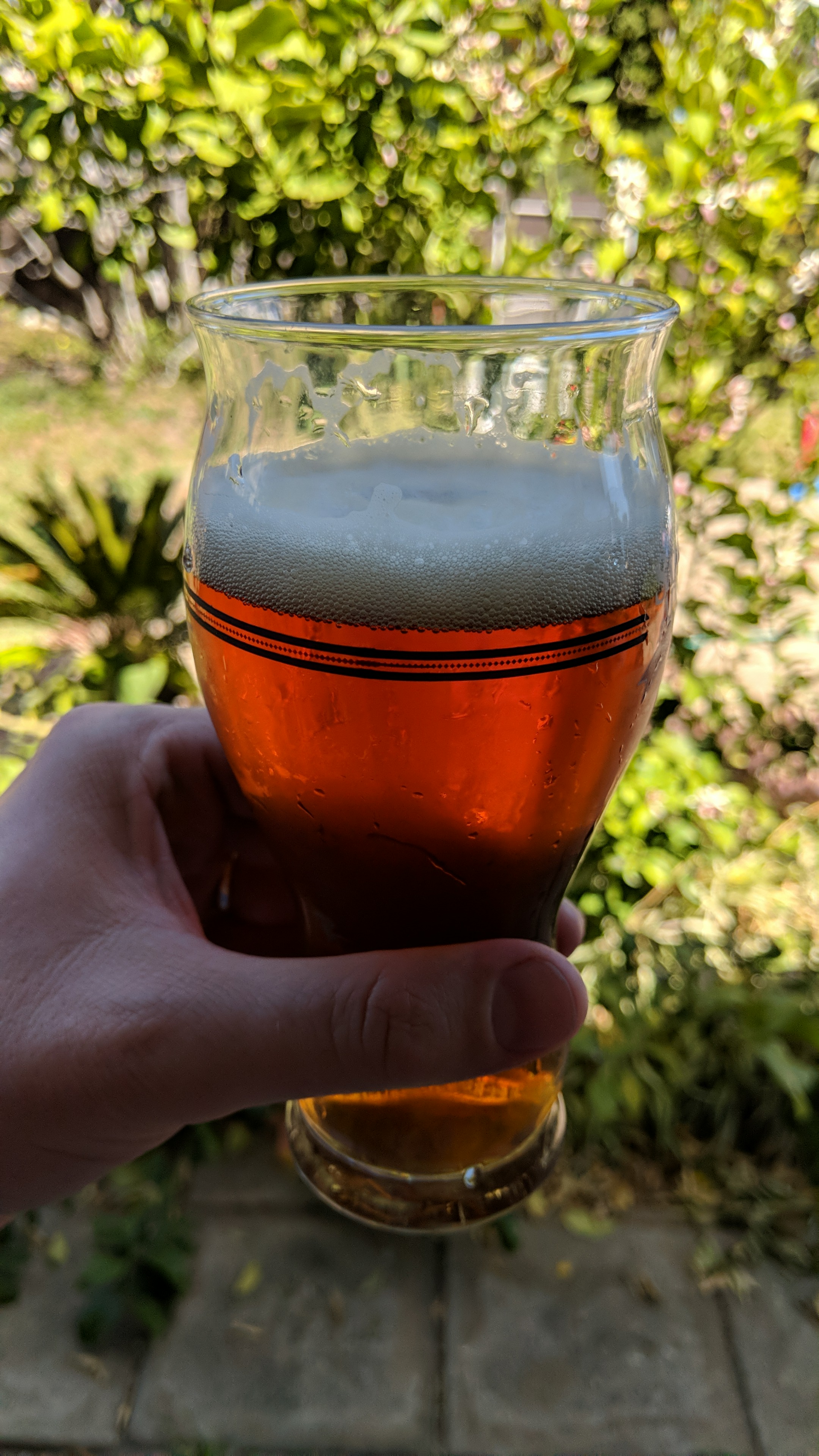
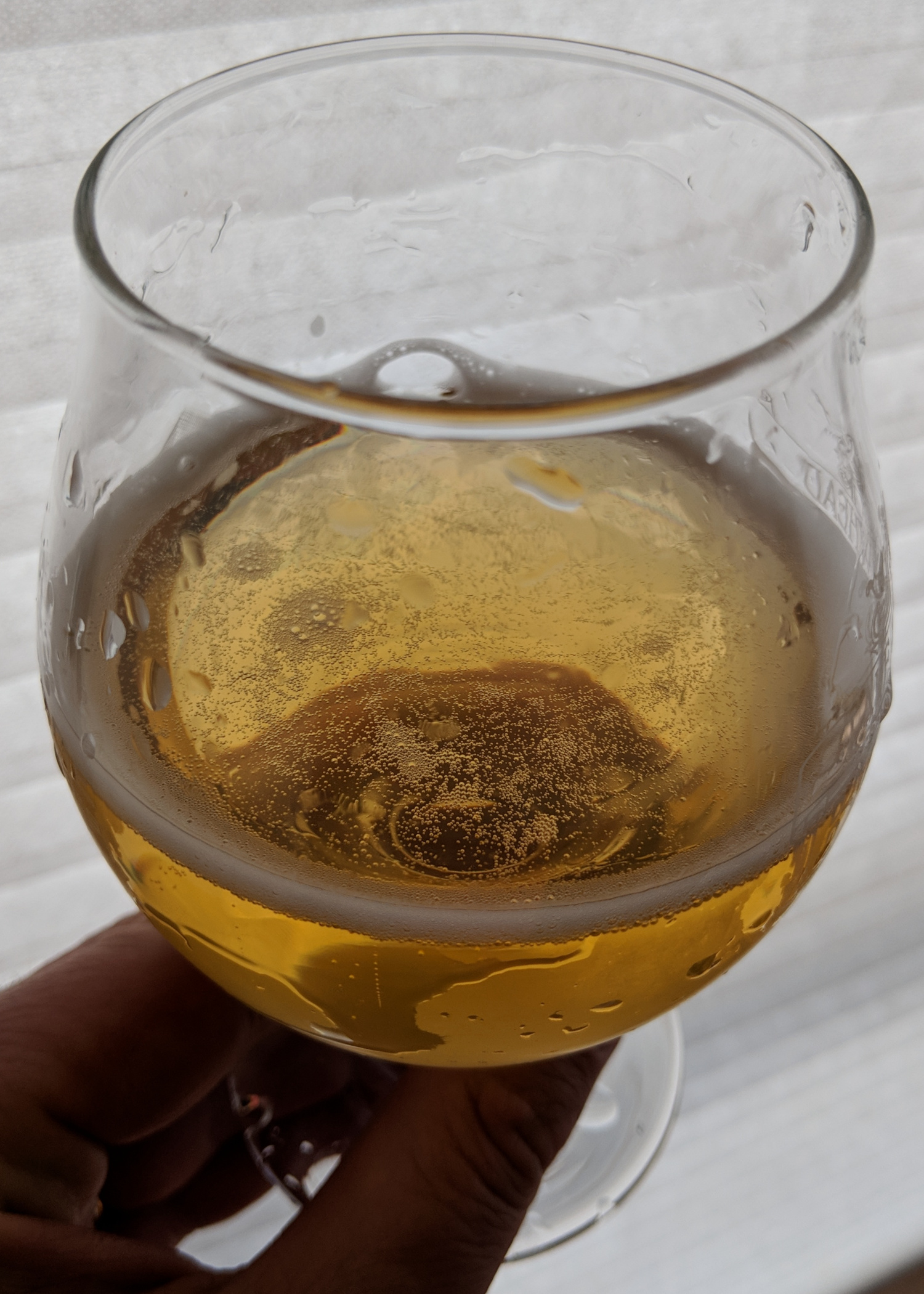
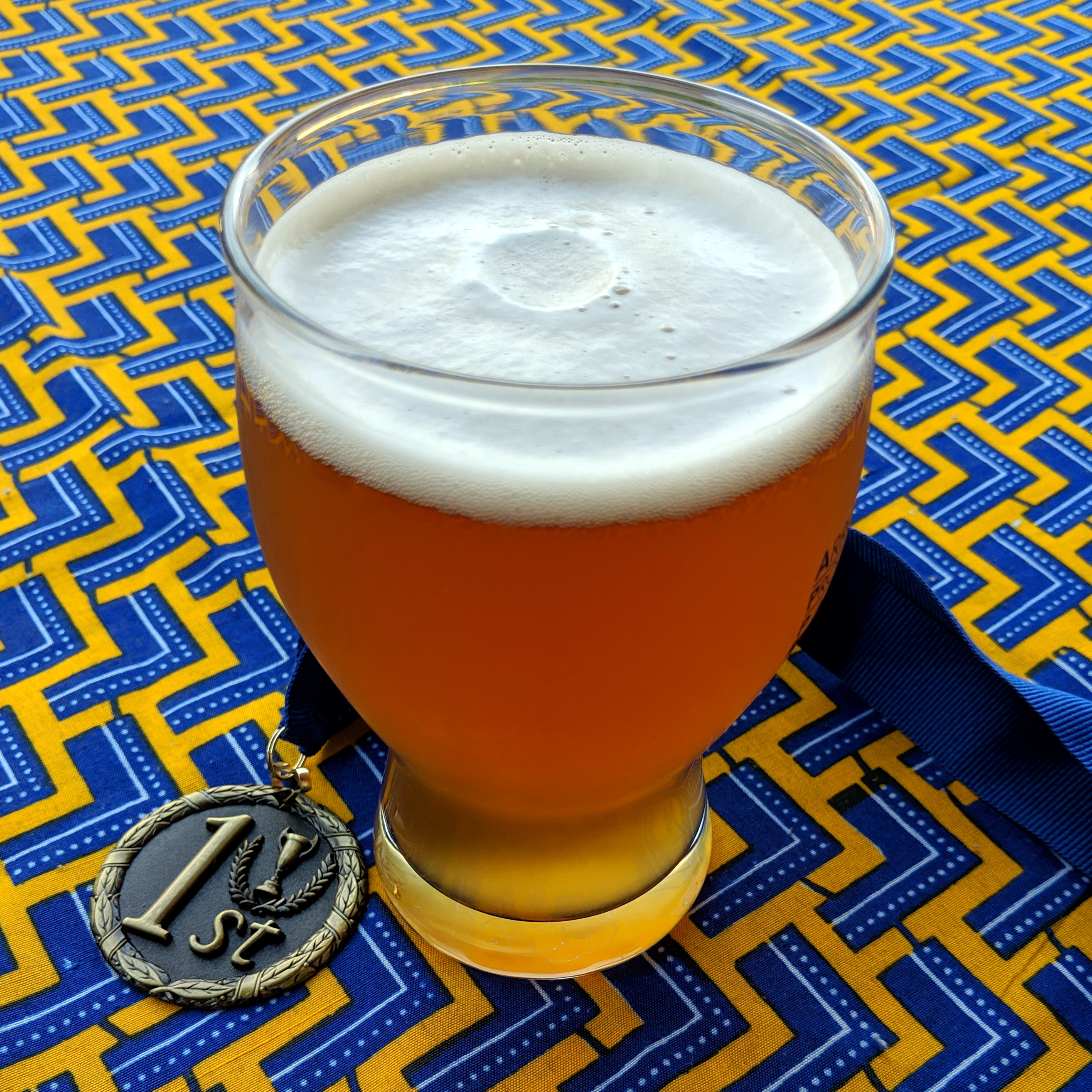
    • Persistent white and very fine head. Beer itself is copper color, with a decent amount of haze.
  • Flavor
    • Lightly fruity on the front, with a nice rounded bready, malty flavor behind that. Hop bitterness is medium-low, with a nice smooth finish.
  • Mouthfeel
    • Great body on this, with moderately high carbonation. The finish is nice and extended, pleasantly balancing the malt and hops.
  • Would I brew this again?
    • This is a really nice beer! I could see myself brewing this recipe again….I wasn’t sure how I’d like this, and it has turned into a pretty enjoyable brew. The flavor is really nice, and it’s a highly drinkable style for its level of alcohol. It’s a great bridge between the beers of winter and the beers of summer. I can’t say there’s anything I’d really change, either to keep it more to style or to make it more to my palate.
  • Overall
    • 10/10

And…the beer won first place in our club competition!
Farke’s ESB

With a 55 lb. sack of Maris Otter malt on hand, I’ve been exploring the world of English beers. The latest stop along this journey was with a best bitter (known commercially sometimes as ESB, or Extra Special Bitter). In order to make this a quick-and-easy brew day, I opted to do a full-volume, no-sparge mash. Even with that shortcut, this one was a winner!

Farke’s ESB

  • 8.5 lb. Maris Otter malt (Bairds)
  • 0.5 lb. caramel 80° malt (Briess)
  • 0.25 lb. 90°L 6-row caramel malt (Briess)
  • 0.25 lb. 20°L caramel malt (Briess)
  • 1 oz. East Kent Goldings hop pellets (6.0% alpha), 60 minute boil
  • 1 Whirlfloc tablet, 10 minute boil
  • 1 oz. East Kent Goldings hop pellets (6.0% alpha), 5 minute boil
  • 1 pkg. London ESB English Style Ale Yeast (Lallemand)

Target Parameters

  • 60 minute full volume infusion mash, 152°
  • 1.042 o.g., 1.012 f.g., 4.0% abv, 28 IBU, 10 SRM
  • Claremont tap water

Procedure

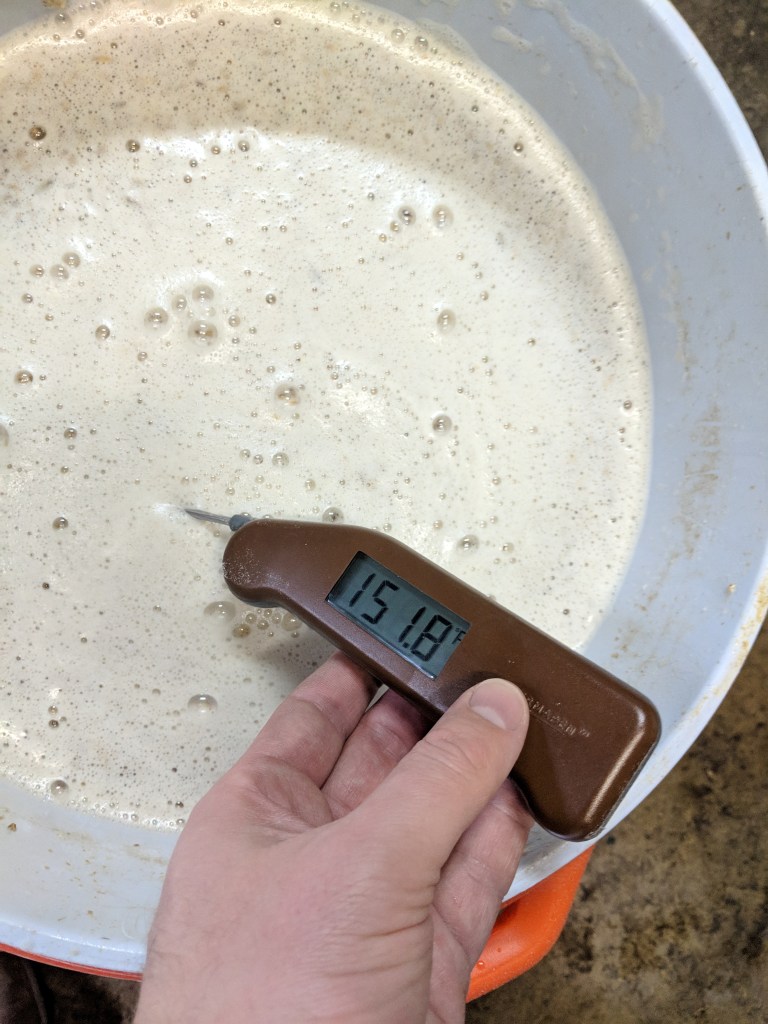
  • I mashed in with 7.5 gallons of water at 156.5°, to hit 151.8° mash temperature. After 60 minutes, I vorlaufed and collected the full volume for the boil.
  • In total, I collected ~6.25 gallons of wort with a gravity of 1.039, for 69.2% mash efficiency.
  • I boiled for 60 minutes, adding hops and finings per the schedule. Then, I chilled and trasnferred to the fermenter.
  • Starting gravity was 1.044, when I brewed this on 3 February 2019. I fermented at 66°.
  • I kegged the beer on 25 February 2019, at a final gravity of 1.015. This works out to 3.8% abv.
  • The beer started out pretty hazy in the keg, but dropped really clear after two or three weeks.

Tasting

  • The Basics
    • O.G. = 1.044; f.g. = 1.015; 3.8% abv; 10 SRM; 28 estimated IBU
  • Appearance
    • Clear, medium amber color, with a fine white head that is pretty persistent. This beer has clarified nicely over the past few weeks.
  • Aroma
    • Light caramel, slightly bready aroma, with a faint fruitiness; incredibly delicious overall!
  • Flavor
    • This is a malt forward beer with a pleasant bitterness on the finish. It’s highly drinkable, with none of the character being overwhelming. The hop character is moderate and balanced well against the malt.
  • Mouthfeel
    • Moderate carbonation appropriate for the style, with a really nicely balanced finish and mouthfeel.
  • Would I brew this again?
    • Yes! It’s a dead simple beer, but one that’s just enjoyable. Pretty much everything is on target here. It’s not one of those “blow your taste buds out of the water” styles, but instead is a solid, enjoyable brew. I might up the fermentation temperature a bit or consider a different yeast, to get more prominent yeast notes, but that’s a fairly minor thing. For being “only” 3.8% abv, this beer doesn’t taste like it!
  • Overall
    • 8.5/10

Dunkel-Osteus 2019

I really enjoyed the Munich Dunkel I brewed two years ago, and recently decided to give the recipe another go. This round was nearly identical in terms of ingredients, with the only real change being a lower mash temperature to dry out the beer a bit and reduce residual sweetness. This version is nearly perfect, and has matured nicely while on tap!

Dunkel-Osteus 2019

  • 9 lbs. Munich Dark malt (BESTMALZ)
  • 6 oz. Carafa Special II malt (Weyermann), added at vorlauf
  • 5 oz. melanoidin malt (Weyermann)
  • 1.5 oz. Hallertauer Mittelfrueh hops (4.0% alpha), 60 minute boil
  • 1 tsp. Fermax yeast nutrient, 10 minute boil
  • 1 Whirlfloc tablet, 10 minute boil
  • 2 pkg. Saflager Lager yeast (Fermentis W34/70)

Target Parameters

  • 60 minute infusion mash, 150°
  • 1.050 o.g., 1.010 f.g., 5.2% abv, 22 IBU, 23 SRM
  • Water adjusted to hit 82 ppm Ca, 7 ppm Mg, 15 ppm Na, 31 ppm SO4, 94 ppm Cl, 131 ppm HCO3, 44 ppm RA

Procedure

  • I used 5.13 gallons of Claremont tap water with 3 gallons of RO water and 5 g of calcium chloride overall, to hit my water targets.
  • I mashed in with 3.25 gallons of tap water (with Campden tablet to remove chloramines) at 161.5°, to hit a mash temperature of 150.5°.
  • For the sparge water, I mixed 2 gallons of tap water with 3 gallons of RO water and 5 g of calcium chloride.
  • After 60 minutes, I added 1.25 gallons of tap water at 185°, let the mash sit for 10 more minutes, vorlaufed, and collected the first runnings.
  • Next, I added 3.3 gallons of sparge water, let sit 10 minutes, vorlaufed, and collected the second runnings.
  • I collected 6.6 gallons of wort with a gravity of 1.040, for 73% mash efficiency.
  • I started the boil, and added the hops, Whirlfloc, and yeast nutrient per the schedule. After 60 minutes, I turned off the flame and chilled the wort down to 70°.
  • I transferred the chilled wort to my fermenter, reduced temperature to 54° in my fermentation chamber, and pitched the yeast at this point.
  • Starting gravity was 1.046, on 26 February 2019.
  • I fermented the beer at 54° for the first week, and raised the temperature to 64° on March 9, 68° on March 12, and cold crashed on March 14. I kegged the beer on 23 March.
  • Final gravity was 1.010, down from 1.046, for 4.7% abv.

Tasting

  • The Basics
    • O.G. = 1.046; f.g. = 1.010; 4.7% abv; 20 SRM; 22 estimated IBU
  •  Aroma
    • Mild chocolate aroma, with no apparent hop aroma.
  • Appearance
    • Beautifully clear, darkest amber/reddish brown color, with an off-tan persistent head
  • Flavor
    • Malty beer, with a residual breadiness on the finish; fairly moderate bitterness
  • Mouthfeel
    • Medium body, with the finish being only very slightly dry. Moderate carbonation, appropriate for style.
  • Would I brew this again?
    • Absolutely! I think I nailed the style pretty well this time around, particularly in that this version is slightly less sweet than the first one I did. I attribute this to a slightly lower mash temperature (150° vs 154°). Finishing gravity was definitely lower (1.010 vs 1.016), too. I wouldn’t mind a touch more chocolate character on this version (which the last version had), but that could be fixed by a bit more Carafa Special II. I also think I liked the Weyermann Dark Munich a bit better than the BEST version of this malt, which also might explain some of the loss in malt character character. I recall Weyermann’s Dark Munich being just a touch richer in character, so I might switch things up next time. Otherwise, this is another great recipe!
  • Overall
    • 9/10

Tripel Threat

Way back in December, my homebrew club had a Belgian tripel contest. I’ll admit that I approached this with a mix of excitement and trepidation. Tripels aren’t really my thing, given their high alcohol content, but on the other hand I think it’s a great idea to stretch my brewing comfort zone. This, after all, is one of the advantages of participating in a homebrew club–you will try styles and get feedback you might not get on your own. So, I took the plunge and brewed a tripel! Recipe and results are below.

Tripel Threat

  • 11.5 lbs. Barket pilsner malt (Weyermann)
  • 3 oz. Saaz hop pellets (3.2% alpha), 60 minute boil
  • 1 Whirlfloc tablet, 10 minute boil
  • 0.4 oz. U.S. Golding hop pellets (3.9% alpha), 5 minute boil
  • 3 lb. white table sugar, 5 minute boil
  • 2 pkg. Abbaye Belgian yeast (Lallemand)

Target Parameters

  • 1.080 s.g., 1.005 f.g., 10.1% abv, 4 SRM, 33 IBU
  • Single infusion batch sparge at 149°
  • Blend of RO and Claremont tap water

Procedure

  • For the strike water, I added 2.6 g gypsum, 0.4 g table salt, 2.1 g epsom salt, and 3.3 g calcium chloride to 3.845 gallons of RO water.
  • I heated the water to 158.6°, and mashed in to hit my target temperature of 148.5°. Mash temperature was down to 144° or so after 60 minutes.
  • After 60 minutes, I added 0.9 gallons of water at 180°, let sit for 10 minutes, vorlaufed, and collected the first runnings. Then, I added 3.3 gallons of water at 180°, let sit 10 minutes, vorlaufed, and collected the second runnings.
  • Total collected volume of runnings was 6.8 gallons with a gravity of 1.047, for ~75% efficiency.
  • I brought the kettle to a boil, adding ingredients per the recipe.
  • After a 60 minute boil, I chilled to 85°, adding 1 tsp of yeast nutrient boiled in 1 cup water. I had forgotten to add this during the boil, and figured it would be important given the high gravity and high percentage of adjunct sugar.
  • I chilled the proto-beer down to 66° and aerated with pure O2 for 60 seconds. Then, I pitched the yeast.
  • Starting gravity was 1.076, with ~6 gallons into the fermenter.
  • I brewed the beer on 7 November 2018. On 1 December, I cold crashed to 33°. I kegged the beer on 2 December 2018, adding 1 tsp. of gelatin in 1 cup of water at 152°. I force carbonated and continued the conditioning at 34°.
  • Final gravity was 1.004, down from 1.075. This works out to 9.6% abv.

Tasting Notes

  • Appearance
    • Light gold, with decent clarity. Fine and persistent white head. In the earlier days of the beer, I had better head formation; as the brew has aged, this has fallen off quite a bit.
  • Aroma
    • Hard to describe — peppery, clovely, alcohol-ey
  • Flavor
    • Hop-forward, with a distinct, almost piercing bitterness. This is balanced against a warming alcohol note and a lightly fruity finish.
  • Mouthfeel
    • Highly carbonated, fairly dry, with a dryness and bitterness (but not astringency) on the finish.
  • Would I brew this again?
    • Meh. This was fun to say I did it, but tripel just isn’t a style that I personally care for, and my particular take on it was fairly mediocre. I know that the beer is supposed to be somewhat dry, but I think it ended up so dry that there wasn’t much for malt character. I would cut back the adjunct sugar quite a bit, and consider adding some flaked grains, either wheat or oats, to help round out the grain character. The bitterness is a little much too, so I might notch that back a shade.
  • Overall
    • 5/10

Session Stout II

A little over a year ago, I brewed a batch of Irish stout based on a recipe in Jennifer Talley’s wonderful book, Brewing Session Beers. The result was pretty enjoyable, so I wanted to revisit the recipe. The main changes from the previous version was a different base malt (Maris Otter instead of American two-row) and using pale chocolate instead of full-on chocolate malt.

The end result was something that is almost there, but in need of a few last tweaks. I love it as a low-alcohol session beer, but feel it still needs a bit more body. I’ll certainly be coming back to this in the future!

Session Stout II

  • 6 lbs. Maris Otter Malt (Bairds)
  • 1 lb. flaked barley
  • 12 oz. roasted barley (Bairds)
  • 7.5 oz. pale chocolate malt (Crisp)
  • 4 oz. black barley (Briess)
  • 2 oz. rice hulls
  • 1 oz. Helga hop pellets (5.6% alpha), 60 minute boil
  • 1.09 oz. East Kent Goldings (6.0% alpha), 10 minute boil
  • 1 Whirlfloc tablet
  • 1 pkg. Safale American ale yeast (US-05)

Target Parameters

  • 1.042 s.g, 1.009 f.g., 4.4% abv, 31 IBU, 42 SRM
  • Infusion mash with batch sparge
  • Water built from Claremont tap water with Campden tablet.

Procedure

  • I mashed in with 166° strike water to hit a target temperature of 152°. After 60 minutes, I added 1.4 gallons of water at 185°, waited 10 minutes, vorlaufed and collected the first runnings. Next, I added 3.3 gallons of water at 185°, waited 10 minutes, vorlaufed, and collected the second runnings.
  • In total, I collected 6.25 gallons of water with a gravity of 1.035, for 71% efficiency.
  • I brought the kettle to a boil, adding hops and finings per the schedule. After 60 minutes, I turned off the heat and cooled down to yeast pitching temperature (combination of cooling coil and time in fermentation chamber after transfer).
  • I transferred the beer to the fermenter and pitched the yeast. I brewed this beer on 4 December 2018, and fermented at 66°. Starting gravity was 1.042.
  • I kegged the beer on 4 Janaury 2019, when it had a final gravity of 1.014. This equates to a measured abv of 3.7%.

Tasting Notes

  • Aroma
    • Chocolatey, roasty, very clean
  • Appearance
    • Deep deep brown, black in the glass; very fine light brown head with excellent persistance; brilliantly clear
  • Flavor
    • Deceptively light flavor, that tilts towards the roasted side with a hint of chocolate. Not a terrible amount of malt backbone. The roastiness is balanced well against the hoppiness. Moderately bitter beer.
  • Mouthfeel
    • Dry, light-bodied beer, with moderately high carbonation as perceived in the mouth.
  • Would I brew this again?
    • This is a pretty tasty, very drinkable beer. I feel like it is just a touch lighter on base malt character and mouthfeel than I like, although this is a pretty easy fix (a bit more base malt or perhaps use full octane chocolate malt instead of pale chocolate). The base recipe itself is pretty solid.
  • Overall
    • 6/10