Tropical Dream IPA

I crafted this recipe to be very tropical hop-forward, with Voss kveik to accentuate any citrus qualities. The kveik choice also let me not be so fussy about temperature; in the end, I’m not sure I’m 100% happy with that decision, but even so the beer is pretty darned good. The hops are amazing!

Tropical Dream IPA

  • 12 lb. 2-row malt (Rahr)
  • 0.5 lb. biscuit malt (Dingemans)
  • 5 oz. crystal 15 malt (Great Western)
  • 5 oz. corn sugar, added to boil
  • 1.15 oz. Magnum hop pellets (10.1% alpha), 60 minute boil
  • 1 tsp. BruTanB, 10 minute boil
  • Whirlfloc tablet, 5 minute boil
  • 1 oz. Enigma hop pellets (19.2% alpha), 10 minute whirlpool
  • 1 oz. HBC 586 hop pellets (11.5% alpha), 10 minute whirlpool
  • 1 oz. Vic Secret hop pellets (18.4% alpha), 10 minute whirlpool
  • 1 pkg. Voss Kveik Ale Yeast (Lallemand)
  • 1 oz. Enigma hop pellets (19.2% alpha), dry hop in keg
  • 1 oz. HBC 586 hop pellets (11.5% alpha), dry hop in keg
  • 1 oz. Vic Secret hop pellets (18.4% alpha), dry hop in keg

Target Parameters

  • 1.060 s.g., 1.010 f.g., 6.6% abv, 67 IBU, 6 SRM
  • Full volume mash at 149° for 60 minutes and 10 minute mash-out at 168°
  • Claremont tap water with Campden tablet, adjusted to hit 113 Ca, 7 ppm Mg, 92 ppm Na, 194 ppm SO4, 110 ppm Cl, 156 ppm HCO3.

Procedure

  • I heated 7.25 gallons of water to 155°, and added the grains along with 8 mL of 88% lactic acid for pH adjustment. I maintained the mash at 149° for 60 minutes, with recirculation, and then raised the mash to 168° for 10 minutes.
  • In total, I collected 6.25 gallons of runnings with a gravity of 1.045, for only 60% mash efficiency. Awful! I’ve had major issues with my grain mill lately, and this was pretty much the last straw. I added a bit of DME to adjust things.
  • I added 7 g of gypsum to the boil, to hit my water target.
  • I brought the wort to a boil, adding the hops and finings per the recipe.
  • After a 60 minute boil, I chilled the wort slightly (down to around 195°), did the whirlpool, and then did the initial chilling of the wort. I finished the chill overnight at ambient, letting things settle down to around 68°.
  • I brewed this beer on 26 November 2022, pitched the yeast on 27 November 2022, and let the beer ferment at ambient. Starting gravity was 1.055.
  • I kegged the beer on 29 December 2022. Final gravity was 1.012, for 5.6% abv.
Tasting

  • Appearance
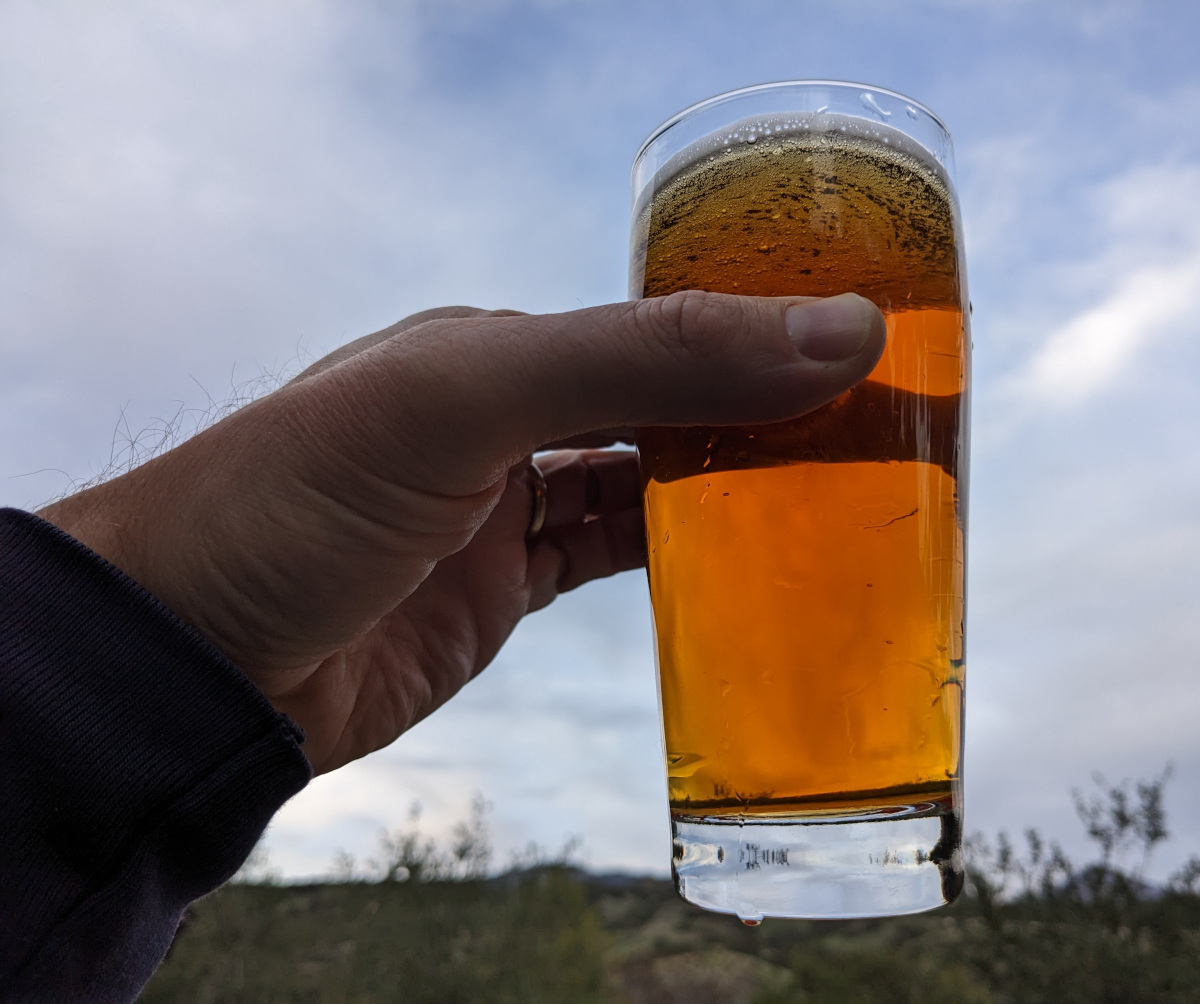
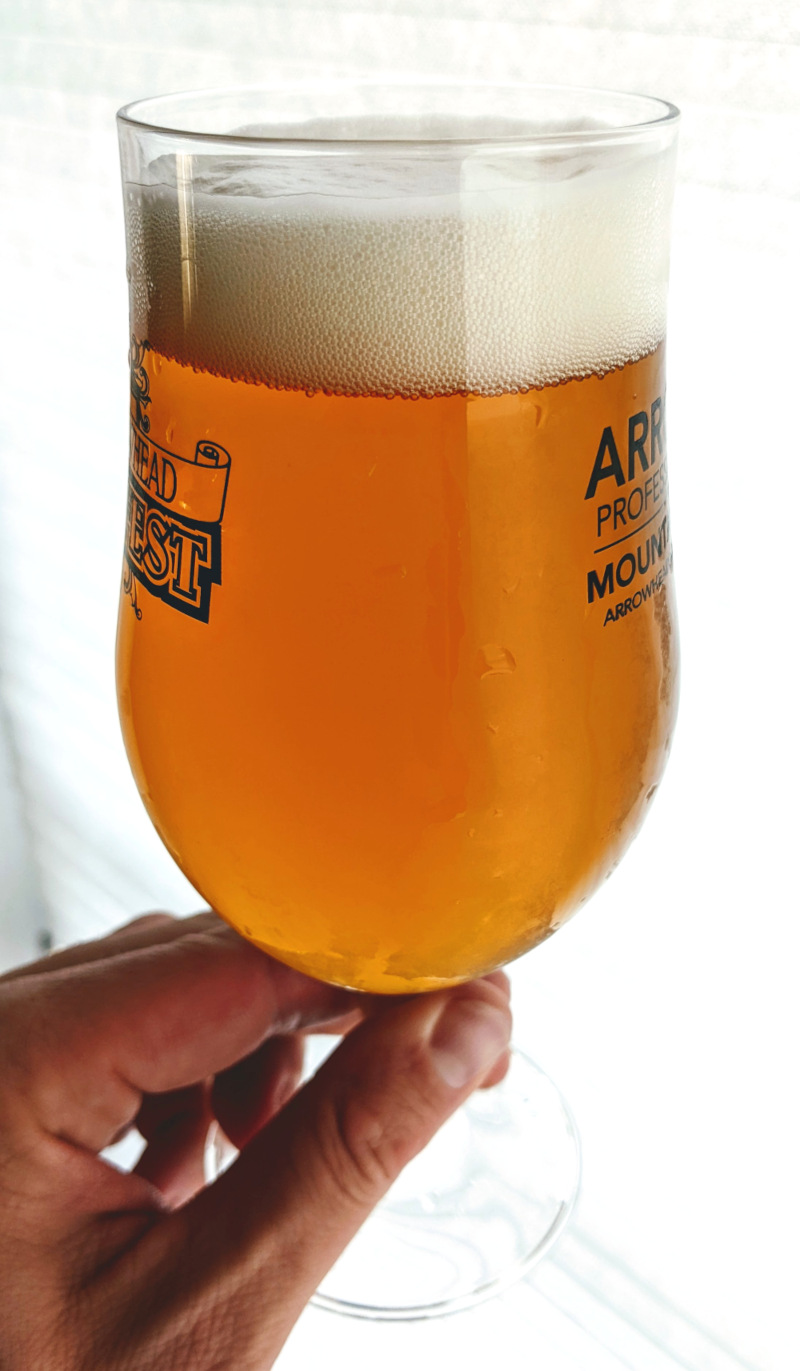
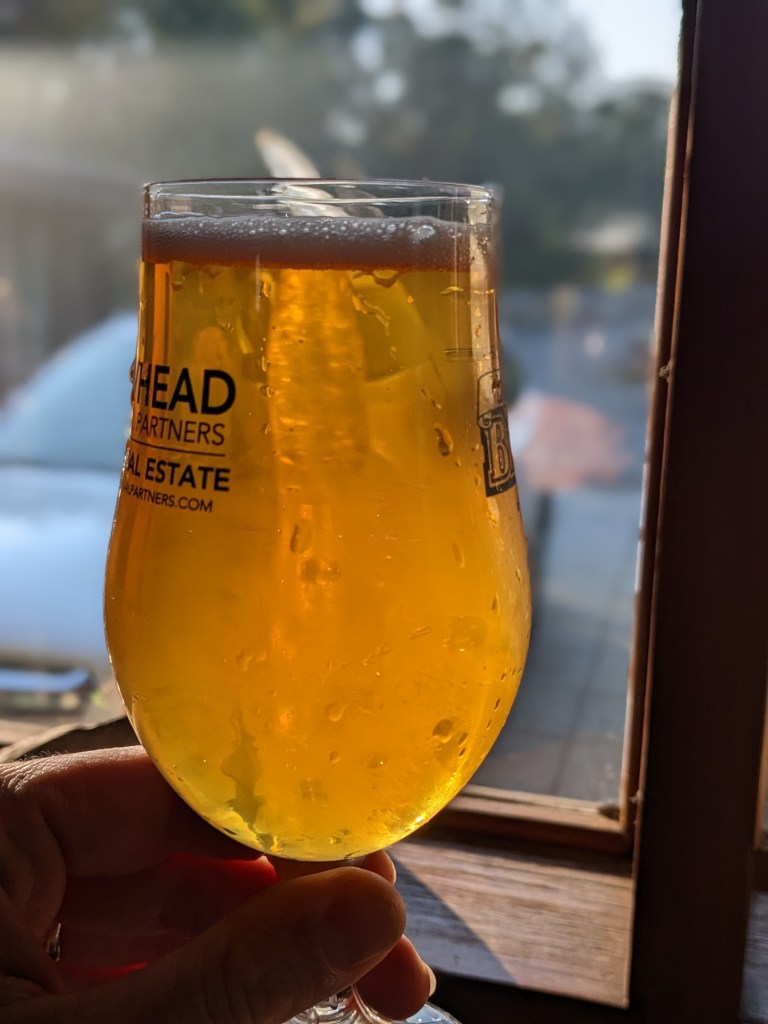
    • The beer pours relatively clear, with a light-gold appearance and a persistent white head. Overall, it’s a very pretty brew!
  • Aroma
  • Lots of hop aroma–guava, honeydew, and orange; very nice!
  • Flavor
    • The beer has a prominent pithy bitterness, with guava, melon, and bright citrus character. The malt is light, clean, and malty sweet. The yeast quality has a very slight bit of ester character; it’s not bad, but gives some kind of Belgian character to the brew. The yeast holds fairly well against the hops, but as an American IPA it would be better without the kveik.
  • Mouthfeel
    • Medium-light body, medium carbonation, dry finish with lingering bitterness.
  • Would I Brew This Again?
    • Yes, but I would likely do it without the kveik; perhaps swap in some American ale yeast instead? There is some type of ester in the background that keeps it from being truly clean. There are no off-flavors; just…something…that clashes a bit. The hop combination is fantastic, though!
  • Overall
    • 7/10

2022’s Homebrew Highlights

The year of 2022 was a bit slower in terms of brewing than some years (22 batches versus 31 last year), because things were just plain hectic. The start of 2023 was even more hectic, hence the fact that it is February before I posted the review for 2022. Even so, I got in some nice brews last year. Here is a recap!

  • Favorite Batch
  • Least Favorite Batch
    • 2022 Orange Summer Wheat Ale. So much went wrong with this batch, and by the time I sampled it from the keg, it was pretty dismal. This was a failure of equipment and technique, not recipe.
  • Experimental Recipe with Most Potential
  • Amber Rye Ale. I had a ton of fun creating this recipe, and it turned out amazing, too! I’m definitely brewing it again.
  • Most Fun New Style/Recipe to Try
  • Big Surprise Belgian Pale Ale. I didn’t expect this one to turn out as well as it did.
  • Upcoming Beer With Most Potential
  • I brewed a schwarzbier at the end of December, and I’m hopeful for it.
  • Best Technique Added to Repertoire
  • Last year was a bit boring; I didn’t really add any new techniques. I suppose that’s OK; stick with what works!
  • Best Ingredient Added to Repertoire
  • Although I started with it in 2021, Diamond Lager yeast became my go-to for lagers in 2022. It’s such a great dry yeast — head and shoulders above dry versions of 34/70, which leave a bit of a tartness I don’t care for. It’s a staple of my brewing supplies now.
  • Favorite Book(s)
  • I didn’t have any new acquisitions that blew me away this year. The Dark Lagers book I received for Christmas 2021 has continued to be enjoyable, and The Fermentation Kitchen is excellent for brewing-adjacent projects. I did get the new Book of Hops — it’s very pretty and full of interesting tidbits, but is probably better suited for those earlier in their brewing journey, or general beer enthusiasts versus more advanced homebrewers.
  • Other Milestones
    • I made beer vinegar for the first time this year, and it was a fun (and tasty) effort. There will be more of this (and other fermentables) in 2023!
  • Overall Stats
    • I brewed 22 batches of beer in 2022, around 120 gallons.
    • IPAs were the major beer of 2022, with 5 batches out of 22. As a category, lagers were 6 out of the 22 batches. This isn’t too different from 2021.

Monks’ Fortitude Märzen

I’ve never made a märzen before, and was intrigued by a recipe in the September 2022 issue of BYO, for Monks’ Fortitude Märzen (paywall). My version is virtually identical, other than using a different dry lager yeast.

Monks’ Fortitude Märzen

  • 8.5 lb. Vienna malt (Weyermann)
  • 3 lb. Munich II malt (Weyermann)
  • 0.5 lb. Carared (Weyermann)
  • 1 oz. Hersbrucker hop pellets (4.3% alpha), first wort hop and 75 minute boil
  • 0.5 oz. Hersbrucker hop pellets (4.3% alpha), 30 minute boil
  • 1 tsp. BruTanB, 10 minute boil
  • 1 Whirlfloc tablet, 5 minute boil
  • 0.5 oz. Hersbrucker hop pellets (4.3% alpha), 5 minute boil
  • 2 pkg. Diamond Lager dry yeast (Lallemand)

Target Parameters

  • 1.055 o.g., 1.009 f.g., 6.1% abv, 24 IBU, 8 SRM
  • Full volume mash at 145° for 40 minutes, 156° for 40 minutes, and 10 minute mash-out at 168°
  • Claremont tap water, with Campden tablet

Procedure

  • I mashed in with 7.25 gallons of water at 145°, adding 7 mL of 88% lactic acid. I maintained temperature at 145° for 40 minutes, before stepping up to 156° for 40 minutes and then 168° for 10 minutes.
  • I collected 6.5 gallons of wort with a gravity of 1.046, for 67% mash efficiency.
  • I forgot to add the CaraRed (argh! too many distractions during my brew day) in the initial mash, but was able to steep it in hot wort for 20 minutes at the start of the boil. I then filtered out the grains and added the steeped liquid to the boiling wort. This should probably kick my efficiency up to around the target.
  • I added hops and finings per the recipe, boiling for a total of 75 minutes.
  • I hit a target gravity of 1.055, exactly on the nose. I chilled the beer
  • I brewed the beer on 8 October 2022, and chilled it overnight to 48°. The next morning, on 8 October 2022, I pitched the yeast.
  • I started fermentation at 48°, and let it free rise to 50° on the first day.
  • I brought the beer out to ambient on 12 November 2022, and let it sit at this temperature until kegging on 19 November 2022.
  • Final gravity was 1.012, for 5.7% abv.

Tasting

  • Appearance
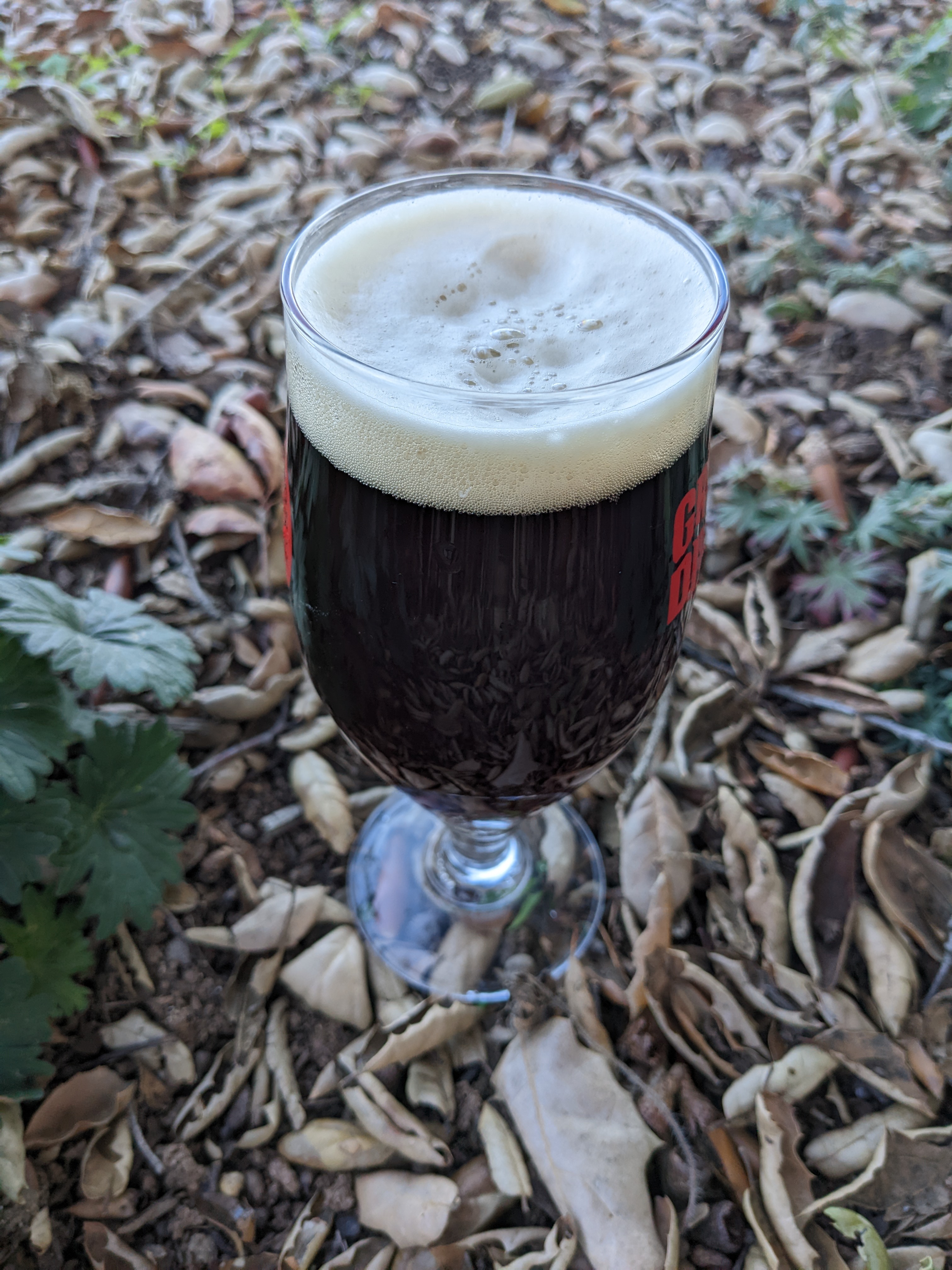
    • Brilliantly clear and light amber hue, with a persistent off-white head.
  • Aroma
    • Malty! There is also a slight bit of spicy hop character. Yeast profile is very clean.
  • Flavor
    • The beer has a rich malty character, with an off-dry finish and a bread-crust quality. Very drinkable! Bitterness is moderate, well matched with the maltiness.
  • Mouthfeel
    • Medium body, med\ium carbonation, smooth and off-dry finish.
  • Would I brew this again?
    • Yes! This is wonderfully drinkable and well attenuated, and a very nice lager. It’s a good version of this style.
  • Overall
    • 10/10

Mahajanga Imperial IPA

It’s the cooler season here in SoCal, so I like a higher strength beer every once in awhile. To that end, I wanted to do an old-school double IPA–something with big malt and piney hop character. So, I returned to the Maharajah Imperial IPA recipe from Craft Beer for the Homebrewer, with my own paleontological spin on it. I made some malt and hop substitutions for what was on-hand, but overall it has the same feel as my previous version. I also added some dextrose to dry out the beer a touch; with the combo of darker malts, I didn’t want it to end up feeling syrupy. I aimed for a batch volume of around 3.5 gallons–firstly, because I don’t want 5 gallons of a beer with this high of alcohol, and secondly because I figured I would lose a bit of volume to the heavy hopping level.

Mahajanga Imperial IPA

  • 11 lb. 2-row malt (Rahr)
  • 6 oz. Special B malt (Dingemans)
  • 4 oz. Aromatic Munich Malt 20L (Briess)
  • 12 oz. dextrose
  • 1.5 oz. Centennial hop pellets (8.1% alpha), 60 minute boil
  • 1 oz. Amarillo hop pellets (10.5% alpha), 30 minute boil
  • 0.5 oz. Amarillo hop pellets (9.5% alpha), 30 minute boil
  • 1 tsp. BruTanB, 10 minute boil
  • 1 Whirlfloc tablet, 5 minute boil
  • 1.75 g yeast nutrient (WLN1000, White Labs), 5 minute boil
  • 1 oz. Centennial hop pellets (8.1% alpha), 5 minute whirlpool
  • 1 oz. Talus hop pellets (6.2% alpha), 5 minute whirlpool
  • 2 pkg. American West Coast Ale yeast BRY-97 (Lallemand)
  • 1 oz. Centennial hop pellets (8.1% alpha), dry hop in keg
  • 1 oz. LUPMAX Chinook hop pellets (17.0% alpha), dry hop in keg
  • 1 oz. Talus hop pellets (6.2% alpha), dry hop in keg

Target Parameters

  • 1.083 s.g., 1.011 f.g., 102 IBU, 12 SRM, 9.6% abv
  • Full volume mash at 149° for 60 minutes, 10 minute mash-out at 168°
  • Claremont tap water adjusted to hit target of 68 ppm Ca, 7 ppm Mg, 92 ppm Na, 108 ppm sulfate, 110 ppm chloride, 156 ppm bicarbonate

Procedure

  • I mashed in with 5.25 gallons of water at 158° and added 5.5 mL of 88% lactic acid, to hit a target rest temperature of 149°. I held it here for 60 minutes, before raising the temperature to 168°.
  • After the mash, I pulled the grains and sparged with about 0.75 gallons of hot water, to rinse the residual sugars out.
  • In total, I collected 5 gallons of runnings with a gravity of 1.060, for 70% mash efficiency. This is good on the one hand, but it meant I had to boil a little harder and longer to get the volume down.
  • I added 2 g of gypsum to the boil, to hit my water target, and also added the corn sugar at this time.
  • I boiled for around 75 minutes, adding the hops and finings per the schedule. After the boil, I chilled a few degrees and then added the whirlpool hops, recirculating for 10 minutes during this process.
  • I chilled the beer the rest of the way, down to around 68°, before transferring to the fermenter and adding the yeast.
  • Starting gravitry was 1.074, a bit short of my goal; I should have boiled a bit longer, because I had plenty of volume. I brewed this beer on 20 November 2022, and fermented at 68°.
  • I kegged the beer on 10 December 2022, with a final gravity of 1.012 and 8.3% abv. I’m pretty happy with that! I bagged the hops and added them to the keg. It didn’t take long for the beer to drop clear at serving temperatures!

Tasting

  • Appearance
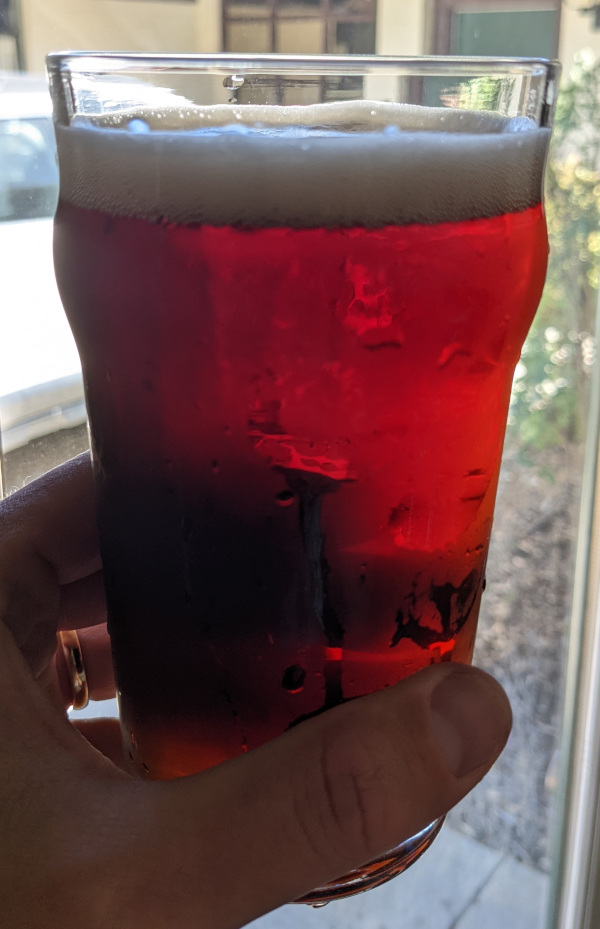
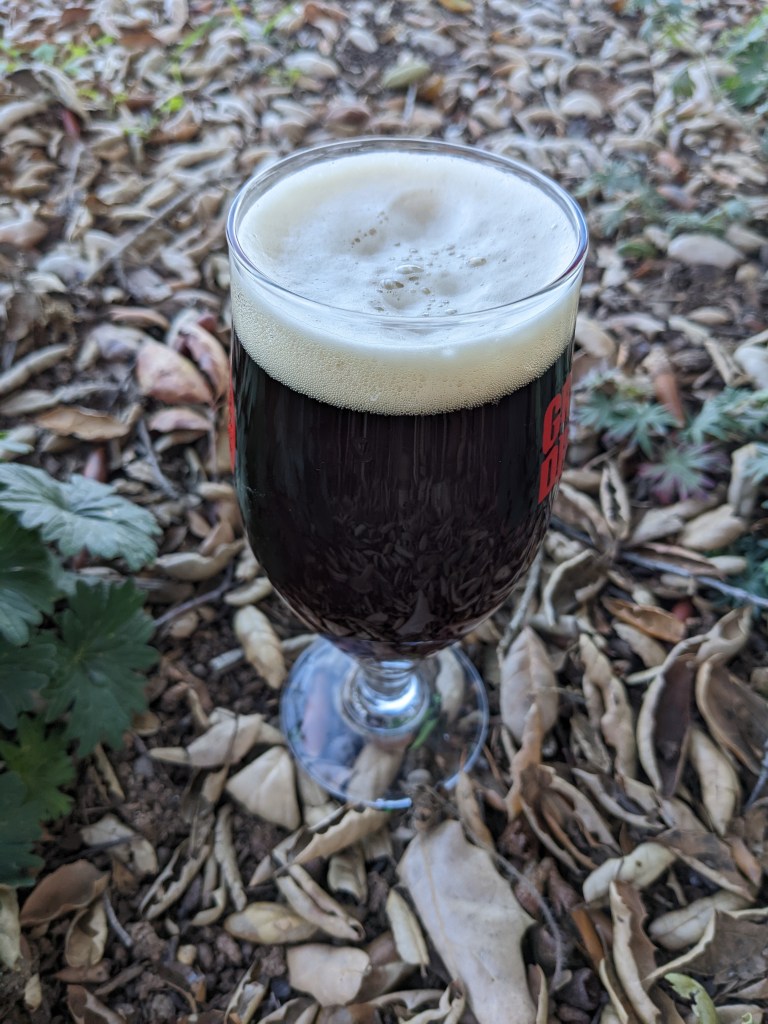
    • Gorgeous! This is a beautifully clear beer–one of the quickest and best I’ve gotten for an IPA–that pours with a tall, persistent, fine, and off-white head.
  • Aroma
    • Pine and resiny hop aroma, with a hint of deep caramelly malt behind that. There is a very slight bit of alcohol apparent when warmed.
  • Flavor
    • High level of piney hop bitterness at the front, with a bit of citrus pith.
  • Mouthfeel
    • Medium body, medium carbonation. The beer has a very slightly dry finish, but not over the top dry.
  • Would I Brew This Again?
    • Yes! This beer is incredibly drinkable; a little too much so, in fact. It goes down smoother than its ABV allows, and there is no solventy alcohol character that sometimes happens in these kinds of homebrews. The end result was a classic “old school” IPA.
  • Overall
    • 10/10

Ill-Tempered Gnome Clone 2022

Another year, another brew of the excellent Ill-Tempered Gnome clone recipe! This version is identical, except I swapped in BRY-97 for US-05. Without any further introduction, all of the details are below.

Ill-Tempered Gnome Clone

  • 12 lb. 2-row pale malt (Rahr)
  • 11 oz. crystal 15° (Great Western)
  • 5 oz. coffee malt (Simpsons)
  • 5 oz. honey malt (Gambrinus)
  • 5 oz. special B malt (Dingemans)
  • 4.5 oz. special roast malt (Briess)
  • 3.5 oz. chocolate malt (Bairds)
  • 1 oz. Nugget hop pellets (13.0% alpha), 60 minute boil
  • 0.5 oz. Centennial hop pellets (8.1% alpha), 20 minute boil
  • 0.5 oz. Crystal hop pellets (4.5% alpha), 20 minute boil
  • 1 Whirlfloc tablet, 5 minute boil
  • 1 oz Cascade whole hops (est. 5.5% alpha), 5 minute boil
  • 2 pkg. American West Coast ale yeast (BRY-97)

Target Parameters

  • 1.063 o.g., 1.015 f.g., 6.3% abv, 58 IBU, 21 SRM
  • Full volume mash at 154° for 60 minutes, with 10 minute mash-out at 168°
  • Claremont tap water, adjusted to reach estimated profile of 75 ppm Ca, 11 ppm Mg, 93 ppm Na, 149 ppm sulfate, 105 ppm Cl, 156 ppm bicarbonate; RA 68, 128 ppm alkalinity; 60 ppm effective hardness.

Procedure

  • I heated 7.5 gallons of water to 162°, adding a Campden tablet to remove chloramines. Then, I mashed in with the grains to hit a temperature of 154°. I added 7 mL (1.5 tsp.) of 88% lactic acid to adjust the pH of the mash, and recirculated at 154° for 60 minutes. Then, I raised the mash temperature to 168° and held it there for 10 minutes, before removing the grains.
  • In total, I collected 6.5 gallons of runnings with a gravity of 1.054, for 68% mash efficiency.
  • As I brought the runnings to a boil, I added 5 g of gypsum to adjust the water profile.
  • The Foundry had some issues with turning on and off, but I approximated a 60 minute boil, adding hops and kettle finings per the recipe.
  • After the 60 minute boil, I chilled to ~75°, transferred to the fermenter, and chilled down to 65° in the fermentation chamber. Then, I pitched the two packages of yeast.
  • I brewed the beer on 2 October 2022, and fermented at 65°. Starting gravity was 1.060.
  • On 8 October 2022, I removed the beer from the fermentation chamber and let it free rise to ambient to finish out fermentation.
  • I kegged the beer on 30 October 2022. At this point, its gravity was 1.015. This equates to 5.9% abv.

Tasting

  • Appearance
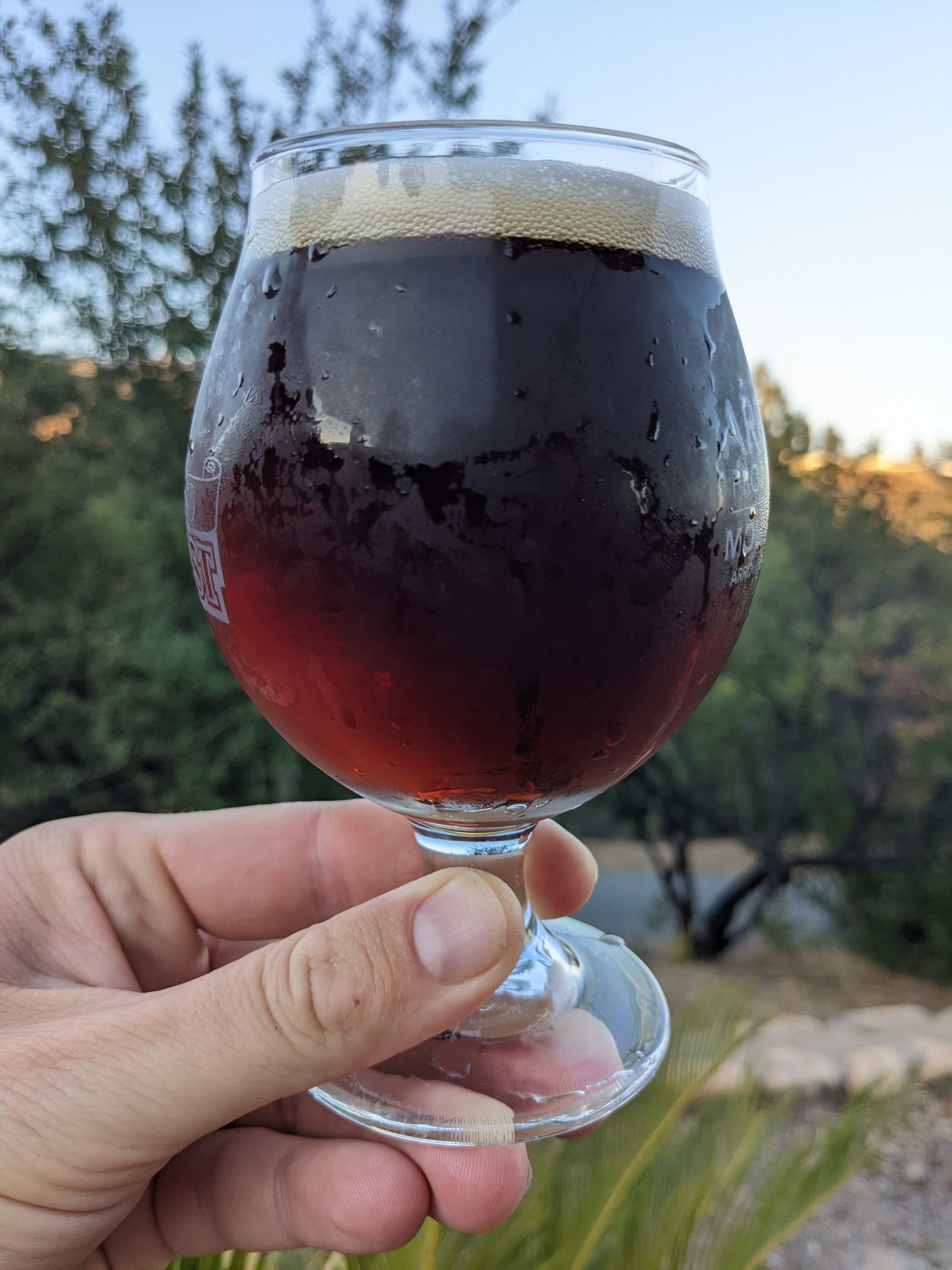
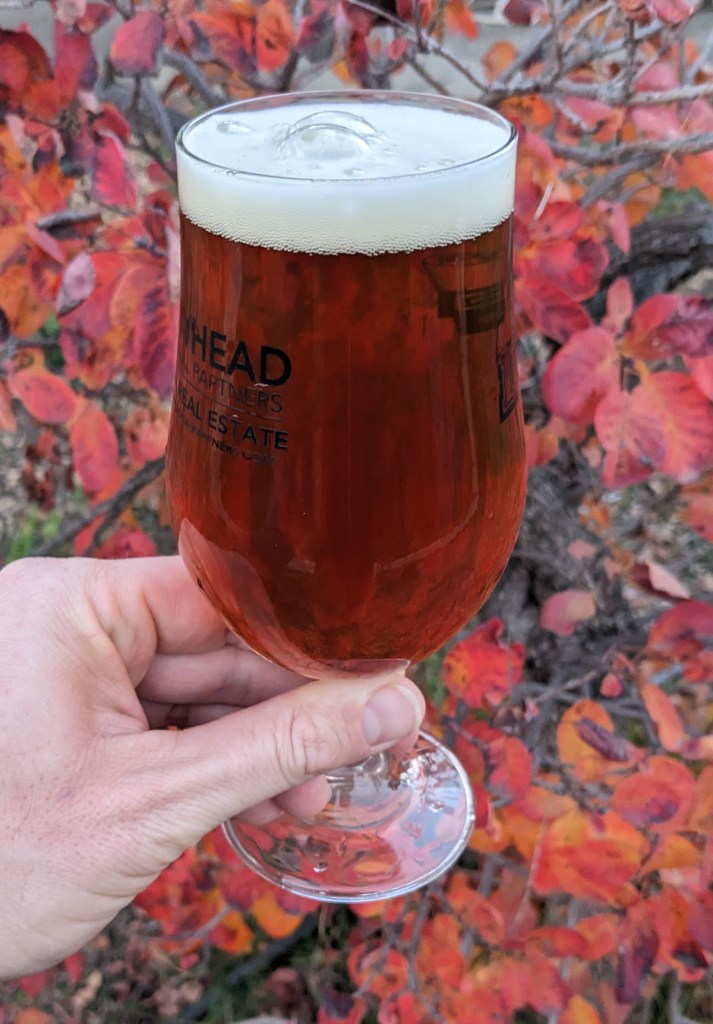
    • Thick, creamy, persistent tan head. Brilliantly clear, reddish-brown beer. Very pretty!
  • Aroma
    • Dark caramel and coffee malt aroma.
  • Flavor
    • Resiny hop bitterness at a moderately high level is very prominent, with a coffee and dark chocolate malt character behind that. There is a very very faint fruity character in the yeast, barely detectable. The bitterness lingers on the finish, quite pleasantly.
  • Mouthfeel
    • Medium body and moderate carbonation, with a smooth finish.
  • Would I Brew This Again?
    • Yep! This is a nice recipe; my memory of last year’s version is that it was a touch better, although I think that’s in part the keg. I split the beer into two 2.5 gallon kegs, and I suspect the one I’m sampling from (the less filled one) may have had a touch of oxidation due to the head space. Either way, it’s enjoyable!
  • Overall
    • 9/10