Salty One Gose

I’ve never made a gose before! This confession is probably not terribly surprising for those who know my brewing preferences, because I find most sour beers a little too annoying to deal with. Kettle sours take time, and other sour processes are prone to contamination of subsequent batches in the same equipment. Plus, I find many sours just a little too sour to be drinkable beyond a half glass. That said, gose is only lightly tart and lower alcohol, which puts it into the space of beers I enjoy. I think the main thing deterring me from the style in the past was the annoyance of having to dial in the sourness without overshooting (undershooting?) the pH.

Then, I spotted a neat recipe in the January 2025 Zymurgy magazine–a brew called “Salty One Gose” that won gold in the European Sour Ale category at NHC 2024. Crafted by Jonathan Hernandez of Waterville, Maine, the beer drew my interest because it used kettle soured sauergut added to the main kettle in order to hit the perfect level of sourness. So, you’re essentially blending wort for a desired result.

I modified this beer only slightly from the original recipe. The published version was 6 gallons, so I reduced it towards a 5.25 gallon batch. I also adjusted the amount of pilsner malt required downwards, anticipating high efficiency (as is typical of my batches with minimal grain volumes). I used a mix of Viking and MCM malt, because I had a pound of the latter on-hand to use up. Finally, I used whole Saaz hop cones from South Dakota; hops are a minor consideration for this style, so I wasn’t too concerned about alpha level, aroma, or flavor.

Coriander choice took some thought–although I have it on-hand for cooking, it had been in the pantry for a few years, and I was worried about freshness. So, I ordered a small quantity online; the package didn’t document origin of the spice, but when I smelled the crushed seeds they had the fresh lemon quality I was looking for.

Recipe Name

  • 1 gallon sauergut (added to kettle at boil)
    • 1 lb. pilsen light DME (Briess)
    • 1 pkg. Wildbrew Sour Pitch (Lallemand)
  • 3.5 lb. white wheat malt (Briess)
  • 2.5 lb. pilsner zero malt (Viking)
  • 1 lb. pilsner malt (Montana Craft Malting)
  • 2 oz. rice hulls
  • 0.5 tsp. BrewTanB, added to mash
  • 1 oz. Saaz whole hops (est. 1.5% alpha), 60 minute boil
  • 0.5 tsp. BrewTanB, 10 minute boil
  • 8 g. coriander seed, crushed, 10 minute boil
  • 13.1 g kosher salt, added at end of boil
  • 1 pkg. Köln Kölsch-style yeast (Lallemand)

Target Parameters

  • Full volume mash with 5 minute rest at 131°, 40 minute rest at 147°, 30 minute rest at 161°, and 10 minute rest at 168°
  • 1.042 o.g., 1.007 f.g., 4.6% abv, 5 IBU, 3 SRM
  • Mash water adjusted to 37 ppm Ca, 20 ppm SO4, and 51 ppm Cl.

Procedure

  • Two days before the primary brew day (April 3), I measured out 1.1 gallons of RO water (4.164 kg), added 1 lb. of Briess pilsen light dry malt extract, 1.5 tsp. (7.5 mL) of 88% lactic acid, and then boiled this for 4 minutes. Next, I chilled the wort to 90°, before pitching the entire packet of the lacto culture.
  • I started the initial culture on the evening of 3 April 2025, kept a heating pad under it, and wrapped it in a blanket, to hold temperature at 85° to 90°.
  • By April 5, the pH looked to be around 3.2 or 3.3 as measured by pH strips. This was brew day!
  • I mashed in with 6.5 gallons of RO water and mineral adjustments, with 0.9 g gypsum and 2.6 g calcium chloride. I heated the strike water to 134°; once the grains were added, I held the temperature at 131° for 5 minutes, before heating to 147° for 40 minutes, raising to 161° for 30 minutes, and then mashing out at 168° for 10 minutes.
  • Because I had such a low volume of grains, I had exceptional mash efficiency at 1.034 with 6.9 gallons, for 89% mash efficiency.
  • As the main runnings were coming to a boil, I boiled the saurgut prepared earlier and added it to the kettle, getting a pre-boil gravity of 1.035.
  • I brought the kettle to a boil, adding hops, BrewTanB, coriander, and salt per the recipe. After a full 90 minute boil, I turned off the heat and chilled to 72° before transferring to the fermenter.
  • I chilled the wort to 64° in the fermenter, holding it at that temperature for initial fermentation.
  • I brewed the beer on 5 April 2025, and had a starting gravity of 1.043.
  • I kegged the beer on 18 May 2025, with closed transfer. Final gravity was 1.009, for 4.5% abv.
  • My tasting at the time of kegging showed it to be an exceptional beer–the coriander flavor and aroma were perfect, as was the salt balance. After the initial carbonation and tastes, I decided to up the carbonation to about 3.2 volumes.

Tasting

  • Appearance
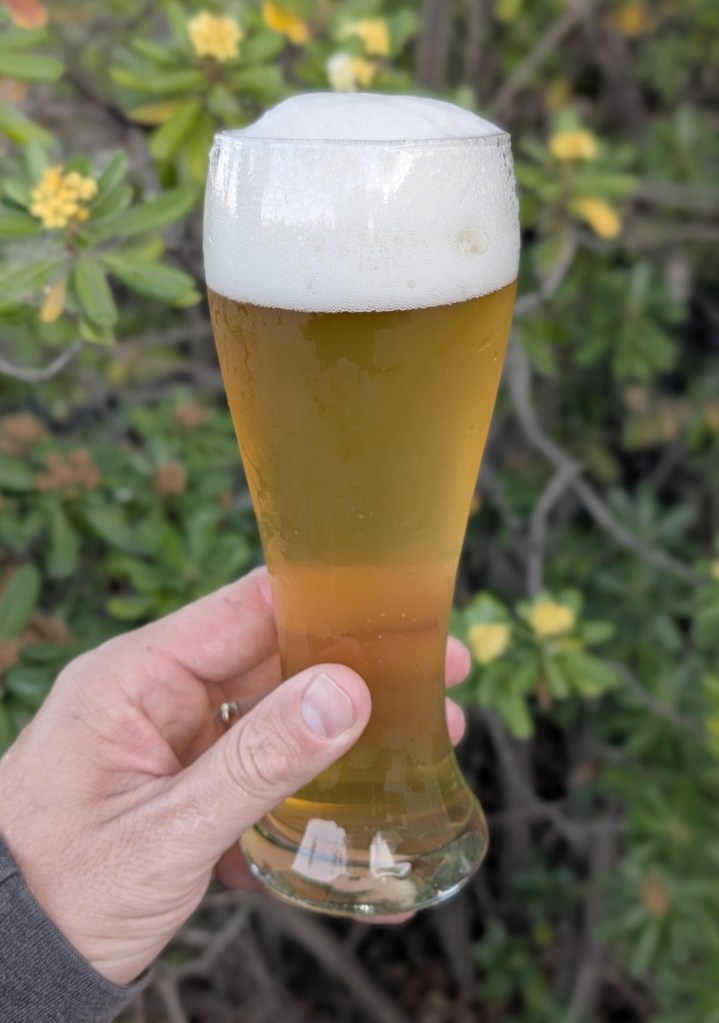
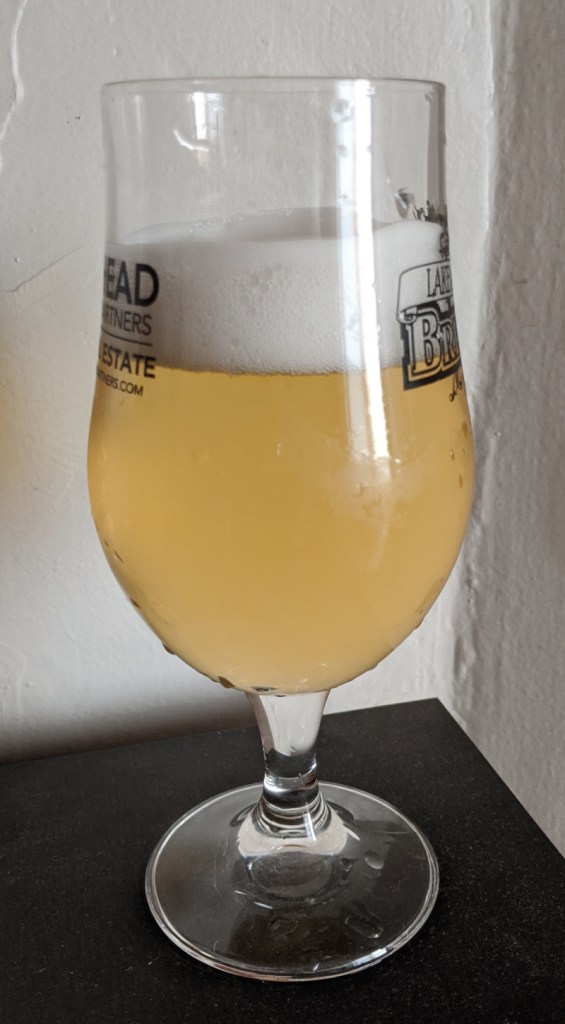
    • A light yellow, moderately hazy beer, pouring with a fluffy white head of excellent persistence; the head leaves lacing down the side of the glass.
  • Aroma
    • Bright, medium-light aroma of coriander and fresh sea breeze; a light bread dough aroma behind that
  • Flavor
    • Lightly and pleasantly tart; a light lemony coriander flavor alongside fresh sea breeze from the salt. “Doughy” malt flavor of medium intensity. Low bitterness, with no hop character to speak of.
  • Mouthfeel
    • Rounded mouthfeel, high level of carbonation, dry mouthfeel on the finish, medium-light body. Very drinkable and very refreshing!
  • Would I Brew This Again?
    • Yes! This is an amazing beer and a solid first attempt at a gose. I had to adjust the carbonation upwards a bit, because it was a bit flabby on my first few pours, but once that was dialed in it notched the beer to perfection. The coriander and salt balance are spot-on, as is the level of tartness. I might use K-97 next time around, to retain the haze at a slightly higher level for longer, but this is just an awesome beer as is. I especially like the partial kettle sour method, so that I was able to hit a low level of acidity with minimal fuss.
  • Overall
    • 10/10

Rated “PG” for Pineapple Guava

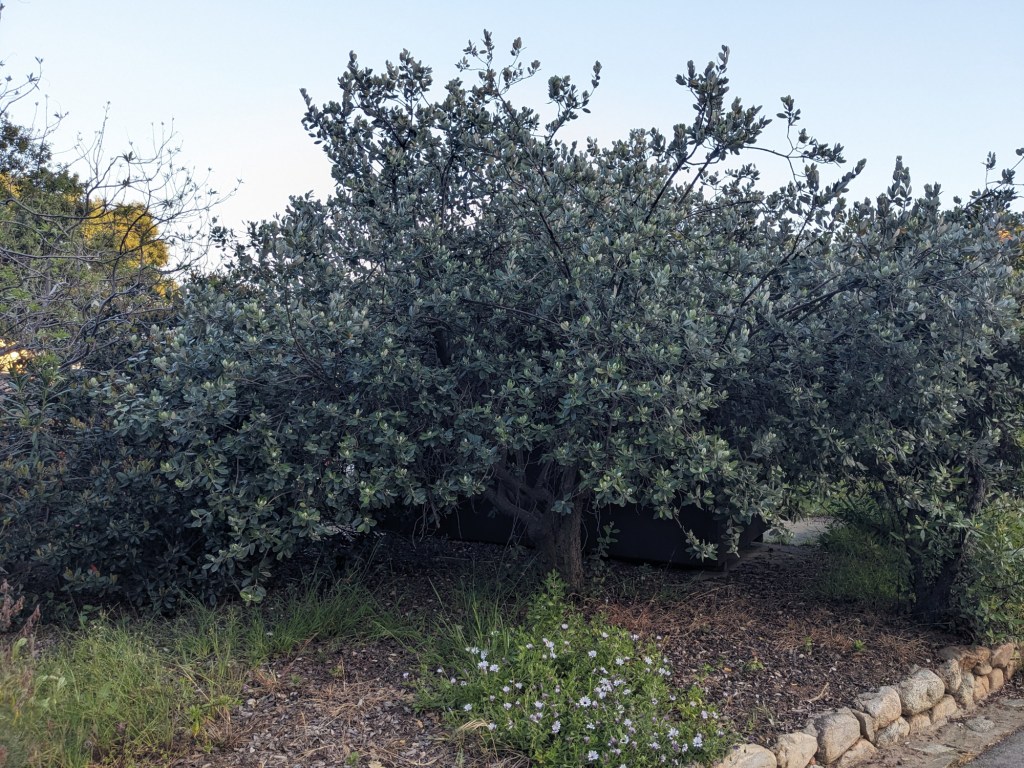
Even though I have lived here for nearly 16 years, I didn’t grow up in southern California, and so I’m always learning something new about the the kinds of fruits and vegetables that grow in this climate. Last fall, I noted a bunch of fruit on a tree adjacent to our home, and upon examination found that it was rather tasty in aroma. A little internet research revealed the source–feijoa, or pineapple guava!

green fruit with white bloom on the surface -- the fruit are somewhat egg-shaped, and laying on the ground

Pineapple guava (I’ll use that name throughout) are native to parts of South America, including Brazil, Argentina, Uruguay, and Paraguay, and have been cultivated in many areas with appropriate climate (apparently they are particularly popular in New Zealand). A member of the myrtle group, rather than a true guava, pineapple guavas produce a small (one to two inch across), green-skinned fruit that tastes and smells almost exactly how the name sounds. Somewhat counter-intuitively, they are not ready to eat until they drop from the tree and onto the ground!

Once I found this fruit, I knew that it would be perfect for enhancing a sour beer–something low abv, refreshing, and spritzy. I chose a Berliner Weisse-style grain bill (50% pilsner, 50% wheat malt), aiming for ~1.030 s.g. I didn’t want a highly hopped beer, so I used ~1 oz. of South Dakota Saaz hops. I didn’t know the alpha acid, but if I added them late enough it didn’t really matter. For this beer, I wanted an easy sour, with a clean character that would let the fruit shine through. Wildbrew Philly Sour was an obvious choice, enhanced by the fact that I wouldn’t have to worry as much about contamination of other batches. The fruit is a fair bit of effort to pick and process, so I stuck with a 2.5 gallon batch, aiming for one pound of fruit per gallon of beer.

The results were totally worth it! This is one of the best experimental brews I made in a long time, and it was really fun to highlight something that I picked from our yard.

Rated “PG” for Pineapple Guava

  • 2 lb. pilsner malt (Rahr)
  • 2 lb. red wheat malt (Briess)
  • 2 oz. rice hulls
  • 1 oz. Saaz whole hops (est. 3.5% alpha), 10 minute boil
  • 0.5 tsp. BrewTanB, 10 minute boil
  • 0.5 tsp. yeast nutrient (WLN1000), 5 minute boil
  • 0.5 pkg. Wildbrew Philly Sour yeast (Lallemand)
  • 2.5 lb. pineapple guava puree

Target Parameters

  • 1.031 o.g., 1.006 f.g., 3.2% abv, 8 IBU, 3 SRM
  • Full volume mash, no sparge, 152° mash for 60 minutes, 10 minute mash-out at 168°
  • Claremont tap water, neutralized with 88% lactic acid and treated with Campden tablet

Procedure

  • Starting with 4.75 gallons of tap water, I added 1/4 Campden tablet and 3.2 mL of 88% lactic acid to remove the carbonates. I heated the strike water to 156°, before adding the grains along with 0.7 mL of 88% lactic acid. I held the mash at 152° with recirculation for 60 minutes.
  • After the 60 minute mash, I raised the temperature to 168° for 10 minutes, before pulling the grains.
  • Overall, I collected ~4.5 gallons of runnings with a gravity of 1.025, for 76% mash efficiency.
  • I boiled for 60 minutes, adding finings and hops per the recipe.
  • After turning off the heat, I chilled the wort to 85° and transferred to the fermenter. I pitched a half packet of Philly Sour and sealed up the fermenter.
  • I brewed this beer on 2 April 2024. Starting gravity was 1.033, and I fermented the beer at 80°.
  • I picked the fruit way back in December, peeled it, and put everything into the deep freezer until beer time. I thawed the fruit or a day or two, pureed it, and then pasteurized at 161° for 30 seconds. I let it cool a bit, and then added to the fermenter. All of this happened on 3 April 2024, very early in fermentation.
  • I kegged the beer on 18 April 2024. Final gravity was 1.009, for 3.1% abv.

Tasting

  • Appearance
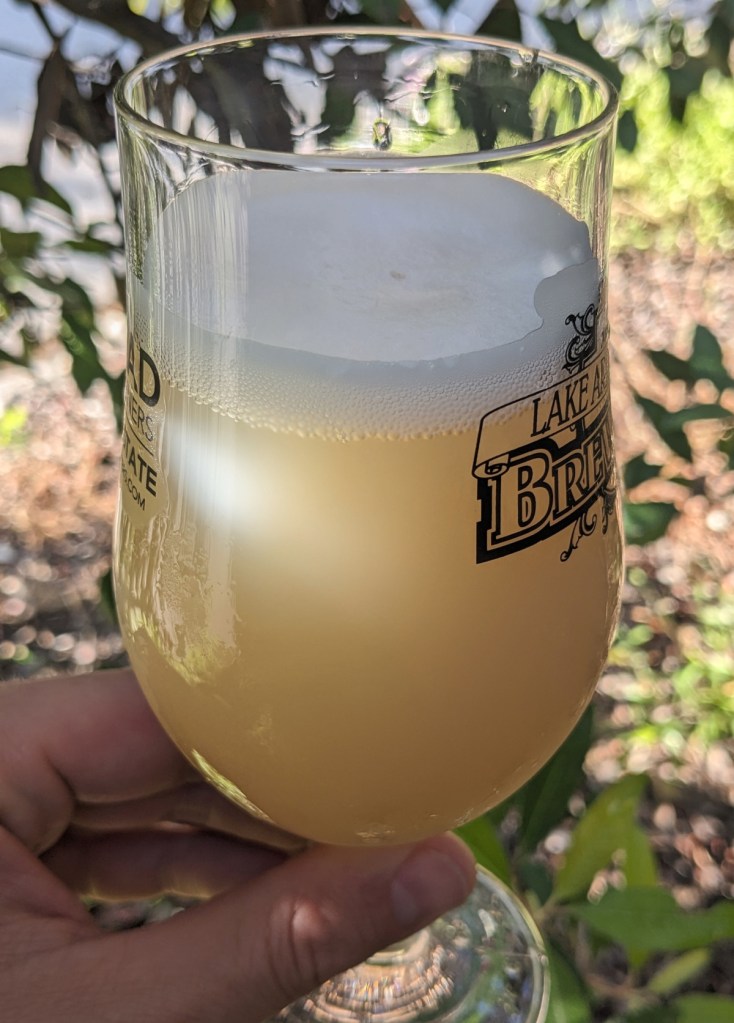
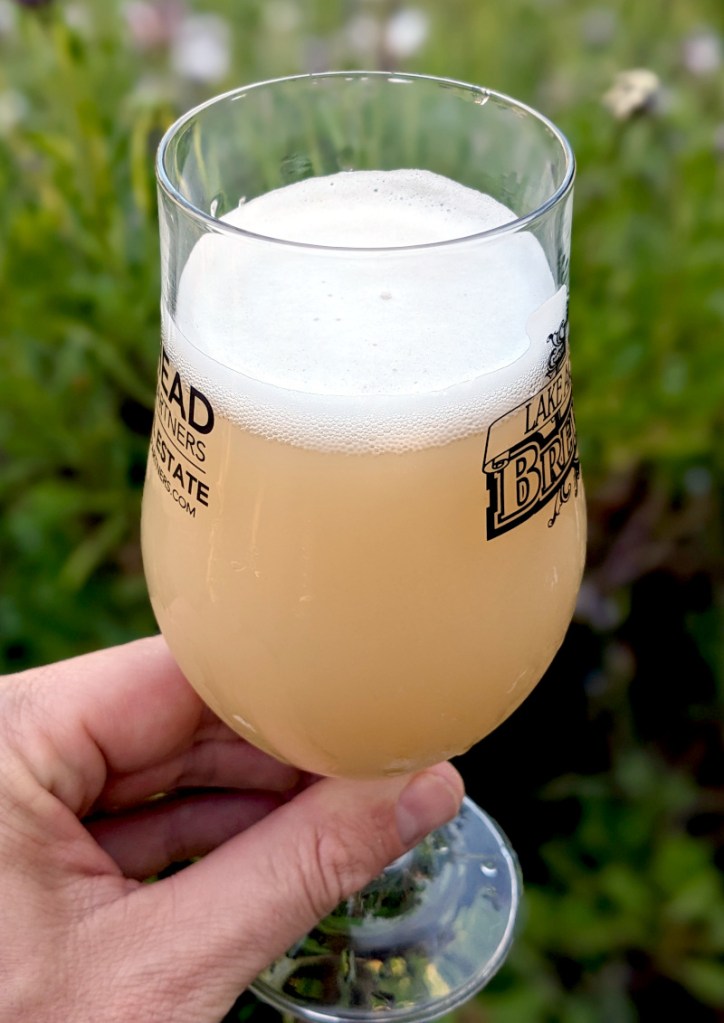
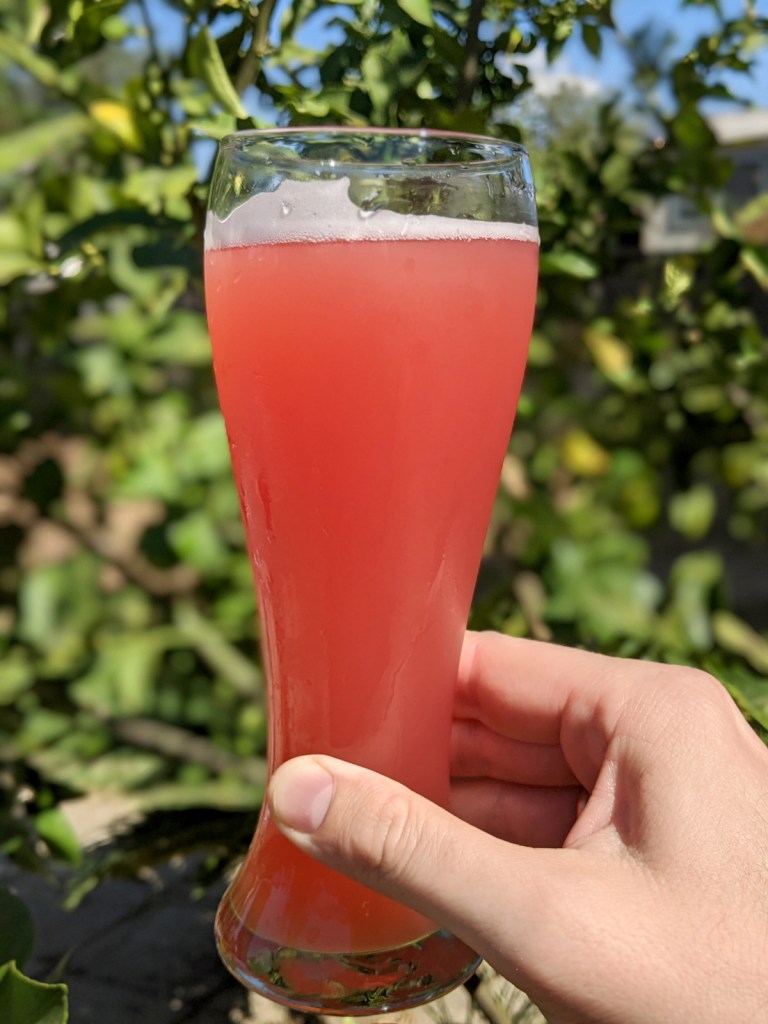
    • Hazy straw color, like the appearance of grapefruit juice. Pours with a thick white head that persists well.
  • Aroma
    • Quite prominent guava fruit aroma at the forefront, with a little doughy character behind that.
  • Flavor
    • The beer is fairly tart, but not puckeringly sour, at first impression. The tropical fruit character is definitely there, but it’s subtle–notes of guava (unsurprisingly) dominate. Some doughy wheat character hides behind it all, at a low level. Barely perceptible bitterness.
  • Mouthfeel
    • Light body, spritzy carbonation, slightly dry finish.
  • Would I Brew This Again?
    • Yes! This is a perfectly refreshing beer, well suited for the warming afternoons of spring. It is crisp, but not watery. The fruit is gorgeous on the aroma and perfectly restrained on the flavor. It’s that rare fruited beer where you can pick up the fruit character, but it takes a few seconds to process the flavor. This batch was a good bit of extra work in the fruit process, but absolutely worth it. I have sometimes seen some dismissive comments about Philly Sour being too one-note in character, but that is perfect for this beer as a way to let the subtle fruit notes take center stage. I know that I’ll never find a beer like this commercially, and that’s so much of the fun of homebrewing!
  • Overall
    • 10/10
dark green tree
The feijoa tree in all of its glory — the tallest branch is perhaps 8 or 10 feet off the ground

Raspberry Belgian 2021

According to my records, this is the fifth time I’ve made Raspberry Belgian. It is one of my favorite recipes, without a doubt. The process is a fair bit of work, and it’s not the cheapest thing to brew, but WOW, are the results worth it!

My approach to this has morphed considerably over the years, and there are inevitably some variations in ingredients and process. So, every time is different, even if they’re all more or less in the same flavor space.

As before, the key to this recipe is using fresh/frozen raspberries. Tons and tons of raspberries–4.5 pounds, to be precise. I used just frozen ones this time, which I thawed and pureed before adding to the fermenter. Canned purees just don’t “pop” in the same way. For souring, I tried out the Lactobacillus Blend from Omega Labs, which is what the local shop had on-hand. Past versions of the recipe used acidulated malt in the grist, which was a hold-over from the original “bacteria-free” version, and I decided to just ditch that because it was unnecessary.

Raspberry Belgian 2021

  • 6.5 lb. Viking Pilsner Zero Malt
  • 2.5 lb. white wheat malt (Great Western)
  • 1 lb. flaked wheat
  • 0.5 lb. Carapils malt (Briess)
  • 0.5 lb. rice hulls
  • 0.5 oz. Magnum hop pellets (10.1% alpha), 60 minute boil
  • 1 tsp. WLN1000 yeast nutrient (White Labs), 10 minute boil
  • 1 pkg. Belgian Wit Ale Yeast (WLP400), prepared in 1L vitality starter
  • 1 pkg. Lactobacillus Blend (Omega Labs OYL-605)
  • 72 oz. frozen raspberries, pureed

Target Parameters

  • 1.048 o.g., 1.012 f.g., 18 IBU, 4 SRM, 4.8% abv
  • 154° full-volume mash, 60 minutes
  • Overnight kettle sour
  • Claremont tap water, no adjustment

Procedure

  • Way back in May, I made a starter for Pannotia White IPA using WLP400, but it was suuuuper slow to kick off. Worrying that it was dead, I got some Whiteout (Imperial Yeast), but kept the WLP400 starter going just in case. After a day or two, it was off to the races, and so I harvested the results to save for a later brew–which turned out to be the raspberry brew!
  • I mashed in with 7.25 gallons of water at 160°, and held the mash at 154° for 60 minutes with recirculation. I added 7 mL of 88% lactic acid to adjust the mash pH. I raised the temperature to 168° for a 10 minute mash-out, and then removed the grain basket.
  • In total, I collected 6.25 gallons of runnings with a gravity of 1.038, for 61% mash efficiency. This is a bit low, but that seems to be the case for these adjunct-heavy beers (and my mill seems to be not quite tight enough, after inspection of equipment).
  • Next, I boiled the runnings for 5 minutes, before chilling down to 95°. I added 25 mL of 88% lactic acid, to get the pH down to 4.4, and then added the lacto culture. Because I’m using the Foundry, I just let the runnings in the kettle, and set it to maintain temperature at 90°. I did this step on 14 August 2021.
  • After 25 hours, the pH was down to 3.5, right in my target range. I called this perfect!
  • While getting the soured runnings ready, I made a SNS (shaken-not-stirred) starter for the harvested yeast culture.
  • I boiled the runnings, adding hops and yeast nutrients per the recipe. After 60 minutes, I chilled the wort, transferred to the fermenter, and then chilled down to 66° before pitching the yeast starter.
  • I started primary fermentation on 15 August 2021, holding at 66°.
  • On 19 August 2021, I added 72 oz. of pureed frozen raspberries, and raised the temperature to 68°.
  • On 22 August 2021, I brought the beer out to ambient, around 75° or so, to finish up.
  • I kegged the beer on 28 August 2021. At this point, it had a final gravity of 1.013, which works out to 4.0% abv. With the extra sugars from the fruit, actual abv might be a touch higher.

Tasting

  • Appearance
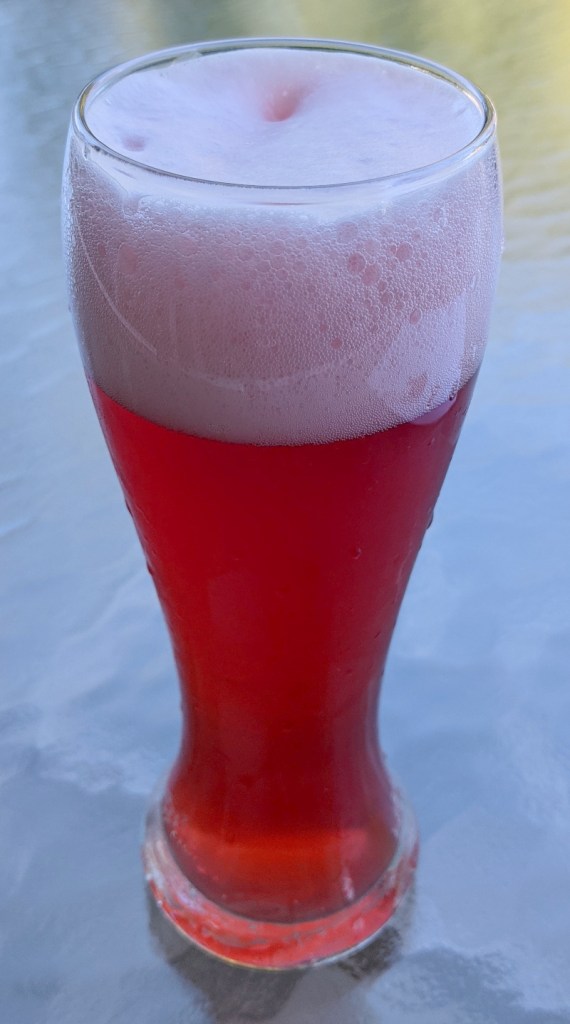
    • The beer is gorgeous! I pours with a pink, frothy, and somewhat persistent head. The beer itself is dark pink, and moderately (but not overly) hazy. I think it’s looking clearer than might be usual, because I’m using a floating dip tube. I wouldn’t mind a little extra haze, if it helped augment the mouthfeel and flavor.
  • Aroma
    • Raspberry is prominent, with a bit of tartness also.
  • Flavor
    • The beer is moderately sour, but not over the top. The sour character is clean (one person who tasted it described it as a sour patch kid–that’s a high compliment in my book!). Bitterness is perceived as low. The raspberry comes through very nicely. There might be a slight wheat flavor, but in general I don’t think the malt is terribly perceptible. I’m a bit surprised that the Belgian yeast character doesn’t come through more, either.
  • Mouthfeel
    • This beer has a light body and effervescent quality, with a tart, modestly sour, and dry finish.
  • Would I Brew This Again?
    • This is a wonderful beer! It’s incredibly drinkable, especially during warm weather. I wouldn’t mind a touch more malt character and a little bit more prominent Belgian yeast character…I would be curious to see if it’s genuinely no Belgian character, or if that is just being covered up by the raspberries. Perhaps I’ll try fermenting at a higher temperature next time, to bring out the phenols more prominently. Those are truly minor issues, and really just in the category of optional tweaks to consider.
  • Overall
    • 9/10

Claremonter Weisse 2020

As summer and summer temperatures drag on here in southern California, I’m spending my brewing energy on light, flavorful, and refreshing beers. This often means lagers, but sometimes it’s nice to play on the sour side of the street. A few years back, I brewed an award-winning Berliner Weisse, which tasted fantastic. I’ve been wanting to revisit that style and that recipe for awhile, and finally made some time this summer.

For my 2020 brew, I rolled with a similar recipe to my 2016 version, except for the sour pitch. Last time, I used Omega Labs OYL-605 lacto blend. This time around, I had a satchet of Lallemand’s Wildbrew Sour Pitch, which had already been opened for my Raspberry Belgian. Not wanting to waste a good culture, I made the decision to use this instead. I didn’t have to make a starter, which was a nice bonus. I switched in 2-row for pilsner malt, to up the malt character a little for such a low gravity beer. Finally, for the main fermentation, I made the very minor substitution of US-05 instead of WLP001.

Claremonter Weisse 2020

  • 2.25 lb. premium 2-row malt (Great Western)
  • 2.25 lb. pale wheat malt (Weyermann)
  • 2 oz. rice hulls
  • 0.5 pkg. Wildbrew Sour Pitch dry culture (Lallemand)
  • 1 tsp. Fermax, 10 minute boil
  • 0.5 oz. Cascade whole hops (5.5% alpha), 8 minute boil
  • 1 Whirlfloc tablet, 5 minute boil
  • 1 pkg. Amercan Ale Yeast (US-05)

Target Parameters

  • 1.031 s.g., 1.007 f.g., 3.2% abv, 3 SRM, 5 IBU
  • Full volume, no-sparge infusion mash, 152°; 10 minute initial boil, kettle sour; 60 minute secondary boil with hops, nutrients, and finings
  • Claremont water, unadjusted

Procedure

  • I mashed in with 4.8 gallons of water at 155°, to hit 151° in the mash. I added 2 mL of 88% lactic acid to adjust mash pH.
  • After 20 minutes, the mash was down to 149°. After 60 minutes of total mash time, I vorlaufed and collected the runnings. I only had a gravity of 1.026, for 65% efficiency.
  • I boiled for 10 minutes, chilled the wort down to 102°, and added 2.5 mL of 88% lactic acid to bring down the pH. Then, I added 5 g of Sour Pitch culture, and let it sit on a heating pad for ~100° temperature maintenance. This was started on 24 July 2020.
  • After 24 hours, I sampled the wort. It wasn’t quite tart enough yet, so I decided to let it go another 24 hours. When I sampled it on 26 July 2020, it was less tart than expected, but I figured 48 hours at 100° was enough time for the bacteria to work their magic.
  • I boiled the soured runnings for 60 minutes, and added the hops and other finings per the recipe. After 60 minutes, I chilled the wort and transferred it to the fermenter.
  • Starting gravity was 1.031, with ~3.25 gallons into the fermenter on 26 July 2020. I started fermenting at 66°.
  • I moved the beer to ambient temperature on 8 August 2020, to let it finish up.
  • I kegged the beer on 13 August 2020, putting it in one of my 2.5 gallon kegs. I added 3.95 oz. of corn sugar for natural carbonation, sealed it up, and let it sit for awhile.
  • Final gravity was 1.008, down from 1.031, for 3% abv. At the time of kegging, the beer had a gorgeous floral aroma, almost like orange blossom honey.
  • I checked on the natural keg pressure over a few days, as the keg sat at ambient temperatures. On 21 August (8 days post kegging), the keg had hit 32 psi (~2.4 volumes of CO2). On 23 August, the keg had hit 40 psi (~2.8 volumes of CO2). I gave it another day or two, there was no change in pressure, so I put the keg in the lagering chamber and topped up the carbonation level.
  • I measured the final pH at around 3.6.

Tasting

  • Appearance
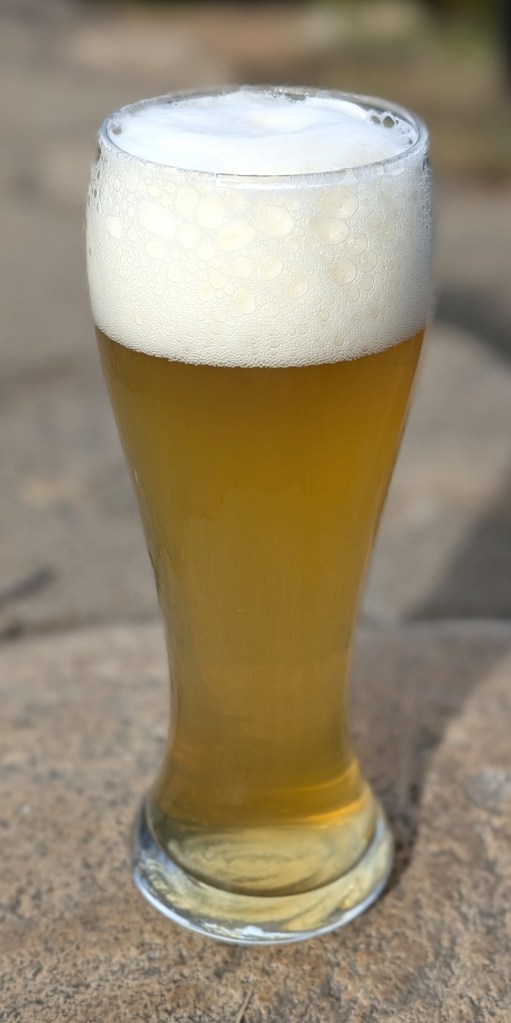
    • Pale straw color and hazy, with a creamy white head that completely subsides after a few minutes.
  • Aroma
    • Tart, citrus blossom aroma, with a bit of floral honey. Really pleasant! There is a bit of a raw bread dough character behind all of it.
  • Flavor
    • Lemony tartness dominates, with the doughy malt character in the background. The level of sourness is moderately high, and it is a clean sour. I don’t really pick up any hop notes, which is expected given the low level of hopping.
  • Mouthfeel
    • Crisp and dry, but not astringent. Effervescent and highly carbonated, with a light body that makes this very easy to drink.
  • Would I brew this again?
    • Yes! This isn’t a style I want all of the time, or in massive quantities, but it’s really nice every once in awhile. This is a different take on the beer from the 2016 version I made, as expected with a different sour culture. It seems a bit less sour, but is still really nicely balanced. The aroma really is fine on this one, and a true highlight of the beer.
  • Overall
    • 9/10

Raspberry Belgian 2020

I’ve brewed this beer at least three or four times, and I keep coming back to it as one of my very favorite recipes. It’s crisp, it’s low alcohol, it’s flavorful, and it’s well out of my usual brewing styles. I wouldn’t want this year-round, but it sure is a nice treat every once in awhile!

deep pink beer in Belgian wit glass, held aloft against green tree leaves

My personal take on this recipe–which started out as a clone of Funkwerks Raspberry Provincial–has evolved since I first brewed it in 2017. Every batch is a bit different, especially in the souring strain and the type of raspberry puree added. It never fails to be a great beer.

Raspberry Belgian 2020

  • 4.75 lb. pilsner malt (Weyermann)
  • 2.5 lb. pale wheat malt (Weyermann)
  • 1.75 lb. acidulated malt (BestMalz)
  • 0.5 lb. Carapils malt
  • 0.5 lb. flaked oats
  • 0.5 lb. flaked wheat
  • 6 oz. rice hulls
  • 0.35 oz. Magnum hop pellets (13.2% alpha), 60 minute boil
  • 0.5 pkg. (~5 g) of Wildbrew Sour Pitch (Lallemand)
  • 1 pkg. Whiteout Belgian Wit Yeast (Imperial #B44)
  • 36 oz. raspberry puree

Target Parameters

  • 1.048 o.g., 1.013 f.g., 15 IBU, 3 SRM, 4.5% abv
  • 155° full-volume mash, 60 minutes
  • Overnight kettle sour
  • Claremont tap water, no adjustment

Procedure

  • I mashed in with ~8.5 gallons of water at 160°, to hit a 155° mash temperature target. After 60 minutes, I vorlaufed and collected the full volume of runnings.
  • In total, I collected 6.7 gallons of runnings with a gravity of 1.033. This was way below my target (and only 57% mash efficiency), so I added 0.75 lb. of extra light DME to bring the gravity up to 1.038.
  • I boiled the runnings for 10 minutes and then chilled to 115°. I added 1 tbs. of 88% lactic acid, to bring the pH down to ~4.4.
  • Once the kettle temp was down to 105°, I added 5 g of the Wildbrew Sour Pitch, stirred gently, and left it on a heating pad in a warm garage.
  • I started the souring process at around 10:30 am on 18 July 2020, and it was down to ~3.35 by the next morning. The sour level was right where I wanted it, when I sampled a little.
  • I boiled the beer for an hour, adding hops per the schedule as well as some yeast nutrient.
  • I chilled the wort and put it into my fermenter, bringing the temperature down the rest of the way in my fermentation chamber. I pitched the yeast, and let it ferment at 66°. The starting gravity was 1.046.
  • I pitched the yeast on 19 July 2020, and added fruit puree on 23 July 2020.
    • To make the puree, I took frozen raspberries (purchased fresh a few weeks prior, sorted, and frozen) and thawed them out. I had 72 ounces by mass, which was around 130 ounces by volume of whole raspberries. 12 ounces by weight should make around 6 ounces of puree by volume, so I ended up with around 36 ounces (a quart) of puree. To make the puree, I heated the raspberries in a double boiler, mashing them up. I heated the mixture to between 150° and 170°, with the bowl sitting in near-boiling water. I let it sit for 15 minutes and then chilled in an ice bath, before adding the puree to the fermenter.
  • I kegged the beer on 1 August 2020. Final gravity at that time was 1.020, for 3.3% abv; I wonder if the yeast hadn’t completely fermented out? I usually agitate the fermenter when I’m using the various Belgian wit strains, because they do tend to stall out without babysitting. Oh well…I figure that any final fermentation will hopefully wrap up in the keg.
  • I added 3.2 oz. of corn sugar boiled for ~2 minutes in 1 cup of water, and then sealed up the keg (adding a touch of pressure to make sure the lid was seated).
  • Carbonation level maxed out at around 24 psi at 72°, which is not terribly great as a level of carbonation for this style. That’s only 2.2 or so volumes of CO2, and I was aiming for 3.0 at least. I used my CO2 talk to top things up.
  • On 9 August 2020 (the same day as the tasting), I decarbonated a sample and measured gravity with both hydrometer and refractometer, getting a final gravity of 1.017. This works out to ~3.8% abv, and if I were to guess, around 4% abv when you factor in the sugars from the raspberry.

Tasting

deep pink beer in Belgian wit glass
  • Appearance
    • Right now (second day on tap for the keg), this beer has a gorgeous deep pink color, with a prominent haze. It pours with a frothy white head that subsides to a relatively continuous thin blanket.
  • Aroma
    • This beer smells like fresh raspberry. I get maybe a little bit of the citrusy Belgian wit yeast character behind that, but the raspberry is front and center here.
  • Flavor
    • What else? Raspberry! More seriously, the beer has a pleasant (but not over-the-top) tartness, with a berry and citrus character. The malt is pretty subdued, and largely overwhelmed by the fruit and sour notes. But, raspberry definitely dominates.
  • Mouthfeel
    • Crisp and light bodied, with a nice smooth finish. Carbonation is high, which gives a pleasant and spritzy character to the beer, but the heavy amount of suspended yeast and the malt bill keep it from being too thin.
  • Would I brew this again?
    • This is one of my very favorite summer beer recipes. It has evolved considerably from the original clone recipe, and it has further evolved from my initial few attempts. It’s such an interesting beer, and is a good reward for the above-average amount of effort and above-average ingredient cost. The only minor change I might make would be to ditch the acidulated malt–it’s a holdover from the original recipe, which used this malt alone to get the desired sour character.
  • Overall
    • 9/10