Pfriem Pilsner 2024

I have done a version of this three times previously, usually with some minor variations for hops or yeast. This time, I decided to do the hop varieties and timings exactly as written (with adjustments for alpha acid), to follow the original Pfriem Pilsner clone recipe from Dave Carpenter’s Lager book. Without further ado, here’s what I did.
Pfriem Pilsner 2024

  • 9.75 lb. pilsner malt (Rahr)
  • 6 oz. Carafoam malt (Weyermann)
  • 0.5 tsp. BrewTanB, in mash
  • 0.75 oz. Perle hop pellets (6.3% alpha), 60 minute boil
  • 0.5 oz. Tettnang hop pellets (2.4% alpha), 60 minute boil
  • 0.5 oz. Tettnang hop pellets (2.4% alpha), 10 minute boil
  • 0.75 oz. Saphir hop pellets (2.3% alpha), 10 minute boil
  • 0.5 oz. Spalt Spalter hop pellets (4.3% alpha), 10 minute boil
  • 0.5 tsp. BrewTanB, 10 minute boil
  • 1 Whirlfloc tablet, 5 minute boil
  • 1.5 oz. Tettnang hop pellets (2.4% alpha), 10 minute whirlpool
  • 0.75 oz. Saphir hop pellets (2.3% alpha), 10 minute whirlpool
  • 0.5 oz. Spalt Spalter hop pellets (4.3% alpha), 10 minute whirlpool
  • 2 pkg. Diamond dry lager yeast (Lallemand)

Target Parameters

  • 1.046 s.g., 1.007 f.g., 5.1% abv, 4 SRM, 38 IBU
  • Full volume step mash, with 45 minutes at 142°, 45 minutes at 156°, and 10 minutes at 168°; 70 minute boil
  • Water built up from RO, to hit target parameters of 62 ppm Ca, 11 ppm Mg, 121 ppm SO4, and 51 ppm Cl, with RA=-50 ppm

Procedure

  • I built up my mash water from 7.5 gallons of RO water, with 3 g calcium chloride, 3 g epsom salt, and 4 g gypsum. Then, I heated it to 146° before adding the grains and holding at 142° for 45 minutes, with recirculation. Then, I raised the mash to 156° for 45 minutes and finished up at 168° for 10 minutes.
  • After the mash, I pulled the grains. I collected 6.8 gallons of runnings with a gravity of 1.041, for 74% mash efficiency.
  • I brought the runnings to a boil, boiling for 10 minutes before adding the first round of hops and proceeding with the rest of the recipe as written. In total, this was a 70 minute boil.
  • At the end of the boil, I turned off the heat, added the whirlpool hops, and whirlpooled for 10 minutes before continuing with the rest of the chill.
  • Once the beer was down to 72°, I transferred to the fermenter and chilled down to 46° in my fermentation chamber, before pitching the yeast.
  • I brewed this beer on 28 October 2024, and the starting gravity was 1.049.
  • The starting fermentation temperature was 48°, and I held it here until 3 November 2024, when I raised the temperature to 52°. On 17 November, I raised the temperature to 54°, and then to ambient (~62°) on 24 November 2024.
  • I kegged the beer on 25 November 2024. Final gravity was 1.009, for 5.3% abv.
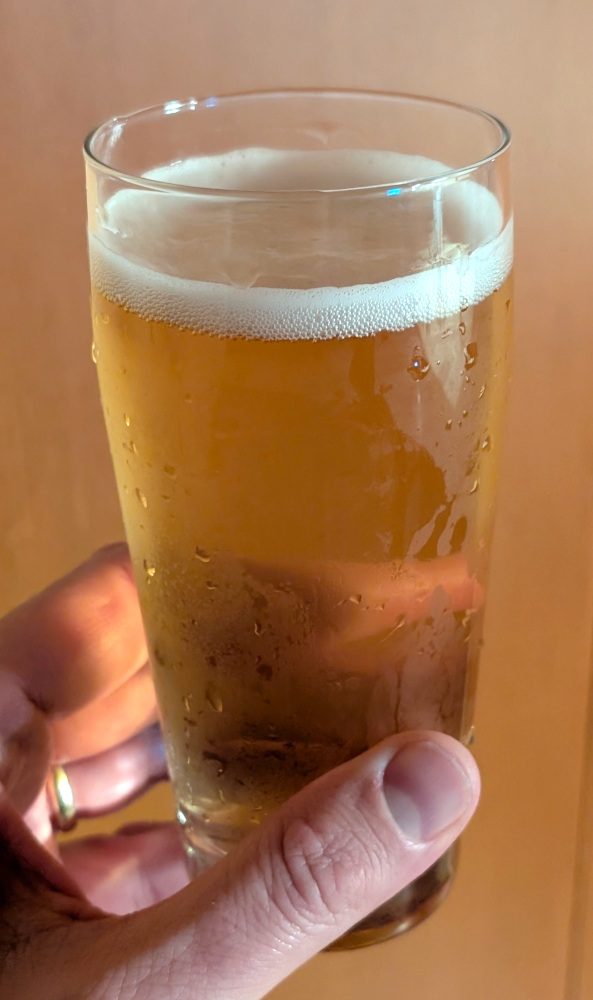
Tasting

  • Appearance
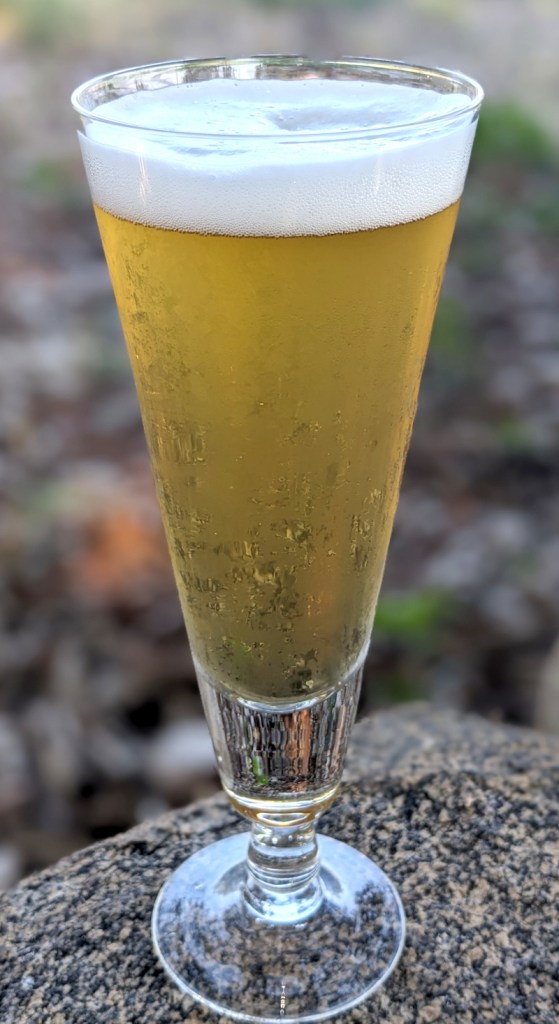
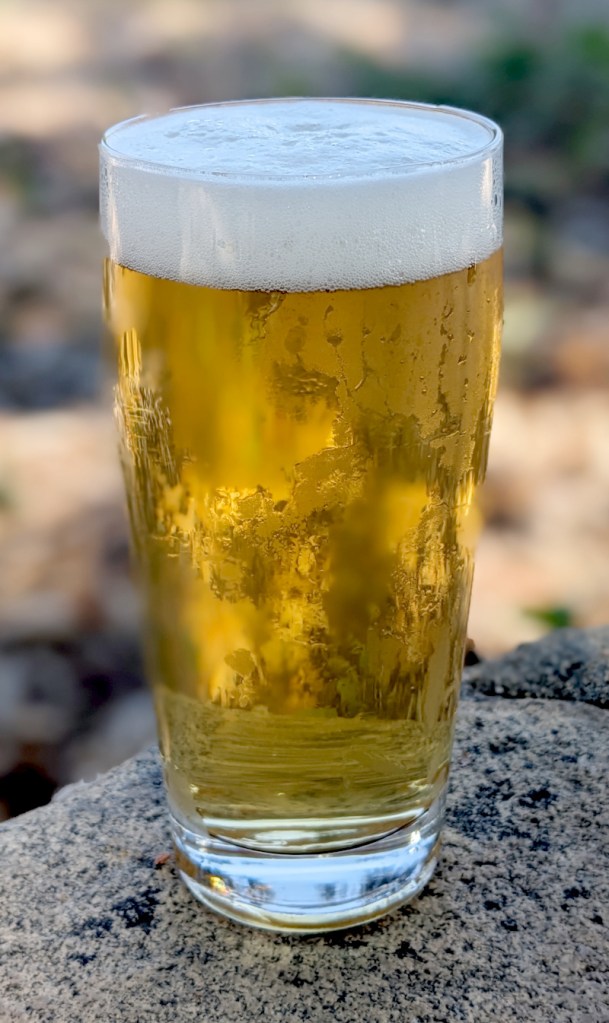
    • Clear, but short of brilliant; there is just a tiny touch of barely visible haze. It is a straw-colored beer that pours with a fine and persistent white head, which leaves some nice lacing on the glass.
  • Aroma
    • Light notes of cracker and honey in the malt, and a pleasant light floral hop aroma, with a touch of fresh hay. This beer smells awesome!
  • Flavor
    • Medium-high bitterness, grainy sweet malt character; hop flavor is lightly herbal. Minerally feel to finish out the flavor.
  • Mouthfeel
    • Medium carbonation, medium light body, dry finish. Minerally, but not unpleasantly so.
  • Would I Brew This Again?
    • I am feeling pretty good about this recipe overall. It is perhaps a touch more bitter than I prefer in all of my pils, but I like the hop aroma and malt character; the overall aroma is amazing! I wouldn’t mind a touch taller head (but that may be in the pour), and I also must ding the beer a bit for its clarity. I wonder if the persistent light haze is from the large dose of whirlpool hops? I could have used some finings, and might do that next time for a pilsner-type beer, because clarity is something important to me for these.
  • Overall
    • 8/10

Pfriem Pils 2023

German pils is perhaps my favorite style. It’s surprisingly complex, highlights both malt and hops in a non-IPA sort of way, and is a fun challenge to do well. At current count, I’ve made 16 batches over the past 7 years.

My latest batch retreads the Pfriem Pils recipe from Dave Carpenter’s Lagers book. I’ve made versions of this twice previously, and it’s a really solid beer. Every iteration has some changes in hops, grist, and yeast, and this version is no different. I leaned into the HOPBOX European hops I had on hand, ending up with a nice combo of Hallertauer Mittelfrueh, Saaz, and Tettnang. Although the original recipe calls for acidulated malt, I worked with lactic acid instead, which provides pretty much the same effect. Lallemand’s Diamond Lager yeast rounded out the recipe–this strain is (in my opinion) one of the best dry lager yeasts out there right now. It ferments quickly and cleanly, and drops clear with minimal fuss.

Pfriem Pils 2023

  • 9.5 lb. Viking Pilsner Zero malt
  • 0.5 lb. Carafoam
  • 0.5 tsp. BrewTanB (added to mash)
  • 1.5 oz. Hallertauer Mittelfrueh hop pellets (5.2% alpha), 60 minute boil
  • 0.5 tsp. BrewTanB, 10 minute boil
  • 1 Whirlfloc tablet, 5 minute boil
  • 1 oz. Saaz hop pellets (2.4% alpha), 5 minute boil
  • 0.5 oz. Tettnang hop pellets (2.2% alpha), 5 minute boil
  • 1 oz. Saaz hop pellets (2.4% alpha), 10 minute whirlpool
  • 1.5 oz. Tettnang hop pellets (2.2% alpha), 10 minute whirlpool
  • 2 pkg. Diamond Lager dry yeast (Lallemand)

Target Parameters

  • 1.046 s.g., 1.007 f.g., 5.1% abv, 4 SRM, 36 IBU
  • Full volume step mash, with 45 minutes at 144°, 30 minutes at 156°, and 10 minutes at 168°; 60 minute boil
  • Water built up from RO, to hit target parameters of 59 ppm Ca, 8 ppm Mg, 89 ppm SO4, and 63 ppm Cl, with RA=-47 ppm

Procedure

  • To 7.5 gallons of RO water, I added 2.9 g gypsum, 2.4 g epsom salt, and 3.7 g of calcium chloride, in order to hit my target parameters.
  • I heated the strike water to 146°, and added the grains and BrewTanB. I set the mash for 144° with recirculation, holding it here for 45 minutes. Then, I raised the mash to 156° for 30 minutes, and finally mashed out at 168° for 10 minutes.
  • After removing the grains, I had 6.6 gallons of runnings with a gravity of 1.037, for 66% mash efficiency.
  • I brought the kettle to a boil, boiling for 60 minutes and adding the hops and finings per the recipe. Finally, I turned off the heat and chilled down to 82°. I let things settle, transferred to the fermenter, and let it chill to 50° before pitching the yeast.
  • Starting gravity was 1.044. I brewed this beer on 12 August 2023.
  • The beer was held at 52° for the bulk of fermentation, and raised to 60° on 19 August. I crashed it to 34° on 27 August 2023.
  • I kegged the beer on 7 September 2023, using a closed transfer. It tastes amazing at this point, with notes of hay in the aroma. In terms of appearance, it’s still reasonably hazy. Final gravity was 1.012, for 4.2% abv. It’s a true session beer!

Tasting

  • Appearance
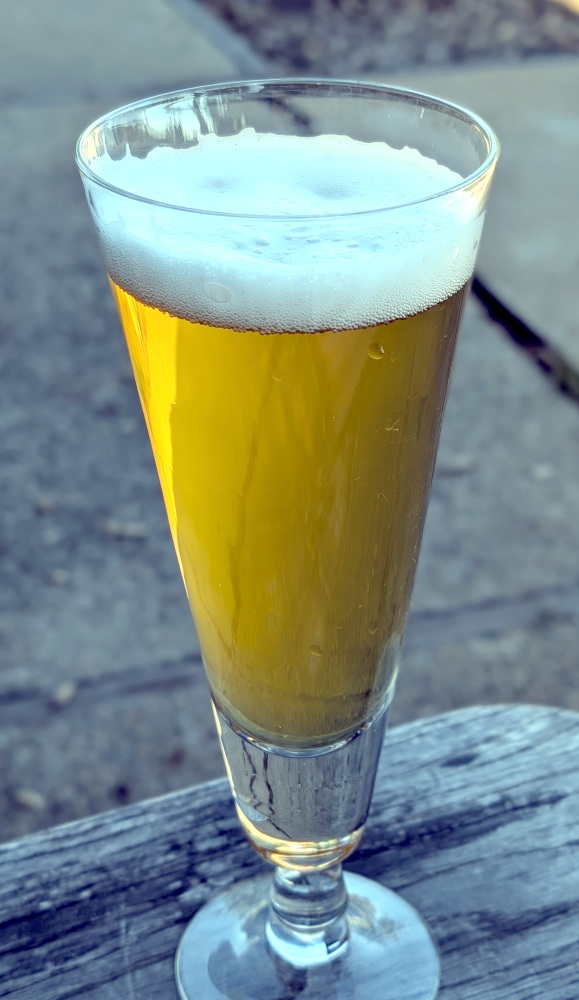
    • Very clear, nearly brilliant; a light yellow beer with a persistent and creamy white head.
  • Aroma
    • Lightly spicy (like a spice cake); malt aroma is slightly sweet.
  • Flavor
    • Medium-high bitterness with a lingering finish; slightly herbal quality to the hop profile. The beer has a crackery malt flavor, with a bit of sweetness also. The balance is tilted towards the bitter side.
  • Mouthfeel
    • Smooth, moderate body, with medium-low carbonation (especially when “slow-poured”). Moderately dry and very crisp finish.
  • Would I Brew This Again?
    • Yes! It’s a great recipe. I might like to try it with more floral-type hops, such as the Edelweiss blend, for something different. I perfected a slow-pour on my faucet, to approximate the creamy and highly persistent heads you can get with the “side-pour” taps. Now that I’ve figured this out, I’m happy with the beer on home draft.
  • Overall
    • 10/10

Polacanthus Porter

IMG_20190829_193848Dark beers! They’re seemingly banished from the summer months, and yet I often have a craving for one even on the hottest days. Not a triple imperial barrel aged chocolate stout, of course–that’s best dumped in the sink during the month of December. I’m thinking of those more drinkable dark beers, a bit lower on the alcohol but still robust on flavor.

An end-of-summer porter seemed like a good way forward. They’re flavorful, but not necessarily gut bombs. They’re relatively easy to brew, and turn around fairly quickly. Also, they’re a “traditional” style that’s just a bit harder to find, overwhelmed by trendier beers on tap lists. If I want a mediocre hazy IPA, I don’t need to make my own; there is no shortage in area breweries!

This recipe is based on the American porter from Gordon Strong’s Modern Homebrew Recipes. My version fairly closely follows that by Strong, with the modifications primarily on the hopping and malt brands. The name recognizes the combination of American and English ingredients, because Polacanthus is a type of armored dinosaur that had relatives on both sides of the Atlantic.

Polacanthus Porter

  • 11 lb. 2-row pale malt (Rahr)
  • 12 oz. 1823 Heritage Crystal Malt (Bairds), 75°
  • 10 oz. chocolate malt (Bairds), 500°
  • 5 oz. roasted barley (Bairds), 600°
  • 0.65 oz. Magnum hop pellets (13.2% alpha), 60 minute boil
  • 1 Whirlfloc tablet, 10 minute boil
  • 1 oz. Cascade whole hops (~5.5% alpha), 10 minute boil
  • 1 oz. Cascade whole hops (~5.5% alpha), 5 minute boil
  • 1 pkg. Safale American Ale Yeast (US-05)

Target Parameters

  • 1.058 o.g., 1.014 f.g., 5.8% abv, 36 IBU, 34 SRM
  • 60 minute infusion mash, 154°, batch sparge
  • Claremont tap water

Procedure

  • I mashed in with 4.25 gallons of water at 164.5°, to his a mash temperature of 155°. After 45 minutes, I added 1 gallon of water at 185°, and collected first runnings after a 10 minute rest and vorlauf. I then added 3.5 gallons of water, let rest for 10 minutes, vorlaufed, and collected second runnings.
  • In total, I collected 7.1 gallons of runnings with a gravity of 1.048, for 73% efficiency.
  • I brought the runnings to a boil, adding hops and such per the recipe.
  • After 60 minutes, I turned off the flame, chilled, and transferred to the fermenter (with aeration). I had to let the wort rest in the fermenter for a few hours, to chill down to the fermentation temperature of 66°.
  • I brewed this beer on 13 July 2019. Starting gravity was 1.057.
  • I kegged the beer on 14 August 2019. Final gravity was 1.013, for 5.8% abv. This was exactly on the dot for my targets!

Tasting

  • Appearance
    • Deep brown, with garnet tones when illuminated from behind; clear; persistent tan head
  • Aroma
    • Roasty, chocolately aroma; very nice.
  • Flavor
    • Roast malt character at the front, with a slight chocolate and coffee tinge; slight citrus aspect; moderately bitter, with a finish that tilts towards the bitter rather than the malty side.
  • Mouthfeel
    • Medium body, medium carbonation; off-dry finish (probably due to the roast character). It could maybe have a touch more body, but I think overall it’s okay on this end. Too much body would make this harder to drink.
  • Would I brew this again?
    • Yes! This is a nice and simple recipe, with a pleasant flavor. As porters go, this definitely is towards the roasted and bitter side, but I’m okay with that. This is really drinkable as a summer porter! I would add it to my regular repertoire.
  • Overall
    • 9/10

Brew Updates: Palaeotis Pils 1.2 & Old Pine Pale Ale

I’ve kegged two of my brews in the past week, incluing my German pils and my American pale ale. Here are the details!

  • After 10 days in primary, I kegged Old Pine Pale Ale on 12 December 2017. I added the dry hops at this point, in a bag. Depending on how it works out, I may or may not remove the hops. I force carbonated the keg, and had it on tap by 16 December. The brew is pretty hazy at this point, and should clear up with time. Final gravity was 1.012, down from 1.052, working out to 5.2% abv.
  • My latest iteration of Palaeotis Pils started fermentation on 20 November 2017. It fermented at 50° until 27 November, when I raised the temperature to 54°. I raised the temperature to 66° on 2 December 2017, and cold crashed it on 10 December 2017. I kegged the beer on 16 December 2017. Final gravity was 1.010; with a starting gravity of 1.049, we’re clocking in at 5.1% abv. There is a touch of haze, which I’m going to settle out with time and cold.

Palaeotis Pils 1.2

I really, really like a good German pils, and have iterated through two batches previously. Based on what I learned there, I refined the recipe a bit more. I opted for Magnum hops for bittering, Barke pilsner malt (courtesy of a free bag from Weyermann at Homebrew Con), and a return to decoction mashing.

Palaeotis Pils 1.2

  • 8.5 lbs. Barke pilsner malt (Weyermann)
  • 0.6 lb. acidulated malt (Bestmalz)
  • 0.6 oz. Magnum hop pellets (13.2% alpha), 60 minute boil
  • 1 Whirlfloc tablet, 10 minute boil
  • 0.5 tsp. Fermax, 10 minute boil
  • 1 oz. Hallertauer Mittelfrueh hop pellets (4.1% alpha), 5 minute boil
  • 2 pkg. Saflager lager yeast (W34/70)

Target Parameters

  • Double decoction mash, infusion to hit 45 minute rest at 151°, thick decoction to raise temperature to 158°, 10 minute rest, thin decoction to mash out at 168°. Batch sparge.
  • Water built from R.O., to hit 59.1 ppm Ca, 8.2 ppm Mg, 89 ppm SO4, and 62.9 ppm Cl.
  • 1.046 s.g., 1.008 f.g., 34 IBU, 3.4 SRM, 5.0% abv

Procedure

  • I started with RO water for both the mash and sparge. For the mash water, I added 1.65 g gypsum, 1.35 g epsom salt, and 2.1 g CaCl to 4.75 gallons of RO water. For the sparge water, I added the same masses of the salts to 3.8 gallons of RO water.
  • I mashed in with 4.75 gallons of water at 158°, to hit a 151° mash rest.
  • After 45 minutes, I pulled 2 gallons of thick decoction, raised to 160° for 10 minutes, boiled for 10 minutes, and then added it back to the mash. This raised the mash to 158°.
  • After another 10 minutes, I pulled a 1 gallon thin decoction (basically, the first runnings), boiled this for 10 minutes, and added back to the mash tun. After another 10 minutes of settling, I pulled off the first runnings.
  • Next, I added 3.8 gallons of sparge water at 185°, let it sit for 10 minutes, and then drained the mash tun.
  • In total, I collected 6.7 gallons of runnings with a gravity of 1.044–this is 88% efficiency! I added 0.5 gallons of RO water to bring the gravity down to 1.041.
  • I boiled for 60 minutes, adding the hops and other additions per the schedule. After the boil was complete, I chilled to 80° with my immersion chiller, and then chilled down to 48° overnight in my fermentation chamber.
  • I brewed the beer on 19 November 2017, and pitched the yeast on 20 November 2017. Fermentation was started at 50°, and raised to 54° on 27 November 2017. Finally, I raised the temperature to 66° on 2 December 2017.
  • In a week or so, I plan to cold crash and then keg the beer.