Palaeotis Pils 1.1

Time for another batch…this time, a retool of my German pils. Compared to the last round, I have changed just about everything, although the overall base malt is basically the same. To speed my brew day along, I’m not doing a decoction. Instead, I’m rounding out the malt bill with a little bit of melanoidin malt.

Palaeotis Pils

  • 8.5 lbs. floor-malted Bohemian pilsner malt (Weyermann)
  • 5 oz. melanoidin malt (Weyermann)
  • 3 oz. acidulated malt (BestMalz)
  • 0.3 oz. Warrior hop pellets (15.0% alpha), 60 minute boil
  • 0.5 oz. Liberty hop pellets (4.9% alpha), 30 minute boil
  • 0.5 oz. Tettnang hop pellets (3.5% alpha), 30 minute boil
  • 0.5 oz. Liberty hop pellets (4.9% alpha), 5 minute boil
  • 0.5 oz. Tettnang hop pellets (3.5% alpha), 5 minute boil
  • 1 tsp. Fermax yeast nutrient, 10 minute boil
  • 1 Whirlfloc tablet, 10 minute boil
  • 2 packages lager yeast (Fermentis W34/70)

Target Parameters

  • Infusion mash to hit target of 150°. Batch sparge.
  • Water built from R.O., to hit 59.1 ppm Ca, 8.2 ppm Mg, 89 ppm SO4, and 62.9 ppm Cl.
  • 1.048 o.g., 1.010 f.g., 4.9% abv, 34 IBU, 4 SRM, 5 gallons into fermenter

Procedure

  • For this recipe, I built my water to match the “Pilsner Water” profile on Braukaiser. For the 3.1 gallons of mash water, I added 1.2 g of gypsum, 1.2 g of epsom salt, and 1.5 g of calcium chloride. For the 5.5 gallons of sparge water, I added 2.1 g of gypsum, 1.7 g of epsom salt, and 2.7 g of calcium chloride.
  • I mashed in with 3.1 gallons of water at 160° to hit 150°, and let it rest for 60 minutes. After 35 minutes, the mash temperature had fallen to 148°.
  • After a 60 minute mash, I added 1.75 gallons of water at 200° to raise the mash temperature to to 160°. I let it sit for 10 minutes, vorlaufed, and collected the first runnings.
  • Next, I added 3.75 gallons of water at 185°, let sit for 10 minutes, vorlaufed, and collected the remainder of the runnings.
  • In total, I had 7.1 gallons of mash runnings at a gravity of 1.039, for 82% efficiency.
  • I brought the kettle to a boil, and added the hops and other ingredients per the schedule.
  • After 90 minutes, I chilled the wort down to 75°, transferred the wort while aerating, put the fermenter into the fermentation chamber, and let it cool down to 50° before pitching the yeast.
  • Starting gravity was 1.048, nearly precisely on target. I started fermentation at 50°, and raised it to 54° after four days. I brewed the beer on 20 May 2017.

Czech-ed Out Pilsner

My first attempt at a Bohemian pilsner turned out reasonably well, but it also had a few areas of potential improvement. The flavor was a little less well rounded than I hoped for, so I aimed for a brew that added in a small percentage of crystal malt. Additionally, the color on my previous batch was a touch paler than desired, so for this version I’m adding in a tiny percentage of Carafa II to deepen that up a bit.

20170409_125350

The recipe today is very loosely based on “Czech It Out” pilsner, published in the January/February 2017 issue of BYO. I’ve made some substitutions and adjustments for the malts and hops, but the overall gist is still there. Lots of Bohemian malt, lots of Saaz hops! Note that I did use a touch of Warrior for the bittering addition; my on-hand Saaz was low in alpha, so I needed to beef up the bittering with another hop. I also had to substitute in American crystal malt for Carahell, based on what was at my local homebrew shop.

I had a few members from my homebrew club over for the brew afternoon. Although I can do pretty much everything solo, it was nice to have the extra company!

Czech-ed Out Pilsner

  • 9.5 lbs. floor-malted Bohemian pilsner malt (Weyermann)
  • 0.5 lb. 10° crystal malt (Briess)
  • 0.25 lb. acidulated malt (Weyermann)
  • 0.2 oz. Carafa Special II malt (Weyermann)
  • 0.47 oz. Saaz hop pellets (5.6% alpha), 60 minute boil
  • 0.25 oz. Warrior hop pellets (15.8% alpha), 60 minute boil
  • 2 oz. Saaz hop pellets (3% alpha), 15 minute boil
  • 2 oz. Saaz hop pellets (3% alpha), 5 minute boil
  • 1 Whirlfloc tablet, 10 minute boil
  • 0.5 tsp Fermax yeast nutrient, 10 minute boil
  • 2 pkg. Pilsner Lager yeast (WLP800, White Labs)

Target Parameters

  • 1.053 o.g., 1.013 f.g., 5.3% abv, 40 IBU, 5 SRM, 5 gallons into the fermenter

Procedure

  • A week in advance, I prepared the yeast in a 2L starter. It ran for three days, and then I cold-crashed it in the fridge. Prior to pitching, I decanted off ~1L of spent starter.
  • I mashed in with 3.45 gallons of water at 163.7°, to hit a mash temperature of 152°. This was built up from RO water with 1 g of calcium chloride. After 60 minutes, I added an additional 1.5 gallons of RO water at ~160°, let sit for 10 minutes, and then vorlaufed. After collecting the first runnings, I added another 3.75 gallons of RO water at 180°, to raise the mash up to 165°. I let the mash sit for another 10 minutes, and collected the second runnings.
  • In total, I collected 7.3 gallons of wort at a gravity of 1.041–nearly right on my target, for ~76% mash efficiency.
  • This batch used a 90 minute boil, and I added all of the hops, etc., per the schedule. After a full 90 minutes, I turned off the flame and started chilling.
  • I’ll note that the hop pellets I used for the aroma additions (last 15 minutes of boil) had a strong herbal and almost “green” character. The latter component is maybe more than I care for, but we’ll see how it all ends up after fermentation.
  • I chilled the wort to 75°, transferred to the fermenter while aerating, and then put it in the fermentation chamber. Once everything was down to 54°, I pitched the yeast.
  • Starting gravity was. 1.054, and the beer was brewed on 9 April 2017. I’m fermenting the beer at 50°.

Competition Results: Palaeotis Pils and Take Two Vienna Lager

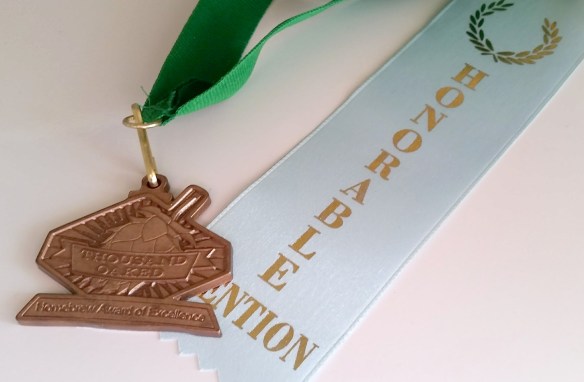
I submitted my recent Vienna lager and German pils for the 2017 Romancing the Beer Competition, hosted by Thousand Oaked Homebrewers. I was pretty happy with these beers, and was pleased to see that the judges agreed! Take Two Vienna Lager earned an honorable mention in the Amber and Dark Euro Lagers category (out of 15 entries), and Palaeotis Pils placed third in the Euro Lagers category (out of 18 entries).

Let’s take a look at the overall results, and see how they stack up against my own tastings!

20170312_084551

Take Two Vienna Lager

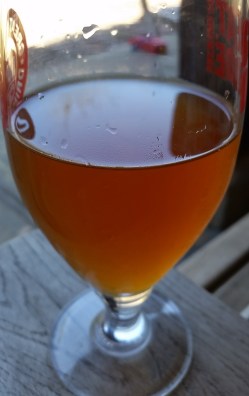
This beer averaged 37.5 (from scores of 37 and 38), falling at the upper end of the “very good” range by the BJCP guidelines.

Overall, the judges thought it hit most of the notes for the style. Hops were noted as nicely balanced against the malt. I was curious to see that the judges were split on mouthfeel–one thought it was pretty much perfect for the style, and the other scored it as slightly thin and watery. Similarly, the judges were split on the maltiness–one thought it was right on point, and the other thought it a bit lacking.

One judge picked up slight estery notes (or possible acetaldehyde). I suspect that this corresponds with a brief period in early fermentation when I lost temperature control due to a power outage.

Based on my tasting, it’s interesting that the recipe doesn’t terribly fit what I like in a Vienna lager (in terms of just a little bit too malty and roasty) compared with what the judges liked in a Vienna lager. I won’t likely brew this recipe again, but I am tempted now to brew something for competition more in line with my preference and see what happens!

Palaeotis Pils

I’m really proud of how this beer turned out. It came across really well on my personal tasting, and was absolutely enjoyable when it was on tap. It may not have won top tier in the category, but the judges comments make me feel like I’m on the right track. The beer averaged 38 (individual scores of 37 and 39), right at the base of the “excellent” score range.

Aroma scored well, although both judges said they were looking for a little more malt character. In terms of the hop aroma, both seemed okay with it (but one noted their perception of a tiny hint of vegetal character and that the overall hop aroma was a bit heavy). Appearance was nailed, and flavor was also pretty solid, with a balance between hops and malt. Interestingly, one judge noted perfect carbonation and the other thought it was a bit low. One thought the finish could be a touch more crisp.

So, if I brew this again, what should I change? I might add a touch of melanoidin malt, or else I might perhaps lengthen the overall decoctions. Another option might be to use a different base malt–perhaps one of the “standard” offerings from Weyermann rather than the Bohemian floor-malted version. I would probably also reduce my late hop just a touch, to about 2/3 or 3/4 of what it was originally. And, I suppose I would reduce the bitterness a tiny bit, too–maybe down to 28 or 30 IBU rather than 34. This would let the malt shine through a bit more. Another alternative (and something I might try) would be to up the overall malt bill and initial gravity a tad. I suppose I could carbonate more strongly or package more carefully, too, but given the split judging assessment, I’m not too worried about it yet.

I’ll be trying a slightly modified version of recipe again soon!

Beer Tasting: Palaeotis Pils

20170128_124227My Palaeotis Pils, falling within the German pils style, has been on tap for a few weeks now, and seems to be reaching a peak in quality. Time for a tasting!

  • The Basics
    • Original gravity = 1.048, final gravity = 1.011, abv = 5.0%, estimated IBU = 34
  • Appearance
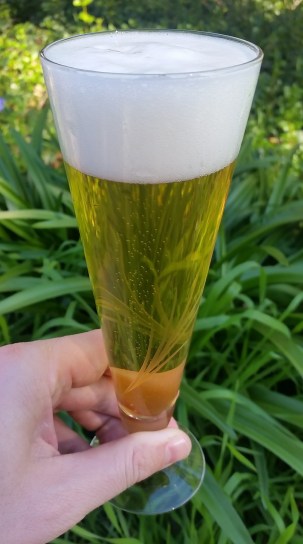
    • Pale straw appearance, brilliantly clear, with a tall, fine, white head that settles to a persistent blanket across the top of the beer.
  • Aroma
    • A very gentle malty sweetness with a spicy hop note behind that.
  • Flavor
    • Bready malt profile, with a firm bitterness that lingers after each sip. It’s definitely a bitter beer, but not out of balance for what I wanted.
  • Mouthfeel
    • Carbonation is appropriately high for the style, and it has a crisp, medium-dry finish.
  • Would I brew this again?
    • Absolutely! This is an exceptionally nice beer; it nails pretty much every point of the style, and is easy drinking, too. German pils is probably a little hoppier than I would always want in a pale lager, but that’s more of a stylistic thing than a flaw in this particular recipe. The other night, I ordered a glass of Bitburger, often considered a “classic” German pils. Although I didn’t taste them side-by-side, I can say that mine hits many of the same notes as this commercial example. I have my pils entered in an upcoming competition, so we’ll see how my assessment compares to that of the BJCP judges.
  • Overall
    • 10/10

Lager / Pils Update

vienna_lagerThings have been moving along on my latest Vienna lager (Take Two Vienna Lager) and German pils (Palaeotis Pils). The two beers are in the same fermentation chamber; because the pils was brewed most recently, the temperature control regimen has been dictated by that batch.

For these brews, I elected to use a fast lager schedule. The pils was brewed on 9 December, with a starting gravity of 1.048. When I checked the beer on 16 December, the gravity was down to 1.020. At 57% apparent attenuation, this exceeded the recommended 50% threshold for temperature ramp-up, so I was clear to go. I didn’t bother to check on the Vienna lager, because it had been in there for a week extra and high krausen had long since passed. So, I figured it was more than safe to ramp that one up too.

At this point, I turned off the fermentation chamber to let things free-rise for the first day. Because my garage temperature was fairly cool, the temperature in the fermentation chamber hadn’t exceeded 55° after 24 hours. So, I added the heating pad and set the temperature for 68°. The temperature probe was loose, so that it would sense ambient temperature in the chamber, for a slower rise in the fermenters themselves than if the probe was attached to a fermenter directly.

I checked the pils again on 24 December, at which point the gravity was 1.011, and this was unchanged two days later (5% abv, with the 1.048 starting gravity). The Vienna lager (depicted in the photo) was at a final gravity of 1.013 (5.1% abv, following a starting gravity of 1.052). So, on 26 December I set the fermentation chamber to 34°, still leaving the temperature probe loose so as to ensure a slower temperature drop in the fermenters. I filled the airlocks with vodka, to avoid having the sanitizer water sucked in as things cooled.

After 24 hours of cold-crashing, I added gelatin, with 1/2 tsp. in a half cup of water for each batch. I’ll let things settle for a few more days before kegging and carbonating.