
2019’s Homebrew Highlights

2019 marked my eleventh year brewing out in California, and I feel like I’m squarely in the comfort zone of homebrewing. Yet, I didn’t let myself get too comfortable, either. This was a year to push myself with more lager recipes and some new styles. I’ve improved my packaging of oxygen-sensitive beers, and overall this has paid off handsomely. Let’s take a look at some of the highlights!

  • Favorite Batch
    • This was a great year, with several batches I really loved. Favorite batch for 2019 is a hard choice, but I think I’ll give a slight edge to the Alta California Lager. It was a virtually perfect beer, and I hope I’ll be able to get something close to it again in a future incarnation!
  • Least Favorite Batch
    • I didn’t have any complete disasters this year, so this is another hard choice. My recent brown ale was a bit of a disappointment, so that’s probably what I would nominate. I also haven’t gotten quite to the perfect Bohemian pilsner. Something to shoot for next year!
  • Experimental Recipe with Most Potential
    • I made a Breslau-style pale schöps, and it was just plain fun. I loved the challenge of creating a recipe for a style taste-unseen, and the result was really nice. It was a treat!
  • Most Fun New Style/Recipe to Try
    • Stygimoloch Bock turned out great in its inaugural run, and with a little more tweaking it’s going to be pretty darned amazing. I had fun working with the artist on the commemorative design, and had just as much fun enjoying the beer with friends.
  • Best Technique Added to Repertoire
    • I’ve perfected a partially closed transfer, to reduce oxygen exposure for sensitive beers like dry hopped IPAs and light lagers. Just like a totally closed technique, I purge the keg with CO2 by filling it with StarSan solution and pushing out the liquid. Rather than pushing the beer in with CO2 also, I just siphon in via the out port. As long as I don’t disturb the surface of the fermenter’s beer too much, I figure that oxygen introduction is quite minimal. I feel this is a touch safer than even minimal pressure added to a glass carboy, and the process also involves less equipment.
  • Best Ingredient Added to Repertoire
    • Comet hops! I liked how my Comet Pale Ale turned out, and will be looking to try this again for future IPAs and pale ales.
  • Favorite Book(s)
    • I read the somewhat old Bavarian Helles volume by Hornbusch (from Brewers Publications), and rather enjoyed it. I picked up a few from this style-centered series when they were on sale, and have been working my way through them. The oldest date back to the early 1990s, when brewing and homebrewing were completely different worlds. Some of the recipes have value, and some I take with a bit of skepticism. Even so, the histories and background are super interesting, with more detail than the typical brewing article. The books are also a nice length to finish in one or two sittings, which is a rare sweet spot for the beer writing market.
    • On the cultural side, I think This Ain’t the Beer That You’re Used To: A Beginners Guide To Good Beer, by Dom “Doochie” Cook, stands out among books I read. It’s highly readable, and brings a fresh voice to the beer writing world. Check it out!
  • Other Milestones
    • This is the year that I finally figured out lagers. Around a quarter of the beers of 2019 were lagers, including everything from Munich dunkels to German pils to Mexican-style lager to bocks. I had more hits than misses, and can foresee even more lagers next year!
  • Overall Stats
    • I brewed around 25 batches this year; not as much as some years, but certainly not too shabby. There were times where I ran a little short on homebrew (mainly when I had extensive stretches of no-brewing due to work/family schedules), so next year I’ll try to plan things out a bit more.
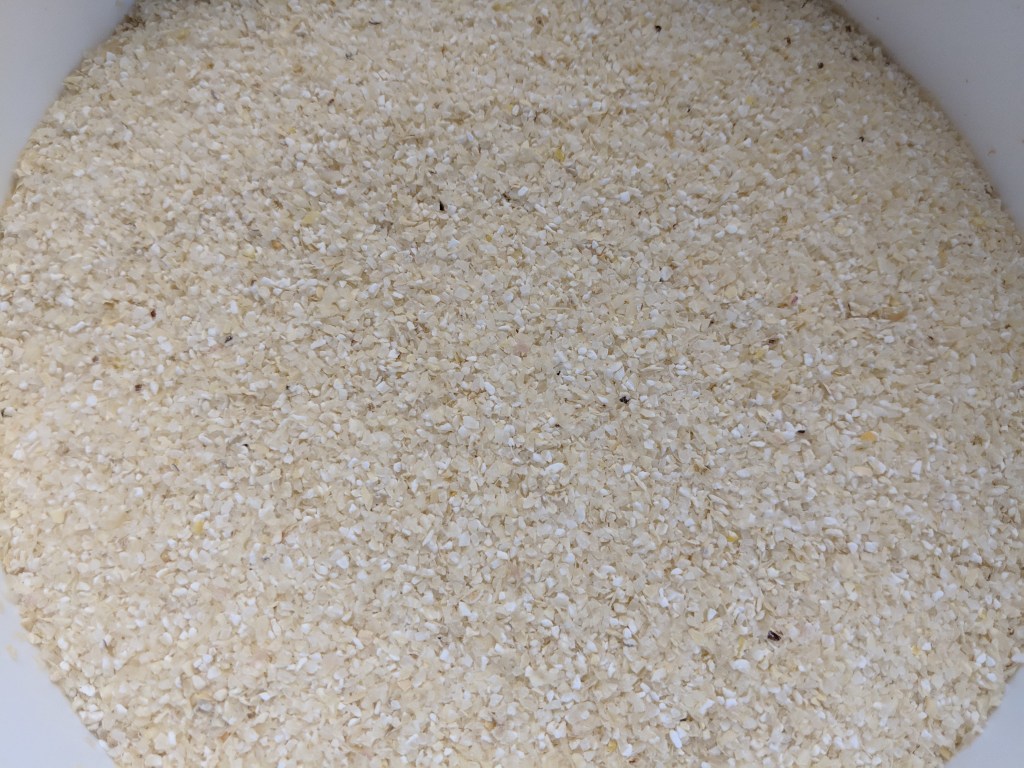
Corn grits, ready to go into the Alta California Lager

The Session #125 — Pale European Lagers: The Ultimate SMaSH beers

thesessionNote: This is my first time contributing to The Session, a monthly blogging challenge for beer aficionados. For The Session #125, Mark Linder chose the topic of SMaSH (single malt and single hop) beers.
SMaSH beers–those brews marrying a Single Malt variety and a Single Hop variety–are often promoted as something that’s interesting to try but not particularly versatile. As a homebrewer, I’ve usually thought of them as a tool to explore ingredients, perhaps fun as a technical gimmick but not necessarily a pathway to truly exceptional beer. Sure, you could get some good stuff, but it would lack complexity and get boring after a few pints. SMaSH beers were a way to turn out some pale ales with funky new hop varieties, but these were only a brief stop along the journey to a more worthy recipe. Don’t even bother entering them in a BJCP competition, because they won’t hold up well relative to their rivals with a longer ingredient list.

Then I discovered the Bohemian pilsner.

When I first sampled American-style craft beer, the cheap American lagers of my early days faded into mental oblivion. Why even bother with a watery fizz-drink, when you could blast your taste buds with a triple imperial IPA touting 190 IBUs, 12 percent alcohol, and five varieties of hops? Or what about a delightful English porter, with its malty backbone and slightly fruity yeast character? Clear beers were for quitters and college students. European lagers were mildly intriguing, but typified by badly aged and skunky six packs in green bottles. Why bother with that, when there was a world of fresh local craft brew and homebrew to explore?

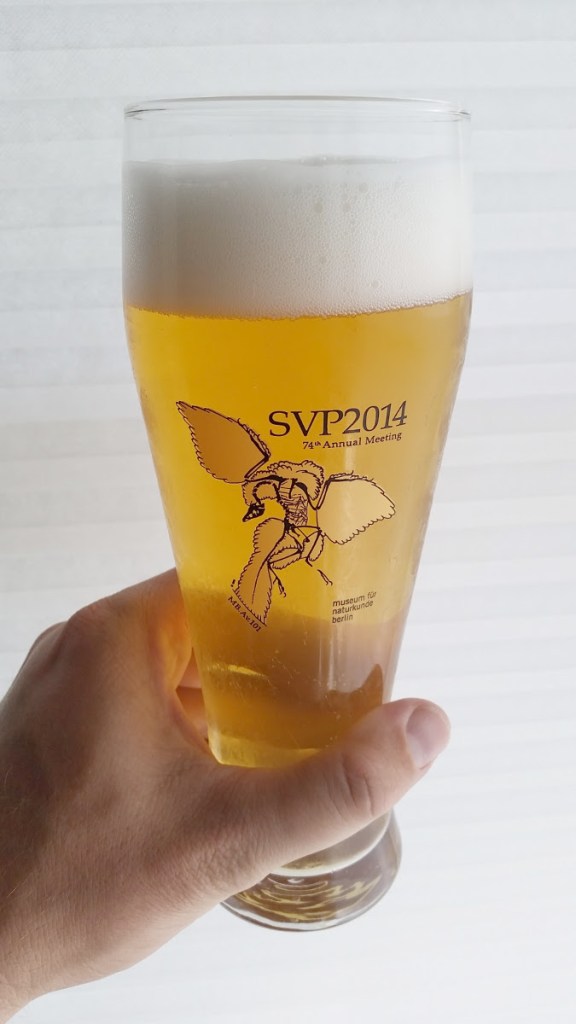
An Archaeopteryx-linked beer requires the appropriate glassware.

My first homebrewed Bohemian pilsner (made with genuine Jurassic ingredients!)

Not too long ago, though, I decided to dip my homebrewing toes into the lagered waters. Bohemian pilsner (a.k.a., Czech pilsner, a.k.a., Czech premium pale lager in the 2015 BJCP guidelines) caught my attention early on…it was the original pilsner, after all! What better way to learn what this beer is all about?

Yet, I was shocked by the simplicity of the classic recipes! Bohemian pilsner malt. Czech-sourced Saaz hops. Soft water. Clean lager yeast. The rest is just up to technique–in particular, a good decoction mash was apparently the key to success.

My first attempt at a Bohemian pilsner wasn’t perfect, but wow, it was pretty darned good. This was the first time I consciously experienced Saaz hops, finally getting a name to match with that distinctive aroma and flavor. It was also the first time I experienced a genuinely fresh European-style lager in the United States, and I finally knew what the big deal was all about.

This spurred a realization. SMaSH beers weren’t just for pale ales. In fact, pale lagers are the most reliable ticket to SMaSH success. Quality malt. Quality hops. Careful water chemistry. A clean fermenting lager yeast. A bit of skill. All of this combines to a memorable and surprisingly complex brew. Of course, Czech pilsner isn’t the only lager style with a simple recipe. Munich helles, German pils, and others jostle alongside in the running. Any of these can be done quite well with a short shopping list. This is what makes them so hard to do exceptionally well, perhaps–any flaws can’t hide behind crystal malt and yeast esters.

So, what’s the style best suited to a SMaSH beer? I love all of my European pale lagers, but Bohemian pilsner wins for me every time.

Confidence and Competence in Brewing

20170107_084229

“Relax. Don’t Worry. Have a Homebrew.” What a lifesaver that phrase was in my early days of brewing! Getting started in this hobby can be a nerve-wracking business. First are all of the (rightfully) important warnings about sanitation and proper temperature for yeast pitching and whatever. Then come all of the smaller warnings about water chemistry, boil volumes, specific gravity, and the rest. If a novice brewer spends more than a few minutes browsing any homebrew forum, they are quite likely to spin themselves into a panic over every last detail. And heaven help them if they run across the most die-hard low-oxygen brewing proponents!

Yet, as long as you master the very basics, you can make some pretty passable beer. All of those other details can come later, with practice and experience. Brewing becomes a genuinely relaxing process, passing the threshold from slightly stressful exercise that produces a fun product to a fun exercise that produces an excellent product.

Just the other day, as I was brewing a pilsner, I thought…”Hey! I really have confidence in brewing now!” Much of this comes from frequent practice. I know my system. I can throw in a new technique without too much disruption in my brew flow. I know my ingredients. If I can’t find one particular ingredient for a recipe, I feel confident in making appropriate substitutions. I’m getting much stronger in self-critique, and have had my critiques validated in formal competitions. Speaking immodestly, most of my beer is pretty decent, and some of my beer is pretty darned excellent.

To truly enjoy brewing, don’t try to master everything at once. Focus on the big picture, and dial in the details over time. Brew by brew, work on your craft and develop your knowledge base. It takes time, but we all have the potential to be confident and competent brewers!

Homebrew savings in bulk?

Since I started ramping up my homebrewing two or three years back, I’ve been brewing at least 20 times a year. At five gallon batches, that adds up to a lot of supplies! I soon realized that it might make sense to start buying in bulk as a cost-saving measure, for things like hops, base malts, and some cleaners. But I also realized there are a number of cost/benefit factors that need to be considered. In this post, I outline my thought process.

20170513_102228

  • Do you brew often enough?
    • If you’re the sort of person who only brews a few times a year, it probably doesn’t make sense to buy bulk supplies. They’re likely to go stale before you use them up, and thus are just a waste of money.
  • Do you have space?
    • I’m fortunate to have plenty of storage space to store bulk supplies. Back in the days when I was an apartment brewer, that wouldn’t have been the case.
  • Is the particular supply or ingredient something you use frequently and in large volumes?
    • I brew with American 2-row a lot, so it makes good sense to keep a supply on hand. I can save around 40 to 50% by doing so, which adds up over a few batches. It would not make sense to buy 50 pounds of chocolate malt; I only use a few pounds per year, and a bulk sack would go stale before I could use it all up.
  • What’s the shelf life?
    • A 50 pound bucket of PBW cleaner is nearly two and a half times cheaper than buying the equivalent in 1 pound increments. It will probably take me several years to use this up, but I can’t imagine this stuff ever goes bad, as long as I store it properly. For stuff like yeast or bulk malt, a multi-year shelf life isn’t likely in the cards.
  • Can I pick it up in person or does it have to be shipped?
    • I buy bulk at my local homebrew shop whenever I can. In general, I have found that shipping can swamp out any potential savings otherwise. On those occasions when I do order online, I do a quick calculation on shipping to see if things still add up.
  • Do I really want that in bulk?
    • Although buying in bulk saves money, it also potentially constrains creative exploration of new ingredients. For instance, if I have 50 pounds of a particular brand of pilsner malt, I’m probably not going to try out other brands, at least until I’ve finished out that supply.

Overall, I find bulk purchases to be a good value given my brewing habits. Everyone’s situation is different, though. Think carefully; it might be right for you, too!