Bierstadt Pils Clone

It’s pils time again, as I continue my exploration of European lagers. The July/August 2018 issue of BYO magazine had a tasty looking clone recipe, for Bierstadt Lagerhaus’ Slow Pour Pils. Its simplicity was beautiful–pilsner malt, acidulated malt, Hallertau Mittelfrueh hops, and lager yeast. Additionally, it gave me a chance to play around with more step mashes and decoctions.

I followed the published recipe pretty closely, adjusting just slightly on my additions to ensure that the bittering hops would still hit my target of ~33 IBU. But, I then saw a correction in a later issue that the whirlpool addition should instead be a late hop addition. I figure this probably won’t mess things up too much, giving a bit more hop aroma, although also leaving slightly more potential for haze. In any case, the official recipe is posted at the BYO website.

Because I don’t have direct-fire capabilities for my mash tun, all of the steps had to be accomplished via infusions. This took a bit of creativity, but I managed reasonably well. As another wrinkle in the process, I tried for the first time a closed-transfer technique. In the past, I found that my pilsners tended to get that honey-like taste of oxidation after 6-8 weeks, which detracted from my overall enjoyments towards the end of the keg. As noted below, my attention to technique paid off pretty well!

Bierstadt Pils Clone

  • 8 lbs. Barke pilsner malt (Weyermann)
  • 0.5 lb. acidulated malt (BEST)
  • 1 oz. Hallertauer Mittelfrueh hop pellets (4.0% alpha), first wort hop and 60 minute boil
  • 1 oz. Hallertauer Mittelfrueh hop pellets (2.7% alpha), 40 minute boil
  • 1 oz. Hallertauer Mittelfrueh hop pellets (2.7% alpha), 10 minute boil
  • 1 oz. Hallertauer Mittelfrueh hop pellets (4.0% alpha), 10 minute whirlpool
  • 2 pkg. W34/70 Saflager lager yeast
  • 1 Whirlfloc tablet, 10 minute boil

Target Parameters

  • 1.048 s.g, 1.011 f.g., 4.9% abv, 33 IBU, 3.4 SRM
  • Infusion step mash with decoction
  • Water built from 8.12 gallons of RO water, with 1.6 g CaCl, 1.25 gypsum, 1 g epsom salts in 3.25 gallons of mash water, and 2.4 g CaCl, 1.9 g gypsum, 1.5 g epsom salts in 5 gallons of sparge water, to achieve -47 RA, 59 ppm Ca, 8 ppm Mg, 89 ppm SO4, 63 ppm Cl

Procedure

  • I mashed in with 2.5 gallons of water at 150° (1.054 quarts/pound of grain), aiming for a protein rest temperature of 131°. Instead, I hit 141°, and stirred frequently to get it down to 136° by the end of the 10 minute protein rest.
  • I next added 1.5 quarts of boiling water to achieve a mash rest of 144°. After 30 minutes, the temperature was down to 140°. I then added 1.5 quarts of boiling water, to hit 152°. This was below my target of 160°, so I added another 2 quarts of boiling water, to finally hit 160°. I let it sit here for 40 minutes before proceeding to the next step. In total, I added 4.5 gallons of water for the mash.
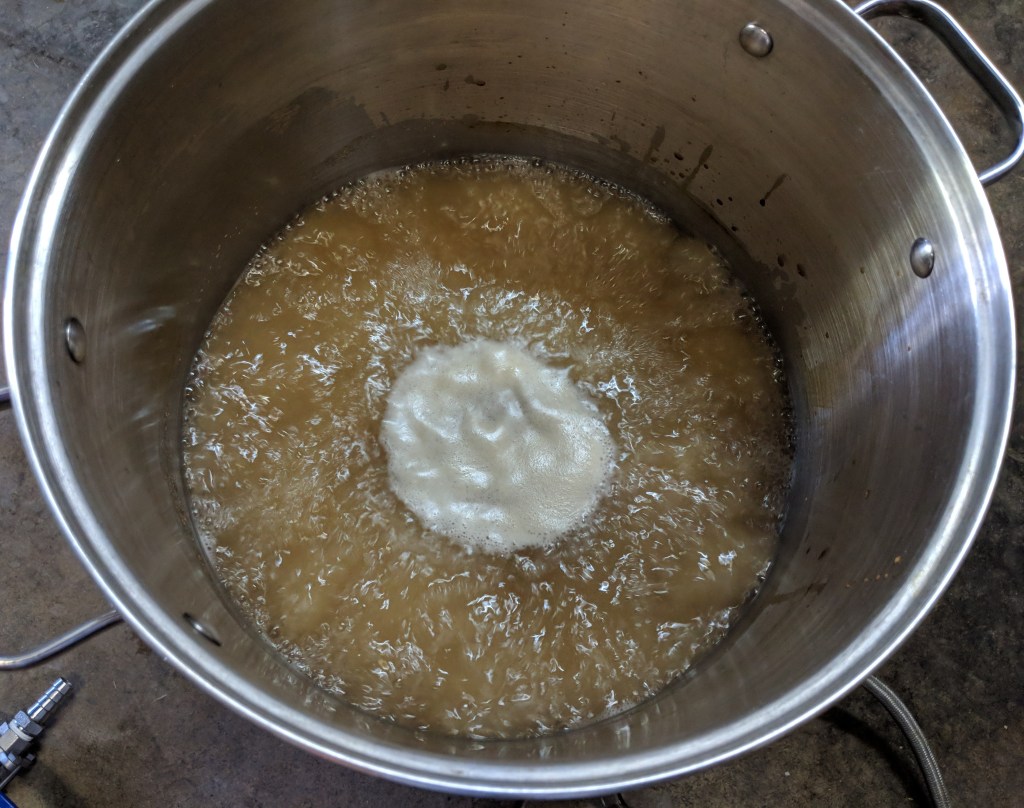
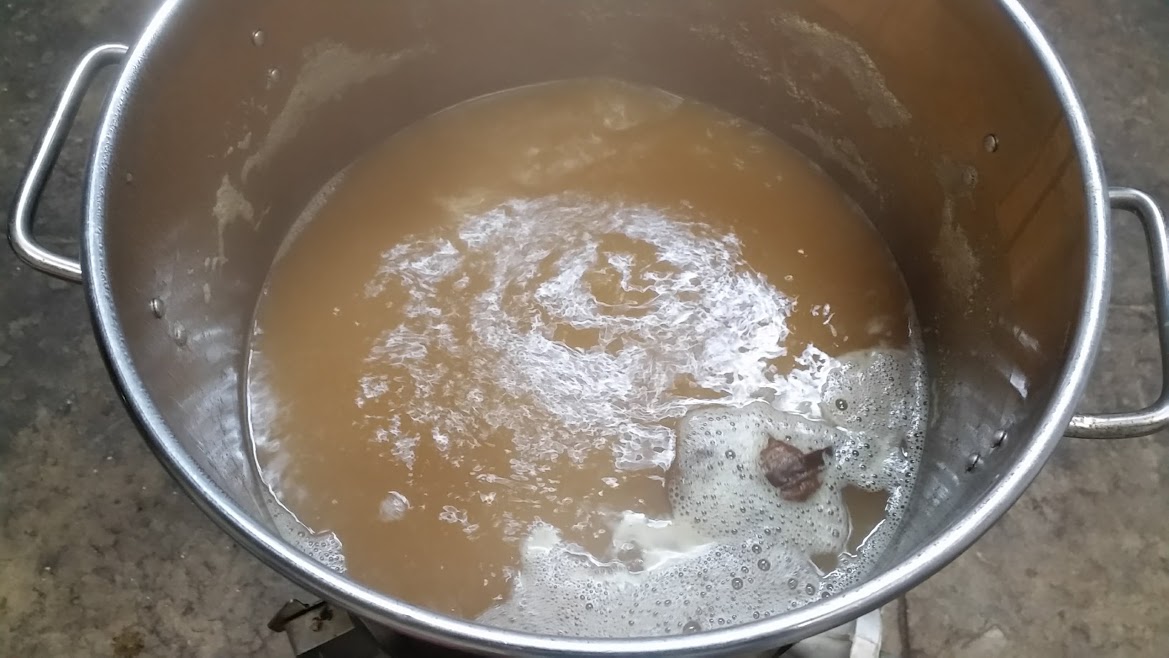
  • Next, I pulled a thin mash of 2.75 gallons, and boiled it for 10 minutes. Next, I added it back to the mash tun, to hit 168°. I let this sit for 10 minutes, vorlaufed, and collected the first runnings.
  • Next, I added 3.25 gallons of water at 180°, let it sit for 10 minutes, vorlaufed, and collected the second runnings.
  • In total, I collected 6.75 gallons of runnings with a gravity of 1.053, for 87% mash efficiency.
  • I brought the runnings to a boil, adding hops and kettle finings per the schedule. To keep bitterness closer to my calculated numbers, I removed the boil hops before adding the whirlpool charge.
  • I chilled the wort to 85°, and then transferred it to the fermenter, where it was further chilled to 49° in my fermentation chamber. I oxygenated with 60 seconds of pure O2, and then pitched the two packets of dry yeast directly.
  • Starting gravity was 1.053, with brewing on 31 August 2018. I fermented at 50°, until 25 September 2018, when I cold crashed to 36°.
  • I did a closed transfer to the keg (under CO2 pressure) on 27 October 2018.
  • Final gravity was 1.012; down from 1.053, this works out to 5.4% abv.
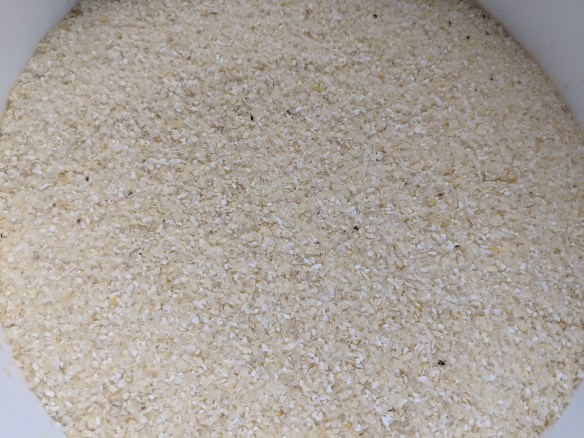
Boiling the decoction

Tasting Results

  • The Basics
    • 1.053 o.g., 1.012 f.g., 5.4% abv
  • Appearance
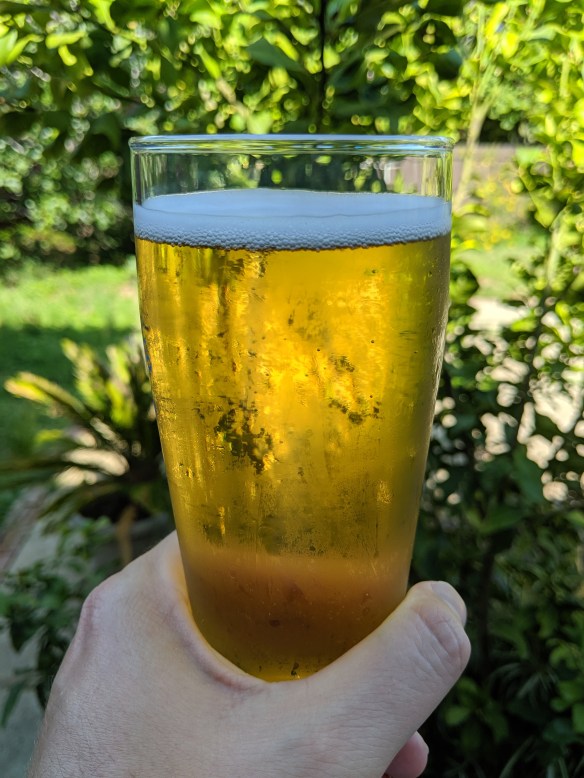
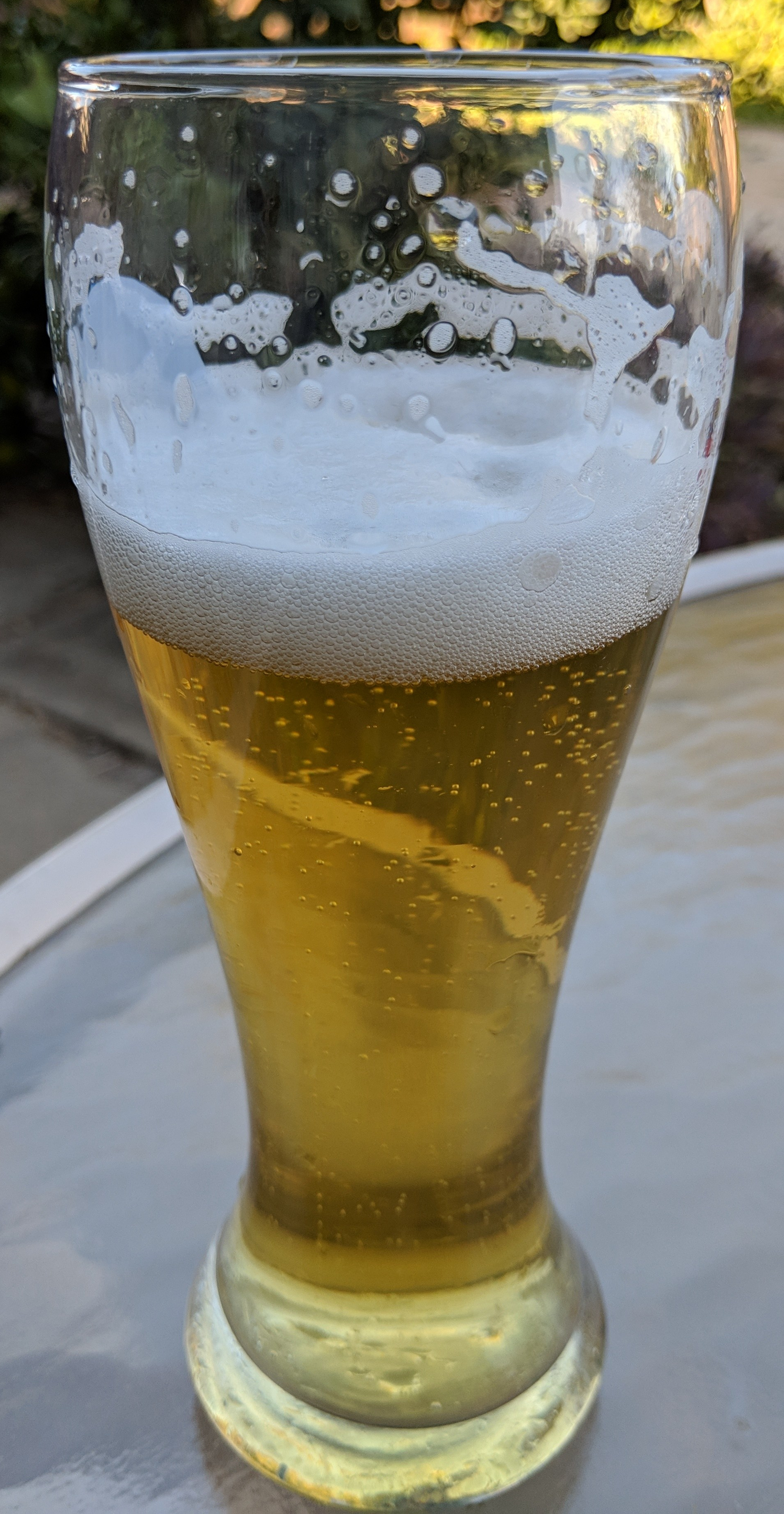
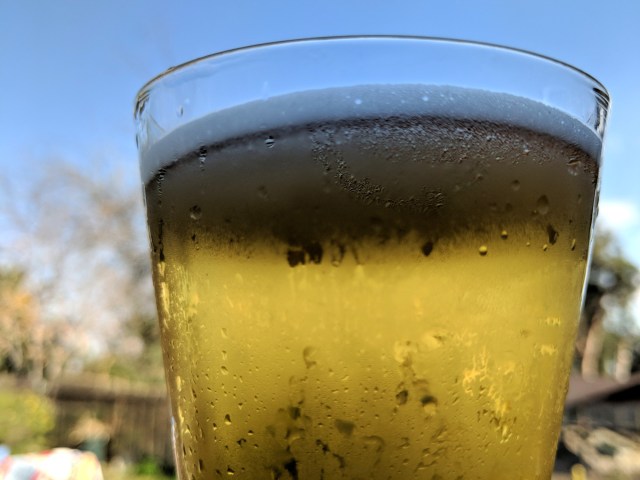
    • Brilliantly clear, light yellow beer, with a fine, white, and persistent head
  • Aroma
    • Slight spicy hop aroma, with a pleasant and gentle maltiness behind that
  • Flavor
    • Robust hop character nicely balanced against a grainy/sweet malt profile. Really nice!
  • Mouthfeel
    • Moderately dry, with a smooth finish that tilts toward the hoppy end in a gentle yet firm way.
  • Would I brew this again?
    • Absolutely! This has matured into a wonderfully drinkable, really delightful beer. I’m pleased with how such a simple recipe can produce excellent results.
  • Overall
    • 9/10

Little Green EuroLager

Warm weather is around the horizon, which means pale lager season is soon to be here.  Time to get brewing! This recipe is modified from the “Generic Green Bottle” formulation in Dave Carpenter’s recent Lager book. The book is a nice, accessible overview of the subject, supplementing the conversational text with a nice appendix of recipes for a variety of styles.

Relative to Dave’s recipe, I substituted in Warrior for Magnum, and used Belgian malt instead of German. Additionally, I used WLP830 instead of the suggested Wyeast 2042 Danish Lager yeast. My heart is in the right place, though–this is intended to be a clean, middle-of-the-road European lager, and I figure that the ingredient substitutions will keep the flavor in that realm.

Little Green EuroLager

  • 9.25 lbs. Château Pilsen malt (Castle Malting)
  • 0.25 lb. Carahell malt (Weyermann Malting)
  • 0.3 oz. Warrior hop pellets (15.8% alpha), 60 minute boil
  • 0.5 oz. Hallertauer Mittelfrueh hop pellets (4% alpha), 15 minute boil
  • 1 oz. Saaz hop pellets (2.7% alpha), 5 minute boil
  • 1 Whirlfloc tablet, 10 minute boil
  • 1 pkg. German Lager yeast (White Labs, WLP830)

Target Parameters

  • Infusion mash to hit target of 149°, 90 minutes, batch sparge.
  • 1.049 o.g., 1.009 f.g., 5.2% abv, 24 IBU, 3 SRM
  • Water built from RO and Claremont tap water to hit target of 40 ppm Ca, 10 ppm Mg, 9 ppm Na, 41 ppm SO4, 39 ppm Cl, 87 ppm HCO3, 37 ppm RA.

Procedure

  • Two days before brew day, I made a 2L starter. After 36 hours, I cold crashed the starter for another 24 hours.
  • I mashed in with 3.25 gallons of RO water with 2 g of Epsom salts, 2 g CaCl, and 5 mL 75% phosphoric acid, to hit a temperature of 149°. After 90 minutes, I sparged with 3.25 gallons of tap water (with 1/4 of a Campden tablet) and 1.75 gallons of RO water.
  • In total, I collected 7.1 gallons of wort at a gravity of 1.042, for 84% efficiency.
  • I boiled for 60 minutes, chilled to 75°, and then chilled to 49° over a period of 12 hours before oxygenating (a 60 second pulse) and pitching the yeast. I brewed the beer on 2 March 2018, and pitched the yeast on 3 March 2018.
  • I fermented at 52° for around 2 weeks, before raising to 66° or so. On 23 March, I dropped the temperature to 34° for a cold crash.
  • I kegged the beer on 3 April 2018, adding 1 tsp. of gelatin in 1 cup of water to clarify.
  • Starting gravity was 1.050, and final gravity was 1.006, for 5.8% abv.

Initial Impressions

My initial impressions of this beer, after it has been on tap for a few weeks, is that it is pretty awesome and almost exactly what I was looking for. Malt character is glorious, and the aroma is crisp. The yeast character is super clean. My only minor ding is that the bitterness can come across as a touch harsh; I’ve noticed that on a few batches of lighter beers where I use Warrior as the bittering hop. Despite that hop being billed as a good general bittering hop, I think it’s probably just a bit too forward for anything less robust than a porter or stout, or less hoppy than a pale ale. That aside, I’m absolutely enjoying the beer. It has received high compliments from several people whose opinions on beer I trust, which is an exceptionally gratifying piece of feedback.

First of Maibock

My homebrew club is doing an in-club style competition for its May meeting, featuring–appropriately–maibock. Flying in the BJCP guidelines as a helles bock, this is a fairly malty, higher gravity German lager. It’s also not a style I’ve brewed before–this provides a great excuse (and is a reminder of how participating in a homebrew club can push you to try new things)!

This recipe is modified in part from one that appears in Gordon Strong’s Modern Homebrew Recipes. I adjusted the grain bill and hops slightly, and opted for an infusion mash rather than a decoction mash. The main commonality is that the recipe is basically pilsner, Vienna, and Munich malt, in descending proportions. I added in some melanoidin to help up the maltiness (particularly since I wasn’t doing a decoction mash). Finally, I adjusted this to be a 3.5 gallon batch, rather than a 5 gallon batch. This is a bigger beer, and I just didn’t want 5 gallons of the stuff!

The name is mangled from a Jonathan Coulton song; apologies to everyone.

20180210_211951

First of Maibock

  • 5 lb. Château Pilsen malt (Castle Malting)
  • 2.5 lb. Vienna malt (Great Western Malting)
  • 1.5 lb. Munich I malt (Weyermann Malting)
  • 0.25 lb. melanoidin malt (Weyermann Malting)
  • 0.45 oz. Magnum hop pellets (11.8% alpha), 60 minute boil
  • 1 oz. Tettnang hop pellets (2.2% alpha), 5 minute boil
  • 1 Whirlfloc tablet, 10 minute boil
  • 2 pkg. SafLager West European Lager yeast (S-23)

Target Parameters

  • Infusion mash to hit target of 152°, 60 minutes, batch sparge.
  • 1.068 o.g., 1.018 f.g., 6.5% abv, 27 IBU, 7 SRM
  • Water built from RO to hit target of 50 Ca, 5 Mg, 5 Na, 55 SO4, 70 Cl, 0 HCO3 ppm, RA -40

Procedure

  • To make my brewing water, I added 1.6 g gypsum, 0.3 g table salt, 1.2 g epsom salt, and 3.2 g calcium chloride to 6.5 gallons of RO water.
  • I mashed in with 3.15 gallons of water at 167° (and 4.75 mL of 75% phosphoric acid), to hit a mash temperature of 155°. After 40 minutes, the temperature was down to 152°. So, I added 0.65 gallons of water to bring the temperature back up to 157°. After a total of 60 minutes, I vorlaufed and collected the first runnings.
  • I added 2.75 gallons of water at 180°, let it sit for 10 minutes, vorlaufed, and drained the mash tun.
  • In total, I collected 5.5 gallons of runnings with a gravity of 1.049, for 78% efficiency.
  • I brought the kettle to a boil, adding hops and Whirlfloc per the schedule.
  • After 50 minutes of boiling, I measured the gravity and saw that it was at 1.058. This was well below my target, so I added 1.18 pounds of Briess pilsen DME to bring up the gravity.
  • After 60 minutes of boiling, I turned off the heat and chilled to 75°. I transferred to the fermenter, and put it in the fermentation chamber overnight to chill down to 54°. About 4 gallons of beer went into the fermenter.
  • I brewed the beer on 10 February 2018, and pitched the yeast on 11 February 2018. Prior to pitching, I hit the wort with 60 seconds of oxygen.
  • Starting gravity was 1.072.
  • On February 24, I let the beer free-rise to 64°. I’ll let it hang out at this temperature for a week or two before cold crashing.

Red Rye Lager

Moving through the winter months, and moving through my practice in the world of lagers, I’m feeling like something a bit different. I’ve got a good, clean German pils conditioning, so yet another pale lager would be somewhat boring. St. Patrick’s Day isn’t that far away, so an Irish-inspired beer seemed intriguing. I like Irish red ales, but rarely brew them. And then I thought…what about a red lager? Let’s take an Irish red ale recipe, and lagerize it!

Thus, my Red Rye Lager was born. I started with the Better Red Than Dead recipe from AHA, and worked a bit of magic on it. Instead of Maris Otter, I subbed in pilsner malt. To add a little more character, I dropped in a pound of rye malt. Thanks to a suggestion on the AHA forum, I used Carafa III instead of roasted barley for color adjustment. The hops got switched over to lager-appropriate hops, too. Finally, I wanted a yeast that would be clean but flavorful–and a California Common yeast seemed perfect.

20171222_140511

This was a fun recipe to work out…I feel like it’s something a bit different and creative. It doesn’t really conform to any particular BJCP style, which is also a plus in my book! The style guidelines are handy, but I find sometimes discourage me from thinking outside the box. I’m not brewing this for competition, so the sky is the limit!

Red Rye Lager

  • 5 lbs. Château Pilsen malt (Castle Malting)
  • 1.5 lbs. Barke pilsner malt (Weyermann Malting)
  • 3 lbs. Munich I malt (Weyermann Malting)
  • 1 lb. rye malt (Briess Malting)
  • 0.5 lb. CaraRed malt (Weyermann Malting)
  • 2 oz. Carafa III malt (Weyermann Malting)
  • 0.5 oz. Magnum hop pellets (13.2% alpha), 45 minute boil
  • 2 oz. Hallertauer Mittelfrueh hop pellets (4.0% alpha), 5 minute boil
  • 1 Whirlfloc tablet, 10 minute boil
  • 0.5 tsp. Fermax yeast nutrient, 10 minute boil
  • 1 pkg. San Francisco Lager Yeast (White Labs, WLP810), prepared in 1.75L starter

Target Parameters

  • Infusion mash to hit target of 152°, 60 minutes, batch sparge
  • 1.053 o.g., 1.016 f.g., 4.8% abv, 26 IBU, 14 SRM
  • Water adjusted to hit target of 52 Ca, 10 Mg, 11 Na, 43 SO4, 53 Cl, 109 HCO3, RA 46 ppm.

Procedure

  • I prepared a 1.75L starter for the yeast, 24 hours in advance. Within 12 hours, it had a visible fermentation.
  • I mashed in with 4.5 gallons of RO water, with 2 g Epsom salt and 3 g CaCl added, in addition to 3 mL of 75% phosphoric acid. The strike water was around 165°, to hit a mash temperature of 154°. It was down to 149.5° after 60 minutes. At this point, I vorlaufed, drained the mash tun, and added 4.5 gallons of tap water at 180°.
  • After waiting another 10 minutes, I vorlaufed and drained the mash tun again.
  • In total, I collected 7.3 gallons of wort with a gravity of 1.047, for 81% efficiency. Wow! I wonder if it was because I had a slightly thinner mash than normal?
  • I brought the runnings to a boil, adding hops and other ingredients per the schedule. After a 60 minute boil, I turned off the flame and chilled down to 70°.
  • I transferred the wort to the primary fermenter, and then hit it with 2 minutes of pure oxygen. I pitched the yeast, and sealed it all up. I will be fermenting at 60°.
  • The beer was brewed on 22 December 2017. Starting gravity was 1.053, exactly on target. I ended up with just over 6 gallons in the fermenter.
  • I cold-crashed the beer on 1 February 2018, and kegged it on 2 February 2018. Final gravity was 1.013, for 5.3% abv.

Tasting Notes

  • Aroma
    • A nice crisp spicy aroma, with a gentle malt aroma behind that. Really nice.
  • Appearance
    • A beautifully clear reddish amber color, with an ivory head that starts as thick, tall foam before settling down to a persistant blanket across the top of the beer. Really nice!
  • Flavor
    • The rye spice note is at the back of this beer; it’s not overwhelming, but definitely detectable, which is awesome. The malt backbone is very present, with that nice toasty note that you get from Munich. The bitterness is firm but gentle, standing up perfectly to the malt.
  • Mouthfeel
    • Medium bodied, moderately high carbonation. The finish is somewhat dry, but not overwhelmingly so.
  • Would I brew this again?
    • This is a wonderful beer! All of the flavors blend perfectly, to make a tasty and very unique beer. This isn’t the sort of thing that I would enter into a competition, because it’s just too off-beat for any category. Not quite amber lager, not quite steam beer.
  • Overall
    • 10/10

Brew Updates: Palaeotis Pils 1.2 & Old Pine Pale Ale

I’ve kegged two of my brews in the past week, incluing my German pils and my American pale ale. Here are the details!

  • After 10 days in primary, I kegged Old Pine Pale Ale on 12 December 2017. I added the dry hops at this point, in a bag. Depending on how it works out, I may or may not remove the hops. I force carbonated the keg, and had it on tap by 16 December. The brew is pretty hazy at this point, and should clear up with time. Final gravity was 1.012, down from 1.052, working out to 5.2% abv.
  • My latest iteration of Palaeotis Pils started fermentation on 20 November 2017. It fermented at 50° until 27 November, when I raised the temperature to 54°. I raised the temperature to 66° on 2 December 2017, and cold crashed it on 10 December 2017. I kegged the beer on 16 December 2017. Final gravity was 1.010; with a starting gravity of 1.049, we’re clocking in at 5.1% abv. There is a touch of haze, which I’m going to settle out with time and cold.