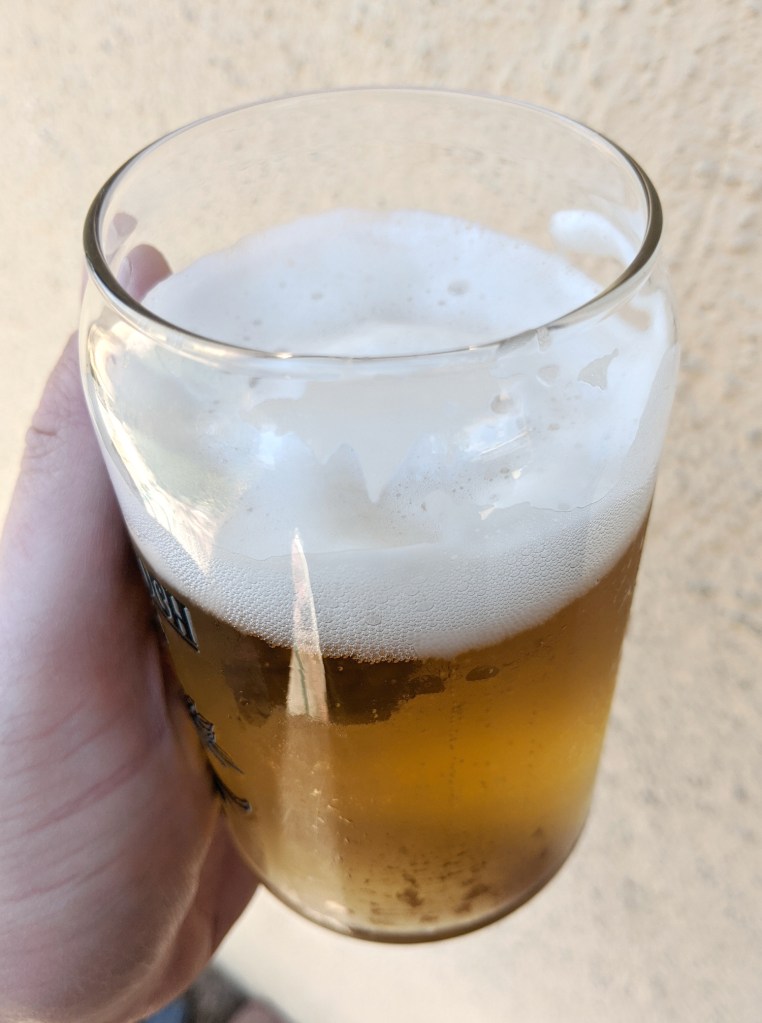
The Celtic Elk Stout 1.1

Nearly five years ago, I made an Irish stout that tasted great and did well in competition. I gave another go this year, seeking a dark beer with lots of flavor but not a lot of booziness. It was a success!

The recipe is basically the same as last time, just with some minor ingredient adjustments.

The Celtic Elk Stout 1.1

  • 6 lb. Maris Otter malt (Crisp)
  • 1.5 lb. flaked barley
  • 13.6 oz. crystal 75 malt (Great Western)
  • 12 oz. roasted barley (Briess)
  • 10 oz. chocolate malt (Briess)
  • 4 oz. crystal 10 malt (Briess)
  • 3 oz. Blackprinz malt (Briess)
  • 3 oz. Carafa Special III malt (Weyermann)
  • 3 oz. rice hulls
  • 0.65 oz. Warrior hop pellets (15.8% alpha), 60 minute boil
  • 1 Whirlfloc tablet, 5 minute boil
  • 1 pkg. Irish Ale Yeast (WLP004)

Target Parameters

  • 1.045 o.g., 1.014 f.g., 4.1% abv, 35 IBU, 39 SRM
  • Infusion mash, 156° for 60 minutes, batch sparge
  • Claremont tap water

Procedure

  • The night before brewing, I made a 0.75 L starter, and let it run on the stir plate.
  • I mashed in with 3.5 gallons of water at 168°, to hit a mash temperature of 156°.
  • After 60 minutes of mashing, I added 1.5 gallons of water at 185°, let sit for 10 minutes, vorlaufed, and collected the first runnings. Next, I added 3.75 gallons of water at 185°, let sit for 10 minutes, vorlaufed, and collected the second runnings.
  • In total, I collected 7.5 gallons of runnings with a gravity of 1.045, for 87% efficiency! This was way too high, so I removed 0.5 gallons of runnings and added 0.5 gallons of tap water, to hit 1.041. This was much better. I saved 2 cups of this to use in bread (and it made tasty bread!).
  • I brought the kettle to a boil, adding hops and finings per the schedule. After 60 minutes, I turned off the flame and chilled the wort.
  • Once the wort was down to around 75°, I transferred to the fermenter and chilled the rest of the way down to 66°. Finally, I pitched the yeast.
  • I brewed this beer on 18 April 2020. Starting gravity was 1.050.
  • I fermented the beer at 66°, and kegged the beer on 25 April 2020. To save some CO2 and try keg conditioning, I primed the keg with 2.1 oz. of corn sugar in boiling water.
  • Final gravity was 1.019, for 4.1% abv.

Tasting

  • Appearance
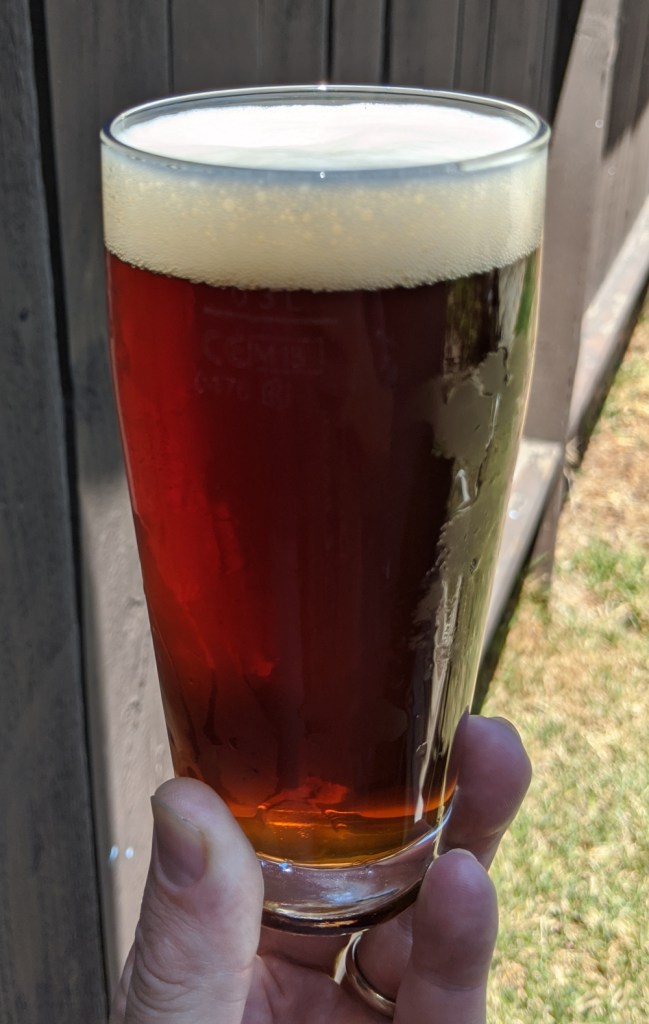
    • Dark! Black in the glass, and a deep, dark brown if you get a thin sliver of beer. Thin but persistent brown head.
  • Aroma
    • Rich aroma of chocolate with a touch of roasted coffee. There are hints of dried cherry behind that; I don’t think it’s esters (because the flavor of the beer is pretty clean in terms of yeast character), but a synergistic effect of the dark malts. I like it!
  • Flavor
    • Roasted coffee character at the outset, with a touch of dark chocolate behind that. There is a really nice coffee-type bitterness from the malt than creeps in alongside the hop bitterness. Hop bitterness is clean. The flavor is malt forward, with hops secondary, until the finish. There is an extended, slightly bitter (but not unpleasant) finish.
  • Mouthfeel
    • Dry, medium-light body, moderate carbonation.
  • Would I brew this again?
    • This is a great recipe, and a fine interpretation of the style. I think my modifications were okay overall, although I’ll replace the Carafa III with all debittered black malt next time, and use pale chocolate instead of regular chocolate malt, because the malt was just a little too much chocolate and not enough roast. As the beer matures, it has really come into its prime. I rushed it just a touch to get it on-tap, and so it had a hint of sweetness at first from the corn sugar used for priming (at least I think that’s what I was experiencing). That’s gone away now. This recipe produces a really quaffable beer, and the low alcohol level (4.1% abv) isn’t really a flavor/mouthfeel detriment thanks to the malt character.
  • Overall
    • 9/10

Humboldt’s Hefeweizen

It has been a loooooong time since I’ve brewed a German hefeweizen / weissbier. In fact, my records show that I’ve only done it once, over five years ago. That attempt was all-extract, and turned out reasonably well.

I’ve been thinking about this style because I wanted something that turns around quickly, has a ton of character, and is low alcohol enough to be enjoyed as a session beer on warm days. Plus, I’ve really been into German styles lately–what’s not to like?

The recipe more or less follows Gordon Strong’s weissbier recipe from the March/April 2020 issue of Brew Your Own magazine (recipe here, behind paywall). I liked its simplicity, and that it could be done fairly well with an infusion step mash. I added in a touch of melanoidin malt, to use up a lingering handful, and used up some extra wheat malt, too. The recipe called for a ferulic acid rest (to maximize clove character), and I was willing to give that a try in the interest of science.

The name–Humboldt’s Hefeweizen–honors German scientist Alexander von Humboldt. I recently finished a biography about him (Andrea Wulf’s Invention of Nature–highly recommended!), and I was fascinated by his intellectual and cultural influence, as well as his incredible dedication to documenting knowledge. This dude has a ton of animals and plants bearing his name, bestowed by the scientific community. There’s a Humboldt Penguin, and a Humboldt Squid, and a Humboldt’s Sapphire Hummingbird. Why not a Humboldt’s Hefeweizen? I don’t know that he necessarily drank much of the stuff when he was alive, but he probably didn’t eat many penguins, either.

Humboldt’s Hefeweizen

  • 4.75 lb. Superior Pilsen Malt (Great Western)
  • 4 lb. white wheat malt (Briess)
  • 1.25 lb. white wheat malt (Great Western)
  • 1.6 oz. melanoidin malt (Weyermann)
  • 0.25 oz. Magnum hop pellets (13.2% alpha), 60 minute boil
  • 1 pkg. Hefeweizen Ale yeast (WLP300, White Labs)

Target Parameters

  • 1.047 o.g., 1.010 f.g., 4.9% abv, 11 IBU, 4 SRM
  • Infusion mash; 15 minute acid rest at 116°; 30 minute saccharification rest at 149°; 30 minute saccharification rest at 158°, batch sparge
  • Claremont tap water with mineral additions, to hit target water profile of 80 ppm Ca, 9 ppm Mg, 23 ppm Na, 58 ppm SO4, 50 ppm Cl, 220 ppm HCO3; RA=118 pm

Procedure

  • The night before brewing, I spooled up a 1.25L starter for the yeast.
  • On brew day, I mashed in with 2 gallons of water at 129°, to hit 119° for the acid rest. This is a touch higher than I wanted, but still within the acceptable parameters for an acid rest.
  • After 15 minutes, I added 1.6 gallons of water at 202°, to hit a 149° mash temperature. I added 4.5 mL of lactic acid at this time, and let it rest for 30 minutes.
  • Next, I added 1.6 gallons of water at 185°, to raise the mash temperature to 152°. I had been hoping for a little warmer (158°), but will settle for this. After 30 minutes, I collected the first runnings.
  • I added 3.6 gallons of water at 185°, let it rest for 10 minutes, and collected the second runnings.
  • In total, I collected 7.2 gallons of runnings with a gravity of 1.040, for 75% mash efficiency.
  • I brought the runnings to a boil, adding the hops per the schedule. After 60 minutes, I turned off the flame and began chilling.
  • I transferred the wort into the fermenter, and chilled it further in my fermentation chamber. Once I hit 62°, I pitched the yeast.
  • I brewed this beer on 26 April 2020, and kept the 62° temperature for the first four days of fermentation. I ramped up to 67° on 30 April.
  • On 3 May 2020, I brought the beer out to ambient temperature, which was around 72°, to finish out fermentation.
  • I kegged the beer on 5 May 2020, adding 3.61 oz. of corn sugar. This should hit a target carbonation volume of ~3.4 volumes. After a week, I hooked it up to the gas in my keezer, carbonating the last little bit in there.
  • Starting gravity was 1.045, and final gravity was 1.013, for 4.3% abv.
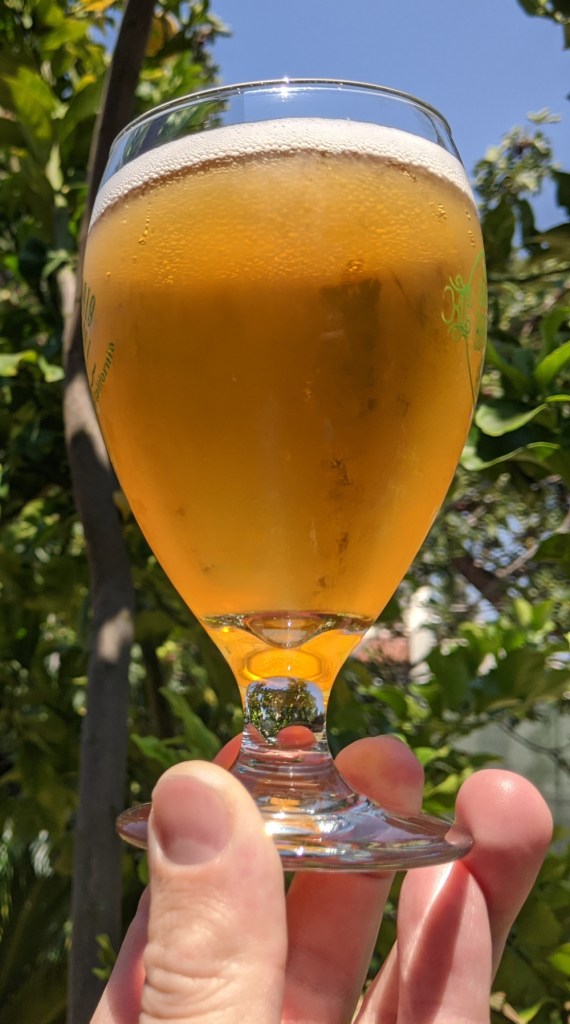
yellow beer with fluffy white head, in weizen glass with SVP2014 on front with picture of fossil Archaeopteryx, held by hand in green yard

Tasting

  • Appearance
    • Creamy white head, persistent; doesn’t always pour consistently tall, though (gotta work on the head factor). I seem to do better if I let the beer line rest for 10 minutes between pours, to let CO2 out of solution and encourage some foam. Very hazy light gold beer.
  • Aroma
    • Tart aroma, with light bubblegum and clove. (no banana) Lots of yeast character!
  • Flavor
    • Light and smooth, with very low, subtle hop flavor. Slightly tart, with a mild bite coming from high level of carbonation that offsets the malt. Moderate clove, slight banana, very slight bubblegum in the yeast character. Malt character is light and somewhat bready, with a residual sweetness.
  • Mouthfeel
    • Medium-light body, creamy on tongue, with high carbonation, very slightly dry finish.
  • Would I brew this again?
    • This is a really nice weissbier! I think the freshness, malt balance, and high carbonation come together pretty well. I like that I dodged the super-banana (sometimes to the level of stomach-churning) character of wheat beers fermented at higher temperatures, so there’s not much I would change on that end. The yeast character is pretty nice here, too. My one disappointment concerns the level of head; depending on my pour (and how long the beer has sat in the lines between pours, with a greater length of time encouraging more foam), I don’t get quite as tall of a head as consistently as I would like. I wonder if the low temperature initial mash rest had a detrimental effect in this regard (in terms of breaking down the relevant proteins just a bit too much). Or maybe it’s how I’m pouring? Or maybe I am expecting more head than is realistic in a typical setting? I might add in a touch of flaked wheat to address head character next time.
    • As a style, I’m definitely coming back to this one. It’s super flavorful, packing in a ton of character without a ton of alcohol. That’s perfect for enjoying on a summer afternoon!
  • Overall
    • 8.5/10

What’s Brewing? May 2020 Edition

Following the relatively quiet brewing months of March and much of April, I’ve been able to get back into the swing of things again. With extra time at home, I’ve also been making various syrups and other fermented goodies. It’s a lot of fun!

Fermenter with the Alta California Lager, ready for kegging

Beer Batch Updates

  • I brewed a German wheat ale on April 26 (Humboldt’s Hefeweizen), and it has been carbonated and is now on service! It’s a super straightforward recipe, with pilsner malt, wheat malt, and a touch of melanoidin (to finish out my stash of that malt). I’ve not brewed this style in some time (it looks like 2015 was my last batch), so it seemed like a good time to give it another try.
  • I kegged the 2020 edition of the Alta California Lager on 10 May 2020, and put it on tap yesterday. It has been lagering for just under three weeks, and has a ways to go yet before I’ll consider it optimal. Luckily, I can focus on the weizen for now, which is a bit better young anyhow.
  • On May 3, I brewed a kitchen sink pale ale, to use up a few stray ingredients. I’ll keg it in a day or two, using priming sugar for carbonation.
  • Last weekend, I made an altbier, repitching the yeast used in my kolsch-style ale earlier this year. The recipe is straight from the Brewing Classic Styles series book on altbier, just for a change of recipe pace. Fermentation took a few days to take off, but it’s now going gangbusters!
  • Yesterday I started a Dortmunder Export Lager, as a style new to me. I was going to repitch some German Lager yeast (WLP830), but the jar in my fridge hadn’t clarified terribly well. I took this as a sign to toss the yeast (which had already been through two batches), and just went with dry Saflager 34/70. I did some experimenting with water chemistry on this batch, which I plan to detail in a later post.

What’s On Tap?

  • Humboldt Hefeweizen — as described above, it’s a fairly traditional German wheat ale. I’m serving it at a pretty high carbonation (~3.5 volumes of CO2), and it has been quite enjoyable so far. This is one I want to drink quickly….it might be my favorite on tap at the moment!
  • Celtic Elk Irish Stout — this is a traditional-ish Irish stout, filling the dark beer morphospace in my tap selection. The batch is a slightly modified rebrew of one I did a few years back.
  • Alta California Lager — a Mexican-style lager, intended as a light and drinkable summer beer.

What’s Coming Up?

Freshly empty malt bag…now I’m all set to make more German beers!
  • I’m thinking a kolsch-style ale would be nice. Not sure yet on recipe.
  • An American-style lager (using a repitch of the yeast from my Mexican-style lager yeast) is also under consideration. I’m thinking something using rice to lighten it up.

Other Than Beer

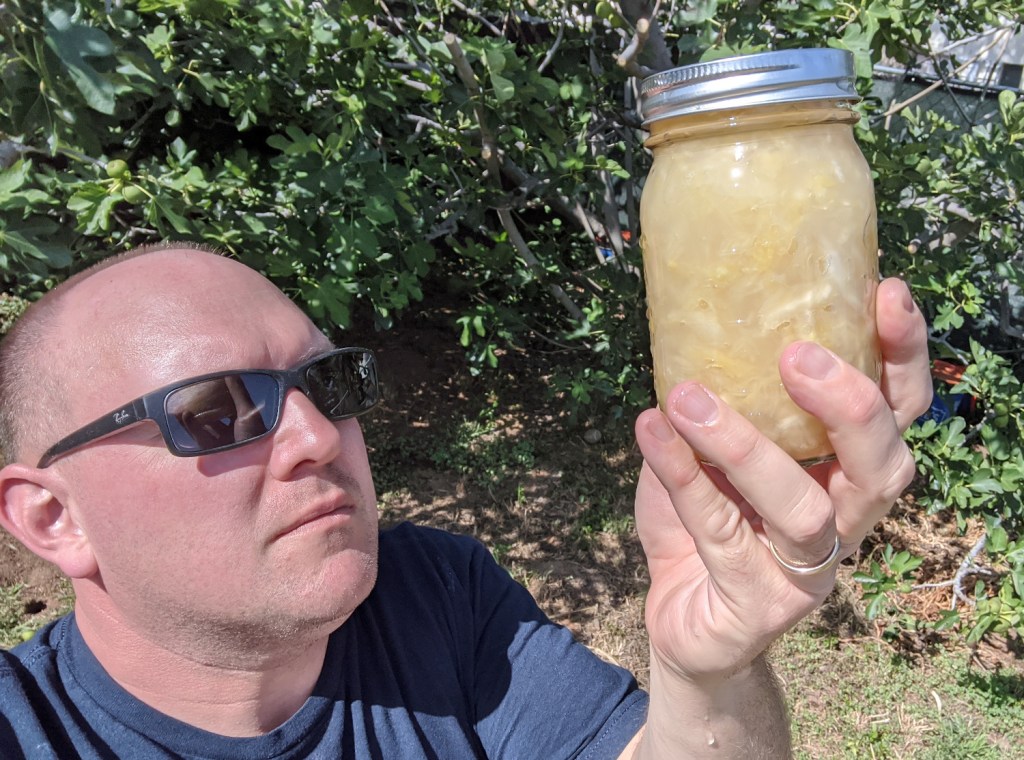
  • I put a batch of sauerkraut out to ferment last weekend. Why not expand into other fermented foods, after all? Today I’ve also started a batch of fermented carrot sticks.
  • I’ve done a bunch of drink syrups…tonic syrup, of course, but also ginger syrup. For the latter, I need to cut back on the water (maybe 1 cup instead of 2?), because it ends up pretty thin, even though the flavor is great. I also did a juniper syrup, to have as an alternative for gin-based drinks. The initial taste is quite good!

Schell’s Pils Clone 1.1

Last year, one of my favorite recipes was a clone of Schell’s Pils, a German-style pilsner from Minnesota using 2-row malt rather than pilsner malt. I decided to have another go at this recipe, but with a few minor modifications in the ingredients.

Schell’s Pils Clone 1.1

  • 11.5 lb. 2-row malt (Great Western)
  • 0.25 lb. Carapils malt (Briess)
  • 1 oz. Mt. Hood hop pellets (4.6% alpha), first wort hopping and 60 minute boil
  • 0.75 oz. Mt. Hood hop pellets (4.6% alpha), 60 minute boil
  • 0.75 oz. Mt. Hood hop pellets (4.6% alpha), 20 minute boil
  • 0.5 oz. Sterling hop pellets (7.4% alpha), 5 minute boil
  • 1 tsp. Fermax yeast nutrient, 10 minute boil
  • 1 Whirlfloc tablet, 5 minute boil
  • 1 repitch of German lager yeast (White Labs WLP830)

Target Parameters

  • 1.052 o.g., 1.011 f.g., 5.4% abv, 38 IBU, 4 SRM
  • 60 minute infusion mash, 152°, batch sparge
  • Water built up from RO, to hit target water profile of 59 ppm Ca, 8 ppm Mg, 89 ppm SO4, 63 ppm Cl; RA=-47ppm

Procedure

  • I built up my RO water with 1.86 g CaCl, 1.45 g gypsum, and 1.2 g Epsom salt in total with 8.5 gallons of RO water.
  • I mashed in with 4 gallons of water at 163.5°, to hit a mash temperature of around 152°. After 60 minutes, I added 1.1 gallons of water at ~185°, let sit for 10 minutes, vorlaufed, and collected the first runnings.
  • I next added ~3.6 gallons of water, let sit for 10 minutes, vorlaufed, and collected the second runnings.
  • In total, I collected 7.25 gallons of runnings with a graviy of 1.045, for 77% mash efficiency.
  • I brought the kettle to a boil, adding the hops, nutrient, and finings per the schedule.
  • After a 60 minute boil, I chilled the wort down to ~75°, and transferred to the fermenter.
  • I chilled the wort in my fermentation chamber down to 49°, oxygenated with 30 seconds of pure O2, and pitched a culture of yeast from a previous batch (my Crystal Pils, harvested about 6 weeks prior).
  • I fermented at 52°, for just under a month.
  • Starting gravity was 1.053, on 7 March 2020.
  • I didn’t change the temperature at all during the duration of fermentation, figuring that any lingering off-flavors would be cleaned up during this time.
  • I kegged the beer on 4 April 2020. Final gravity was 1.010, for 5.7% abv.

Tasting

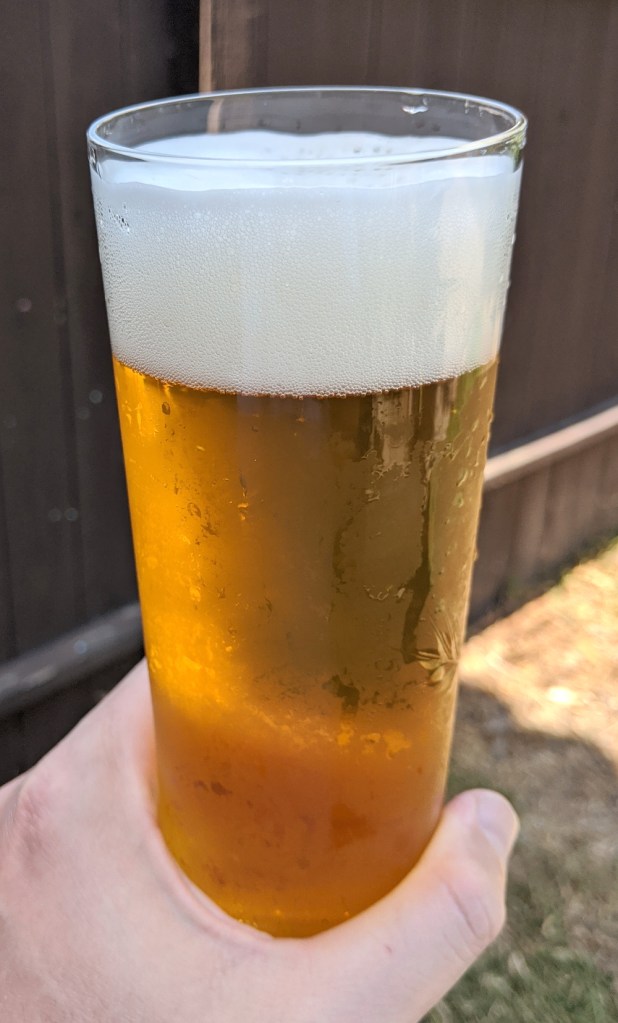
golden beer with white head in conical pilsner glass
  • Appearance
    • Thick white head, pretty persistent. It pours well, and sticks around, too. The beer itself is light yellow and pretty clear (but not quite brilliant).
  • Aroma
    • Lightly spicy hop character, slight grainy-sweet malt character.
  • Flavor
    • Definitely hop dominant, with an assertive hop presence that is on the tongue well after finishing the sip. Malt character is smooth and slightly doughy, but definitely in the background…almost too much so.
  • Mouthfeel
    • Off-dry, moderately high carbonation, with a lingering bitter finish.
  • Would I brew this again?
    • For my tastes, I liked the first batch much better. This version is still a pretty good German pils, but definitely a touch more bitter than I care for in this style. It just overwhelms the malt too much. I think I’ll go back to my hopping schedule from the previous version. The hop/malt balance was just better in that one. I’ll still keep the dry-hop out, though. I also wonder if changing from Rahr to Great Western for the malt made a difference?
  • Overall: 6.5/10

What’s Brewing? April 2020 Edition

As mentioned last time, my brewing activity has slowed as we continue our general shut-down here in SoCal. Even so, I’ve managed to squeeze in a few sessions and enjoy some of my previously tapped kegs.

Beer Batch Updates

  • I kegged my imperial stout for the homebrew club project on April 11, and sent it off for transfer to the club barrel (all done without in-person contact, of course!). The final gravity was 1.030, down from 1.105, for 10.2% abv, and I ended up with just a shade below 5 gallons. The flavor is quite rich, and the Belgian character of the yeast comes through nicely. I’ll be interested to see what it tastes like when barrel aged with everyone else’s contributions!
  • I kegged my Schell’s Pils Clone on 4 April 2020 (using a purged keg and closed transfer), and it has a final gravity of 1.010 (for 5.7% abv). I saved the yeast culture for a future brew. I just moved the beer into the keezer (after a shade under two weeks lagering), because I had finished my kolsch and had an open tap. The beer really needs a little more time to condition, and should be quite a bit better in a week or two. It had a slightly harsh yeast edge to it during the first day or two on tap, and has improved dramatically since then. I’ve noticed this issue with WLP830 (White Labs’ German lager yeast) before, because it flocculates fairly slowly. The head and head retention on this beer are amazing! I can’t wait to see where it ends up when fully conditioned.
  • Two weeks ago (April 4), I brewed this year’s batch of Alta California Lager. The 2020 edition is vastly simplified, using flaked corn instead of a cereal mash with grits. I also am using the Mexican lager yeast strain from Imperial (instead of the White Labs version), because that’s what was available at my local homebrew shop. After two weeks at 51°, I let it free-rise to 60° to finish up. I will likely keg it in another week or so (but am not in a particular rush).
  • On Saturday, I spooled up my Celtic Elk Irish Stout, as a quick turn-around beer. I figure it will be ready to keg in around 10 days. As an experiment, I’m going to carbonate it in the keg with corn sugar, as a way to reduce the amount of CO2 gas I’m using.
Schell’s Pils Clone, with that beautiful foam cap!

What’s On Tap?

  • Wildfire IPA. Since posting the tasting, this beer has continued to clarify, and the hops are really singing now. I love this recipe!
  • Czech-Style Dark Lager. This is another great beer. I am enjoying it more and more as it continues to condition; I suppose it’s growing on me!
  • Schell’s Pils Clone. As mentioned above, it’s got a little ways to go in terms of maturing. I’ll post a review once the beer is in prime shape.

What’s Coming Up?

  • Within the next weekend or two, I’m going to do an altbier, with some of the yeast saved from my kolsch a few weeks back.
  • I’m going to try something in the Dortmunder Export world, because it’s one of the few (?only) pale lagers that is okay with heavily mineralized water. I may try to reduce the carbonate load a bit with slaked lime, but that’s a topic for another post.

New Equipment

  • I want to learn more about our tap water, and how it varies through the year. The annual test reports are handy, but they don’t tell me much about my water at-the-moment. I recently invested in the LaMotte water test kit, and have run the tests a few times already. Look for an upcoming blog post on the topic!