Belgian Wit

I’ve brewed lots of fruit-based witbier recipes, and plenty of things with Belgian wit yeast, but I’ve only done a “real” witbier recipe once! BYO magazine recently featured the witbier style, so I brewed a slightly modified version recently.

Belgian Wit

  • 5.5 lb. Barke pilsner malt (Weyermann)
  • 5 lb. soft red flaked wheat (Briess)
  • 0.5 lb. flaked oats
  • 0.25 lb. Munich II malt (Weyermann)
  • 1 oz. Edelweiss hop pellets (5.1% alpha), 30 minute boil
  • 9 g chamomile flowers (dried), 5 minute boil
  • 1.5 oz. lemon zest (fresh), 5 minute boil
  • 0.4 oz. coriander seed, 5 minute boil
  • 1 pkg. wit Belgian wit-style ale yeast (Lallemand)

Target Parameters

  • 1.050 s.g., 1.009 f.g., 5.3% abv, 14 IBU, 4 SRM
  • Full-volume mash, no sparge, at 149° for 60 minutes
  • Claremont tap water, neutralized to remove carbonates.

Procedure

  • I heated 7.5 gallons of water to 155°, adding 6.25 mL of 88% lactic acid to remove the carbonates.
  • I mashed in to hit a mash temperature of 149°, adding 3.5 mL of 88% lactic acid to adjust pH. I held the mash here for 60 minutes with recirculation, before raising to 168° for a 10 minute mash out.
  • After removing the grains, I had a total of 6.25 gallons of runnings with a gravity of 1.041, for 63% mash efficiency.
  • I brought the kettle to a boil, boiling for an extra 15 minutes before adding hops and spices per the recipe, in order to raise the gravity. After 75 minutes total of the boil, I turned off the heat and chilled to 80°. I transferred the wort to a fermenter and chilled it the rest of the way down to 62° before pitching the yeast.
  • I brewed the beer on 17 September 2022. Starting gravity was 1.045.
  • I pitched the yeast at 62°, let it free rise to 64° and held there for the first three days of fermentation. I did all of this with open fermentation, putting a piece of foil over the hole in the fermenter lid rather than using an airlock or blowoff tube.
  • On 20 September 2022 (three days into fermentation), I added a blowoff tube and let the fermentation free rise to 72°.
  • I kegged the beer on 30 September 2022. It had a final gravity of 1.012, for 4.4% abv.

Tasting

  • Appearance
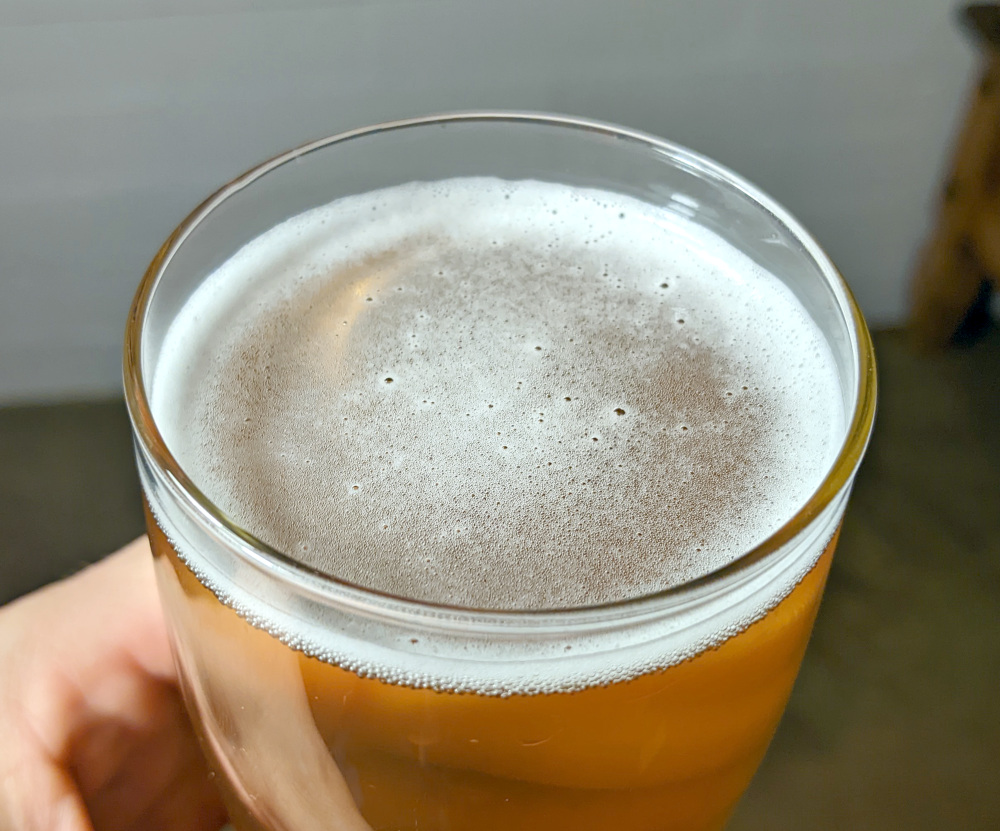
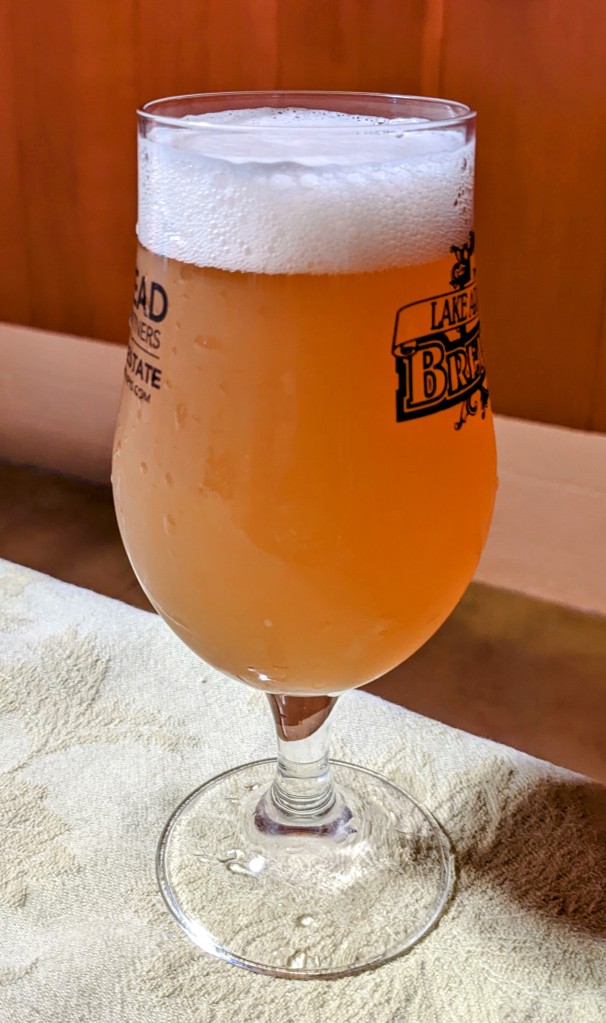
    • Straw colored, hazy beer with a fluffly and persistent white bead.
  • Aroma
    • Light chamomile and hay aroma; slightly tart character to it.
  • Flavor
    • Very refreshing! There is a bit of spice; the coriander is faintly present, and chamomile comes through on the back end of each taste, but is definitely more prominent. Coriander provides a pleasant sweetness. Medium-low bitterness; maybe even a bit too much? There is a hint of citrus flavor. The malt flavor is fairly low, with a doughy and slightly grainy character if anything.
  • Mouthfeel
    • Light body, highly carbonated, smooth finish, off-dry. It is almost a bit too dry.
  • Would I Brew This Again?
    • I like this recipe overall! It could use a bit more coriander, but the chamomile is delightful. It gives a fresh-mown hay quality that is quite interesting. The beer is a bit more dry than I like for this style; some more oats could help with that. The yeast character is okay, but not exceptional. I might like a bit more from the yeast, and suspect an increase in fermentation temperature could help. A little more haze would also be nice, and slightly less bitterness. The beer is quite refreshing, but not perfect. The beer clarified a bit after a few weeks from the initial tasting, and is still super interesting in flavor. The chamomile helps to make this a fall beer, rather than just something for a summer afternoon!
  • Overall
    • 6/10

Lycorhinus Pale Ale

For this recipe, I wanted a nice down-the-middle American Pale Ale, to use up some of my hops on hand and also to emphasize the pine/citrus flavors I love. I’ve brewed something in the Sierra Nevada Pale Ale territory before, so this time around I wanted to do something a touch different. I looked in the Craft Beer for the Home Brewer book, where I found the “Capt’n Crompton’s Pale Ale” recipe from Epic Brewing. The reference to Crompton made me think of the famous paleontologist “Fuzz” Crompton, for whom Lanasaurus is named, and then I remembered that this is the junior synonym for Lycorhinus, and there we are with the final name!

The recipe is pretty similar to the original, except I made some minor substitutions for hops (Crystal instead of Mt. Hood, and I upped the Amarillo a little). For the dry hop addition, I used the very latest 2022 Cascade hops from my dad’s bines in South Dakota. They were under two weeks past picking when I added them to the beer!

Lycorhinus Pale Ale

  • 6 lb. Finest Pale Ale Malt, Golden Promise (Simpsons)
  • 6 lb. 2-row malt (Rahr)
  • 0.5 lb. Caramel Munich 60L malt (Briess)
  • 0.5 lb. Carapils malt
  • 1 oz. Centennial hop pellets (8.1% alpha), 60 minute boil
  • 0.5 oz. Crystal hop pellets (4.5% alpha), 30 minute boil
  • 1 Whirlfloc tablet, 5 minute boil
  • 0.5 oz. Amarillo hop pellets (9.5% alpha), 5 minute boil
  • 0.5 oz. Centennial hop pellets (8.1% alpha), 5 minute boil
  • 1 pkg. American West Coast Ale yeast
  • 1 oz. Cascade whole hops, dry hop in keg

Target Parameters

  • 1.058 o.g., 1.012 f.g., 6.0% abv, 39 IBU, 7 SRM
  • Claremont tap water adjusted to 78 ppm Ca, 21 ppm Mg, 92 ppm Na, 188 ppm SO4, 110 ppm Cl, 30 ppm HCO3
  • Full-volume mash, no sparge, at 152° for 60 minutes

Procedure

  • I heated 7.25 gallons of water to 158°, adding 6 mL of 88% lactic acid to neutralize the carbonate.
  • I adjusted the pH to an estimated 5.35, using 88% lactic acid. I adjusted the mash to 152° for 60 minutes, and then raised the mash to 168° for an additional 10 minutes, all with recirculation.
  • After the mash, I pulled the grains. In total, I collected 6.25 gallons of runnings with a gravity of 1.049, for 64% mash efficiency.
  • I added 4 g of gypsum and 4 g of epsom salt, to adjust the water.
  • I brought the runnings to a boil, adding hops per the recipe. After a 60 minute boil, I turned off the heat and then chilled to ~82°. I transferred to the fermenter, and then chilled in the fermentation chamber to 66° before pitching the yeast.
  • Starting gravity was 1.058. I brewed this beer on 3 September 2022, and fermented it at 66°.
  • On 17 September 2022, I transferred the beer to the keg, and used 1 oz. of the 2022 South Dakota crop of Cascade to dry hop in a bag. I dry hopped the beer at room temperature for 3 days before removing the hops and carbonating at 34°.
  • Final gravity was 1.010, for 6.3% abv.

Tasting

  • Appearance
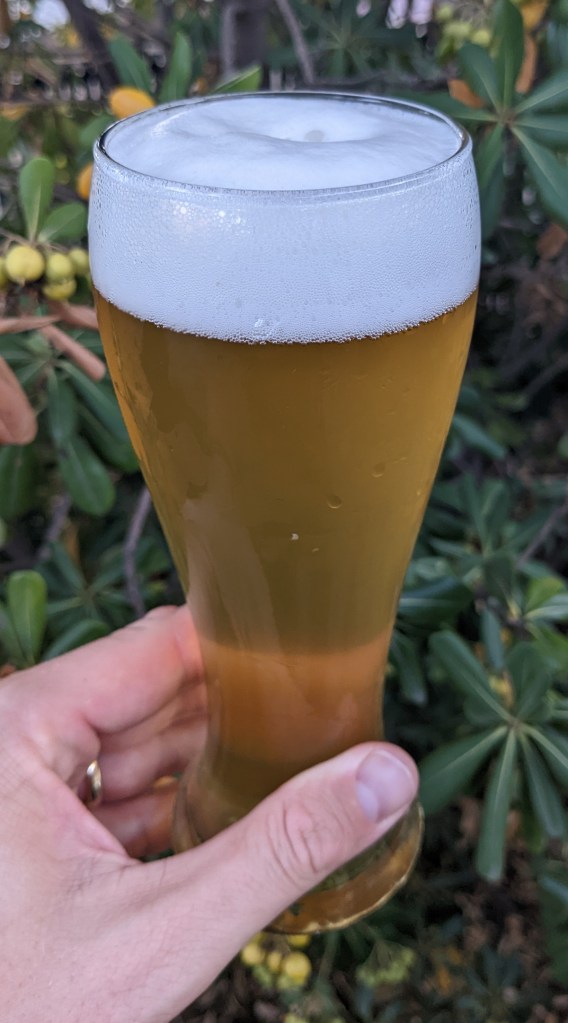
    • Deep gold beer with a slight haze. The medium-sized ivory head is quite persistent.
  • Aroma
    • Light citrus hop aroma, with a slight caramel malty note. Clean yeast character.
  • Flavor
    • There is a perfect proportion between malt and hops. The overall flavor tilts bitter, but the malt backbone is fantastic, with aspects of bread, bread crust, and a slight hint of caramel. The hops are citrusy, and the fermentation profile is pretty clean.
  • Mouthfeel
    • Medium-light body, with a slightly dry finish. Moderate carbonation.
  • Would I Brew This Again?
    • Yes! This is a tremendous recipe, and the beer itself has matured into a super nice example of a classic America pale ale. It took a few weeks after kegging for the beer to mature and the haze to settle, but right now it’s a perfect beer. It is incredibly drinkable, and probably one of the best American pale ales I have made.
  • Overall
    • 10/10

Citrosaic Session IPA

This summer was incredibly hectic–both in expected and unexpected ways–and thus it was hard to fit in as much brewing as I would like. One of my precious brewdays was set aside for a session IPA…and because things were topsy-turvy, I decided to run with kveik.

The recipe itself isn’t based on anything in particular, beyond past experience. I wanted a beer that was flavorful in hops, highly crushable, and not too over-the-top in alcohol. Thanks to my regular HOPBOX deliveries, I had no shortage of IPA-worthy hops.

I built the recipe with a base of Golden Promise malt, and a touch of light crystal malt to keep things from being too dry or too thin. As I often do with my session beers, I mashed high. Instead of a massive whirlpool addition, I tilted the hops towards the final five minutes of the boil, and loaded in a few ounces of dry hops in the keg. Citra, Mosaic, and Eclipse were a natural combination. I hadn’t brewed with Eclipse before, but the description suggested it would meld well with the other two. As for yeast, Voss Kveik seemed like a good fit. I’ve brewed with it a few times before, and the citrus notes hopefully wouldn’t clash. Plus, I liked the idea of a yeast that I didn’t have to baby too much during summer weather.

Citrosaic Session Ale

  • 10 lb. Golden Promise Finest Pale Ale malt (Simpsons)
  • 0.25 lb. Cara 20 (Dingemans)
  • 0.25 lb. Carahell (Weyermann)
  • 1 oz. Citra hop pellets (12.8% alpha), 30 minute boil
  • 1 Whirlfloc tablet, 5 minute boil
  • 1 oz. Citra hop pellets (13.6% alpha), 5 minute boil
  • 1 oz. Eclipse hop pellets (16.8% alpha), 5 minute boil
  • 1 oz. Mosaic hop pellets (11.6% alpha), 5 minute boil
  • Voss kveik (Lallemand), 1 pkg. dry yeast
  • 1 oz. Citra hop pellets (13.6% alpha), dry hop in keg
  • 1 oz. Eclipse hop pellets (16.8% alpha), dry hop in keg
  • 1 oz. Mosaic hop pellets (11.6% alpha), dry hop in keg

Target Parameters

  • 1.046 s.g., 1.013 s.g., 4.4% abv, 66 IBU, 5 SRM
  • Claremont tap water, no adjustments
  • Full-volume mash, no sparge, at 156°

Procedure

  • I mashed in with 7 gallons of water at 162°, to hit a mash temperature of 156°. I held it here with recirculation for 10 minutes. I added ~7 mL of 88% lactic acid at the start of the mash, to adjust pH.
  • After 60 minutes, I raised the mash temperature to 168°, held it here for 10 minutes, and then removed the grains.
  • In total, I collected 6.1 gallons of runnings with a gravity of 1.043, for 69% mash efficiency.
  • I brought the mash to a boil, adding hops and finings per the recipe. After 60 minutes, I turned off the heat and chilled down to around 90°.
  • I brewed this beer on 11 July 2022. Starting gravity was 1.048.
  • I transferred the wort to my fermenter, pitched the yest, and let things roll at ambient temperature. Everything was rocking within 6 hours, and had slowed down within 18 hours.
  • Although I planned to keg this within a week or so, life got in the way (thanks, COVID), and it wasn’t until 13 August 2022 that I managed to get things transferred. I was a bit worried about flavor damage or oxidation, but it didn’t seem too awful.
  • I added the hops in a bag, at the time of kegging. Final gravity was 1.022, for 3.4% abv.

Tasting

  • Appearance
    • Medium-gold, fairly hazy, pours with a creamy and persistent white head.
  • Aroma
    • Fresh tangerine is prominent in the hop aroma, with a bit of passion fruit and other tropical notes; there is a touch of dankness as the beer warms up. And of course I get the class blueberry. Fermentation aroma is clean.
  • Flavor
    • Very bitter, with a slight hop “bite” and citrus pithiness. The very prominent hop flavor includes orange/tangerine, grapefruit, and a bit of blueberry. It tastes quite “juicy”! Malt is clean, with a slight hint of light caramel sweetness and graininess.
  • Mouthfeel
    • Medium dry, with a dry finish. Moderate carbonation.
  • Would I Brew This Again?
    • Yes! This is just a nice summer IPA, in the tropical/citrus tradition. I don’t want these flavors all the time, but I really liked this particular recipe. The kveik meshes well with the hops, and has a surprisingly clean profile. It just stays out of the way. I wouldn’t mind if the clarity was better (hence my lower rating), but in the end this is a highly crushable IPA, exactly what I wanted.
  • Overall
    • 8/10

Amber Rye Ale

I firmly believe that amber ales deserve more love than they get nowadays. A well crafted amber ale is one of my favorite beers, but ambers are often hard to find relative to their zenith around 20 years ago. I make them semi-regularly, but wanted to take things in a slightly different direction this time around. So…why not add some rye?

With this particular batch, I wanted a beer that had the caramel quality and dry hop character of my favorite ambers, while adding a bit of rye spice to help it stand out. The recipe was loosely based on one by Charlie Papazian, “Choco Red Rye Wedding Ale.” I got a bit of feedback via the AHA forum, which was helpful in further refining my plans. For something a little different, I used Lutra kveik — it is supposed to ferment fairly clean at lower temperatures, so I thought it would be an interesting experiment.

I served the beer at the Lake Arrowhead Brewfest this past weekend, and it was pretty well received. I maybe have a gallon left, and will be savoring that.

Amber Rye Ale

  • 8 lb. 2-row malt (Rahr)
  • 2 lb. rye malt (Weyermann)
  • 10 oz. crystal 60 (Great Western)
  • 8 oz. caramel/crystal malt 135/165L (Bairds)
  • 2 oz. chocolate wheat malt (Weyermann)
  • 6 oz. rice hulls
  • 1 oz. Cascade whole hops (5.5% alpha), 60 minute boil
  • 1 oz. Cascade whole hops (5.5% alpha), 15 minute boil
  • 1 Whirlfloc tablet, 5 minute boil
  • 1 oz. Cascade whole hops (5.5% alpha), 5 minute boil
  • 1 pkg. Lutra kveik (Omega OYL-071) dry yeast
  • 1 oz. Cascade whole hops (5.5% alpha), dry hop in keg

Target Parameters

  • 1.048 s.g., 1.012 f.g., 4.8% abv, 31 IBU, 17 SRM
  • Full-volume mash, no sparge, at 156°
  • Claremont tap water, treated with Campden tablet

Procedure

  • I heated the strike water to 162° (with Campden tablet), and mashed in to hit a mash temperature of 156. I added 5.6 mL of 88% lactic acid to adjust the pH.
  • After 60 minutes of mash with recirculation, I raised the temperature to 168° for a 10 minute mash out. Then, I pulled the grains. In total, I collected 5.9 gallons of runnings with a gravity of 1.045, for 67% mash efficiency.
  • I brought the kettle to a boil, adding hops and finings per the recipe.
  • After a 60 minute boil, I chilled the wort to 85°, transferred to the fermenter, and pitched the yeast. I let it ferment at ambient in the garage, which was around 66° for most of the time. Vigorous fermentation took off in under 12 hours.
  • I brewed this beer on 25 May 2022, and kegged it on 9 June 2022. I added the dry hops to the keg in a bag.
  • Starting gravity was 1.052. Final gravity was 1.017, for 4.6% abv.

Tasting

  • Appearance
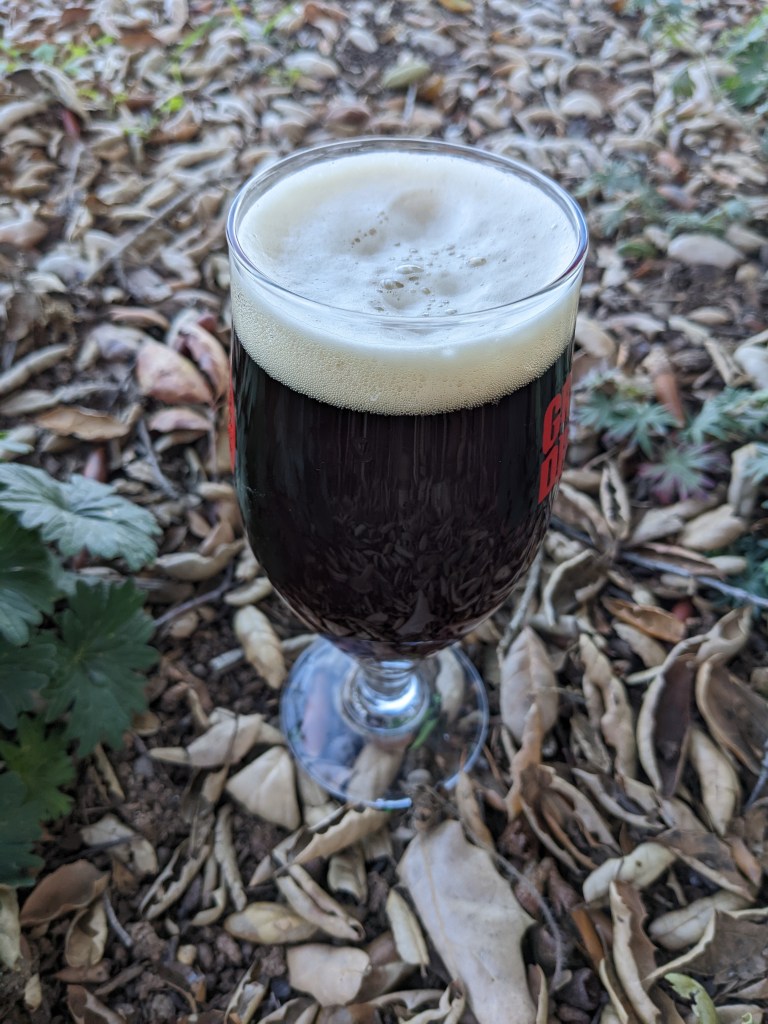
    • This beer pours with a creamy, tall, and persistent ivory head. The beer itself is deep amber and brilliantly clear. It is beautiful in the glass!
  • Aroma
    • There is plenty of rye “zing.” I pick up a little dried stonefruit, and some fresh hay from the hops. The fermentation profile is surprisingly clean.
  • Flavor
    • Rye and rich malt, with a touch of dark caramel behind that. The bitterness is moderate and clean. Just like with the aroma, I don’t get anything really for yeast.
  • Mouthfeel
    • Medium body, moderate carbonation. Smooth finish.
  • Would I brew this again?
    • YES! This is a fantastic and interesting beer from start to finish. The end product was exactly what I envisioned. Fermentation profile is wonderfully clean (or at least playing well with the malts and hops). I can’t think of anything to change.
  • Overall
    • 10/10

Summer Helles

Last year, I made a Munich helles following a recipe in Gordon Strong’s Modern Homebrew Recipes, with pretty excellent results. Munich helles is such a great summer lager (among many great summer lager varieties!), but it was only on my 2021 batch that I felt I had finally gotten close to nailing the style.

This year’s version is along the same lines as last year’s, but I used different brands/variations of ingredients for what I had on hand or needed to use up. For instance, I used Weyermann’s Barke pilsner malt instead of their “regular” pilsner malt, and their Munich I malt instead of Chateau’s equivalent. I had Briess’s aromatic Munich 20L on-hand, so that went in as a substitute for Carahell, and I just flat-out skipped Carapils. I used Hallertau Tradition in place of Hallertauer Mittelfrueh, and finally went with Diamond Lager yeast instead of 34/70. I guess that’s a long way of saying it is a completely different recipe, but has largely the same proportions of ingredients and targets pretty similar numbers.

Because this was a really busy summer (filled with fieldwork, a house move, and COVID), the beer ended up conditioning in the keg for over two months. I rarely have a lager that sits for so long, and the end result was something that was crystal clear. As you’ll see in the tasting notes, I’m overall quite pleased with this iteration!

Summer Helles 2022

  • 8.25 lb. Barke pilsner malt (Weyermann)
  • 1.25 lb. Munich I malt (Weyermann)
  • 0.25 lb. Aromatic Munich malt 20L (Briess)
  • 0.75 oz. Hallertau Tradition hop pellets (6.1% alpha), 60 minute boil
  • 1 tsp. BruTanB, 10 minute boil
  • 1 Whirlfloc tablet, 5 minute boil
  • Repitch of Diamond Lager yeast (Lallemand)

Target Parameters

  • 1.044 o.g., 1.007 f.g., 17 IBU, 5 SRM, 4.9% abv
  • Full-volume infusion step mash, 45 minute rest at 144°, 45 minute rest at 160°, 10 minute rest at 168°
  • Water built from RO, to hit 23 Ca, 8 Mg, 32 SO4, 40 Cl, -21 RA

Procedure

  • I added 2.5 g epsom salt and 2.5 g CaCl to 7 gallons of RO water, to hit my target water specifications.
  • I heated the strike water to 148°, and added the grains along with ~1.1 mL of 88% lactic acid in order to hit my target pH of 5.4. I held at 144° for 45 minutes while recirculating, and then raised the mash to 160° for another 45 minutes. Finally, I mashed out for 10 minutes at 168°.
  • After removing the grains, I had collected 6.4 gallons of runnings with a gravity of 1.041, for 72% mash efficiency.
  • I brought the kettle to a boil, adding hops and finings per the recipe. After a 60 minute boil, I turned off the heat and chilled the wort to ~70° before transferring to the fermenter. I chilled overnight to 49°.
  • I brewed the beer on 15 May 2022, and pitched the yeast slurry from my Alta California Lager the next morning, 16 May 2022. At this time, I oxygenated with 30 seconds of pure O2.
  • I starting fermentation at 50°, holding it there until 23 May 2022, when I let it free-rise to 60°. Then, I cold crashed to 34° on 28 May 2022.
  • I kegged the beer on 8 June 2022. Starting gravity was 1.046, and final gravity was 1.012, for 4.5% abv. The beer cold conditioned at ~34° for over two months, before going on tap.

Tasting

  • Appearance
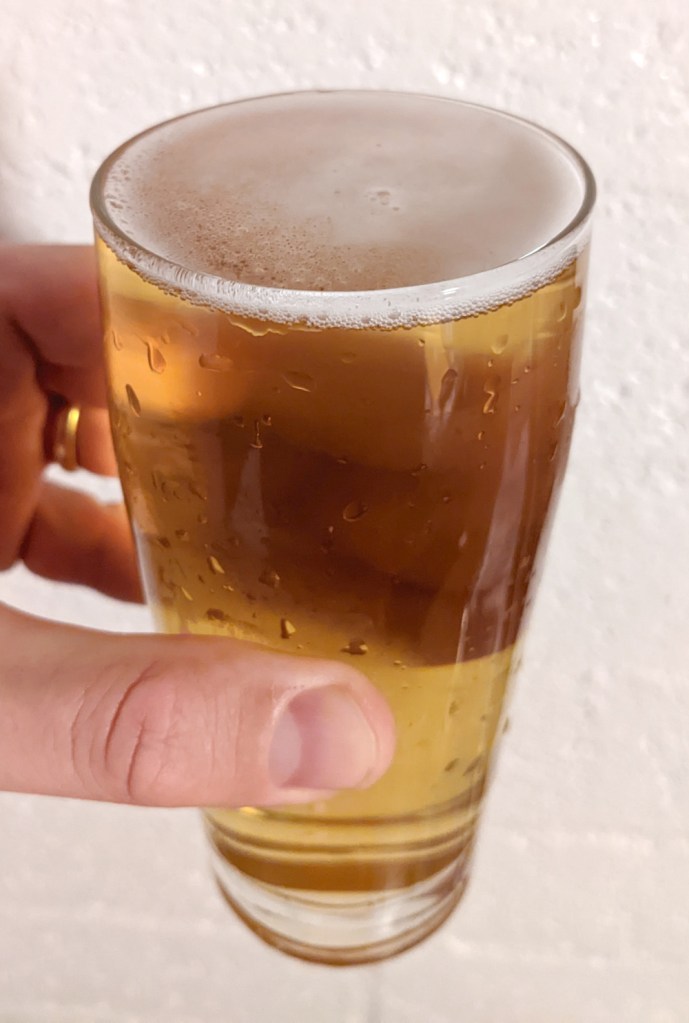
    • Brilliantly clear, gold beer. It pours with a white, medium head that subsides to a persistent white ring around the edge of the glass.
  • Aroma
    • Malty aroma, at a modest level. Very clean fermentation, with no noticeable yeast character. No hop aroma apparent.
  • Flavor
    • Moderately rich malt flavor, with a lingering sweet maltiness against a moderately low level of hop bitterness.
  • Mouthfeel
    • Medium-light body, moderate carbonation, very smooth finish.
  • Would I Brew This Again?
    • Yes! This is a great recipe. The low level of head on this is the only minor flaw. Otherwise, this is an incredibly gorgeous, tasty, and easy drinking beer. Next time, I’ll probably add the Carapils back in, and switch back to Carahell instead of Aromatic Munich.
  • Overall
    • 9/10