Ingredients
- 1 lb. flaked oats
- 8 oz. roasted barley
- 12.5 oz. 80° crystal malt
- 8 oz. chocolate malt
- 1.5 lbs. amber dry malt extract
- 6 lbs. traditional dark liquid malt extract
- 2 oz. American Fuggles hops pellets (bittering)
- 1 oz. Hallertauer whole hops (aroma)
- 1 packet Nottingham dry yeast
Unfortunately, I only realized at the last minute that I didn’t have any roasted barley! Luckily, I found this page on how to roast your own. It was pretty easy – I took 12 oz. of pearl barley (straight from the grocery store), and spread them out as a single layer on a cookie sheet. I roasted the barley at 450° for 35 minutes, and it ended up with a nice, black color on the outside with a dark brown inside. The end weight was about 9 or 10 ounces, just the right amount for my recipe.
I steeped the grains in 2.5 gallons of water at 150 degrees for 45 minutes, and then sparged them with a half gallon of water. Once I heated it to a boil, I added the malt extract and bittering hops. After 55 minutes of boiling, I added the aroma hops for a final five minutes.
I chilled the wort, and topped it up with distilled water to around 4.5 gallons. The starting gravity was 1.052, or 7 percent potential. This is a very thick, rich wort – probably on account of the oats. It is almost slippery in feel!
After one week, I transferred the beer from the primary to the secondary. The beer had separated out into layers, with a very sludgy layer in the middle in addition to the usual one at the bottom. I wonder if this was some of the unfermentables from the oats. . .next time, I’ll probably use a kit. I only transferred about 2.5 gallons, and dumped the rest – it was just too sludgy to deal with! The stuff I transferred tasted just fine (in fact, rather good, like a stout should). . .so, I’m not sure what the deal was.
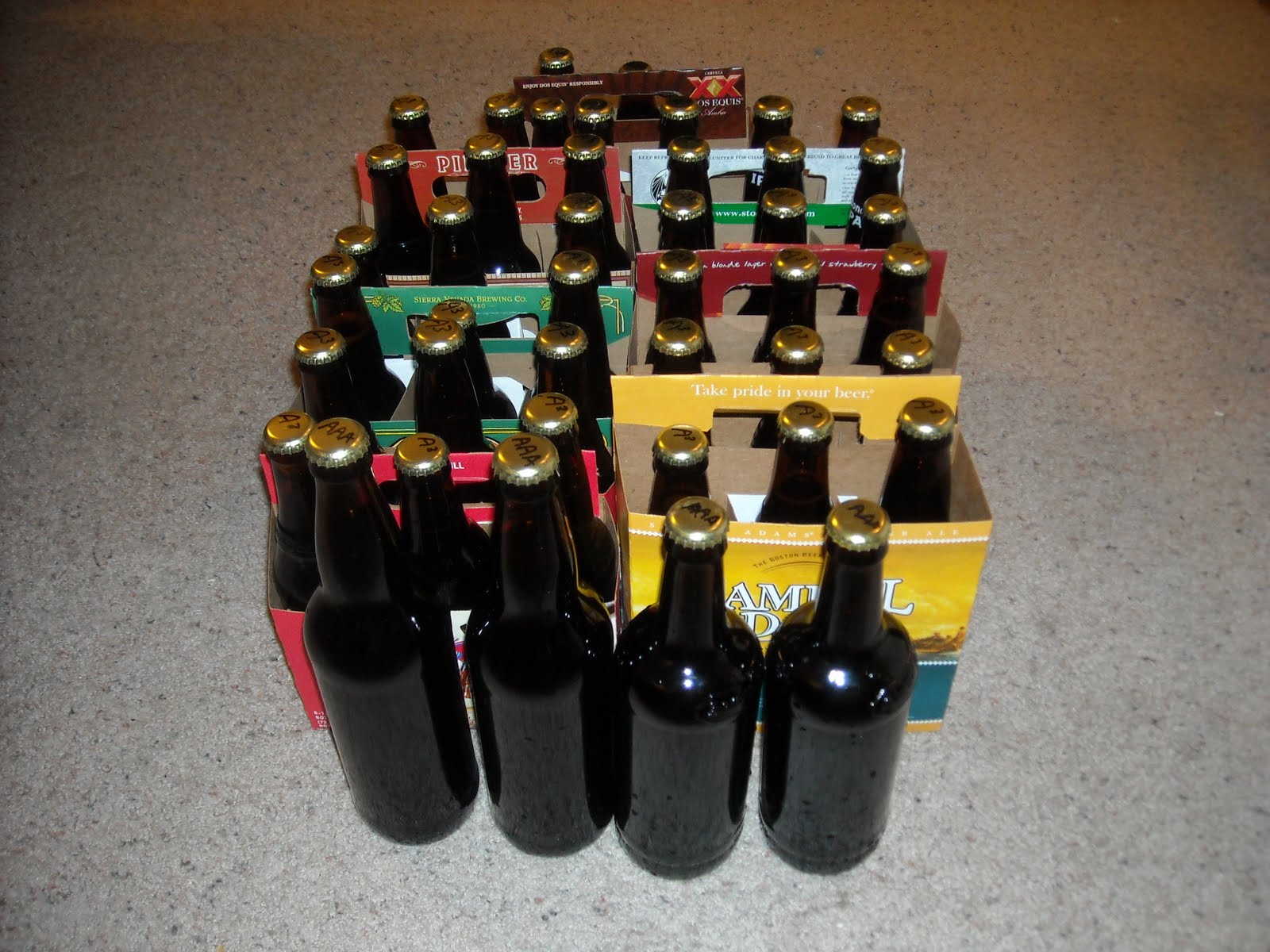
At this point, the gravity was 1.032, or 4 percent potential. After the transfer into the carboy, fermentation picked right back up at a very vigorous rate. I waited another two weeks, and then bottled. The final gravity was 1.020 (2.5 percent potential), meaning I’ve got a brew with 4.5 percent alcohol (right about where I want it). I used a little over 1/3 cup corn sugar for carbonation. Because I had to discard so much during the transfer to the secondary, I ended up with but 18 12-oz. bottles in the end. Hence the name, “Premium Oatmeal Stout.”
At the time of bottling (February 5, 2010), it’s tasting pretty good. A nice toasty flavor and a really beautiful, dark hue. Thus, I’m really looking forward to trying out the carbonated product in a few weeks!

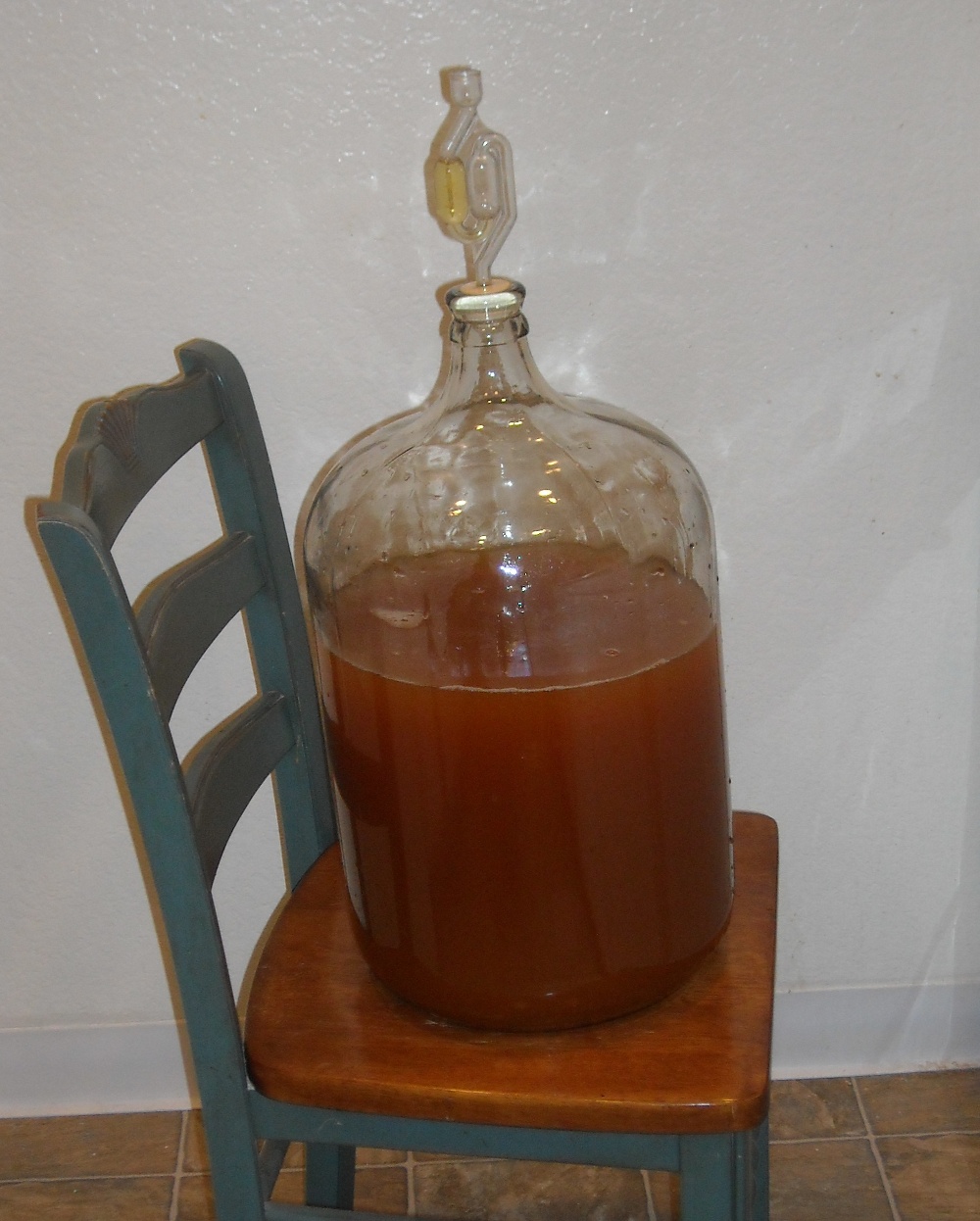 I just transferred the EGA over to the secondary fermenter. The transfer happened a little later than normal (12 days, rather than the 7 days I usually aim for) on account of travel and other stuff going on during the past week.
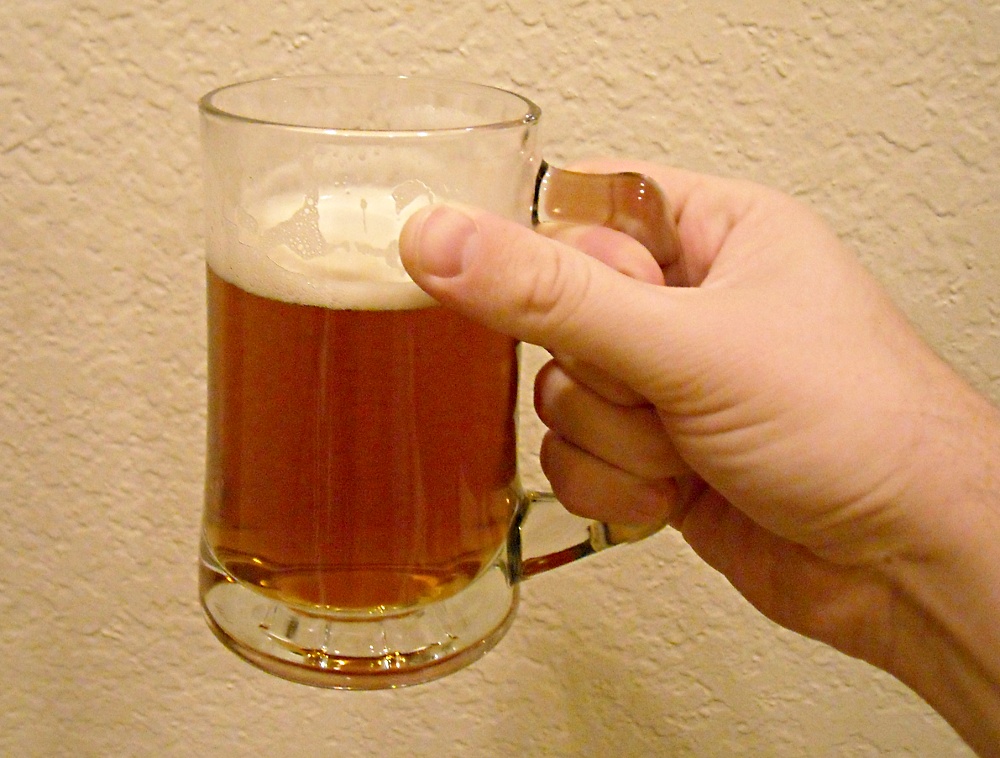
 A sample glass of the Experimental Golden Ale