Sideways Saison

It has been a long time since I last made a saison, back in 2018. It’s an interesting style, but one that I’m usually content to enjoy in a sporadic bottle, rather than a full keg. But, inspired by some reading and podcasts, I decided to give the style another go. My friend Justin was in town, so it was fun to have a brewing partner.

I patterned my recipe after Odds & Ends Saison from Modern Homebrew Recipes, and followed Drew Beechum’s guide to yeasts and yeast techniques via the Maltose Falcons. I used the saison article in the July/August 2018 Zymurgy magazine for my water profile.

This was a complicated batch in the end. The breaker on my Foundry gave up mid-boil, so I had to transfer to a kettle and finish over a propane burner. There’s never a dull moment while brewing! Things really went sideways on this batch, which conveniently provided the name. (Thankfully, it was an easy fix for the breaker issue, which involved swapping in a new breaker)

Sideways Saison

  • 4.5 lb. Lamonta pale malt (Mecca Grade)
  • 1 lb. flaked rye
  • 1 lb. Viking Pilsner Zero Malt
  • 1 oz. roasted barley (Bairds)
  • 4 oz. rice hulls
  • 0.5 lb. white sugar, added at end of boil
  • 1.5 g. WLN1000 yeast nutrient (White Labs)
  • 1 oz. Moutere hop pellets (19.5% alpha acid), 15 minute whirlpool
  • 1 pkg. Belgian Saison yeast (Wyeast 3724), prepared in vitality starter

Target Parameters

  • 1.057 s.g., 1.006 f.g., 6.7% abv, 30 IBU, 10 SRM
  • Full volume mash, 149° for 60 minutes, 168° mash-out for 10 minutes
  • Claremont tap water and RO water adjusted to hit target water parameters of 33 ppm Ca, 18 Mg, 34 Na, 103 SO4, 49 Cl, 63 HCO3, 18 ppm RA

Procedure

  • A few hours before the mash, I made a vitality starter with a 16-oz. can of Propper Starter (Omega) along with 16 oz. of distilled water.
  • I combined 2.25 gallons of Claremont tap water and 3 gallons of distilled water, adding 1 g gypsum and 3 g of epsom salt to hit my water parameters. Once I got the water to 154°, I added the grains (except for the roasted barley) along with 3.4 mL of 88% lactic acid, to adjust the pH.
  • I held the mash temperature at 149° for 60 minutes, with recirculation. Then, I added the roasted barley, raised the mash to 168°, and held it there for 10 minutes before pulling the grains.
  • In total, I collected 5 gallons of runnings with a gravity of 1.037, for 78% mash efficiency.
  • The Foundry crapped out on the way to the boil, so I transferred the runnings to my big 10 gallon kettle and continued the process over my propane burner. I boiled for 90 minutes total, to up the gravity.
  • I added hops and finings per the recipe.
  • For some reason, I didn’t record the gravity, but I think it was around the target. I was able to estimate the starting gravity by measuring the final gravity and taking a final refractometer reading–which worked out to 1.055.
  • I brewed this beer on 28 May 2023.
  • Once the initial chill was done, I transferred it to the fermenter. I chilled the wort to 64° before pitching the yeast, and set the fermenter to 65°. I held it here for 3 days, before letting it free-rise.
  • I raised the temperature to 72° on 31 May 2023, and then to 85° on 2 June 2023. This was a free-rise with ambient heat, rather than measuring the temperature of the fermenter.
  • Despite using an “open” fermentation (aluminum foil over the airlock, rather than liquid in the airlock), I still got the “saison stall.” Gravity was only at 1.032 on 8 June 2023, so I left the beer at 85°.
  • The beer was finally down to 1.009 on 19 July 2023. This works out to 6.1% abv.

Tasting

  • Appearance
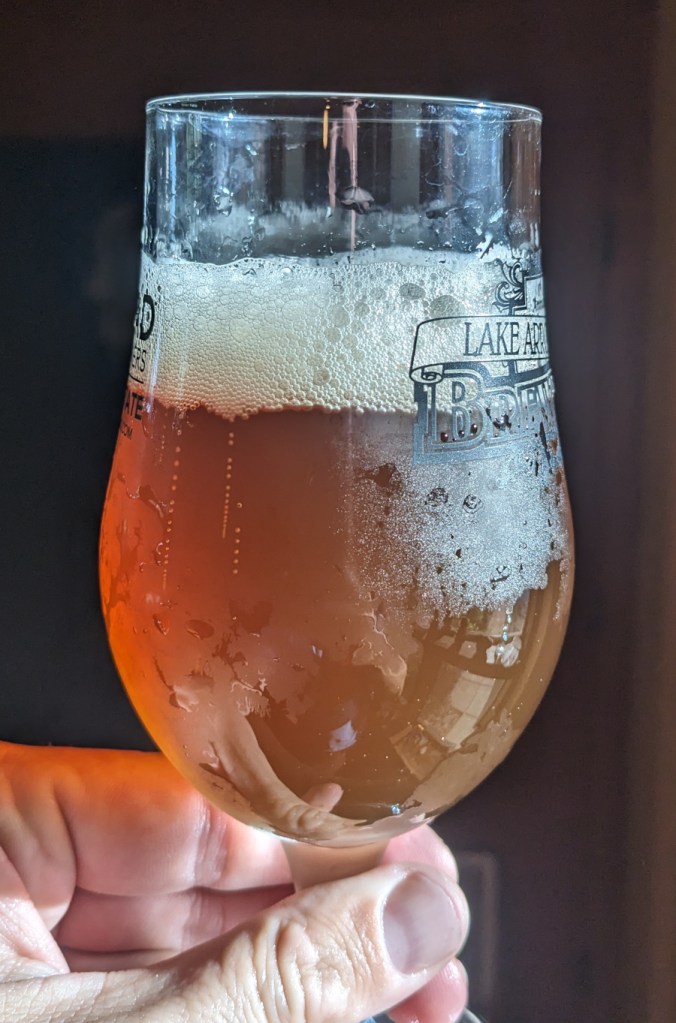
    • Pours with a fluffy and persistent ivory head. The beer itself is medium amber and has a decent haze..
  • Aroma
    • Slightly earthy aroma, with a moderate level of pear character alongside some peppery spice. A tartness also comes through, which is really delightful.
  • Flavor
    • Spicy, slightly peppery flavor and a decent bit of ripe pear at the forefront, with only moderate bitterness. I get a bit of the rye flavor, but most of the flavor is in the world of the yeast.
  • Mouthfeel
    • Medium-light body, moderately high carbonation, moderately dry finish.
  • Would I Brew This Again?
    • This is a pretty good recipe! It is a bit darker than I am used to for a saison (especially the classic Saison Dupont), but I think it’s still well within the style. I personally might like one that is a little lighter bodied, and I wonder if the rye didn’t complicate matters some. I also might go for 100 percent pilsner malt, rather than American pale malt as the dominant grain, in order to streamline the flavor. The yeast qualities are quite nice, and hit a nice balance of interesting but not in-your-face. I feel that I got the fermentation parameters just about perfect. It was worth the extra fuss!
  • Overall
    • 9/10

Fruit Bowl Session IPA

A good session IPA is nice to have on hand in the summer months, and also a handy way to burn through my hop stash. For this batch, I aimed for a “short and shoddy” approach, to speed up the brew day during a busy time of year. This meant a 30 minute mash and 30 minute boil, along with Lutra kveik to reduce chill time.

I have a decent variety of hops on-hand from my HOPBOX subscription, and aimed for a very experimental selection. Comet went in for the bittering, with a hefty dose of BRU-1 and Meridian for the dry hop in the keg. BRU-1 is supposed to provide a pineapple and green fruit combo, and Meridian some tropical fruit and berry. So, I’m calling this “Fruit Bowl Session IPA.”

Fruit Bowl Session IPA

  • 9 lb. 7 oz. Lamonta Pale American Barley Malt (Mecca Grade)
  • 8 oz. caramel malt 20L (Briess)
  • 8 oz. Munich I malt (Weyermann)
  • 2 oz. Comet hop pellets (10.4% alpha), 30 minute boil
  • 0.5 tsp. BrewTanB, 10 minute boil
  • 1 Whirlfloc tablet, 5 minute boil
  • 1 pkg. Lutra Kveik (Omega OYL-071; dry)
  • 2 oz. BRU-1 hop pellets (20.0% alpha), dry hop in keg
  • 2 oz. Meridian hop pellets (5.6% alpha), dry hop in keg

Target Parameters

  • 1.046 s.g., 1.011 f.g., 4.6% abv, 59 IBU, 6 SRM
  • Full volume mash, 156° for 60 minutes, 168° mash-out for 10 minutes
  • Claremont tap water treated with 88% lactic acid to neutralize carbonates

Procedure

  • The night before brewing, I collected 7 gallons of Claremont tap water and added 5.84 mL of 88% lactic acid to neutralize the carbonates.
  • I heated the strike water to 162°, adding the grains to hit a mash temperature of 156°. I added 1.5 mL of 88% lactic acid to adjust the pH, and then recirculated for 30 minutes.
  • After 30 minutes, I raised the mash temperature to 168°, and continued recirculation for another 10 minutes before pulling the grains.
  • In total, I collected 6.5 gallons of runnings with a gravity of 1.041, for 71% mash efficiency.
  • I brought the mash to a boil, adding hops and finings per the recipe. After 30 minutes, I chilled the wort to 82° and transferred to the fermenter.
  • Starting gravity was 1.045. I brewed the beer on 14 May 2023, and fermented at ambient. The fermenter temperature hit between 82° and 85° at the height of fermentation.
  • I kegged the beer on 23 May 2023. Final gravity was 1.012, which works out to 4.4% abv.

Tasting

  • Appearance
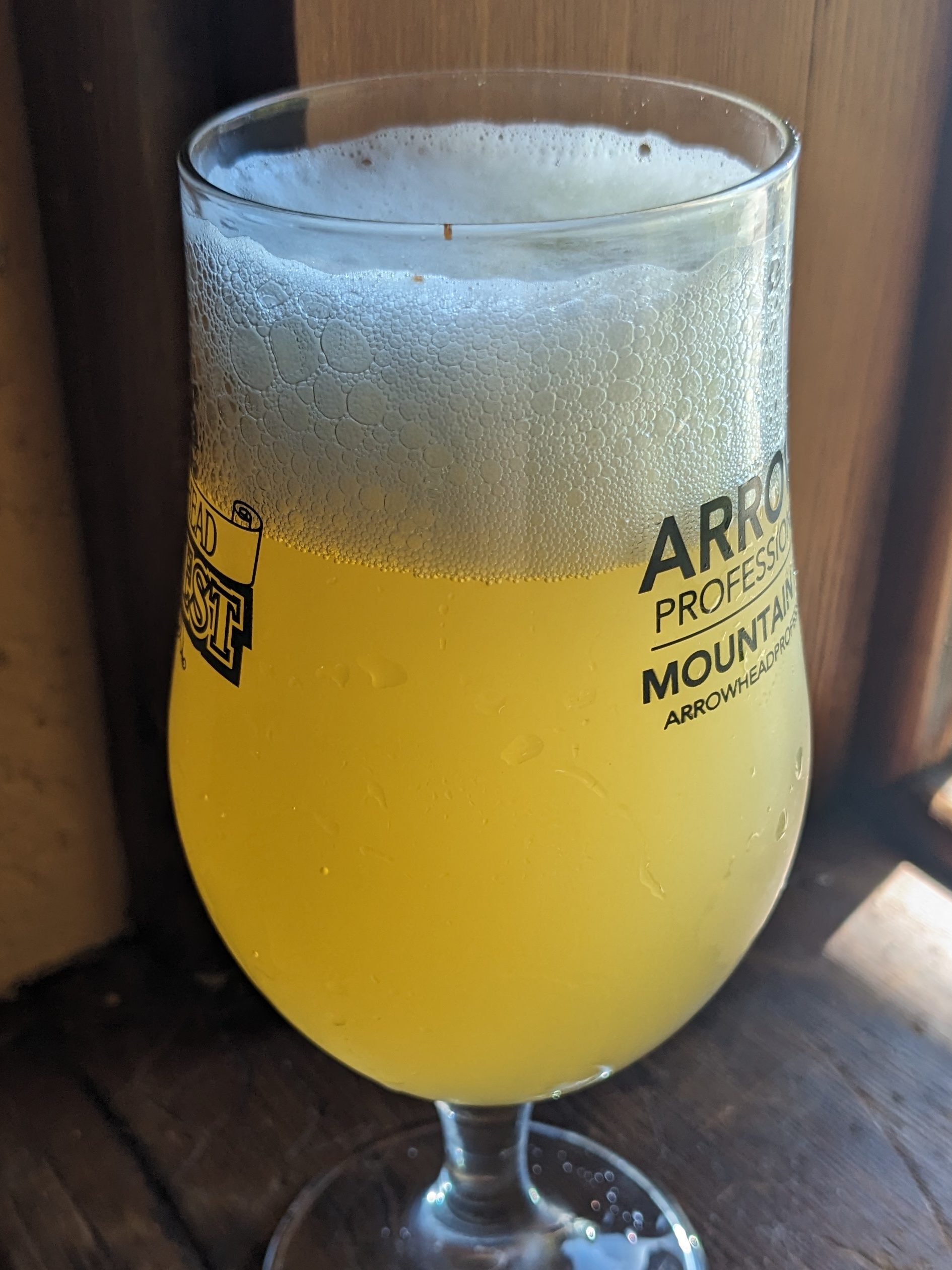
    • A straw yellow beer, with a pillowy and persistent white head. I’m writing this tasting on the last pour of the keg, which has a fair bit of haze. Even before the final pours and after sitting in the keg for two months, the beer never completely cleared.
  • Aroma
    • Bright citrus and kiwi hop aroma — very nice!
  • Flavor
    • Tropical fruit, fresh pineapple, lemon, and orange — it’s a very fruit-forward hop flavor. Bitterness is moderately high. The malt character is fairly subdued, as expected given the gravity and hoppiness of this beer.
  • Mouthfeel
    • Medium-light body, moderate carbonation. There is a slight hop astringency, which is accentuated in the final glass.
  • Would I Brew This Again?
    • I’m fairly pleased with this one, especially in the hop combination. If I were to brew this again (or one like it), I would reduce the dry hop load by a bit, to cut the astringency. I would probably increase the mash time to see if that helps with the haze (in case lingering starch was the cause), too. Overall, it’s a pretty decent session IPA!
  • Overall
    • 7/10

Dakota Gold Pils

Summer is a great time for pale lagers! For this recipe, I riffed on the Schell’s Pils clone I’ve brewed in the past. It is intended to be a German pils, which is a style I quite enjoy. This recipe uses only 2-row malt, rather than pilsner malt, for the base, with a bit of CaraPils or similar malt.

For this iteration, I tried out Mecca Grade’s pale American malt as the primary base grain, using a bit of Rahr 2-row to finish out that supply. I also subbed in Carafoam instead of Carapils. The hops are entirely whole cones from South Dakota (thanks, Dad!). I had to guess on the alpha based on what is typical for the style, and as you’ll see in the results probably guessed high.

Dakota Gold Pils

  • 7 lb. 9 oz. Lamonta Pale American malt (Mecca Grade)
  • 2 lb. 7 oz. 2-row pale malt (Rahr)
  • 0.5 lb. Carafoam malt (Weyermann)
  • 1.09 oz. Hallertauer whole hops (3.0% estimated alpha), 60 minute boil
  • 1 oz. Sterling whole hops (4.5% estimated alpha), 60 minute boil
  • 1 oz. Saaz whole hops (3.5% estimated alpha), 15 minute boil
  • 0.5 tsp. BrewTanB, 10 minute boil
  • 1 Whirlfloc tablet, 5 minute boil
  • 1 oz. Saaz whole hops (3.5% estimated alpha), 5 minute boil
  • 1 tsp. yeast nutrient (WLN1000, White Labs), 5 minute boil
  • 2 pkg. Diamond Lager dry yeast (Lallemand)

Target Parameters

  • 1.047 s.g., 1.010 f.g., 4.8% abv, 35 IBU, 5 SRM
  • Full volume mash, 149° for 60 minutes, 168° mash-out for 10 minutes
  • RO water with minerals added to hit target of 59 ppm Ca, 8 Mg, 89 SO4, 63 Cl, RA=-47, alkalinity=0.

Procedure

  • Starting with 7.6 gallons of RO water, I added 2.7 g gypsum, 2.2 g epsom salt, and 3.4 g of calcium chloride, to hit the target water profile. I also added half of a sodium metabisulfate tablet, to remove any latent oxygen in the water.
  • I heated the water to 154° and added the grains to hit a target mash temperature of 149°. I did not add any lactic acid, because the pH was calculated to be approximately fine (pH of 5.4) without any additions.
  • After a 60 minute mash, I heated to 168° for the mash-out, and pulled the grains after 10 minutes of this.
  • In total, I collected 6.8 gallons of runnings with a gravity of 1.039, for 70% efficiency.
  • I brought the runnings to a boil, adding hops and finings as indicated by the recipe. After a 60 minute boil, I turned off the heat and chilled to ~70°. I transferred the wort to the fermenter, and chilled down to 50° before pitching the yeast.
  • Starting gravity was 1.047. I brewed the beer on 15 April 2023, fermenting at 52°. I held it here until 13 May 2023, when I cold crashed the beer.
  • I kegged the beer with a closed transfer on 28 May 2023. Final gravity was 1.009, for 5.0% abv.

Tasting

  • Appearance
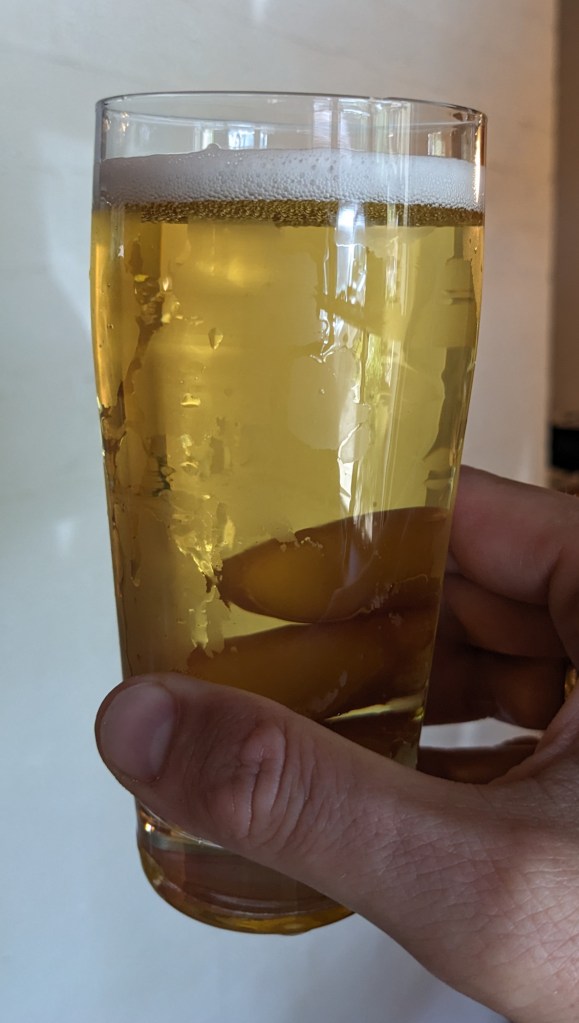
    • Brilliantly clear, straw-colored beer that pours with a fine and persistent white head. Absolutely beautiful!
  • Aroma
    • Sweet malt aroma. Not really much for hops.
  • Flavor
    • Cracker and sweet malty flavor. Moderately low bitterness, with a very clean fermentation profile. There is not a ton of hop character, surprisingly.
  • Mouthfeel
    • Medium-light body, moderately high carbonation, and smooth finish with a slightly extended bitterness.
  • Would I Brew This Again?
    • This is an excellent beer! A touch more bitterness and hop flavor/aroma would be great, but it is otherwise fantastic in drinkability and appearance. It’s not really a German pils at all–it should be more bitter–but that’s OK. Were I to assign a BJCP category, I would probably put it in International Pale Lager. This is the definition of a lawnmower beer!
  • Overall
    • 10/10 as a beer on its own; 6/10 as a German pils.

Beam Me Up Pale Ale

Beer can commemorate life events and the passage of time…meeting new friends and saying farewell to old. A dear friend and neighbor is off to new opportunities with their family, and it’s definitely a beer-worthy event. He loves Sierra Nevada Pale Ale (SNPA), and we’ve shared a few in his driveway (as well as a few homebrews) over the years. So, I decided to brew something SNPA-inspired…and by coincidence, this year’s “Big Brew Day” recipe is right in that wheelhouse.

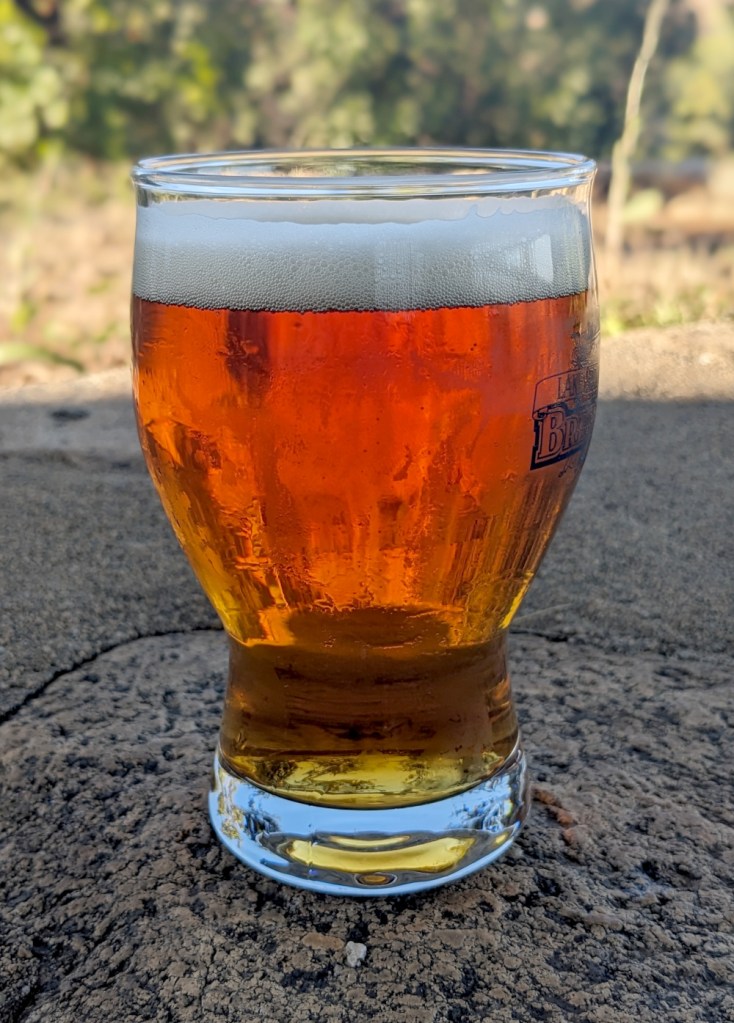
Beam Me Up Pale Ale, all on its own

The original recipe was in the March/April 2023 issue of Zymurgy, under the name of “Nearly Nirvana Pale Ale.” It’s pretty similar to the Miss’ippi #BIGCASCADE recipe from the September 2013 BYO issue, too! My recipe is a good match for “Nearly Nirvana,” except I lowered the gravity a touch (1.056 vs. 1.060), to more closely match SNPA. This batch is also special in that I used only whole cone Cascade hops from the Farke family farm in South Dakota, all representing the 2022 crop year. I made some minor adjustments in the grist — the original called for Simpsons Crystal Light malt, and I substituted in Briess’s Caramel 40L.

I elected for a quick mash on this one, with just 30 minutes for the main rest of 156°. The goal was to shave a few minutes off of the brew day!

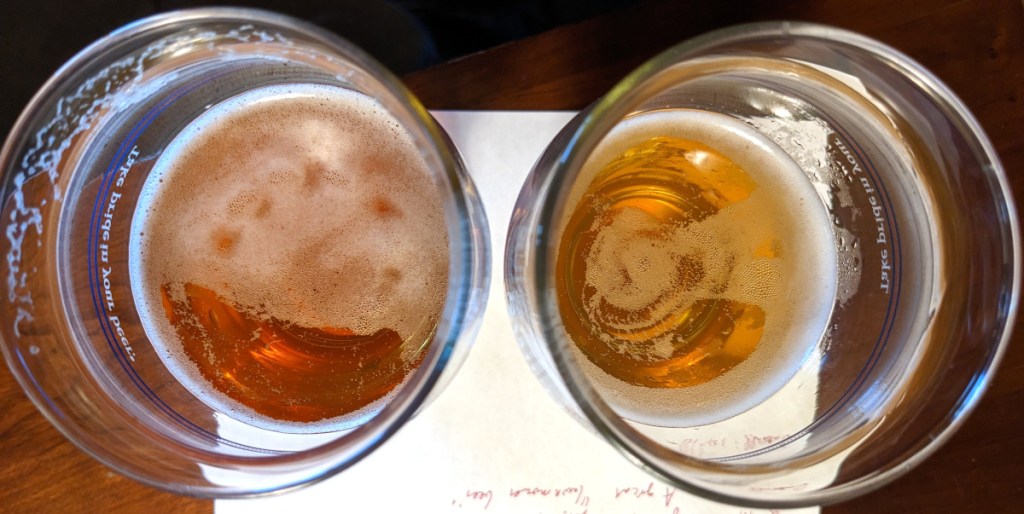
I did something a little different for the tasting, in doing a head-to-head with Sierra Nevada Pale Ale. Although my beer isn’t precisely a clone, I thought it would be good to make a comparison nonetheless. The intent was to help me more clearly evaluate my own version, and think about what the ingredients delivered.

Beam Me Up Pale Ale

  • 12 lb. 2-row pale malt (Rahr)
  • 0.5 lb. caramel malt – 40L (Briess)
  • 1.5 oz. Cascade whole hops (5.5% estimated alpha acid), 60 minute boil
  • 1.0 oz. Cascade whole hops (5.5% estimated alpha acid), 15 minute boil
  • 0.5 tsp. BrewTanB, 10 minute boil
  • 1 Whirlfloc tablet, 5 minute boil
  • 1.5 oz. Cascade whole hops (5.5% estimated alpha acid), 5 minute boil
  • 2 pkg. BRY-97 (Lallemand)

Target Parameters

  • 1.056 s.g., 1.015 f.g., 5.4% abv, 44 IBU, 6 SRM
  • Full volume mash, 156° for 30 minutes, 168° mash-out for 10 minutes
  • Claremont tap water adjusted with lactic acid and mineral additions, to achieve calculated water profile of 142 Ca, 6 Mg, 84 Na, 83 SO4, 120 Cl, 156 HCO3, RA=23 ppm.

Procedure

  • I mashed in with 7.75 gallons of water at 163°, to hit a target rest of 156°. I added 5.5 mL of 88% lactic acid to adjust the pH.
  • I recirculated during the mash, raising it to 168° for a 10 minute mash-out.
  • After the mash, I removed the grains. In total, the mash yielded 7 gallons of runnings with a gravity of 1.046, for 70% mash efficiency.
  • On the way to the boil, I added 2.5 g of gypsum to accentuate the bitterness a bit more.
  • Once the runnings were boiling, I added hops and kettle finings per the recipe. After 60 minutes, I turned off the heat and chilled to 68° and transferred the wort to the fermenter. I pitched the yeast, and held the fermenter at 67° for the primary fermentation.
  • I brewed the beer on 18 March 2023. Starting gravity was 1.053.
  • I kegged the beer using a closed transfer, on 15 April 2023. Final gravity was 1.013, for 5.3% abv.
Down the glass, with Sierra Nevada Pale Ale at left, and Beam Me Up Pale Ale at right.

Tasting

Just for fun, I tasted the beer on its own and also did a side-by-side with a can of Sierra Nevada Pale Ale.

  • Appearance
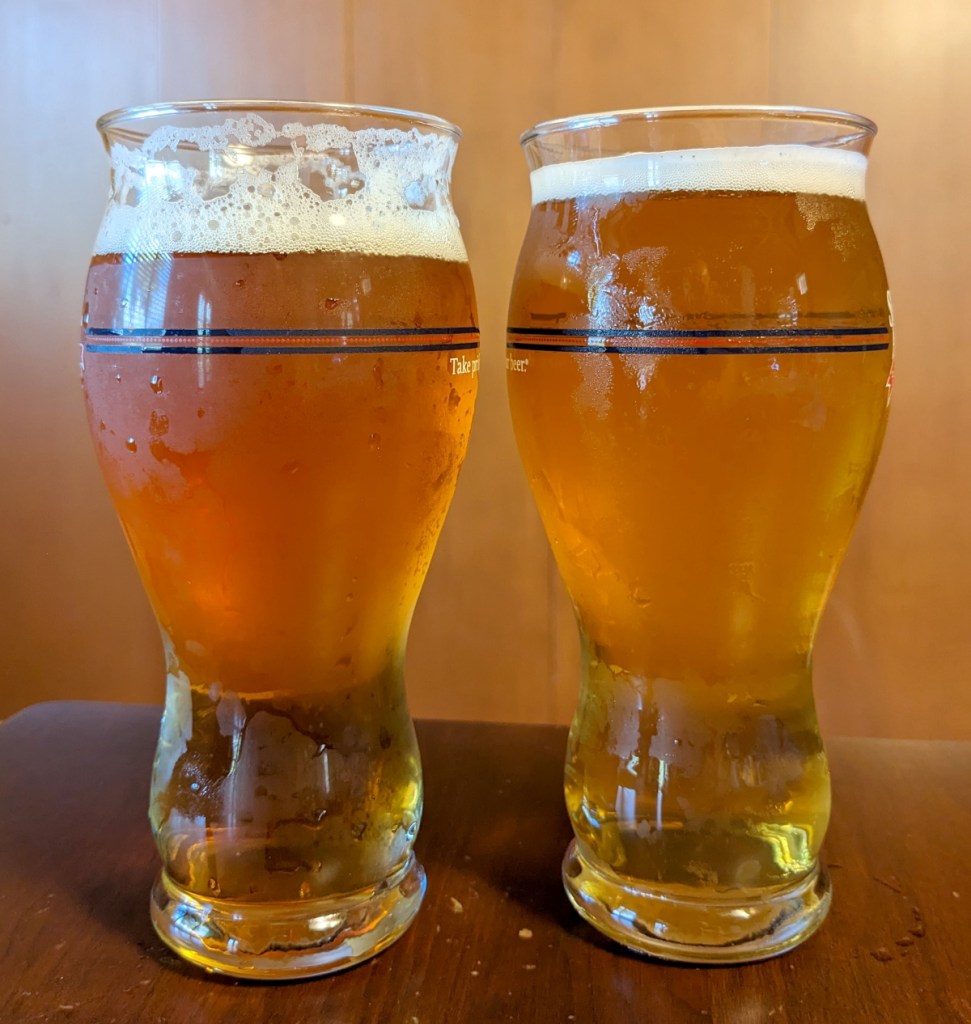
    • The beer is very clear, gold in color, and pours with a white and moderately persistent head.
      • Versus Sierra Nevada: Mine is slightly lighter in color, with less head and less head retention. The latter might be a result of a pour from draft versus the can? I’m not sure. The SNPA is slightly clearer, but also has what looks like some minor hop particulates at the bottom.
      • Winner: SNPA, by just a small margin, due to the better head and head retention.
  • Aroma
    • Sweet malt aroma and light caramel, with a light and citrusy hop aroma. The hops definitely have a mandarin quality.
      • Versus Sierra Nevada: SNPA lacks the light caramel aroma, and doesn’t have as much hop character (at least in the can I poured).
      • Winner: It’s a draw! I don’t have a preference either way.
  • Flavor
    • Medium level of citrusy mandarin orange and grapefruit, with a light resin quality in the hops. Light caramel in the malt character, medium bitterness, and clean yeast character.
      • Versus Sierra Nevada: SNPA is slightly more bitter, with more resin/pith character to the hop flavor. It’s definitely hop-dominated, with the malt to the back end, unlike mine.
      • Winner: Draw! I like aspects of each. They’re just different beers.
  • Mouthfeel
    • Medium carbonation, medium-light body, off-dry and smooth finish.
      • Versus Sierra Nevada: SNPA has a medium body profile and is slightly dryer on the finish.
      • Winner: I like SNPA slightly better, for having just a touch more body.
  • Would I brew this again?
    • Yes! “Beam Me Up Pale Ale” is by no means a clone (nor is it intended to be), but it’s a tasty and very drinkable beer! The mandarin quality on the hops in my version is super enjoyable. My main adjustments would be to up the bitterness slightly, and perhaps bitter with Chinook or another more resiny hop, using the Cascade for later additions. Or maybe I would leave it the same! It’s not a clone, after all.
  • Overall
    • 8/10
Sierra Nevada Pale Ale (left) and Beam Me Up Pale Ale (right), head to head

Spring Lager

Heading into the warmer months, I love having some crisp, drinkable lagers on-hand. I often err on the side of a traditional German pils, but it’s nice to explore other realms of lager space. It may be rather generic, but the “International Pale Lager” style in the BJCP sure can be refreshing during warm weather.

This batch was ridiculously simple–100 percent Viking Pilsner Zero malt, Liberty hops at 60 minutes and 10 minutes, and Novalager for my yeast. The latter is a new strain from Lallemand, bred to be clean and highly flocculant. I was intrigued to try a new dry yeast, especially given how much I love Diamond Lager. It can’t hurt to have a few more tools in my toolbox.

Spring Lager

  • 10 lb. Viking Pilsner Zero Malt
  • 1 oz. Liberty hop pellets (4.0% alpha), 60 minute boil
  • 1 oz. Liberty hop pellets (4.0% alpha), 10 minute boil
  • 1 tsp. BrewTanB, 10 minute boil
  • 1 Whirlfloc tablet, 5 minute boil
  • 2 pkg. Novalager dry yeast (Lallemand)

Target Parameters

  • 1.049 s.g., 1.003 f.g., 5.9% abv, 20 IBU, 4 SRM
  • Full volume mash, 144° for 45 minutes, 160° for 45 minutes, 168° mash-out for 10 minutes
  • RO water built up to hit target water parameters of 54 ppm Ca, 42 ppm SO4, 64 ppm Cl.

Procedure

  • I started with 7 gallons of RO water, adding 2 g gypsum and 3.5 g of calcium chloride, to hit my water targets.
  • I heated the water to 149°, adding the grains as well as 1.1 mL of 88% lactic acid. I held the temperature at 144° and recirculated for 45 minutes, before raising the temperature to 160°. I held it here for 45 minutes, and then mashed out at 168° for 10 minutes.
  • In total, I collected 6.2 gallons of runnings with a gravity of 1.044, for 73% mash efficiency.
  • I brought the kettle to a boil, adding hops and finings per the recipe. After a 60 minute boil, I turned off the heat and chilled to 70°.
  • I transferred the wort to the fermenter, and chilled it down to 50° before pitching the yeast. I held the temperature at 52° for fermentation.
  • I brewed the beer on 20 February 2023. Starting gravity was 1.051.
  • I held the beer at 52° for five days, before pulling it to ambient (~50°) for the next stage.
  • I moved the beer to “house ambient” (~66°) on 18 March, and then kegged on 26 March 2023.
  • The final gravity was 1.010, for 5.4% abv.
  • I held the beer at near-freezing; it had dropped clear by 15 April 2023.

Tasting

  • Appearance
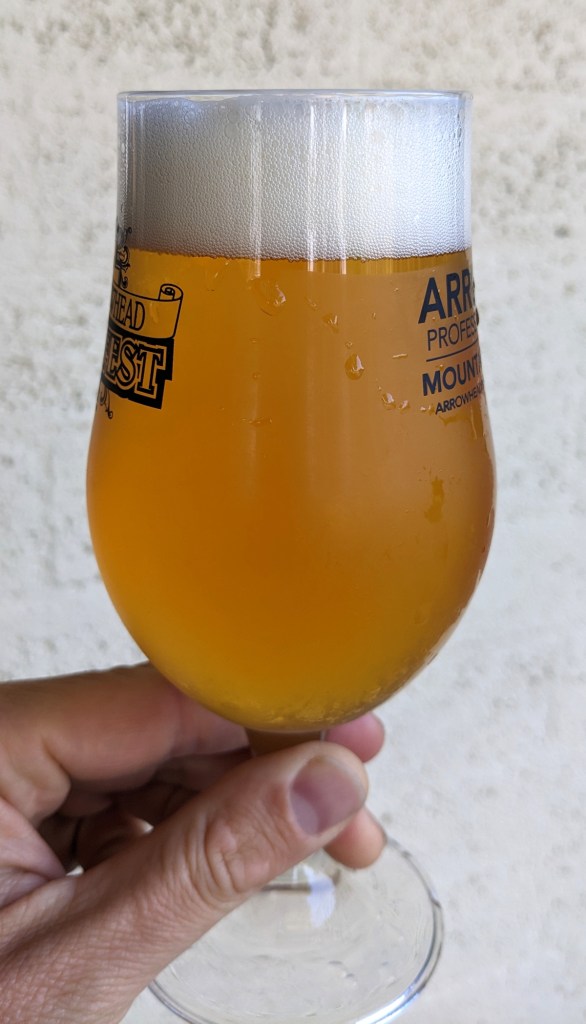
    • Brilliantly clear and straw in color, with a moderately persistent white head.
  • Aroma
    • Grainy sweet malt character, with a slight floral and spice hop profile.
  • Flavor
    • Medium-light malty and slightly grainy flavor as well as a bit of cracker for the malt, with medium-low bitterness. Very clean yeast profile.
  • Mouthfeel
    • Medium-light body, medium carbonation. Smooth finish that tilts towards the malt.
  • Would I brew this again?
    • Absolutely! It’s not the most exciting beer, but it’s a darned great one. It’s super flavorful, but not too much flavor–in other words, exceptionally drinkable. This is more interesting an a light adjunct lager. I’m also impressed by the clarity. This is a perfect “lawnmower beer”! The combo of Novalager and Viking Pilsner Zero really pay off.
  • Overall
    • 10/10