The Quest for a Real Jurassic Beer

Unexpected connections between my vocation of paleontology and my avocation of brewing pop up in the strangest places.

Recently, I decided to try my hand at a traditional Bohemian pilsner. While reading up on the style in order to develop my recipe, I ran across this interesting tidbit from a technical presentation by folks from Technische Universität München and Weyermann Malting Company [link to PDF]:

The most influencing process for the production of original Bohemian malt is the floor malting process after a 48 h steeping. This is done on traditional naturally cooled Solnhofen limestone floor tiles.

Solnhofen Limestone?!!! No way! My paleontologist brain went into overdrive when I read that statement. Using Solnhofen Limestone for floor tiles is the paleontological equivalent of using Kobe beef in a McDonald’s Happy Meal. Kinda sacrilegious, but also pretty awesome. Let me take a minute to explain this seemingly inane (yet exciting) detail.
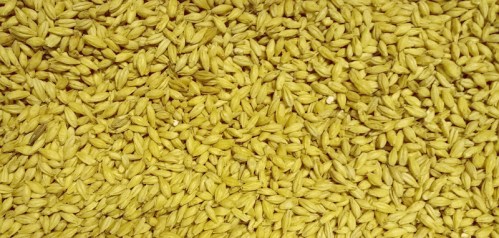
Malted barley

Malted barley

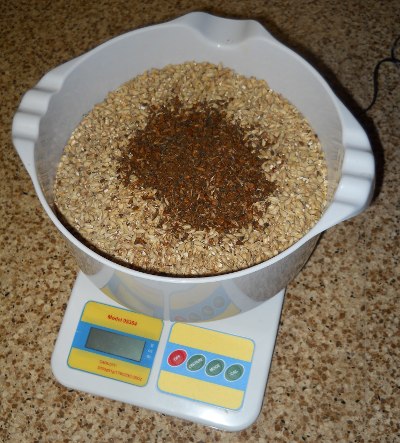
First, the brewing side. Raw barley grains are turned into malt by a brief germination, which among other things creates enzymes in the grain that break down starches into more fermentable sugars later during the brewing process itself. Germination produces a lot of heat, which can be a fire hazard in some conditions (and isn’t great for the quality of the finished malt, either). So, the grain is cooled by a combination of physical turning as well as specially cooled floors. Traditionally, the cooling was accomplished by hand-turning on stone tiles (including those made from Solnhofen Limestone, apparently). This germination period is followed by a drying and kilning period, which halts germination and readies the malted barley for brewing. The malted grains are ground up, steeped in water, the resulting liquid is boiled with hops and then fermented with yeast–and bingo, you have beer!

Now, let’s talk about rocks. Solnhofen Limestone is from Bavaria, formed in warm-water lagoons during the Late Jurassic, around 150 million years ago. The gentle waters and fine-grained ooze created the conditions for exquisite preservation of any animals that died in or near the water. Soft-bodied organisms that are rarely fossilized, including dragonflies and giant shrimp, are fairly common finds. The most widely known fossils, though, are the rare and delicate flying vertebrates. Winged reptiles such as Pterodactylus are housed in museum collections globally. And then there is the most iconic fossil of all: Archaeopteryx.

Fossil of Archaeopteryx in Solnhofen Limestone. Specimen displayed at the Museum für Naturkunde (Berlin). Photo by H. Raab, CC-BY-SA.

Fossil of Archaeopteryx in Solnhofen Limestone. Specimen displayed at the Museum für Naturkunde (Berlin). Photo by H. Raab, CC-BY-SA.

First discovered in the 1850s, the early bird Archaeopteryx is a textbook example of a transitional fossil. It preserves features of its dinosaurian ancestors, including sharp teeth and a long bony tail, as well as the long flight feathers found in today’s modern birds. The fingerprints of evolution are all over Archaeopteryx, and it has been key for many discussions on the origin of birds and flight as well as their relationship with carnivorous dinosaurs. Although new discoveries in China, Mongolia, and elsewhere have filled in additional details, the Archaeopteryx skeletons from the Solnhofen Limestone remain historically and scientifically important.

Beyond its paleontological significance, the durable and fine-grained Solnhofen Limestone has a long industrial history–indeed, the fossils are basically “by-catch” from that activity. Over the centuries, the limestone has been used for sculpture, floor tiles, and printing (lithographic) plates. A connection to brewing was new to me!

In the interest of geeky beers, I wondered: was it possible to brew a beer with malt that had rested on the same rocks as Archaeopteryx–a real Jurassic beer? I knew that Bohemian malt had traditionally been malted on Solnhofen Limestone floor tiles. But was this still the case today? Time for some sleuthing.

I started my investigation with Weyermann Malting. They carry a wide range of European pilsner malts; being a modern company, their product is largely produced using state-of-the-art malting techniques in order to maintain consistency and quality. This most typically entails malting on slotted metal floors to allow efficient germination and air circulation at the appropriate times in the process. These procedures create high quality malts, but they don’t involve Solnhofen Limestone.

My eye was then drawn to their floor-malted Bohemian pilsner malt. It is billed as being “made in an original floor malting facility”. That sounded promising. A little more sleuthing found a 2009 article [PDF] about the malt by Sabine Weyermann (of the very same malting company) in Scandinavian Brewers’ Review. In this article, Weyermann notes that their floor-malted pilsner malt is produced under contract at Ferdinand Brewery and Malting Company–whose malt house is floored by Solnhofen tiles.
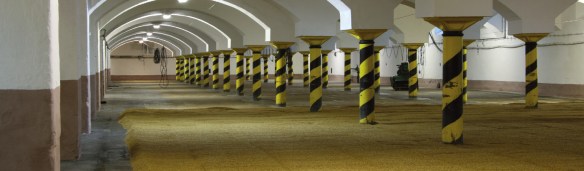
A view inside the traditional floor malting facility at Ferdinand Brewing and Malting. From Weyermann 2009.

A view inside the traditional floor malting facility at Ferdinand Brewing and Malting. From Weyermann 2009.

My journey to Solnhofen Beer was almost complete! I sent off a quick email to several individuals at Weyermann Malting Company, to confirm if their traditional pilsner malt that is sold today is still produced on Solnhofen Limestone. Not long after, I received a response from Stefan Gottschall at Weyermann, verifying the Solnhofen connection. My quest was complete.

So, you can brew a Solnhofen-themed beer! Thanks to Weyermann’s Floor-Malted Bohemian Pilsner Malt, every sip of my latest lager has a physical connection to Archaeopteryx and all of the other Jurassic critters of ancient Bavarian lagoons. This is beer at its best–an experience not just of taste, but also one imbued with 150 million years of history and a link to the fossils I love.
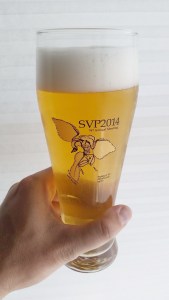
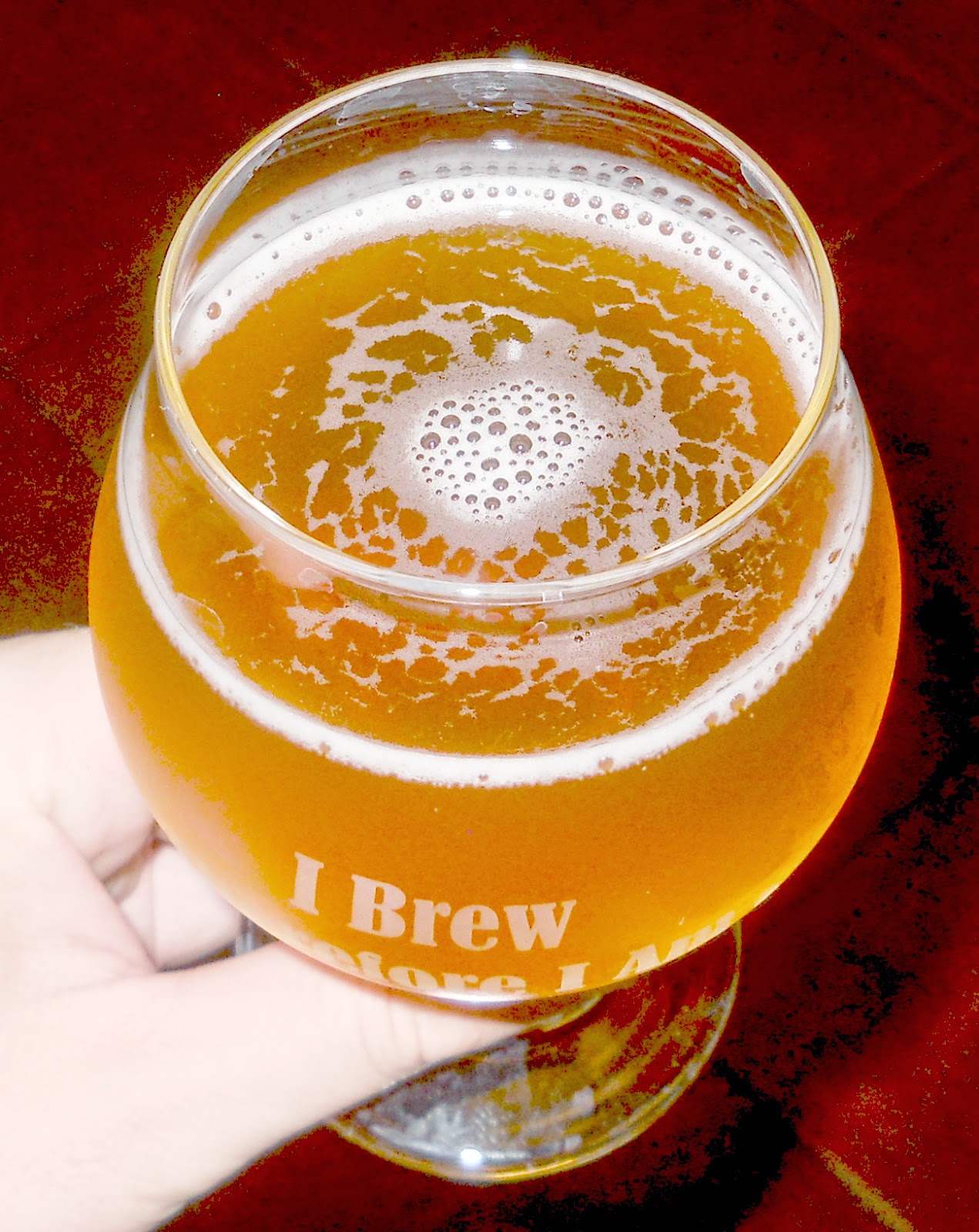
An Archaeopteryx-linked beer requires the appropriate glassware.

An Archaeopteryx-linked beer requires the appropriate glassware.
A New Blog Home

If you have been following this blog for any length of time, you have probably noticed the new look and the new URL. After nearly eight(!) years at my original home, it was time for a change. All of the content has been migrated, and most new content will be more of the same–recipes, tastings, and the like. However, I also plan to have more frequent essay-style posts, and to use this blog as a workshop for some beer writing projects. Cheers to whatever lies ahead!

2015’s Homebrew Highlights

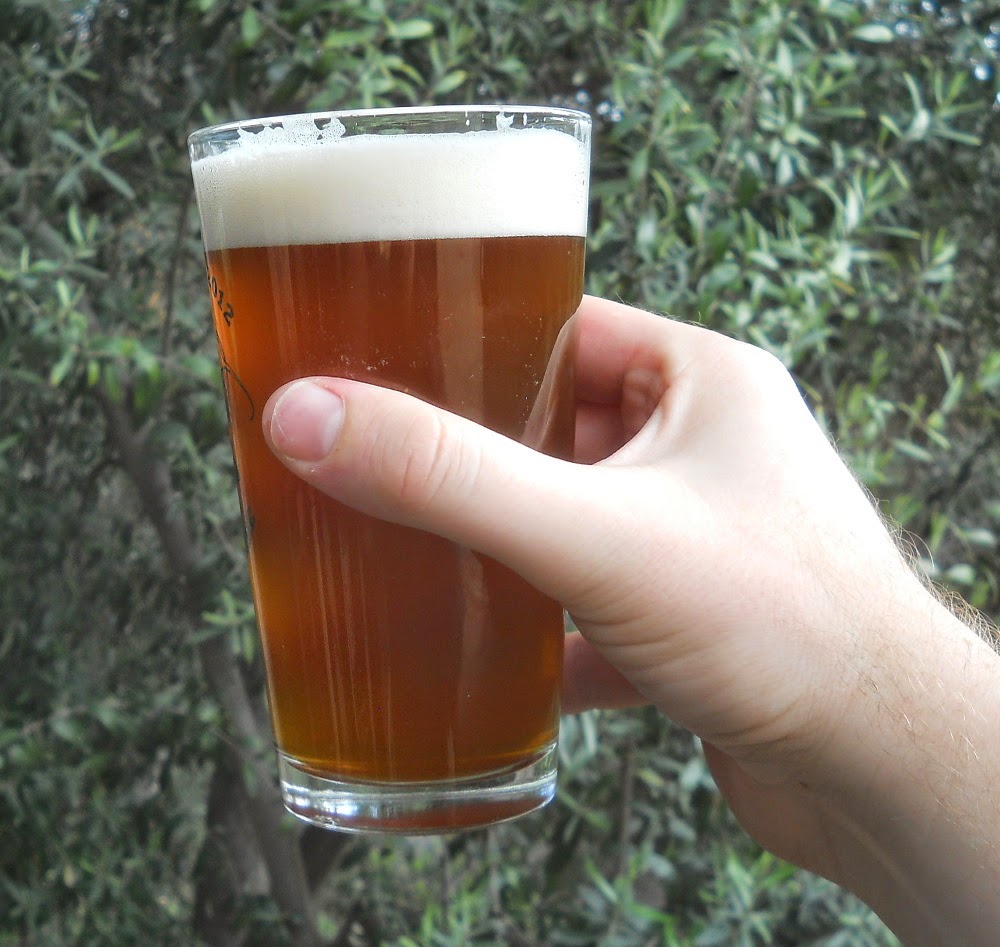
My beer of the year, Citra Blonde Ale

Looking back, 2015 was a banner year for my brewing. Speaking immodestly, I produced some excellent beers. Just as importantly, if not more so, I really stretched myself in terms of new styles and techniques.

  • Favorite Batch
    • Citra Blonde Ale
      • This blonde ale nailed every single aspect–in fact, I might say it is one of the best beers I’ve brewed over the years.
  • Least Favorite Batch
    • I didn’t have any batches that totally went south, but I did have some that were just not quite where I wanted them. My Live Long and Porter was squarely mediocre, as was my attempt at an Old Speckled Hen Clone. The former was mostly a result of recipe–the latter was, at least in part, the need to age for way longer than I was willing to give it.
  • Experimental Recipe with Most Potential
    • Pannotia White IPA
      • I’ve done two iterations of this recipe now, and each time have dialed it in just a little closer to my overall goals. One more, and I think I should have it where I want it! This is my “brew to watch” for 2016.
  • Most Fun New Style/Recipe to Try
    • Berliner Weisse
      • I’ve long been hesitant to brew a sour beer (and truth be told, I think that sours are a bit overdone), but I couldn’t pass up a chance to try kettle souring. It was super easy, and the result has been pretty tasty!
  • Best Technique Added to Repertoire
    • I tried a lot of new things this year (different hopping schedules, session IPA’s, kettle souring, brew-in-a-bag, and oaking, to name a few), but I think the biggest addition to my toolkit has been kegging. I absolutely love the convenience–so much less scrounging, scrubbing, and sanitizing–and it also makes hosting people easier (no more piles of bottles on the counter). I’ll admit that the “cool factor” of a few taps on-hand is nice, too. It’s nice to be able to just have a few ounces if that’s all I want, rather than committing to a full 12, 18, or 22 ounce bottle. A win all around!
  • Most Frustrating Technique/Tool to Master
    • I would say that mastering my refractometer has been among the most frustrating aspect of brewing this year. It is a handy little tool, but wow, is the scale off major time. It took quite a few iterations and the development of an instrument-specific equation to get it to the point where I feel comfortable with it.
  • Best Ingredient Added to Repertoire
    • I have to say that WLP400, White Labs’ Belgian Wit yeast, is probably one of the most enjoyable strains to work with, in terms of quality of the results. I’ve used it in both of my White IPA batches, and I’m hooked.
  • Favorite Book
    • Hands down, it’s Gordon Strong’s Modern Homebrew Recipes. Every single recipe I’ve tried or modified from there has been excellent. It has also helped me to really think about my process, and the effects that process can have on each batch (e.g., late hopping, adding dark grains at the vorlauf, etc.). A close runner-up is Mastering Homebrew by Randy Mosher. Not only is it informative, but it’s got the best (and most helpful) graphics of any homebrew book I’ve seen yet. Strong’s book has pushed my technique the most, but Mosher’s has solidified the basics the most. They are a good duo of publications!

Advice for the New Homebrewer

This post is intended as a “sticky note” for friends, acquaintances, and general internet inhabitants who ask how to get into home brewing. It is based on my own personal experience and opinion. If there is anything that home brewers are, it’s opinionated. So, you may hear drastically different advice on some points (e.g., extract versus all-grain), but I suspect most would at least partly agree on what I have to say here.

My starting assumption here is that the reader is at least passingly familiar with basic terms such as “extract brewing” or “all-grain brewing” or “sparging.” If not, a quick internet search will turn up better definitions than I could provide.

General Advice

    • “Relax, Don’t Worry, Have a Home Brew.” I really like Charlie Papazian’s philosophy. Papazian is in many ways a founder of homebrewing culture, and his book “The Complete Joy of Home Brewing” is a legitimate classic. Although I’ve since learned that the corners of some content in the book are a little outdated or have better alternatives, Papazian’s “Relax” mantra is a healthy one to keep in mind. Most minor mistakes in brewing (and even some major ones) won’t completely kill a batch of beer! As I tell friends who are just starting out–“The worst thing that usually can happen is that you will get beer.”
    • You will not get Bud Light style lager through 99% of all home brewing efforts. If that is your goal, you are far better off just picking up a case of the cheap stuff at the store. The light American lagers–despite their bad reputation among beer snobs–are technically quite difficult to achieve by most homebrew setups. That said, you are not restricted to just stouts and porters. You can fairly easily make a really tasty blonde ale, for instance–light, refreshing, and quite achievable!
    • If your intent is to save money on beer, find another hobby. In terms of raw ingredients for a batch, yes, you might save money in the long run. But once you factor in time and equipment, this is not by any means a money-saving proposition. Quite frankly, there are better ways to save money–like cutting back on your beer drinking.
    • You know what your own tastes are. Trust them. If the beer tastes good to you, it’s good beer. That said, do be open to constructive critique from those who have practiced taste buds. As a corollary to that, though, remember that we all pick up on different things in beer. Beware relentlessly negative tasting critiques from beer snobs. There are always those who will find fault no matter what; learn to identify them and (politely) ignore them.

  • The goal is not (or isn’t always) high alcohol or maximum hoppage. Those things can be nice in some beers, but get boring after awhile. There is an unfortunate “macho” philosophy prevalent among some home brewers (and even some craft brewers) that the goal is to create the highest alcohol beer that will provide maximum buzz, or the most bitter concoction, or the funkiest Brett brew. This isn’t healthy, nor is it fun, in the long run. Good beer comes in all shapes and sizes; I’ve had great beer with almost no hops character, and lots of hops character. Likewise, I’ve had great beer with 3.2% abv, or 9% abv. Variety is the spice of life.
  • There is a tremendous amount of BS masquerading as brewing advice on various internet forums and websites. There is also a tremendous amount of good knowledge out there. As a scientist, I am a little frustrated at times by the uncritical eye cast towards brewing techniques. I get the sense that there is a vast world of scientific knowledge out there, but it doesn’t often percolate down to home brewers. So, use a bit of common sense when incorporating new techniques into your repertoire. As I said in the intro–home brewers are an opinionated bunch, for better or worse.
  • Start small. You have no idea if you will give up on brewing after two batches, or if you’ll still be brewing strong ten years down the road. Thus, it doesn’t make a lot of sense to drop $1,000 on equipment right from the start. You should be able to brew your first batch of beer for around or under $100 of equipment and supplies.
  • If possible, brew with a friend before committing. If you have a friend who is a homebrewer, ask if you can “ride along” for one of their brewing sessions. It’s a good way to see how the process works. That said, be aware that your friend may have good habits, bad habits, cheap habits, expensive habits, or unnecessary habits built into his or her work flow. Just because they do all-grain with a massively complex sparge setup doesn’t mean that you have to also. Or, if they use iodine-based sanitizers without proper dilution or rinsing, you may want to do something a little different.
  • Start with extract brewing. It requires minimal equipment investment as well as requires the easiest technique. It’s a good way to get your feet wet (or end up completely immersed in the hobby!).
  • Both extract and all-grain brewing can produce good (or bad) beer. Each technique has its advantages and disadvantages, but with care and experience both can produce excellent beer. If you spend your entire career doing extract, and get excellent results, yay! Don’t let all-grain snobs get you down.
  • Take good notes. You will never regret this. What worked in your process? What didn’t work? What did you change from before? What were the starting and finishing gravities? It is hard to improve (or maintain high quality) if you don’t know what happened.
  • You will not get perfect beer at first–but you will almost certainly get drinkable beer. As you learn and practice your technique, your brews will nearly certainly improve.
  • If the beer tastes funny, wait a week or two or three before tossing it. I’ve made a few batches that improved drastically after a few weeks of maturing. Time doesn’t fix all ills in brewing, but it sure can mitigate most.


Looking Back on the News and Brews of 2014

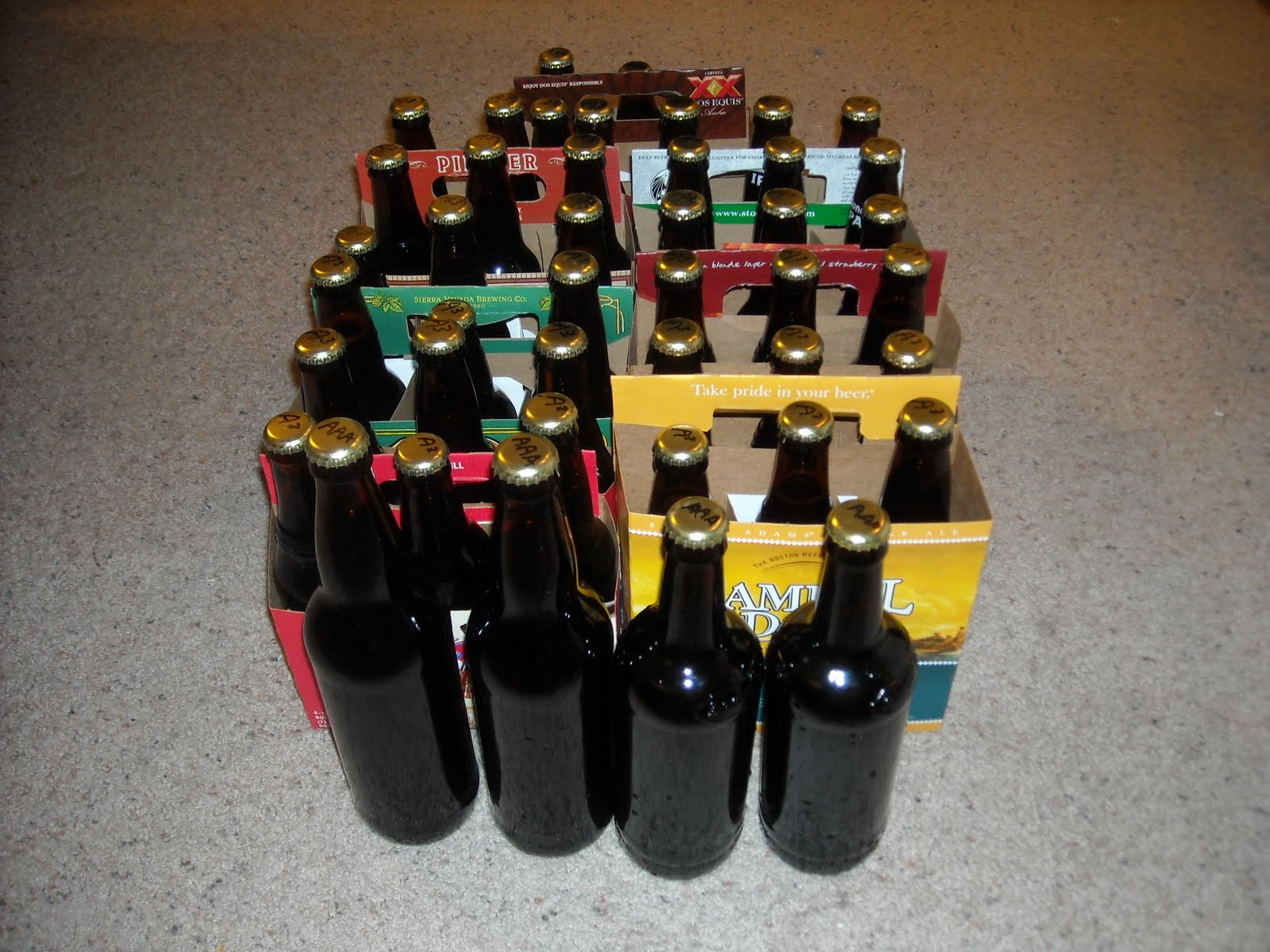
2014 has seen more changes to my brewery and brewing practice than just about any year since I started brewing. In part, this happened because I feel comfortable enough with the hobby–and that I’ll be brewing for the long-term–to invest in more equipment. This in turn was enabled by a move into a new place that had a garage with utility sink, so I was able to get the operation out of the kitchen (with its various space, sanitation, and process limitations) and into a dedicated brewing area. More space meant more equipment…which meant more options for brewing! As a result, I feel like I have really grown and improved as a brewer. This has been challenging at times–the switch to all-grain was like learning to brew all over again! But, the challenges have been mostly fun and solvable; the best kinds of challenges to have.

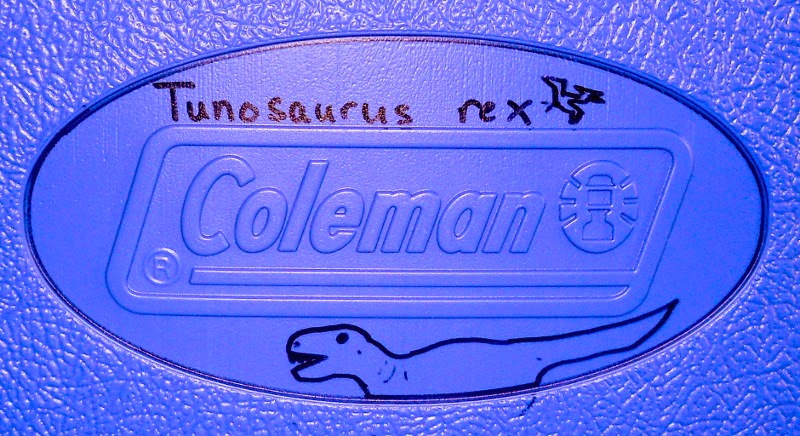
A handy inscription on my mash tun

Major Changes in Technique / Equipment

  • Changing from partial volume to full volume boils. This was a relatively minor change in the grand scheme of things, but it did pave the way for all-grain brewing.
  • Transitioning into all-grain brewing. This is perhaps the largest and most enjoyable change. As mentioned above, in many ways it was like learning to brew all over again. New equipment, new things to worry about (or relax about). 
  • Improved temperature control. This change has allowed me to extend my brewing season, as well as ensure happier yeast during my previous “usual” brewing season (late fall through early spring).
  • Yeast starters. Where I had been relying largely on dry yeast, I am excited to expand into some new strains in the world of liquid yeast packaging.
  • Beginning the transition into kegging. As I finish out the year, I’ve been building a keezer setup, with anticipated “first draft” in the first week or two of the New Year.
Favorite Brews of 2014
  • Bonedigger Brown Ale. This may be the first recipe I’ve ever designed that turned out perfect on first try. I chalk it up to dumb luck, and will definitely put this into regular rotation!
  • Gondwana Pale Ale. This one took two iterations, but ended up as a nice showcase for Citra hops (my new favorite hop variety–it will be tough to hold back on overusing this one!).
  • Summer Blonde Ale. This ale was my first temperature-controlled brew, and ended up as a quite drinkable warm-weather concoction. This too is going into regular rotation!
Goals for 2015
  • Experiment with new ingredients–yeast, hops, and malts. I have worked a lot with “classics” such as crystal malt, basic American and British yeasts (e.g., Nottingham, various Chico strains, etc.), and Cascade hops. In the upcoming year, I would like to expand into some untouched territory.
  • Perfect kegging and in-keg carbonation of my homebrew, along with small-scale bottling from the keg. I’m thinking about building a bottling gun, just for fun.
  • Develop an in-house white IPA recipe. While I was traveling recently, I got a chance to try an amazing Italian white IPA (Lariano Vergött), and since then have been dreaming about devising one of my own.
  • Brew and/or develop more session beer recipes. Pretty much what it says.
  • Brew a lager. Now that I have good temperature control, I can start to think about lagers and pilsners. This opens up a whole new world of styles and techniques, of course. 
Summer Blonde Ale
Homebrew Roll Call (everything I brewed in 2014)