
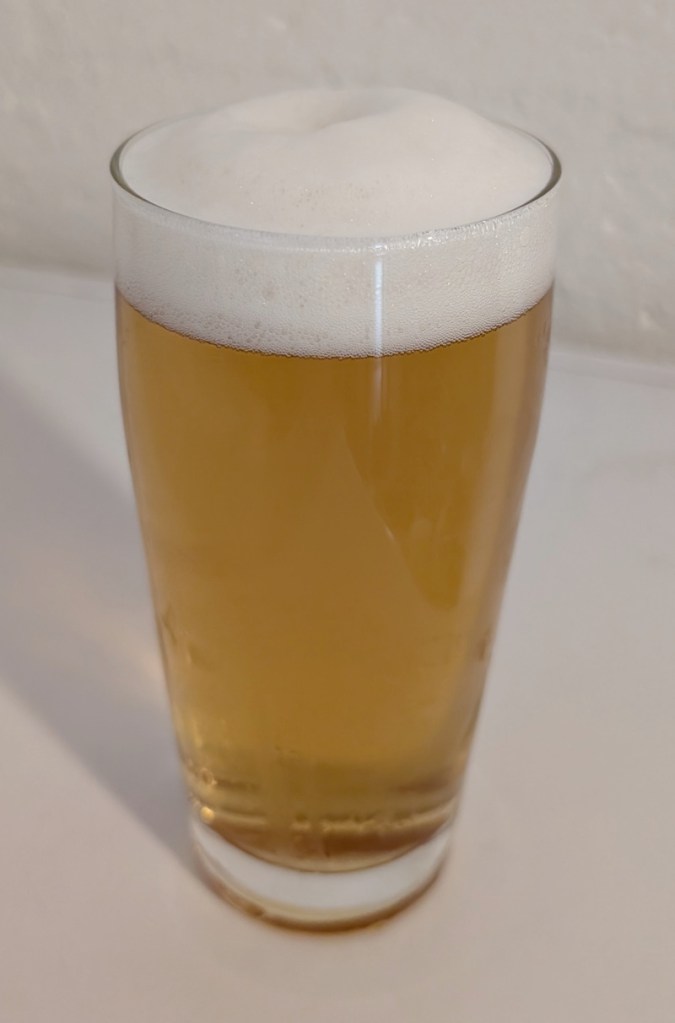
I’ve been chasing the Bohemian pilsner style for awhile, with variable success. My most recent version, No. 11 Bohemian Pilsner, got pretty close to what I was looking for. It needed just a touch more malt character, so I increased the melanoidin contribution from 4 oz. to 5 oz. for my 2025 version. I was also a bit low on Carafoam, so I reduced that from 8 oz. to 5 oz.; I figured that would have a minimal effect. Finally, I’m using Viking pilsner zero malt as the base, versus Rahr.
Recipe Name
- 10 lb. Viking Pilsner Zero malt
- 5 oz. Carafoam malt (Weyermann)
- 5 oz. melanoidin malt (Weyermann)
- 0.5 tsp. BrewTanB, added to mash
- 3.5 oz. Saaz hop pellets (2.4% alpha), 60 minute boil
- 1.5 oz. Saaz hop pellets (2.4% alpha), 10 minute boil
- 0.5 tsp. BrewTanB, 10 minute boil
- 1 Whirlfloc tablet, 5 minute boil
- 1 oz. Saaz hop pellets (2.4% alpha), 5 minute boil
- 0.5 tsp. yeast nutrient (WLN1000), 5 minute boil
- 2 pkg. Diamond lager yeast (Lallemand)
- 1 oz. Biofine Clear, added to keg
Target Parameters
- 60 minute infusion mash, 154°, full volume mash
- 1.049 o.g., 1.010 f.g., 5.1% abv, 37 IBU, 5 SRM
- Water built from RO, to hit target profile of 6 ppm Ca, 5 ppm Na, 6 ppm SO4, 6 ppm Cl, 14 ppm HCO3, RA=7 ppm
Procedure
- I started with 7.4 gallons of RO water, to which I added 0.3 g gypsum, 0.3 g calcium chloride, 0.5 g baking soda, to hit target profile of 6 ppm Ca, 5 ppm Na, 6 ppm SO4, 6 ppm Cl, 14 ppm HCO3, RA=7 ppm.
- I heated the strike water to 159°, before adding the grains, BrewTanB, and 4.1 mL of 88% lactic acid to hit my ideal pH.
- I held the mash at 154°, with recirculation, for 60 minutes, before raising the temperature to 168° for a 10 minute mashout.
- At the end of the mash, I pulled the grains and heated the runnings to a boil. In total, I started with 6.6 gallons of runnings at a gravity of 1.041, for 69% mash efficiency.
- Once the kettle was at a boil, I added hops and finings per the recipe. After the full 60 minutes, I chilled the beer to 80°, transferred to the fermenter, and chilled the rest of the way to 50° before pitching the yeast. I set the fermentation chamber at 52°, and observed signs of fermentation within 12 hours.
- I brewed this beer on 14 June 2025; it had a starting gravity of 1.049.
- On 19 June 2025, I pulled the fermenter to ambient for about 4 hours, so that I could chill a second lager (Munich helles) down to 50°. During this time, the fermenter temperature rose to 60° and fermentation really kicked off. I chilled the beer back to 50° after this and completed fermentation at that temperature.
- I cold crashed the beer on 17 July 2025, and kegged it on 4 August 2025 using a closed transfer. The beer had some haze to it still.
- Final gravity was 1.011, for 5.0% abv. I hit my numbers really well on this batch!
- To speed up the clarification process, I added 1 oz. of Biofine Clear on 25 August 2025.
Tasting
- Appearance
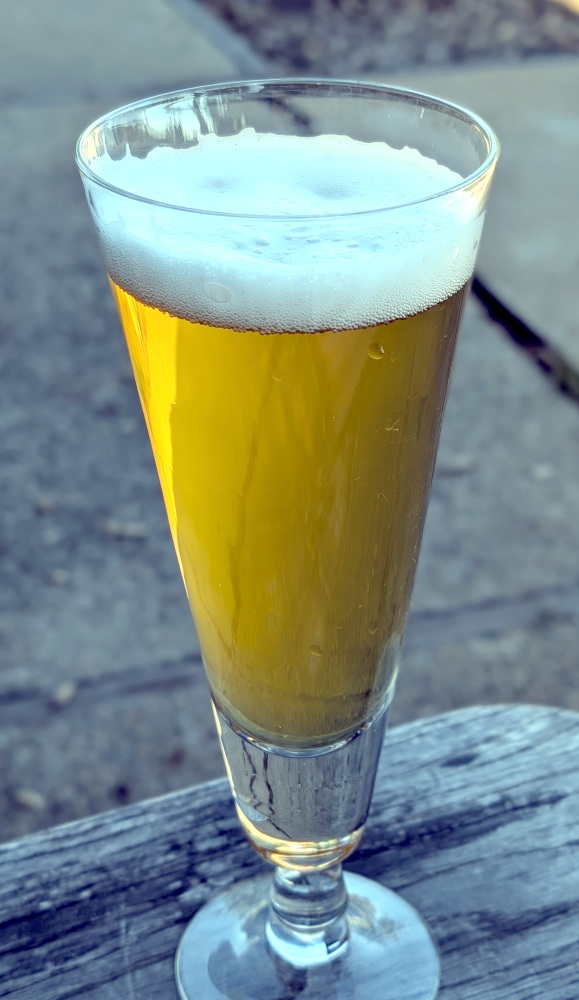
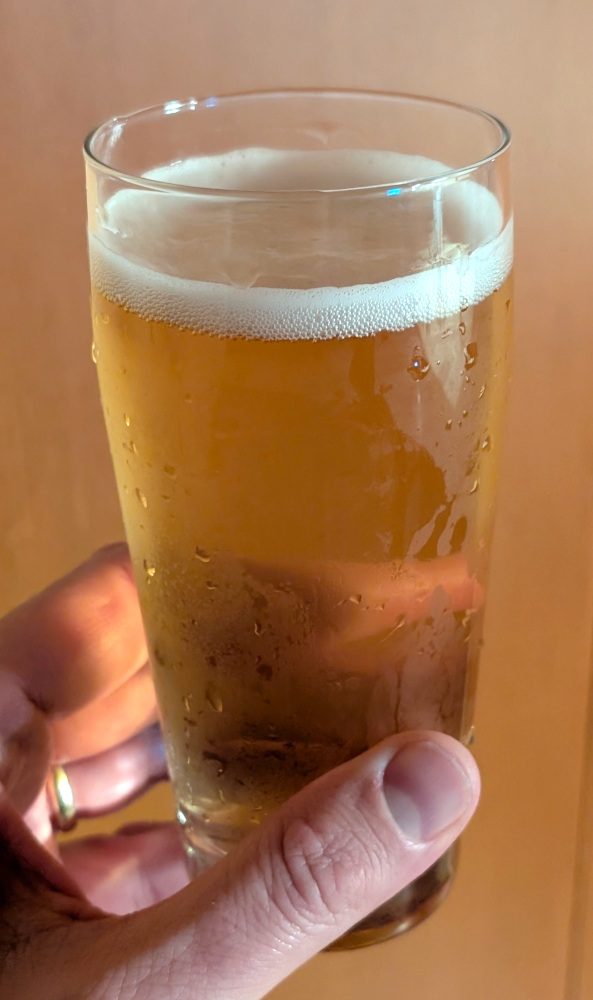
- Brilliantly clear gold beer with a thick and persistent white head, which has a tall and creamy appearance when well poured.
- Aroma
- Medium-high malty aroma, medium low spicy/herbal hops as the beer warms.
- Flavor
- Bready maltiness at a medium level, against a bitter yet rounded hop character, with an herbal and slightly spicy quality.
- Mouthfeel
- Medium body, medium carbonation, smooth finish.
- Would I Brew This Again?
- This might be my best Bohemian pilsner yet. It is incredibly drinkable, and the balance between malt and hops is spot-on. Soft water definitely pays off, with the subtle bitterness that plays well against the malt.
- Overall
- 10/10


 Andy's Brewing Blog