2019’s Homebrew Highlights

2019 marked my eleventh year brewing out in California, and I feel like I’m squarely in the comfort zone of homebrewing. Yet, I didn’t let myself get too comfortable, either. This was a year to push myself with more lager recipes and some new styles. I’ve improved my packaging of oxygen-sensitive beers, and overall this has paid off handsomely. Let’s take a look at some of the highlights!

  • Favorite Batch
    • This was a great year, with several batches I really loved. Favorite batch for 2019 is a hard choice, but I think I’ll give a slight edge to the Alta California Lager. It was a virtually perfect beer, and I hope I’ll be able to get something close to it again in a future incarnation!
  • Least Favorite Batch
    • I didn’t have any complete disasters this year, so this is another hard choice. My recent brown ale was a bit of a disappointment, so that’s probably what I would nominate. I also haven’t gotten quite to the perfect Bohemian pilsner. Something to shoot for next year!
  • Experimental Recipe with Most Potential
    • I made a Breslau-style pale schöps, and it was just plain fun. I loved the challenge of creating a recipe for a style taste-unseen, and the result was really nice. It was a treat!
  • Most Fun New Style/Recipe to Try
    • Stygimoloch Bock turned out great in its inaugural run, and with a little more tweaking it’s going to be pretty darned amazing. I had fun working with the artist on the commemorative design, and had just as much fun enjoying the beer with friends.
  • Best Technique Added to Repertoire
    • I’ve perfected a partially closed transfer, to reduce oxygen exposure for sensitive beers like dry hopped IPAs and light lagers. Just like a totally closed technique, I purge the keg with CO2 by filling it with StarSan solution and pushing out the liquid. Rather than pushing the beer in with CO2 also, I just siphon in via the out port. As long as I don’t disturb the surface of the fermenter’s beer too much, I figure that oxygen introduction is quite minimal. I feel this is a touch safer than even minimal pressure added to a glass carboy, and the process also involves less equipment.
  • Best Ingredient Added to Repertoire
    • Comet hops! I liked how my Comet Pale Ale turned out, and will be looking to try this again for future IPAs and pale ales.
  • Favorite Book(s)
    • I read the somewhat old Bavarian Helles volume by Hornbusch (from Brewers Publications), and rather enjoyed it. I picked up a few from this style-centered series when they were on sale, and have been working my way through them. The oldest date back to the early 1990s, when brewing and homebrewing were completely different worlds. Some of the recipes have value, and some I take with a bit of skepticism. Even so, the histories and background are super interesting, with more detail than the typical brewing article. The books are also a nice length to finish in one or two sittings, which is a rare sweet spot for the beer writing market.
    • On the cultural side, I think This Ain’t the Beer That You’re Used To: A Beginners Guide To Good Beer, by Dom “Doochie” Cook, stands out among books I read. It’s highly readable, and brings a fresh voice to the beer writing world. Check it out!
  • Other Milestones
    • This is the year that I finally figured out lagers. Around a quarter of the beers of 2019 were lagers, including everything from Munich dunkels to German pils to Mexican-style lager to bocks. I had more hits than misses, and can foresee even more lagers next year!
  • Overall Stats
    • I brewed around 25 batches this year; not as much as some years, but certainly not too shabby. There were times where I ran a little short on homebrew (mainly when I had extensive stretches of no-brewing due to work/family schedules), so next year I’ll try to plan things out a bit more.
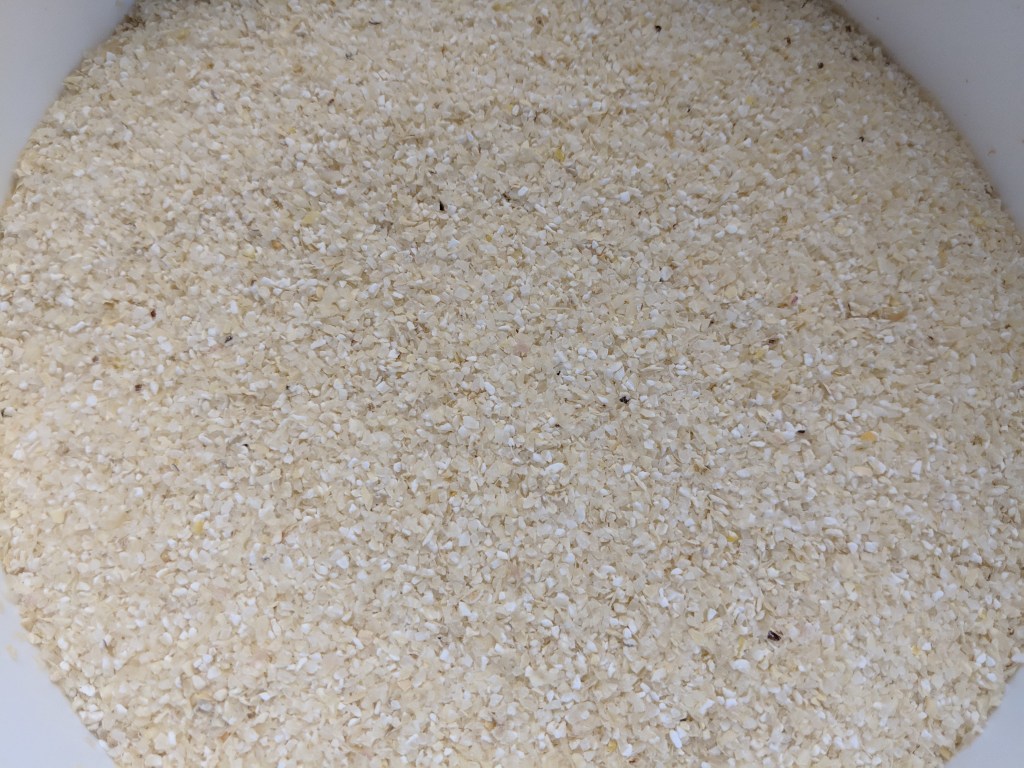
Corn grits, ready to go into the Alta California Lager

2017’s Homebrew Highlights

20171113_1742532017 was a fun and productive year for my brewing. Here’s are some of the highlights:

  • Favorite Batch
    • Dunkel-Osteus
      • My first Munich dunkel brought together several techniques I had been practicing–water adjustments, late addition of dark grains, and lagering. It came out nearly perfectly, creating an intensely enjoyable and very drinkable beer.
  • Least Favorite Batch
    • Czech-ed Out Pilsner
      • My first dumped batch. When the hops have a funny aroma in the bag, they’re not going to have a better aroma in the brew. This ended up as a grassy-smelling mess (even though it looked beautiful). Lesson learned!
  • Experimental Recipe with Most Potential
    • Raspberry Belgian (version 1 and version 2)
      • I did two iterations of this batch; one with frozen raspberries and acid malt to provide fruit and tartness, respectively, and one with canned raspberry puree and kettle souring. The first batch hit the fruit flavor much better, although it wasn’t terribly tart. The second batch didn’t have nearly as nice of flavor or as pretty of a color, and was almost too sour. So, I’ll probably try another kettle-soured version that hits less acid (maybe a pH around 3.8?) and uses frozen fruit. With a bit of tweaking, this recipe should be a solid one.
  • Most Fun New Style/Recipe to Try
    • Red Rye Lager
      • I haven’t tasted the results yet, but this batch was just plain fun to plan and brew. I enjoyed experimenting more with rye, as well as applying my developing skills for lagers. It was probably the most creative brew I’ve done in awhile, in terms of going off-script for recipes.
  • Best Technique Added to Repertoire
    • Kettle souring with yogurt
      • I tried this with the second iteration of the Raspberry Belgian, and loved the concept. It’s way cheaper and easier than buying a fancy bacterial culture, and produces a nice, clean sourness. I want to try this with a few other styles, such as Berliner Weisse.

20170625_205023

  • Best Ingredient Added to Repertoire
    • I discovered the Amoretti Craft Puree series at Homebrew Con this year (we got a bottle in our “swag bag”), and have really been enjoying playing with it. It seems to fill a nice niche in between fruit extracts and straight fruit purees; the blood orange variety went nicely with my American wheat beer, and I also crafted a tasty peach IPA with the stuff. 2018 will bring more brews with this series of purees!
  • Favorite Book
    • As we close out the year, I just finished Pete Brown‘s Miracle Brew. I’ve enjoyed Brown’s writing, since I discovered Hops and Glory, and this book is a worthy successor. Brown excels at combining travelogue with beer history, while being pretty entertaining in the process. Miracle Brew is no exception–he surveys the history and cultural influence of major beer ingredients, while introducing us to many of the folks behind the scenes. His books tilt towards the British (I got a bit lost in the otherwise enjoyable Man Walks Into a Pub, because I’m not immersed in British pub culture), but this one is cosmopolitan enough to be engaging even for us Americans. Highly recommended!
  • Other Milestones
    • It was a good year for blending beer and science communication; I had an article in Zymurgy on the evolution of hops, which presented a ton of new information on hops that hadn’t made it into the brewing literature yet. Additionally, I put together a slide presentation on the intersections between beer and paleontology, which I gave at several venues (including HomebrewCon).
  • Overall Stats
    • I brewed around 30 batches this past year–that’s a new record!

Confidence and Competence in Brewing

20170107_084229

“Relax. Don’t Worry. Have a Homebrew.” What a lifesaver that phrase was in my early days of brewing! Getting started in this hobby can be a nerve-wracking business. First are all of the (rightfully) important warnings about sanitation and proper temperature for yeast pitching and whatever. Then come all of the smaller warnings about water chemistry, boil volumes, specific gravity, and the rest. If a novice brewer spends more than a few minutes browsing any homebrew forum, they are quite likely to spin themselves into a panic over every last detail. And heaven help them if they run across the most die-hard low-oxygen brewing proponents!

Yet, as long as you master the very basics, you can make some pretty passable beer. All of those other details can come later, with practice and experience. Brewing becomes a genuinely relaxing process, passing the threshold from slightly stressful exercise that produces a fun product to a fun exercise that produces an excellent product.

Just the other day, as I was brewing a pilsner, I thought…”Hey! I really have confidence in brewing now!” Much of this comes from frequent practice. I know my system. I can throw in a new technique without too much disruption in my brew flow. I know my ingredients. If I can’t find one particular ingredient for a recipe, I feel confident in making appropriate substitutions. I’m getting much stronger in self-critique, and have had my critiques validated in formal competitions. Speaking immodestly, most of my beer is pretty decent, and some of my beer is pretty darned excellent.

To truly enjoy brewing, don’t try to master everything at once. Focus on the big picture, and dial in the details over time. Brew by brew, work on your craft and develop your knowledge base. It takes time, but we all have the potential to be confident and competent brewers!

Are homebrew experiments scientific?

e3ce2-20151107_180604As a professional scientist, I absolutely love any opportunity to meld the art and science of homebrewing. The intersection of chemistry and biology with the senses of taste, smell, touch, and sight creates endless hours of enjoyment. Even more so, I love playing with ingredients and processes to explore this beer landscape.
I’m not alone in this passion for the scientific side of homebrewing, either–two particularly prominent efforts (among others) have a solid hold in our brewing culture. The first of these is Experimental Brewing, by Denny Conn and Drew Beechum. In addition to a great website, they host one of my favorite brewing podcasts. Their mode of experimentation is to recruit IGORs (Independent Groups Of Researchers) who brew parallel batches of beer to test brewing hypotheses. The other major player in the world of homebrew experimentation is Brülosophy. This brewing team regularly investigates single variables (e.g., yeast pitch rate or addition of gelatin finings) of relevance to homebrewers, examining what (if anything) matters for your typical 5-10 gallon batch.

Over the past year or so of following these efforts, I have found some great value and food for thought in all of their experiments. The associated podcasts and blog posts pose interesting questions, and often challenge the received wisdom of homebrew tradition. Yet, the scientific side of me often wonders: Is it really science?

The short answer to this is, in my opinion, both yes and no.

Homebrew experiments are often scientific in that they propose hypotheses, design procedures to test the hypotheses, and collect data for later analysis. This is certainly necessary for science, but it’s not entirely sufficient.

I should preface my explanation on this latter point by saying that my opinions here are not intended as unthinking criticism of some really great homebrew experimentation. I love and appreciate what others are doing. That said, I do notice that the work is sometimes misused or misinterpreted within the broader homebrew culture. Some basic scientific safeguards could help to maximize the value of homebrew experiments and minimize confusion. So, my post is less about breaking down the current “system” (if it even really is a system) and more about what we can add to improve the value of homebrew experiments. Even more so, it’s about how those of us who read the “exbeeriments” should interpret them!

  • Expand the brewing scenariosAs is readily acknowledged by most brewing experiment writers, results of a particular experiment are really only applicable to those experimental conditions. For instance, if you find that there is no difference between a 20 minute and a 60 minute boil for a stout, the results probably shouldn’t be extended to a blonde ale. More experiments at a homebrew scale are needed!
  • Emphasize limitations. This follows pretty logically from the point immediately above. I think that most of the brewing experiment write-ups out there do this pretty well, so it’s more of a caution for those who read and try to apply the results.
  • Record methodology in detail. Brülosophy sets a high bar for this, and is able to do so because their brewing is done typically by a single person. The IGORs do good work, but the distributed nature of the brewing means that a lot of the details on their brewing setups and techniques aren’t immediately available. Different brewers often have very different techniques. Unfortunately, this can raise a lot of basic questions about experimental results and interpretation. Experimental Brewing did a great episode highlighting differences between brewers’ techniques and how it affected an experiment related to bitterness. This was indeed illuminating!
  • Pair sensory perception analysis with laboratory analysis. The aforementioned Experimental Brewing episode did this really well, in terms of evaluating differences in IBU yields across different recipes and setups, as did a Brülosophy exbeeriment related to loose vs. bagged hops in the kettle. This approach really helps to nail down the interpretation of results (especially for those related to bitterness), although I also admit it is potentially expensive.
  • Engagement with the brewing literature. There is an ocean of literature from the commercial brewing world, much of it published in formal scientific journals, yet this is rarely if ever incorporated into the homebrew world in any meaningful way. There are reasons for this, of course…for instance, much of this literature pertains to giant commercial brewing setups and cannot be transferred confidently to the homebrew scale. Also, much of the literature is technical and paywalled, so might as well not exist for most hobbyists.
  • Peer review and formal publication. Is it time for a Journal of Homebrewing Science? If there is a single thing that would improve homebrew experiments, it would be formal, independent peer review and a mechanism for publication of these reviewed results. Comments on blog posts do provide one form of review, but this is not always reflected by modifications in the experiments or changes in interpretation of the experiments. If I were to be really ornery, and I suppose I am because I am writing this post, I would suggest a multi-step peer review process handled by an independent review or editorial board for brewing experiments.
    • Design the experiment, and open it up for input.
    • Modify the experimental design as required.
    • Run the experiment.
    • Write up the results, and open the write-up for review.
    • Following the review, revise the write-up accordingly.

Overall, I love the experimental approach to homebrewing. I think it illuminates some really interesting facets of our hobby, and helps brewers to be more and more thoughtful in their technique. We’re now at the stage where we can push things to the next level–so let’s do it!

2016’s Homebrew Highlights

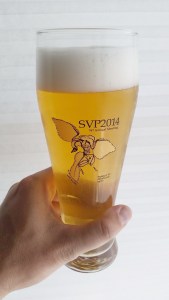
An Archaeopteryx-linked beer requires the appropriate glassware.I’ve really enjoyed the past year of homebrewing–lots of fun recipes, techniques, and achievements. Here’s are some of the highlights:

  • Favorite Batch
    • Olde Persica Porter
      • This was my first time brewing with smoked malt, and wow! It ended up as a deliciously balanced and flavorful beer, definitely in my personal Top 10 list.
  • Least Favorite Batch
    • Gingerbread Winter Warmer
      • This was one of those “good in concept, not as good in results” brews. Thankfully, I only had two gallons of the stuff (even if my spouse really likes it). I did bottle up a few for aging, so we’ll try again in a year.
  • Experimental Recipe with Most Potential
    • Citra Wit
      • I enjoyed so much about this beer, but it missed out a bit in the areas of mouthfeel and citrus aroma. A little more fine-tuning, and this should be an awesome recipe.
  • Most Fun New Style/Recipe to Try
    • Thumbspike Saison
      • This was my first attempt at a saison, and the results were pretty fine. My dry hopping was maybe a little out of style, but another saison is definitely in the cards for next year.
  • Best Technique Added to Repertoire
    • Lagering
      • I’ve brewed a few lagers and pilsners this year, and really like the new challenges and opportunities that these styles bring. Lagering my beer has opened up a whole new world of styles, and I want to make the the focus of 2017 for me! I’ve already acquired an additional fermentation chamber to be devoted just to lagering.
  • Most Frustrating Technique/Tool to Master
    • Decoction mashing
      • I initially had this on the “best technique” category, but decided to place decoction mashing here instead. The main issue is mastering the temperature rests–there is enough fall-off in temperature as I remove the decoction that it has been tough to hit the target temperatures later! I’m getting closer, but still have some work to do here.
  • Best Ingredient Added to Repertoire
    • Vienna Malt
      • I bought a bulk sack of this earlier this fall, and have made it the centerpiece of a few brews (including, of course, Vienna lager).  It’s really grown on me as a flavorful base malt, particularly for pale ales and IPAs. After American 2-row, this is my new favorite!
  • Favorite Book
    • Brewing Classic Styles
      • This book by Zainasheff and Palmer is becoming a really handy reference guide whenever I build recipes. The recipes in here are simple, don’t generally use crazy ingredients or techniques, and have both extract and all-grain versions. The broad variety of recipes is pretty handy, too. I’ve been referencing this one a lot since it arrived at my house!
  • Other Milestones
    • First Zymurgy article
      • At the beginning of the year, I had a “Brew Year’s Resolution” to pitch an article for a major homebrewing publication. Success! (and another article on the way in a few months)
    • First homebrew medals
      • Although my first few competition entries didn’t hit the mark, I achieved gold earlier this year. I can’t say I’ll enter every competition that heads my way, but the learning experience up to this point encourages me to try some more.
    • Planting hops
      • I planted four hop bines (two each of Cascade and Nugget), and got some good leafy growth. Hopefully cones are in the cards for year two!
  • Overall Stats
    • I brewed 29 batches this year–not too shabby!