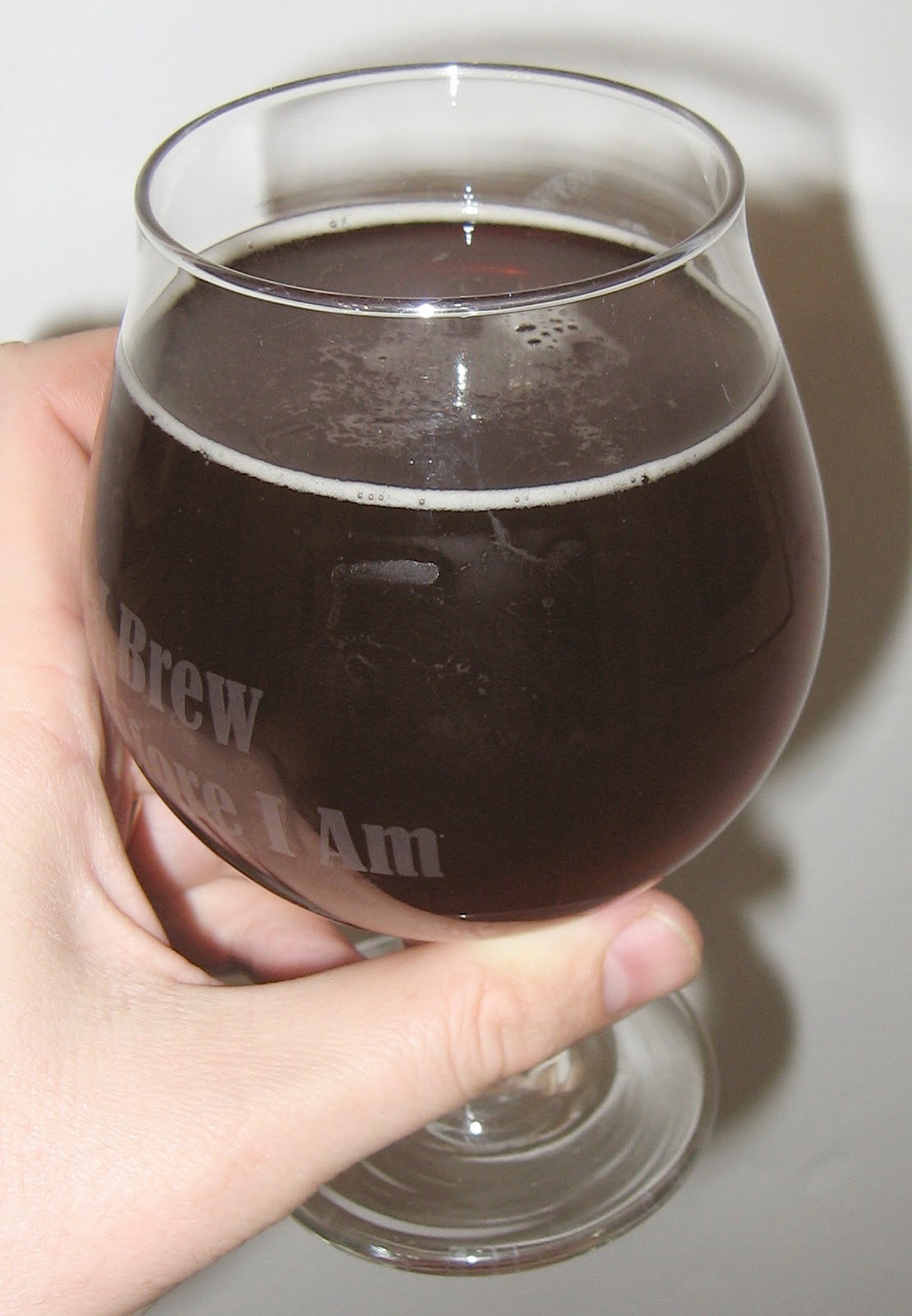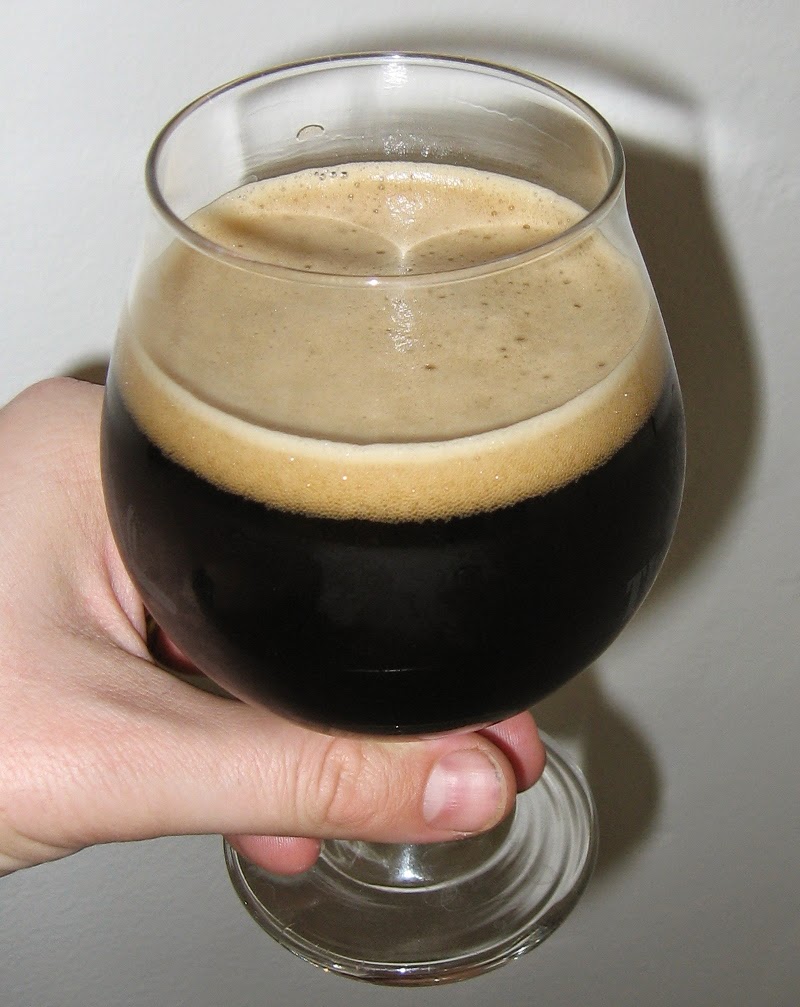
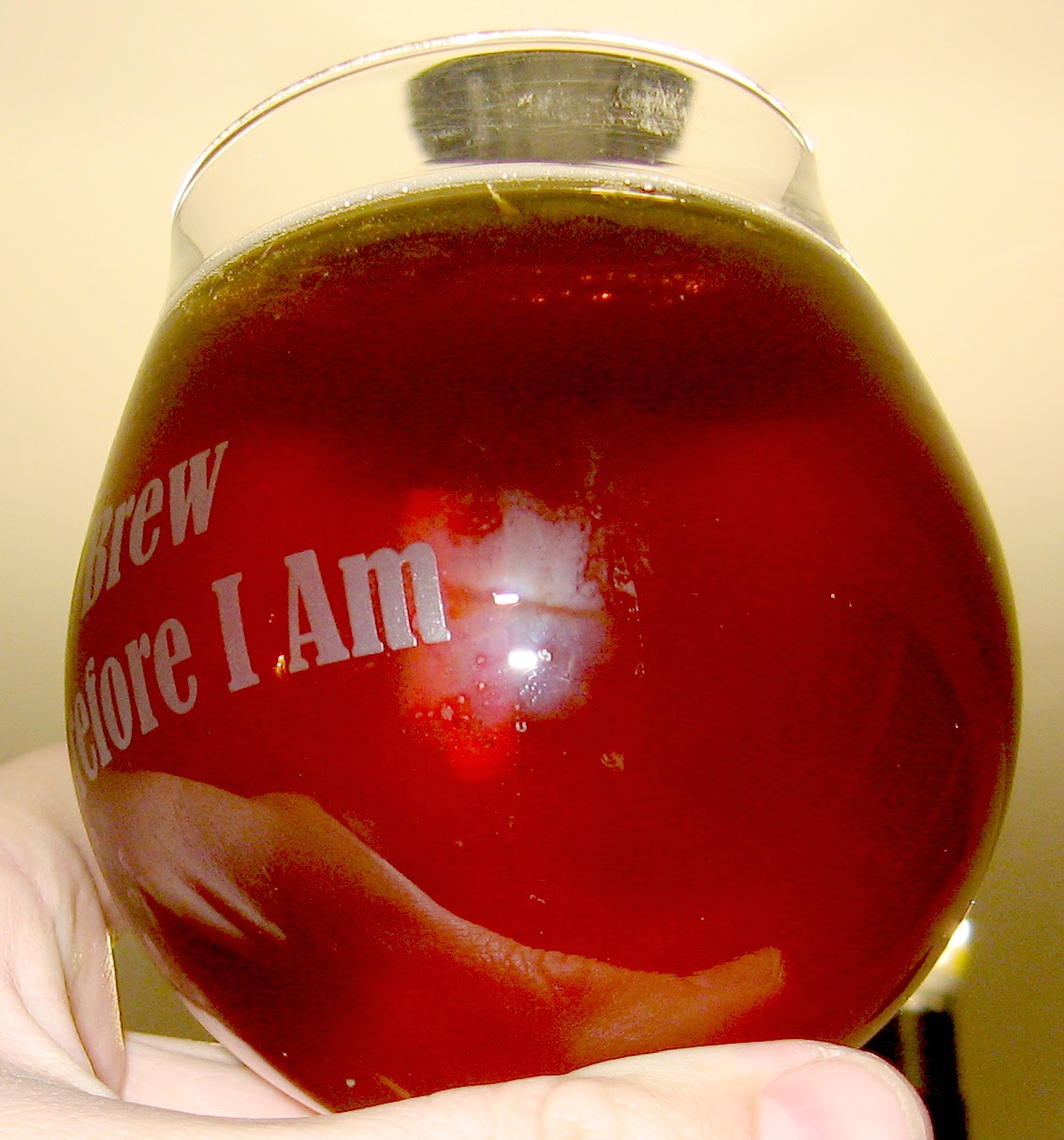
Bonedigger Brown Ale

Things finally seem to be clicking along with my all-grain setup; I’ve got my mash tun properties dialed in, my grain mill configured, and everything else coming up aces. The all-grain learning curve is perhaps a bit frustrating, after feeling like I was so proficient at extract brewing, but it feels like the pay-off is finally here. I’m now getting consistent extract efficiency (thanks in large part to owning my own grain mill), and the beers are turning out quite tasty.

For today’s brew session, I wanted to play with a style I haven’t brewed previously: American brown ale. Looking back at the blog, I brewed a British-style nut brown from a kit a few years back, but that’s it! I got some advice from Ray Daniels’ Designing Great Beers, and set up a recipe in BeerSmith. I was also inspired by a recent visit to Rök House Brewing Company, which had an incredibly tasty SMaSH ESB; on asking, I learned that the wonderfully malty flavor was courtesy of Maris Otter malt. So, I knew I had to incorporate that into my next recipe!

Bonedigger Brown Ale

  • 9 lbs. 2-row malt
  • 1 lb. Maris Otter pale malt
  • 0.75 lb. 80°L crystal malt
  • 0.5 lb. carapils malt
  • 0.5 lb. chocolate malt
  • 1 oz. Cascade whole hops, bittering (60 minute boil)
  • 1 oz. Cascade whole hops, bittering (20 minute boil)
  • 0.5 oz. Willamette hops pellets, aroma (5.3% alpha; 3.7% beta; 5 minute boil)
  • 1 tsp. Irish moss (10 minute boil)
  • 1 pkg. US-05 Safale American Yeast
Procedure
  • I mashed in with 3.75 gallons of water at 165°. This hit my target mash temperature of 153°. The mash ended at around 151-152°, an hour later.
  • After 60 minutes, I stirred in 0.82 gallons of water just below boiling temperature, and let this sit for 10 minutes. I collected ~3.1 gallons of first runnings.
  • Then, I added 3.14 gallons of water at 185°; the mash temperature stabilized at 168°. I let it sit for 10 minutes.
  • After the second runnings, I had collected 6.5 gallons of wort with a gravity of 1.049. This works out to 75.7% efficiency.
  • I brought the wort to a boil, and added the hops as indicated. The wort boiled for a total of 60 minutes.
  • After flame-out, I cooled the wort to ~78° using my wort chiller, whirlpooled, rehydrated the yeast, and pitched the yeast. I will be fermenting this beer for 2 weeks at 65°.
  • Starting gravity is 1.057, with a total of 5.1 gallons of wort. I brewed this up on 27 September 2014.

Edmund Fitzgerald Porter Clone Bottled

After 12 days in the secondary fermenter, I bottled the Edmund Fitzgerald Porter Clone on Friday, September 26. The yeast had settled out the rest of the way quite nicely, with a thin and compacted cake at the bottom of the carboy.

I elected to bottle the entire batch of beer, rather than kegging. Thus, I measured out 3.2 oz. of priming sugar; with ~4.75 gallons of beer, this works out to around 2.1 volumes of CO2 for the batch. The end result was 18 12-oz. bottles, 14 18-oz. bottles, and 6 22-oz. bottles.

At bottling, final gravity was unchanged from the last check, at 1.016. With a starting gravity of 1.060, this translates to 5.8% abv.

Beer Update: Vaalbara Session IPA & Edmund Fitzgerald Porter Clone

Today was a bit of “housekeeping” with my two latest brews–one batch to bottle, one batch to transfer to the secondary fermenter.

Vaalbara Session IPA
After two weeks of dry-hopping, I was ready to bottle this batch. The final gravity was 1.011; with a starting gravity of 1.045, this works out to 4.6% abv. The flavor and aroma are both quite pleasant!

The final yield as two 5-L mini-kegs (each primed with 1.5 tbs corn sugar), 3 12-oz. bottles (primed with one carbonation drop each), and 2 22-oz. bottles (primed with two carbonation drops each). Given the small volume that was not kegged, I didn’t feel the desire to mess around with corn sugar.

Edmund Fitzgerald Porter Clone
This beer has been in the primary for just over two weeks, so it was high time to move it to the secondary fermenter. The gravity is down to 1.016 from 1.060, or about 5.8% abv. Even better, it’s delicious! The beer has a nice roasty flavor (thank you, roasted barley!), black color, and is very definitely a “robust” porter. I’m going to let it sit in the secondary fermenter for at least two weeks, at around 66°.

In other news…
I tapped one of the Gondwana Pale Ale 1.1 mini-kegs. The beer is quite tasty, with well-balanced hops and malts, as well as a fantastic Citra hop aroma. The recipe is a keeper! If I have any minor complaint at the moment, it is that the carbonation is a little lower than I might like. I suspect this is because the keg has been kept cool (~66°), so a few more weeks of conditioning and carbonation are in order for the other keg.

Edmund Fitzgerald Porter Clone

The past year has seen some major changes in my brew practices, most prominently in the transition from extract to all-grain. It has been fun to stretch my abilities and add new techniques to my toolkit, although not without its frustrations, either. There is a whole new learning curve to master! 
One of the toughest projects has been to master my mash efficiency. Where you can get really, really consistent gravities quite easily with extract (I would rate this as a big “plus” for extract brewing), I’ve found less consistency in my all-grain. From my reading and conversations with other brewers, “crush” hits the top of the list for improving efficiency. So, with that in mind, I purchased a two-roller mill from Monster Brewing Hardware. Their mills are pretty consistently well-rated, so it seemed wise to follow that reputation. It will be really nice to be able to control my crush more precisely–the local homebrew shop generally gave me good results, but now I can mill grains exactly to my home specs. This also makes it logistically easier to get big bags of my base malts (see photo). By buying in bulk, I can cut the per batch cost significantly.

It took me a bit to figure out what I wanted to brew for the first batch with my new mill. I had thought about a simple amber ale–but, I already have a fair bit of IPA and pale ale on hand (and apparently an amber ale is just a variant of a pale ale–makes sense, but I hadn’t thought of it this way before!). So, a good porter seemed like a great alternative. It will round out my beer stock nicely.

After a bit of thought and searching, I elected to go for a clone recipe that I’ve tried versions of before. One of my favorite beers is the Edmund Fitzgerald Porter, courtesy of Great Lakes Brewing. It’s tough to find out in California, but I have had it a few times on tap or in the bottle when in the midwest or out east. For this batch, I stuck much closer to the original recipe from the North American Clone Brews book. The only mild variation was to have Cascade as strictly an aroma (steeping) hop at the very end, mainly because I forgot to pick up a little more at the store.

Edmund Fitzgerald Porter Clone

  • 10.6 lbs. 2 row malt
  • 1 lb. 60°L crystal malt
  • 0.66 lb. chocolate malt
  • 0.66 lb. roasted barley
  • 0.70 oz. Northern Brewer hops pellets, bittering, first addition (9.9% alpha, 4.6% beta)
  • 0.75 oz. Willamette hops pellets, bittering, second addition (5.3% alpha, 3.7% beta)
  • 0.75 oz. Willamette hops pellets, bittering, third addition (5.3% alpha, 3.7% beta)
  • 1 oz. Cascade hops pellets, aroma, fourth addition (5.5% alpha, 6.0% beta)
  • 1 tsp. Irish moss
  • 1 tbs. pH 5.2 stabilizer (for mash)
  • 1 pkg. Danstar Nottingham dry yeast (11 g)
Procedure
  • I mashed in with 4.3 gallons of water at 172°. As measured 20 minutes later, the temperature was stabilized at 154°.
  • After 1 hour, the temperature was down to 152°. I added 0.75 gallons of water at ~185°, stirred, and let it sit for 10 minutes. From this, I collected ~3.1 gallons of wort. I did have a slightly stuck sparge (first time ever!) towards the end of the collection, but was able to unstick it by stirring the top of the mash slightly and blowing air up the tube.
  • Then, I added 3.25 gallons of water at 190°. After stirring, the mash stabilized at 168°. I let the mash rest for 10 minutes, vorlaufed, and collected 7.1 gallons of wort. I suspect I got so much because there was more wort left than usual in the first round of the batch sparge.
  • The 7.1 gallons of wort had a gravity of 1.046. This equals 72% mash efficiency.
  • Once the boil started, I added the Northern Brewer hops.
  • After 30 minutes, I added the first addition of Willamette hops. At this point, the wort volume was down to ~6.75 gallons.
  • After 60 minutes, I added the second addition of Willamette hops. Wort volume was down to ~6.2 gallons at this point
  • After 75 minutes, I added the Irish moss. Wort volume was down to 6 gallons at this point.
  • After 90 minutes, I added the Cascade hops, turned off the heat, and chilled the wort using my wort chiller.
  • It took ~30 minutes to chill the wort to 80°. I whirlpooled the wort, transferred it to the primary fermenter (with the Venturi pump in use for aeration), and pitched the rehydrated yeast. The beer was visibly bubbling within a little more than 12 hours.
  • The end result was 5 gallons of wort into the fermenter, with a starting gravity of 1.060 at 60°.
  • I am fermenting the beer at 65°. This batch was brewed on 30 August 2014.

Beer Update: Gondwana Pale Ale 1.1, Vaalbara Session IPA

Last night (August 29), I bottled up the Gondwana Pale Ale 1.1 and transferred the Vaalbara Session IPA over to the secondary. Details are below.

Gondwana Pale Ale 1.1

  • This beer had been dry hopping for 12 days. It had a final gravity of 1.011, which works out to 4.7% abv.
  • I filled two mini-kegs, which were each primed with 1.5 tbs. of corn sugar. The remaining beer, totaling 1.9 gallons, was bottled and carbonated with 1.65 oz. of corn sugar to reach a target carbonation  of 2.5 volumes.
  • Total yield was 2 5-L kegs, 4 22-oz. bottles, 2 18-oz. bottles, and 8 12-oz. bottles.
  • This beer promises to be really nice — a pretty clean flavor and just the Citra hops aroma I was aiming for.
Vaalbara Session IPA
  • After six days in the primary fermenter, I transferred the beer over to a secondary fermenter.
  • I racked the beer directly onto ~1.75 oz. of Cascade hops pellets, with approximately 3.75 gallons transferred. The carboy went into my temp-controlled fermenting freezer, set to 66°.
  • At the moment, the beer is fairly clear and perhaps a little green in flavor, but there is nothing “off” for flavors relative to what a beer should have at this point in fermentation. Gravity is 1.015, down from 1.045, which calculates to 3.9% abv. I will not be surprised if the gravity drops another point or two in the next two weeks before bottling.