Beer Tasting: Experimental Amber Ale

After about 10 days of carbonation, I felt that my Experimental Amber Ale was ready for a serious evaluation. The overly malty flavor at kegging–almost to the point where I was worried that it might be diacetyl or some other flaw–has disappeared, and the beer tastes quite nice. The full story is below.

  • Basics
    • Starting gravity = 1.047; final gravity = 1.013; abv = 4.5%
  • Aroma
    • Clean and lightly malty; nothing to speak of for hop aroma.
  • Appearance
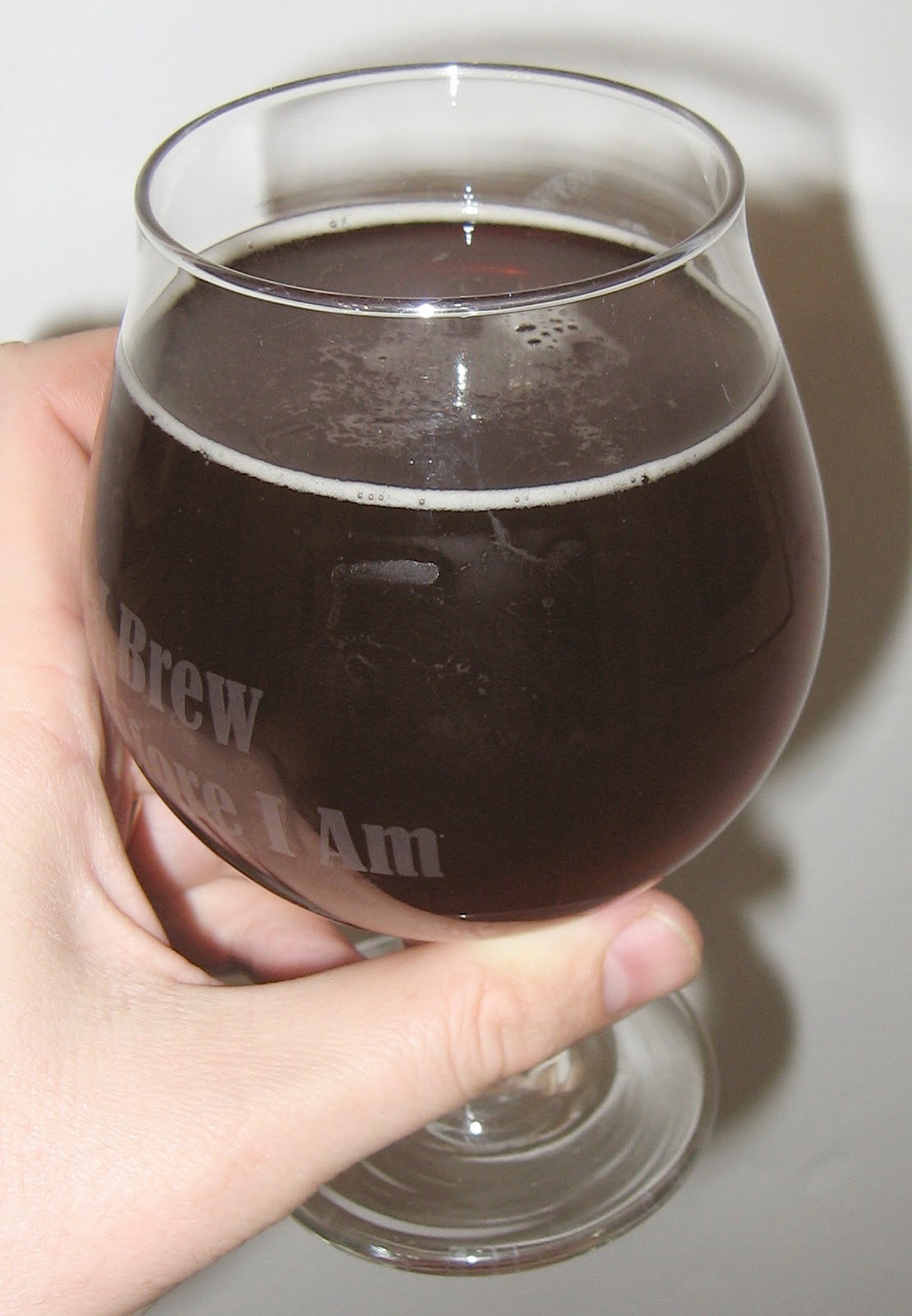
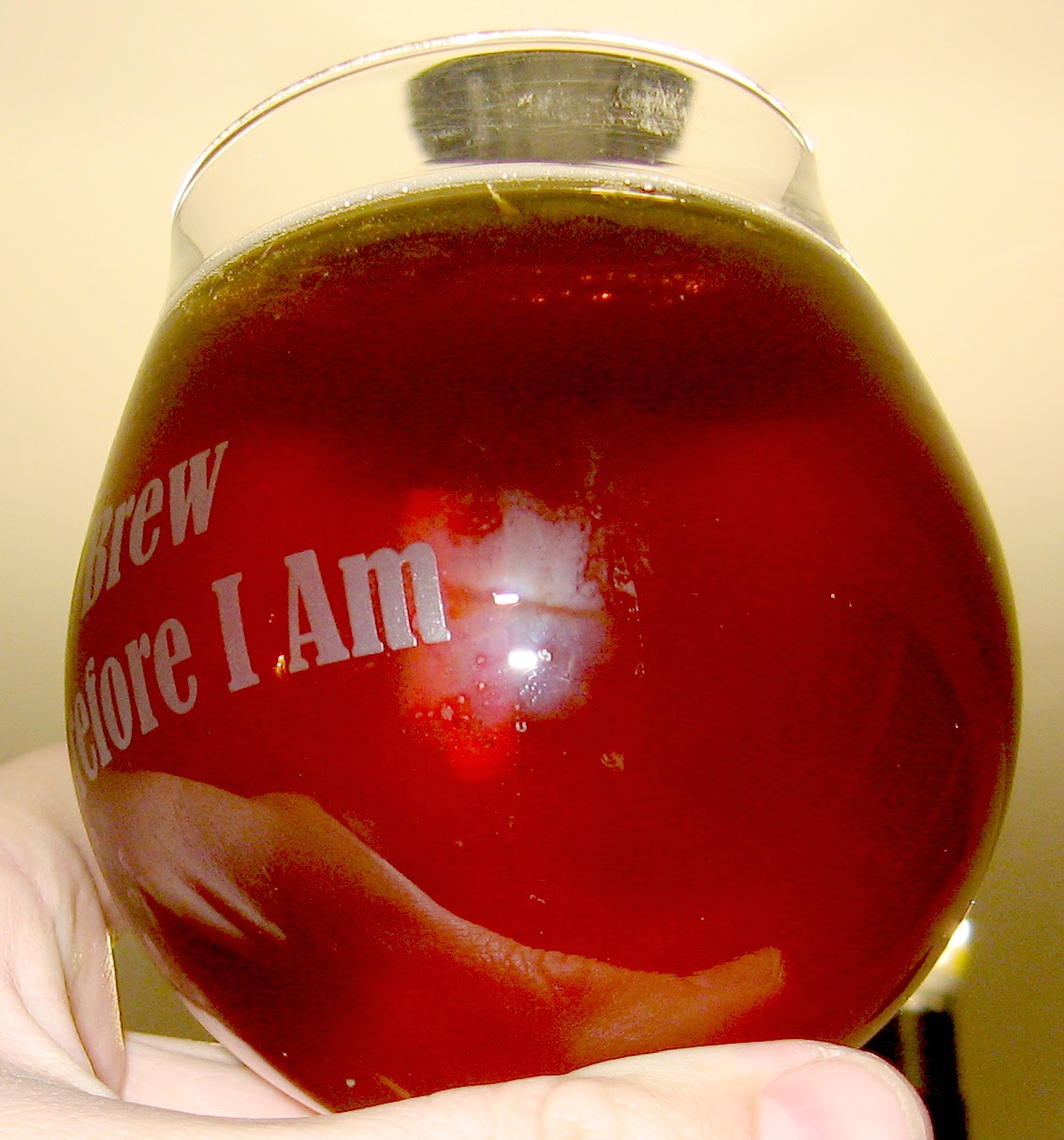
    • A rich amber in color, and clear in appearance. The head is off-white, with good retention, but is not particularly “big” in size.
  • Flavor
    • Malt-forward, with a moderate bitterness that finishes smoothly. Nicely balanced.
  • Mouthfeel
    • Moderately light (but not thin) body and moderately carbonated.
  • Would I brew this again?
    • Probably so, but maybe with a bit of crystal 60 added. I wouldn’t place this into the “absolutely outstanding” category, but there is nothing terribly offensive about it, either. It could probably have a little more of a caramel presence to fit the style guidelines for an amber ale (and indeed, I had intended to add this, but forgot when at my homebrew store), as well as to round out the flavor. If I enter this in a competition, I expect it would get dinged a bit for style. On the other hand, I still like this beer!
  • Overall rating:
    • 7/10

Beer Tasting: Eagle Face Oatmeal Stout

My Eagle Face Oatmeal Stout ended up as another fine brew–it’s been a great winter brewing season so far. I took a sample to my homebrew club meeting last week, and it actually placed highest in our informal beer tasting competition (out of eight entries, many of them quite good)! 

At any rate, I thought I would do my own, self-critical tasting while the beer is still in its prime. The results are below.

  • Basics
    • Starting gravity = 1.057; final gravity = 1.022; abv = 4.6%
  • Aroma
    • Slightly chocolatey / roasty; no hops detectable. Very nice.
  • Appearance
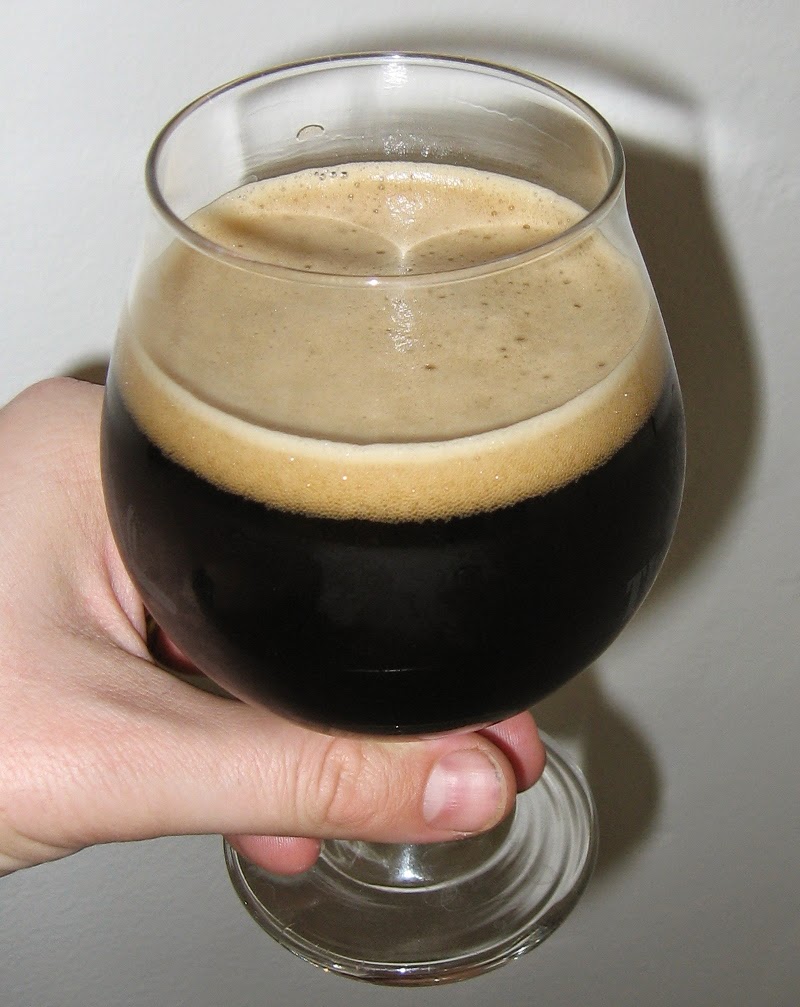
    • Head retention excellent (in fact, amazing! it keeps going until I finish the glass); light brown head with fine foam and nice lacing on the side of the glass; color of beer is black to dark brown (the latter only in the thinnest part of the glass). Clarity is quite good (at least as can be determined for the color)
  • Flavor
    • Malty and rich; balance between bitterness and maltiness is good; a tad thin on the finish; flavor is primarily coffee and just a light hint of cocoa
  • Mouthfeel
    • Moderate body, carbonation perfect for style; just a touch creamy/silky, but not overly so; no astringency or any off flavors.
  • Would I brew this again?
    • Absolutely! The recipe turned into a really nice beer! I might up the oatmeal on this just a tad next time to give it just a hint more mouthfeel, but otherwise it’s quite good.
  • Overall rating: 9/10

Beringea IPA Update

Tonight I transferred my Beringea IPA from the primary fermenter into the keg, where it will be dry-hopped for 14 days before carbonation begins. In a slight switch from original plans, I changed the final hops addition from Simcoe to Amarillo. Although I like the aroma of Simcoe, I’ve heard so many good things about Amarillo that I wanted to try it out. I put the hops pellets (2 ounces total) in a largish nylon hops bag, weighted it with a small ceramic dish, and tied it to the outside of the keg with a piece of thread. Then, I sealed up the keg.

The final gravity for this beer was 1.013, down from 1.060. This works out to 6.2% abv, right on target for the recipe. Taste and appearance for the beer are quite nice–it will be hard to have the patience for my first taste! After my two weeks of dry-hopping at between 60 and 65 degrees, into the keezer it goes for carbonation.

Experimental Amber Ale Kegged

Last night (11 January 2015) I kegged the Experimental Amber Ale. It had been in the primary fermenter for 10 days. For the first eight days, I had it at 65°, and for the last two days I raised it up to 68° to clean up any lingering diacetyl. During the course of fermentation, gravity dropped from 1.047 to 1.013, which works out to 4.5% abv.

I’ll be force carbonating this at ~13.5 psi at 42°, which works out to around 2.5 volumes of CO2. Yield was about 4.5 gallons of beer in the keg. Aroma is predominantly malty, and the flavor is fairly smooth. The maltiness is maybe a little more prominent than I like (which is probably my fault for making Maris Otter a good chunk of the malt bill); I am hoping it balances out a bit as the beer matures.

Eagle Face Oatmeal Stout Update

Three and a half weeks after brew day, it was time to take care of the Eagle Face Oatmeal Stout. Over the holiday break, I worked on getting set up for kegging. I converted a 7 cubic foot deep freezer into a “keezer”; I’ll probably detail that in another post, but the short version is that it has a redwood collar made out of 2×4’s, with a three keg (and three faucet) capacity. This oatmeal stout is my first beer kegged in a 5 gallon keg (I’ve done some 5 L mini-kegs using the Philtap system), and was wonderfully easy to package!

The beer was brewed on Saturday, December 13, and was happily fermenting by the next morning. On the evening of December 14, I noticed that temperature of the fermenter had risen to 74°, a few degrees over what is ideal for this strain. Part of the problem was that I had my temperature sensor for the temperature controller hanging in the air, rather than taped to the fermenter. Lesson learned, and I was able to drop the fermenter down to the mid-60s by the next morning. Not ideal, but it seems like the extra conditioning time cleared out any negative flavors.

On January 1, 2015, I pulled the fermenter from the chamber and set it on the floor. This was in the midst of a cold snap, so the whole setup was soon down to the ambient temperature of 52°. The temperature increased a little bit over the next few days, to 60° or so, but didn’t exceed that.

In terms of overall character, the English Ale Yeast (White Labs WLP002) was fast-acting and extremely flocculant. In other words, true to the strain. This was coupled with relatively low attenuation (see below), as expected.

On January 7, 2015, I kegged the beer. Final gravity was 1.022, down from 1.057. This works out to 4.6% abv and 60% apparent attenuation. The beer was slightly sweet (as expected for the yeast strain), with a nice background bitterness and just a subtle fruity aroma. If I do this recipe again, it would be interesting to try another strain to see what a drier version of the beer is like. I transferred 5 gallons (virtually all of the beer in the fermenter) into a refurbished cornie keg.

After kegging, I put the keg in the keezer, which is set for 42°. Following suggestions for force carbonation from Midwest Brewing, I set the CO2 pressure to 40 psi. I’ll do this for 24 hours, lower to 20 psi for another 24 hours, lower to ~13.5 psi, and then sample. Thus, I should be ready for at least preliminary sampling by the weekend!