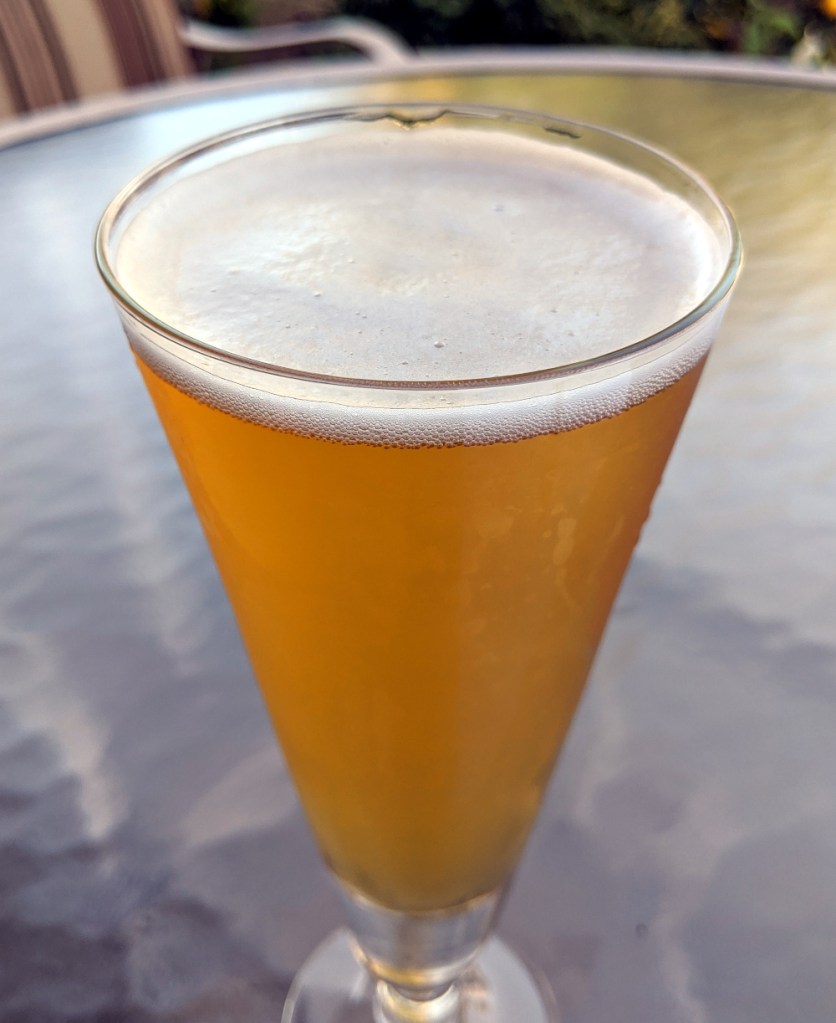
Alta California Lager 2020

Another go at my favorite beer of last year, Alta California Lager. I made a few minor adjustments for this iteration, to simplify brewing. Specifically, I used flaked corn (rather than a cereal mash with grits), and used the Imperial version of the Mexican lager yeast instead of White Labs’ version, due to availability at my local shop.

Alta California Lager 2020

  • 6.5 lb. Superior Pilsen Malt (Great Western)
  • 2 lb. flaked corn
  • 1.75 lb. Vienna Malt (Great Western)
  • 0.25 lb. rice hulls
  • 0.40 oz. Magnum hop pellets (13.2% alpha), 60 minute boil
  • 0.50 oz. Sterling hop pellets (7.4% alpha), 5 minute boil
  • 1 tsp. Fermax yeast nutrient, 10 minute boil
  • 1 Whirlfloc tablet, 5 minute boil
  • 1 tsp. Fermax
  • 1 pkg. Que Bueno liquid yeast (Imperial Yeast L09)

Target Parameters

  • 1.046 o.g., 1.009 f.g., 4.9% abv, 20 IBU, 3 SRM
  • Infusion mash, 149° for 60 minutes, batch sparge
  • Blend of Claremont tap water and RO water, to achieve calculated water profile of 19 Ca, 7 Mg, 46 Na, 15 SO4, 53 Cl, 102 HCO3. RA=66 ppm, alkalinity=84 ppm, effective hardness 18 ppm.

Procedure

  • I spooled up a 1.5L starter on 2 April 2020, and cold crashed it on the morning of 4 April.
  • My water was a mix of tap water (4.25 gallons) and RO water (4.5 gallons), to get 8.75 gallons total. Given the stay-at-home orders, I didn’t want to run out for more RO water.
  • I mashed in with 3.75 gallons of tap water and 5 mL of 88% lactic acid, to hit my 149° mash temperature. The mash was down to 143 after 75 minutes, so I added 1.5 gallons of hot tap water/RO water blend to bring up the temperature and prepare for collection of the runnings.
  • I added rice hulls just before first runnings were collected. Once the first runnings were in the kettle, I added 4 gallons of RO water, let sit for 10 minutes, vorlaufed, and collected the second runnings.
  • In total, I collected 7.25 gallons with a gravity of 1.042, for 80% efficiency.
  • I brought the kettle to a boil, adding hops and finings per the recipe.
  • After 60 minutes, I chilled, and transferred the wort to the fermenter. I let it chill the rest of the way overnight, down to 50°. I brewed the beer on 5 April 2020.
  • On the morning of 6 April 2020, I oxygenated with 45 seconds of pure O2, and pitched the yeast. I am fermenting at 51°. Starting gravity was 1.050.
  • I let the beer free-rise to 62° on 18 April 2020. On 25 April, I lowered the temperature to 52°, and then to 42° on 26 April, and 33° on 27 April.
  • I kegged the beer on 10 May 2020, after purging the target keg with CO2.
  • Final gravity was 1.008, for 5.5% abv.

Tasting

  • Appearance
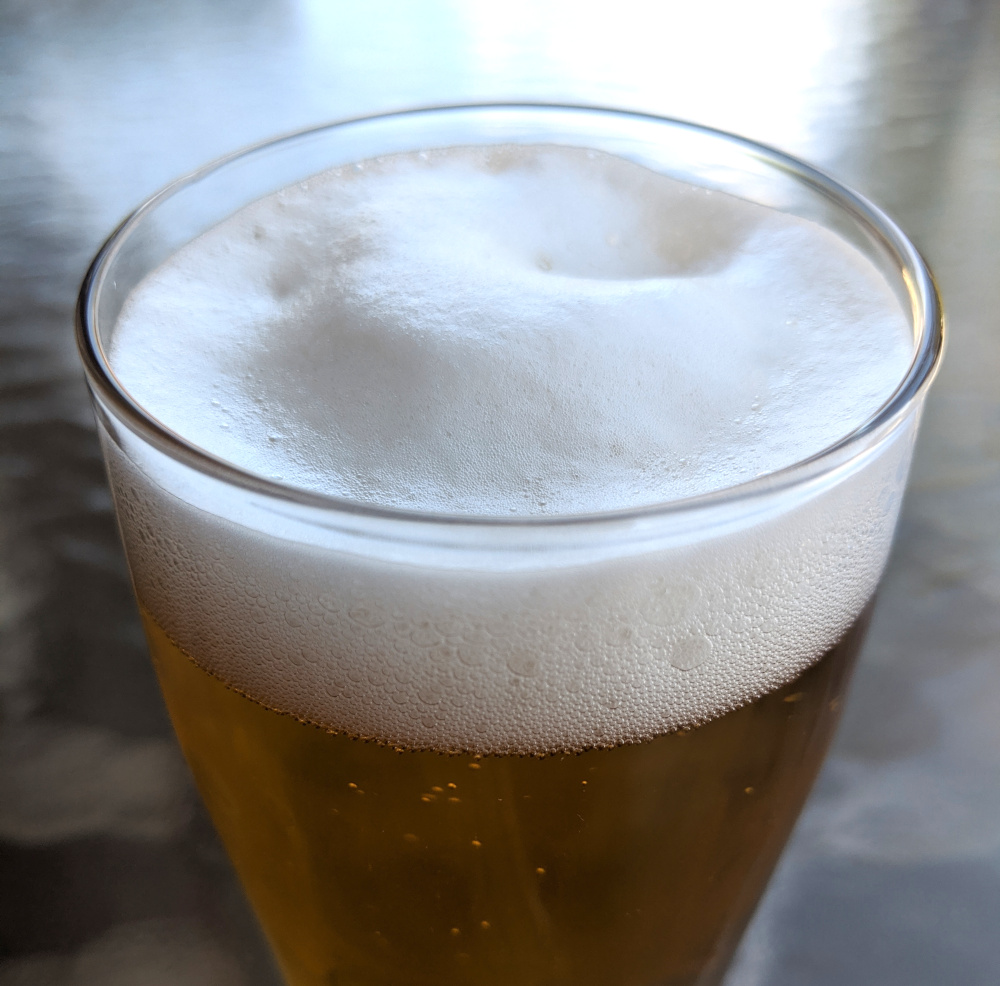
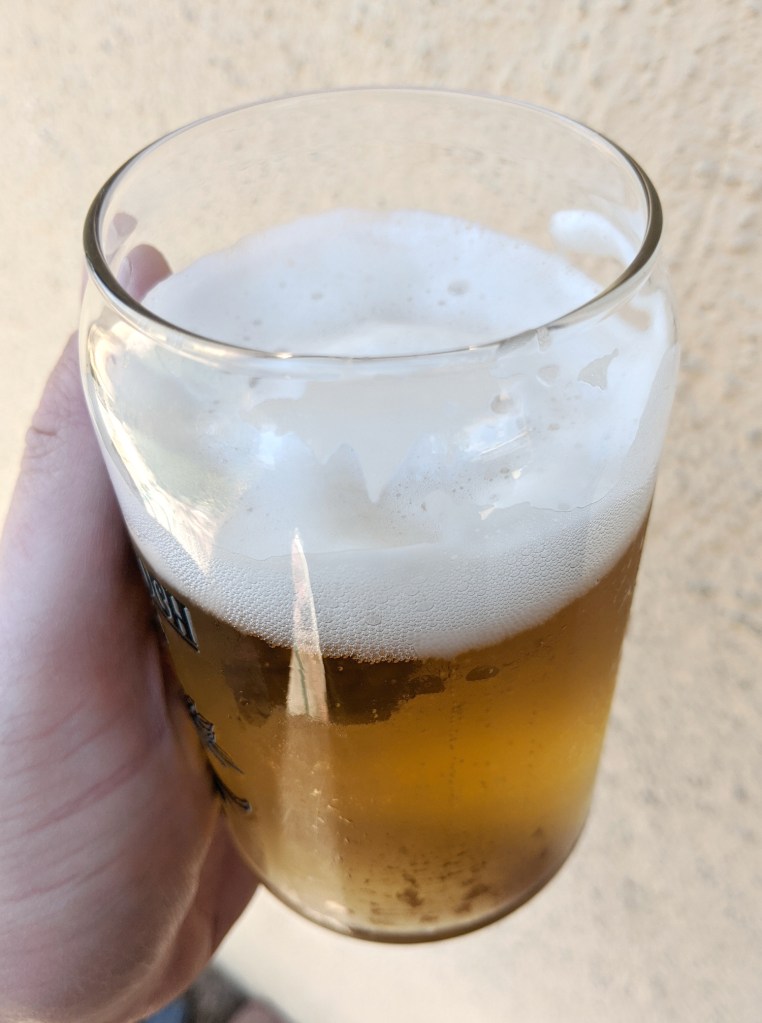
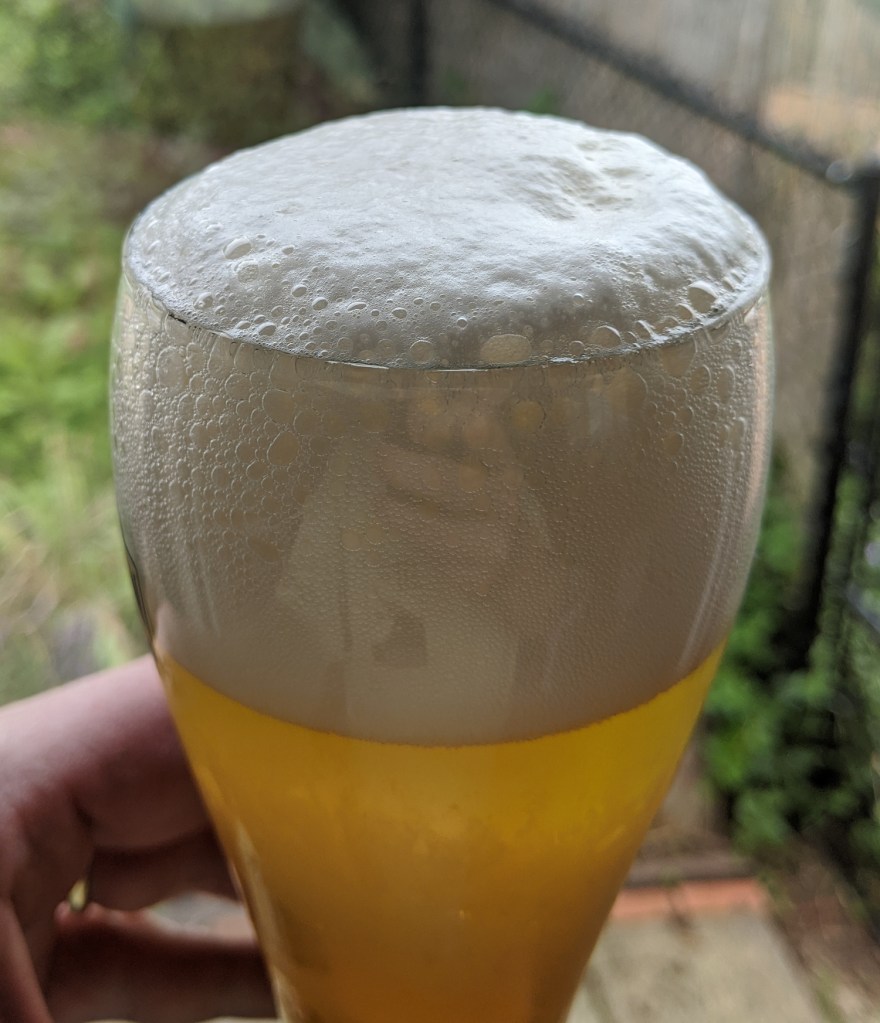
    • Light yellow, slight chill haze for the first few weeks on tap, but otherwise clear. I finally achieved good clarity about a month after kegging–patience pays off! The beer pours with a nice dense head with excellent retention.
  • Aroma
    • Light spice hop note; malt has a slight graininess with a maize aroma too (not DMS!).
  • Flavor
    • Light grainy maltiness, slight maize character with that; distinct but not overpowering bitterness; this beer is definitely more tilted towards the bitter end than I expected, though. It’s not IPA levels, but I think I could notch the IBUs back about 10 percent. I wonder if I got higher utilization this time with the hops free floating rather than bagged. The finish tilts towards bitter.
  • Mouthfeel
    • Crisp, off-dry, moderately high carbonation.
  • Would I brew this again?
    • I’m going to tweak a bit more, and think I’ll go back to a cereal mash for the next version, and perhaps try the White Labs yeast again. I’ll also notch the hops back a touch, to reduce the bitterness for when I use free floating hops in the boil. It’s a pretty good beer, but the slight persistent haze was mildly disappointing, and the slight overbitterness could be fixed. That said, it’s pretty good with a lime slice!
  • Overall
    • 7.5/10

Schell’s Pils Clone 1.1

Last year, one of my favorite recipes was a clone of Schell’s Pils, a German-style pilsner from Minnesota using 2-row malt rather than pilsner malt. I decided to have another go at this recipe, but with a few minor modifications in the ingredients.

Schell’s Pils Clone 1.1

  • 11.5 lb. 2-row malt (Great Western)
  • 0.25 lb. Carapils malt (Briess)
  • 1 oz. Mt. Hood hop pellets (4.6% alpha), first wort hopping and 60 minute boil
  • 0.75 oz. Mt. Hood hop pellets (4.6% alpha), 60 minute boil
  • 0.75 oz. Mt. Hood hop pellets (4.6% alpha), 20 minute boil
  • 0.5 oz. Sterling hop pellets (7.4% alpha), 5 minute boil
  • 1 tsp. Fermax yeast nutrient, 10 minute boil
  • 1 Whirlfloc tablet, 5 minute boil
  • 1 repitch of German lager yeast (White Labs WLP830)

Target Parameters

  • 1.052 o.g., 1.011 f.g., 5.4% abv, 38 IBU, 4 SRM
  • 60 minute infusion mash, 152°, batch sparge
  • Water built up from RO, to hit target water profile of 59 ppm Ca, 8 ppm Mg, 89 ppm SO4, 63 ppm Cl; RA=-47ppm

Procedure

  • I built up my RO water with 1.86 g CaCl, 1.45 g gypsum, and 1.2 g Epsom salt in total with 8.5 gallons of RO water.
  • I mashed in with 4 gallons of water at 163.5°, to hit a mash temperature of around 152°. After 60 minutes, I added 1.1 gallons of water at ~185°, let sit for 10 minutes, vorlaufed, and collected the first runnings.
  • I next added ~3.6 gallons of water, let sit for 10 minutes, vorlaufed, and collected the second runnings.
  • In total, I collected 7.25 gallons of runnings with a graviy of 1.045, for 77% mash efficiency.
  • I brought the kettle to a boil, adding the hops, nutrient, and finings per the schedule.
  • After a 60 minute boil, I chilled the wort down to ~75°, and transferred to the fermenter.
  • I chilled the wort in my fermentation chamber down to 49°, oxygenated with 30 seconds of pure O2, and pitched a culture of yeast from a previous batch (my Crystal Pils, harvested about 6 weeks prior).
  • I fermented at 52°, for just under a month.
  • Starting gravity was 1.053, on 7 March 2020.
  • I didn’t change the temperature at all during the duration of fermentation, figuring that any lingering off-flavors would be cleaned up during this time.
  • I kegged the beer on 4 April 2020. Final gravity was 1.010, for 5.7% abv.

Tasting

golden beer with white head in conical pilsner glass
  • Appearance
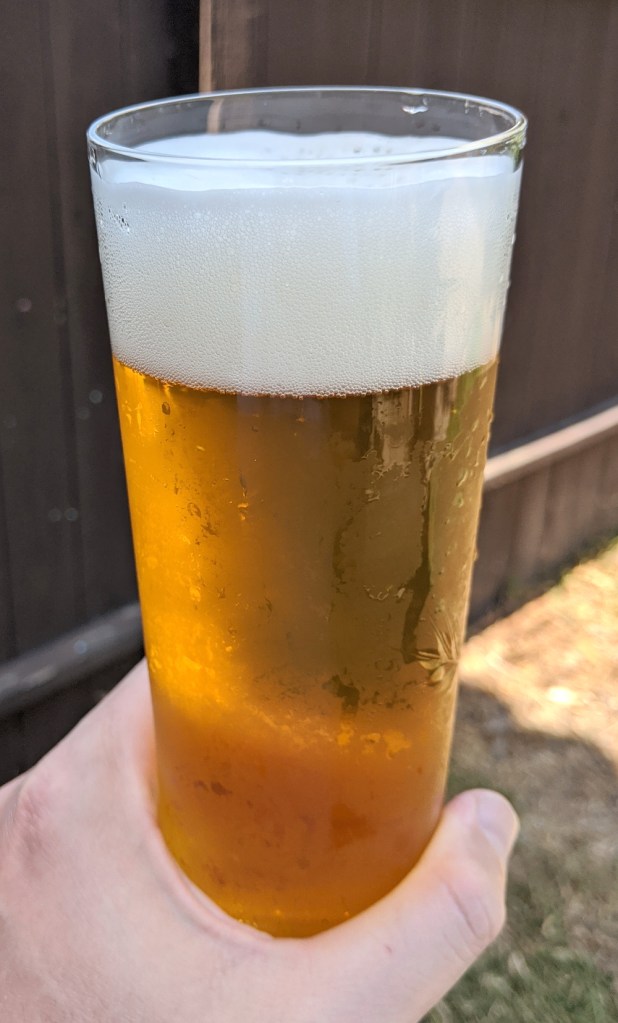
    • Thick white head, pretty persistent. It pours well, and sticks around, too. The beer itself is light yellow and pretty clear (but not quite brilliant).
  • Aroma
    • Lightly spicy hop character, slight grainy-sweet malt character.
  • Flavor
    • Definitely hop dominant, with an assertive hop presence that is on the tongue well after finishing the sip. Malt character is smooth and slightly doughy, but definitely in the background…almost too much so.
  • Mouthfeel
    • Off-dry, moderately high carbonation, with a lingering bitter finish.
  • Would I brew this again?
    • For my tastes, I liked the first batch much better. This version is still a pretty good German pils, but definitely a touch more bitter than I care for in this style. It just overwhelms the malt too much. I think I’ll go back to my hopping schedule from the previous version. The hop/malt balance was just better in that one. I’ll still keep the dry-hop out, though. I also wonder if changing from Rahr to Great Western for the malt made a difference?
  • Overall: 6.5/10

Czech-Style Dark Lager

I am loving the challenge of brewing lagers, lagers, and more lagers! It seems like there is always a new style to make, and the process has opened me up to a spectrum of flavors I haven’t experienced in the abundant craft beers from my area.

glass of beer held by hand, with the beer having a brown color, quite lear, and a tan head

Most of my lagers to this point have sat at the pale end, with a few forays into amber. A few years back I did a schwarzbier, and I’ve done a Munich dunkel twice, and that’s been about it for dark lagers. Sounds like it’s time to get to work! I like to have a darker beer on hand most of the time, and that space is usually filled by a porter or stout. A Czech-style dark lager seemed like a good candidate for my next brew.

The recipe is based primarily off of that in Modern Homebrew Recipes, by Gordon Strong. I increased the amount of dark Munich malt slightly, partly to increase the maltiness and partly to use up ingredients on-hand. I adjusted the dark specialty malts a touch, to adjust for ingredient availability at my LHBS. I elected to do a step infusion mash, rather than decoction, just for simplicity.

Czech-Style Dark Lager

  • 6 lbs. Vienna malt (Weyermann)
  • 2 lb. Munich malt (Bestmalz, 7.6 SRM)
  • 1.5 lb. Viking Munich Dark Malt (11.2 SRM)
  • 0.5 lb. Caramunich I (Weyermann), added at vorlauf
  • 5.5 oz. Carafa Special II (Weyermann), added at vorlauf
  • 2.5 oz. Carafa Special III (Weyermann), added at vorlauf
  • 3 oz. Saaz hop pellets (2.4% alpha), 60 minute boil
  • 1 tsp. Fermax, 10 minute boil
  • 1 Whirlfloc tablet, 5 minute boil
  • 1 oz. Saaz hop pellets (2.4% alpha), 5 minute whirlpool
  • German lager yeast (WLP830, White Labs), ~130 mL repitched from slurry harvested from Crystal Pilsner

Target Parameters

  • 75 minute infusion step mash, 15 minutes at 131°, 30 minutes at 147°, 30 minutes at 158°, batch sparge
  • 1.048 o.g., 1.012 f.g., 4.8% abv, 26 IBU, 21 SRM
  • 8.75 gallons of RO water with 3.4 g of CaCl, to hit 28 ppm Ca and 50 ppm Cl.

Procedure

  • I mashed in with 2 gallons of water at 149° and 3.25 mL of 88% lactic acid, stirring like crazy to drop down to a protein rest of 134°. This was a little above my target of 131°, but I figured this was okay.
  • After 15 minutes, I added 5 quarts of 180° water, to hit between 146° and 148°, depending on where I measured and how I stirred.
  • After 30 minutes, I added the remainder of the mash water (~6 quarts) at 185°, to bring the mash up to 154°. This was a touch lower than my goal of 158°, but I’m OK with it. I let this sit for 30 minutes, and in the last 5 minutes added the dark grains (CaraMunich, Carafa Special II and III).
  • I vorlaufed, drained the mash tun, and then added 3.58 gallons of water at 185°. I let this rest for 10 minutes, vorlaufed, and collected the second runnings.
  • In total, I collected 7.15 gallons of water at a gravity of 1.040, for 73% efficiency. I brought the kettle to a boil, adding finings and hops per the schedule. After 60 minutes, I turned off the heat and chilled.
  • After chilling down to 70°, I transferred the wort into the fermenter and continued the chill down to 52°. I oxygenated and pitched ~130 mL of harvested yeast slurry (from my Crystal Pils, around 1 week old).
  • Starting gravity was 1.048. I brewed this beer on 1 February 2020.
  • Fermentation temperatures were held between 52° and 54°. On 9 February, I moved the fermenter to ambient (~60°), to finish out fermentation.
  • I kegged the beer on 22 February 2020. Final gravity was 1.012, to reach 4.8% abv.

Tasting

reddish-brown beer in glass
  • Appearance
    • This beer pours with a creamy, persistent, tall tan head. In the glass, it has a very deep amber, almost reddish brown color, and is brilliantly clear. The reddish tinge makes for a really pretty beer.
  • Aroma
    • Amazing. Crisp, spice-infused aroma, with bready notes behind that. This beer smell delicious!
  • Flavor
    • Malty, crusty breadiness, with a slight roasted, coffee-like note behind that. The flavors combine to produce a slight, dark dry fruitiness on the tongue that doesn’t show up in the aroma. It’s not fruitiness in the same way as a warm fermentation or the wrong yeast strain; it’s like the fruitiness you get in some roasts of coffee. It’s unexpected…and apparently within style, according to the 2015 BJCP. The bitterness level is fairly low, but perceptible. The hopping comes across as a smooth, extended bitterness that persists after the malt fades away on the tongue, so the balance is very slightly tilted towards the hops (but not overly so).
  • Body
    • The body is a touch lighter than I expected; I expected something more towards the medium-body, but it’s medium-light at best. I think the beer is slightly overcarbonated, but that should hopefully subside with time.
  • Would I brew this again?
    • Yes? This is a super interesting beer, and definitely a flavor space that I’ve not tasted before. It’s growing on me, and I think I’ll enjoy it plenty as I finish up the keg. However, there is a bit of a clash between the roastiness and fruitiness, which detracts slightly from enjoyability. So, it’s not a bad beer, just maybe not to my taste. If I brew this style again, I will choose a different recipe, maybe one with less roastiness to it. As I read about the style from the BJCP guidelines, apparently a pilsner malt base is more typical, so I might reformulate with a very different grist. All that said, this beer looks really great in a big pint mug!
  • Overall
    • 7/10
tall mug of dark lager with tan colored head

Red Rye Lager 1.1

Back in late 2017, I came up with one of my best from-scratch recipes: Red Rye Lager. It’s been over two years since that batch, so I decided to give it another go. This fills a nice niche of a malty, moderate body, good-for-winter lager. It’s basically the same recipe, just with some modifications for malt brands and hop types. Following my 2020 goal of trying more American hop varieties, I went with Mt. Hood for the hops instead of Hallertauer and Magnum. Also, I used crystal 120 instead of The end result is pretty nice, as before!

Red Rye Lager 1.1

  • 6.75 lb. Superior Pilsen Malt (Great Western Malting)
  • 3 lb. BEST Munich malt (BESTMALZ)
  • 1 lb. Viking rye malt
  • 0.5 lb. Carared malt (Weyermann)
  • 6 oz. Caramel 120°L malt (Briess)
  • 2 oz. Carafa Special III malt (Weyermann)
  • 2 oz. rice hulls
  • 1 oz. Mt. Hood hop pellets (4.6% alpha), 60 minute boil
  • 1 tsp. Fermax yeast nutrient, 10 minute boil
  • 1 Whirlfloc tablet, 5 minute boil
  • 2 oz. Mt. Hood hop pellets (4.6% alpha), 5 minute boil
  • 1 pkg. Cablecar yeast (Imperial yeast #L05)

Target Parameters

  • Infusion mash to hit target of 154°, 60 minutes, batch sparge
  • 1.053 o.g., 1.015 f.g., 5.0% abv, 21 IBU, 14 SRM
  • Water adjusted to hit target of 52 Ca, 10 Mg, 11 Na, 43 SO4, 53 Cl, 109 HCO3, RA 46 ppm.

Procedure

  • I mashed in with 4.5 gallons of RO water, with 2 g epsom salt and 3 g CaCl added and 5 mL of 88% lactic acid, in order to hit a 152° mash temperature for 60 minutes.
  • I used tap water for the sparge, starting with 1 gallon at 185°. I let it sit for 10 minutes, vorlaufed, and collected the first runnings. Then I added 3.75 gallons at 185°, let sit for 10 minutes, vorlaufed, and collected the second runnings.
  • In total, I collected 7.5 gallons of runnings with a gravity of 1.042, for 73% mash efficiency.
  • I brought the runnings to a boil, adding hops and other items per the recipe. After 60 minutes, I chilled to 75°, whirlpooled, and let the wort sit for around 40 minutes.
  • I transferred to the fermenter, added the yeast directly from the package, and let the beer ferment at ambient (56°).
  • I brewed the beer on 29 December 2019. Starting gravity was 1.055.
  • I kegged the beer on 31 January 2020. Final gravity was 1.010, for 5.9% abv.

Tasting

  • Appearance
    • Reddish amber and clear, with a creamy, persistent ivory head. It’s a beautiful beer!
  • Aroma
    • Caramel and rye spice aroma; very clean yeast profile. Not much for hop aroma.
  • Flavor
    • Malt-forward, with a nice (but not overwhelming) rye character and a caramel note with that. The bitterness comes through on the back end; it’s firm, not over the top, and keeps the malt from being too cloying. It’s maybe a touch sweeter than I might like, but that’s only a very minor degree.
  • Body
    • Medium body, not as light as I would expect for the lowish finishing gravity. That said, the body is perfect for this beer. Moderate carbonation, with an off-dry finish.
  • Would I brew this again?
    • Yep! This is a winner of a recipe, even in the second iteration. It’s definitely among my favorite beers. Both this and the past iteration (version 1.0) are quite solid. I might ditch the crystal 120 to dial back the sweetness slightly, but that’s a fairly minor tweak.
  • Overall
    • 9.5/10

Crystal Pils

One of my current brewing goals is to try out American noble-type hops, to see how they stack up against German varieties. I theoretically should be able to get American varieties that are fresher and slightly cheaper than their German counterparts, although freshness is my main concern in the quantities I use.

For this batch, I’m making a German-style pils, with American malt and American hops. Crystal is my focus for this batch–it is often described as a substitute for Hallertauer Mittlefrueh, which made this American variety a logical choice.

Otherwise, the batch is a pretty straightforward pilsner. I upped the effort a bit with a double decoction, to improve mash efficiency as well as flavor. I also experimented with boiling the water prior to brewing to precipitate out carbonates. Finally, I made an additional water treatment of gypsum and calcium chloride. Our tap water here is a bit low in sulfate, and I also thought a bit more calcium and chloride wouldn’t hurt. I have had perpetual issues with minor haze, so it seemed worth a try. Similarly, I think that decoction may be helpful. This is all bad experimental science of course, because I’m changing way too many variable at once, but in any case I was feeling adventurous.

Crystal Pils

  • 9.5 lb. Superior Pilsen Malt (Great Western Malting)
  • 1 oz. Crystal hop pellets (3.0% alpha), 60 minute boil
  • 1 oz. Crystal hop pellets (4.5% alpha), 60 minute boil
  • 1 tsp. Fermax yeast nutrient, 10 minute boil
  • 1 Whirlfloc tablet, 5 minute boil
  • 2 oz. Crystal hop pellets (4.5% alpha), 5 minute boil
  • 1 pkg. German lager yeast (WLP830), prepared in starter

Target Parameters

  • Double decoction, with 60 minute rest at 145°, 20 minute rest at 158°
  • 1.048 o.g., 1.006 f.g., 5.5% abv, 32 IBU, 3 SRM
  • Claremont tap water, boiled and cooled prior to brewing, with 2 g gypsum and 3 g CaCl added.

Procedure

  • Two days prior to brewing, I brought the tap water to a rolling boil and let it cool, in an attempt to precipitate out carbonate. I carefully decanted the water prior to brewing. I added 2 g of gypsum and 3 g of CaCl to increase the overall calcium and sulfate levels.
  • Also two days in advance, I made a 1.75L starter, let it run, and cold crashed for 12 hours prior to pitching.
  • I mashed in with 4 gallons of water at 156°, to hit 145°. I added 6.25 mL of 88% lactic acid to the mash, to adjust mash pH. Because I didn’t know the exact chemistry of my water, I did a few test scenarios and found that this amount would keep me in the acceptable pH range for most possible water chemistries.
  • After 30 minutes of mash rest, I decocted 6 quarts of thick mash, raised the temperature to 160°, and let it sit for 10 minutes. I boiled for 15 minutes, and added it back to the main mash, to hit 152°. This was a bit below my intended target of 158°, so for next time I’ll want to decoct a larger volume–perhaps twice what I needed?
  • After 20 minutes, I decocted two gallons of thick mash, boiled for 10 minutes, and added it back to the main mash. This hit a temperature of 166°, so I stirred and added 1 gallon of water at 160°. This brought the mash down to 162°.
  • I let the mash sit for 10 minutes, vorlaufed, and collecte the first runnings. I added the remaining 3.6 gallons of water, and collected second runnings.
  • In total, I collected 7.1 gallons of water with a gravity of 1.040, for 81% mash efficiency.
  • I brought the kettle to a boil, boiling for 60 minutes and adding hops, nutrients, and finings per the schedule.
  • I chilled down to 85° and let the kettle sit for 4 hours. Trub settled out nicely–a long rest might be a good procedure for future beers where I care about clarity.
  • I transferred to the fermenter, chilled to 48°, oxygenated, pitched the yeast, and let the fermenter free rise to 52°.
  • I brewed the beer on 26 December 2019, and fermented at 52° for the first 11 days. The yeast threw off a ton of sulfur in the first few days of fermentation.
  • On January 6 (11 days post-brew), ambient temperature in my garage was 58°, so I moved the fermenter out of the fermentation chamber. Temperatures in the garage were between 55° and 62° for the next three weeks.
  • After 20 days at ambient, I kegged the beer on 26 January 2020. I transferred the beer semi-closed transfer into a CO2-purged keg. I conditioned at 33° for awhile, before moving it on-tap.
  • Final gravity was 1.010, down from 1.045, for 4.6% abv.

Tasting

  • Appearance
    • Light yellow, clear (but not quite brilliant), with persistent, fine white head. Gorgeous! It’s a shame it’s not brilliant, but that would probably just take a bit more time and patience.
  • Aroma
    • Slightly spicy hop aroma, with a lightly sweet malt note. Very nicely balanced between the two.
  • Flavor
    • Slightly sweet, grainy malt character. Firm but not overpowering bitterness.
  • Mouthfeel
    • Moderately dry, smooth finish with a residual bitterness that pleasantly lingers. Moderate carbonation; a bit reduced because I have to do an extended pour thanks to the massive head!
  • Would I brew this again?
    • Yes! This is a delightful beer, which is a darned good approximation of the German pils style using American ingredients. I would be a bit happier if it was brilliant rather than just “vey clear,” but that’s about the only ding on this otherwise great brew. It seems that a decoction didn’t make much difference for clarity here. Even so, the thing I love about pilsners is that they are simplicity in recipe with maximum enjoyability in flavor!
  • Overall
    • 9.5/10